Three Hybrid Engines and a Box Wing. How a Japanese Airliner of the Future Revolutionized Passenger Transportation

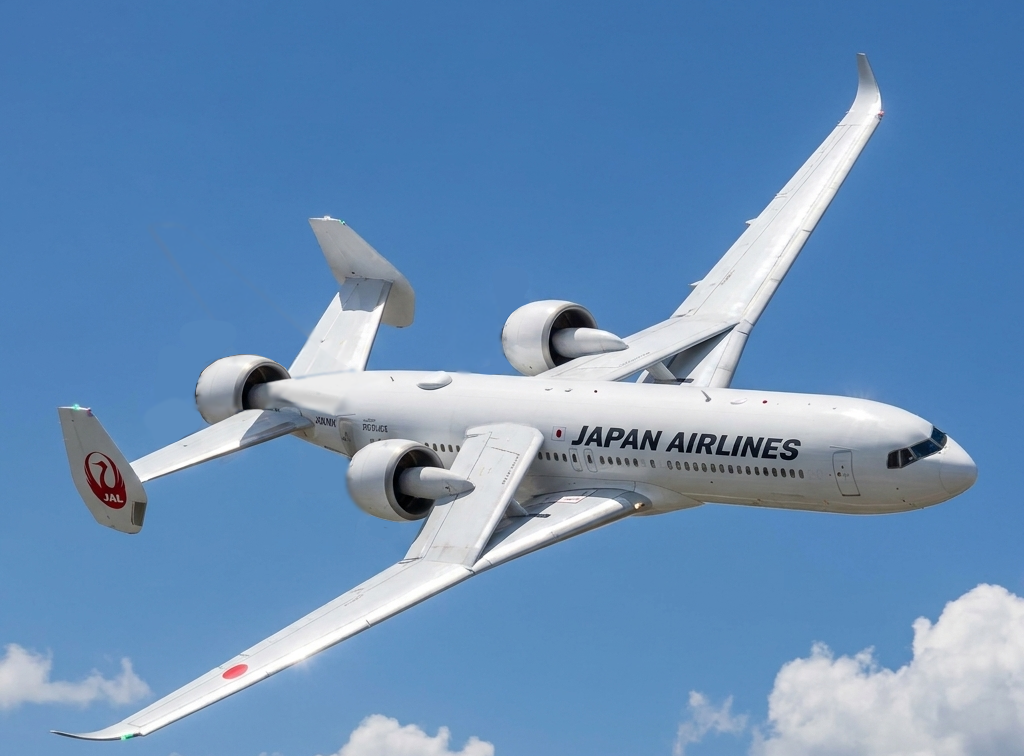
The new JA-300 Mirai became one of the most unusual passenger aircraft of its time. Its creators promised a reduction in fuel consumption of almost one-third, exceptionally low noise levels, and the ability to operate on the world’s busiest air routes. However, the road to success proved considerably more difficult than originally anticipated.
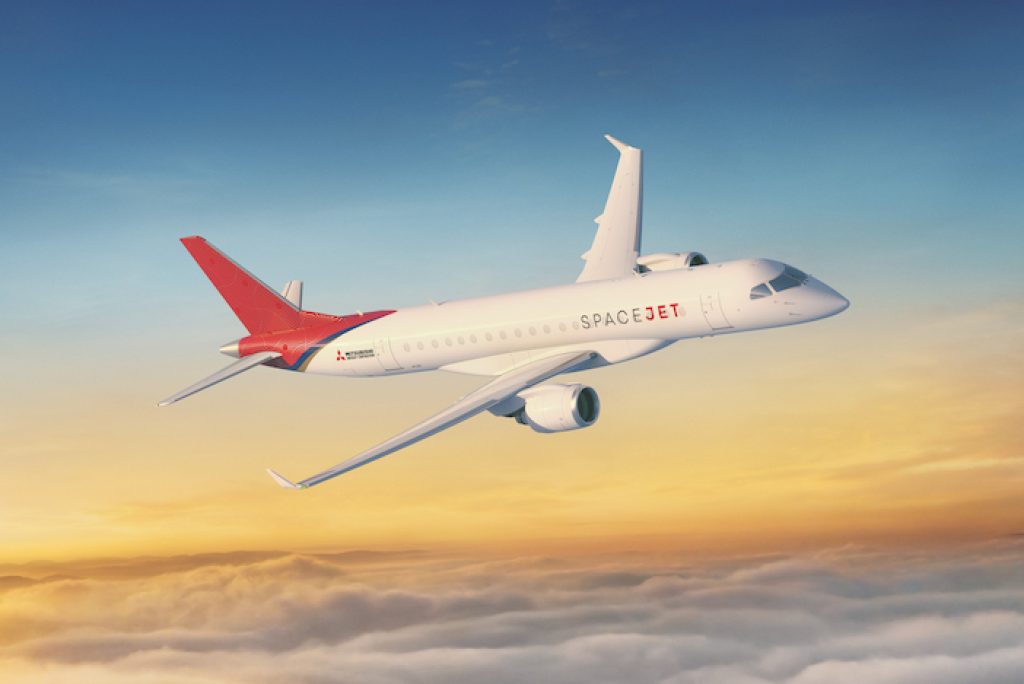
The history of this aircraft is particularly interesting because its development was a direct consequence of one of the greatest failures of Japan’s civil aviation industry in the early 21st century: the cancellation of the Mitsubishi SpaceJet program.
Japan’s Comeback After the SpaceJet Failure
In February 2023, Mitsubishi Heavy Industries announced the final termination of the Mitsubishi SpaceJet regional airliner program. Development had continued for almost two decades and required enormous financial investments, but the Japanese had ultimately failed to create a commercially competitive aircraft.
This event became a turning point in the history of Japan’s aviation industry.
In 2027, the Japanese government adopted a long-term program to revive the country’s civil aircraft manufacturing industry. Unlike previous attempts, the new strategy focused not on competing with existing aircraft but on creating a fundamentally new generation of passenger aviation.
In 2029, the Japan Advanced Aircraft Corporation (JAAC) consortium was established, bringing together Mitsubishi Heavy Industries, Kawasaki Heavy Industries, Subaru, and several leading manufacturers of electric propulsion systems.
The new project received the designation JA-300 and the name Mirai, which means “Future” in Japanese.
Initially, the plan was to develop a conventional twin-engine airliner capable of carrying approximately 250 passengers. However, as early as 2031, the designers abandoned the traditional configuration in favor of a much bolder solution.
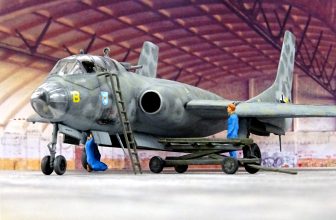
Mitsubishi SpaceJet
The Box Wing: A Return to Forgotten Ideas
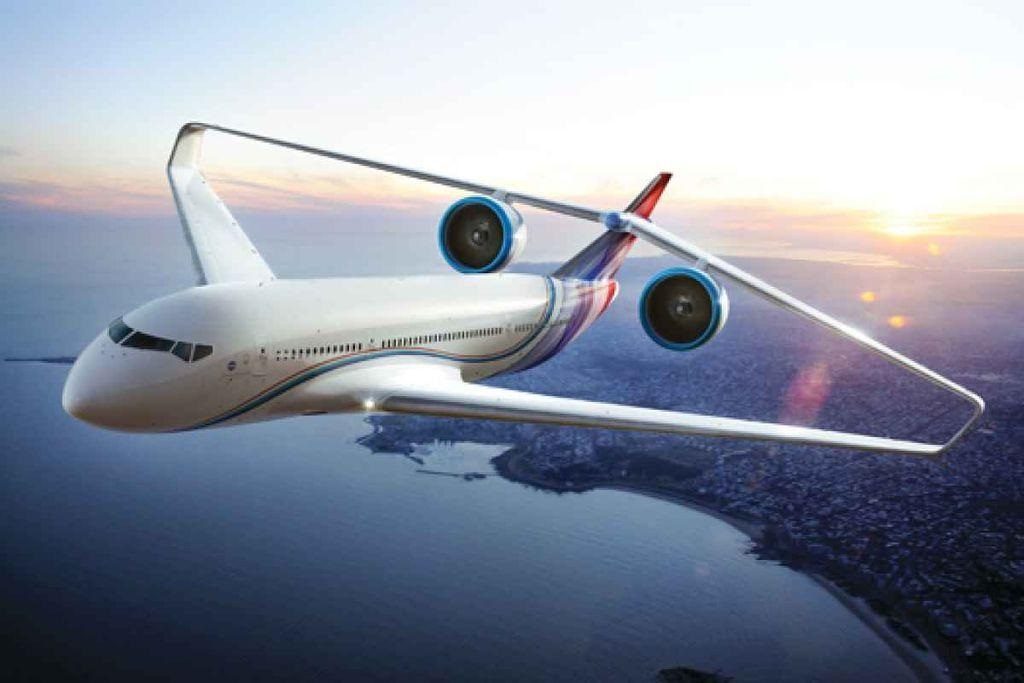
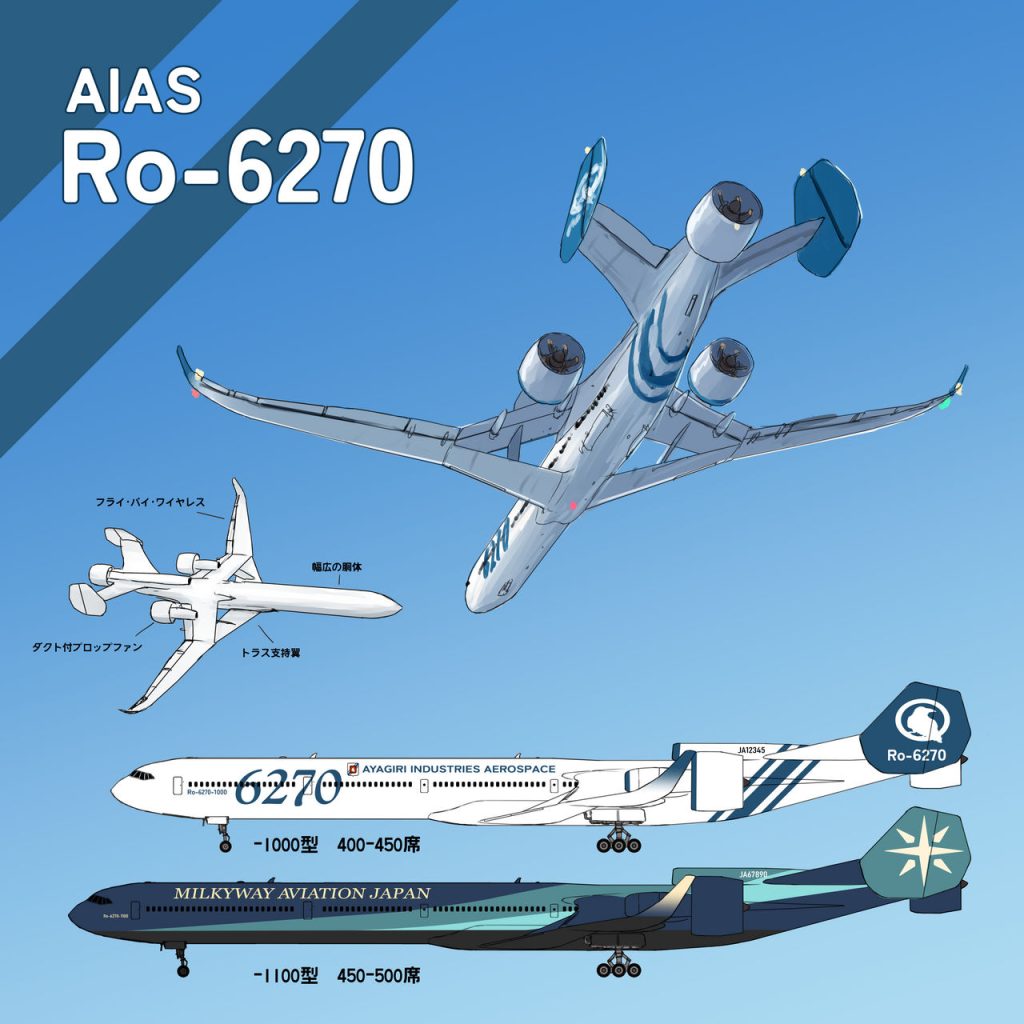
The most distinctive feature of the new Japanese aircraft was its box wing configuration.
Unlike a conventional monoplane, this design employed two lifting surfaces positioned at different heights and connected at their wingtips. The result was a distinctive closed, three-dimensional structure.
Such a configuration had been known to aeronautical engineers since the 20th century, but its practical application had long been limited by manufacturing complexity and the considerable weight of the connecting elements.
Advances in composite materials allowed Japanese specialists to revisit this concept.
The main advantage of the box wing was a reduction in induced aerodynamic drag, which occurs when lift is generated. In addition, the three-dimensional structure provided high rigidity without an excessive increase in weight.
As a result, the JA-300 received a wing configuration that significantly improved fuel efficiency during cruise flight.
However, the unusual design required the development of an entirely new flight control system. Instead of conventional ailerons, the aircraft used a set of interconnected control surfaces managed by an electronic system.
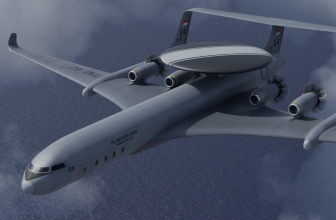
Aircraft with a box wing
Three Hybrid Engines Instead of Two Conventional Ones
The second revolutionary feature of the JA-300 was its propulsion system.
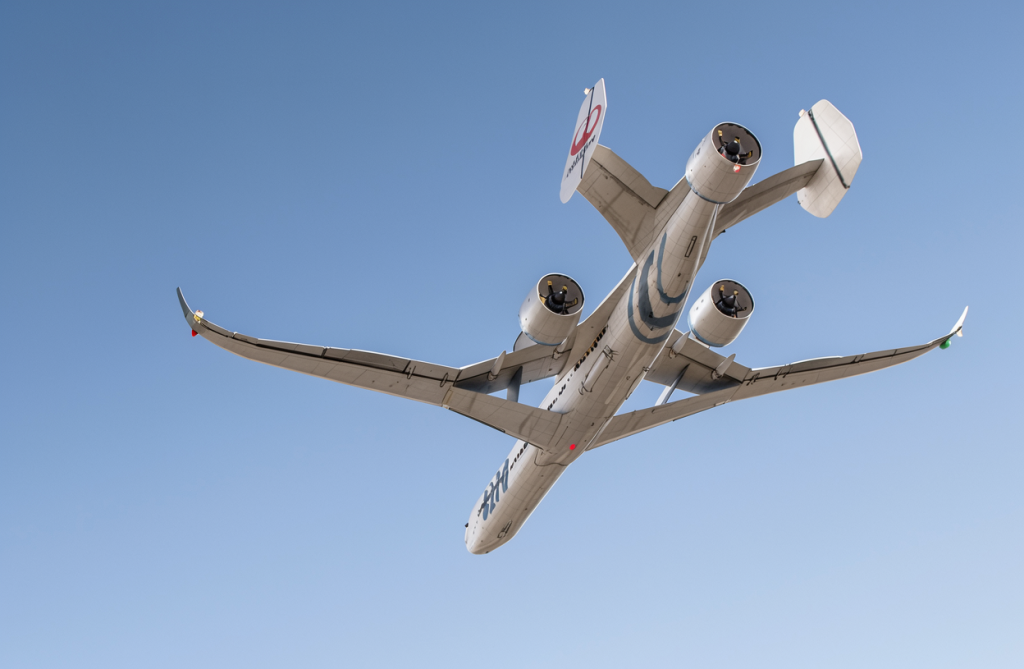
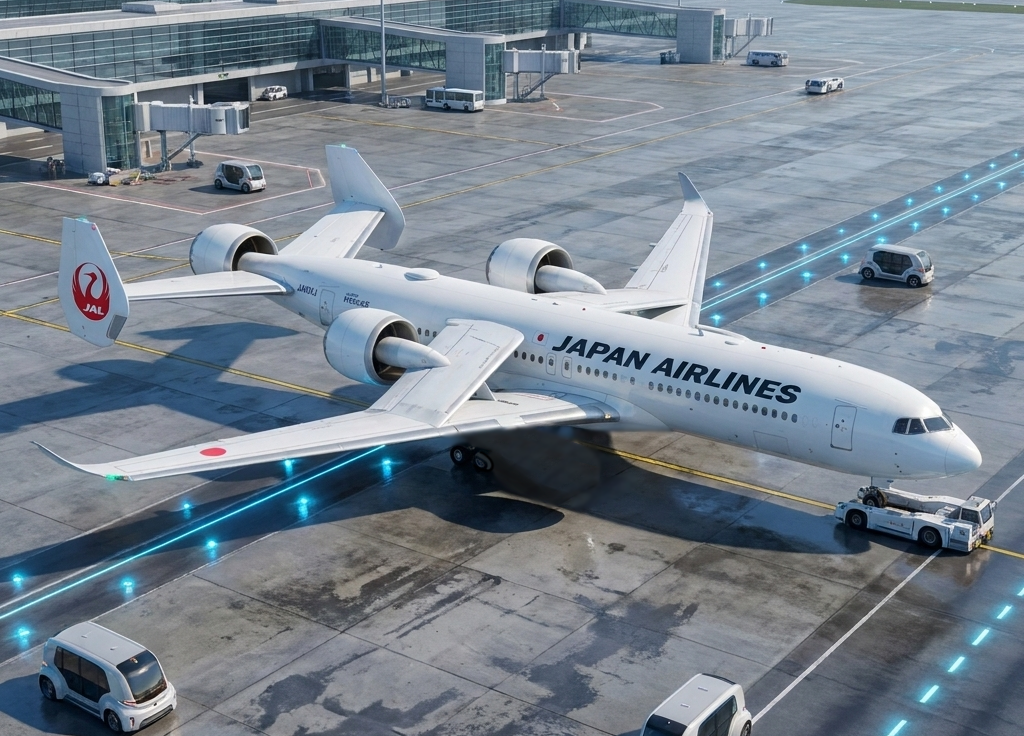
The aircraft was equipped with three hybrid propulsion units that used electric motors to drive large fans enclosed within annular ducts.
Two engines were positioned in the upper section of the wing structure, while the third was installed in the rear fuselage.
The system was based on a turboelectric configuration. Gas turbines drove electric generators, which produced electricity for the propulsion motors. Part of the power was supplied by batteries.
This arrangement provided much greater flexibility in selecting operating modes, reducing fuel consumption and lowering noise levels.
The rear engine was particularly interesting. Its air intake partially captured the slower-moving boundary-layer airflow surrounding the fuselage. This reduced the aircraft’s overall aerodynamic losses.
During takeoff, all three electric motors operated at maximum power, receiving additional energy from the batteries. During cruise flight, the gas-turbine generators supplied most of the power, while the electrical system ensured optimal power distribution.
Thanks to this arrangement, the JA-300 consumed approximately 25% less fuel than comparable aircraft of the previous generation.
The Long Road to the Skies
The first JA-300 Mirai prototype was unveiled to the public in Nagoya in May 2038.
On September 18 of the same year, the aircraft made its maiden flight. JAAC consortium test pilots were at the controls, and the flight lasted 47 minutes.
Initial testing confirmed the advantages of the chosen aerodynamic configuration but also revealed several serious technical problems.
The most difficult challenge was controlling vibrations in the box wing structure. Under certain combinations of speed and aerodynamic loading, oscillations developed that could potentially cause structural fatigue failure.
The hybrid propulsion system presented additional difficulties. The electric motors required effective cooling, while the powerful generators produced considerable thermal loads.
The rear engine caused particularly serious problems because it operated in an uneven airflow.
As a result, the flight testing program lasted almost five years. Only in late 2043 did the JA-300 receive certification from Japanese and international aviation authorities.
Technical Specifications of the JA-300 Mirai
The production JA-300 Mirai airliner had the following specifications:
-
Crew — 2 pilots.
-
Passenger capacity — 240–280 passengers.
-
Length — 53 m.
-
Wingspan — 58 m.
-
Height — 15 m.
-
Maximum takeoff weight — 155 tonnes.
-
Aerodynamic configuration — box wing.
-
Propulsion system — three hybrid turboelectric propulsion units with ducted fans.
-
Total maximum thrust — approximately 330 kN.
-
Cruising speed — 780 km/h.
-
Maximum operating speed — 830 km/h.
-
Service ceiling — 12,000 m.
-
Maximum range — 7,000 km.
-
Fuel savings compared with previous-generation airliners — up to 25–30%.
The First Passengers and an Unexpected Success
The first scheduled passenger flight of the JA-300 took place on April 12, 2044. An All Nippon Airways aircraft operated a flight from Tokyo to Sapporo.
Passengers immediately noticed the exceptionally low noise levels inside the cabin. Thanks to its hybrid-electric propulsion system and the positioning of the main fans above the wing structure, the aircraft was noticeably quieter than conventional jet airliners.
However, its most important advantage was fuel efficiency.
On busy routes between major Japanese cities, the JA-300 demonstrated significantly lower fuel consumption per passenger. This allowed airlines to reduce their operating costs considerably.
As early as 2046, Japanese aircraft began operating international services connecting Japan with China, South Korea, and Southeast Asian countries.
The first foreign orders came from Singapore, Thailand, and Indonesia.
By 2050, 180 aircraft had been manufactured, while the total order backlog exceeded 400 units.
Why Couldn’t Boeing and Airbus Respond Immediately?
The success of the JA-300 came as an unpleasant surprise to Western aircraft manufacturers.
Boeing and Airbus continued improving conventional twin-engine aircraft, focusing on new materials and more fuel-efficient turbofan engines.
The Japanese, however, had introduced an entirely different approach, combining a box wing with hybrid-electric propulsion.
Nevertheless, it was too early to speak of the JA-300’s complete superiority.
The complicated wing structure required specialized maintenance, while the hybrid propulsion system proved considerably more expensive than conventional engines.
The large wingspan created additional difficulties at airports. Furthermore, maintaining three propulsion units required more time than servicing the usual two engines.
Consequently, the Japanese aircraft spread much more slowly in Europe and North America than in Asia.
Nevertheless, the JA-300 became the first passenger airliner in decades to significantly challenge the position of traditional manufacturers in a particular segment of the market.
The Second Generation of the Japanese Airliner
In 2055, the JAAC consortium introduced a thoroughly modernized version, the JA-310 Mirai II.
The main difference was an improved hybrid propulsion system. Thanks to advances in superconducting electrical machinery, engineers managed to significantly reduce the weight of the propulsion motors while improving their efficiency.
The batteries achieved a considerably higher energy density, allowing greater use of electric power during takeoff and climb.
New composite materials were introduced into the box wing structure. While retaining its original dimensions, the wing’s weight was reduced by almost 12%.
The new aircraft also received an improved flight control system and additional automated diagnostic equipment.
The JA-310 was approximately 10% more fuel-efficient than its predecessor, while its range increased to 8,000 kilometers.
By the early 2060s, aircraft of the Mirai family were operating in more than thirty countries around the world.
The End of an Unusual Era
Despite its commercial success, the JA-300 program gradually encountered limitations inherent in its original concept.
The complex arrangement of interconnected lifting surfaces required expensive repairs, while operating three hybrid propulsion units remained more labor-intensive than maintaining conventional engines.
Furthermore, advances in electric aviation gradually changed the requirements for new passenger aircraft.
By the early 2060s, simpler twin-engine aircraft capable of delivering comparable fuel efficiency had entered the market.
In 2062, JAAC announced the end of production of the first-generation Mirai, concentrating instead on manufacturing the modernized JA-310 and developing a new family of aircraft.
Approximately 750 aircraft of the JA-300 and JA-310 family were built in total.
Despite the end of production, many of them continued operating for many years.
The Aircraft That Changed Aviation History
Today, the JA-300 Mirai is regarded as one of the most unusual and significant passenger aircraft of the mid-21st century.
Although it never became a universal replacement for conventional airliners, it demonstrated the practical viability of several technologies that had previously existed primarily as experimental concepts.
The box wing, hybrid-electric propulsion systems, and boundary-layer ingestion in the rear propulsion unit made it possible to achieve significant improvements in passenger transportation efficiency.
But the JA-300’s greatest achievement was not even its reduced fuel consumption.
After decades of setbacks, Japan managed to return to the ranks of the world’s leading passenger aircraft manufacturers and demonstrated that the future of aviation did not necessarily have to follow the familiar aerodynamic configurations of Boeing and Airbus.