Expensive Airplanes vs. Cheap Drones: Why the F-35 Is Hunting Shaheds, While the Perfect “Killer” Sits Idle

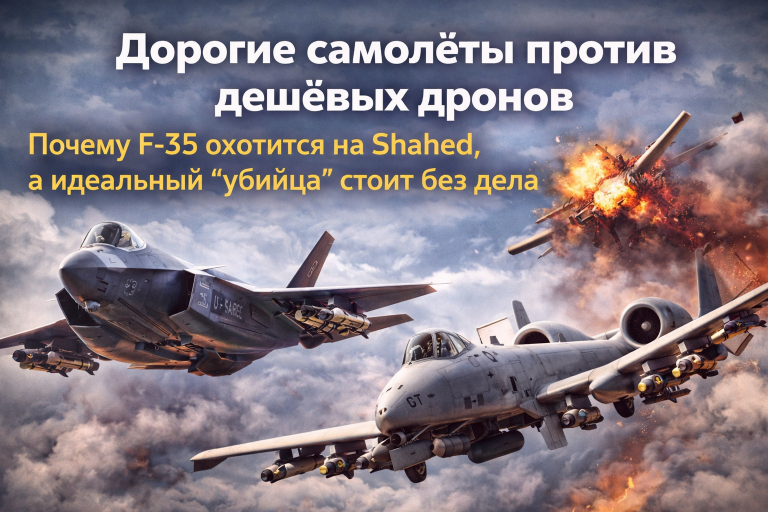
Modern warfare increasingly resembles a strange clash between two worlds.
On one hand, there’s the F-35, one of the most expensive aircraft in history.
On the other, there’s the Shahed drone, which costs about as much as a nice car.
And the most interesting thing is that the former is increasingly being used against the latter.
Contents:
When Expensive Technology Solves a Simple Problem
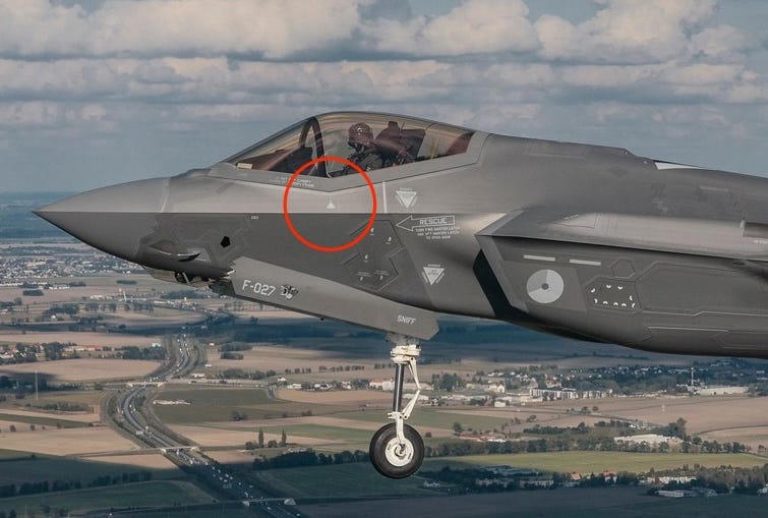
In recent months, the U.S. has been actively facing attacks by Shahed-type drones in the Persian Gulf region. And its response has been quite predictable—it has deployed aircraft.
The following are involved:
- F-35
- F-16
- Ten-A
Sometimes—using missiles such as the AIM-120.
And this is where an obvious imbalance arises.
A rocket can cost hundreds of thousands of dollars.
The drone itself is several times cheaper.
From a military standpoint, the problem is being solved.
From an economic standpoint, it is not.
Why Shahed Is a Problem, Not a Goal
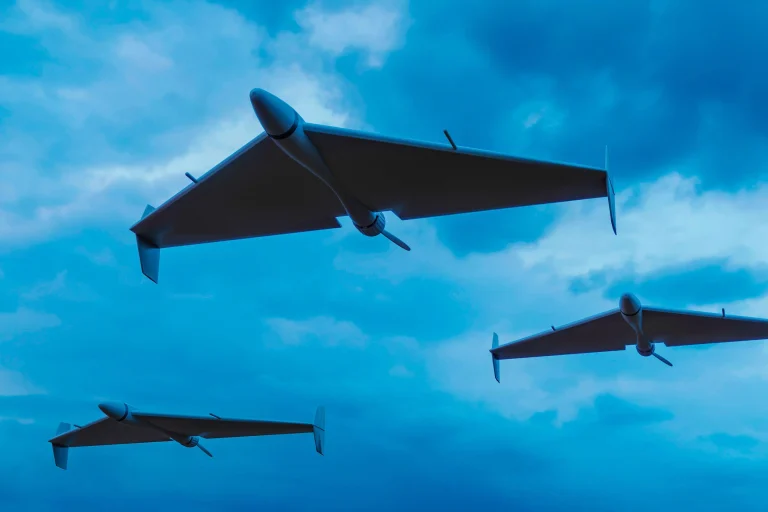
The main feature of these drones isn’t their specifications.
And the sheer number of them.
They:
- flying low
- have a simple design
- are launched by the dozens
And most importantly, it doesn’t matter if you lose them.
As a result, the air defense system or the air force faces not a single target, but a stream of them. And in this situation, even the most advanced fighter jet begins to perform poorly.
Not because it’s bad.
Because the task has changed.
The A-10 is better, but it’s still not quite right
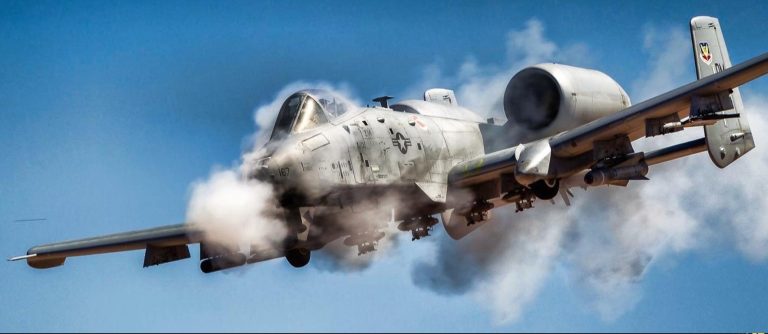
The A-10 attack aircraft seems like a more logical choice.
He has:
- powerful cannon
- the ability to operate at low altitudes
- relatively low cost per flight hour
But even this is still a jet aircraft with high operating costs.
In other words, it’s a step in the right direction.
But it’s not a solution.
The plane that already exists—and that people ignore
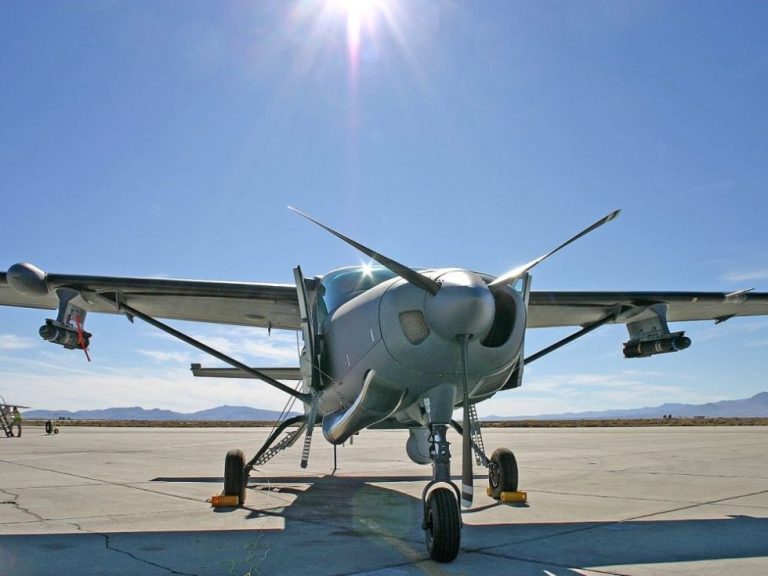
And this is where things really get interesting.
In fact, the U.S. already has a platform that is ideally suited for this task.
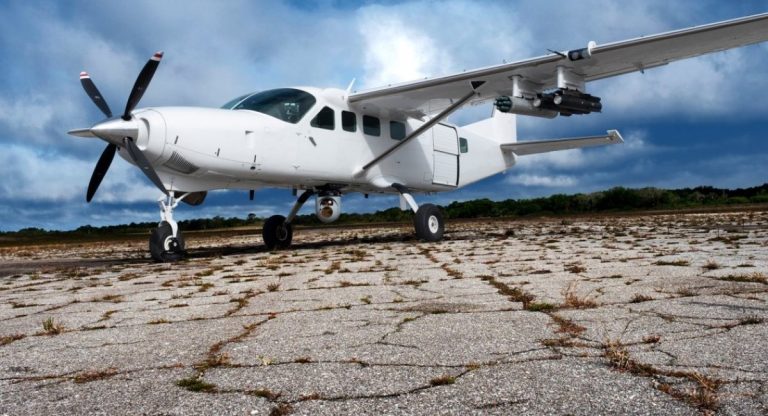
We’re talking about the Cessna C-208 Caravan in its AC-208 Combat Caravan configuration.
It’s not a fighter jet.
It’s not an attack aircraft.
It’s a light turboprop aircraft.
But at the same time, he:
- can remain airborne for a long time
- is significantly cheaper to operate
- is equipped with optics and Hellfire missiles
- is capable of working specifically toward these goals
In fact, it’s a “drone hunter” that already exists.
Why isn’t it used on a large scale?
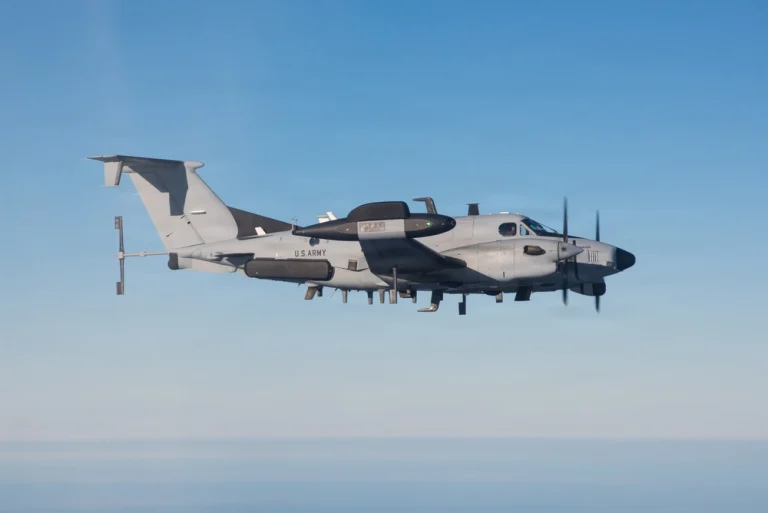
And this is where it’s no longer just about technique, but about the system.
The problem isn’t that there’s no solution.
The problem is that:
- The aviation sector is geared toward fighter jets
- The infrastructure has already been built to accommodate them
- Decisions are made based on the logic of “large systems”
As a result:
Expensive planes are used for simple tasks,
while simple solutions are overlooked.
The logic of war is changing faster than technology
The most important thing about this story isn’t even the specific planes.
And the overall shift.
Modern warfare increasingly resembles a struggle:
- low-cost, mass-market systems
- as opposed to expensive high-tech
And it’s not always the one with the best technology who wins.
And the one with the better combat economy.
The Final
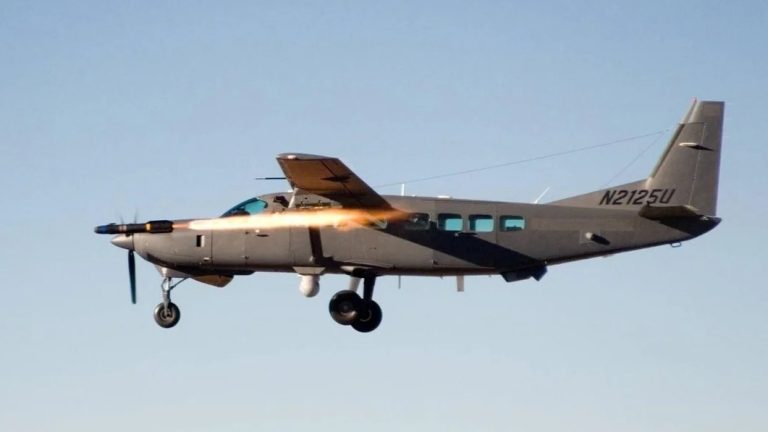
The story about the F-35 versus the Shahed isn’t about aviation.
This is about inconsistency.
When a weapon is designed for one war
but used in another.
And sometimes the solution isn’t about creating something new.
It’s about making use of what we already have.
Just as intended.