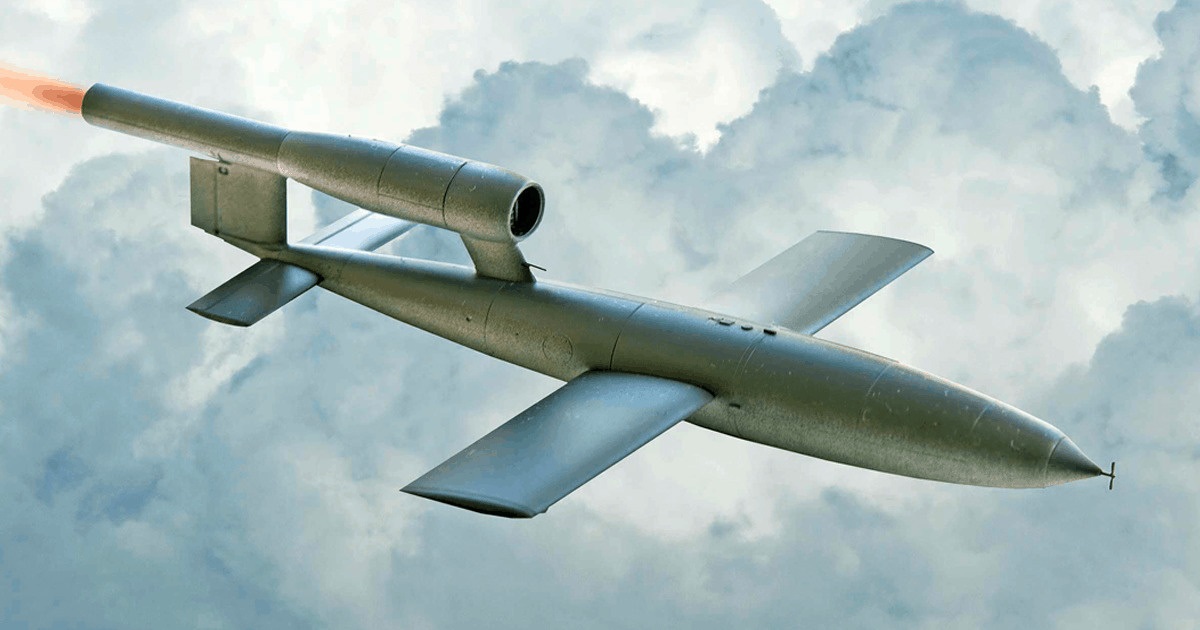
During World War II, the Soviet Union was repeatedly faced with the challenge of not only repelling aggression but also acquiring the enemy’s advanced military technologies. One such challenge was the FAU-1 (Fi 103) flying bomb, developed by Nazi Germany and first used against London in 1944. As early as 1043, Soviet intelligence obtained the blueprints and design specifications for this weapon. This served as the starting point for launching their own program to create an equivalent—a Soviet cruise missile that went down in history under the designation “Aircraft 22” (S-22).
Project “Aircraft 22”: From Intelligence Data to the First Prototype
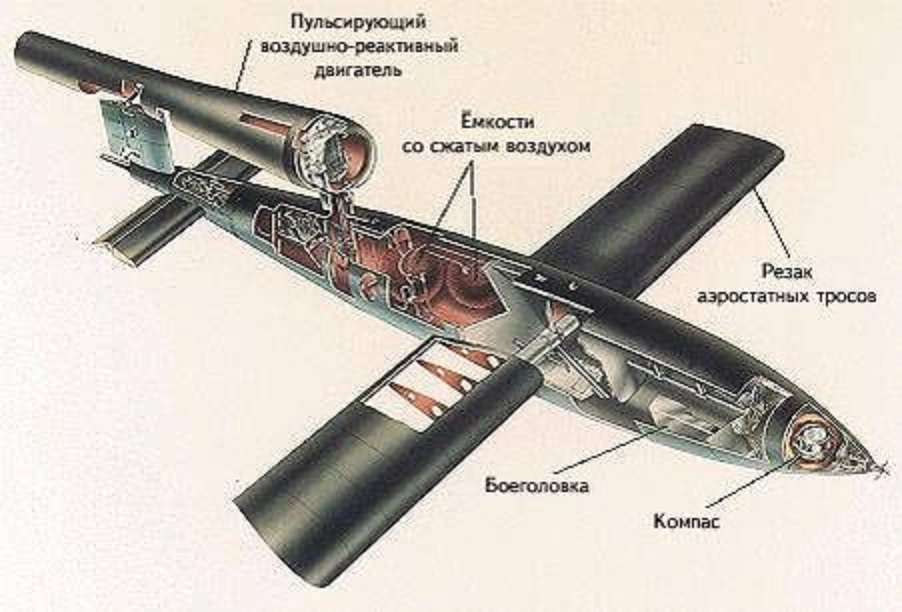
After examining the captured materials, a decision was made to develop a similar weapon in the USSR. Vladimir Nikolaevich Chelomey was in charge of the powerplant; he was tasked with creating a pulsating air-breathing jet engine (PAJ) modeled after the German engine manufactured by Argus. Nikolai Nikolayevich Polikarp—a legendary Soviet aircraft designer and creator of such aircraft as the I-15, I-16, and I-153—was appointed to lead the design of the airframe.
Under the strictest secrecy, a closed group of engineers led by Polikarpov was formed in a separate room on the grounds of the Experimental Tactical Base of the Central Institute of Aviation Engine Construction (CIAM). Their task was to reconstruct the German “bomb plane” based on the fragmentary data available and to create a Soviet version of it. As early as December 1943, the first wooden mockup of the S-22 (without equipment) was sent to TsAGI for testing in the T-101 full-scale wind tunnel.
The key specifications of “Airplane 22” were impressive for their time:
- Length: 8.2 m
- Wingspan: 5.4 m
- Wing area: 5.64 m²
- Engine thrust: 300 kgf
- Warhead weight: 850 kg
- Maximum speed: 600 km/h
- Flight range: 240 km
This was the USSR’s first major step toward developing cruise missiles—a new class of strike weapons capable of delivering a powerful payload over significant distances without a pilot.
From the S-22 to the “10X”: The Birth of the First Soviet Cruise Missile
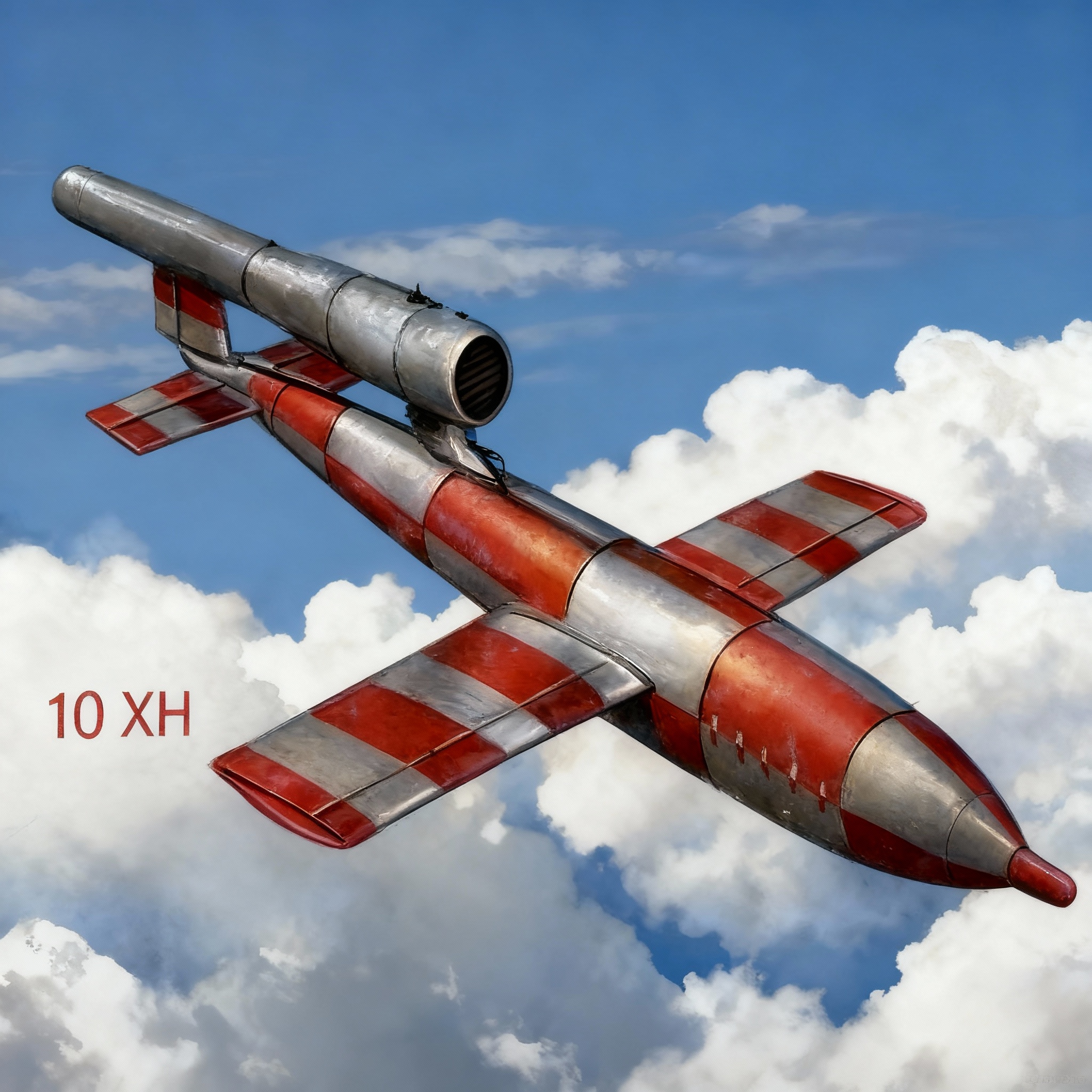
Based on the results of testing and an assessment of the project’s potential, on June 13, 1944, the State Defense Committee (GKO) decided to develop a production-model missile aircraft designated 10X (“Product 10”). The design of the S-22 was slightly modified, and thus the USSR’s first domestically produced cruise missile was born.
However, the fate of this project turned out to be tragically intertwined with Nikolai Polikarpov’s personal tragedy. Years of intense work, constant pressure from above, setbacks in bringing new aircraft to fruition, and Chkalov’s death in one of his planes—all of this took a toll on the designer’s health. In the spring of 1944, he was diagnosed with stomach cancer. Despite his illness, Polikarpov led his team until his final days, writing letters to the People’s Commissariat for the Aviation Industry and the Central Committee requesting that his design bureau be preserved and that his deputy, Dmitry Lvovich Tomashevich, be appointed as his successor. He never received a reply. On July 30, 1944, at the age of 52, Nikolai Nikolayevich passed away. He was buried at the Novodevichy Cemetery in Moscow. In his memory, U-2 aircraft—later renamed Po-2 in his honor—flew over his grave.
A Change in Leadership and the Loss of Heritage
As early as September 1944, an incomplete specimen of the German FAU-1 was delivered to the USSR from England. The missing parts were found at a captured German test site in Poland. From that point on, it became clear just how close Polikarpov’s design was to the original.
However, project leadership soon passed to V.N. Chelomey, whose design bureau focused on rocket technology. Tomashevich remained as deputy, responsible for the aviation component. In December 1944, factory tests of the 10X began. At the same time, however, Chelomey ordered the destruction of all documentation related to the S-22, as well as to Polikarpov’s other designs. Thus, to satisfy personal ambitions, an entire layer of Soviet aviation history was lost.
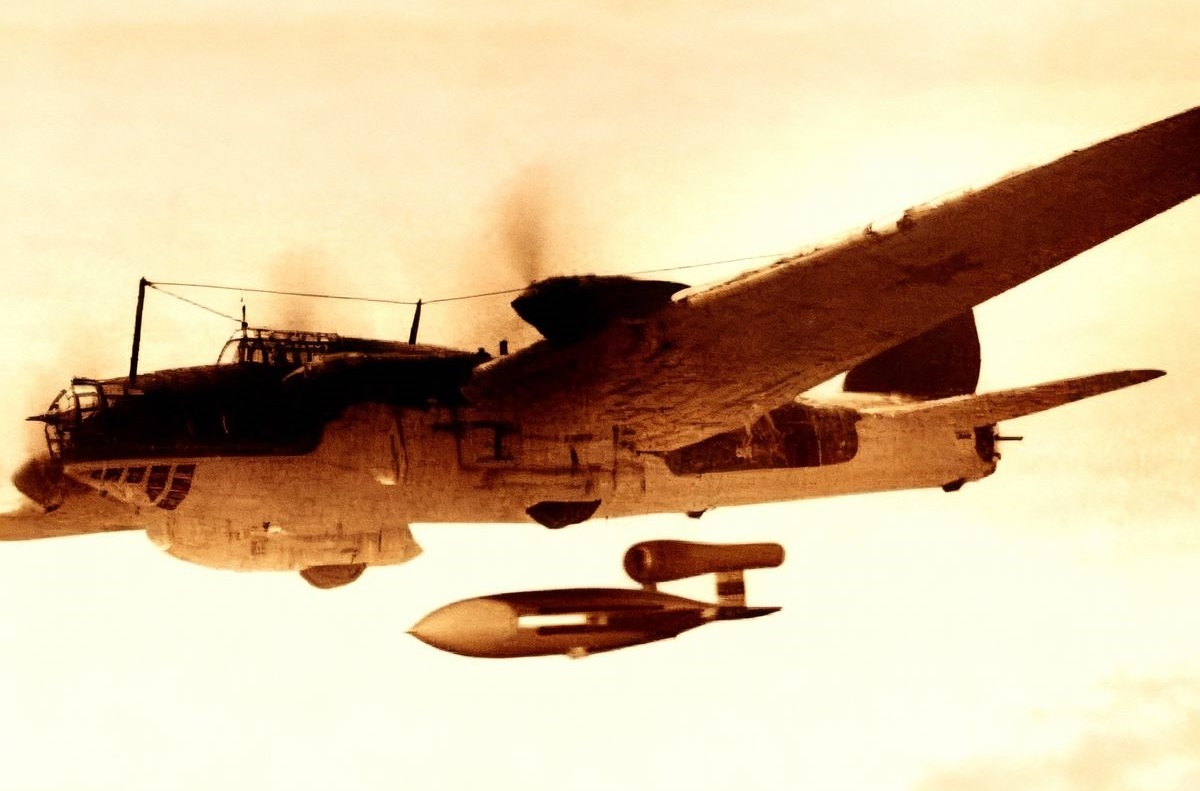
Launch of a 10X missile from a Pe-8 bomber
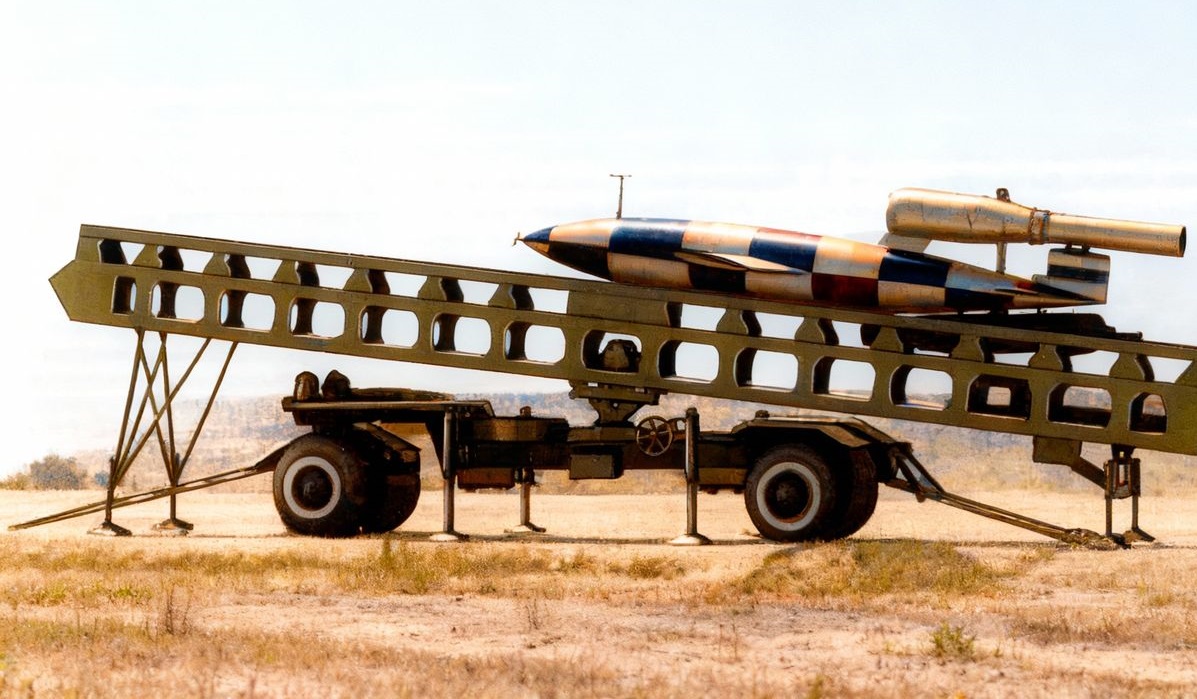
Nevertheless, the 10X program continued. Batches of 100 and then another 150 missiles were produced. In March 1945, flight tests began using launchers mounted on Pe-8 and Tu-2 aircraft. Five carrier aircraft (three Pe-8s and two Er-2s) were prepared for strikes on Berlin, but they were never used in combat—the war had ended.
Failure and Legacy
Testing of the 10X was completed in 1946, but the Air Force refused to adopt the missile due to the guidance system’s low accuracy. The 10XN, 14X, and 16X variants were also not further developed. In January 1953, Chelomei and a small group of specialists were reassigned to a different project—the development of missiles for the Navy and space programs. And in October 1953, the newly reestablished Sukhoi Design Bureau—which had been closed in 1949—was relocated to the premises of Plant No. 51. The engineers and workers who had previously worked under Polikarpov’s leadership now resumed their work on aircraft design as part of the new design bureau.
This twist in history seems almost symbolic: Polikarpov’s aviation legacy, despite attempts to destroy it, has been revived in new forms.
Based on material from https://dzen.ru/a/Z9ldhsjHtlMhO7JC