Five Aircraft Against an Entire Fleet: Why Britain Planned a Near-Suicidal Raid on Argentina

On the morning of June 14, 1982, the British diesel-electric submarine HMS Onyx was lying in San Carlos Water near the Falkland Islands. At 08:15, ten members of the SAS and SBS boarded the submarine. Their destination was not the Argentine-occupied islands, where the defending garrison was already collapsing, but the coast of Argentina itself.
Under cover of darkness, Onyx was to surface approximately two nautical miles offshore. The commandos would approach the beach in Gemini inflatable boats and make their way toward an airfield. Their targets were French-built Super Étendard strike aircraft, their pilots, and the remaining Exocet anti-ship missiles. The aircraft were to be destroyed with anti-tank weapons and demolition charges.
Only hours after the team boarded Onyx, Argentine forces on the Falklands surrendered. Yet the enormous military machine could not stop immediately. On June 15, with the outcome of the war already decided, the commandos aboard the submarine were still rehearsing amphibious landings from their inflatables.
The operation was never carried out. But British records reveal how far London was prepared to go to destroy five aircraft that never managed to sink an aircraft carrier, yet forced the entire Royal Navy task force to wait anxiously for the next attack.
Five Aircraft and Five Missiles
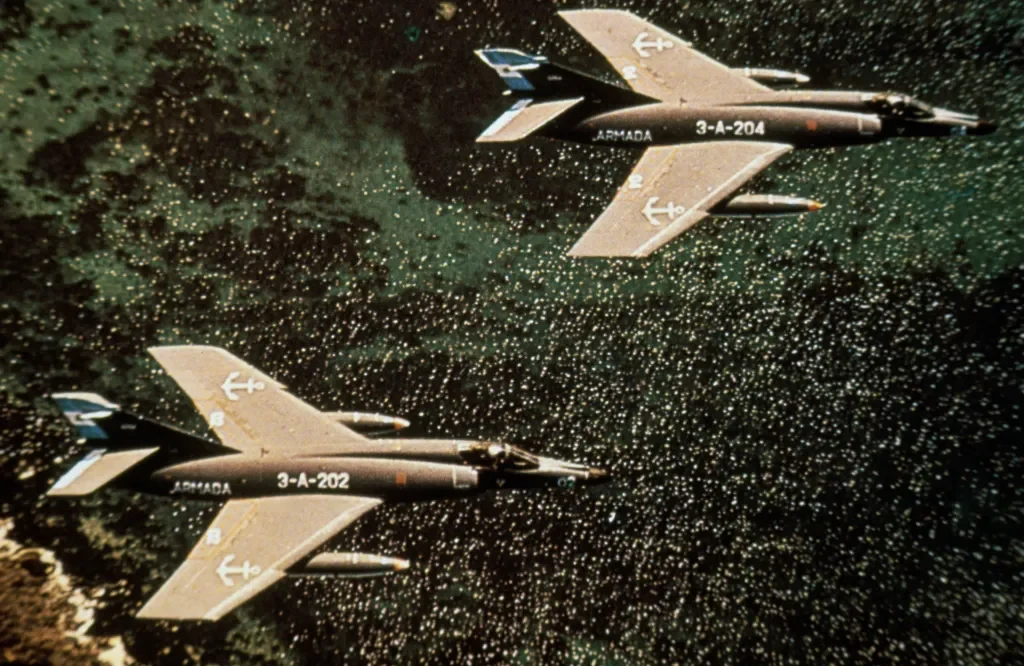
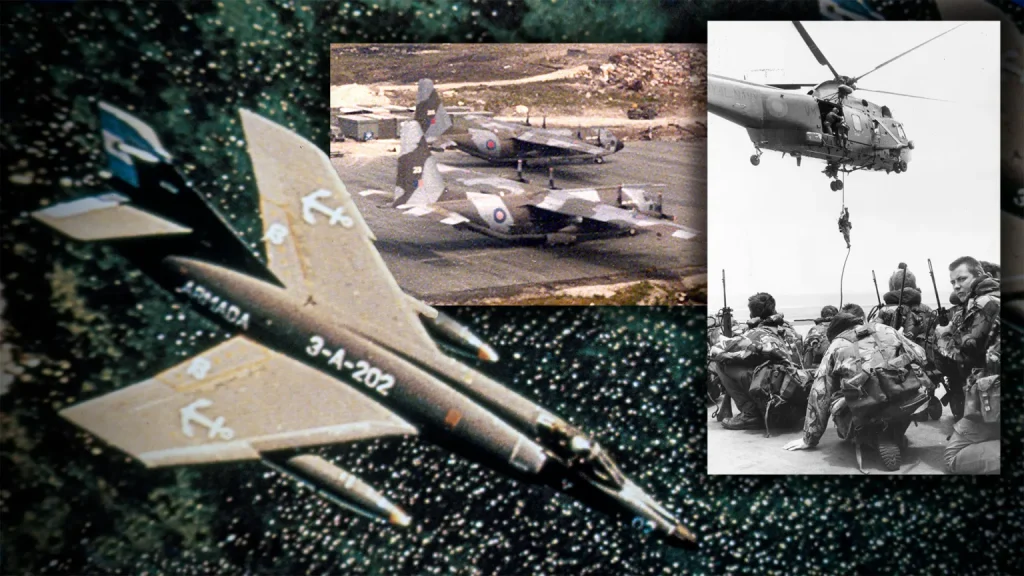
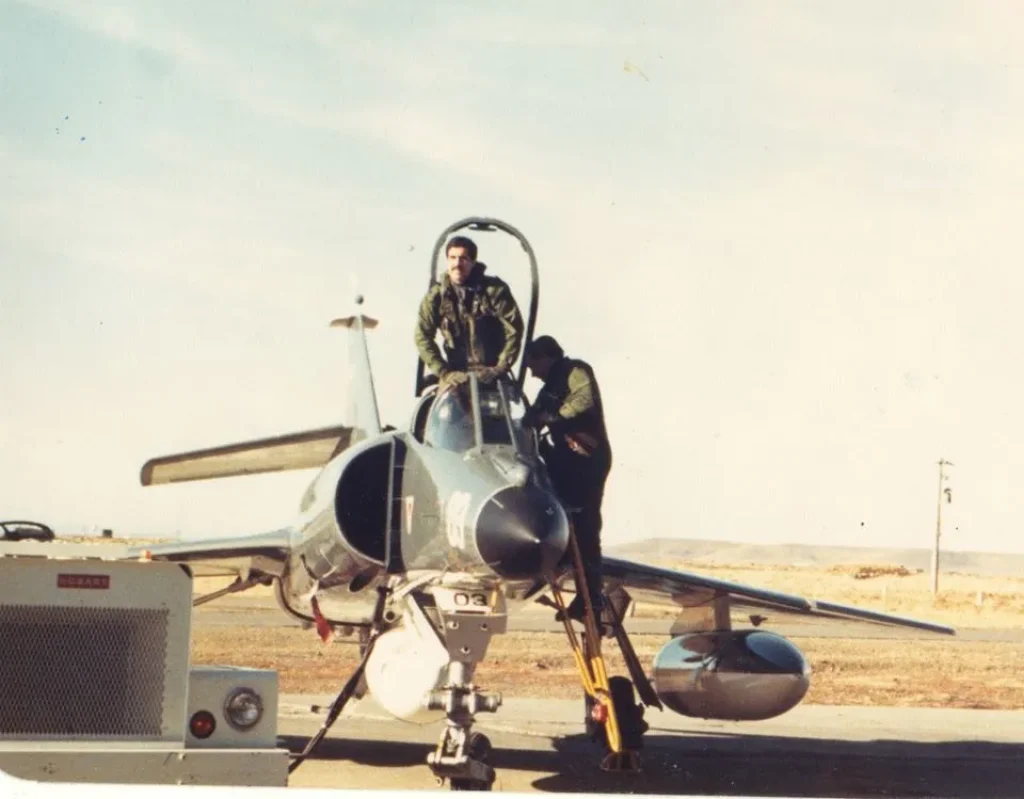
Before a French embargo took effect, Argentina received five Dassault-Breguet Super Étendard strike aircraft and five AM39 Exocet air-launched anti-ship missiles. The aircraft joined the Argentine Navy’s 2nd Naval Fighter and Attack Squadron and operated from Río Grande on Tierra del Fuego.
On paper, this force looked almost insignificant. Britain sent two aircraft carriers, nuclear-powered submarines, destroyers, frigates, amphibious ships, and dozens of auxiliary vessels to the South Atlantic. Argentina possessed only a handful of new strike aircraft and an equally small number of missiles. After French specialists left, Argentine technicians had to complete much of the Exocet integration work themselves.
Yet on May 4, two Super Étendards approached the British task force at extremely low altitude. They climbed briefly to search for targets with their Agave radars and launched two missiles. One fell into the sea. The other struck the destroyer HMS Sheffield.
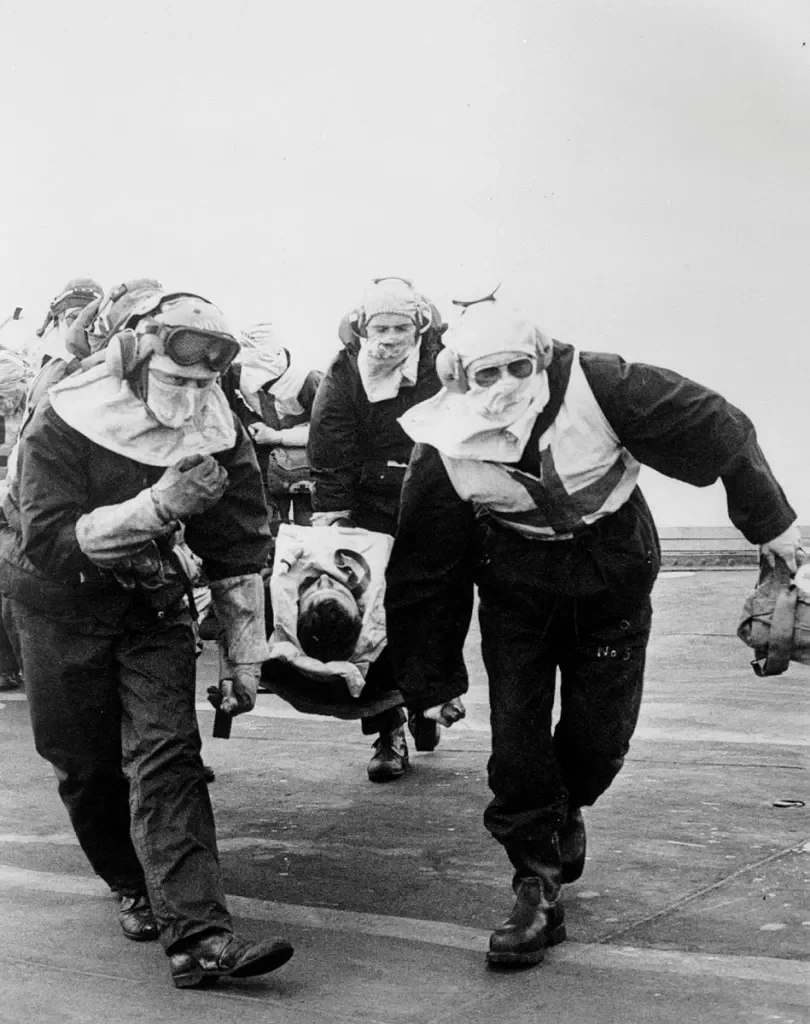
The missile’s warhead apparently failed to detonate as designed, but the impact and resulting fire crippled the ship. Twenty sailors were killed, and six days later the damaged destroyer sank while under tow.
On May 25, the Super Étendards struck again. This time, Exocet missiles hit the transport Atlantic Conveyor. The ship was lost along with helicopters and essential supplies intended for British forces ashore. The destruction of several heavy-lift Chinooks sharply reduced the army’s mobility. Instead of being moved by air, many British troops had to march across the islands.
The two attacks demonstrated that the danger was not determined by the number of aircraft available. The Super Étendards did not need to fight Sea Harriers or penetrate the British formation. They could approach at wave-top height, switch on their radars only briefly, and release their missiles dozens of kilometers from the target.
If an Exocet had struck HMS Hermes or HMS Invincible, the entire British operation could have been placed in jeopardy. That possibility turned five aircraft at Río Grande into a target of almost strategic importance.
The First Reconnaissance Team Never Reached Its Objective
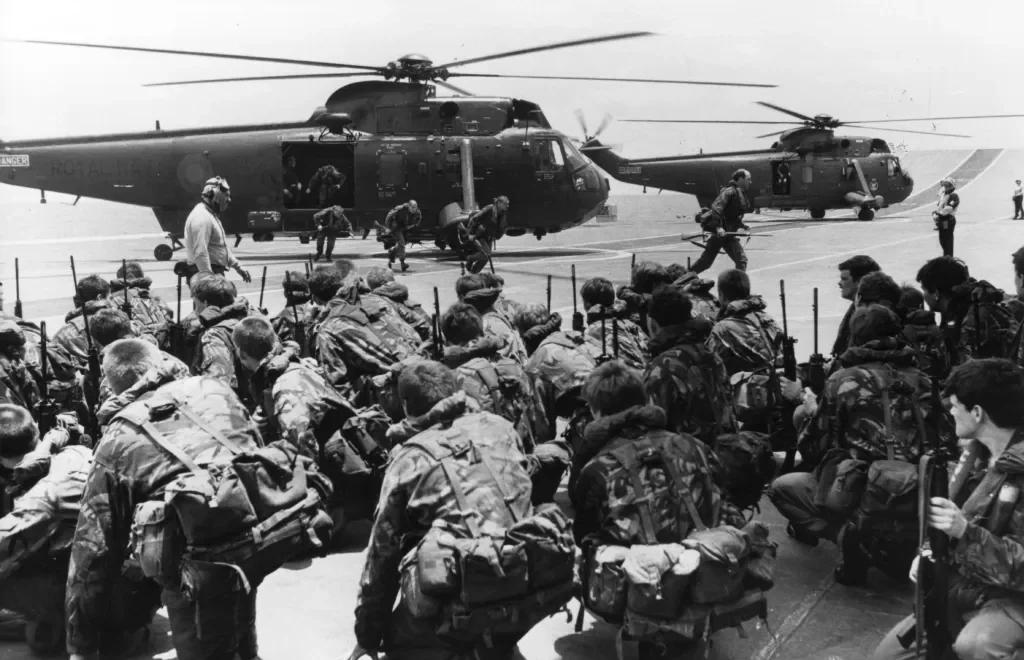
Britain developed a series of related operations to destroy the Super Étendards: Plum Duff, Mikado, Kettledrum, and finally Impi. Each successive plan was intended to solve the problems of the previous one, but in practice they became increasingly dangerous.
The first stage was Operation Plum Duff. An SAS reconnaissance team was supposed to observe Río Grande and establish the location of the aircraft, missiles, crew quarters, and air defenses. Without that information, attacking the base meant sending men into the unknown.
On the night of May 17–18, a Sea King HC4 helicopter took off from HMS Invincible and headed for Tierra del Fuego. The mission pushed the aircraft close to the limits of its range, so no return to the carrier was planned. After delivering the reconnaissance team, the crew was to fly into Chile, dispose of the helicopter, and attempt to reach British diplomats.
The operation quickly began to unravel. The reconnaissance team was inserted too far from the target and failed to observe Río Grande. The helicopter reached Chilean territory, where its crew attempted to destroy it. The Sea King was burned on a beach, while the aircrew hid for several days before being discovered by the Chilean authorities.
The British had lost a helicopter, narrowly avoided an international scandal, and obtained none of the intelligence required for the raid. Instead of abandoning the attack, however, London moved on to an even more dangerous plan.
Two Hercules Were to Land Directly on the Enemy Airfield
Operation Mikado called for a direct assault on Río Grande. Two C-130 Hercules transports would make a night landing at the base and deliver as many as 70 men from B Squadron, 22 Special Air Service.
The commandos would destroy the Super Étendards and Exocets, kill the Argentine pilots, and then reboard the Hercules. If the transports were damaged or blocked on the runway, the survivors would seize vehicles and escape toward the Chilean border, approximately 80 kilometers away.
The plan resembled the Israeli raid on Entebbe, but lacked its most important advantage: accurate intelligence. The British did not know exactly where the aircraft and missiles were stored, how many troops defended the base, or what obstacles might have been placed on the runway. There was no guarantee that the Super Étendards would even be present when the attack began.
The aircrews were expected to land two heavy transports in formation at night, possibly on an icy runway, with a tailwind of around 20 knots and minimal ambient light. The Hercules would have to fly at low level using early passive night-vision goggles. Once the fighting began, they would then have to take off from an airfield within easy reach of the Argentine Air Force.
The crews did not refuse the mission, but they warned openly that the available intelligence was inadequate for an air-landing operation. There was also serious opposition within the SAS. The raid acquired the unofficial nickname Operation Certain Death.
British commanders accepted from the beginning that both Hercules might be lost. But the destruction of the transports was not the worst possible outcome. The capture of dozens of British commandos on Argentine territory could have expanded the war, placed Chile in an extremely dangerous position, and caused political damage far greater than the loss of another warship.
On June 4, the British Ministry of Defence canceled Operation Mikado.
The Plan Was Canceled, but the Hunt Continued
The cancellation of Mikado did not end British efforts to destroy the Super Étendards. On the same day, the military was ordered to develop a new option. It received the code name Impi, after a Zulu fighting formation.
The new concept was smaller. Instead of two Hercules transports and 70 commandos, planners considered using one aircraft together with a separate force inserted from the sea.
According to a later RAF account, the Hercules would take off from Ascension Island, refuel in flight, pass east of the Falklands, fly around Cape Horn, and approach Tierra del Fuego from the south. This route would bring the aircraft in from the direction where Argentine defenses were least likely to expect it.
The final part of the flight would be made at low altitude, below radar coverage. At night, the Hercules would head toward one of two airfields identified in the documents by the code names San Jose and Arco Iris. These probably represented Río Grande and Río Gallegos, although their identities have never been conclusively established.
The most unusual element involved navigation. Off the Patagonian coast, the nuclear-powered attack submarine HMS Conqueror was to come to periscope depth and operate as a radio beacon. The low-flying Hercules could use the signal to refine its position before approaching the coast.
Conqueror, which had recently sunk the Argentine cruiser General Belgrano, would temporarily be transformed from a ship-hunter into a navigation marker for a transport aircraft.
The Submarine Moved Closer
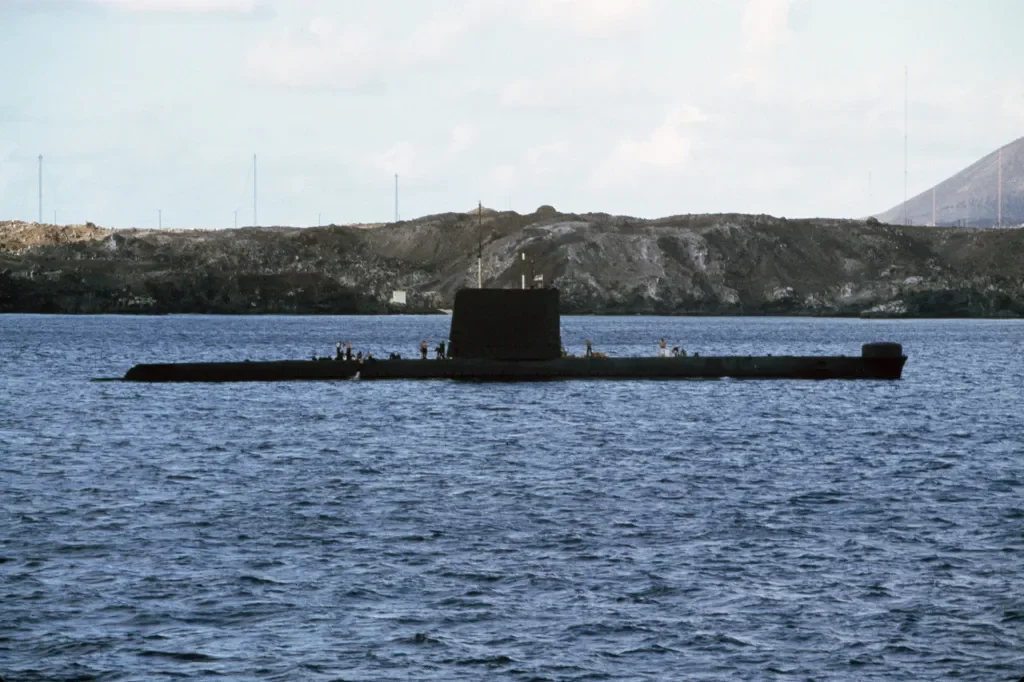
The maritime component of Impi is much better documented. It was assigned to HMS Onyx, the only British diesel-electric submarine deployed during the conflict. Compared with the nuclear-powered boats, Onyx was smaller, quieter at low speed, and better suited to operations in shallow coastal waters.
At night, Onyx was to surface about two nautical miles offshore. Ten SAS and SBS commandos would transfer into Gemini inflatable boats, reach the coast, and attack the target. The aircraft and any missiles found there would be destroyed using anti-tank weapons and demolition charges.
By June 12, Impi was no longer simply an idea circulating among staff officers. British operational signals indicate that the mission had been allocated forces and was considered self-sufficient. Special forces in the theater were so heavily committed to operations around Port Stanley and preparations for Impi that commanders requested additional SAS personnel.
On the morning of June 14, the raiding party actually boarded Onyx. Argentine forces on the islands surrendered later that day.
Preparations continued by sheer military inertia for another 24 hours. On June 15, the commandos rehearsed leaving the submarine in their Gemini boats. Only the cessation of Argentine air activity finally removed the mission’s purpose.
The official record described the reason for cancellation in dry administrative language: the surrender of Argentine forces on the islands and the end of hostile aircraft activity.
The Hercules That May Never Have Existed
The maritime part of Impi is supported by command signals, submarine records, and the documented presence of the raiding party aboard Onyx. The airborne component is far more uncertain.
The only detailed description of the Hercules mission appears in an RAF historical narrative prepared four years after the war. The document is a working draft covered with corrections, and it contains errors even when describing training flights whose details are otherwise known.
Veterans of No. 47 Squadron, which would have supplied the aircraft and crew for such an operation, say they never heard the Impi code name. In their view, it would have been almost impossible to assign one of the small number of specially trained crews to such a mission without the rest of the unit eventually learning about it.
By mid-June, there was probably only one special-forces aircrew on Ascension qualified for in-flight refueling. That crew was capable of extremely demanding missions. It had trained for long-range flights, night operations at altitudes of around 75 meters, special-forces insertions, and rapid runway offloads. During Plum Duff, one Hercules sortie remained airborne for more than 24 hours.
The flight was technically possible. But there is no certainty that a specific aircraft and crew were actually assigned to Impi. The airborne element may have existed only as an option in a staff document, while the maritime team had already moved into practical preparation.
Why Britain Feared Five Aircraft
By mid-June, Argentine defenses on the Falklands were collapsing. British forces were approaching Port Stanley, and the outcome of the ground campaign was no longer seriously in doubt. Yet part of the British command remained focused on five French-built aircraft and a small group of naval aviators.
The reason was the potential price of a single successful attack. The loss of a destroyer was serious, while the destruction of Atlantic Conveyor was painful. The loss or crippling of an aircraft carrier, however, could have transformed the entire campaign.
Without the Sea Harriers operating from Hermes and Invincible, the fleet would lose its fighter protection, while troops ashore would lose critical air support.
British commanders could not be certain whether Argentina still possessed unused Exocets, whether additional missiles might be obtained, or when the Super Étendards would fly again. The continued existence of the entire strike system—the aircraft, pilots, and possible ammunition stock—was therefore viewed as a threat that had to be physically eliminated.
This explains the willingness to strike mainland Argentina, risk two Hercules transports, and combine a nuclear submarine, special-forces aviation, and a small raiding party in a single operation. Britain was not simply planning to bomb an airfield. It wanted to remove from the war the people and equipment capable of launching the next missile attack.
An Operation That Is Still Not Over in the Archives
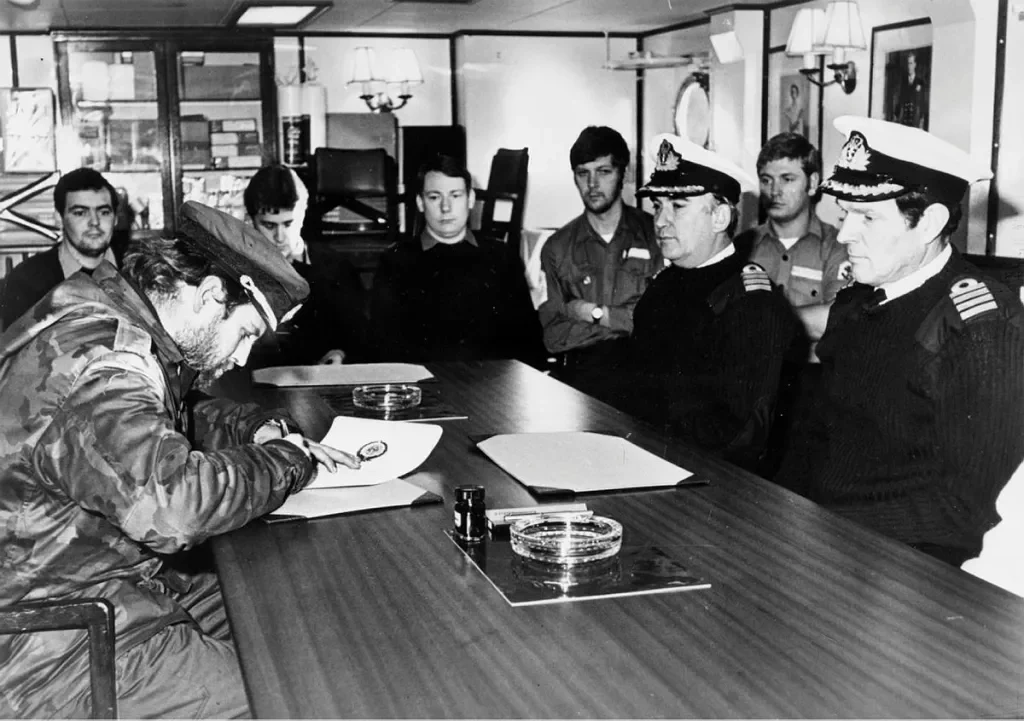
The complete Impi plan has still not been released. File DEFE 71/980, containing the annexes, target identities, and sequence of operations, remains closed at the United Kingdom’s National Archives. No future release date has been announced.
Chile’s role may be one reason for the continued sensitivity. Britain received intelligence support from Santiago, but openly using Chilean territory or evacuating raiders across the border could have drawn the country into the war. It is no coincidence that documents concerning British-Chilean cooperation have been among the most reluctantly declassified Falklands records.
The history of Impi must therefore be reconstructed from fragments: operational signals, submarine logs, unit records, and later accounts by participants. These reveal an operation that seems to have consisted of two very different halves.
One is solidly documented. A nuclear submarine received preliminary instructions, ten commandos boarded Onyx, and rehearsals continued after the Argentine surrender.
The other—a lone Hercules flying around Cape Horn and landing at a coded airfield—remains somewhere between a real operational plan and a staff officer’s fantasy.
But both halves reveal the same fear. Five Super Étendards could not defeat the British fleet in a conventional battle. They only needed to locate the correct ship among a mass of radar contacts and launch one final missile.
That is why, on the morning of June 14, as the war on the islands was approaching its end, British commandos were descending into a submarine. They were preparing to begin the final special operation of the Falklands War on the territory of a country that had no idea how close the enemy intended to come to its shores.
based on https://www.twz.com/sea/britains-final-plan-to-kill-argentinas-super-etendards-attack-jets