For which aircraft is the giant PD-35 aircraft engine being developed? The Il-296 and others

Amid the transformation of the global aviation industry and the need to ensure the Russian Federation’s technological sovereignty, the task of developing new-generation domestic power plants has taken on renewed importance. The PD-35 engine (a next-generation engine with 35 metric tons of thrust) is a key element of the technological platform for wide-body aircraft in civil and transport aviation. This article is devoted to systematizing data on the target platforms for which this powerplant is being developed, with a focus on the Il-296 cargo aircraft project and other promising aviation systems.
Design and Technical Specifications of the PD-35 Engine
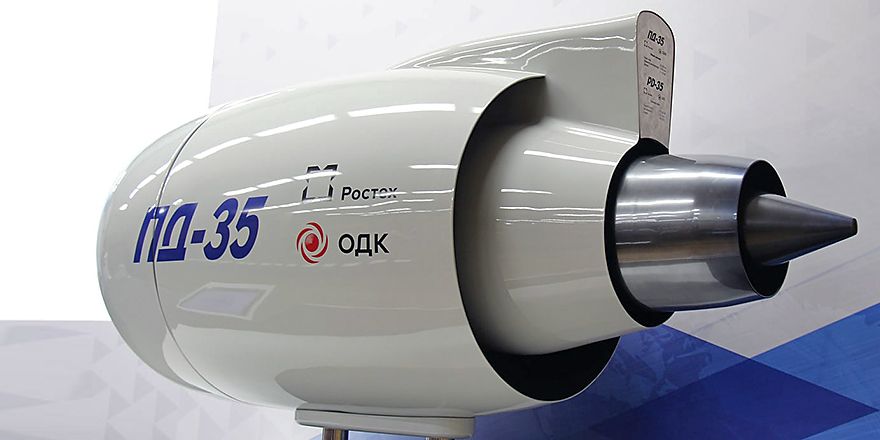
The PD-35 is classified as a twin-circuit turbofan engine with ultra-high thrust, developed by the UEC Corporation in collaboration with UEC-Aviadvigatel JSC and UEC-Saturn JSC. The conceptual basis of the project is the scaling up of the PD-14 engine’s gas generator with the addition of an extra stage in the high-pressure compressor, which ensures that the target thrust parameters in the range of 33–40 metric tons are achieved.
The engine’s key technical specifications are listed below:
PD-35 Specifications:
- Thrust during takeoff is approximately 35,000 kgf;
- fan diameter — 3,100 mm;
- degree of dual-circuitness — 10.6–11.0;
- the total length of the power unit exceeds 8 meters;
- Engine weight: approximately 9,840 kg.
Specific fuel consumption in cruise mode is 2–5% lower than that of comparable aircraft from the early 2010s, while nitrogen oxide emissions are 50–60% below CAER6 standards, and noise levels have been reduced by 17–20 EPNdB compared to Chapter 4 of the ICAO standards
Promising Aviation Platforms for the PD-35 Engine
Il-296 Cargo Aircraft
The Il-296 project is a twin-engine variant of a wide-body transport aircraft, conceptually based on the Il-96 platform. This configuration is expected to significantly improve cost-effectiveness by reducing the number of engines while maintaining payload capacity and range. The Il-296 is positioned as a potential competitor to foreign counterparts, such as the Airbus A330 and Boeing 787, in the long-haul cargo transport segment. However, as of April 2026, the project is in the conceptual design phase, and its implementation depends directly on the completion of certification tests for the PD-35 engine.
The Il-96-400M wide-body passenger aircraft and its variants
The Il-96-400M family is considered one of the priority platforms for integrating the PD-35. The transition from a four-engine configuration to a two-engine configuration using high-thrust powerplants makes it possible to optimize operating costs and improve the aircraft’s aerodynamic performance. The modernization involves not only replacing the engines but also adapting structural elements of the wing, pylons, and control systems, which requires comprehensive computational and experimental studies.
Promising Transportation and Specialized Aviation Systems
In addition to civil aircraft, the PD-35 engine is being considered for use in heavy-lift transport aircraft, including potential variants based on the An-124 “Ruslan.” Standardizing the power plant across different classes of aircraft helps reduce life-cycle costs and simplify operational logistics. Furthermore, the PD-35 technological platform serves as the basis for the development of derivative models, such as the PD-26 with 26 metric tons of thrust, intended for medium-range wide-body aircraft.
International Cooperation Projects
In the early stages of design, the PD-35 engine was considered as one of the powerplant options for the Russian-Chinese CR929 wide-body aircraft. Although the current status of this project is uncertain, the technological solutions developed as part of the PD-35 program retain their export potential and can be adapted to meet the requirements of international customers.
Development Phases and Current Status of the Program
Work on the development of the PD-35 began in 2016, with initial plans calling for the completion of prototype development by 2025 and the start of mass production by 2028. However, due to shifting industrial policy priorities and the reallocation of resources toward import substitution programs (PD-14, PD-8, PS-90A), the program’s timeline was adjusted.
The years 2024–2026 will see key phases of bench testing for the engine demonstrator. During the first phase, conducted in 2024 at the test facility in the village of Novye Lyady (Perm Krai), approximately 50 test runs were performed, resulting in the achievement of the specified thrust of 35 metric tons. The second phase, carried out in 2025, involved testing the engine under critical operating conditions. At the same time, work is underway to implement additive manufacturing technologies, composite materials for fan blades, and digital control systems.
Conclusion
The PD-35 engine is a strategically important component in the development of the domestic aircraft industry, providing the technological foundation for the creation of competitive wide-body aircraft. The target platforms for this powerplant include the Il-296 cargo aircraft, upgraded versions of the Il-96-400M, next-generation transport aircraft, and potential international projects. The successful implementation of the PD-35 program requires coordinated cooperation between engine developers, aircraft manufacturers, and regulatory agencies, as well as continued funding for research in the fields of materials science, gas dynamics, and control systems. Achieving the stated technical and environmental specifications will not only ensure import substitution in the high-thrust engine segment but also help build export potential for Russian aviation products.