From Khakassia—to the future of aviation. Ivan Khamin’s unusual helicopter could revolutionize the industry!

In the world of aviation, where every new solution undergoes decades of testing, the emergence of a radically new concept is an extraordinary event. The development by Khakass engineer Ivan Khamin was precisely such an event; he proposed a design for a vertical takeoff and landing aircraft that experts have already dubbed the “anti-helicopter.” Unlike traditional rotorcraft, in this design the lifting rotors are located not on top but inside the fuselage, which radically changes our understanding of aircraft layout and flight control.
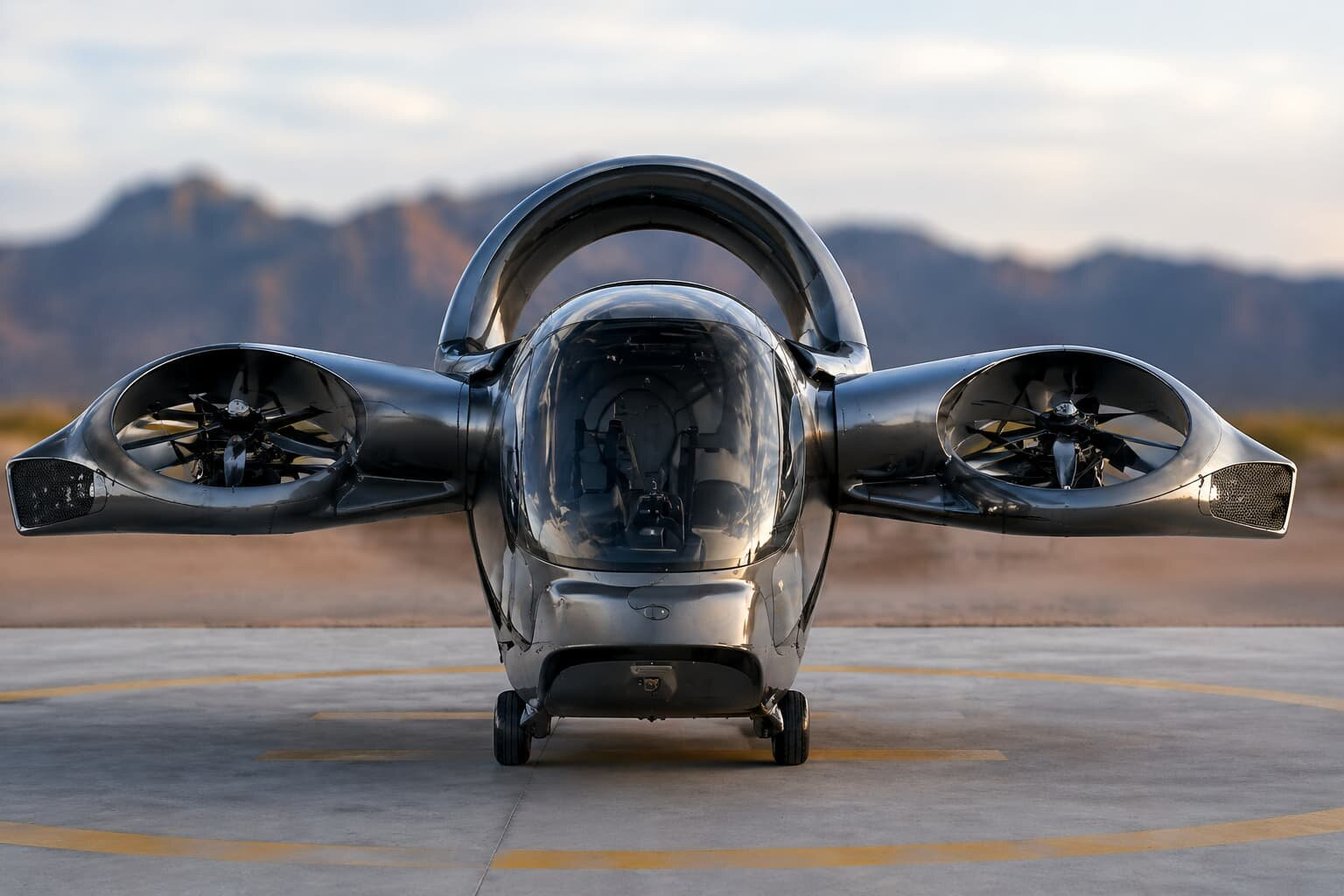
The “anti-helicopter” concept: rotors inside the fuselage
The heart of the innovation lies in the placement of the main rotors inside the aircraft’s fuselage. The design features a two-section cabin—front and rear—with rotors enclosed in diffusers installed inside each section. This configuration eliminates the need for a conventional yaw control system: thrust and lift vector are controlled by changing the position of the propellers themselves within the channels. This is not merely a technical trick—it is a fundamentally different approach to the aerodynamics of vertical flight.
The developer paid particular attention to the geometry of the blades. Each propeller consists of two elements that, when rotating, form a hemispherical surface. Thanks to centrifugal forces, the position of these elements automatically adapts to the current flight mode, ensuring optimal thrust without complex mechanical adjustment systems.
Power Plant and Control System
To power the vehicle, Ivan Khamin proposed a hybrid power plant. At its core is a gas turbine engine with coupled turbines and integrated compressors, supplemented by a reversible electric machine capable of operating in both motor and generator modes. This solution improves the system’s reliability and opens up opportunities for energy recovery.
Pitch control of the propellers is achieved via a hydraulic drive with a manual override option. The pitch angle of the blades is adjusted automatically by the centrifugal forces of special weights, allowing the system to respond instantly to changes in engine RPM and flight conditions.
Benefits and Prospects for Application
The designer highlights a number of key advantages of his design. First, its compactness: placing the rotors inside the fuselage significantly reduces the helicopter’s overall dimensions compared to conventional helicopters with a similar payload capacity. Second, improved balance due to the symmetrical arrangement of the propulsion elements. Third, expanded operational capabilities: the aircraft is capable of hovering, landing on confined spaces, navigating around obstacles, and even landing on water.
Potential applications span both the civilian and specialized sectors: delivering cargo to hard-to-reach areas, search-and-rescue operations, infrastructure monitoring, and operations in densely built-up urban areas.
Technical Specifications (Design Data)
- Aircraft type: vertical takeoff and landing rotorcraft (concept)
- Design: a housing with front and rear sections, inside which the support screws are located in the diffusers
- Propeller blades: two, with hemispherical blades consisting of two sections
- Thrust control system: adjusting the position of the propellers inside the ducts without a conventional pitch control mechanism
- Blade adjustment: automatic, driven by the centrifugal forces of the weights
- Power plant: gas turbine engine with coupled turbines + reversible electric machine
- Control system: hydraulic, with manual backup capability
- Claimed capabilities: vertical takeoff and landing, hovering, flying around obstacles, landing on water
- Patent registration date: March 31, 2026
- Developer: Ivan Khamin, an engineer from the Republic of Khakassia
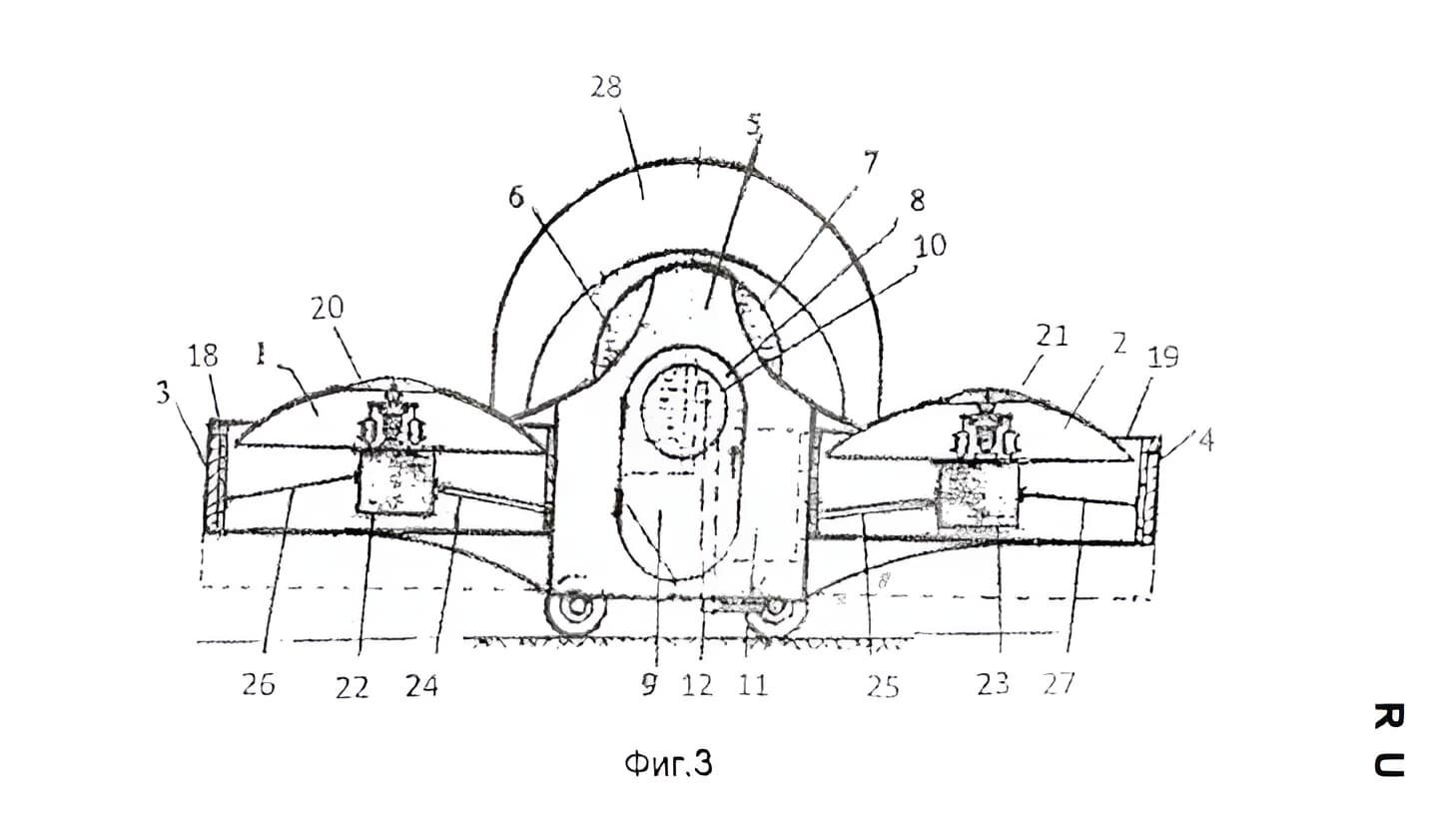
The Journey from Idea to Implementation
Ivan Khamin’s concept was officially patented in Russia on March 31, 2026, confirming its novelty and technical soundness based on expert evaluation. However, the path from blueprints to the first flight is always long and complex in aviation. Development requires large-scale aerodynamic testing, structural strength calculations, certification procedures, and, of course, investment.
Nevertheless, interest in the project has already been shown: the publication of the concept has generated a wide response within the professional community and among aviation enthusiasts. Experts note that even if this specific design does not go into production, the principles underlying it could influence the development of the next generation of rotorcraft.
Conclusion: Khakassia as a Hub for Aviation Innovation
The story of Ivan Khamin is a striking example of how groundbreaking ideas can emerge not only from design bureaus in the capital but also from regions across Russia. Khakassia, known for its natural resources and cultural heritage, may now go down in history as the birthplace of an aviation innovation capable of reimagining the future of vertical flight.
For now, the “anti-helicopter” remains at the concept stage, but the very possibility of such an invention serves as a reminder: the aviation of the future is being created today—by bold minds willing to challenge established dogmas. And if Khamin’s idea finds the support and resources needed for implementation, perhaps a new era in the development of rotary-wing aviation will begin right here in Khakassia.