Some weapons impress with their stats. Others impress with their impact.
And then there are those whose significance becomes clear only when you start thinking not about the explosion itself, but about exactly where it’s happening.
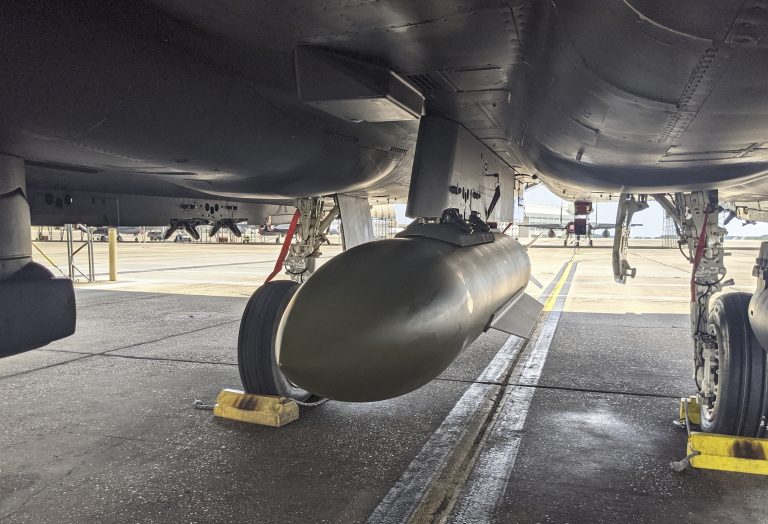
The American GBU-72 aerial bomb falls into this last category. At first glance, it appears to be just another heavy munition. In reality, it is a weapon designed for a war that is increasingly being fought underground.
The impact that begins before the explosion
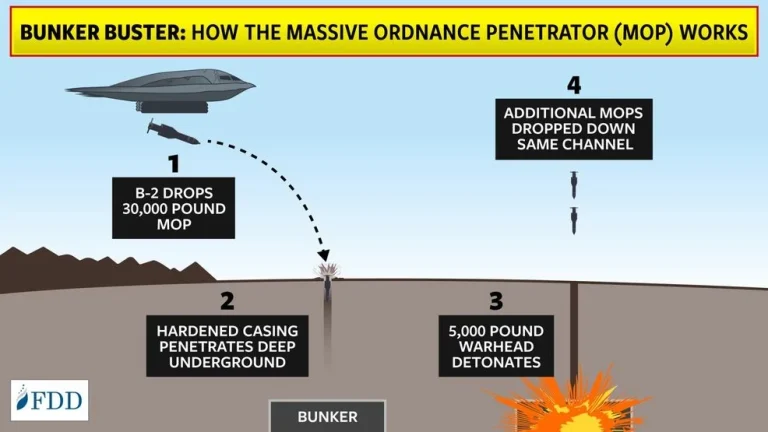
A typical bomb has a short life: a fall, an impact, a flash. It all happens on the surface—quickly and visibly.
The GBU-72 is designed differently. It begins to function upon impact, but its operation does not end there.
First, a sharp, almost silent impact. Then, a downward movement through the soil or concrete. And only then—an explosion.
Not on the outside. On the inside.
This is a fundamental difference. Because in this case, the destruction does not occur along the facade, but rather within the structure itself. The floor slabs collapse inward, the walls lose their support, and the building itself ceases to exist as a single space.
Weapons for a World That Hides Itself
The emergence of such bombs is neither a coincidence nor a technological whim. It is a response to how the very logic of defense has changed.
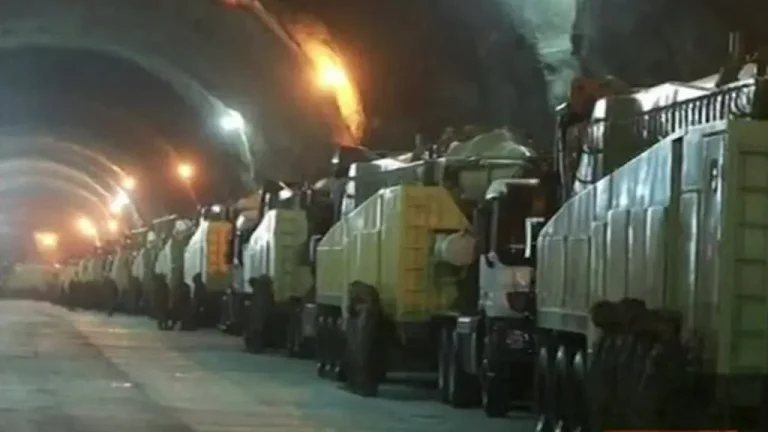
Modern military facilities no longer aim to withstand an attack. They try to avoid it.
Command posts are being moved underground. Warehouses are hidden in the rocks. Missile systems are housed in tunnels where every exit is camouflaged and every corridor has an alternate route.
These are not fortifications in the traditional sense. They are an environment in which an attack must first find a way through before it can cause damage.
The GBU-72 was designed specifically for a world like this.
A balance that didn’t exist before
Before it was introduced, there were two approaches.
The first is to use conventional bombs, relying on accuracy and repeated strikes.
The second is to use massive penetrating munitions capable of destroying the deepest shelters, but which require heavy strategic delivery systems and are used only rarely.
The GBU-72 appeared between them.
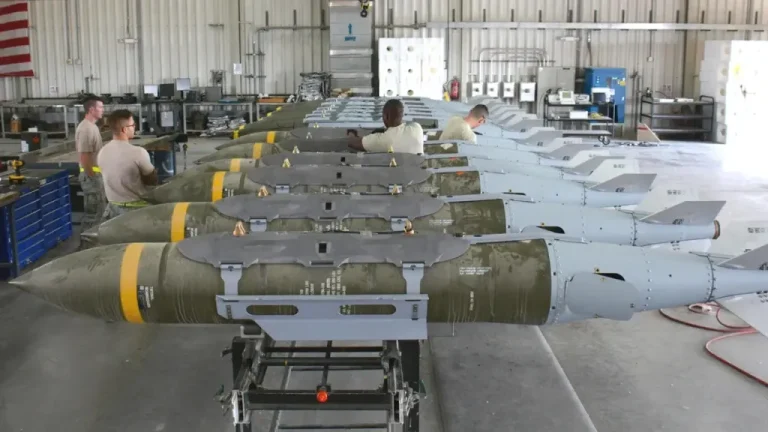
It isn’t a record-breaker in terms of weight—it weighs about 2.3 metric tons.
But it’s heavy enough to penetrate deeply.
And it’s compact enough to be used regularly, rather than only in exceptional cases.
This isn’t a “final argument.” It’s a practical tool.
Precision as a Form of Power
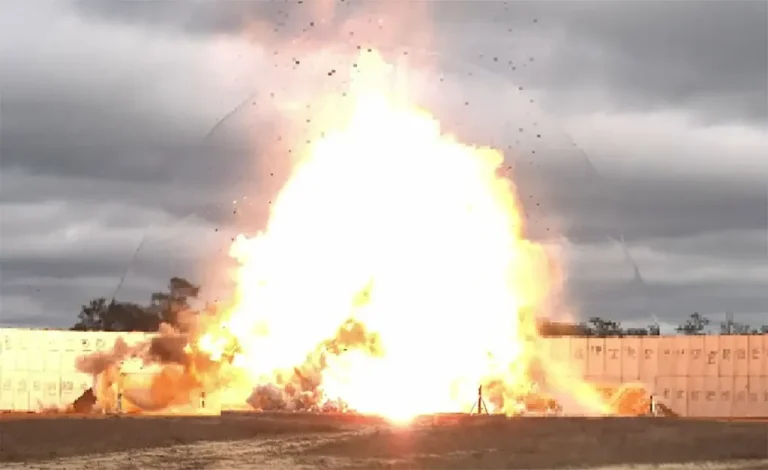
The most important feature of the GBU-72 is not only its penetration capability, but also where exactly it strikes.
Modern warfare depends less and less on the area of impact. And more and more on specific points.
Tunnel entrance.
Structural joint.
Ventilation unit.
A strike to such areas can render an entire complex inoperable, even if most of it remains physically intact.
A bomb doesn’t have to destroy everything. It’s enough to destroy whatever is essential for the system to function.
Depth Limit
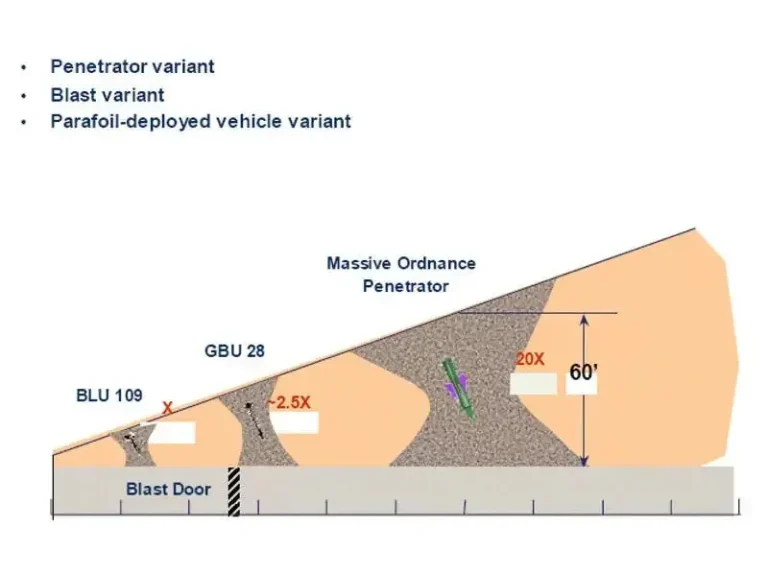
And yet, even such a weapon has its limits.
Depth remains the main challenge. The deeper an object goes underground, the harder it is to retrieve it with a single strike. Layers of soil, concrete, and geological formations all act as natural barriers.
Furthermore, modern underground complexes are rarely simple. They are not just a single bunker, but a network:
- with a network of tunnels;
- with backup outputs;
- with redundant systems.
A blow may destroy part of the system, but not always the entire system.
Therefore, the GBU-72 is not a solution to the problem. It is a way to make it less stable.
The War That’s Slowing Down
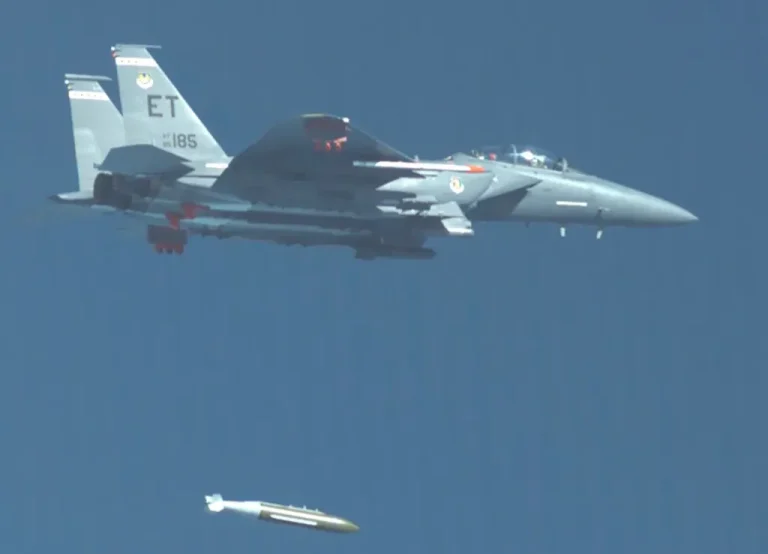
The very fact that such munitions have been developed and deployed speaks volumes:
the front line is no longer confined to the surface.
It goes deeper.
Where it used to be safe, protection is now needed.
Where the attack used to end, it is now just beginning.
And under this new logic, bombs like the GBU-72 are no longer the exception, but the norm.
Conclusion
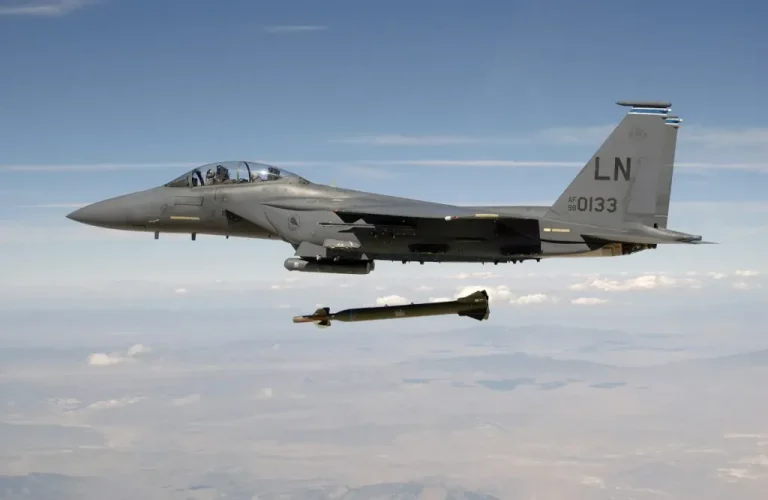
The GBU-72 is neither the largest bomb nor the most destructive one.
But it very accurately reflects what modern warfare is becoming.
Not loud.
Not always visible.
And more and more often—hidden beneath layers of earth.
Because now it’s not just about hitting.
It’s about getting there.
по материалам https://www.twz.com/air/u-s-used-its-new-5000-pound-bunker-busters-to-hit-iranian-anti-ship-missile-sites-reports