Heirs of the Type XXI: What the Soviet Union, the United States, and Britain Really Inherited from German Submarines

In May 1945, Germany’s submarine war ended in complete defeat. The Allies controlled the Atlantic, German shipyards were being devastated by air raids, and the once-formidable U-boat fleet was either surrendering or being scuttled by its own crews. Germany’s most advanced series-built submarine, the Type XXI, had barely had a chance to fight. The mass-production program on which Germany had placed enormous hopes was plagued by problems with sectional assembly, manufacturing quality, and the completion of boats that had already been launched. The Type XXI never scored a single confirmed sinking.
That should have been the end of the story. Instead, the opposite happened. The Americans acquired and began testing U-2513 and U-3008, the British studied their own captured examples, the French operated the former U-2518 for years as Roland Morillot, and the Soviet Union gained access to German submarines and technical documentation. Before long, the U.S. Navy launched the GUPPY modernization program and then built the Tang class, while the Soviet Union began mass production of Project 613 submarines. NATO’s anti-submarine forces, meanwhile, started preparing not for another war against boats designed in 1940, but against an entirely new generation of submarines.
This is where one of the most persistent myths originated: that Germany invented the modern submarine at the end of World War II, after which the victorious powers simply dismantled the Type XXI, studied it, and began copying it. The reality is far more interesting. The Germans did not invent most of the Type XXI’s fundamental technologies from scratch. Their real achievement was combining existing solutions around an entirely new philosophy: a submarine should be designed primarily as a vessel intended to live and fight underwater.
That idea survived the Third Reich.
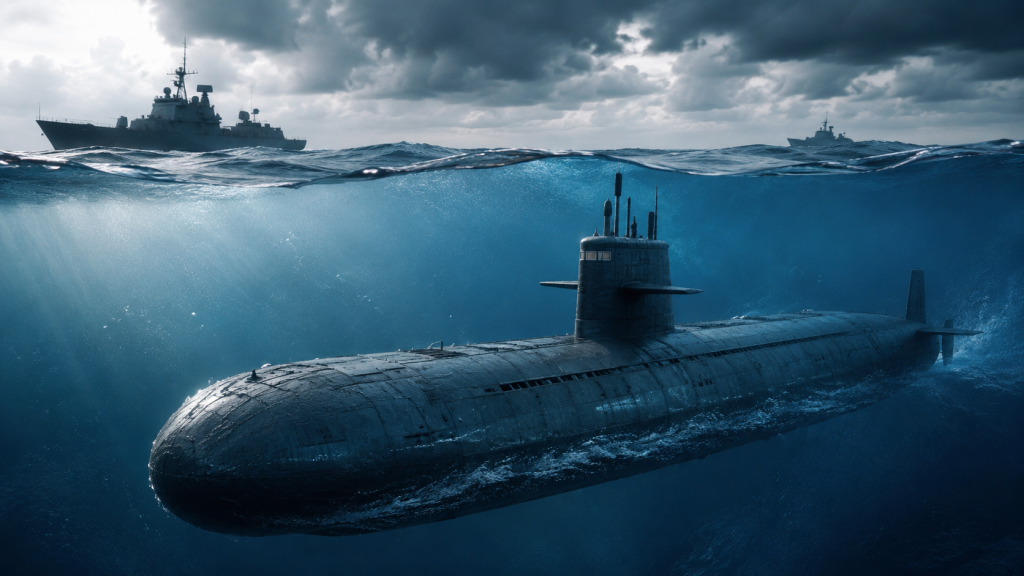
Before the Type XXI, Submarines Actually Liked the Surface
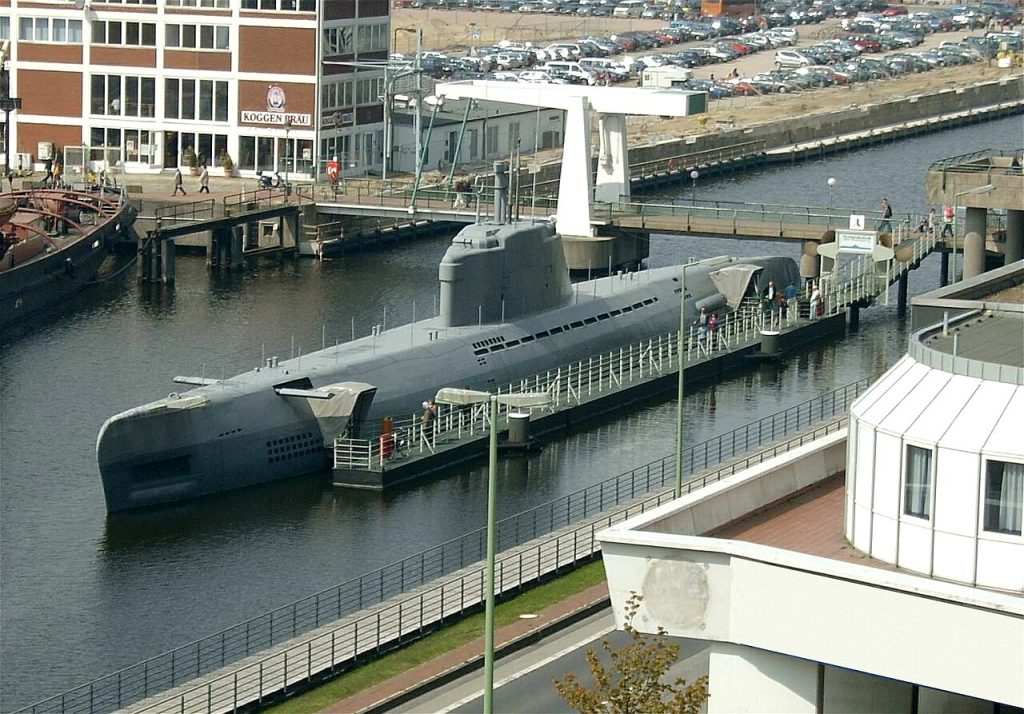
To understand the significance of the German design, we first need to forget our modern image of a submarine. Today, we think of a submarine as a vessel that spends most of its patrol underwater. For a nuclear-powered submarine, surfacing is almost an exception. In 1939, the situation was almost exactly the opposite.
The typical diesel-electric submarine of World War II was, to a considerable extent, a surface vessel capable of submerging. Diesel engines operated on the surface, batteries were recharged there, maximum speed was achieved there, and long-distance transits were generally conducted above water. Submergence was primarily necessary for attack, covert maneuvering, and evasion. American fleet submarines demonstrated this philosophy particularly well: they were excellent ocean-going vessels with great range and relatively good living conditions, but surface performance remained a central part of their design.
The Type XXI reversed those priorities. It featured cleaner hydrodynamic lines, substantially enlarged battery capacity, a snorkel, powerful main electric motors, and separate low-speed electric motors for silent running. Its six bow torpedo tubes were equipped with a rapid reloading system, while considerable attention was devoted to passive sonar. The submarine was no longer designed around the question of how well it could operate on the surface and then dive when necessary. The new question was how long it could avoid appearing on the surface at all.
That is where the real Type XXI revolution lies. Not in any single device, but in a fundamental shift in the priorities of the entire design.
There Was No German Technological Magic
This point is important because the Type XXI is often transformed into yet another Wunderwaffe. The snorkel was not a purely German invention; the concept of operating diesel engines while submerged by drawing air through a mast existed earlier. Electric propulsion had long been a standard feature of diesel-electric submarines. Larger batteries, improved hydrodynamics, and more sophisticated passive sonar were all developments of technologies that already existed.
Even high underwater speed was not an exclusively German objective. Other navies also understood that future submarines would have to become faster beneath the surface. The British experimented with improving submerged performance during the war and, after 1945, combined their own experience with information obtained from captured German Elektroboote.
The Type XXI’s real achievement was integration. The Germans brought together the snorkel, greatly increased battery capacity, a streamlined hull, high submerged speed, quiet propulsion, and sophisticated passive sonar, then made all of them serve a single concept. Once that concept had demonstrated its potential, returning to the old philosophy no longer made much sense.
On Paper, It Was Almost an Underwater Predator
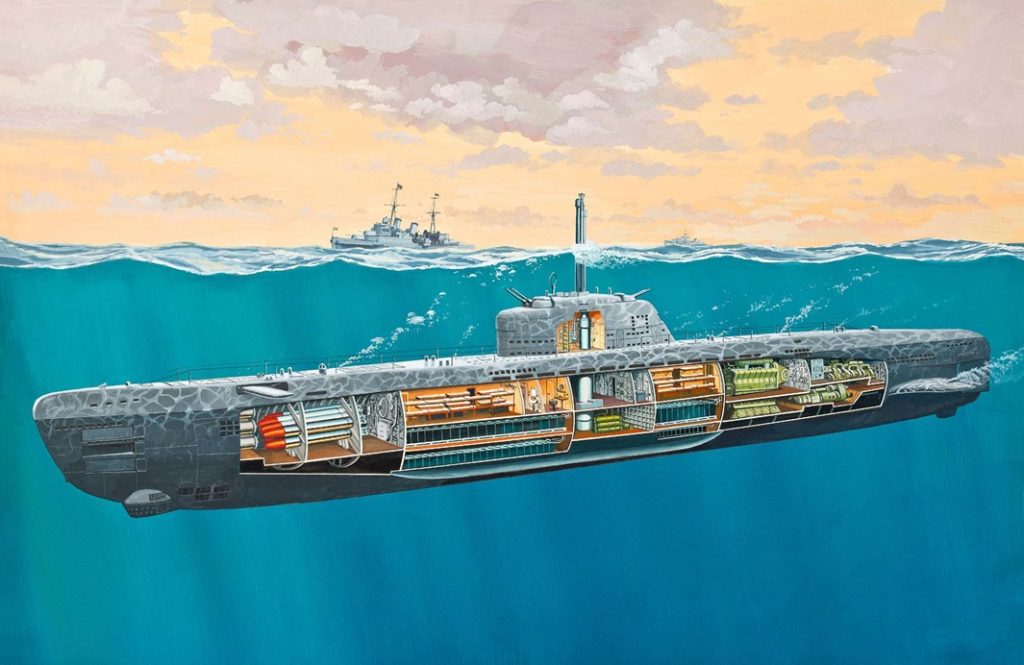
The Type XXI displaced around 1,620 tons surfaced and more than 1,800 tons submerged, measured roughly 76.7 meters in length, and carried six 533-mm torpedo tubes in the bow. Its most impressive characteristic, however, was speed. Underwater it could reach approximately 17 knots, compared with around 15–16 knots on the surface. Many conventional World War II submarines, by comparison, struggled to reach 8–9 knots underwater, and maintaining high speed rapidly depleted their batteries.
At economical speeds, the Type XXI could remain submerged much longer, while its snorkel allowed the diesels to operate and recharge the batteries without fully surfacing. This also changed tactics. In theory, the submarine could approach a convoy underwater, maneuver into a favorable position, attack, use its high submerged speed to leave the immediate area, and then return to silent running. Even the attack itself became less dependent on visual observation through the periscope and more dependent on sonar and torpedo fire-control data.
But there was an enormous gap between what the design could theoretically accomplish and what Germany could actually field in combat.
The Type XXI Was Revolutionary — and Terribly Immature
Germany attempted to build the new submarine using a sectional construction method. The hull was divided into large modules manufactured at different plants and then transported to shipyards for final assembly. On paper, the concept was brilliant: production could be dispersed, many sections could be manufactured simultaneously, and submarine output could be increased dramatically.
In reality, Germany in 1944 was perhaps one of the worst possible places to conduct such an industrial experiment. Bombing raids were destroying railways and factories, skilled labor was increasingly scarce, and plants with no previous experience in submarine construction were expected to manufacture pressure-hull sections to demanding tolerances. Sections arrived with dimensional errors, failed to fit properly, welds required reworking, and submarines often needed extensive corrections even after they had formally been launched.
The result was a remarkable paradox. Germany developed the concept for a next-generation submarine at precisely the moment when its industrial system was losing the ability to turn such a sophisticated design into an effective mass-produced weapon. The Type XXI’s real career therefore began not during World War II, but after it — in the hands of the victors.
The Victors Did Not Receive a Blueprint for the Future — They Received an Ideal Test Platform
The United States acquired U-2513 and U-3008. They were not simply examined while tied up at a pier. After repairs, both were actually used as experimental submarines. American specialists could measure their speed and noise, test the snorkel, examine battery performance, evaluate sonar and torpedo systems, and study their handling characteristics.
This distinction matters. The United States did not discover a finished “modern submarine” in Germany that could simply be copied. What it acquired was an extremely useful platform on which new ideas could be tested directly. Engineers could determine which solutions actually worked, which were excessively complicated, which did not fit American requirements, and which should immediately be incorporated into domestic programs.
That is how technological inheritance usually works. Country A does not simply hand Country B a ready-made answer. Country B receives an exceptionally valuable clue and then solves the problem using its own methods.
America’s First Answer Was GUPPY
After the war, the United States faced a unique situation. The Navy possessed a huge number of nearly new Gato, Balao, and Tench-class submarines. These boats had performed exceptionally well in the Pacific and had effectively devastated Japanese merchant shipping. Scrapping them made little sense, yet it was becoming equally obvious that their underlying concept was rapidly becoming obsolete.
The answer was the GUPPY — Greater Underwater Propulsive Power Program. Deck guns and unnecessary external structures were removed, sails and superstructures were redesigned, battery capacity was increased, snorkels were introduced, and sonar was improved. In other words, American wartime submarines were not being converted into Type XXI copies, but they were being forced to accept the same fundamental principle: submerged performance now mattered more than surface performance.
It was an extremely rational solution. Rather than immediately discard hundreds of operational submarines and start from scratch, the U.S. Navy created a transitional generation. GUPPY allowed the existing fleet to adapt quickly to the new reality while American industry worked on the next generation of purpose-built submarines.
High Underwater Speed Created a New Problem: Noise
The ability to travel underwater at 15–17 knots looked impressive, but physics quickly reasserted itself. As speed increases, hydrodynamic drag rises sharply, while the flow around the hull, propellers, openings, and external structures generates more noise. The submarine becomes easier for the enemy to hear, while its own passive sonar increasingly suffers from self-noise.
High submerged speed therefore did not mean a submarine could spend hours silently hunting at maximum power. It was primarily a maneuvering tool: useful for quickly reaching a position, breaking through an area, escaping pursuit, or relocating. Covert hunting demanded an entirely different regime — slow and quiet.
Here, too, the Type XXI proved surprisingly modern. It did not merely demonstrate that a submarine could be fast underwater. It posed the next major question: how could speed and stealth be combined? That question would become one of the central problems of submarine development throughout the Cold War.
The Tang Was an Heir to the Type XXI, but Not an American Copy
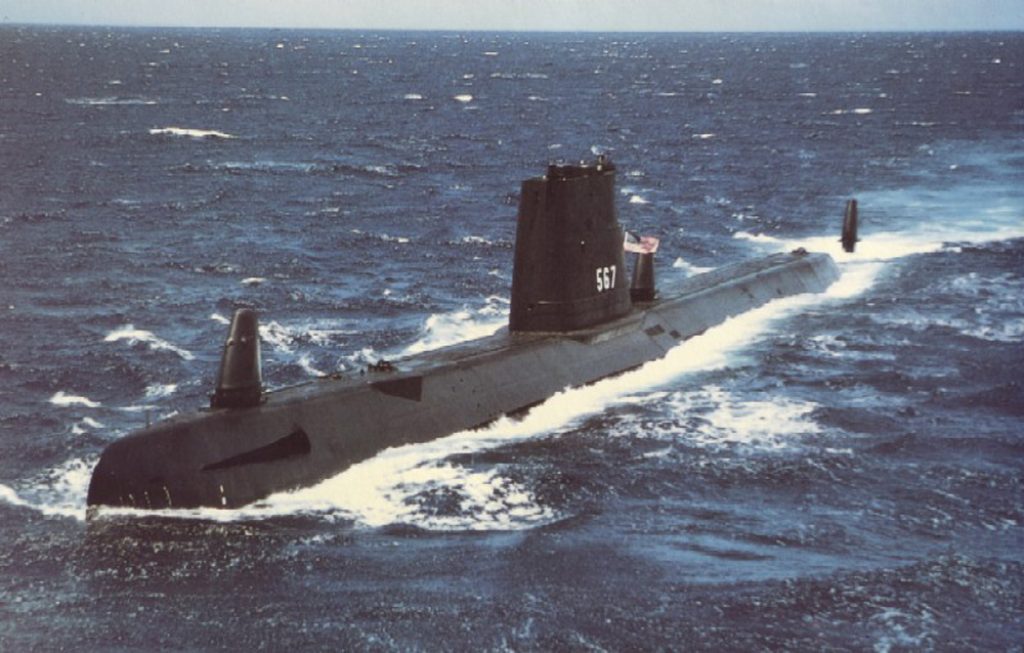
The next American step was the Tang class. It is often described as an “American Type XXI,” and there is some truth in that description. High underwater speed, improved hydrodynamics, greater stored electrical energy, and sophisticated sonar clearly reflected lessons learned from the German boats.
But from that point onward, the engineering was thoroughly American. Tang was designed around U.S. requirements for range, habitability, weapons, and equipment. It received American sonar, torpedoes, electronics, and a very different internal arrangement. At the same time, the project encountered problems the Germans had never faced in quite the same form.
The best example was the famous General Motors 16-338 diesel, commonly known as the pancake engine. These engines were exceptionally compact and seemed ideal for fitting substantial power into a small machinery space, but they proved unreliable in service. They eventually had to be replaced by more conventional diesels, requiring hull modifications and lengthening.
This is a good example of why the claim that “the Americans simply copied the Type XXI” explains very little. A concept can be inherited. Thousands of engineering problems still have to be solved all over again.
The Soviet Union Did Much the Same Thing
Project 613 generated an almost identical myth: the Soviet Whiskey class was supposedly just a copied Type XXI. German influence was certainly significant, but the story is more complicated. Soviet designers had already been working on new medium submarines during the war. After 1945, they gained access to a huge amount of German technical material, allowing them to reassess certain solutions, accelerate development, and compare their own ideas with an already constructed submarine.
Project 613 consequently incorporated many features associated with the new generation: greater emphasis on submerged operation, cleaner hydrodynamic lines, a snorkel, and improved sonar. But the submarine was designed around Soviet weapons, industrial capabilities, basing requirements, and operating conditions. It was not a clone but a Soviet interpretation of the same new philosophy.
And here something particularly important happened. The Soviet Union managed to do what Germany never could: turn the new concept into a genuinely mass-produced submarine. Between 1949 and 1958, the Soviet Navy received 215 Project 613 boats. It was this mass production, rather than the existence of a handful of captured Type XXIs, that became a far more serious problem for the West.
America Feared Not the German Boat, but Hundreds of Its Heirs
After 1945, the Soviet Union quickly became the primary potential adversary of the United States. In a major European war, America’s allies would depend heavily on transatlantic shipping. Troops, fuel, ammunition, and equipment would once again have to cross the ocean. The Americans had just lived through the Battle of the Atlantic and understood perfectly what a serious submarine threat could do to maritime communications.
Now imagine that instead of early-war U-boats, the opponent fields hundreds of submarines that surface less often, use snorkels, possess greater underwater speed, and have better passive sonar. Even if each individual Soviet submarine was far removed from some mythical “superweapon,” sheer numbers could create a formidable problem.
American assessments in the late 1940s could therefore become alarmist, but the underlying fear was rational. The Type XXI had demonstrated what a new generation of submarines might look like, while the Soviet Union possessed the industrial and mobilization base to build new boats by the dozen.
At that point, the German legacy began changing not only submarines themselves, but also the forces designed to hunt them.
The Old Anti-Submarine War Was Becoming Obsolete
During World War II, aircraft became one of the U-boat’s most dangerous enemies because diesel-electric submarines had to spend substantial periods on the surface. There they recharged batteries, traveled quickly to operational areas, and remained relatively visible. The introduction of airborne radar made surfaced submarines increasingly vulnerable.
The snorkel made the problem considerably more difficult. Now only a small mast protruded above the water while the hull remained submerged. The submarine could recharge its batteries without entering a fully surfaced condition. The Type XXI added another complication: once detected, it could switch to electric propulsion and attempt to escape underwater at much greater speed.
Anti-submarine forces therefore had to rethink their entire approach. If the submarine no longer appeared regularly on the surface, it had to be hunted as an object that remained underwater. That meant greater reliance on passive sonar, sonobuoys, fixed surveillance systems, and specialized submarine hunters.
The Submarine Acquired a New Profession
Before World War II, submarines primarily hunted surface ships and merchant vessels. After the war, another mission became increasingly important: hunting other submarines.
The United States began developing hunter-killer submarines intended to patrol likely Soviet submarine transit routes and destroy them before they could break out into the open ocean. Early Barracuda-class boats reflected this new logic. At the same time, passive sonar systems were being developed to detect operating diesel engines, propellers, and other underwater noise sources at ever greater ranges.
Once again, the Type XXI mattered less as an individual submarine than as a preview of a new threat. It had barely participated in the war, yet it helped force the victors to prepare for combat against submarines that did not yet exist in large numbers.
German Sonar Left Its Mark as Well
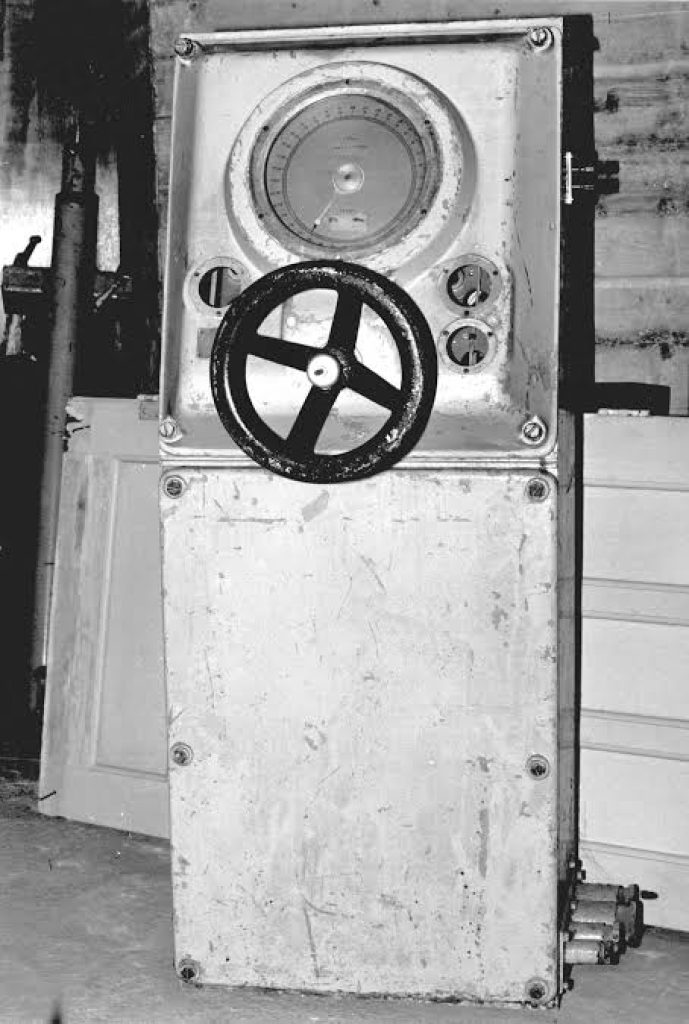
The Type XXI carried the sophisticated GHG — Gruppenhorchgerät — passive hydrophone array. For a submarine intended to attack primarily from beneath the surface, this made sense: the less frequently the commander needed to raise the periscope and approach shallow depth, the better the boat’s chances of remaining undetected.
The Americans studied German hydrophone systems closely, and some of the concepts influenced postwar development of U.S. passive sonar. New sonar suites appeared on GUPPY conversions and subsequent designs, now optimized for a very different kind of underwater warfare.
Again, however, this was not simple copying. The United States already possessed a powerful domestic underwater-acoustics research establishment and enormous wartime anti-submarine experience. German technology did not replace American research; it accelerated it. Captured equipment allowed engineers to compare approaches, identify successful solutions, and move more quickly toward the next generation of sonar systems.
Britain Shows Why the Type XXI Cannot Be Treated as the Sole Source of the Revolution
The Royal Navy reached the concept of high underwater speed through its own development path. Britain needed fast underwater targets to train anti-submarine forces and had therefore experimented with modifying existing submarines and investigating new propulsion concepts both during and immediately after the war. German experience became another valuable source of information after 1945, but it was never the only one.
British T- and A-class submarines subsequently underwent extensive modernization, receiving cleaner hull forms and improved underwater performance. Later came the new Porpoise and Oberon classes. Even where German Elektroboot influence is obvious, therefore, we still see independent evolution rather than direct copying.
This is an important qualification to the entire Type XXI story. Germany was not the only country that understood where submarine technology was heading. It was simply the first to bring these ideas together in such a comprehensive series-production design.
But the Diesel Engine Was Still Tied to the Atmosphere
No matter how much battery capacity was increased, or how much the snorkel and hydrodynamics were improved, the diesel-electric submarine retained a fundamental limitation: diesel engines need oxygen. Sooner or later, the submarine had to rise to snorkel depth, start its engines, and recharge its batteries. At that point, noise increased, exhaust appeared, and a mast protruded above the surface — all of which created new opportunities for detection.
Then came the nuclear reactor. It did not require atmospheric oxygen and could provide large amounts of power for extended periods. Suddenly, the idea behind the Type XXI no longer had to remain a compromise. A submarine truly no longer needed to return regularly to the surface simply to keep moving.
Even here, however, the story cannot be reduced to “Type XXI plus reactor equals nuclear submarine.”
Nautilus Solved the Energy Problem, but Not Immediately the Shape Problem
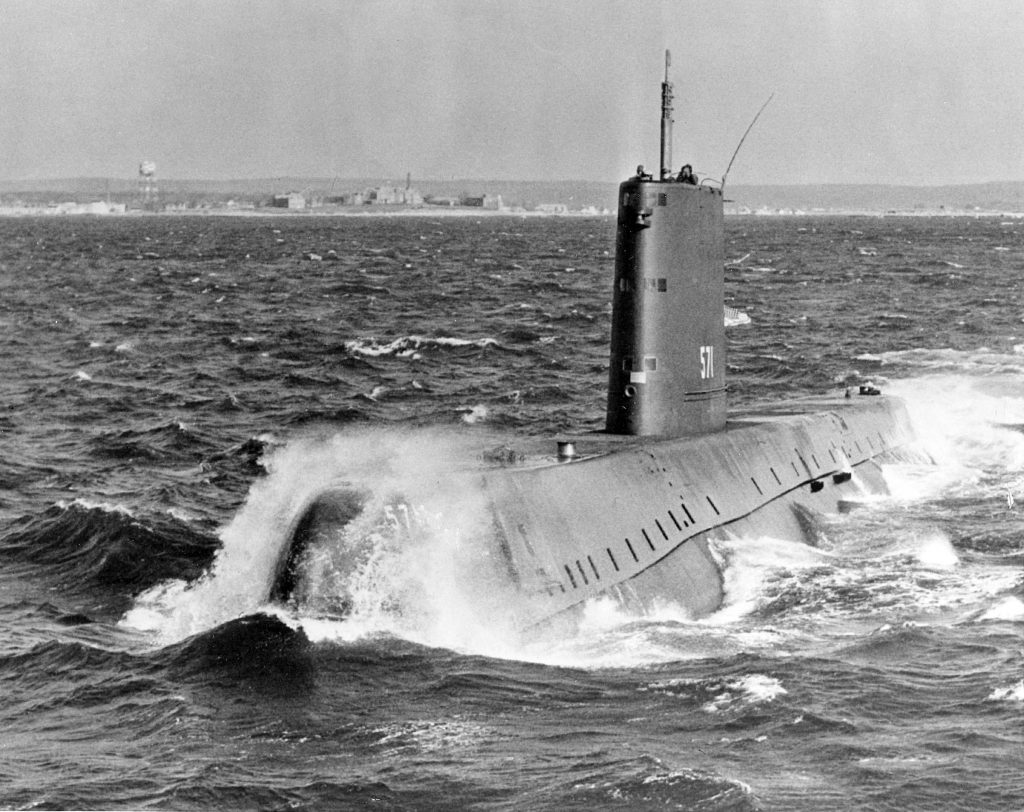
USS Nautilus represented a revolution primarily because of its propulsion system. Submerged endurance was no longer determined by battery charge but by food supplies, equipment endurance, and crew limitations. Yet the first nuclear submarines still retained many hull characteristics inherited from the previous era.
At the same time, the United States built USS Albacore, an experimental diesel-electric submarine designed around essentially one question: what should the hull of a vessel intended primarily for underwater operation actually look like? The answer was the famous teardrop form, with minimal external projections and a complete emphasis on submerged hydrodynamic efficiency.
This is where two development lines converged. The Type XXI demonstrated that underwater operation should be the submarine’s primary mode. Albacore demonstrated what a hull should look like once surface performance was no longer the priority. Nuclear propulsion supplied the power source that no longer required atmospheric oxygen.
The next logical step was Skipjack.
Skipjack Already Looked Like a Modern Submarine
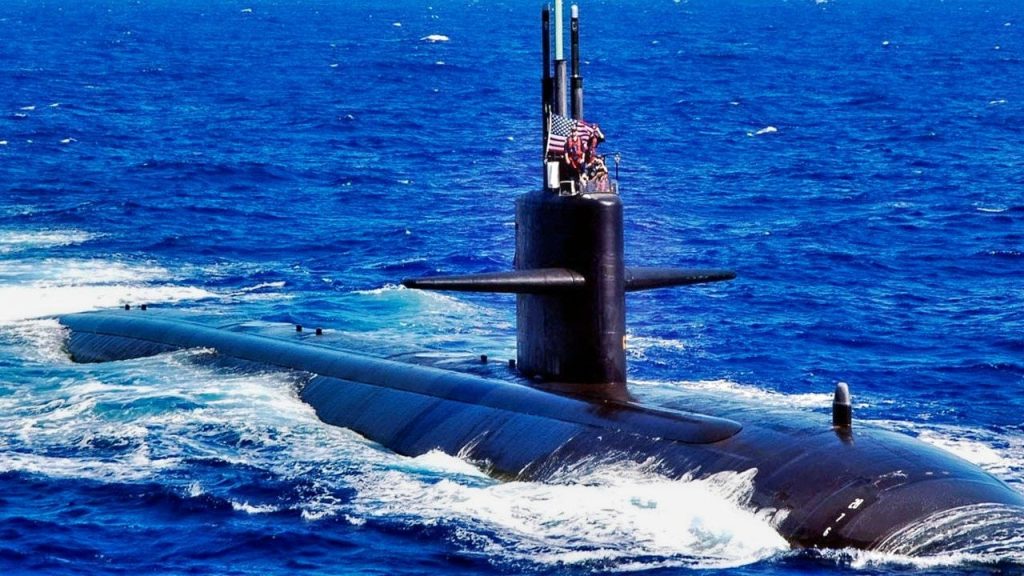
USS Skipjack, commissioned in 1959, combined nuclear propulsion with a streamlined hull derived from the ideas tested by Albacore. High sustained underwater speed, an overwhelming emphasis on submerged operation, and new hydrodynamics made it one of the key submarines that established the recognizable architecture of the modern nuclear attack boat.
This is why the popular phrase that the Type XXI was “the first nuclear submarine without a reactor” sounds good but is technically inaccurate. The German submarine lacked the necessary propulsion system, did not have an Albacore-style teardrop hull, and could not sustain high underwater speeds for months. Its sonar and computational systems belonged to an entirely different technological era.
But the Type XXI did something fundamental: it formulated the problem. Nuclear power and new hydrodynamics later made it possible to solve that problem completely.
The German School Disappeared — and Then Returned in a Different Germany
After Germany’s surrender, its submarine fleet ceased to exist, but the engineers and accumulated expertise did not simply vanish. One of the key figures in postwar German submarine development was Ulrich Gabler. After the war, he established Ingenieurkontor Lübeck, or IKL, which would later play a major role in shaping West Germany’s new submarine design school.
When West Germany was once again permitted to build submarines, the Type 201, Type 205, and Type 206 appeared. These were very different boats — compact, optimized for shallow European waters, and designed around completely new requirements. But then the German submarine industry unexpectedly became global again.
The Type 209 became one of the most successful export diesel-electric submarine designs of the second half of the 20th century. Various versions were purchased by Greece, Turkey, Argentina, Brazil, Chile, Colombia, Peru, India, South Korea, and other countries. Later, this development line led to the Type 212 and Type 214, incorporating air-independent propulsion and continuing the same fundamental struggle against the diesel-electric submarine’s oldest limitation: the need to maintain regular contact with the atmosphere.
The result is a remarkably long historical arc: from the Type XXI to postwar exploitation of captured German technology, from there to new American, British, and Soviet submarines, then to the nuclear revolution, and simultaneously to the rebirth of the German submarine design school in West Germany.
But There Is Still No Single Direct Line of Descent
The modern submarine did not descend from one German design. The Americans contributed their enormous experience of oceanic submarine warfare, their own sonar and electronics, and eventually nuclear propulsion. The British had their own experiments with high underwater speed. The Soviet Union had its own submarine design tradition and adapted German ideas to domestic requirements. The teardrop hull of the modern nuclear submarine owes far more to Albacore than to the hull form of the Type XXI.
The claim that “all modern submarines descend from the Type XXI” is therefore far too simplistic. But the opposite argument — that the German submarine’s importance has been greatly exaggerated — is also wrong. The influence of the Type XXI cannot be measured by counting how many individual components the victors literally copied.
Its influence is better measured by the fact that, after its appearance, almost every major navy began trying to solve the same problem: how to turn the submarine into a vessel that lives and fights primarily underwater.
Germany Lost the War, but Its Question Outlived Its Fleet
That is the real paradox of the Type XXI. It did not save Germany, barely participated in combat, and its production program suffered from enormous technical and organizational problems. Judged purely as a weapon of World War II, the result looks close to failure.
But the history of technology does not judge designs solely by their combat record. Sometimes the more important question is what problem they force every subsequent engineer to confront. The Type XXI demonstrated that a submarine no longer had to be designed as a compromise between two environments. It could instead become a vessel for which the surface was secondary.
After the war, the United States, Britain, and the Soviet Union produced different answers to that challenge. GUPPY transformed existing American submarines. Tang represented a new U.S. design. The Soviet Union built the enormous Project 613 series. Britain modernized its existing boats and continued along its own development path. Nuclear propulsion and Albacore then destroyed the old compromise almost completely.
The Type XXI is therefore best understood not as a “secret German wonder weapon that the victors copied,” but as a boundary between two eras of submarine design.
Before it, the central question was roughly this: how good an underwater vessel can we make from a submarine that still spends much of its life on the surface?
After it, the question became different: if water is the submarine’s natural environment, why design it as a good surface ship at all?
American, British, and Soviet engineers produced different answers using different hulls, engines, torpedoes, sonar systems, and industrial capabilities. But the direction of travel was the same.
And once the nuclear reactor, the teardrop hull, and modern sonar were added to the equation, the logical conclusion became obvious.
A modern submarine is no longer a ship that can submerge. It is a ship that barely needs the surface at all.