In my fourth year at music school, I was learning a waltz by Alexander Griboyedov on the piano. Back then, his name above the sheet music meant very little to me. Later I read Woe from Wit, one of my favourite books, and learned about his diplomatic career and his death in Tehran.
Over time, the three parts of his story—music, comedy and diplomacy—stopped feeling like unrelated episodes in one man’s life. But my introduction to Griboyedov began with a short waltz I had to practise for a lesson.
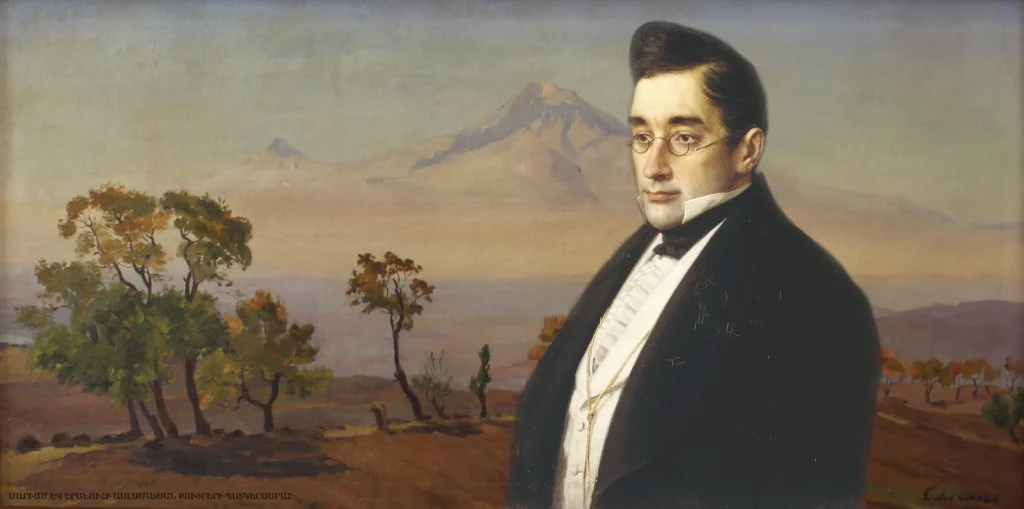
A man between Moscow and Persia
Griboyedov was born into a noble family in Moscow and received an education that few people of his time could afford. Even the date of his birth is uncertain. It is usually given as January 4 (15), 1795, though official service records later listed 1790. Historians have been unable to find his birth record.
He studied at Moscow University’s Noble Boarding School, then enrolled at the university, where he pursued literature and law. Griboyedov read, translated, wrote plays and played the piano. He entered the world of theatre at an early age and never seemed eager to fit himself into just one profession.
When war with Napoleon began in 1812, Griboyedov joined a hussar regiment. His unit never saw combat. After the war, he left the army and settled in St Petersburg, where he soon found himself among writers and actors.
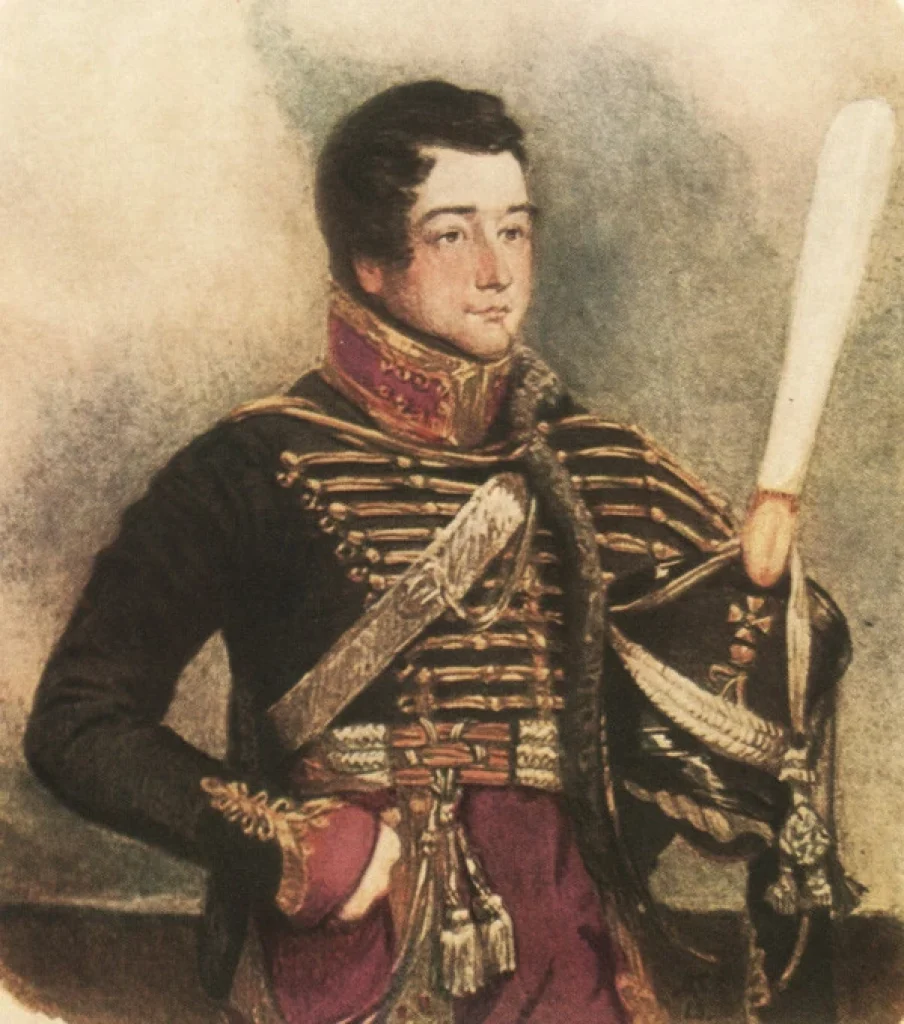
In 1817, he became involved in a story that could have come from a stage drama. The ballerina Avdotya Istomina was at the centre of a dispute between Count Alexander Zavadovsky and an officer, Vasily Sheremetev, who considered himself engaged to her. Their quarrel ended in a duel: Sheremetev was mortally wounded. Griboyedov was Zavadovsky’s second; Alexander Yakubovich served as Sheremetev’s. The seconds agreed to fight a duel of their own, but postponed it.
A year later, Griboyedov was travelling through Tiflis to his post in Persia. Yakubovich insisted that their unfinished business be settled. Griboyedov missed; his opponent shot him in the left hand. One finger remained stiff. For someone who spent so much time at the piano, it was more than just a wound.
Service in Persia changed the course of his life. Griboyedov spent several years in Tabriz, handling diplomatic affairs and working to secure the return of Russian soldiers who had remained in Persia after earlier wars. In his diary, he wrote: “I will lay down my head for my unfortunate countrymen.”
In 1822, he was transferred to Tiflis to serve under General Alexei Yermolov. He remained in government service, but was now closer to literary life. There, he began writing the comedy that would soon become famous even among people who had never seen it in print.
The play people copied by hand
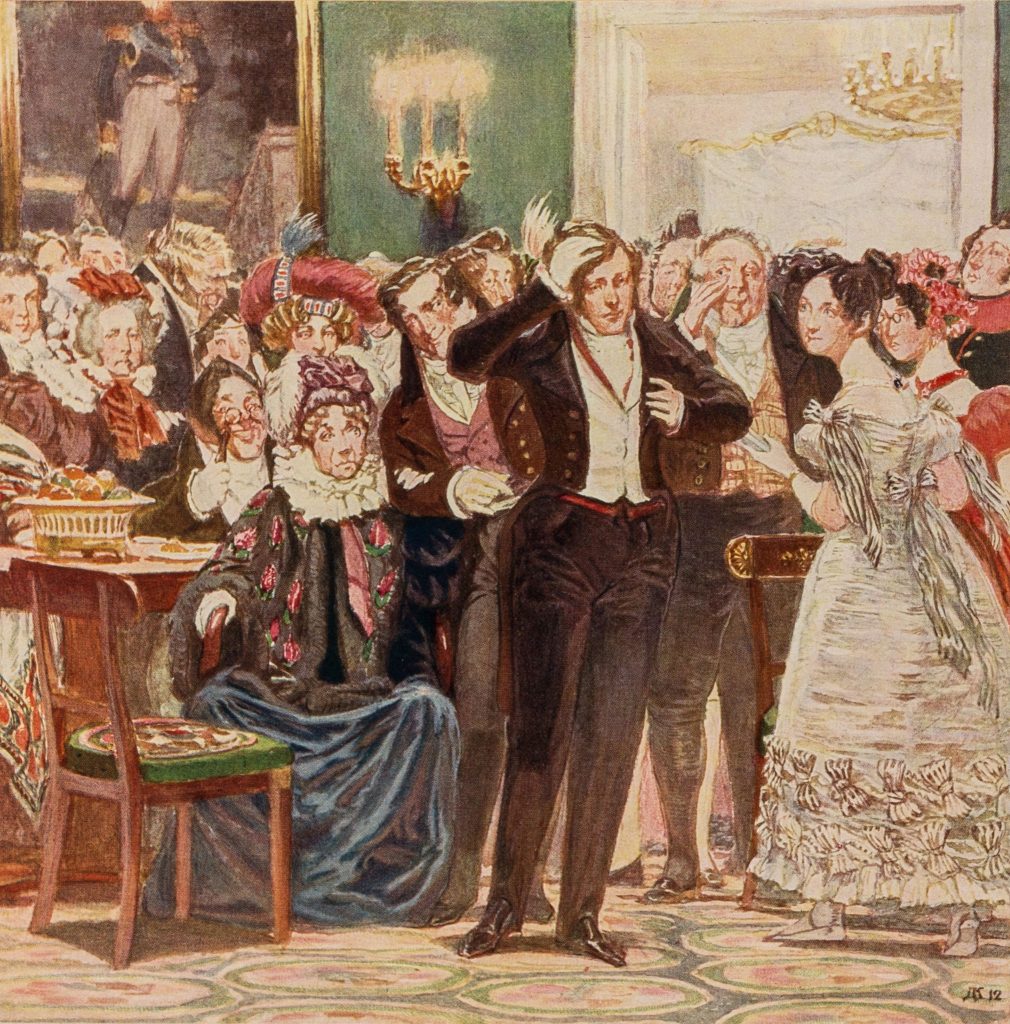
Griboyedov wrote the first two acts of Woe from Wit in Tiflis and completed the comedy in Moscow in the autumn of 1824. The censor would not allow the whole play to be published. Only individual scenes appeared in print.
That did not stop it from spreading. People copied the manuscript, lent it to friends and passed it from one household to another. Readers knew Chatsky, Famusov, Molchalin and Skalozub even if they had never held a printed copy. Lines from the comedy quickly became part of everyday speech: “The tale is fresh, but hard to believe.”
The complete text was first published in 1833, four years after the author’s death. By then, the play had long been living its own life.
In December 1825, the Decembrist uprising led to the arrest of many of Griboyedov’s acquaintances. Copies of Woe from Wit were found among the papers of those arrested, and some people named its author. Griboyedov was summoned to St Petersburg and arrested. He denied belonging to a secret society, and investigators found no evidence that he had taken part in the conspiracy. He was released in June 1826.
Griboyedov’s music
Griboyedov was not only a playwright and diplomat. He was an accomplished pianist, knew music theory and enjoyed improvising. Most of his music has been lost: he did not always write down the melodies he came up with at the piano.
Two piano waltzes have survived, in E minor and A-flat major. They are believed to date from the winter of 1823–24, when Griboyedov was working on Woe from Wit.
Music occupies only a small place in his biography—just a few surviving pages of sheet music. But for me, it was the beginning of my acquaintance with Griboyedov. Now it is hard to separate that schoolroom waltz from everything I learned later: his comedy, his diplomatic work and the life that ended in Tehran.
The wound he received in the duel made it harder for Griboyedov to play as he once had, but he did not give up music. After his death, according to a widely repeated account, the old injury helped identify his body. Sources tell the story in different ways, so it is best treated as a familiar version rather than an entirely certain fact.
A peace treaty and a new mission
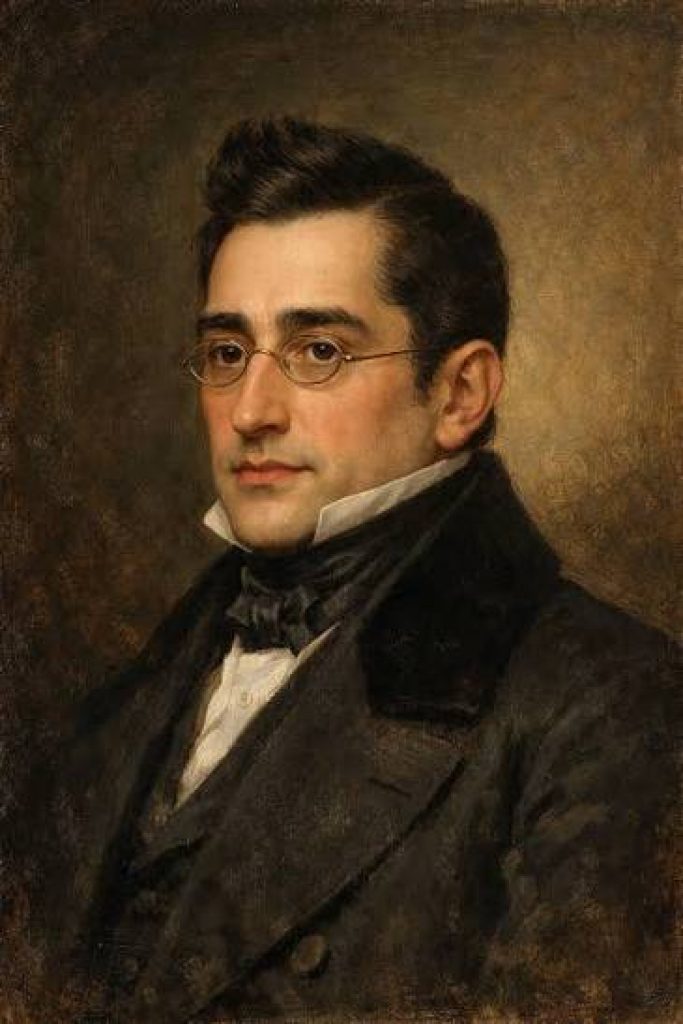
After his release, Griboyedov returned to the Caucasus. A war between Russia and Persia was under way, and he took part in diplomatic work on the staff of General Ivan Paskevich. Griboyedov travelled to negotiate with Abbas Mirza, heir to the Persian throne, and helped work out the terms of peace.
The Treaty of Turkmenchay was signed in February 1828. Persia ceded the Erivan and Nakhichevan khanates to Russia and agreed to pay an indemnity of twenty million rubles. The Russian court saw it as a major victory. For Persia, it meant harsh terms after a lost war, the loss of territory and new financial obligations.
Griboyedov was not the treaty’s sole author, but his knowledge of Persia and his role in the negotiations made him one of the key figures responsible for carrying out Russian policy. He brought the treaty to St Petersburg. The emperor appointed him a State Councillor and named him plenipotentiary minister to the Persian court. His next task was to make sure the agreement was carried out.
On his way back, Griboyedov stopped in Tiflis and married Nina Chavchavadze, the daughter of his friend, a Georgian poet and military commander. They travelled together to Tabriz in the autumn of 1828. Griboyedov was to handle negotiations there before continuing to Tehran to meet Shah Fath-Ali.
In a letter, he explained why he was leaving his wife behind: “I have been married for two months and love my wife beyond measure,” but he had to hurry to the shah over the question of payments. Nina was pregnant. Griboyedov left her in Tabriz in the care of friends and continued alone. He expected to return.
Griboyedov’s final days in Tehran
In Tehran, Griboyedov was expected to secure the implementation of the Treaty of Turkmenchay, including the payment of the remaining indemnity and the return of people covered by its provisions. Russia viewed these as rights established by treaty. To the shah’s court, they were a constant reminder of defeat.
Tensions around the Russian mission grew over the case of people seeking refuge there. Among them were Mirza Yakub, an Armenian who had served at the shah’s court, and two women from the household of the shah’s relative, Allahyar Khan. Persian sources claimed that the women had converted to Islam; Russian accounts stressed their origins and their right to return to Russian protection. Rumours spread through the city that Russian diplomats were forcing the women to renounce their faith.
A dispute over a few people quickly became a dispute over power, religion and the terms of the peace treaty. Historians disagree over Griboyedov’s conduct. Persian accounts described him as arrogant and insulting to the shah and his officials. Russian sources portrayed him as a defender of treaty rights and his countrymen.
The destruction of the mission was not the result of a single misunderstanding. It grew out of the recent war, the harsh peace, resentment over Russian demands and rumours that inflamed the situation.
On January 30 (February 11), 1829, a mob stormed the Russian mission. Griboyedov and almost all the staff were killed, including the Cossacks and servants. Only the first secretary, Ivan Maltsev, escaped.
The Persian government claimed it had not been involved in the attack and later sent an official apology to St Petersburg. The massacre itself is an established fact, but questions about who incited the mob—and whether the authorities could have prevented the attack—remain disputed.
Griboyedov’s body was taken to Tiflis and buried on Mount St David. Nina had these words engraved on his tombstone: “Your mind and deeds are immortal in Russian memory, but why did my love outlive you?” There are no diplomatic titles or literary honours in that inscription. Only the grief of a young woman who had lost her husband.
The Shah Diamond
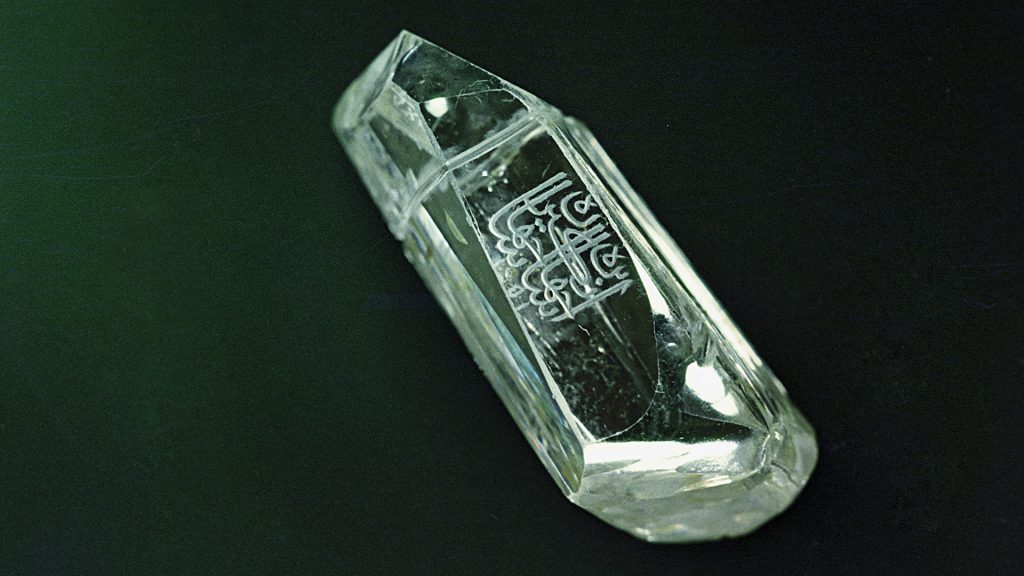
After Griboyedov’s death, the Persian court feared that Russia might use the tragedy as a pretext for another war. An embassy led by Khosrow Mirza, the son of Abbas Mirza and grandson of the shah, was sent to St Petersburg. He carried a letter from Fath-Ali Shah with an official apology, along with valuable gifts.
In Moscow, the prince visited Griboyedov’s mother. According to Iranologists, he wept with her. In August 1829, Khosrow Mirza formally apologised to Nicholas I at the Winter Palace.
Among the gifts was the Shah Diamond. Before it reached Persia, the stone had belonged to Indian rulers. Nader Shah took it after his campaign in Delhi, and in 1824 Fath-Ali Shah ordered his own inscription added to it.
The diamond entered the Russian collection not as a prearranged payment for Griboyedov’s life, but as one of the official gifts brought by the embassy of apology. The negotiations helped avert another war. Russia, for its part, softened its demands for the remaining indemnity and also gave gifts to the Persian officials.
The short version—“Persia paid for the Russian ambassador’s blood with a diamond”—is dramatic, but it oversimplifies what happened. The stone did arrive in St Petersburg after Griboyedov’s death, and its place in the Russian collection is connected to the tragedy. But it was not literally the price of the diplomat’s life.
Once, I learned Griboyedov’s waltz for a music lesson. Back then, there was only an unfamiliar name above the notes. Now that name brings to mind a comedy people read in handwritten copies, a diplomat who never made it back to his wife, and a diamond that arrived in St Petersburg with the shah’s apology.