How to Defend Against a Small Attack Drone. Why a “Grill” on a Tank Is Just the Beginning of a New Era

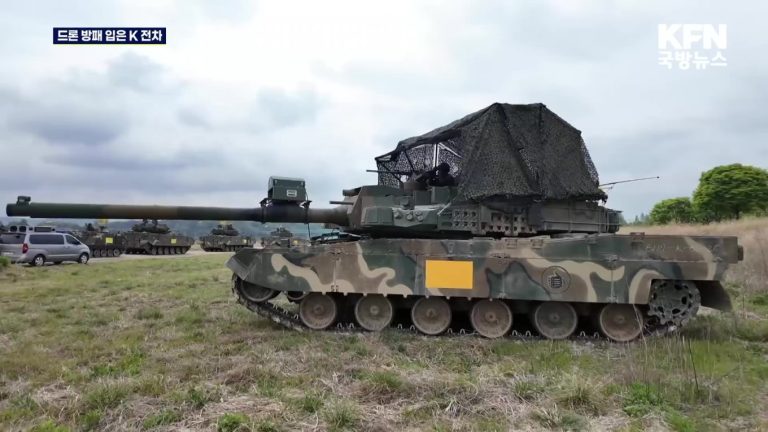
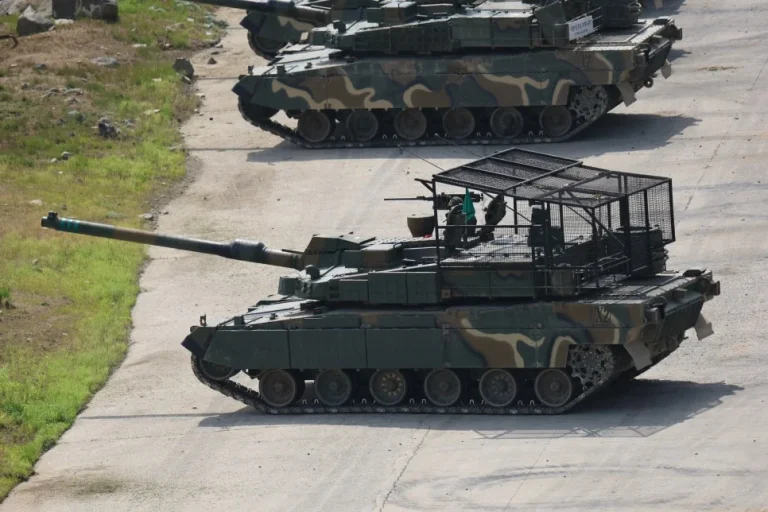
Just a few years ago, photos of tanks with metal grates welded onto their tops drew nothing but ridicule online. These contraptions were called “barns,” “chicken coops,” and “barbecue grills”; they were seen as a sign of technical decline and almost a symbol of the helplessness of modern armored vehicles. But history, as is often the case in war, quickly set the record straight. It turned out that the ugly welded structure was not an absurdity, but humanity’s first attempt to adapt armored vehicles to a new threat: swarms of small attack drones.
Today, an FPV drone costing a few hundred dollars is capable of destroying a vehicle worth millions. And we’re no longer just talking about tanks. Infantry fighting vehicles, self-propelled artillery, multiple rocket launchers, trucks, engineering equipment, and even stationary positions are now at risk. The drone has turned out to be the very weapon that has once again upset the balance between the cost of attack and the cost of defense. And that is precisely why an entirely new military philosophy is now beginning to take shape around the issue of countering small UAVs.
The most interesting thing is that today’s “mangals” are likely just the primitive precursors of future energy and kinetic barriers, which could completely transform the appearance of military equipment in just one or two decades.

Why Regular Armor Stopped Working
Conventional armor was designed for a completely different kind of war. It was meant to withstand hits from shells, shrapnel, and anti-tank missiles traveling along relatively predictable trajectories. But the FPV drone turned out to be a unique threat. It is small, inexpensive, maneuverable, and capable of attacking from virtually any angle.
Attacks from above have become particularly dangerous. The top of a tank is traditionally less well-protected than its front, since for decades it was assumed that the main attack would come from the front. But a drone doesn’t care at all where the thickest armor is located. It can hover, select a target, and literally “dive” into the turret roof or the engine and transmission compartment.
This is where the “mangal” originated.
In fact, this is an attempt to create a distance barrier between the projectile and the vehicle’s main armor. Even a simple metal grille is capable of:
— change the angle of impact;
— damage the drone’s propellers;
— cause the munition to detonate prematurely;
— reduce the effectiveness of the cumulative jet.
Yes, it looks clunky. Yes, designs like this impair visibility, increase weight, and make the equipment harder to operate. But the problem is that they actually work. Which means the idea of a remote barrier has proven to be viable.
From the “mangal” to the kinetic cocoon
Right now, most of these designs are created in makeshift workshops. But if you look at the situation from an engineer’s perspective, it becomes clear that this is only the beginning of the evolution.
The next step could be fully-fledged modular anti-drone frames—not makeshift grids, but complex three-dimensional structures installed around the vehicle at a distance of one to two meters from the body. And we’re no longer just talking about metal.
Such a barrier may include:
— composite meshes;
— carbon fiber cables;
— ceramic components;
— sacrificial sections;
— flexible panels;
— active anti-drone modules.
In essence, the tank of the future could be equipped with an external “skeleton” designed exclusively to combat small UAVs.
The most interesting concept, however, is that of a dynamic kinetic barrier. For example, a net of thin, ultra-strong threads automatically unfolds around the vehicle. They’re almost invisible to the human eye, but for a quadcopter flying at speeds exceeding 100 kilometers per hour, a collision with such a system would be fatal.
An even more unusual option involves using rotating or vibrating structural elements. Essentially, this involves creating a zone around the vehicle in which a small drone would simply be physically unable to fly steadily.
And all of this can no longer be called simply armor. Rather, it would be a kind of kinetic cocoon.
Microwave Shield. This energy weapon already exists
But the biggest revolution may take place in an entirely different field—electronics.
When people hear the term “energy barrier,” they usually imagine the fantastical force fields they see in movies. In reality, however, the first components of such a system already exist.
We’re talking about microwave weapons.
A modern FPV drone is entirely dependent on electronics. The camera, transmitter, flight controllers, stabilization system, and batteries—all of these are extremely sensitive to strong electromagnetic interference. And if a sufficiently dense microwave field is created around the drone, its electronics will literally begin to break down.
The consequences can vary:
— loss of control;
— autopilot freeze;
— loss of video signal;
— overheating of electronic components;
— complete burnout of components.
In fact, the tank of the future may be equipped with its own “electromagnetic dome,” inside which a drone would simply cease to function.
What is particularly important is that such a system is capable of countering not only individual drones but also swarms of them. Indeed, many military analysts consider swarms of drones to be one of the main threats of the coming decades.
Of course, this raises a host of problems. Microwave weapons require enormous amounts of energy, complex cooling systems, and powerful generators. In addition, this type of radiation can also interfere with the vehicle’s own electronics. But from a technological standpoint, this approach already seems quite feasible.
Laser Barrier: The Future of Anti-Drone Defense

Laser weapons appear to be an even more promising area.
And we’re not talking about giant, fantastical beams that burn right through armor. A small drone is an extremely fragile target. It doesn’t need to penetrate multi-layered defenses. All it takes is:
— blind the camera;
— damage the motor;
— burn out the battery;
— disrupt the operation of the optics.
That is precisely why compact laser systems could be the ideal weapon against FPV drones.
The main advantage of a laser is its virtually instantaneous engagement speed. While modern air defense systems are forced to expend costly missiles, a laser is theoretically capable of destroying targets almost continuously, limited only by its energy supply.
Imagine a tank of the future, with a small automated module rotating above its turret. Cameras and neural networks detect an approaching FPV drone, after which a laser literally burns out its optics or motor in a fraction of a second. To the crew, it will look almost like an invisible shield.
The development of artificial intelligence is particularly important here. Humans are simply incapable of responding to dozens of small targets at the same time. An automated system, however, is fully capable of doing so.
What Will the Tank of the Future Look Like?
The most interesting thing is that drone warfare is gradually changing the very philosophy of armored vehicles.
The 20th-century tank was, first and foremost, an armored vehicle. The 21st-century tank will likely become a complex, multi-layered survivability system.
The following may exist simultaneously around it:
— physical anti-drone barriers;
— active protection;
— microwave dome;
— laser modules;
— electronic warfare systems;
— proprietary interceptor drones;
— a network of sensors and cameras.
In fact, the car itself will be nothing more than the center of a huge protective bubble.
And perhaps, in a few decades, historians of technology will view today’s welded “barbecues” in much the same way that we view the first British tanks of World War I today. Ridiculous, awkward, strange—but it was precisely these that ushered in a new era.