Hypersonics at the Price of a Conventional Missile: Why the U.S. Is Developing the Mass-Produced Blackbeard

For the past two decades, hypersonic weapons have followed a fairly straightforward development philosophy: maximum speed, maximum range, highly sophisticated guidance, specialized heat-resistant materials — and, inevitably, an enormous price tag for every weapon produced. The result has been missiles capable of performing extremely demanding missions, but manufactured in batches of dozens, and sometimes effectively as individual items.
The American company Castelion is trying to turn that logic on its head. Its Blackbeard is also intended to fly at hypersonic speeds and strike targets hundreds of kilometers away, but maximum range and maximum speed are not the program’s primary objectives. The key requirement is the ability to manufacture these weapons by the hundreds and eventually thousands per year.
Castelion openly acknowledges the trade-off: some extreme performance can be sacrificed if doing so transforms hypersonic weapons from boutique systems into mass-produced munitions.
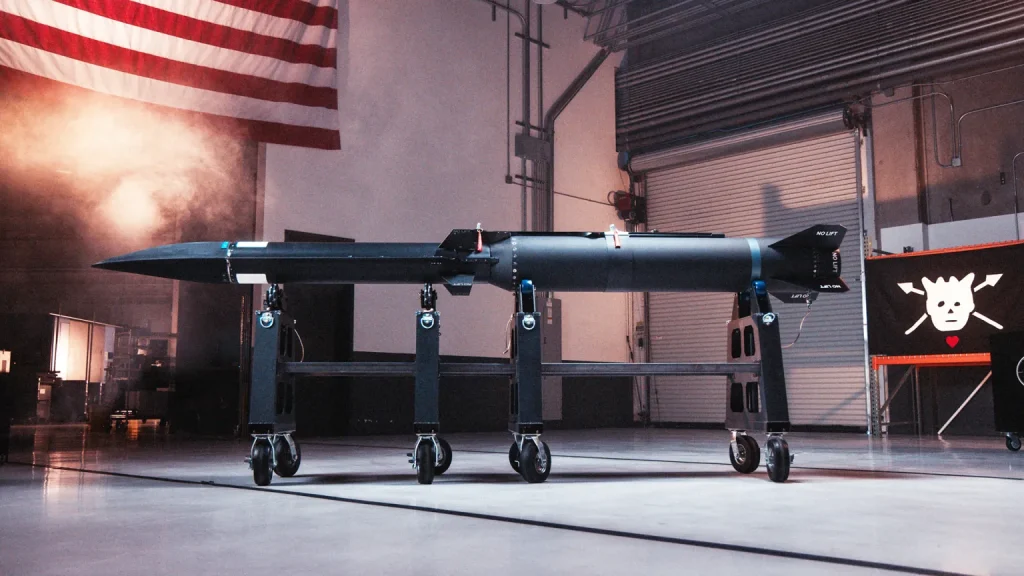
On August 20, 2026, the project became considerably more interesting. Castelion provided the clearest look yet at a configuration resembling an actual operational Blackbeard rather than an early experimental flight vehicle. What emerged is an unusual two-stage system: a rocket booster accelerates a relatively small unpowered hypersonic glide vehicle, which then separates and continues toward its target. Previously stated range has been just under 500 miles, or roughly 800 kilometers.
Meanwhile, the U.S. Navy has already ordered the first 50 pre-production Blackbeards, the Army is exploring a ground-launched version, and the F/A-18E/F Super Hornet is expected to carry an air-launched variant. The goal is to achieve an initial operational capability as early as 2027.
That makes Blackbeard an unusual weapon.
And perhaps the most interesting thing about it is not the hypersonic speed.
Blackbeard Is Not a Hypersonic Cruise Missile
First, the terminology needs to be clarified, because the word “hypersonic” is now used to describe several fundamentally different types of weapons.
Broadly speaking, there are two main approaches. The first is the hypersonic cruise missile, powered by an air-breathing engine, typically a ramjet or scramjet. Such a weapon generates thrust during much of its flight and travels through the atmosphere somewhat like an extremely fast cruise missile.
The second approach is the Hypersonic Glide Vehicle, or HGV.
Blackbeard belongs to the latter category.
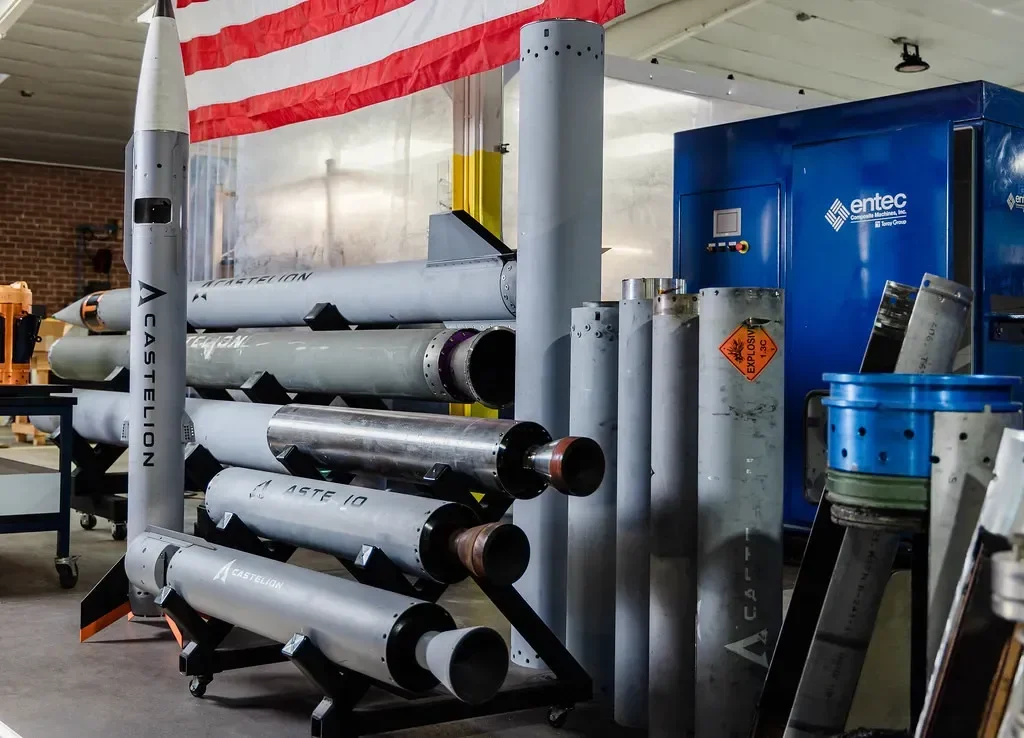
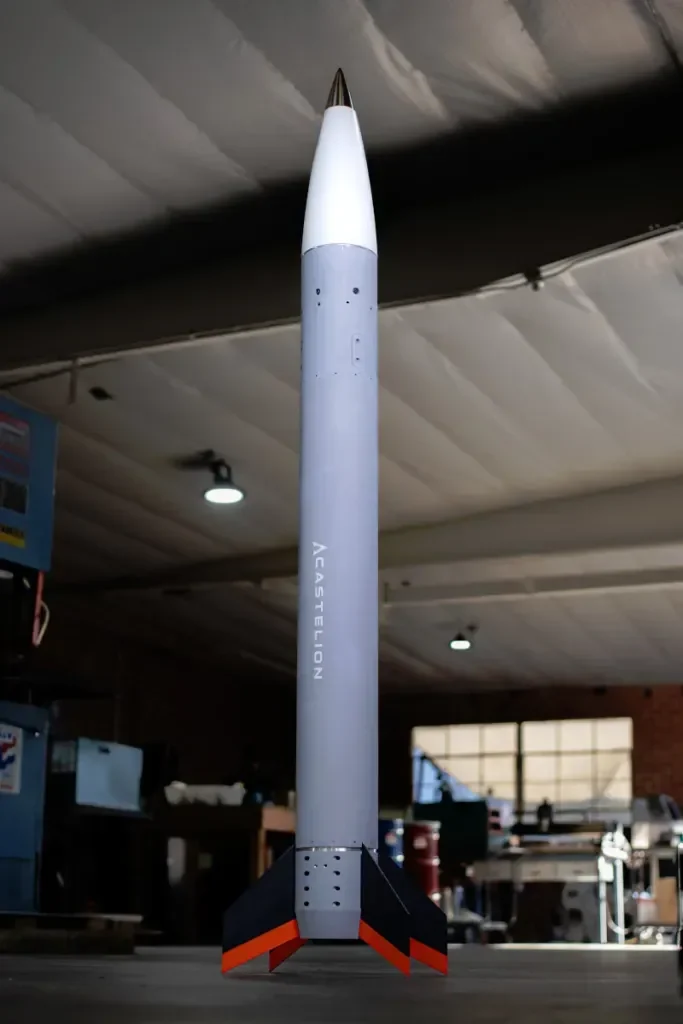
The configuration shown by Castelion clearly consists of two major components. The lower section is a rocket booster that outwardly resembles a relatively conventional ballistic missile stage. Above it sits the glide vehicle itself, featuring a sharply pointed nose and a distinctive aerodynamic body.
The operating principle is relatively straightforward. The booster accelerates the complete weapon and carries it to the required altitude and velocity. The glide vehicle then separates. It has no sustained propulsion system of its own and instead continues flying using the kinetic and potential energy accumulated during boost, while maneuvering aerodynamically toward its target.
And this represents the first major simplification behind Blackbeard.
Why Having No Engine After Boost Matters
Developing an engine capable of sustained operation above Mach 5 in the atmosphere is extraordinarily difficult. Air ahead of the vehicle is compressed and heated to extreme temperatures, combustion must take place in a very high-speed airflow, and the entire structure simultaneously experiences severe thermal and mechanical loads.
An HGV allows designers to avoid some of those problems.
Acceleration is handled by a comparatively conventional rocket motor in the booster. Once separation occurs, the glide vehicle does not need to sustain combustion inside a hypersonic airflow.
That solution is not free of compromises.
The vehicle continuously loses energy. Its range and maneuverability depend on its initial velocity, release altitude, aerodynamic efficiency, and flight profile.
But the resulting weapon can potentially be significantly simpler than a full-fledged hypersonic cruise missile.
For Blackbeard, that distinction is fundamental.
Castelion is not optimizing the weapon to achieve the absolute maximum possible performance.
It is optimizing it for production.
What Do We Know About Blackbeard’s Specifications?
A major caveat is necessary here: final specifications have not been publicly released. Castelion itself previously emphasized that vehicles flown in 2024 and 2025 were primarily low-cost experimental platforms intended to rapidly validate technologies rather than demonstrate the final weapon configuration.
The company has been aiming to mature the operational design around 2027.
At present, the available picture looks approximately like this:
| Developer | Castelion |
| Type | Hypersonic strike weapon |
| Configuration | Rocket booster + HGV |
| Speed | Above Mach 5 |
| Range | Up to ~500 miles / ~800 km* |
| Guidance | Precision guidance; moving-target capability planned |
| Ground-launched variant | Blackbeard Ground Launch |
| Air-launched carrier | F/A-18E/F Super Hornet |
| Potential ground launcher | Dedicated launchers; HIMARS under consideration |
| Early Operational Capability | Planned for 2027 |
| Initial U.S. Navy order | 50 weapons |
| Planned production rate | At least 500 per year after testing |
*A definitive operational range has not been officially published; Castelion has previously discussed engagement distances just under 500 miles.
There are several figures we should not invent.
The precise maximum speed remains unknown. Warhead weight is unknown. Exact dimensions and total launch weight have not been publicly disclosed.
But the basic concept is already clear enough to examine in detail.
“Cheap Hypersonics” Does Not Mean a Cheap Missile
There is an obvious trap here.
Castelion frequently describes Blackbeard as a low-cost hypersonic weapon. That does not mean the company is promising a hypersonic missile costing as little as an artillery shell.
There is currently no publicly confirmed production unit price for Blackbeard.
In June, the U.S. Navy awarded Castelion a $23.4 million contract covering 50 pre-production Blackbeard weapons and 50 shipping and storage containers. Simply dividing the contract value by 50 gives approximately $468,000 per set, but treating that as the actual unit cost of a production missile would be misleading. The contract covers early-production hardware, containers, and associated work.
Nevertheless, the order gives some indication of what Castelion is trying to achieve.
Previous American hypersonic systems have generally been discussed in a completely different cost category, with individual weapons or program-derived unit costs reaching millions or even tens of millions of dollars depending on how they are calculated.
Blackbeard is intended to move hypersonic strike much closer to the cost category of conventional mass-produced precision missiles.
That is why the cost of the first ten weapons is not the most important figure.
The cost of the thousandth one is.
Why Deliberately Build a Less Capable Hypersonic Weapon?
At first glance, the idea sounds strange. If a country is already investing in extremely sophisticated hypersonic technology, why not maximize range, speed, and maneuverability?
Because there is one military problem that performance alone cannot solve:
Magazine depth.
Imagine two weapons.
The first has extraordinary performance, but costs tens of millions of dollars and can only be manufactured at a rate of 30–50 per year.
The second has less range and perhaps somewhat lower overall performance, but costs several times less and can be produced at a rate of 500–1,000 per year.
For a handful of extremely demanding targets, the first weapon may be significantly better.
In a prolonged large-scale conflict, however, the second weapon suddenly becomes just as important.
After several weeks of intensive operations, the decisive question is no longer simply how effective each missile is.
It becomes how many missiles remain in storage and how many the factory can deliver tomorrow.
That is the logic behind Blackbeard.
The U.S. Wants to Use It Against Targets Too Important for Ordinary Missiles but Not Important Enough for Premium Hypersonics
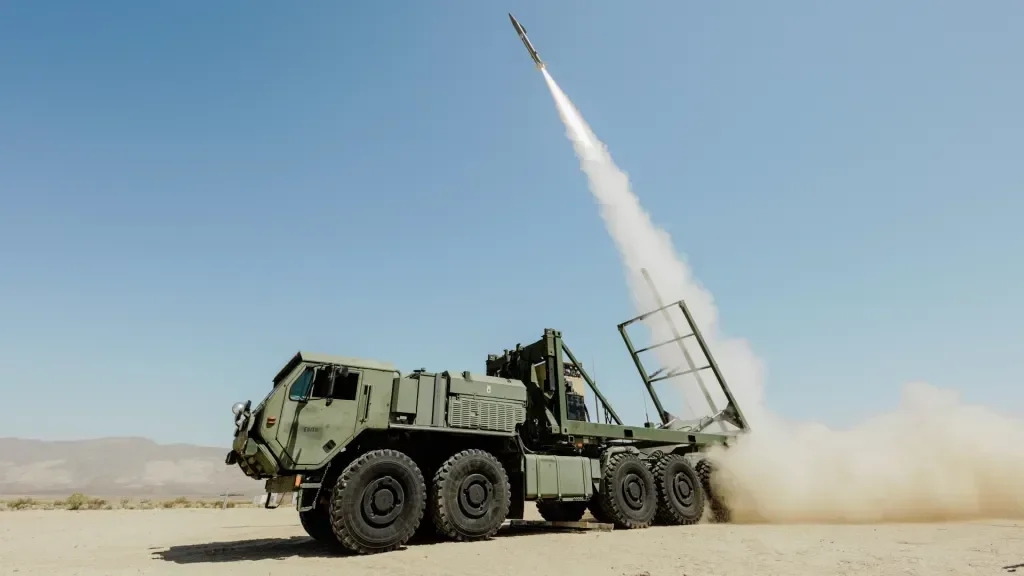
The U.S. Army has described the intended role of Blackbeard Ground Launch in revealing terms.
The ground-launched version is intended to provide precision strike capability against time-sensitive, moving, and hardened targets, while costing substantially less than existing hypersonic weapons.
That distinction matters.
Blackbeard does not necessarily have to replace America’s largest and most expensive hypersonic systems.
It could occupy the tier below them.
There are targets for which a conventional subsonic cruise missile may be too slow or too vulnerable, but employing an extremely expensive strategic hypersonic weapon would be economically excessive.
That creates a potential niche for Blackbeard: medium range, extremely high speed, precision guidance, and a sufficiently low price for large-scale employment.
In effect, Castelion is trying to do to hypersonic weapons what mass production has already done to many other categories of precision-guided munitions.
Not build the best possible missile.
Build a missile that is good enough — and build a lot of them.
HIMARS Makes the Concept Even More Interesting
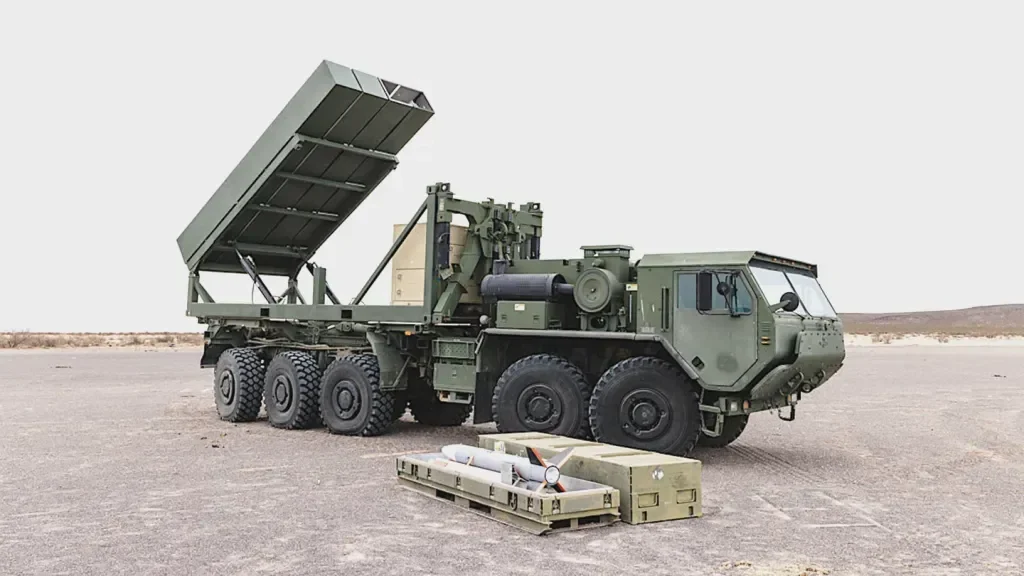
The Army is examining several potential ground-launch options for Blackbeard, including new unmanned launch vehicles. The possibility of using the existing M142 HIMARS is also under consideration. Exactly how many Blackbeards a HIMARS launcher could carry has not been disclosed.
If integration with HIMARS becomes practical, it would provide an important advantage.
HIMARS already has an established ecosystem: vehicles, trained crews, maintenance infrastructure, transportation equipment, fire-control systems, and logistics.
The new weapon would not require an entirely separate support network.
At the same time, a hypersonic munition could potentially extend the strike reach of existing rocket artillery units dramatically.
But caution is necessary here. Blackbeard has been discussed in connection with HIMARS, but the final launcher configuration and missile load remain unclear.
The Navy Wants Blackbeard Under an Ordinary Super Hornet
The air-launched version may be even more significant.
In April 2026, the U.S. Navy awarded Castelion a $105 million contract to continue integrating Blackbeard with the F/A-18E/F Super Hornet. The work includes safety testing, certification, flight testing, and activities associated with carrier operations. The objective is to achieve Early Operational Capability in 2027.
This could significantly expand the strike reach of carrier aviation.
The aircraft itself effectively becomes the first delivery stage.
A Super Hornet can launch from an aircraft carrier, fly hundreds of kilometers, and only then release the weapon. If Blackbeard’s eventual range approaches the previously discussed 800 kilometers, the total strike depth of the aircraft-weapon combination becomes substantially greater than the missile’s range alone.
It also makes the direction of attack less predictable.
A fixed ground launcher operates from a particular region. Carrier aircraft can approach their launch points from different directions.
And all of this could potentially be achieved without developing a new specialized aircraft.
Why Not Just Build a Ballistic Missile?
There is an obvious question.
If Blackbeard already uses a rocket booster to accelerate its payload to hypersonic speed, why bother with an HGV at all?
A conventional ballistic missile also travels faster than Mach 5.
The answer lies in the trajectory.
After boost, a traditional ballistic missile follows a relatively predictable ballistic arc. Modern maneuvering warheads complicate the picture, but the basic geometry remains understandable.
An HGV descends into denser layers of the atmosphere and can glide and maneuver.
That creates a more difficult problem for missile defense systems because predicting exactly where the vehicle is heading becomes harder.
A lower atmospheric flight profile can also reduce warning time for some detection systems compared with a high ballistic trajectory.
It is this combination of speed, maneuverability, and a less predictable trajectory that makes HGVs attractive.
But those advantages also make the vehicle significantly more difficult to engineer.
Above Mach 5, Air Starts Behaving Very Differently
At hypersonic speeds, propulsion is no longer the only major problem.
Air compresses sharply ahead of the vehicle, creating extreme temperatures. Surface heating can become severe enough that conventional aerospace aluminum structures are no longer suitable.
The nose and leading edges experience particularly intense thermal loads.
Designers therefore need heat-resistant materials, thermal protection, and a structure capable of surviving both high temperatures and substantial aerodynamic forces.
Communications create another challenge.
Under some flight conditions, ionized gas can form around a hypersonic vehicle and interfere with radio-frequency signals.
And Blackbeard is not supposed to be merely a very fast projectile.
The Army has explicitly discussed seeker-based precision fires and the ability to engage moving targets.
That means the relatively inexpensive glide vehicle must contain navigation systems, flight controls, actuators, and potentially a seeker capable of functioning after a hypersonic flight regime.
This is where the promise of low cost becomes genuinely ambitious.
Castelion Is Trying to Make the Development Process Cheaper Too
This may be the most unusual aspect of the entire program.
Castelion was founded by former SpaceX employees, and the company has brought an approach familiar from commercial spaceflight into missile development:
build quickly, launch, collect data, modify the design, launch again.
That is why early Blackbeard vehicles looked significantly different from the configuration being shown now.
That was deliberate.
The company has explained that its earlier vehicles were inexpensive internal test platforms designed to rapidly validate subsystems and improve computational models.
Rather than spending years perfecting the final missile entirely through design work and ground testing, Castelion repeatedly flies relatively inexpensive experimental hardware.
Failure becomes part of development.
That still costs money.
But it can potentially reveal much more quickly which solutions actually work.
And Now the Key Word Is Production
On August 20, Castelion’s unveiling of the latest Blackbeard configuration coincided with another major development: the company raised more than $1 billion in new financing, including $800 million in equity and $250 million in debt financing. Its valuation reportedly reached approximately $13 billion.
Part of that money is intended to scale Blackbeard production and support development of a longer-range follow-on weapon.
A major part of the manufacturing strategy centers on Project Ranger in New Mexico.
Castelion has already invested more than $250 million of its own capital into the site. Covering approximately 1,000 acres, the facility is being positioned as a major dedicated hypersonic missile manufacturing complex.
This illustrates one of the biggest differences between Blackbeard and many previous hypersonic programs.
The factory is being designed almost simultaneously with the weapon.
The question “How do we manufacture a thousand of these?” is not being asked after development is complete.
It is part of the development process itself.
The First 50 Have Already Been Ordered
On June 16, 2026, the U.S. Navy ordered 50 pre-production Blackbeard weapons and 50 shipping and storage containers from Castelion.
The contract is worth $23.4 million.
Deliveries are expected to be completed in 2027.
But the next stage is considerably more important.
In May, Castelion announced an agreement that calls for a guaranteed minimum production rate of 500 Blackbeards per year following completion of testing, with the potential for further purchases measured in the thousands.
Broader Pentagon planning reportedly envisions acquiring at least 10,000 Blackbeards over three years, alongside a similar quantity of lower-cost cruise missiles.
And at that point, Blackbeard stops looking like another experimental hypersonic program.
Ten thousand weapons represent an industrial-scale arsenal.
Quantity May Be Blackbeard’s Most Important Weapon
Modern missile warfare has an uncomfortable economic dimension.
It is possible to build a missile that is extraordinarily difficult to intercept.
But if only 30 such missiles exist, an adversary can design defensive planning around a threat consisting of 30 weapons.
If thousands potentially exist, the problem becomes fundamentally different.
Large inventories also allow inherently expensive hypersonic technology to be used against a much wider range of targets.
Not just a handful of extremely important strategic facilities, but mobile systems, command posts, air-defense assets, ships, and other operational targets.
That is why the word “cheap” can be somewhat misleading in the case of Blackbeard.
A better description might be expendable hypersonics.
The goal is to make the weapon inexpensive enough that commanders no longer have to treat every launch as the expenditure of a rare strategic asset.
But Blackbeard Is Still a Major Gamble
There are good reasons not to declare the revolution complete just yet.
Full performance specifications remain unknown. The final configuration could still change. The production unit price has not been disclosed. Mass production has not yet been demonstrated. Integration with the Super Hornet is ongoing, while the possibility of HIMARS employment still requires further development.
Most importantly, Castelion still has to prove that manufacturing methods that work for relatively simple experimental flight vehicles can scale to complete operational hypersonic weapons containing warheads, precision guidance, seekers, and all the systems required for reliable storage and deployment.
Building one vehicle capable of surviving hypersonic flight is difficult.
Building a thousand identical vehicles, each of which can remain in storage, launch reliably, survive the flight regime, and accurately hit its target, is an entirely different engineering problem.
That is the challenge Castelion is now trying to solve.
Blackbeard Could Change What “Hypersonic Weapon” Means
Until now, hypersonic weapons have largely been treated as strategic technological exotica: extremely expensive, technically sophisticated, and therefore available only in relatively small numbers.
Blackbeard proposes a different philosophy.
Do not maximize range.
Do not chase a speed record.
Do not turn every missile into a technological masterpiece costing tens of millions of dollars.
Instead, combine a relatively straightforward rocket booster with a compact maneuvering HGV, vertically integrate as much production as possible, continuously fly inexpensive test vehicles, and design the weapon from the beginning for large-scale manufacturing.
The result could be a weapon capable of flying faster than Mach 5 to targets roughly 800 kilometers away, launching from both ground platforms and F/A-18E/F Super Hornets, engaging moving targets, and being manufactured not by the dozen but by the hundreds or potentially thousands.
If Castelion can actually deliver on those promises, Blackbeard’s most important achievement will not be its speed.
Hypersonic vehicles have flown before.
The real revolution begins when a hypersonic missile stops being a weapon that has to be carefully conserved and becomes a munition that can be expended in large numbers.
That appears to be why Blackbeard is deliberately not being designed as the most capable hypersonic weapon in the world.
Instead, Castelion is trying to create something the American arsenal has never really had before:
a hypersonic weapon available in quantity.