“I Am No King or Duke. I Am de Coucy”: Why One Medieval Dynasty Placed Its Name Above Titles

In the Middle Ages, a title was far more than an impressive word placed before a man’s name. It defined his position in society, carried legal privileges, conferred prestige, and often gave at least some indication of how much land, how many castles, and how many armed men stood behind him. A king ranked above a prince, a duke above most counts, while an ordinary lord might possess no grand title at all. That is why one of the most famous phrases associated with medieval French nobility sounds almost defiantly illogical:
“I am no king, nor prince, nor duke, nor count either — I am the Sire de Coucy.”
Roi ne suis, ne prince, ne duc, ne comte aussi; je suis le sire de Coucy.
Tradition associates these words with Enguerrand III de Coucy, a man who was indeed neither king nor duke. Yet behind him stood a fortress capable of rivaling royal strongholds; his family was connected to some of Europe’s greatest dynasties; and for almost three centuries the House of Coucy remained one of the most powerful aristocratic families of northern France. The famous phrase, therefore, was not an admission that its speaker lacked an exalted title. It meant precisely the opposite:
“I need no title for you to know who stands before you.”
That is what makes the history of the Coucys so fascinating. Their story reveals the Middle Ages as they actually were, rather than as a neat modern hierarchy of aristocratic ranks. A count could be poorer and weaker than a man who styled himself merely sire. A duke might control an enormous territory yet remain more dependent on the king than another, supposedly lesser lord. An ancient name, land, castles, vassals, and dynastic connections could sometimes matter more than a title.
The House of Coucy took this principle almost to its logical extreme — and left behind such an extraordinary monument to its own pride that, seven centuries later, it took dozens of tons of explosives to destroy it.
Lords With Whom Kings Had to Reckon
To understand the famous motto, we need to return to France at the end of the eleventh and beginning of the twelfth century.
This was not yet the France of Louis XIV, ruled by a powerful monarch from Versailles. The King of France was certainly a king, but the authority of the early Capetians beyond their own royal domain remained limited. Much of the country was controlled by great and lesser feudal houses capable of raising armies, constructing fortresses, forging alliances, and fighting their neighbors for years at a time. Royal authority was gradually increasing, but in many regions the king could not simply issue commands to powerful lords. He had to negotiate with them — or force them into submission by military means.
It was in this France that the House of Coucy emerged.
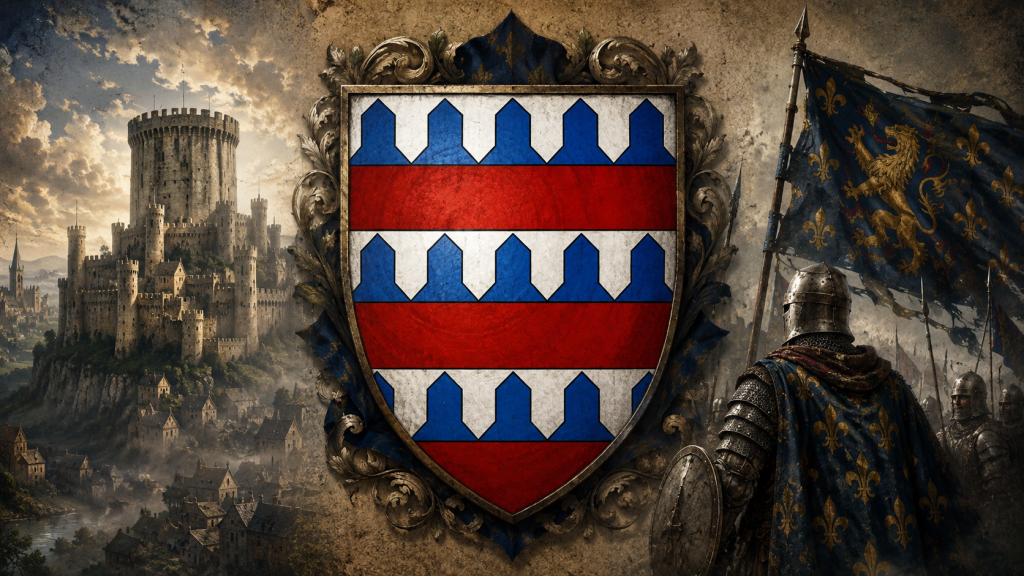
Its lands lay in Picardy, on a strategically valuable rocky height overlooking the valley of the Ailette. A fortress had existed there before the rise of the famous dynasty, but around the 1080s Coucy passed into the hands of Enguerrand I, a member of the House of Boves. From that moment, the name of a relatively small place gradually became one of the most formidable aristocratic names in northern France.
The first generations of the family already demonstrated how peculiar the world of early French feudalism could be. Enguerrand I and his son Thomas de Marle took part in the First Crusade, but it was Thomas who became especially famous — or rather infamous. His wars with neighboring lords, conflicts with the Church, and reputation for extraordinary brutality made him one of the most notorious barons of his age.
Eventually King Louis VI himself had to move against him. In 1117, royal forces attacked Coucy’s strongholds and forced Thomas to submit.
The important point is not merely that Thomas rebelled. It is that restoring royal authority within the king’s own realm required an actual military campaign. That fact alone tells us a great deal about the real power enjoyed by men such as the lords of Coucy.
Later generations continued to fight wars, join crusades, and accumulate land and connections. But the true rise of the dynasty came in the early thirteenth century, under the man whose name would forever become associated with its famous motto.
His name was Enguerrand III de Coucy.
Enguerrand the Great
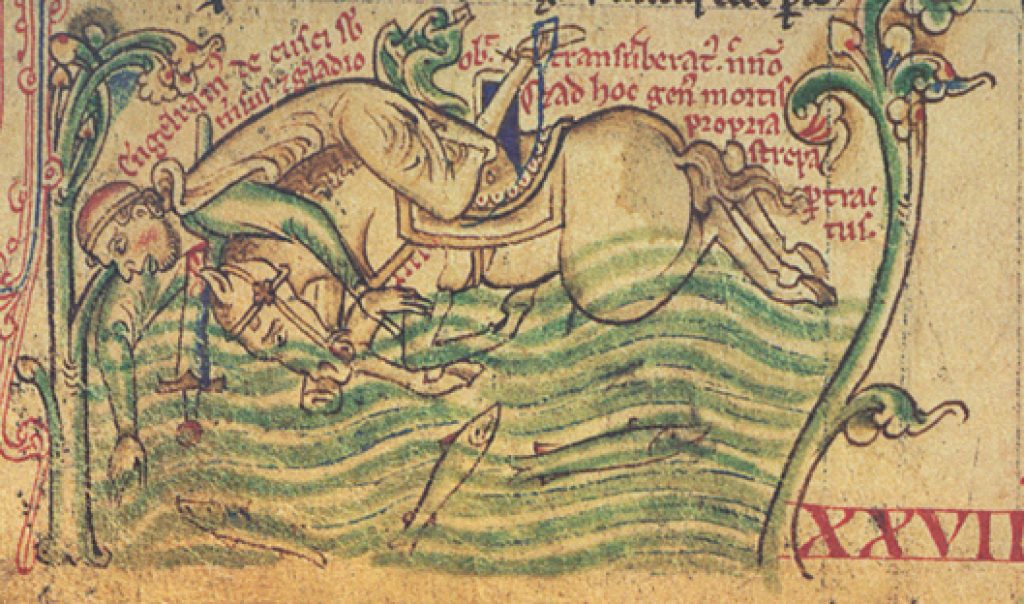
Enguerrand III was born around 1182 and inherited Coucy while still young. He already belonged to an entirely different category of aristocracy from his distant ancestors. Through his mother, he was descended from the Capetian House of Dreux and was related to the French royal family. His marriages connected the Coucys even more closely to the highest ranks of European nobility.
More importantly, Enguerrand knew how to turn family connections and territorial possessions into political power.
In 1214 he fought on the side of King Philip II Augustus at the Battle of Bouvines, one of the defining battles of medieval French history. The victory over the coalition led by Emperor Otto IV and the allies of the English king John dramatically strengthened the French monarchy. Enguerrand later participated in the Albigensian Crusade. He was no provincial lord confined to a single castle but a participant in the great political and military struggles of his age.
Yet relations between Coucy and the monarchy were far from peaceful.
In 1226, Louis VIII died. His heir, the future Louis IX — Saint Louis — was only twelve years old, leaving the government of France in the hands of his mother, Blanche of Castile. To some of the kingdom’s great feudal lords, the king’s minority looked like an opportunity to recover some of the independence the Capetians had gradually taken from them.
Enguerrand III was among the barons who opposed the regency.
Later tradition went even further, attributing to him ambitions to claim the French crown itself. How serious such intentions really were is difficult to establish, and portraying Enguerrand simply as a failed claimant to the throne would go beyond the evidence. Yet the existence of such stories is revealing in itself. Contemporaries and later chroniclers could apparently imagine a political world in which a mere “Sire de Coucy” considered himself powerful enough to challenge the Capetians.
But Enguerrand had another way of announcing his position — one far more convincing than anything a chronicler could write.
He began to build.
A Fortress That Was Itself a Political Statement
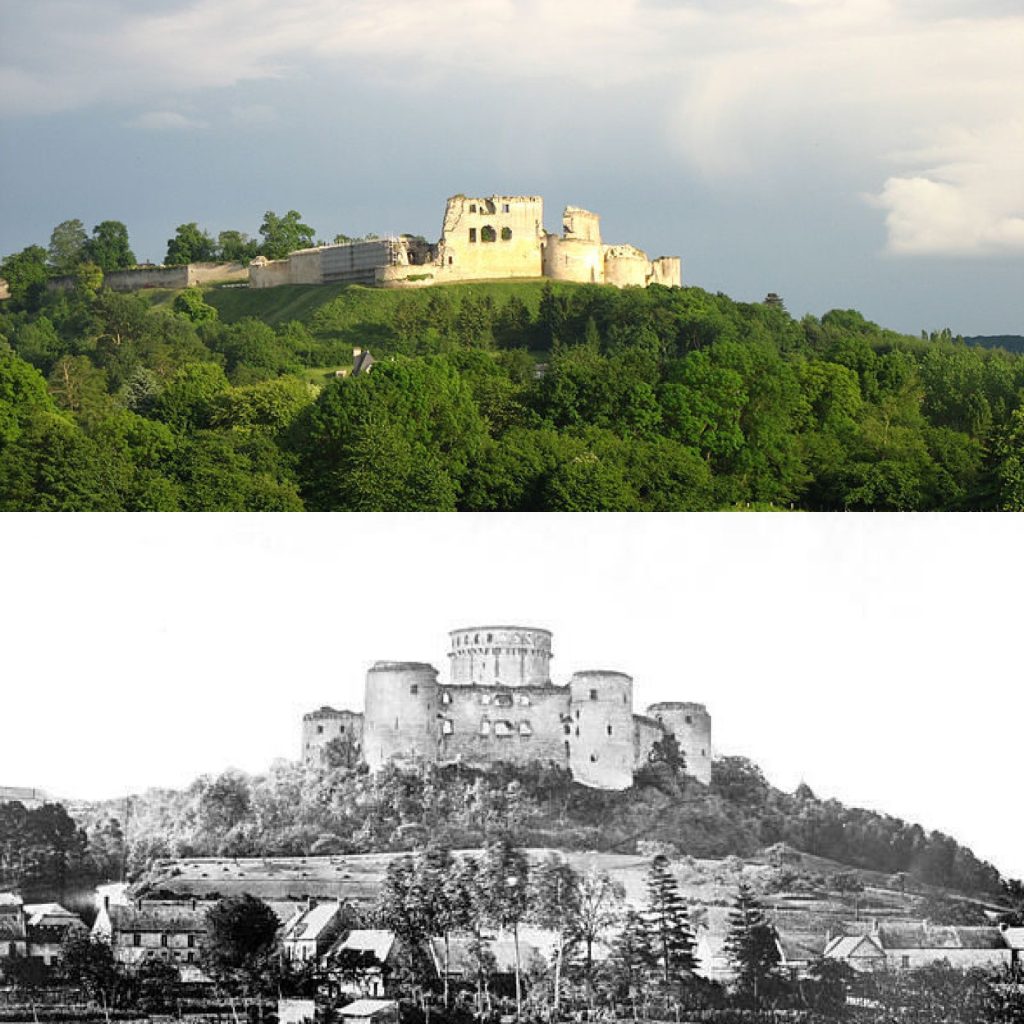
Around 1225, Coucy underwent a colossal reconstruction.
The site was already almost ideal for a fortress. A rocky promontory rose more than sixty meters above the valley, providing natural protection and commanding views across the surrounding countryside. Enguerrand transformed it into an enormous fortified complex incorporating the town, outer defenses, and the castle itself. The town received its own system of walls, with dozens of towers and several fortified gates.
But the centerpiece was the keep.
The great tower of Coucy stood approximately 54 meters high and more than 30 meters in diameter. This was not merely another castle tower. Until its destruction, it ranked among the most extraordinary medieval keeps in Europe. Four enormous corner towers guarded the castle itself — structures that in many other fortresses would have been impressive enough to serve as the principal keep.
Its military purpose is obvious, but military necessity alone cannot fully explain the sheer scale of Coucy.
A medieval castle was simultaneously a fortress, a residence, and a symbol of status. The farther its towers could be seen, the less explanation a traveler needed about who controlled the surrounding land.
Enguerrand III pushed that logic to its extreme.
The King of France had his keep at the Louvre.
The Sire de Coucy built a tower designed to make men forget the king’s.
In that sense, Coucy can be understood as the famous motto expressed not in words but in stone. Even the modern French institution responsible for the monument describes Enguerrand’s rebuilding program as a spectacular demonstration of aristocratic power.
Enguerrand never received a crown. Instead, he built a tower that could be seen for miles.
Only now does the famous formula begin to reveal its real meaning.
“I Am the Sire de Coucy”
The best-known version of the motto reads:
Roi ne suis, ne prince, ne duc, ne comte aussi; je suis le sire de Coucy.
Approximately:
“I am no king, nor prince, nor duke, nor count either — I am the Sire de Coucy.”
Several versions of the wording exist because the formula survives through later tradition. We should therefore be cautious about the attractive story that Enguerrand III personally coined or proclaimed these exact words sometime around 1220. The motto is traditionally attributed to him and became inseparably associated with his dynasty, but there is no securely documented moment when Enguerrand “invented” it.
Regardless of its exact origin, however, the phrase captures the position of the Coucys remarkably well.
Modern readers often imagine the aristocratic system as something resembling a military rank structure: duke above marquess, marquess above count, count above viscount, viscount above baron.
Medieval Europe was considerably more complicated.
A title did not automatically determine the wealth, territorial power, or political influence of its holder. Systems of titles also differed between countries and changed considerably over time.
The word sire itself is not simply equivalent to “baron.” In this context, it is more accurate to speak of the Lord of Coucy, the holder of a particular lordship. Formally, that may sound modest.
But what mattered was not merely the word placed before a man’s name.
What mattered was what came after it.
A man might be the count of a small and impoverished county. Another might be merely the Sire de Coucy — yet control several lordships and castles, command numerous vassals, field his own military forces, and possess family connections extending into royal dynasties.
At that point, promotion to a grander title became almost unnecessary.
The Coucy motto effectively turns the feudal hierarchy upside down:
“You may list your kings, princes, dukes, and counts. I need only give you my name.”
This was not a rejection of the aristocratic system.
It was almost its ultimate expression — the point at which the prestige of a dynasty became so great that the family name began to function as a title in its own right.
When a Family Name Becomes a Title
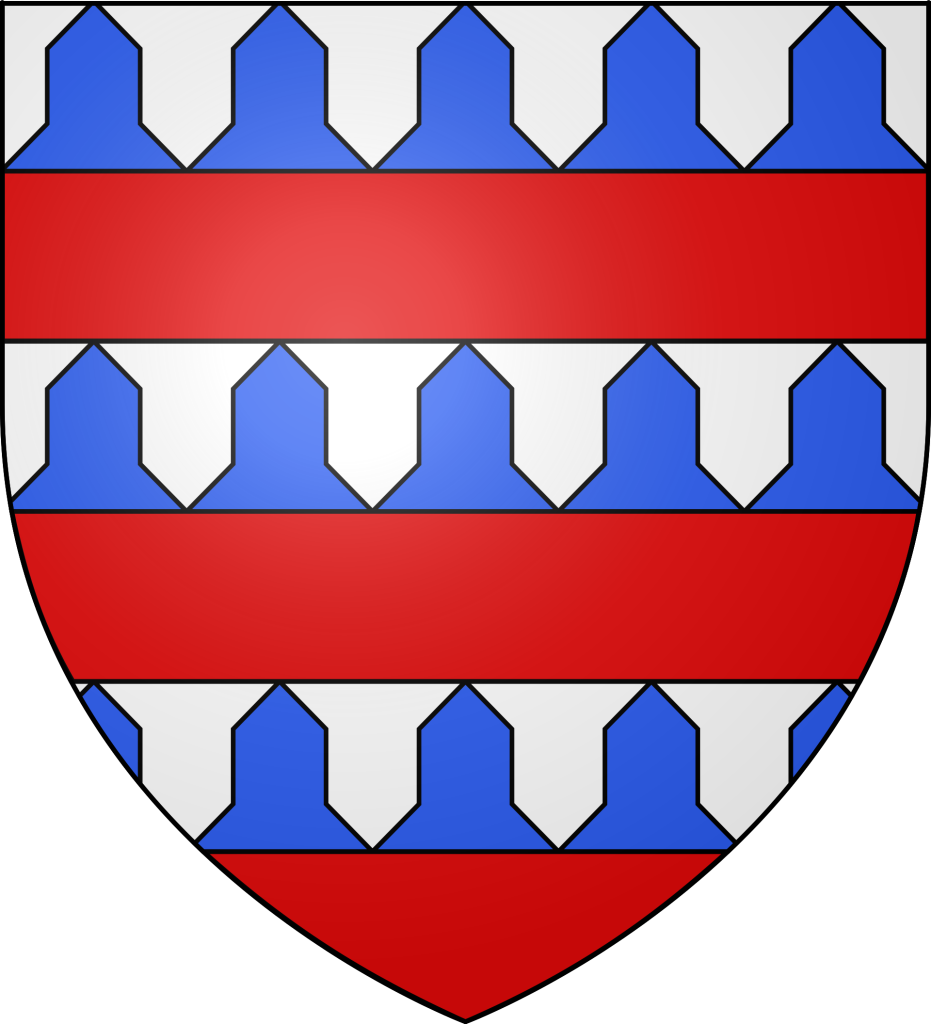
What makes the story even more interesting is that this pride survived Enguerrand III.
He died in 1242 after falling from his horse. Coucy passed to his descendants, and the dynasty continued to occupy an important place in French politics. The castle itself gradually evolved as well. From a purely formidable military stronghold, it also became a magnificent aristocratic residence, with ceremonial chambers, a chapel, and the celebrated Hall of the Nine Worthies. By the fourteenth century, Coucy represented not only military power but the culture and splendor of one of France’s richest aristocratic courts.
Then the dynasty produced a man whose life may explain the old motto even better than that of Enguerrand III.
Enguerrand VII de Coucy.
Born around 1340, he inherited Coucy as a child. His ancestry alone demonstrated how far the family had risen over the centuries. Through his mother he was connected to the Habsburgs.
But the decisive turn in his life came during the Hundred Years’ War.
After the French defeat at Poitiers in 1356, King John II was taken prisoner by the English. As part of the arrangements that followed, members of the highest French nobility were sent to England as hostages. Among them was the young Enguerrand de Coucy.
And then something remarkable happened.
King Edward III of England did not merely welcome the French hostage into his court.
He gave Enguerrand his own daughter, Isabella of England, in marriage.
The Sire de Coucy became the son-in-law of the King of England.
While in England, Enguerrand received estates and was created Earl of Bedford.
There is almost poetic irony here. A representative of a dynasty that had spent generations boasting that being Sire de Coucy was enough finally received a genuine comital title.
Yet history remembers him not primarily as the Earl of Bedford.
It remembers him as Enguerrand VII de Coucy.
A Man Between Two Kingdoms

Enguerrand VII occupied an unusual position even by the standards of the fourteenth century. He simultaneously belonged to the highest ranks of the French aristocracy and to the family of the English king — at a time when England and France were fighting the Hundred Years’ War.
For a while, he managed to balance between these two worlds.
After Edward III’s death, his ties to England weakened, and Enguerrand eventually returned fully to French service. He became governor of Picardy, held important positions at the French court, and participated in diplomatic and military enterprises far beyond his own lands.
By this point, the scale of the family’s power bore almost no relationship to the modest word “sire.”
Here was a man related to the English Plantagenets and the Austrian Habsburgs, serving the French Valois, controlling an enormous complex of estates, and capable of operating as an independent figure in European politics.
Yet the principal name remained Coucy.
This reveals one of the most important features of medieval aristocracy that modern readers can easily miss. The antiquity of a dynasty was political capital. Land was political capital. Marriage connections were political capital.
Even a castle was political capital.
Behind the words “Sire de Coucy,” therefore, stood far more information than a modern reader might initially imagine.
It was almost a rank of its own.
The Last Great Coucy
The end of the dynasty was worthy of its history.
In 1396, European rulers organized a major crusade against the rapidly expanding Ottoman Empire. The crusading army included French, Burgundian, Hungarian, and other European forces. Among its experienced commanders was the now aging Enguerrand VII.
The crusaders encountered the army of Sultan Bayezid I near Nicopolis.
The battle ended in disaster.
The French knights attacked the Ottoman positions and initially made progress, but their assault eventually carried them into battle with the main Ottoman forces. The allied army collapsed. Many noble participants were killed or captured.
Enguerrand was among the prisoners.
He never saw Coucy again.
In February 1397, Enguerrand VII died in Ottoman captivity. With him, the direct male line of the famous dynasty came to an end. A few years later, in 1400, the lordship of Coucy was acquired by Louis, Duke of Orléans, brother of King Charles VI of France.
Almost three centuries of Coucy history were over.
But the castle remained.
Coucy Outlived the Coucys
This may be the most remarkable historical paradox of the entire story.
The dynasty disappeared at the end of the fourteenth century.
The giant built by Enguerrand III continued to stand.
Kings and dynasties came and went. The Hundred Years’ War ended. Medieval feudal France disappeared. The monarchy finally subdued the old aristocracy. The age of royal absolutism arrived, followed by a revolution that destroyed the very system of aristocratic privilege.
France became a republic.
And the keep of Coucy still towered over the valley.
By the nineteenth century, the fortress had become an important historical monument. The celebrated architect and restorer Eugène Viollet-le-Duc studied the site. The enormous keep remained the supreme symbol of the vanished power of the lords of Coucy.
Then came 1917.
During the German withdrawal to the Hindenburg Line in the First World War, the decision was made to destroy the fortifications of Coucy. The demolition of the enormous medieval monument caused outrage in France. According to historical materials published by the Department of Aisne, approximately 28 tons of explosives were placed beneath the great keep, with another 10 tons used against the other towers.
On March 27, 1917, the charges were detonated.
A tower that had stood for almost seven centuries disappeared in seconds.
Only ruins remained.
Why the Coucys Did Not Need to Be Dukes
And now we can return to the phrase with which this story began.
“I am no king, nor prince, nor duke, nor count either — I am the Sire de Coucy.”
Read simply as an aristocratic motto, it sounds like an extraordinary display of arrogance.
The history of the family reveals something deeper.
The Coucys emerged in a world where the authority of the French king still competed with the power of great feudal lords. Their ancestors fought kings, joined crusades, and expanded their possessions generation after generation. Enguerrand III participated in one of the French monarchy’s greatest victories at Bouvines, then became involved in opposition to royal authority himself. He built a fortress whose sheer scale looked almost like a deliberate challenge to the Capetians.
A century and a half later, Enguerrand VII became the son-in-law of the King of England, a relative of some of Europe’s greatest dynasties, and one of the most prominent aristocrats of France.
Yet throughout all of this, the family’s greatest political asset was not the word “count” or “duke.”
It was its name.
Coucy.
That is why the famous motto tells us not merely about one extraordinarily proud medieval lord, but about an entirely different system of power.
We tend to imagine the Middle Ages as a strict pyramid, with the king sitting at its summit and dukes, counts, and barons arranged neatly beneath him. In reality, that pyramid was constantly distorted by wealth, inheritance, marriage, the antiquity of a dynasty, the number of vassals it commanded, and the military power it could mobilize.
Sometimes a man with a lesser title really was more powerful than one with a greater title.
And sometimes a family became so prestigious that it hardly needed a title at all.
The House of Coucy survived for almost three centuries. Its members fought against kings and for kings, joined crusades, married into the Plantagenets and Habsburgs, and witnessed both the height and the beginning of the decline of the classical feudal world. Their dynasty disappeared, their lands passed to other rulers, and their greatest fortress was blown apart seven centuries after it had been built.
But the words survived.
And perhaps that is why it is difficult to imagine a better epitaph for a world in which a name could sometimes mean more than a crown:
“I am no king. No prince. No duke. No count. I am the Sire de Coucy.”