The Destrier: How Much Did a Knight’s Warhorse Cost, and Why Was It Not a Medieval Draft Horse?

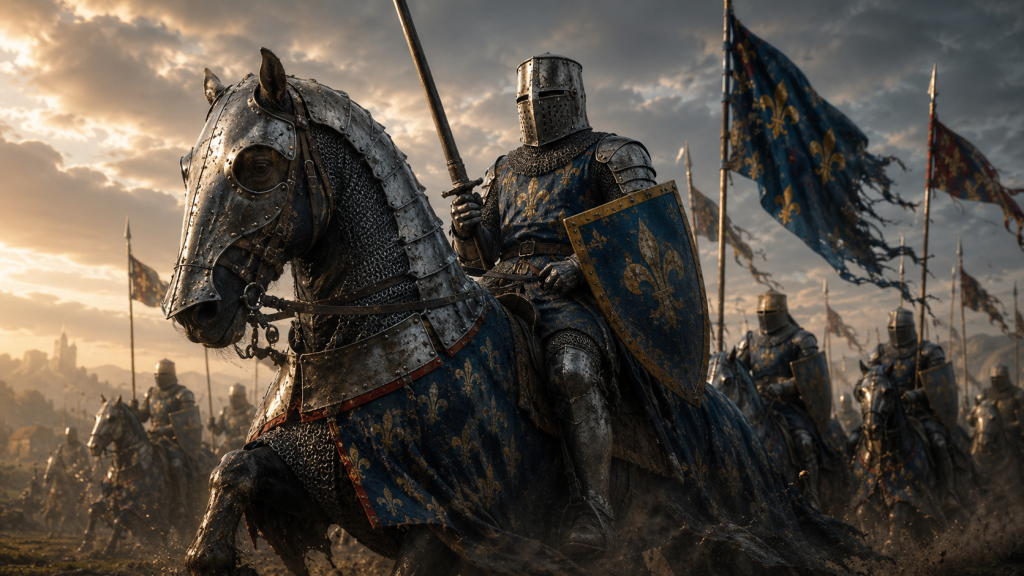
It is difficult to imagine a medieval knight without his horse. Popular culture has made the pair almost inseparable: an armored warrior sits astride an enormous, heavy animal that seems capable of smashing through infantry formations by sheer mass alone. This horse even has a familiar name — the destrier. From there, an apparently logical picture emerges: medieval Europeans must have deliberately bred gigantic warhorses, essentially the draft horses of their age, capable of carrying a heavily armored rider and crushing men beneath their hooves.
The problem is that the real destrier was nothing like that.
First of all, the destrier was not a breed at all. Moreover, most knights did not necessarily fight on destriers, and during a campaign a wealthy warrior would often avoid riding his best warhorse until it was actually needed. Even the idea of exceptionally gigantic medieval warhorses fits poorly with archaeological evidence: medieval horses were generally smaller than many of today’s large riding breeds. The value of the destrier did not lie simply in its size.
The real destrier was much more interesting.
It was a carefully selected, expensively raised, and highly trained warhorse combining strength, speed, maneuverability, and the right temperament. The finest animals could cost fortunes, serving simultaneously as weapons and status symbols and commanding prices many times higher than those of ordinary horses. To understand why a single animal could be worth so much, we first need to understand what medieval people actually meant by the word destrier.
A Destrier Was Not a Breed
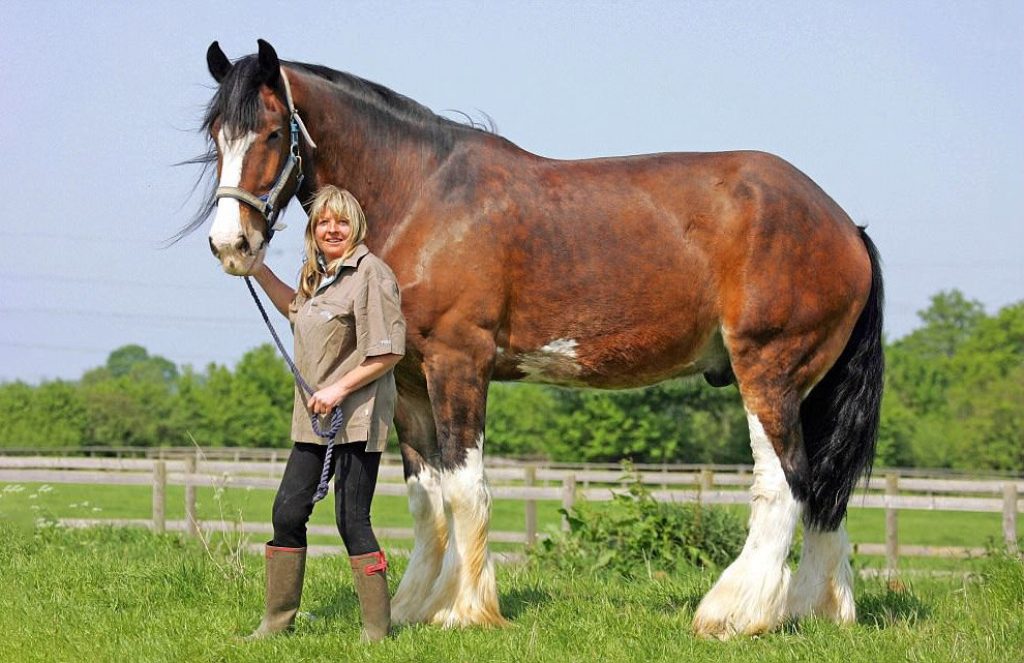
Modern people are accustomed to classifying horses primarily by breed. Arabian, Friesian, Andalusian, Percheron, Shire — each name immediately suggests a particular appearance, size, and ancestry.
So the obvious question is: what breed was the destrier?
But when dealing with the Middle Ages, the question itself is somewhat misleading.
Medieval terminology often described horses primarily by function, quality, and intended use, rather than according to modern concepts of breed. Sources mention destriers, coursers, rounceys, palfreys, and other categories. The boundaries between them were not always rigid, and terminology varied by region and period, but the general logic is clear.
The palfrey was primarily a valuable and comfortable riding horse used for travel and everyday riding. The rouncey was a more versatile and usually less prestigious mount, suitable for campaigning and, when necessary, combat. The courser was valued for speed and its qualities as a fighting horse. At the top of this informal hierarchy stood the destrier — an especially prestigious warhorse associated with heavily armed riders and the knightly elite.
One common explanation for the origin of the word itself reveals something about its intended role. The Old French destrier is usually connected with destre, meaning “right.” The warhorse could be led on the rider’s right side by a squire or servant while its owner traveled on another mount. It would be risky to reconstruct a universal European practice from etymology alone, but the underlying principle makes perfect sense.
The best horse was preserved for battle.
Forcing an expensive warhorse to cover dozens of kilometers every day, exhausting it and risking injury on poor roads, was simply inefficient. Other horses could handle routine travel.
And already the familiar cinematic image begins to fall apart. A knight setting out on campaign did not necessarily ride all the way from his castle to the battlefield on the same horse he would later use to charge the enemy with a lance.
His destrier might be walking beside him.
One Horse Was Not Enough for a Knight
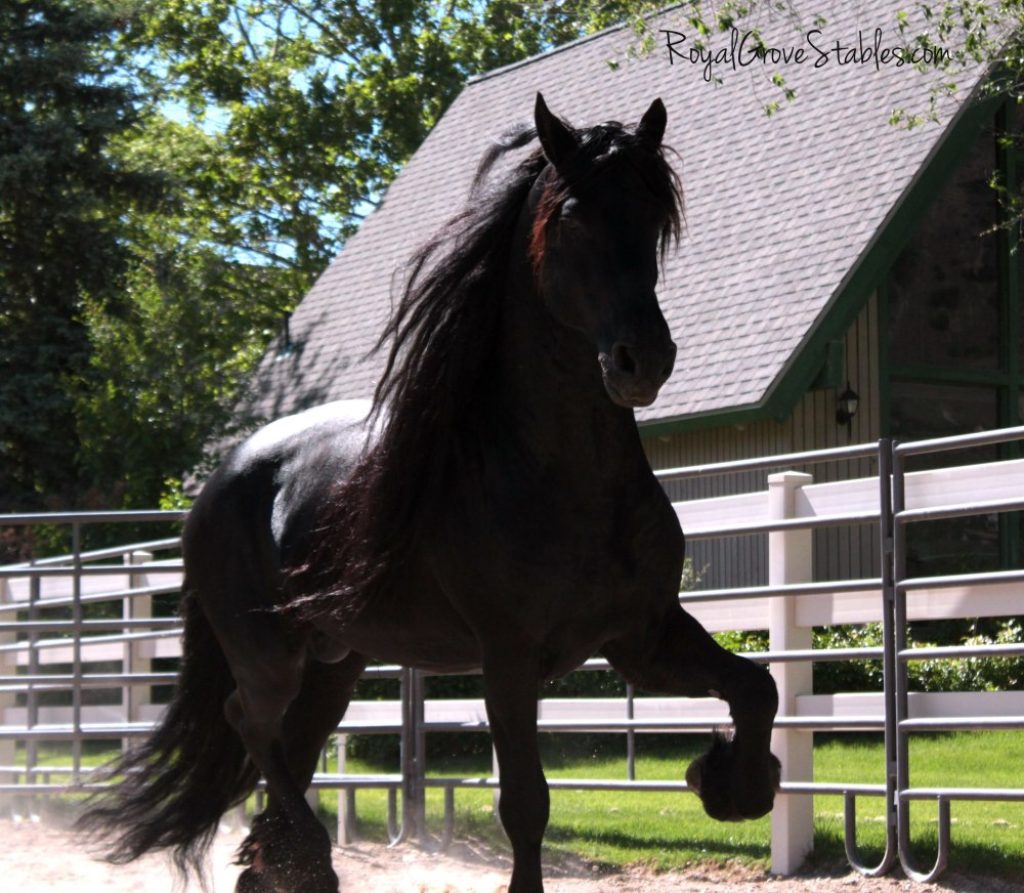
A medieval horse was simultaneously transportation, a military resource, and an extremely expensive living machine. And like any machine, it became tired, suffered injuries, and could break down — except that it also needed food, water, rest, and constant care.
A prosperous knight could therefore take several horses on campaign.
One might serve as his ordinary riding horse. Others could be used by servants or carry equipment. The finest warhorse could be reserved specifically for combat. The wealthier the warrior, the more animals he could afford to maintain.
This is crucial to understanding medieval cavalry.
We often calculate the cost of a knight by looking at his armor. Mail, helmet, shield, sword, lance, and later plate components were indeed expensive. But weapons and armor were only part of the system.
The horse had to be purchased or bred.
It had to be fed.
It required a saddle, bridle, and other equipment.
People were needed to care for it.
If there were several horses, the costs multiplied.
And then years of breeding, raising, and training were required before a promising animal could become a genuinely good warhorse.
In that sense, a medieval knight was not merely a man wearing expensive armor. He represented a small military system whose existence depended upon an entire economic infrastructure.
And the destrier was one of its most expensive components.
But How Large Was a Destrier?
This is where we encounter one of the most persistent myths.
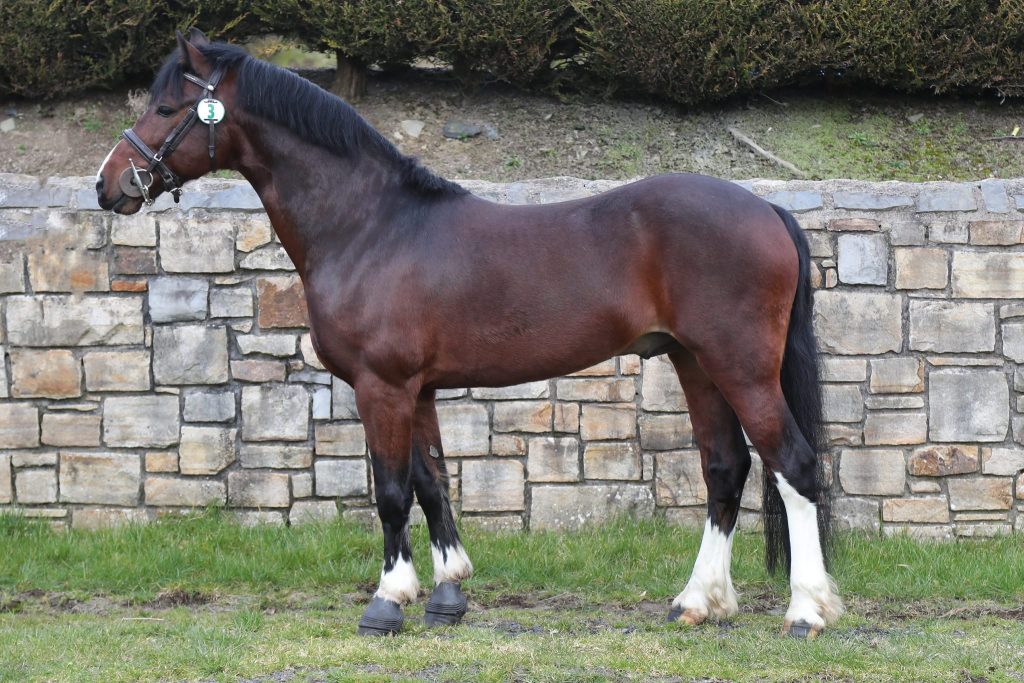
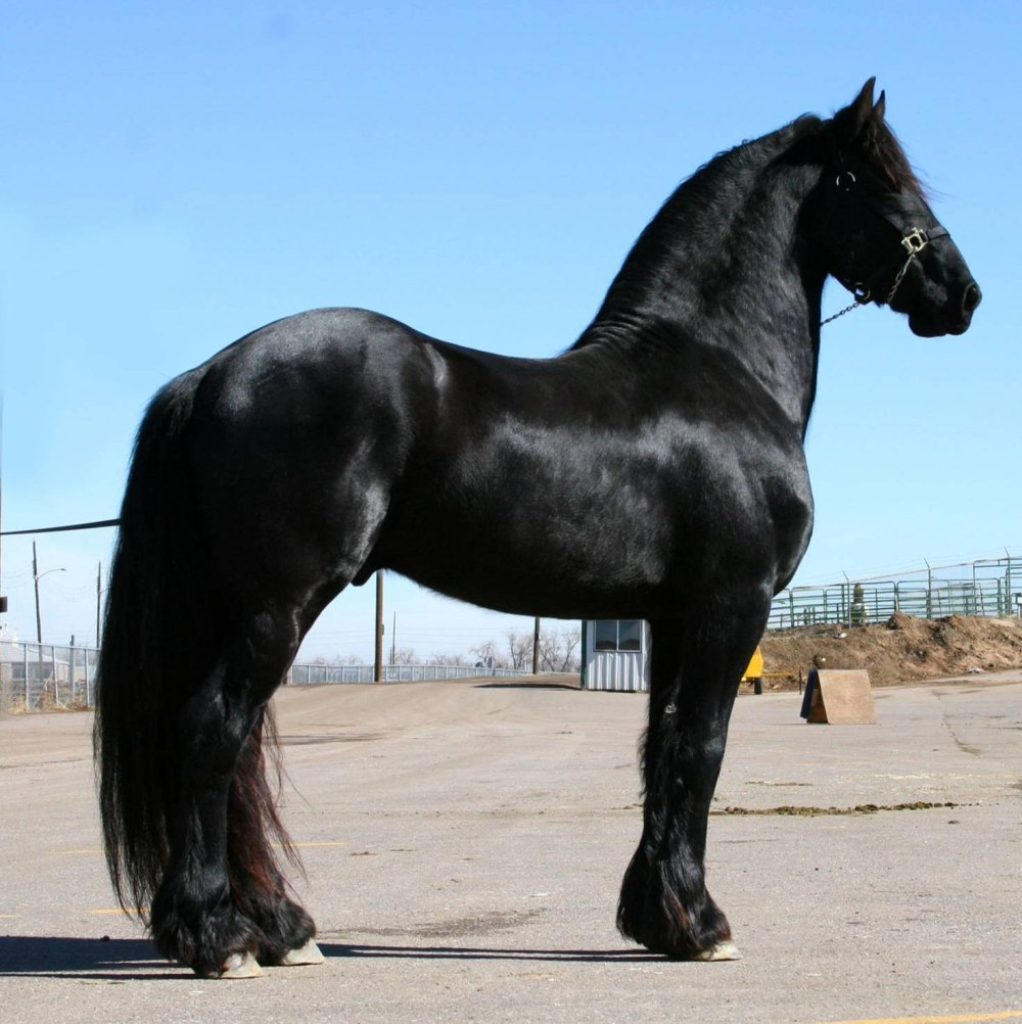
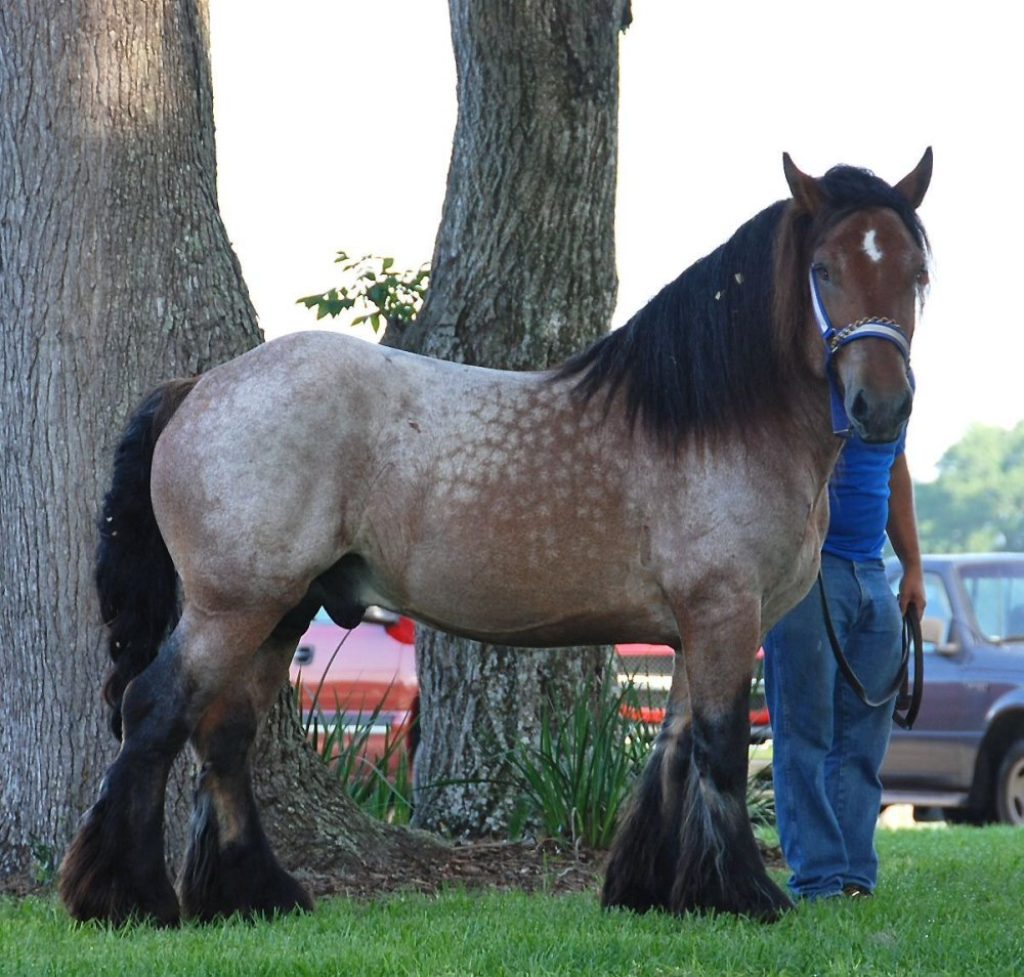
As knights gradually acquired heavier protective equipment, it seems logical to assume that their horses must also have grown larger. Hence the familiar image of the destrier as something resembling a modern Shire or Percheron: broad-chested, enormously built, perhaps approaching 180 centimeters at the withers.
Archaeology tells a different story.
A major study published in 2022 examined British horses from roughly the fourth through the seventeenth centuries, using almost two thousand skeletal remains from 171 archaeological sites. The results were revealing. Medieval horses were generally relatively small, while exceptionally large animals were rare.
Even the development of knightly cavalry did not produce a widespread population of gigantic horses.
This does not mean warhorses were small by the standards of their own time. On the contrary, the best animals could certainly be selected for size, strength, and build. But looking for a direct medieval equivalent of a modern heavy draft horse is misleading.
And here we encounter an important distinction between height and power.
A horse can be relatively modest in height yet possess a strong skeleton, broad chest, powerful back, and muscular hindquarters. For a warhorse, that combination could be considerably more useful than another ten or fifteen centimeters of height.
Nor did a medieval knight actually require a two-meter giant.
Even heavy military equipment represented a manageable load for a healthy, properly conditioned horse. The familiar story that armored knights were so burdened by their equipment that they had to be hoisted into the saddle with cranes is itself a later myth. Properly fitted combat armor allowed its wearer to walk, run, mount a horse, and fight.
The destrier therefore did not need to be a living truck.
It needed to be something much more sophisticated.
A Warhorse Had to Be an Athlete
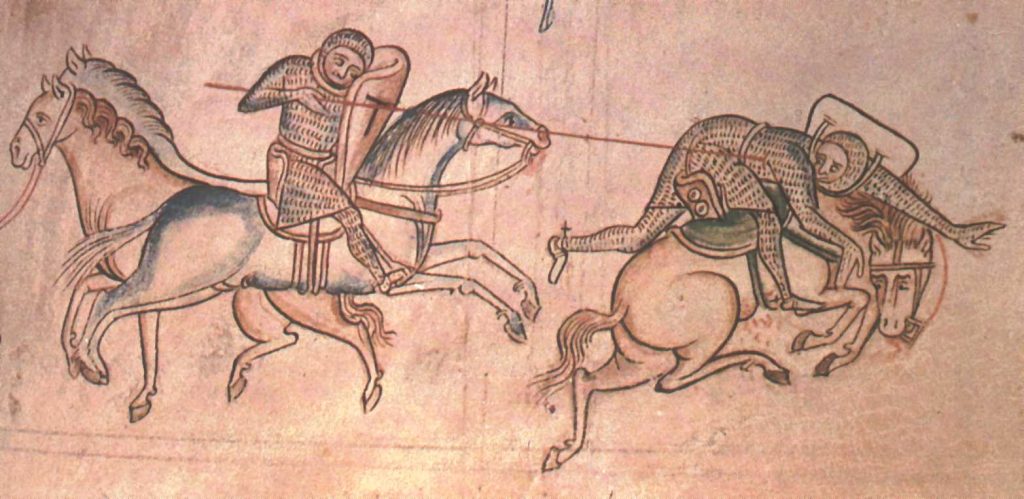
Imagine a battlefield from the horse’s perspective.
Hundreds or thousands of people surround it. Warriors are shouting. Trumpets sound. Drums beat. Other horses move nearby. Weapons flash ahead, arrows fly, and men fall to the ground. The rider holds reins while simultaneously handling a lance, sword, or shield, sometimes controlling the animal largely through his legs and shifts in body weight.
An ordinary untrained horse in such circumstances might attempt the most reasonable thing imaginable — flee.
A warhorse had to do the opposite.
It had to remain controllable.
That quality was probably far more important than a few additional centimeters at the withers.
A good warhorse needed strength and endurance, but also speed, the ability to change direction rapidly, stop confidently, and accelerate again. It had to respond to its rider even when the rider’s hands were occupied with weapons.
For that reason, the closest modern analogy for a destrier is not a draft horse.
It was more like a powerful sport horse trained for an extraordinarily aggressive and dangerous discipline.
It was precisely this combination of physical and psychological characteristics that made a good destrier rare.
A large horse can be bred.
So can a strong one.
But a strong, fast, maneuverable, healthy animal that is simultaneously brave enough for battle and controllable enough for a mounted warrior is much harder to find.
And once such an animal was found, it still had to be trained.
Could the Horse Kill People by Itself?
Another popular image associated with medieval warhorses suggests that destriers were deliberately trained to bite enemies, strike them with their hooves, and essentially participate in hand-to-hand combat alongside their riders.
This requires some caution.
A horse can certainly be an extremely dangerous animal. A kick can severely injure or kill a person, while the bite of a large stallion can cause serious wounds. Medieval and later evidence also demonstrates sophisticated training and control of military horses.
But turning every destrier into a deliberately trained four-legged combatant attacking infantry with teeth and hooves would be romanticization.
The rider remained the primary weapon.
The horse’s main task was to deliver him where he needed to be, maintain speed and control, allow him to strike, and then carry him out of danger.
That may sound less spectacular than a “killer horse,” but in practice it demanded a far higher level of training.
Try directing an animal weighing several hundred kilograms exactly where you want it to go at speed, surrounded by hundreds of other frightened animals and armed men.
It becomes easy to understand why good warhorses were valued so highly.
The Knight’s Most Expensive Weapon Was Alive
The price of a medieval horse could vary enormously.
An ordinary animal suitable for agricultural work or transportation and an elite warhorse belonged to entirely different economic categories. English documents from the thirteenth and fourteenth centuries show a vast range in the valuations of knights’ horses: from a few pounds for relatively ordinary animals to dozens of pounds for the finest warhorses of the nobility.
And dozens of pounds represented an enormous amount of money in medieval England.
For comparison, the income required to sustain a knightly lifestyle could itself be measured in only a few dozen pounds per year. An especially valuable warhorse could therefore represent a substantial portion of a landholder’s annual income.
There are also exceptional recorded valuations of horses belonging to great magnates that reached hundreds of pounds. These should not be treated as the “average price of a destrier.” They were closer to the medieval equivalent of unique luxury objects commanding extraordinary prices. But such examples reveal just how high the upper end of the market could reach.
A fine destrier was simultaneously a weapon, a means of transportation, an investment, and a display of wealth.
Today, a wealthy person might demonstrate status through an expensive car. In the Middle Ages, a magnificent stallion could perform a similar function far more convincingly.
Everyone around its owner understood roughly what such an animal represented.
A knight mounted on an exceptional destrier therefore displayed his wealth and status before anyone had even looked closely at his coat of arms.
Losing a Horse Could Be a Financial Disaster
Living weapons had one enormous disadvantage.
They could die.
A horse could be wounded by a lance, arrow, or other weapon. It could break a leg, fall, become ill, or simply fail to survive a difficult campaign.
And with it disappeared the fortune invested in the animal.
The problem was serious enough that medieval armies developed mechanisms for valuing horses and compensating owners for their loss. Particularly well documented is the English system known as restauro equorum, under which warhorses were assessed and their owners could claim compensation if an animal was lost while serving the Crown.
For historians, these records became extraordinarily valuable.
Bureaucracy created to compensate warriors for dead horses preserved information about prices, owners, colors, and other characteristics. At the same time, the very existence of such a system demonstrates just how serious an economic matter the loss of a good warhorse could be.
A sword could be replaced.
A shield could be made again.
Even damaged armor could be repaired.
But a trained destrier could not be manufactured in a week.
Why Did the Knightly Charge Work at All?
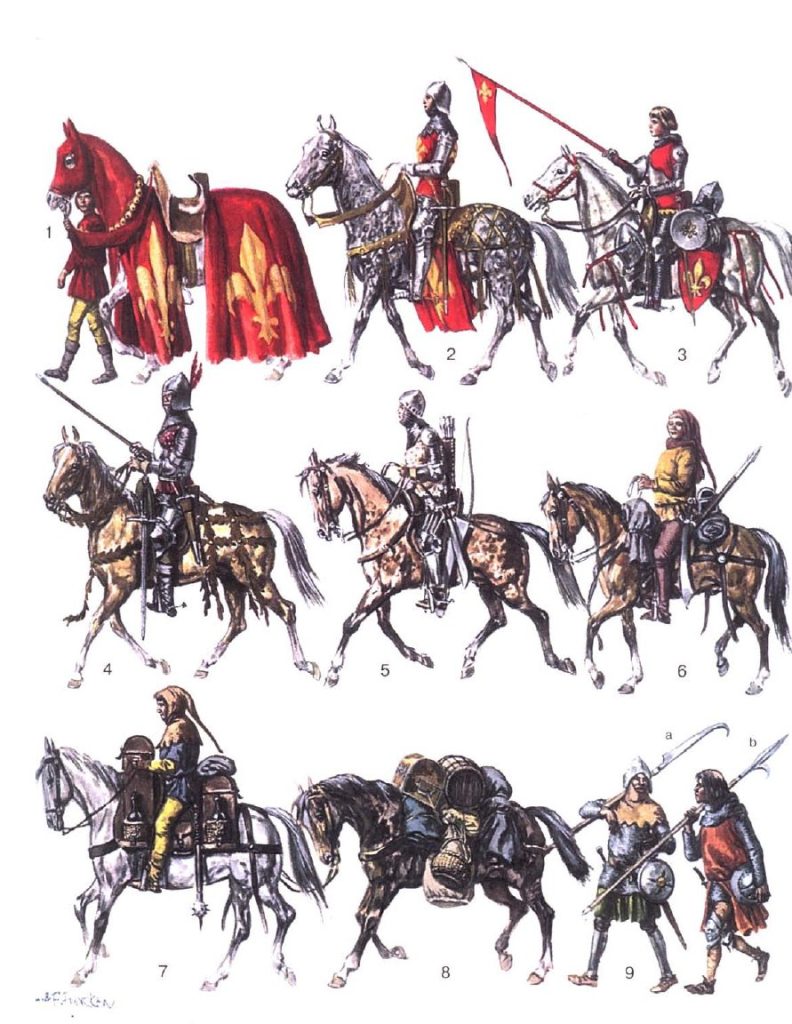
The destrier is sometimes described as part of a “medieval tank,” but the analogy is too crude. Knightly cavalry did not succeed because enormous horses physically crushed everything in their path.
Its main advantage came from a combination of speed, mass, organization, and psychological impact.
Several hundred mounted warriors advancing in formation represented a completely different threat from several hundred individual armed men. The lance allowed the knight to transform the movement of his horse into a powerful strike, while his elevated position offered advantages in close combat.
But no horse willingly wants to crash headfirst into a solid wall of people and sharp objects.
The effectiveness of a cavalry charge therefore depended not only on the quality of the horses but also on the condition of the enemy. If disciplined infantry maintained formation and possessed appropriate weapons, a frontal cavalry attack could end disastrously. If the formation began to waver, gaps appeared, or soldiers started retreating, cavalry speed could transform a crisis into a rout.
The destrier allowed the knight to exploit that moment as effectively as possible.
It had to approach rapidly, maintain formation, endure noise and chaos, allow its rider to strike, and then continue responding to commands.
That is why controllability could be more valuable than sheer size.
Then Horse Armor Appeared
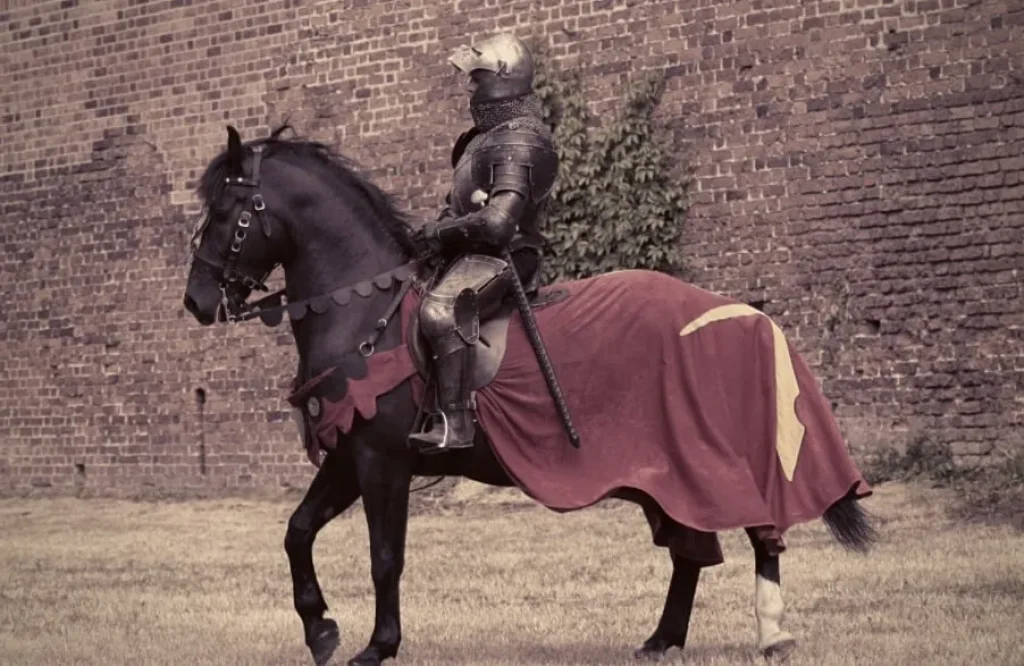
As defensive equipment developed, protection for horses evolved as well.
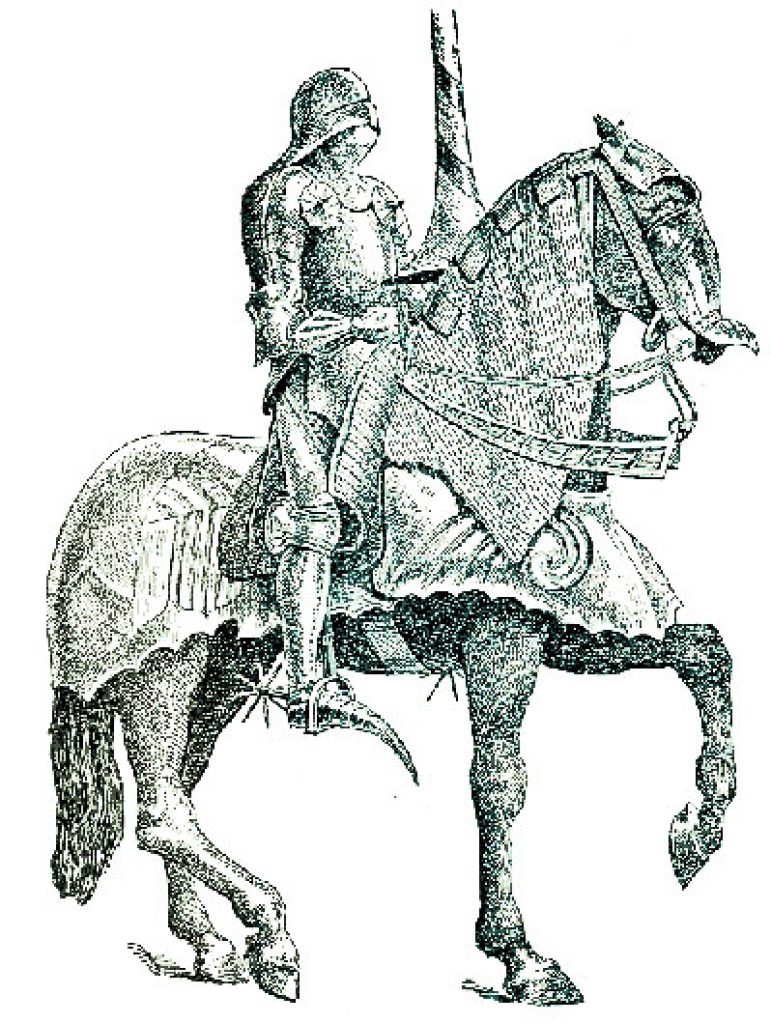
Various forms of horse coverings appeared relatively early, but the spectacular image of the fully armored warhorse belongs primarily to the later Middle Ages and the beginning of the early modern period. By the fifteenth and sixteenth centuries, sophisticated metal barding had developed, with plate components protecting the animal’s head, neck, and body.
This is precisely where popular culture often compresses several centuries into a single image.
A twelfth-century knight, a thirteenth-century destrier, fifteenth-century Gothic plate armor, and sixteenth-century tournament equipment are combined into a generic “medieval knight.”
In reality, military equipment was constantly changing.
The horse ridden by a knight at Hastings in 1066 and the warhorse of a heavily armored Burgundian cavalryman in the fifteenth century belonged to very different military systems.
Their saddles differed.
Their protective equipment differed.
Lance techniques changed.
Protection for the horse evolved.
Even the qualities demanded from the animal changed.
There was therefore no single universal “medieval destrier” that remained unchanged throughout the Middle Ages.
The Tournament Created Another Myth
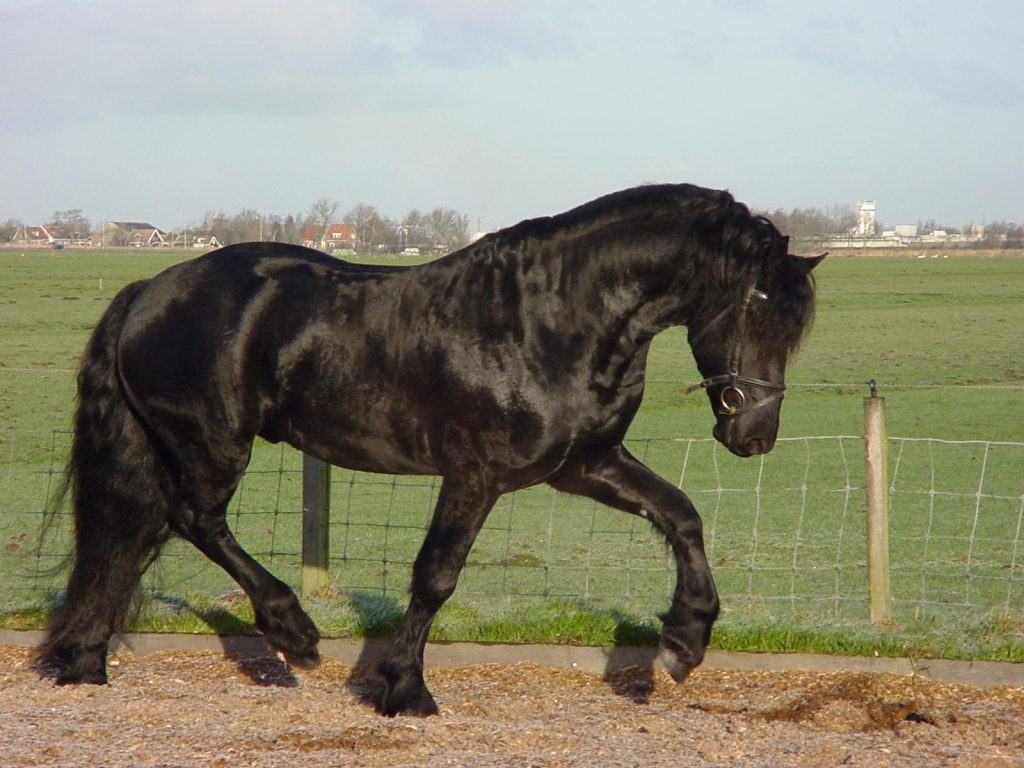
There is another reason why we imagine the knight’s horse as enormous.
The tournament.
Knightly competitions became increasingly specialized over time. Particularly in the later Middle Ages and the sixteenth century, tournament equipment could differ considerably from battlefield equipment. Some forms of mounted competition required specialized armor, saddles, and horse training.
It was becoming almost a separate sporting discipline.
And it is precisely this magnificent late equipment that has survived particularly well in museums. It was frequently photographed, studied, and reproduced by nineteenth-century artists. As a result, it shaped much of our modern visual understanding of knighthood.
This created a kind of historical optical illusion.
We look at the culmination of several centuries of knightly culture and project it backward across the entire Middle Ages.
The destrier consequently becomes a gigantic armored draft horse.
Yet the real warhorse often needed to combine almost contradictory qualities: it had to be strong enough to carry an armed rider while remaining fast and maneuverable enough for combat.
Where Did the Destrier Go?
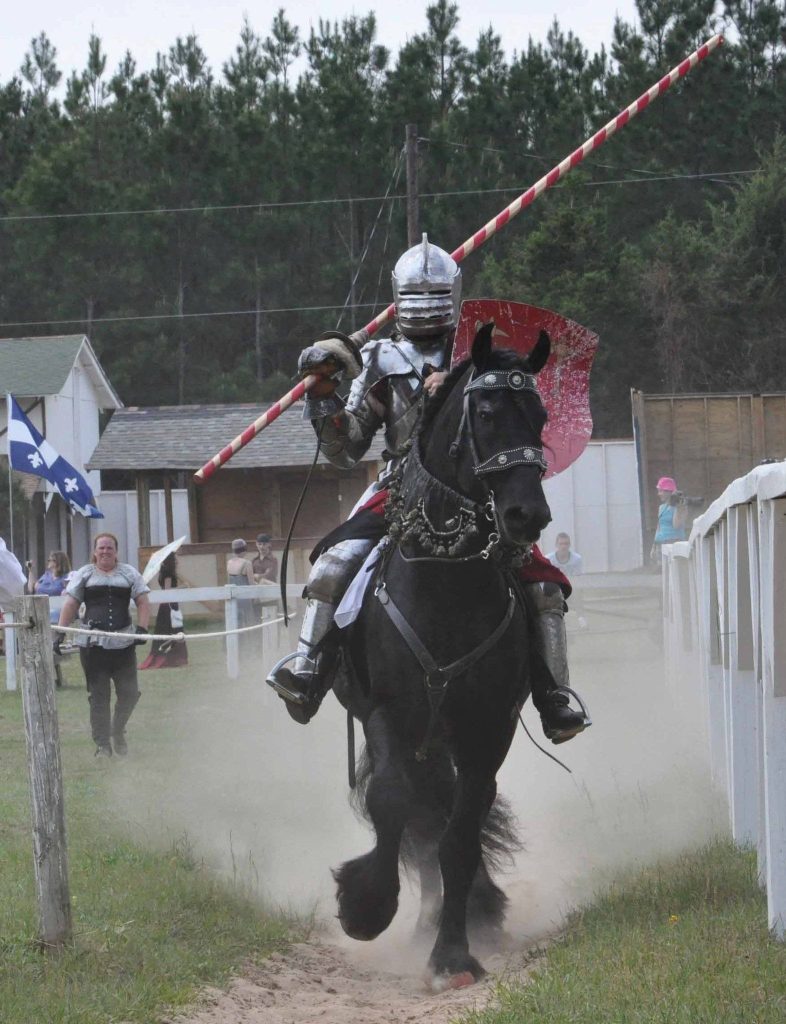
In reality, the destrier did not disappear at one specific moment.
War changed.
Already in the later Middle Ages, the role of heavy cavalry was evolving. Infantry became increasingly organized. Swiss pikemen and other disciplined formations demonstrated how dangerous a dense infantry formation could be to cavalry. Gunpowder weapons spread. During the sixteenth and seventeenth centuries, cavalry itself and the methods of employing it changed considerably.
The requirements placed on horses changed with them.
Armies continued to need excellent warhorses. Cavalry did not disappear — on the contrary, it remained enormously important for centuries. But the social and military world that had produced the classic destrier gradually vanished.
The specific combination of circumstances that made the destrier a distinct category was disappearing.
The destrier belonged to an era in which the heavily armed aristocratic horseman was simultaneously a military system and a social ideal.
When that system disappeared, the word gradually lost its old significance as well.
Not a Medieval Draft Horse
To imagine the destrier simply as an enormous horse is therefore to miss what made it truly remarkable.
Its value did not come from being the largest.
A destrier had to be strong enough, but also fast. Energetic, yet controllable. Brave enough not to panic in battle, yet obedient enough to respond instantly to a rider who might at that moment be wielding a lance or sword.
That combination was rare.
And then came years of raising and training.
That is why the finest horse was not wasted on routine travel. That is why a knight could require several mounts. That is why armies developed systems to compensate warriors for horses killed in service. And that is why the value of an exceptional destrier could reach sums that were significant even to a wealthy feudal lord.
The medieval knight really was an expensive military machine.
Except that a large part of that machine was alive.
It needed food, rest, and care. It could become frightened, fall ill, or break a leg. It could not be forged in a workshop or quickly replaced after a battle.
But when selective breeding, upbringing, training, and horsemanship came together successfully, the result was one of the most sophisticated instruments of mounted warfare of its age.
And that is why the real destrier is more interesting than its cinematic counterpart.
It was not a gigantic medieval draft horse capable of crushing the enemy through sheer mass.
It was an elite combat athlete — an animal that could sometimes be valued almost as highly as everything else carried by the knight sitting in its saddle.