Contents:
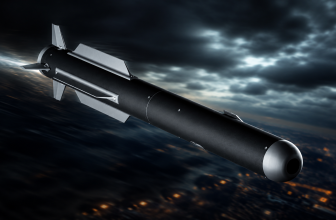
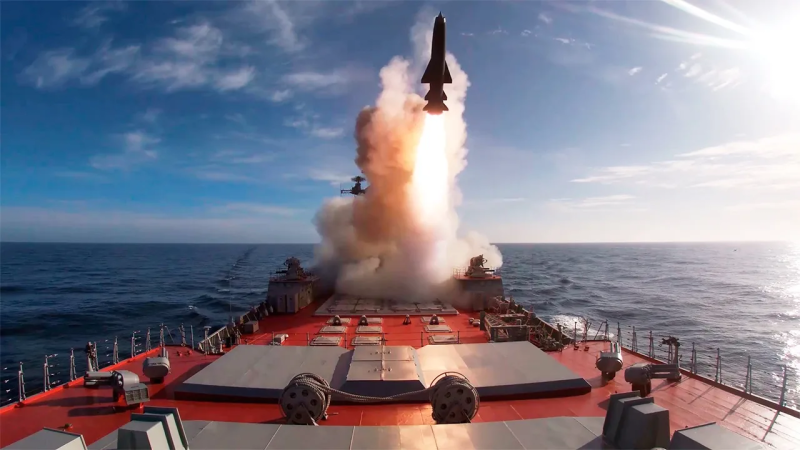
The 3M45 P-700 “Granit” anti-ship missile is rightly considered one of the masterpieces of Soviet military technology. To this day, no country in the world has been able to fully replicate the remarkable capabilities of the heavy Soviet anti-ship missiles, which were designed to tackle an extremely complex task—coordinated attacks against aircraft carrier strike groups, amphibious formations, and convoys under conditions of severely limited sensor support. The P-700 “Granit” missile system was developed primarily as a submarine-launched weapon; once launched, the missiles had to rely solely on themselves to search for, identify, and attack targets.
However, I have repeatedly encountered the fact that many people simply do not believe in the capabilities attributed to “Granit.” The main argument is that Soviet electronics of the 1970s lagged far behind Western technology and, in principle, could not handle such complex tasks.
In this article, I want to demonstrate that the capabilities ATTRIBUTED to the 3M45 P-700 “Granit” missile could very well have been achieved in principle using 1970s technology. Specifically:
* The missiles exchange data while in flight;
* One missile flies higher and guides the others, which fly lower; if the lead missile is shot down, another takes its place;
* The missiles can independently identify targets, recognize groups of ships, formulate an attack plan, and allocate targets among themselves;
* Missiles can approach targets from different directions, employ electronic warfare measures, and perform anti-aircraft maneuvers;
Of course, there is no information in official, declassified sources regarding the actual design of the 3M45 P-700 “Granit.” And I suspect such information won’t surface anytime soon—after all, the missile is still in service. So I’m going to consider the following: if we wanted to build a missile with the capabilities attributed to the P-700 “Granit” using 1970s-level technology, how might we go about it?
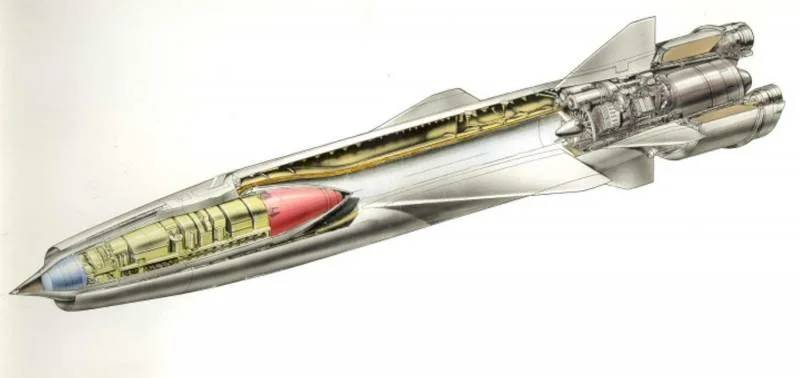
Let me emphasize once again: I have no information about the missile beyond what has been published in official sources. I don’t even know if it actually possesses the capabilities attributed to it. All my assumptions are purely speculative—considering “how a particular problem could be solved in principle”—or references to how similar problems were solved in completely different weapons systems (information about which is available in declassified sources).
ROCKETS EXCHANGE DATA WHILE IN FLIGHT
MISSILES EXCHANGE DATA IN FLIGHT—well, actually, what’s stopping them? The homing head of any given missile doesn’t care at all where it sends the data stream it receives—to a processing unit or to a radio transmitter. In turn, other missiles also don’t really care where the data stream is coming from—whether from their own homing head or via a radio channel from another missile. The radar scanning modes and data-processing algorithms are identical across missiles of the same type anyway.
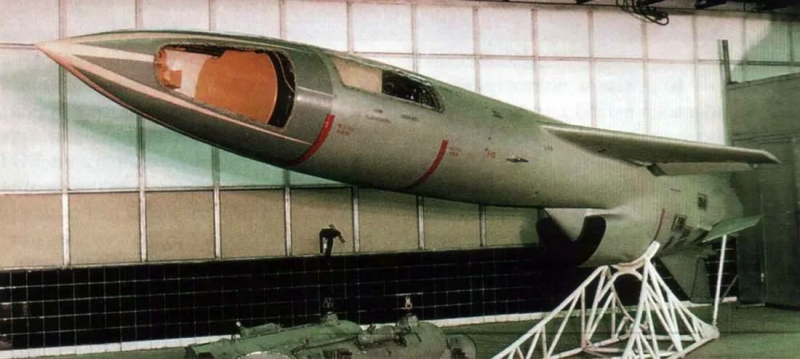
The P-35 rocket, which was capable of this even with 1950s technology
If you want an example of how this works—here you go. A radio channel for transmitting data from the homing head to the outside was already used on the P-35 anti-ship missile, the development of which began back in the 1950s. The P-35 transmitted a “picture” from its radar to the launch vessel via radio—so that a human operator could make sense of the data, manually filter out interference, and instruct the missile which target to track. It stands to reason that by the 1970s, technology had advanced to the point where human intervention was no longer necessary, and data could be transmitted directly from one missile to another.
ONE MISSILE GUIDES ANOTHER TO ITS TARGET
ONE MISSILE GUIDES ANOTHER TO THE TARGET – see above; there is no fundamental problem with having one missile of the same type fly higher and transmit data from its radar to the others. This can be done either analogously (by simply transmitting data directly from the guidance system) or digitally (by converting the data into a set of azimuths and distances). After all, the autopilots of missiles of the same type operate according to identical algorithms and transmit/receive signals in a format that is inherently understandable to one another.
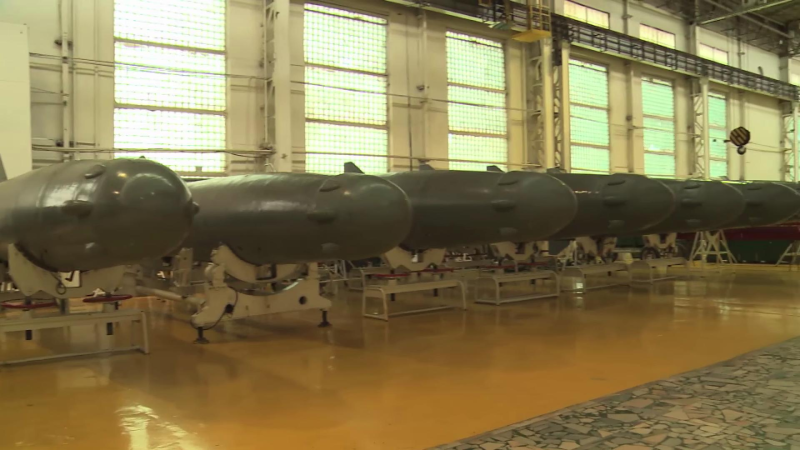
In other words, there is no fundamental problem with “feeding” data to the autopilots of guided missiles flying at low altitude with their radars turned off, with a data stream from a lead missile flying at high altitude and scanning the area with its homing head. Generally speaking, the autopilot doesn’t care exactly where the input data comes from; the main thing is that the data be reasonably accurate and contain the information the autopilot needs.
Certain difficulties may arise with parallax—after all, the lines of sight of the lead missile and the follow-on missiles do not coincide; they “look” at the targets from angles that, while close, are still different. But we don’t need perfect accuracy; it’s enough for the follow-on missiles to have a rough idea of the targets’ positions, even though they can’t see them themselves. And they can approach them at low altitude, staying below the horizon. Once there, the follow-on missiles will activate their homing heads anyway, and they’ll figure it out on their own.
IF THE LEAD ROCKET IS SHOT DOWN, ANOTHER TAKES ITS PLACE
IF THE LEAD MISSILE IS SHOT DOWN, ANOTHER TAKES ITS PLACE—this function can be implemented simply by assigning each missile a unique number. Encoded in the transponder signal, the number allows the rockets to be ranked “by seniority,” with the “most senior” one automatically becoming the lead rocket.
How can this be implemented technically, even using analog electronics? It’s simple: by dividing each transponder signal into several dozen consecutive intervals, each of which is assigned to a specific missile. Each missile knows its own time slot, during which it transmits its code sequence. The missile can (using a very simple analog circuit) determine whether there are signals in earlier time slots or not.
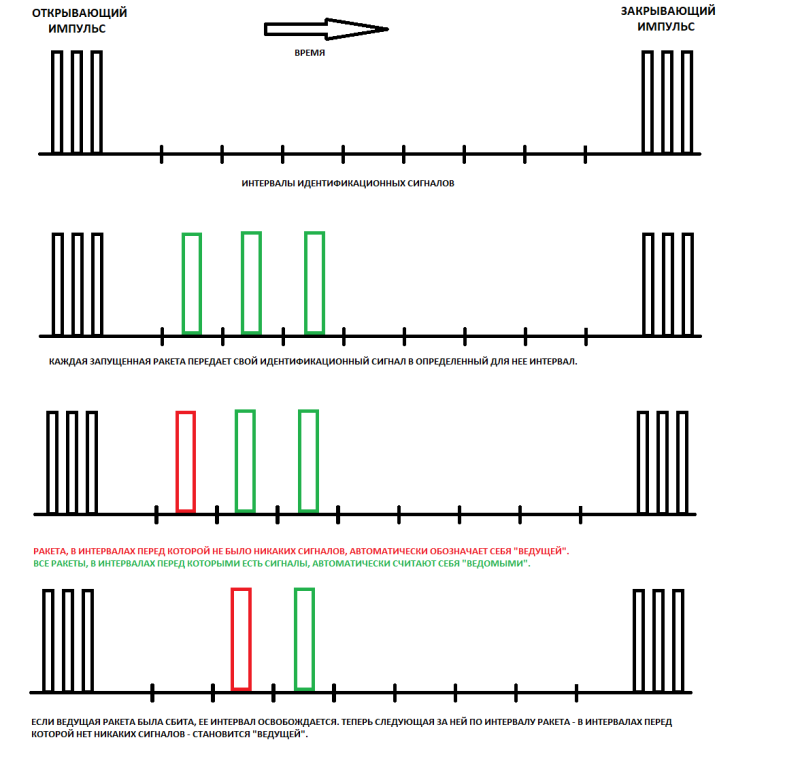
If a particular missile receives transponder signals in which an earlier time slot is occupied than its own, this means there are missiles “senior” in rank to it. The missile remains in a follow-on position and receives data from the lead (“senior”) missile.
If, however, there are no signals from an earlier time slot, then that particular rocket is the “senior” one in rank. It automatically assumes the lead role, gains altitude, and begins transmitting data from its guidance system to all the others. The others, in turn, receive this data. And if the lead rocket is shot down, the next one in line takes its place.
MISSILES AUTOMATICALLY IDENTIFY TARGETS
MISSILES AUTONOMOUSLY IDENTIFY TARGETS — and this is where we get to the “best” part. Namely, the missile’s ability to independently (without human intervention) identify detected targets, determine their type, and select an attack plan.
First, let’s figure out exactly what a missile “sees” using its homing head radar. Essentially, it’s azimuths and ranges—that is, the angle at which the radar detects a particular object and the time it takes for the reflected signal to return. If there are several objects within the radar’s field of view, this results in a sequence of azimuths and ranges.
If a naval formation—such as an aircraft carrier strike group, an amphibious landing force, or a transport convoy—then the sequence will have a specific order and structure. These can be compared to the average patterns stored in the missile’s memory. This can be done using even a simple correlation analysis (which was quite feasible for 1970s electronics) or other statistical methods.

Essentially, the missile compares a set of data—received from the seeker head—with the data stored in its memory. It then determines which of these sets best matches the observed situation statistically. Once the scenario that best matches the observed situation has been identified, the corresponding action plan is initiated.
I’d also like to remind you that more than one missile may be involved in the identification process. Since the missiles exchange data, the principle that “one head is good, but many are better” naturally comes into play. And the probability that, through their combined efforts, they will correctly identify the observed pattern naturally increases. It is also not difficult to organize a “voting” algorithm in which the final decision corresponds to the “majority opinion” (i.e., the data set recognized as the most appropriate by the majority of the interacting missiles is accepted as such).
MISSILES DISTINGUISH BETWEEN THE AIRCRAFT CARRIER AND THE ESCORT SHIPS
MISSILES CAN DISTINGUISH BETWEEN AN AIRCRAFT CARRIER AND ITS ESCORT SHIPS – Well, the ability to distinguish targets based on signature size and select the largest one (or, conversely, ignore the largest one) was already possible as early as the 1950s (!), so this task is by no means difficult. It can be solved quite simply with a filter at the antenna output that automatically tunes to the peak level of the received signal—that is, to the strongest signature.
For missiles that are to be guided toward the aircraft carrier at the center of the formation, the filter sets a lower threshold for the signal. Any signals weaker than this threshold are filtered out; the homing head “does not detect” the escort ships and distinguishes only the aircraft carrier itself.
For missiles that are intended to home in on escort ships, the filter, on the other hand, sets an upper limit on the signal. The aircraft carrier’s signature is thus filtered out; the homing head “does not see” it and focuses on the escort ships.
MISSILES AUTOMATICALLY TARGET THEIR TARGETS
MISSILES ASSIGN THEIR OWN TARGETS—this is a slightly more complicated problem. But it’s still entirely solvable. The simplest way to solve this problem is, once again, to rank the missiles by number. Once a target is identified—that is, once the preprogrammed data set that statistically best matches the observed pattern is selected—the missile initiates the action plan associated with that data set. This plan specifies, in order, which missiles are to be deployed and what each is to do.
Let’s assume, for the sake of argument, that we have twelve missiles—numbered 1 through 12—heading toward the target: an aircraft carrier strike group. The plan of action calls for the first six missiles to attack the aircraft carrier directly; in accordance with the program, these missiles (Nos. 1 through 6) set their filters to the lower limit of the signal and are guided solely and exclusively toward the aircraft carrier itself.
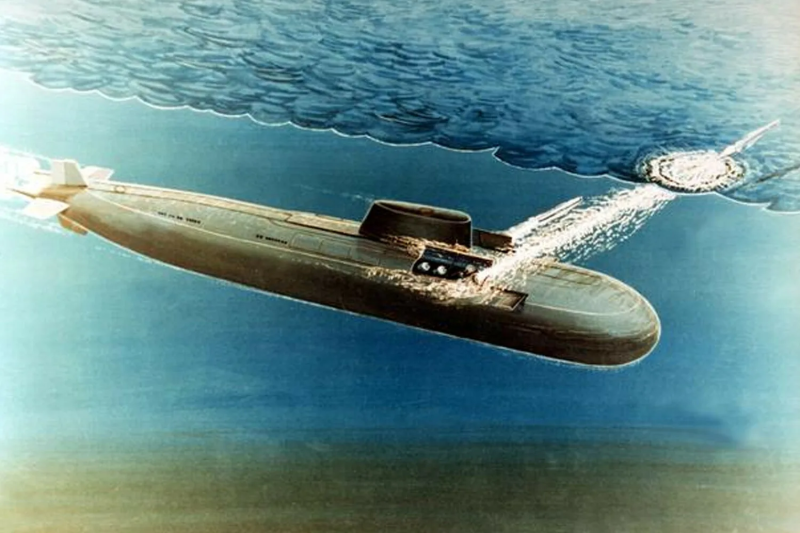
The remaining six missiles attack the escort ships. As programmed, they set their filters to the upper limit of the signal and ignore the aircraft carrier, homing in on the smaller signatures of the escorts.
How exactly should target allocation be implemented—so that all six missiles don’t lock onto the nearest destroyer (which would, of course, be in for a rough time, but the rest of the escort ships would remain unharmed)? Again, by number. The missile with the lowest serial number (in our case, the 7th) begins the search first, locks onto the target, and “marks” it in one way or another.
How exactly does it mark targets? Well, for example, it transmits the “window” of the selected target—in terms of azimuth and range—to other missiles. This causes them to automatically ignore signatures within that space and continue searching for other targets. Alternatively, after establishing radar lock on the selected target, it transmits its identification code along with its probing pulses. When other missiles scan that target, they’ll receive this identification code, realize that the target is “taken,” and will search for other targets.
In this way, we can distribute the targets among the missiles so that each one is assigned no more than the specified number.
MISSILES ARE APPROACHING THE TARGET FROM SEVERAL DIRECTIONS
MISSILES APPROACH THE TARGET FROM SEVERAL DIRECTIONS—here, the situation is somewhat more complicated. In and of itself, a missile executing a programmed maneuver isn’t particularly difficult. But maintaining an accurate picture of the target’s position while doing so… that’s more complicated.
— If we perform this maneuver while the missiles are still above the target’s horizon, then it’s generally straightforward—the missiles simply follow an arc, keeping the target at the edge of the seeker’s field of view. The algorithm in this case is simple: the angle of sight to the target must remain constant, and the distance to the target must not change. After flying along the arc for a while, the missiles turn toward the target—all the while continuing to track it with their radars.
— If, however, the missiles are to maneuver below the horizon (i.e., they cannot see the target themselves), the situation becomes more complicated. One possible solution is to use the lead missile mentioned above to provide the trailing missiles with the necessary data on the targets’ positions. In this case, the trailing missiles rely on the data transmitted by the lead missile.
— Finally, there is a very simple solution: the missiles are divided in advance into two groups, each traveling at a sufficient angle to engage the target from the flanks. This solution, of course, requires a fairly accurate understanding of the target’s position—that is, external target designation in terms of azimuth and range. In this case, the missiles are launched in two groups along azimuths offset from the azimuth toward the target, and at a programmed distance, they simultaneously turn toward the target.
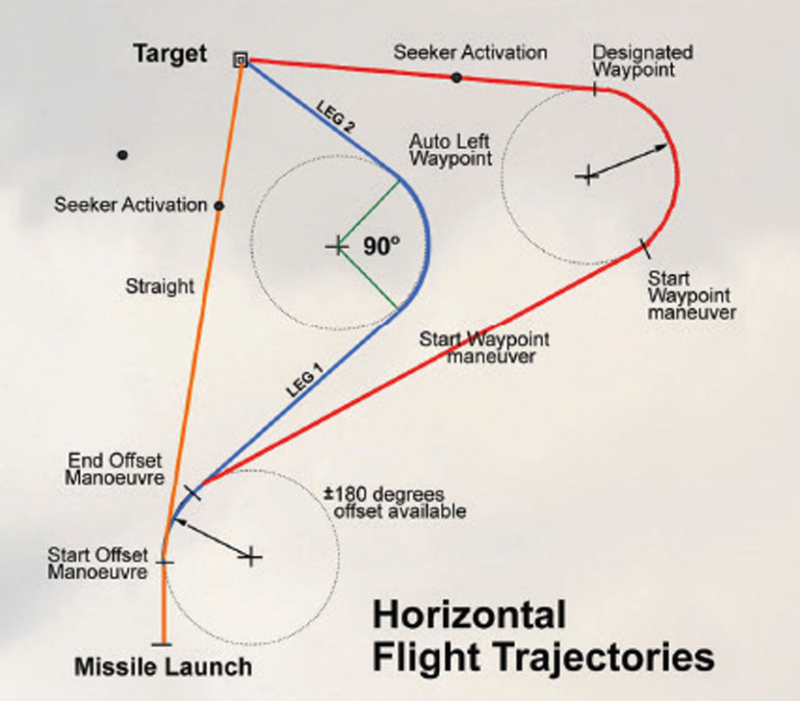
As an illustration, here’s how the “Penguin”—a light Norwegian helicopter-launched anti-ship missile—performs this type of maneuver. Of course, this is not a model from the 1970s but a more modern one—but as you can see, there’s nothing fundamentally complicated about it. The “blue” trajectory is particularly noteworthy; for a flanking approach to the target, it uses a simple right triangle—the missile knows its initial direction toward the target and the approximate distance, and calculates by what angle it needs to deviate and how far it needs to travel along the longer leg (relative to the hypotenuse—the direct course to the target), so that a 90-degree maneuver will then direct it precisely toward the target.
MISSILES USE ELECTRONIC WARFARE EQUIPMENT AND DECOY TARGETS
MISSILES USE ELECTRONIC COUNTERMEASURES AND DECOY TARGETS—well, there’s absolutely no problem there. Of course, we can’t cram a particularly complex jammer onto a missile (such systems at that time required manual tuning by an operator), but a noise jammer pre-tuned to the operating bands of enemy radars—absolutely. And if we put in a little effort, we can even install an automatic repeater capable of tuning into the enemy radar’s signal and beginning to transmit masking and diversionary jamming over the entire range. Of course, without human intervention, all of this would be a bit crude and not very reliable—but it would work.
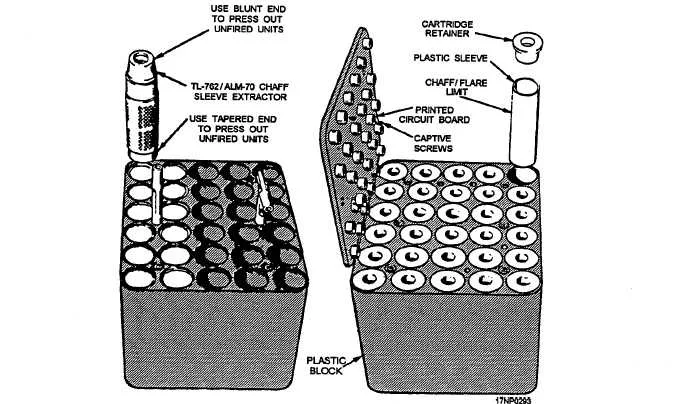
There are no problems at all with decoys. All we need is a radiation detector tuned to the operating frequencies of enemy fire-control radars, and a standard dispenser for cartridges containing dipole reflectors. The detector senses the radar beam directed at the missile—the dispenser begins firing foil-lined rounds, providing the enemy radar with bright, highly visible decoys to lock onto.
MISSILES DODGE ANTI-AIRCRAFT FIRE
MISSILES EVADE ANTI-AIRCRAFT FIRE—here, we can once again draw on foreign experience. Even the aging Norwegian “Penguin” anti-ship missile (AGM-119 in the U.S. Navy), first adopted in 1972, was capable of performing evasive maneuvers as it approached its target.
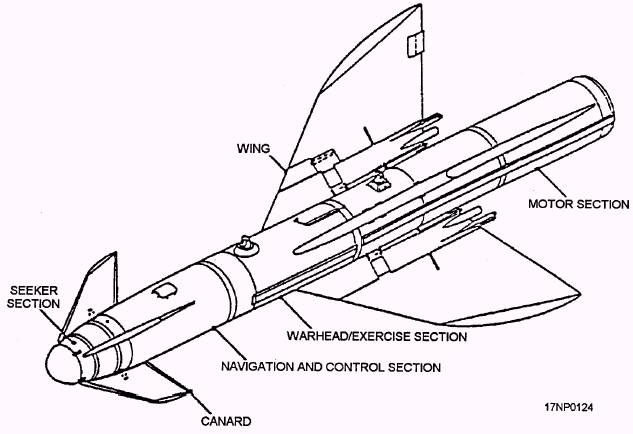
I haven’t been able to find any precise details yet on exactly how the Norwegians implemented this. But most likely, they simply inserted a small logic circuit between the homing head and the autopilot, which introduces an artificial error into the data passing through it.
The guidance system likely activated when the distance to the target fell below a preset threshold, and at regular intervals sent false signals to the autopilot—causing the missile to “jerk” from side to side. And to ensure that the homing head did not lose the target, the maneuvers were likely performed only from the “zero” position (when the missile’s longitudinal axis coincides with the homing head’s longitudinal axis, and the missile is heading directly toward the target), followed by a return to that position.
To sum up: we’ve examined, one by one, the capabilities attributed to the P-700 “Granit” missile system, and I hope we’ve seen that none of them is fundamentally impossible to implement using 1970s-era electronics. Of course, we have no idea what specific functions the missile actually has or how they are implemented. All we can conclude is that in the 1970s, there were readily available methods that made it possible to implement the capabilities attributed to the “Granit.”