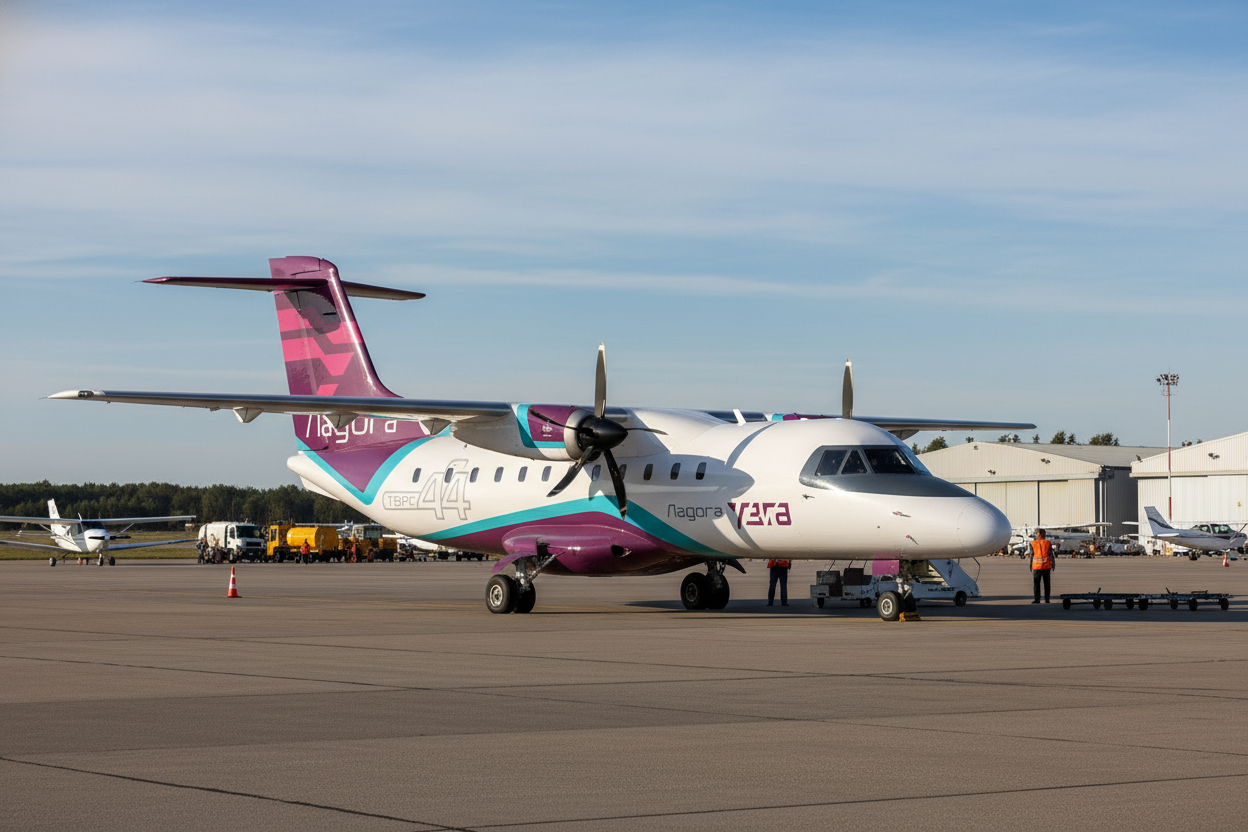
The maiden flight of the passenger version of the TVRS-44 “Ladoga” is still expected in 2026, but civilian airlines are unlikely to see this aircraft in its original form. In May 2026, it was officially announced that the civilian project for a short- to medium-range airliner had been suspended and would be fully transferred to the jurisdiction of the Russian Ministry of Defense.
Below is a detailed analysis of what is happening with the successor to the legendary An-24, what stage the assembly is at, and why the “Ladoga” is switching from a civilian livery to military camouflage.
New Project Status and Shifting Priorities
In May 2026, it was officially announced that the entire TVRS-44 program would undergo a major restructuring. The chief designer of the Ural Civil Aviation Plant announced that the project was being fully transferred to the jurisdiction of the Ministry of Defense of the Russian Federation. This decision effectively puts the original civilian airliner project on hold. All accumulated scientific and technical documentation and production work now serve the interests of the defense ministry, which has been granted the exclusive right to determine the aircraft’s final design and mission.
Adapting the design to meet military needs
Originally, the “Ladoga” was designed as a classic passenger aircraft with a comfortable cabin seating 44 passengers. Now, the priorities have shifted toward versatility and cargo capacity. The Department of Defense has focused on developing three main variants. The primary one will be a full-fledged military transport version equipped with a cargo ramp in the tail section. The second variant will feature a wide side door for the rapid loading of oversized containers. The third variant will retain a passenger or passenger-cargo cabin but will be used exclusively for transporting personnel and for departmental needs.
What stage is the production at?
Despite the change in the customer and the concept, the physical assembly of prototypes at partner plants continues. The Samara-based Aviakor plant successfully manufactured the first fuselage, which was then transported to the production site of the Ural Civil Aviation Plant in the Sverdlovsk Region. Currently, the first flight prototype is in the final stages of assembly and is being equipped with onboard wiring harnesses, hydraulic systems, and avionics. At the same time, the United Engine Corporation is conducting accelerated bench tests of the new turboprop engines.
When will we see an airplane in the sky?
The transfer of the project to the Ministry of Defense significantly affected the test schedule but did not halt it. The developers have been officially authorized to complete construction of the first prototype in its original design configuration in order to evaluate the airframe’s overall aerodynamic performance. The prototype’s first flight is still scheduled for mid- to late 2026. Immediately following that, joint government tests will begin, the specifics of which will most likely be partially classified. The certification process under military standards will take several years, and the start of mass production of the updated ramp version is expected closer to 2029.
Will we see the “Ladoga” in the sky?
The answer to this question is yes, but with a major caveat regarding the role of this aircraft. Ordinary airline passengers are unlikely to ever buy a ticket for this flight. The aircraft is guaranteed to take to the skies and enter serial production, as the government has an urgent need to replace its aging fleet of An-26 military transport planes. At the same time, commercial airlines—which had been waiting for years for the civilian “Ladoga” to modernize their fleets—were left without this key new model. The project has shared the fate of many domestic developments, transforming from a civilian airliner into a purely military workhorse.
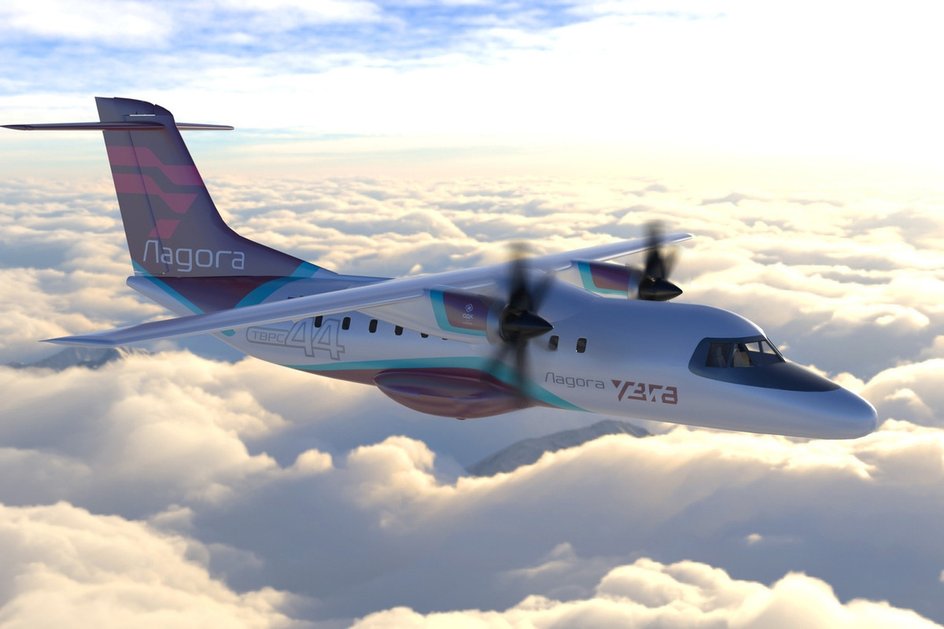
Aircraft Specifications
-
- The maximum takeoff weight is 17 metric tons.
- The maximum payload is 5 metric tons.
- The cruising speed reaches 460 kilometers per hour.
- The maximum flight altitude is 7,600 meters.
- The range with a maximum payload is 1,200 kilometers.
- The range with a full passenger load is 2,200 kilometers.
- The takeoff run at maximum weight is 750 meters.
- The powerplant consists of two TV7-117ST-02 turboprop engines.
- The power output of each engine during takeoff is 2,400 horsepower.
- The propeller diameter is 3.9 meters.
- The aircraft is 22.8 meters long.
- The wingspan is 26 meters.
- The aircraft’s height is 8.3 meters.
Alternative Aircraft for Civil Aviation
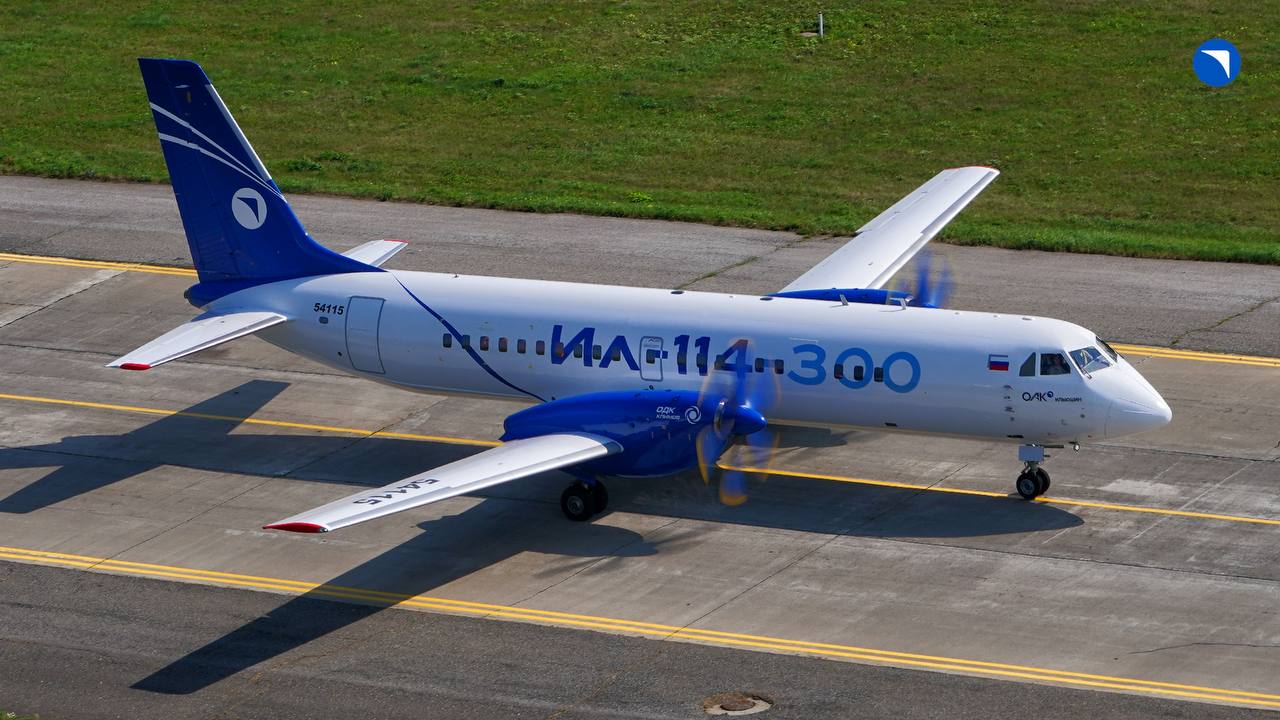
The Il-114-300 is now emerging as the main hope for the civilian sector in the regional passenger aircraft class. This turboprop aircraft is larger than the “Ladoga” and is designed to carry up to 68 passengers. Its key advantage is its complete independence from foreign components and the readiness of the production facility in Lukhovitsy for mass production. However, the Il-114-300 is heavier and requires longer, well-maintained runways, which makes it unsuitable for use at a number of short, unpaved airfields in the Far North.
For very small communities and the least-traveled routes, the focus is on the LMS-901 “Baikal,” a light, multi-purpose aircraft. This nine-seat, single-engine aircraft is designed to replace the legendary An-2 “corncob.” The “Baikal” has unique short takeoff and landing capabilities, allowing it to operate from unprepared dirt airstrips. Despite its modest passenger capacity, it is this aircraft that will serve the most critical routes within the regions of Siberia and the Far East.
In the medium-haul segment, part of the traffic on regional routes will be shifted to the SJ-100 short-haul narrow-body jet. This is a fully domestically produced version of the Sukhoi Superjet, equipped with new domestic PD-8 engines. The very first flight of this aircraft with Russian engines is expected in the near future, and serial deliveries are scheduled to begin in late this year or early next year. The SJ-100 is a 98- to 103-seat jet, so it will be able to replace the An-24 only on major interregional routes with well-developed airport infrastructure.
Development of the TV7-117 Series Power Unit
The TV7-117 family of turboprop engines remains a key element in the revival of Russian regional aviation. The base version of this engine was designed for the Il-114, while its high-output variant, the TV7-117ST, was developed for the Il-112V light military transport aircraft. The program to modernize these engines faced serious technical challenges following several incidents, which required a complete redesign of the friction components, the oil system, and the control systems.
The United Engine Corporation developed the TV7-117ST-01 variant specifically for the civilian Il-114-300. This engine features a new FADEC-type digital control system that autonomously monitors all engine and propeller operating parameters. Engineers have significantly improved fuel efficiency and reliability under extreme temperature conditions, which is critically important for operation in Yakutia and beyond the Arctic Circle.
A TV7-117ST-02 variant is being developed for the military transport versions of the “Ladoga.” Its main design difference lies in its optimization for the aircraft’s ramp geometry and specific flight modes at low altitudes with maximum payload capacity. This engine features a modified layout of auxiliary systems to facilitate maintenance by military technical personnel directly at field airfields.
Specifications of the TV7-117ST-01 Engine
- The power output at maximum takeoff power is 2,900 horsepower.
- The power output in emergency mode, in the event of a single-engine failure, is 3,600 horsepower.
- The specific fuel consumption at cruising speed is 195 grams per horsepower per hour.
- The dry weight of the engine is 500 kilograms.
- The motor has a diameter of 940 millimeters.
- The engine is 2,140 millimeters long.
- The specified service life until the first major overhaul is 1,000 hours for pilot production runs.
- The type of fuel used complies with the TS-1 and RT grades of standard aviation kerosene.
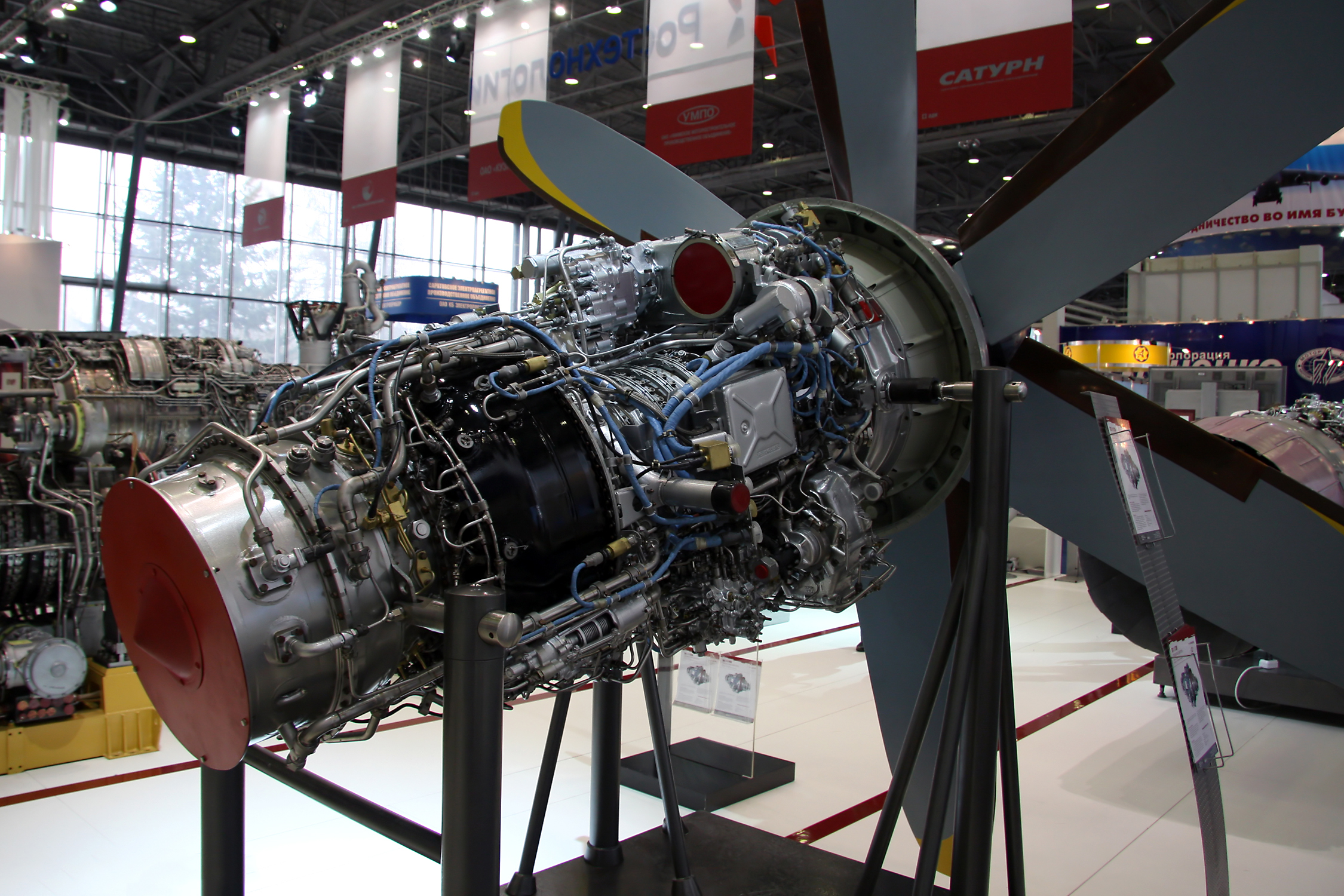
Soviet TV7-117 Gas Turbine Engine
Sources: