It's Not Just the "Oreshnik." What Hypersonic Weapon Is Terrifying the West, and Why?

Basically, you won’t find anything in this roundup that we haven’t already covered on our website. However, this is the first time we’ve provided an overall assessment and comparison of different types of similar weapons. So I think many people will find this article interesting in that regard.
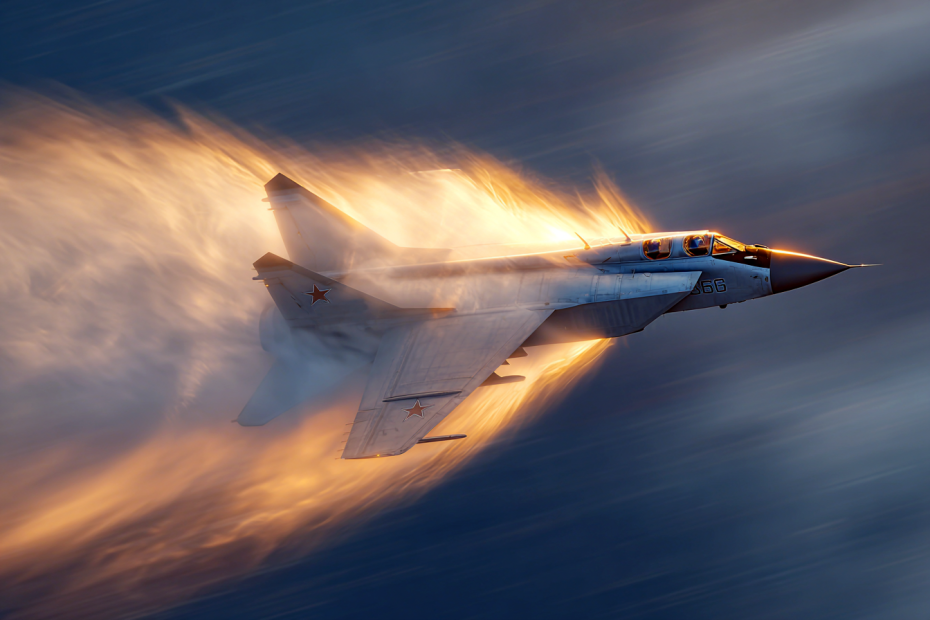
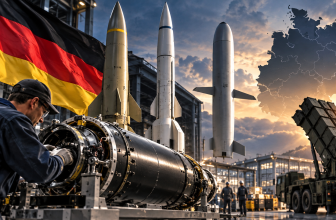
Hypersonic weapons are becoming a significant factor in global politics, and many countries are striving to develop their own systems. The Russian Federation is a leader in this field. What are the advantages of Russian hypersonic systems, and which other countries possess such weapons? We explore these questions in this article for NEWS.ru.
Contents:
What are hypersonic weapons?
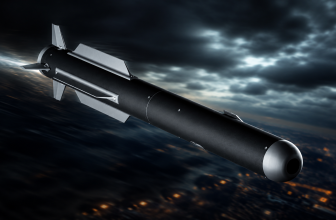
The term “hypersonic” refers to missiles or warheads mounted on ballistic missile launchers. After initial acceleration, they are capable of reaching speeds in the atmosphere that exceed the speed of sound by at least five times (over 6,000 km/h, or 1.6 km/s). There are reports of prototypes reaching speeds 8, 12, and even 16 times the speed of sound. It is important to note that these projectiles must be controllable during flight and capable of maneuvering.
The key advantage of hypersonic weapons is their high speed, which makes them virtually out of reach for modern missile defense and air defense systems (MD and AD). Existing missile defense systems are unable to effectively intercept targets moving at such high speeds.
Hypersonic technologies enable lightning-fast strikes: the enemy has no time to take defensive action or even to take cover. Most existing models of such weapons are capable of carrying nuclear warheads. This ensures almost complete destruction of targets.
What hypersonic weapons does Russia have?
According to publicly available data, the Russian Federation possesses at least four types of hypersonic weapons:
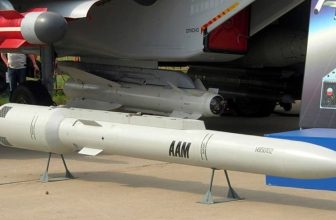
- The “Kinzhal” airborne missile system. Testing has been underway since 2017, and it has been in service since 2018. The “Kinzhal” can reach speeds of up to 10 Mach (times the speed of sound). The missiles are launched from the MiG-31 fighter-bomber. The missiles are capable of striking stationary targets and surface vessels: aircraft carriers, cruisers, destroyers, and frigates.
- In 2023, the “Zircon” anti-ship missile (which is also capable of striking ground targets) was adopted for service. Its flight speed reaches Mach 9, and its range exceeds 1,000 km. It can be launched from ships equipped with Kalibr missiles.
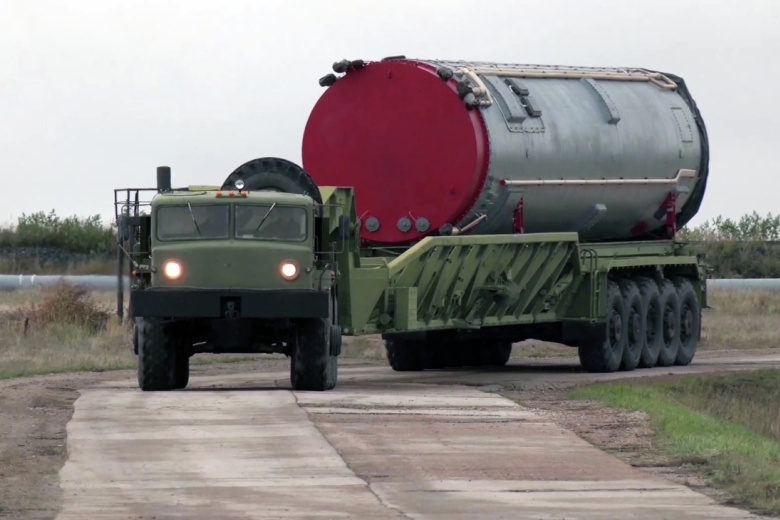
- The “Avangard” intercontinental missile system was developed specifically to overcome enemy missile defense systems. It consists of a combination of an RS-28 silo-launched ballistic missile and a hypersonic warhead capable of carrying a nuclear payload, which can accelerate to Mach 28 (9.6 km/s). At this speed, even without a warhead, it delivers a kinetic effect equivalent to 18 metric tons of TNT. The system has been on combat duty since 2023.
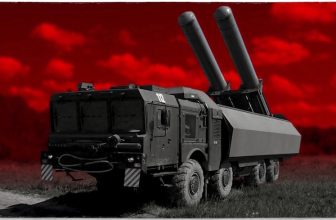
- The fourth type is the “Oreshnik” missile; its exact specifications are classified.
What Advantages Does Hypersonic Technology Offer Russia?
Vadim Kozulin, a military analyst and director of the IAMP Center at the Diplomatic Academy of the Russian Ministry of Foreign Affairs, spoke to NEWS.ru about the key role of hypersonic weapons in the current geopolitical landscape.
“Essentially, this is a surefire way to strike the enemy. Those who are planning hostile actions against Russia are well aware that we possess such a versatile weapon. One example of how it works was demonstrated practically in real time—the ‘Oreshnik.’ The use of the ‘Oreshnik’ against fortified underground production facilities had a strong emotional impact on the international community. “Russia’s adversaries realize that in the event of direct aggression, they will face a response of this kind, against which there is no defense. This serves as a powerful deterrent,” Kozulin emphasized.
Which countries have hypersonic technology, and who is developing it?
Possessing hypersonic weapons is an extremely appealing prospect for developed nations, due to their high effectiveness. Nevertheless, the development of such weapons involves enormous challenges. In particular, the United States has been working on this problem for more than half a century, but has managed to conduct only one successful test during that time. In April 2025, the U.S. program was shut down due to excessively high costs. Despite this, according to reports in the American media, the Pentagon has not given up hope of returning to hypersonic technology in the future, provided there is sufficient funding. Independent military expert Alexander Khramchikhin believes that the U.S. will still be able to develop its own version of such a weapon within the next decade.
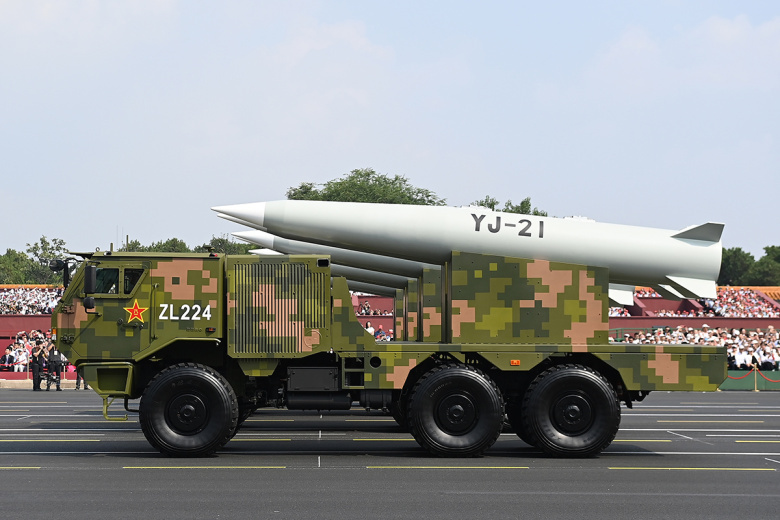
Confirmed data indicate that China and North Korea possess hypersonic weapons. According to Kozulin, only a few countries in the world have the necessary expertise and resources to develop such weapons.
Kozulin noted that in 2012, Rosoboronexport signed a contract with France to assist in the development of hypersonic weapons, but the contract was subsequently terminated. Despite all efforts and the use of some Russian technologies, France still does not possess such weapons. Japan is also showing interest in this field, announcing plans to develop a hypersonic passenger aircraft—a move that is likely an attempt to conceal its weapons development.
In an interview with NEWS.ru, Khramchikhin noted that Iran possesses hypersonic military technologies, presumably obtained from Russia or China. According to the expert, the main challenge in hypersonic technology development lies in creating suitable materials.
Khramchikhin explained that at such speeds, the spacecraft is subjected to intense heat and practically burns up, so materials capable of withstanding temperatures in the thousands of degrees are necessary. Another challenge lies in the control system, which must function under conditions of extremely high plasma temperatures.
Based on material from — https://dzen.ru/a/aMCI2wjYcBIB0oXi