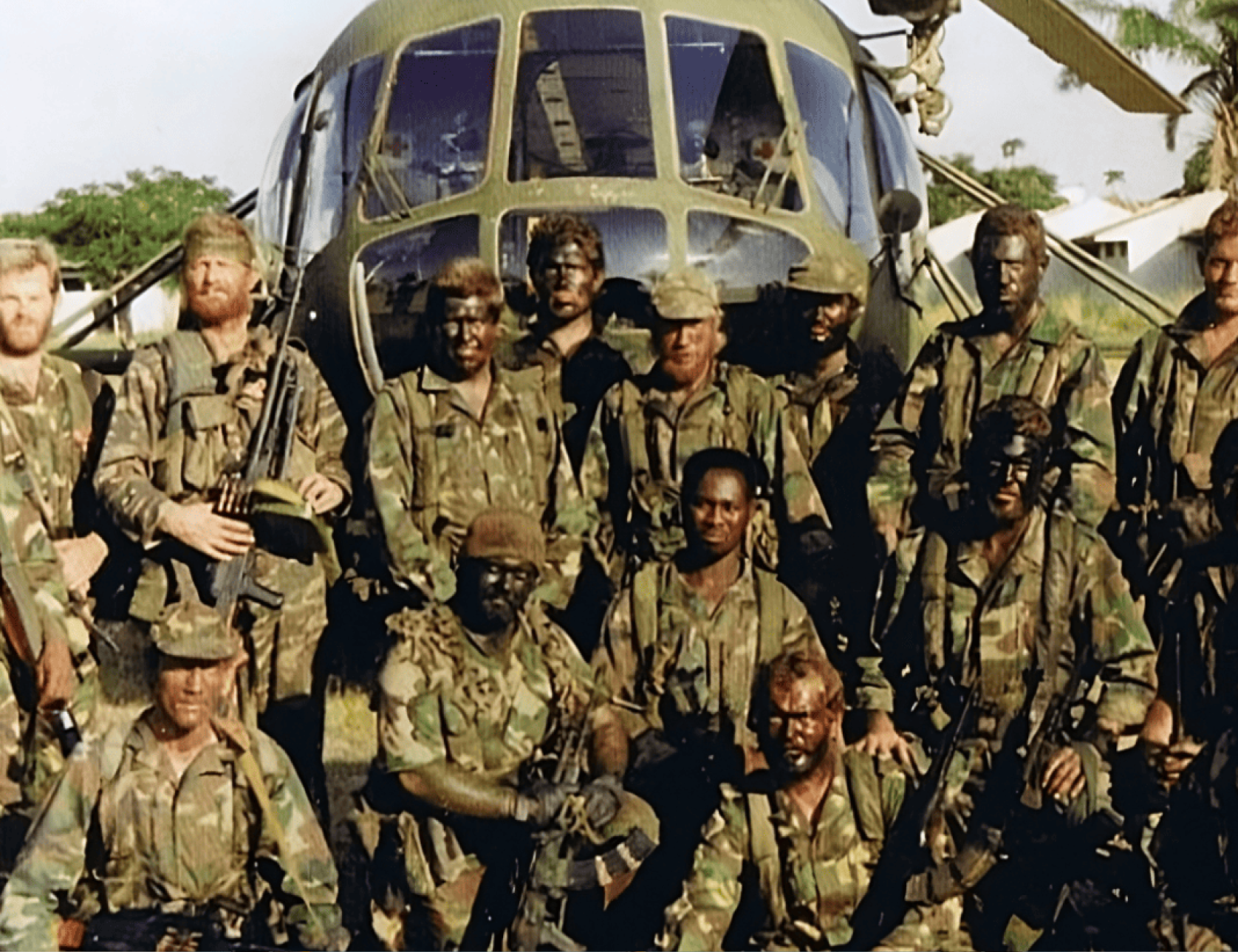
An article by Kirill Kudelko from the WARSPOT website, dated July 22, 2016.
Mercenarism has a long history—in the distant past, it was widespread throughout the world. In the 18th and 19th centuries, it was supplanted on the battlefield by mass armies recruited through universal conscription from all segments of the population. However, in the last quarter of the 20th century, mercenary activity managed to make a comeback in the form of private military companies, creating an entirely new—and, most importantly, legal and profitable—segment of the international market.
According to the UN, the military services market is currently one of the most dynamically developing and fastest-growing markets in the world. It comprises more than 3,000 private military companies (PMCs), which train troops and carry out various contracts in more than 60 countries around the world. Analysts estimate the size of this market to be between $20 billion and $100 billion.
The Revival of Mercenaryism
The resurgence of mercenary activities occurred in the 1960s and coincided with decolonization, when many countries in Africa and Asia—which had previously been colonies of European powers—gained national independence. Almost immediately after the collapse of the colonial empires, fierce civil wars broke out in the former colonies, which had become independent states, fierce civil wars broke out, stemming from intertribal and interclan conflicts, border redrawings, and struggles for power.
The crisis in the Congo from 1960 to 1968 was particularly significant for the emergence of mercenary activity in its modern form, when mining corporations operating in the country hired hundreds of adventurers from various countries to protect their assets. Among them were the “soldiers of fortune” who later became famous: Mike Hoare of Ireland, Jacques Schramm of Belgium, Rolf Steiner and Siegfried Müller of Germany, and Bob Denard of France.
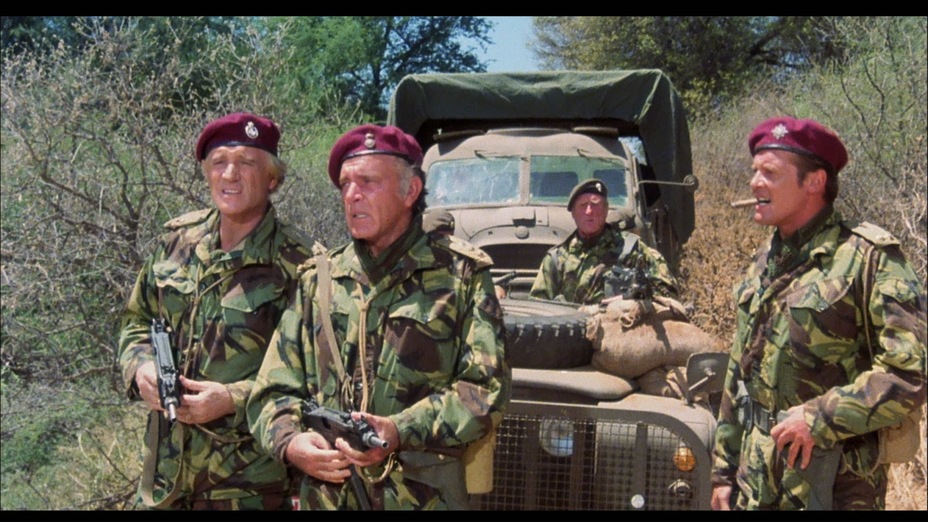
A still from the film *Wild Geese* (1978), for which the famous mercenary Mike Hoare served as a technical advisor. The film’s popularity contributed to the romanticization of the mercenary image among some segments of the modern public.
These people made money off the war, offering their services indiscriminately to anyone willing to pay, installing and ousting self-proclaimed rulers, and participating in a host of other similar operations. To their own surprise, they became popular media figures; articles and books were written about them, and in 1978, the film *Wild Geese* was released, with Mike Hoare serving as a technical consultant. The romanticized image of the dashing and noble “soldier of fortune” that prevailed in this and other similar films was significantly tarnished by reports of atrocities committed in war zones, including the torture and execution of civilians. Gradually, public interest in this topic faded away.
The First PMCs: Military Mediation and Consulting
The first private military company (PMC) in the modern sense of the term was WatchGuard International, founded in 1967 by David Stirling and John Woodhouse, veterans of the British Special Air Service (SAS). The company was staffed primarily by their former colleagues, who were also veterans of the special forces. It was the first British firm of its kind. It was officially registered on the island of Jersey, had its own headquarters, and operated entirely legally. The services it provided included the recruitment and training of personnel, the provision of combat and technical support during operations against insurgents, and a variety of military consultations.
WatchGuard was under the tight control of the British government. The company’s clients included government regimes friendly to London, multinational corporations operating in global hotspots, primarily in the Middle East and Africa, as well as former colonial powers seeking to exert covert influence on the politics of their former colonies.
David Stirling’s colleagues at the SAS also went on to establish and lead a number of private military companies. Major Arish Turtle ran Control Risks, while SAS counterintelligence specialist H. M. Hacklroad ran J. Donne Holdings, which trained Libyan special forces and supplied bodyguards to Muammar Gaddafi.
Another SAS specialist, David Walker, ran Keenie Meenie Services together with intelligence officer Andrew Nightingale. In 1983, its employees trained Afghan mujahideen and took part in CIA operations in Nicaragua. At the same time, Keenie Meenie Services employees served as bodyguards for Prince Bandar, the Saudi ambassador in Washington, a sponsor and active participant in the CIA’s covert “Iran-Contra” operation, which was subsequently closely linked to U.S. Vice President George H. W. Bush. In the early 1990s, amid a scandal triggered by the revelation of details about its covert operations, Keenie Meenie Services was forced to shut down.
Executive Outcomes: The First Private Armies *
WatchGuard International and other British private military companies modeled after it, as well as their American counterparts, Vinnell and Military Professional Resources Inc., the Israeli firms Golan Group and Lordan-Levdan, and others, were primarily intermediary companies that entered into contracts for the planning of military operations or the training of personnel.
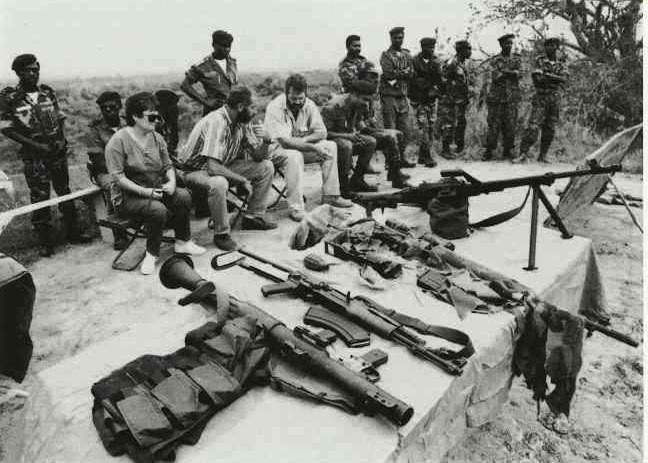
Executive Outcomes personnel display weapons seized from the rebels in the presence of Angolan army commanders. Camp on the Rio Longa
A completely different kind of firm was the South African company Executive Outcomes, founded in 1989, which was the first to succeed in turning war into a complex, well-organized, and truly financially successful enterprise. The company’s founder was Lieutenant Colonel Eben Barlow, former head of the Western European division of the South African Ministry of Defense’s sabotage service; and the head of human resources was Lafras Luiting, a former officer of the South African Army’s 5th Special Forces Reconnaissance Regiment.
The company’s initial staff consisted of 500 military advisors at the command level and up to 3,000 rank-and-file employees, including veterans of the South African Army and special forces units such as the 32nd Koevoet Battalion (“scrap” in Afrikaans). In effect, Executive Outcomes was an autonomous military organization—a fully functional private army—with its own air force, armored vehicles, mortars, and artillery, capable of conducting full-scale combat operations at a reasonable price.
The fall of the apartheid regime in South Africa and the rise to power of the Black majority were accompanied by significant reductions in the size of the military and police forces, which provided private military companies, such as Executive Outcomes, with the necessary pool of former military personnel.
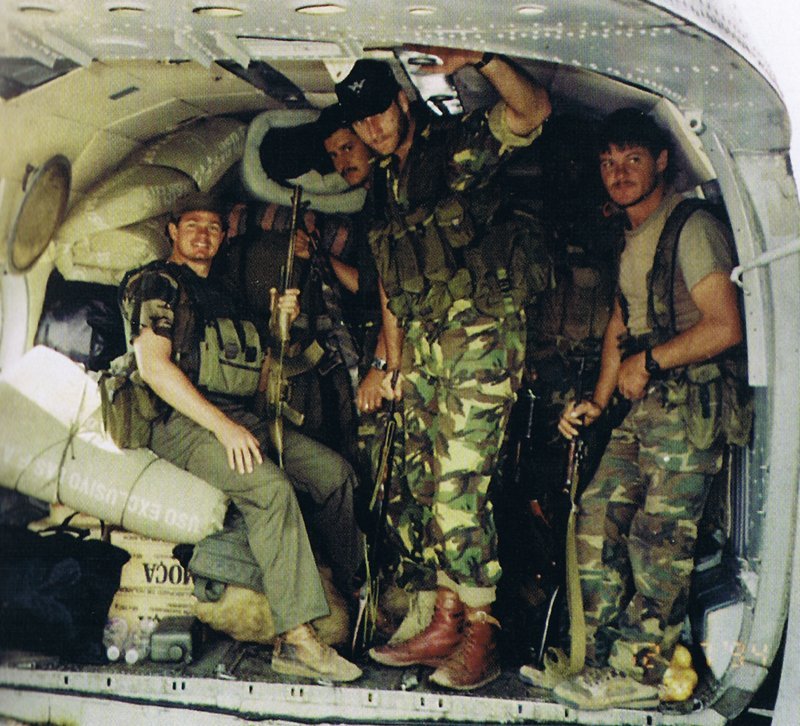
An Executive Outcomes combat team in the cargo compartment of an MI-17 helicopter. Sierra Leone, 1995
EO specialists trained security officers in South Africa and Botswana, as well as the Angolan armed forces. The firm’s first truly successful venture was a contract to provide security for the transport of high-value equipment, signed with the Canadian oil company Ranger Oil. The Canadians were interested in resuming operations in Angola’s Soyo region, which had been seized in March 1993 by units of the opposition movement UNITA. Thanks to their mediation, in June 1993 the Angolan government signed two contracts with Executive Outcomes, each worth $40 million, to train Angolan army units and prepare pilots for the national air force. The contracts were paid for with funds from Ranger Oil, which in return received an oil concession from the government.
To support its operations, the PMC received the 16th Brigade of the Angolan Army from the government, as well as MiG-23 fighter-bombers and Mi-17 helicopters purchased from Russia. As a result of a series of operations planned and carried out by Executive Outcomes specialists from November 1994 to January 1996, UNITA forces suffered a serious defeat, and the leadership of the opposition group agreed to enter into negotiations with the government. However, under pressure from the United States, Executive Outcomes was forced to wind down its operations in Angola. Its place in the country was taken by UN peacekeeping forces.

Preparing a combat helicopter for flight. Sierra Leone, 1995
The company received its next major contract, worth $35 million, in May 1995 from the government of Sierra Leone, where militants from the “United Revolutionary Front” (URF) had seized control of Kono Province, along with its diamond deposits, and laid siege to the country’s capital, Freetown. Executive Outcomes deployed up to 300 of its employees there, with air support consisting of three Mi-17 helicopters and one Mi-24, piloted initially by Belarusian and Russian crews, and later by South African crews.
As early as April–May 1995, Freetown had been cleared of rebels, and in August of that same year, they were driven out of the diamond-mining region. In November 1996, a peace agreement was signed, and in February 1997, under pressure from the international community, the Sierra Leonean government ceased its cooperation with the company. UN peacekeepers took their place in the country, after which RUF militants managed to regroup, go on the offensive again, and even capture the country’s capital. The government once again had to turn to the private military company Sandline for help, which now also had to rescue the UN contingent.
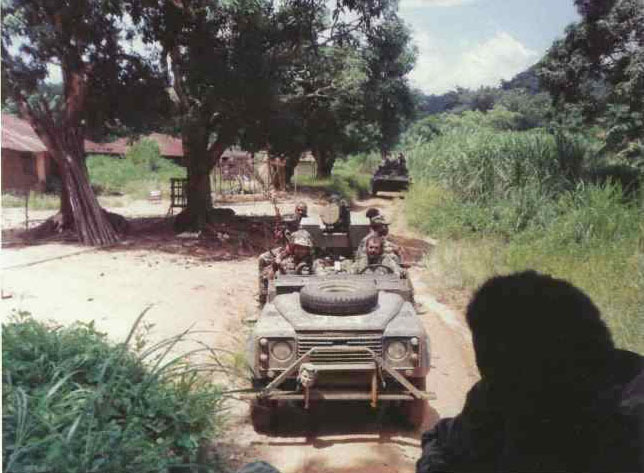
An Executive Outcomes convoy on the move in Sierra Leone. Note the Soviet-made BMP-2 behind the lead vehicle
The successful completion of these contracts brought the company widespread recognition and a solid reputation. The governments of Angola, Mozambique, Uganda, and Kenya, as well as companies such as De Beers, Chevron, JFPI Corporation, Rio Tinto Zinc, and Texaco, have utilized Executive Outcomes’ services.
However, the company’s activities in Angola and Sierra Leone drew the attention of the South African government, as well as international human rights organizations, which accused it of systematic human rights violations and conducting covert operations. In 1998, South Africa passed the “Regulation of Foreign Military Assistance Act,” which was intended to restrict the activities of mercenaries on African soil.
As a result of the passage of this law, a significant number of private military companies were forced to shift their focus to providing consulting services and logistics. Executive Outcomes was officially dissolved on December 31, 1998, but a significant portion of its staff went on to work for the British firm Sandline International. It was run by former SAS Lieutenant Colonel Tim Spicer, who had previously collaborated with Executive Outcomes on numerous occasions and, in particular, had secured a pivotal contract for the company in Angola.
Наследники Executive Outcomes
In 1998, Sandline replaced Executive Outcomes in Sierra Leone, where civil war had broken out again. The country’s ousted president, Ahmad Tejen Kabbah, hired Sandline instructors to train a 40,000-strong militia of the Mende tribe—the so-called “Kamajors”—who had risen up against the RUF, which had seized power in the country. In addition, Sandline was contracted to guard the property of the diamond mining company De Beers and to provide air support and airlift services for government forces fighting rebels in the border regions of Guinea.
The activities of Sandline and its director, Tim Spicer, in Sierra Leone were linked to a series of scandals. An investigation initiated by the British Parliament revealed that in 1999, circumventing the international arms embargo on Sierra Leone, he managed to smuggle 35 metric tons of military cargo into the country from Bulgaria, and this was done with the knowledge of the British High Commission in Sierra Leone and the U.S. State Department.
Another high-profile scandal involving the head of Sandline took place in 1997 in Papua New Guinea. The country’s prime minister, Julius Chan, hired the firm to regain control of the copper mines on Bougainville Island, which had been seized by local separatists. The contract was worth $36 million. To carry out the mission, Spicer recruited 44 former Executive Outcomes employees, who arrived in Port Moresby in February 1997.
Unexpectedly, their arrival prompted a diplomatic protest from the Australian government, which demanded that the contract with the private contractors from Sandline be terminated, threatening Papua New Guinea with international sanctions if it did not comply. Julius Chan refused to comply, and a military mutiny broke out in Port Moresby, supported by part of the local population. The mutineers’ commander, Jerry Singirok, arrested all Sandline employees without firing a single shot and expelled them from the country. The war on Bougainville was halted through international mediation by New Zealand, and the government of Papua New Guinea made concessions to the rebels. Subsequently, Sandline’s management managed to secure a contractual penalty.
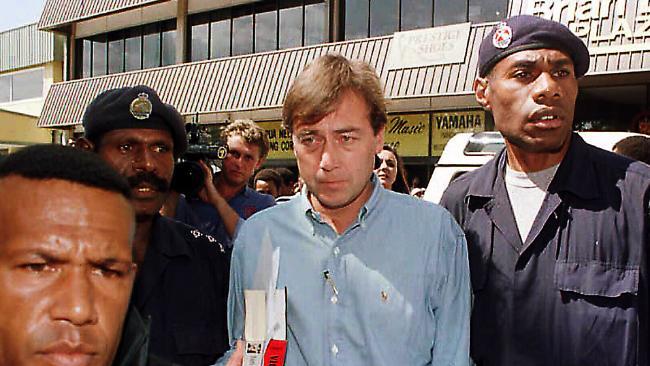
Tim Spicer (center), founder and head of Sandline, was arrested in Port Moresby in February 1997
In 2001, Tim Spicer founded Trident Maritime, which was hired by the Sri Lankan government to provide security for the airport in Colombo. Following the U.S. invasion of Iraq in 2003, Spicer established a new company called Aegis Defense Services and secured a lucrative $293 million contract to provide security for U.S. Army Service Centers in Iraq. The contract also included logistical support and intelligence gathering on behalf of the U.S. Army Corps of Engineers.
Bibliography
-
-
- Konovalov, I. P., and Valetsky, O. V. The Evolution of Private Military Companies. Pushkino: Center for Strategic Conjuncture, 2013. – 136 pp.
- Martyanov, O. U.S. Private Military Companies: A New Tool of Old Imperial Policy // hvylya.org
- Popov, I. “Soldiers for Hire” // forbes.ru
- McFate, S. The Modern Mercenary: Private Armies and What They Mean. New York, 2014.
- Singer, P.W. *Corporate Warriors: The Rise of the Privatized Military Industry*. Ithaca, NY: Cornell University Press, 2003.
-
Source: https://warspot.ru/6532-sovremennoe-nayomnichestvo-vozrozhdenie