Kotin's "Mouse Smasher." Why the Super-Powerful ISU-152BM Never Entered Mass Production

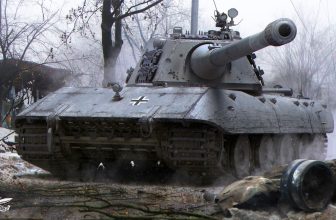
In alternative history, the scenario of the war continuing after 1945 is quite common. In that case, Soviet tanks would have faced off on the battlefield against the super-heavy “Maus” and E-100 tanks. Even if that had happened, the USSR had the means to counter these German behemoths, and we’ll discuss that system below.
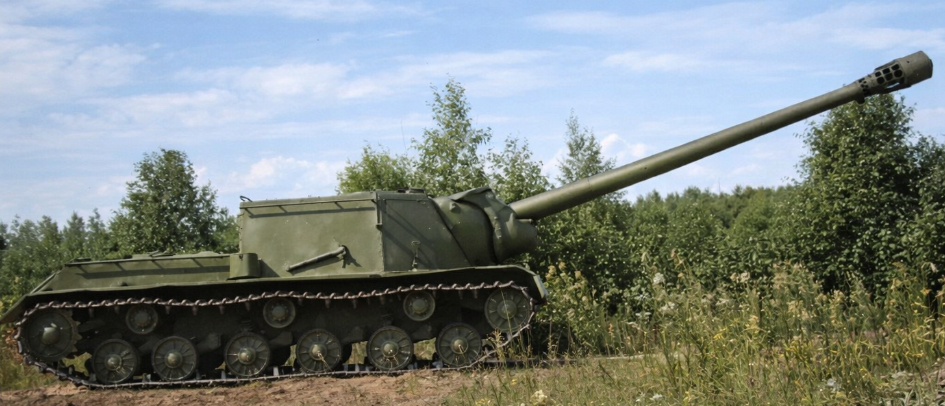
The Project’s Origins: A Response to the “German Monsters”
By mid-1944, the Soviet high command and design bureaus had intelligence indicating that Germany was developing super-heavy tanks whose armor protection exceeded the capabilities of standard anti-tank weapons. The standard 152-mm ML-20S howitzer, mounted on production ISU-152 self-propelled guns, demonstrated sufficient high-explosive effectiveness, but its armor-piercing capabilities at ranges exceeding one kilometer left much to be desired. Under the leadership of Chief Designer Zh. Ya. Kotin of the Chelyabinsk Kirov Plant, SKB-2 initiated the development of a specialized self-propelled gun capable of reliably engaging the frontal armor of vehicles weighing over 100 metric tons. The project was assigned the factory designation ISU-152BM, where the abbreviation stood for “high power.” The vehicle was conceived as an artillery battering ram for tank formations, capable of operating on the front lines and destroying the enemy’s heavy armored vehicles before the main forces entered the battle.
Design and Armament: High-Power 152-mm Gun
The new self-propelled gun was based on the proven ISU-152 chassis, which ensured technological continuity and simplified the preparation of production lines. The main difference was the installation of the 152-mm BL-8 rifled gun, developed by Design Bureau 172. The gun featured a significantly elongated barrel, a reinforced chamber, and a modernized propellant charge, which allowed the projectile’s muzzle velocity to reach values unattainable for standard howitzers. An armor-piercing shell weighing approximately forty-eight kilograms could penetrate up to two hundred twenty millimeters of vertical homogeneous armor at a range of one thousand meters. The increased recoil energy required the installation of more powerful recoil dampers, reinforcement of the recoil mechanism, and additional stiffening of the front plate of the turret. The internal layout was redesigned: the ammunition load was reduced, space for the loaders was increased, and additional exhaust fans were installed to quickly remove propellant gases after firing.
Testing and Operational Characteristics
Field tests of the prototypes began in the fall of 1944 and continued until the spring of the following year. The firing tests fully confirmed the calculated penetration values but revealed a number of design limitations. Recoil remained excessive, leading to accelerated wear on the guide rails, deformation of the gun carriages, and the need for frequent checks of the gun’s alignment. The barrel’s service life did not exceed two hundred rounds, after which it had to be replaced, creating serious logistical difficulties in conditions of mass deployment. Firing accuracy at maximum ranges decreased due to the high muzzle velocity and the propellant charge’s sensitivity to temperature fluctuations. The crew reported elevated acoustic pressure and smoke levels in the fighting compartment, despite modifications to the ventilation system. The increase in combat weight to fifty metric tons led to a decrease in specific power and limited mobility on soft ground, which made maneuvering within tank columns difficult.
Why the car never went into production
The decision not to put the ISU-152BM into mass production was due to a combination of technical, manufacturing, and strategic factors. The end of hostilities in Europe in May 1945 eliminated the urgent need for a highly specialized weapon to counter super-heavy tanks, which never appeared on the front lines in large numbers. Production of the BL-8 gun required high-precision machining of the barrel bore, the use of special alloy steels, and the strictest quality control of propellant charges—all of which were difficult to reconcile with the postwar conversion of industry and the transition to the production of civilian goods. At the same time, work was underway on more balanced systems, including 130-mm self-propelled guns and designs with semi-automatic breeches, which demonstrated better accuracy, greater barrel durability, and less stress on the running gear. The Soviet command’s doctrinal views gradually shifted toward versatile medium and heavy tanks, as well as promising guided projectiles, which made specialized heavy self-propelled guns a lower priority. The ISU-152BM remained at the prototype stage, passing on the accumulated experience to the design bureaus working on postwar artillery and armored vehicles.
Conclusion: The Legacy of *The Mouse Trap*
Kotin’s “Mouse Smasher” never went into mass production, but its story clearly illustrates how engineering innovation clashes with the realities of wartime and postwar restructuring. The vehicle proved Soviet industry’s ability to quickly develop a response to hypothetical threats, yet at the same time confirmed that combat effectiveness is determined not only by the gun’s firepower but also by the reliability of its components, the manufacturability of its parts, and its alignment with operational doctrine. Prototypes of the ISU-152BM served as a testing ground for solutions that were later applied in a new generation of self-propelled artillery systems. Today, these vehicles remain on museum display as evidence that engineering calculations and economic feasibility ultimately proved more important than the arms race, and that preparedness for unimaginable scenarios does not always translate into mass production.
Tactical and Technical Specifications of the ISU-152BM (Object 247):
- Combat weight: 50 metric tons.
- Crew: 5 people.
- Hull length: 9.05 meters.
- Width: 3.07 meters.
- Height: 2.65 meters.
- Cab front armor thickness: 90 millimeters.
- Main armament: 152-mm BL-8 rifled gun.
- Ammunition capacity: 20 rounds (single-shot).
- Initial velocity of an armor-piercing projectile: 860–900 meters per second.
- Maximum firing range: 13,800 meters.
- Engine: V-2IS, 12-cylinder diesel, 520 horsepower.
- Maximum speed on the highway: 35 kilometers per hour.
- Highway range: 220 kilometers.