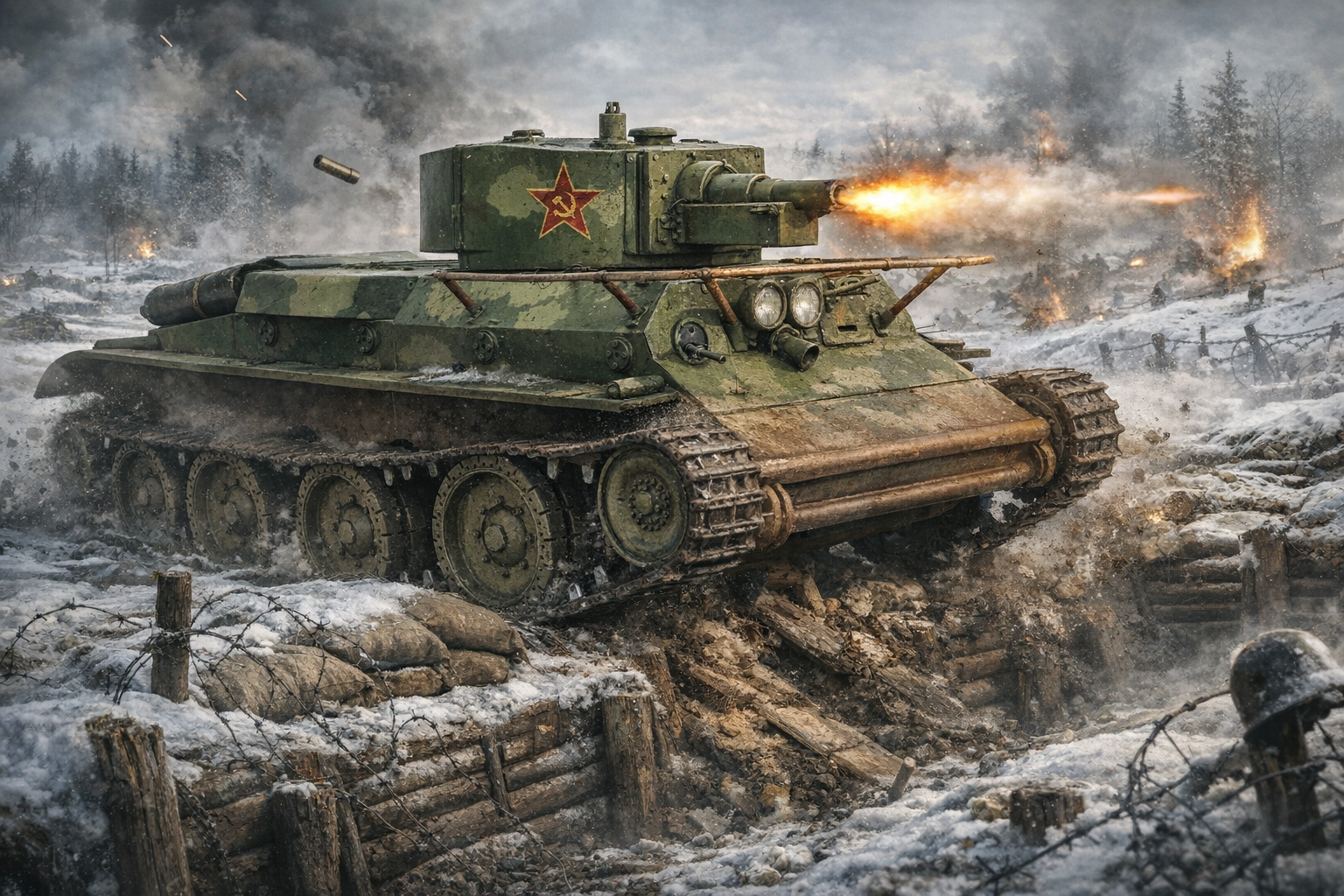
The T-29 wheeled-tracked tank project, developed in the spring of 1933
During the interwar period, the definition of a medium tank could vary widely. This applied to dimensions, weight, and a number of other characteristics. This was especially true given that, in some countries, a medium tank might initially be designed as a light tank but later turn out to be too large and heavy for that category. Furthermore, weight was by no means always the determining factor in classification, not to mention the fact that the initial design could change significantly during development—so much so that the final tank bore little resemblance to the original concept.
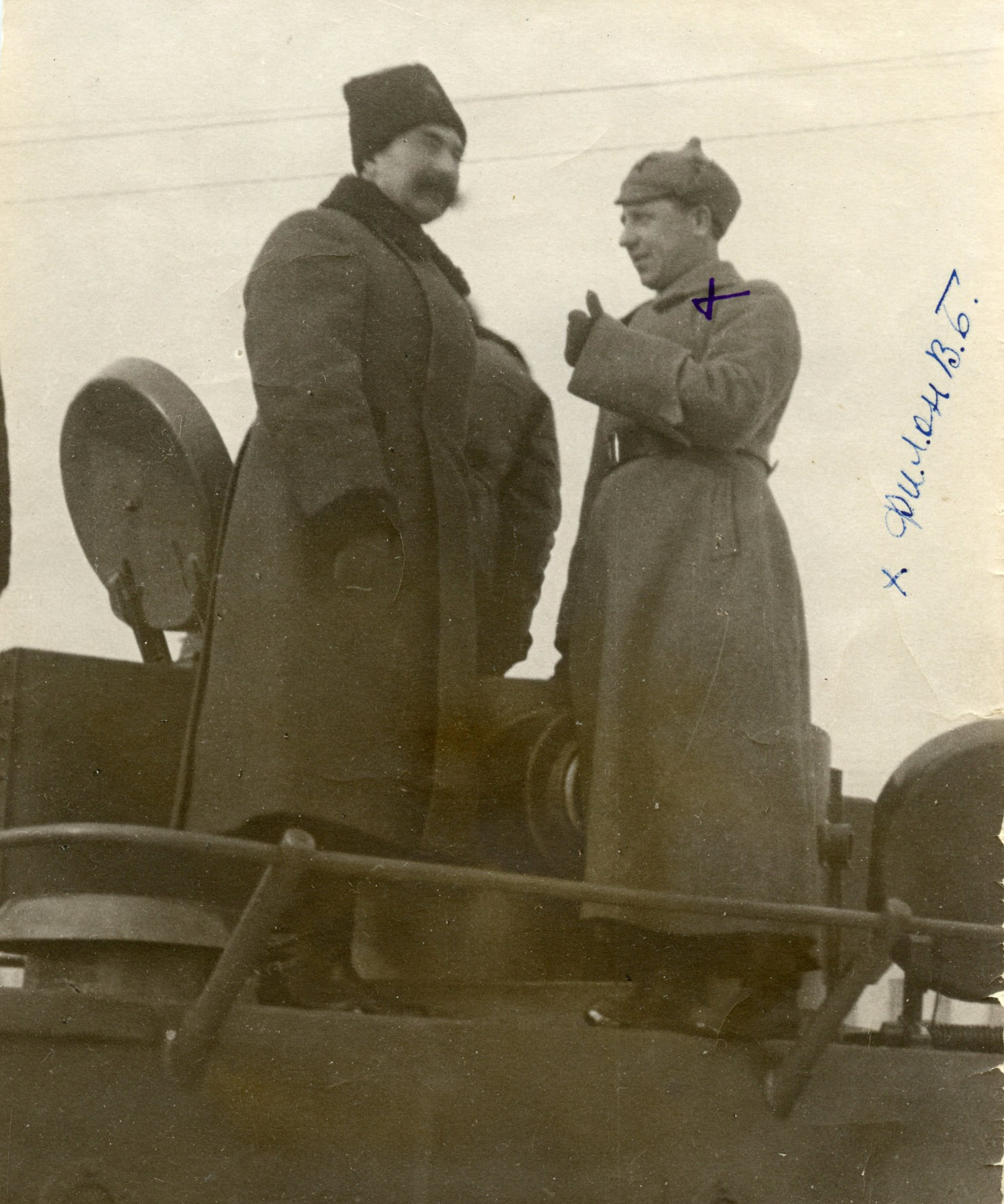
S.M. Budenny and V.B. Filon during the PT-1 tests
By the early 1930s, development of the T-24 maneuverable tank—designed by the OAT Design Bureau and the Kharkiv Machine-Building Plant—was underway in the Soviet Union. Gradually, the project reached an impasse, and by 1931 it became clear that there was no point in further developing the T-24. Design Bureau No. 3 of the All-Union Artillery and Arsenal Association (VOAO), headed by S.A. Ginzburg, was tasked with designing a new maneuverable tank, later known as the T-28. Meanwhile, another medium tank, the PT-1, was being developed in Moscow. It was being designed by the Special Design Bureau (the technical department of the EKU of the OGPU), with N.A. Astrov serving as the lead engineer on the project. V.F. Filon oversaw the work as head of the OGPU’s Tank Design Bureau. In 1933, this tank project branched off into a separate line designated the T-29.
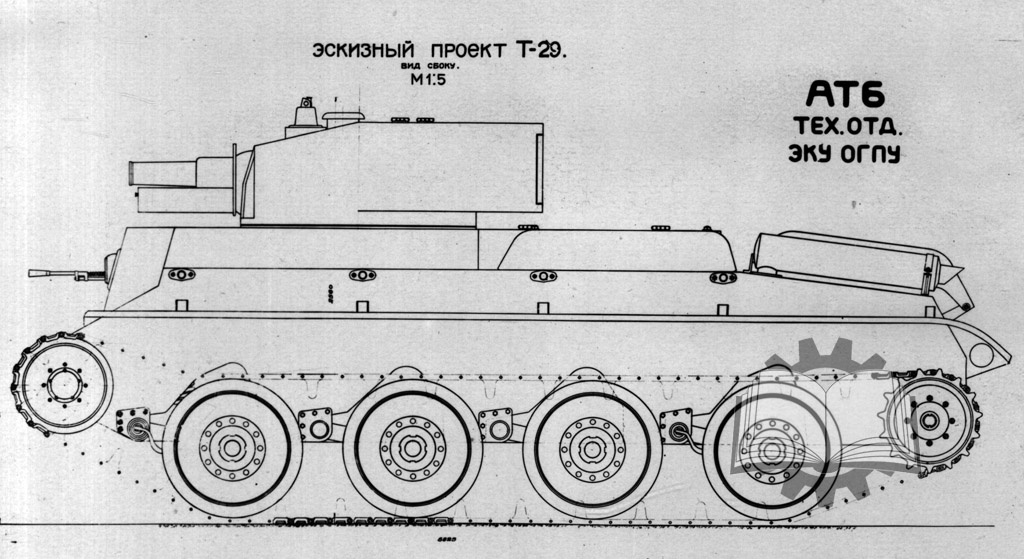
Configurations of the T-29-1 and T-29-3
The PT-1 is often classified as a light tank, which is fundamentally incorrect. The fact is that this project was conceived from the very beginning as a medium amphibious tank. The Technical Department of the OGPU’s Engineering Directorate was guided by the Großtraktor concept—that is, it was designing a tank capable of crossing water obstacles. The German original performed poorly in this regard (the very first attempt ended with the tank sinking). In this sense, the PT-1 was more successful, though with its own nuances. First and foremost, these nuances concerned its armor protection, which, for obvious reasons, turned out to be quite limited. For a medium tank, this proved to be more important than its ability to float. And 7 mm of armor is, after all, quite thin.
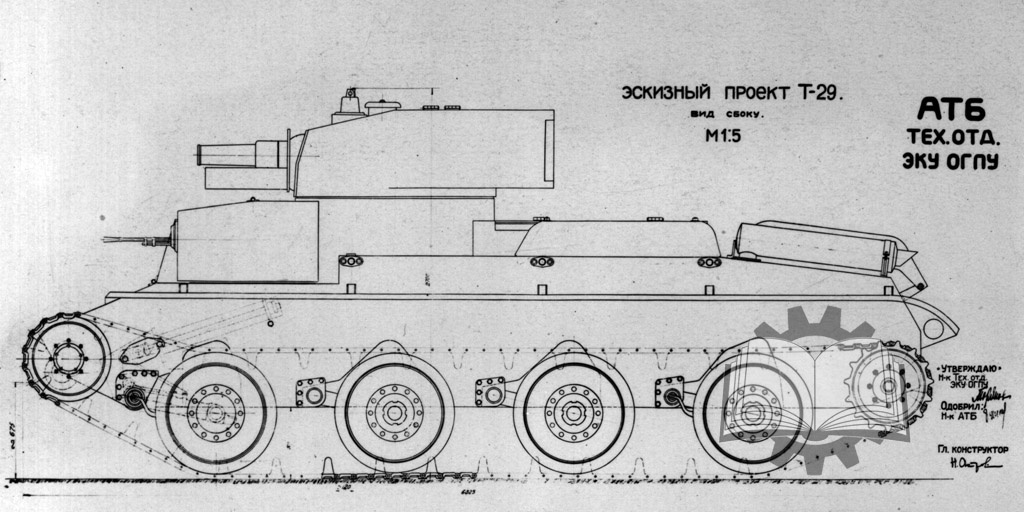
The UMM KA was more interested in the three-turret variants of the tank, the T-29-4 and T-29-5
In March 1933, a design for the IT-3 tank destroyer was completed. It bore a resemblance to the PT-1, but was now a purely “land-based” tank with an initial combat weight of 16 metric tons. The armor thickness increased to 16 mm; a large-caliber DK machine gun was mounted on the front hull plate, and a new turret equipped with a 76-mm KT gun was also introduced. According to estimates, the IT-3 reached speeds of up to 80 km/h on wheels and up to 60 km/h on tracks. Later, the armor thickness was increased to 20 mm, which raised the combat weight to 17.5 metric tons. However, the vehicle’s dynamic performance remained at the same level.
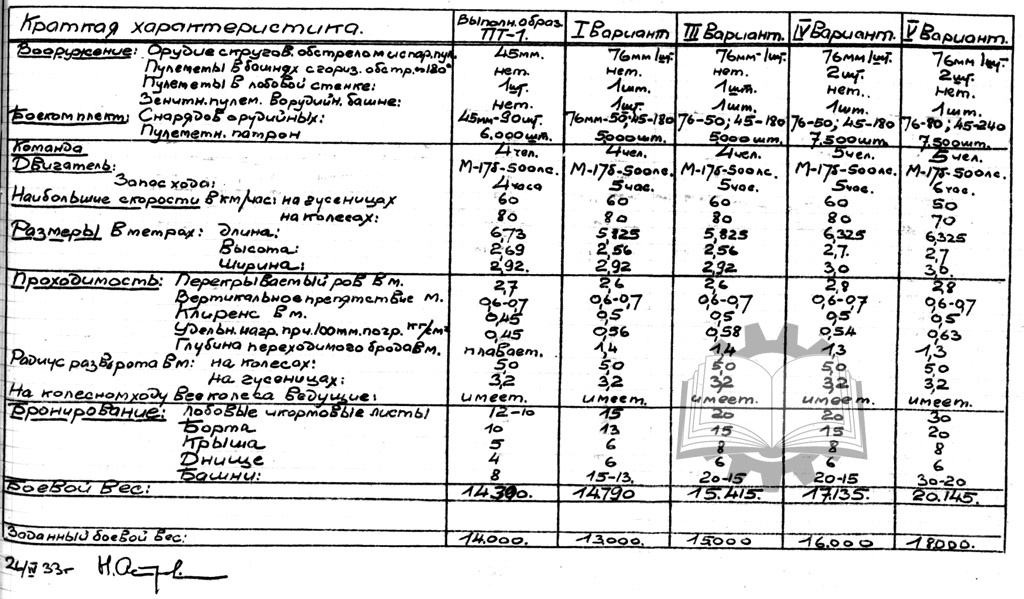
The single-turret and three-turret versions of the tank were offered with different armor configurations
The IT-3 had a very short lifespan. While not rejecting the idea of creating a land-based version of the PT-1, the Military-Technical Directorate of the Air Force decided to develop a combat vehicle that was somewhat different from a tank destroyer. The fact was that at that time, the IT-3 did not differ significantly—including in weight—from the T-28. Therefore, a logical idea emerged to develop a “full-fledged” tank that would be a direct counterpart to the T-28. This tank was first mentioned on April 5, 1933, in connection with an order for two prototypes. It was then that the tank’s designation—T-29—was first used.
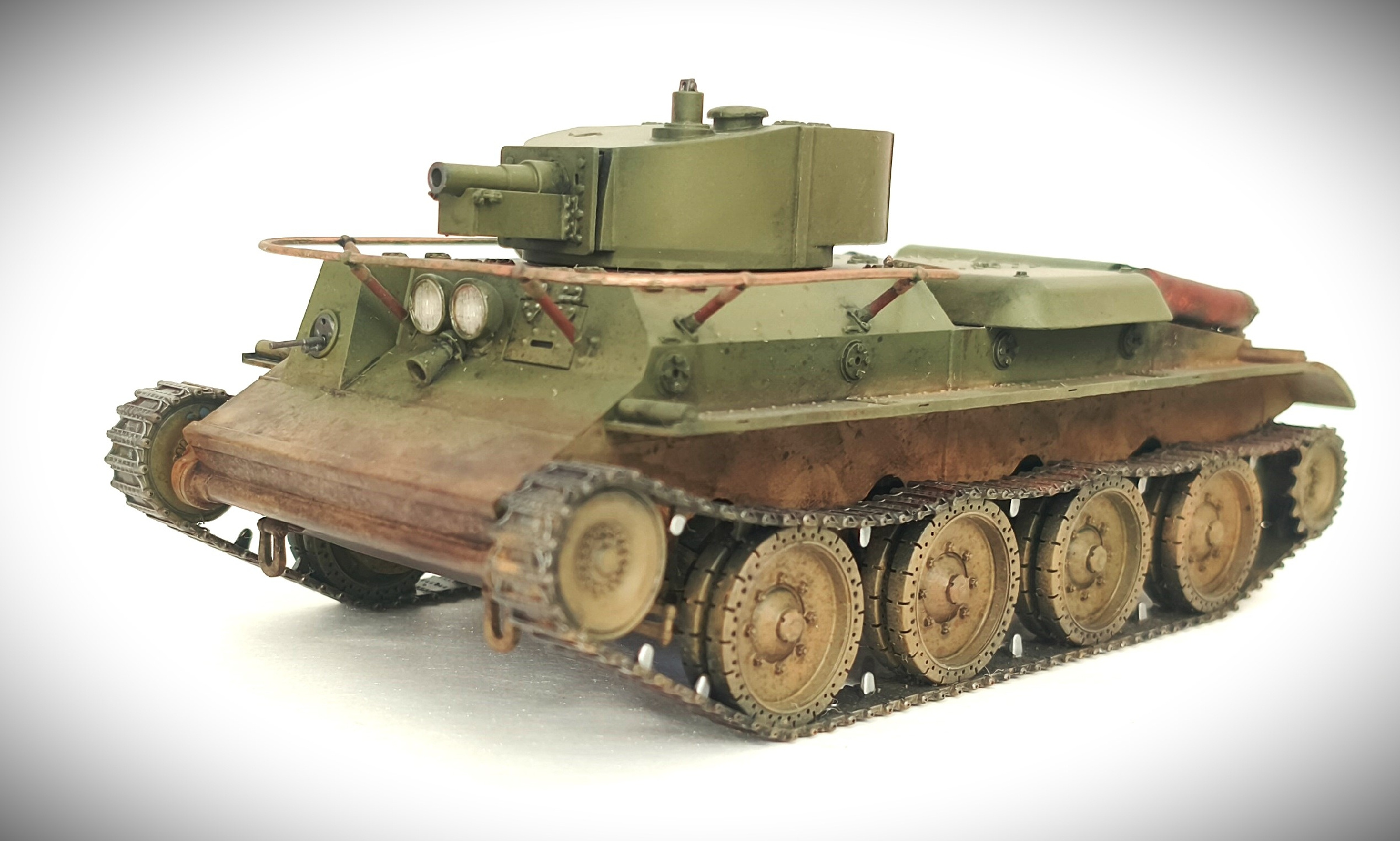
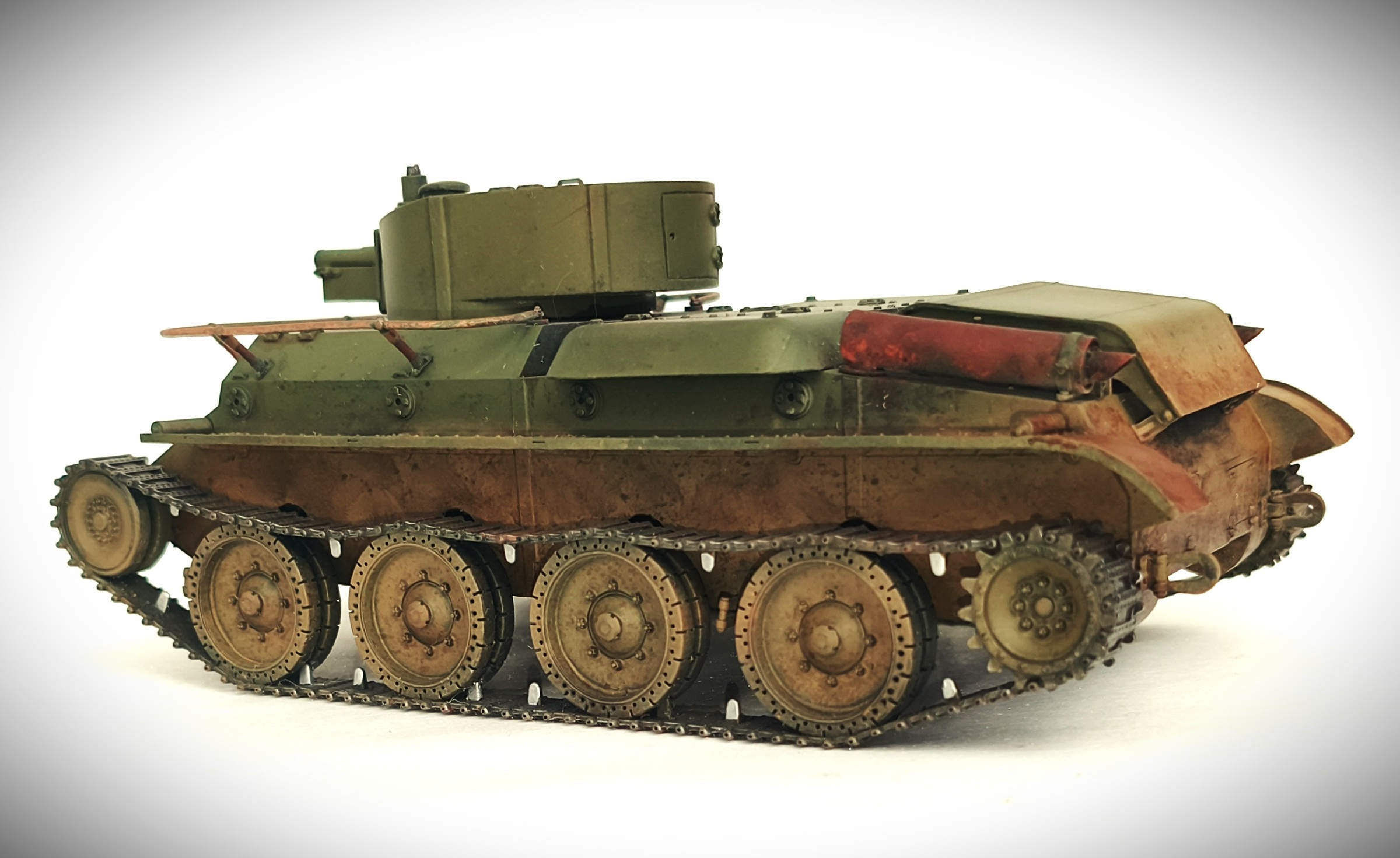
Restoration of the T-29-1, designed by Alexander Kalashnik, Omsk
In practice, the T-29 designs had been worked on earlier—in March 1933. The work proceeded in two directions: the direct development of the IT-3, as well as the development of an analog to the T-28, that is, a three-turret tank. The advantage of developing a variant based on the IT-3 was that such a tank would be shorter and lighter. At the same time, the DK coaxial machine gun was abandoned, for objective reasons. In fact, the DK was still in the experimental stage as a machine gun, with a number of issues. The installation of ShKAS aircraft machine guns was also abandoned; DT machine guns were installed instead.
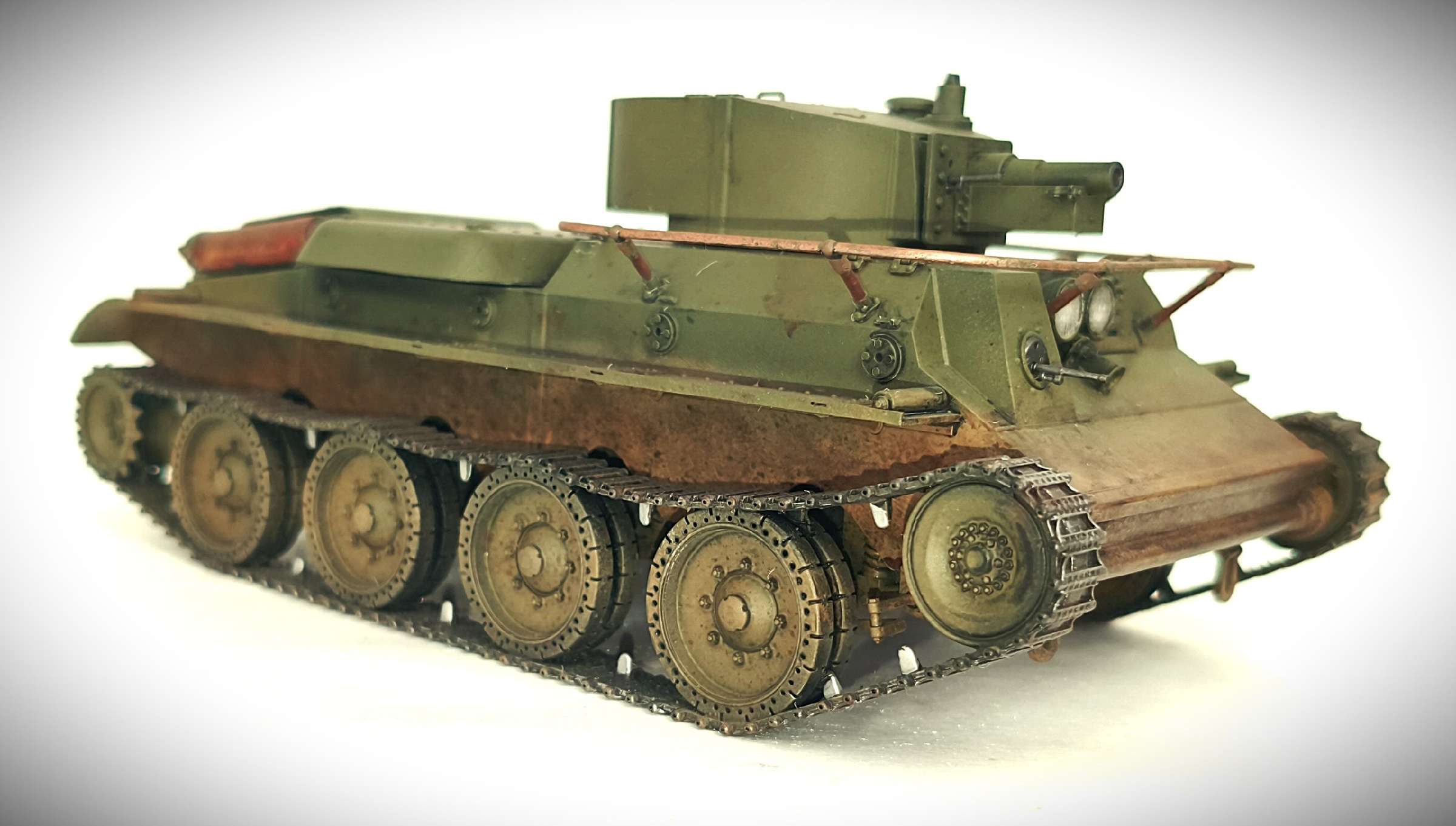
This is what the tank might have looked like if it had been built
It should be noted that the T-29 was not simply an IT-3 with a different turret. The design was significantly revised, resulting in a hull length reduced to 5,825 mm. This made it possible to reduce the combat weight to 14,790 kg in the version with 15 mm armor thickness. This prototype was designated the T-29-1, or the T-29 in its first variant. Interestingly, there was no T-29-2; it was followed by the T-29-3, or T-29 in its third variant. The thickness of the front of the hull and turret increased to 20 mm, while the thickness of the sides and rear was 15 mm. The combat weight increased to 14,415 kg, but the dynamic performance remained the same—80 km/h on wheels and 60 km/h on tracks. The internal components according to the MTO and the running gear remained the same as those of the IT-3.
However, the UMM KA wanted the three-turret T-29
However, the leadership of the KAMU showed far greater interest in another project—the three-turret T-29. Due to the installation of two machine-gun turrets, the crew size increased from 4 to 5, and the hull length grew to 6,325 mm. Yet the expected combat weight of the T-29-4—or the fourth variant of the T-29—was 17,135 kg, which was even less than that of the IT-3. And this was despite armor thicknesses of up to 20 mm. The fifth variant, accordingly, was identical, but the frontal armor thickness increased to 30 mm, and the side armor to 20 mm. Its combat weight was 20,135 kg. The speed specifications for the T-29-4 and T-29-5 remained the same as those for the T-29-1 and T-29-3.
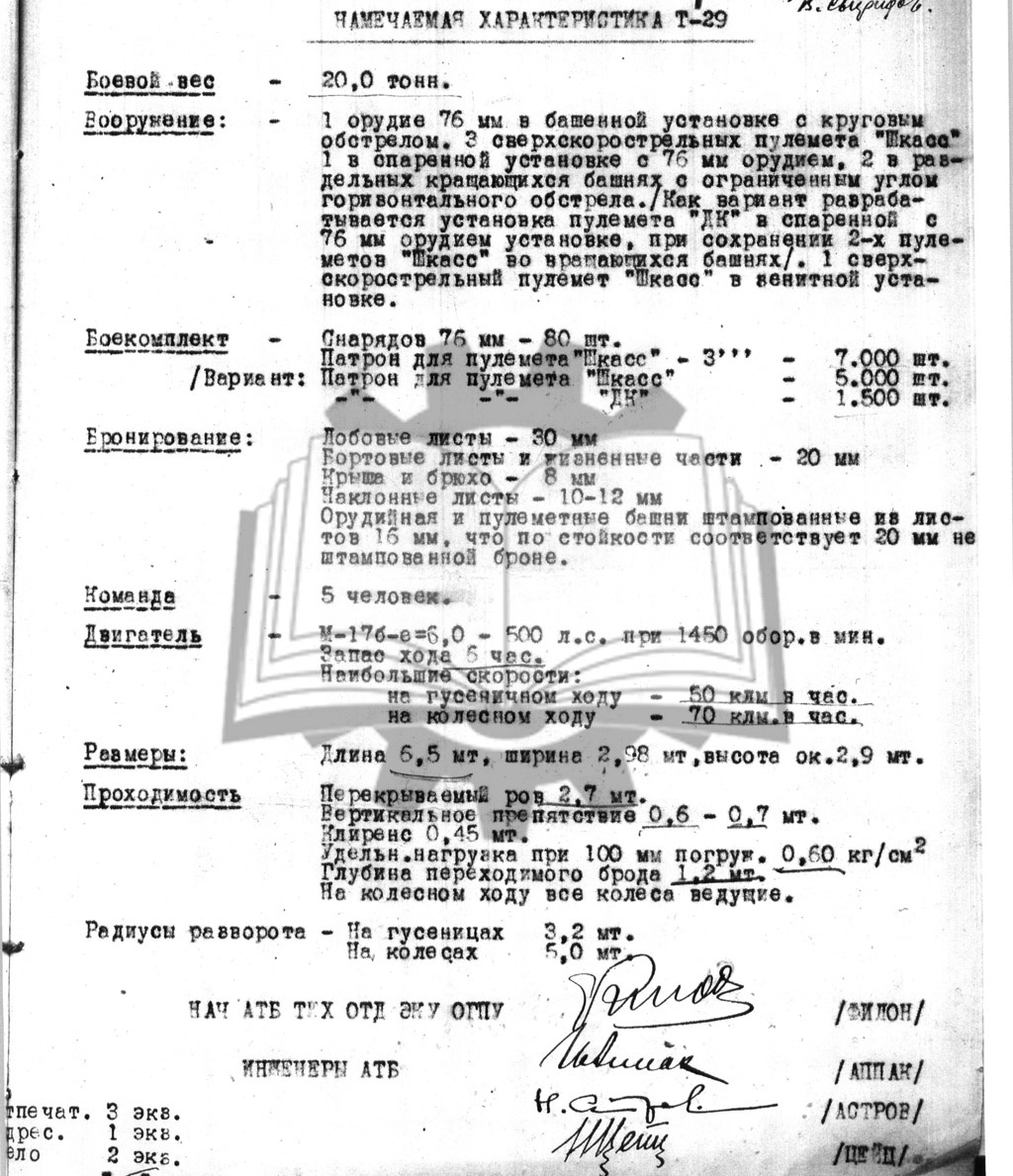
The T-29-5 could have looked like that. However, the ShKAS and DK were quickly abandoned.
Of these designs, the Main Military-Technical Directorate (UMM KA) approved the three-turret concept, in both variants. The rationale behind this decision was that a lighter tank would have better dynamic performance. Meanwhile, the PT-1 remained in development. Based on the results of the PT-1 tests, a revised tank design was developed, designated the PT-1A. There is speculation that the “missing” T-29-2 is actually the PT-1A. Incidentally, the T-29 was originally designated as the PT-1, but their development paths subsequently diverged. A similar situation arose with the T-29-4 and T-29-5. The metal prototypes differed significantly from one another.
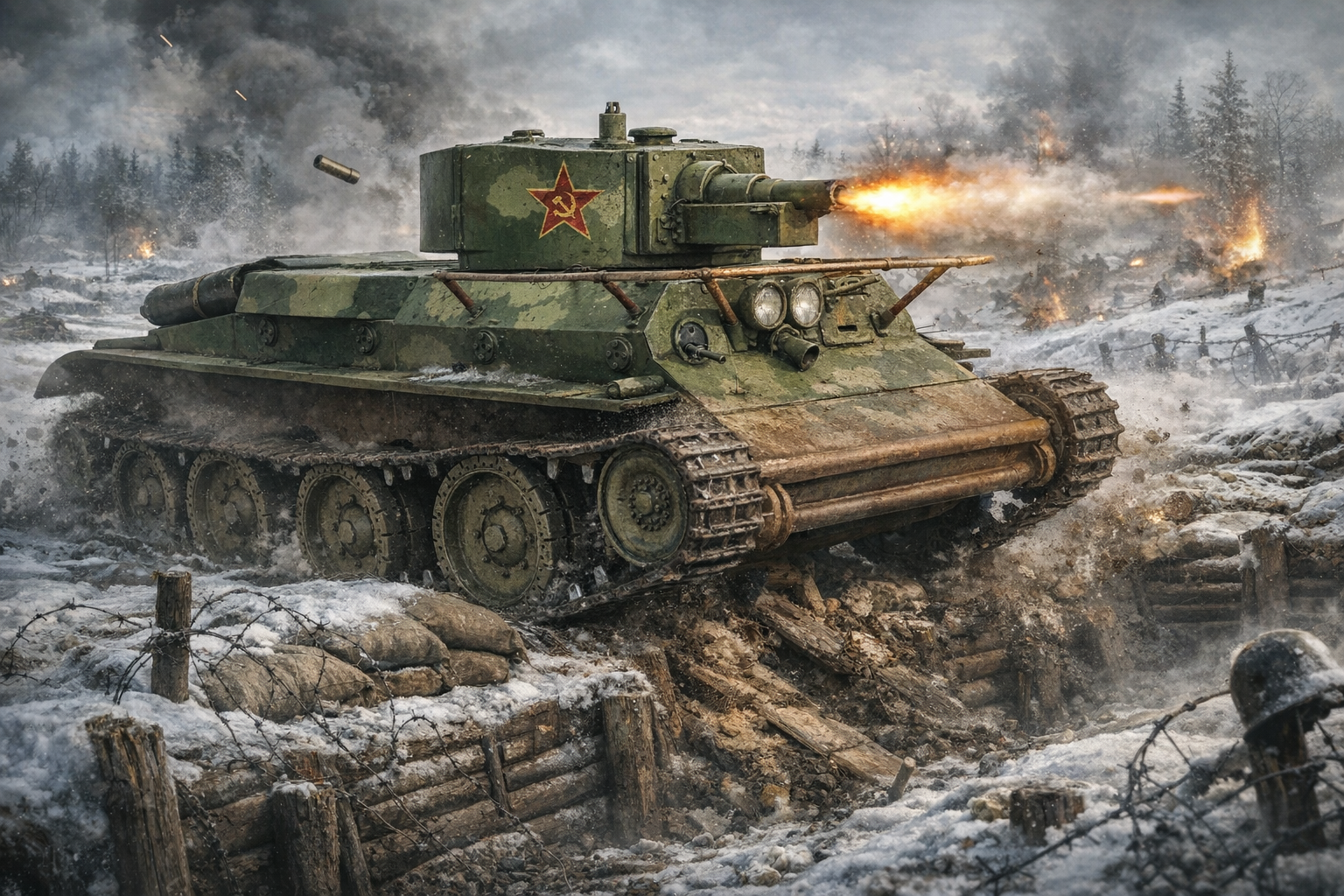
A hypothetical scenario of the T-29-1 tank in combat during the Finnish War. Image generated by lmarena.ai
The author would like to thank Alexei Makarov and Vadim Antonov (Moscow), as well as Alexander Kalashnik (Omsk), for their assistance in preparing this material.
List of Sources:
-
-
- RGVA
- State Catalog
- Central Archives of the Ministry of Defense of the Russian Federation
-