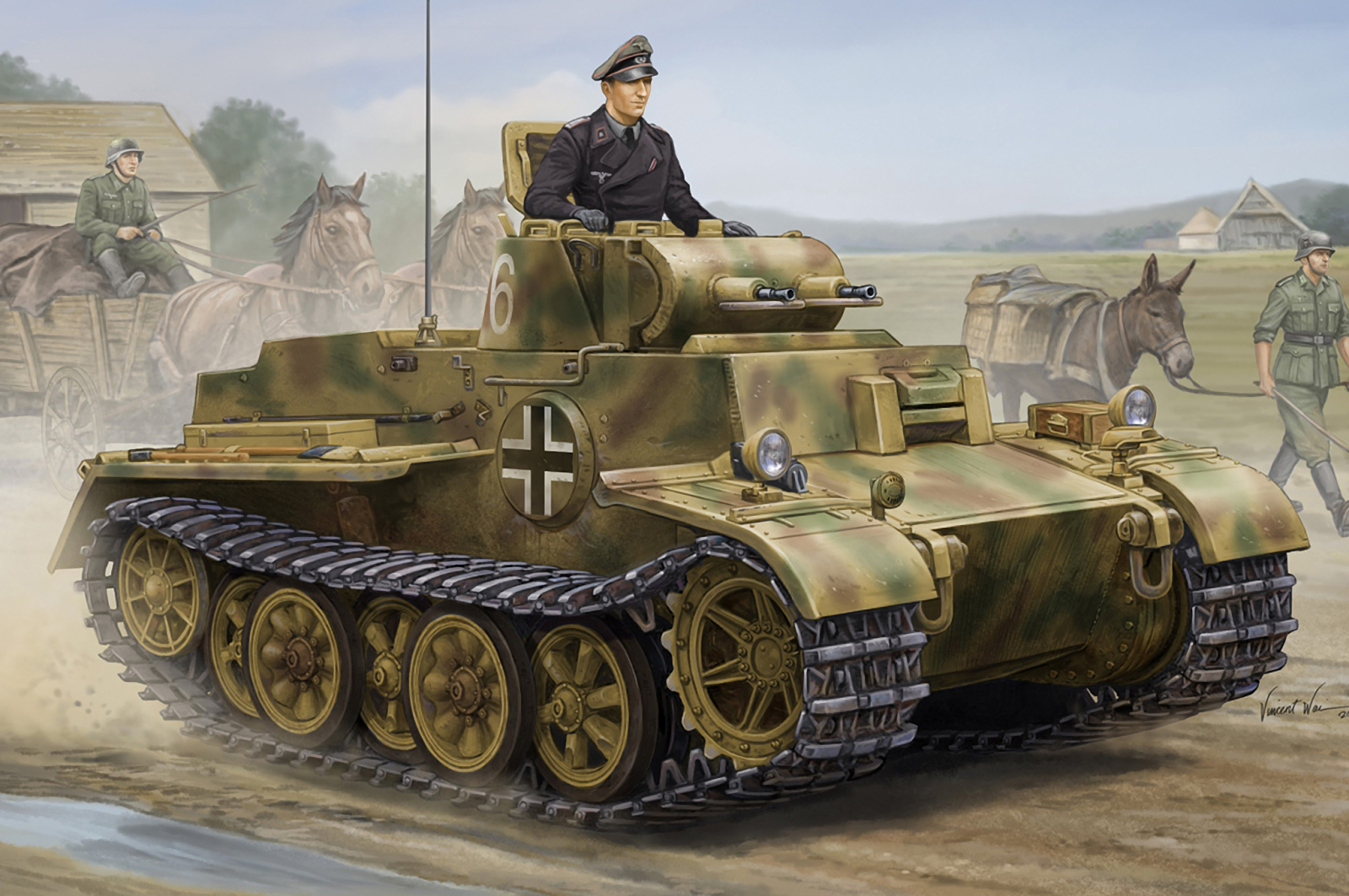
An article by Yuri Pasholok from the WARSPOT website, dated March 27, 2017
One of the favorite pastimes of many tank experts—as well as people who consider themselves to be such—is compiling rankings. As a rule, the creators of these rankings try to determine the best tank. And while a somewhat systematic approach has developed over the years in this area, identifying the worst combat vehicles is a more complicated matter. Often, the compilers of “worst tanks” rankings make their selections based on an incomprehensible system and name a wide variety of combat vehicles—and some of them receive this shameful label without fully deserving it.
However, if we consider the balance of a tank’s specifications, the time of its introduction on the battlefield, and its combat effectiveness, the German Pz.Kpfw.I Ausf.F turns out to be one of the worst tanks of World War II. Conceptually very similar to the British Infantry Tank Mk.I, it appeared on the front lines in the middle of World War II with specifications that were extremely questionable for that time.
The Little Assault Soldier
The French military is very often and quite justifiably criticized for having prepared, in the interwar period, for a war that was already over. But we must not forget that other countries also had their share of military leaders who believed that the coming war would feature battles very similar to those of World War I. There were similar commanders in the German army as well. Among them was Colonel General Walter von Brauchitsch, who was appointed Commander-in-Chief of the Wehrmacht’s Land Forces on February 4, 1938.
It cannot be said that von Brauchitsch was a die-hard conservative, but some of his decisions raise questions. The hero of this article came to prominence precisely because of an order issued by von Brauchitsch on November 24, 1938. This order was related to the fact that the Germans were preparing not only for a war of maneuver but also for an assault on pre-prepared and deeply echeloned defensive lines. Among Germany’s neighbors, Czechoslovakia, Belgium, and France possessed such defenses. To “break through” the fortifications, it was planned to use anti-aircraft artillery as well as specialized self-propelled guns. One of them, the Pz.Sfl.IVa, even reached the prototype stage and saw combat—albeit as a tank destroyer.
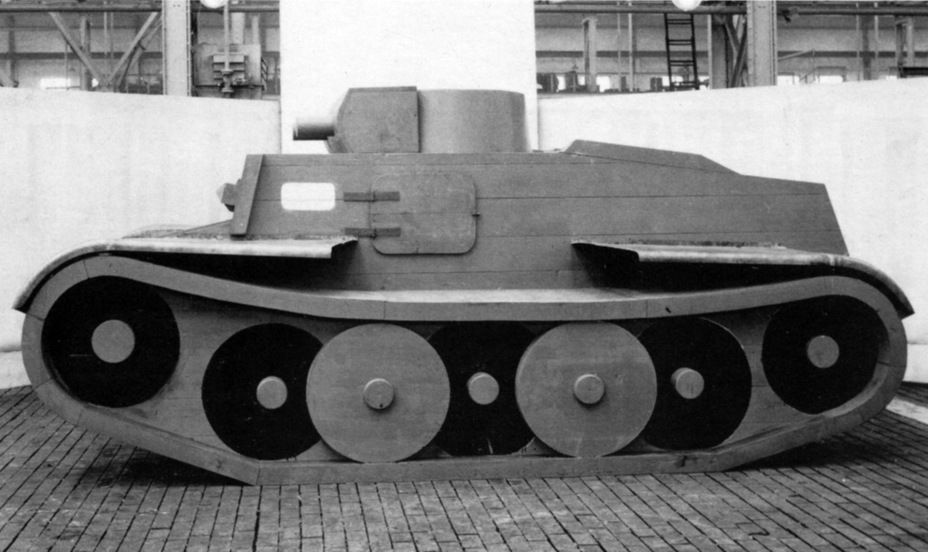
Full-scale model of the VK, January 18. Its turret has not yet been fitted with a sheet-metal “collar.”
The use of anti-aircraft artillery to attack fortifications, as well as the development of specialized self-propelled guns for this purpose, seemed reasonable. But von Brauchitsch’s directive also gave rise to the idea of creating heavy tank companies, whose mission would also be to engage enemy defensive lines. This required tanks with the maximum possible protection.
The idea of building a tank with anti-shell armor wasn’t a bad one in and of itself. The question was what kind of tanks In 6 (Inspekteur für Heeresmotorisierung, Inspectorate of Motorized Forces) wanted for this purpose. The first of these, the VK 65.01, more or less met the specified requirements. With a combat weight of 65 metric tons, it was to have armor up to 80 mm thick and be armed with a short-barreled 105-mm (later 75-mm) gun.
The second tank, however, inspires nothing but bewilderment. The 6th Division of the Armaments Department received a request for a vehicle with capabilities similar to those of… the Pz.Kpfw.I light tank. That is, a two-seater combat vehicle with a crew of two and armed with two machine guns. At the same time, the level of protection for such a tank was limited by only one parameter—the load capacity of pontoon crossings, which was 18 metric tons.
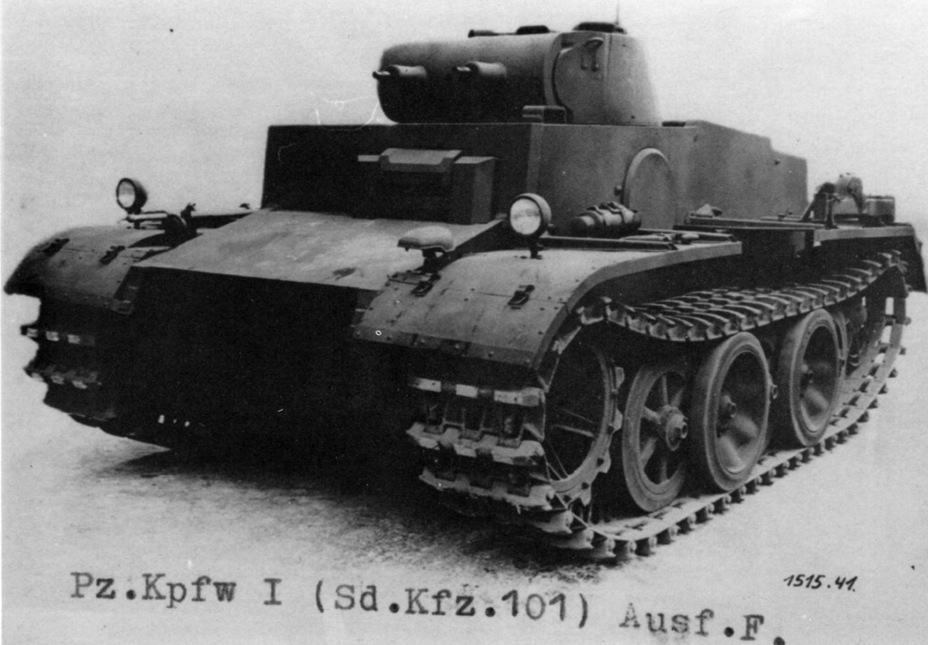
This was the VK 18.01 prototype. The vehicle differed somewhat from the production tank, including in the design of its tracks.
At that time, the Krupp concern, the developer of the main Pz.Kpfw.I series, found itself “sidelined” from the development of new vehicles. By refusing to work according to the specifications developed by Heinrich Knipkamp, the company deprived itself of the prospects for further development of the La.S. project. As of late 1938, work on the light tank—later designated Pz.Kpfw.I Ausf.C—was being carried out by Krauss-Maffei (Krauss & Comp.-J. A. Maffei AG) of Munich. At that time, the vehicle, known as the VK 6.01, was still in the design phase, and during this process, the VK 6.01’s appearance had changed significantly. It was only natural that the contract for the German “small, heavily armored tank” was also awarded to Krauss-Maffei. The development of the turret was, as was customary, entrusted to the Daimler-Benz AG Werk 40 plant in Marienfeld (in the southern part of Berlin).
The fact that Krauss-Maffei was awarded the contract by no means meant that work on the tank project—designated VK 18.01 (an 18-metric-ton-class tracked chassis, first prototype)—would begin immediately. As already mentioned, the company’s main task at that time was the development of the VK 6.01, and that project was running behind schedule. This was largely due to redesigns of the running gear.
Around the same time, a project very similar to the VK 18.01—a three-man tank with the maximum possible armor protection—was assigned to MAN. This vehicle was designated VK 16.01. After some deliberation, the 6th Division of the Armaments Department decided to merge these projects. This did not mean that the two companies would build a single tank. Nevertheless, the very similar technical specifications suggested that these vehicles could easily be standardized in terms of a number of components and assemblies.
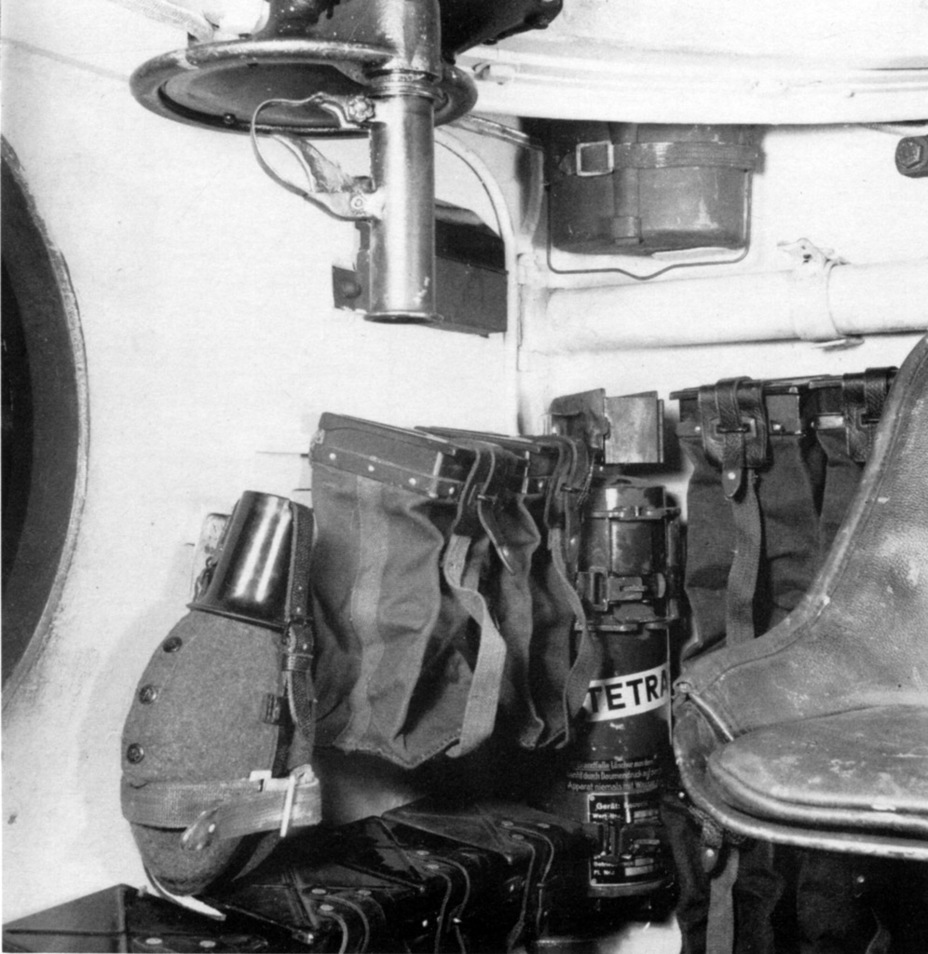
The commander’s station, who also served as gunner and loader. Unlike the “standard” Pz.Kpfw.I, this one was quite spacious
On November 19, 1939, a meeting was held attended by representatives of both companies. At the meeting, an agreement was reached to combine their efforts, with greater use being made of the existing design work on the Krauss-Maffei chassis. This was quite logical, since by that point, progress on the VK 6.01 had been quite significant, and the design was nearing its final version. Of course, this was only a conceptual discussion, since the vehicle’s mass—which was three times greater—made it impossible to use the light tank’s running gear as-is. From the VK 6.01, both heavily armored vehicles inherited a layout with five road wheels per side, a redesigned suspension, and a 150-horsepower Maybach HL 45 engine.
Krauss-Maffei was tasked with developing a redesigned undercarriage, including the tracks. MAN was not left without work either: it was tasked with developing the drive wheels, final drives, and the main transmission. It was decided to use the ZF SSG 47 transmission in the tank. Each company built four prototype chassis, with Krauss-Maffei producing eight sets of running gear for itself and MAN, and MAN producing eight sets of transmissions and drive wheels.
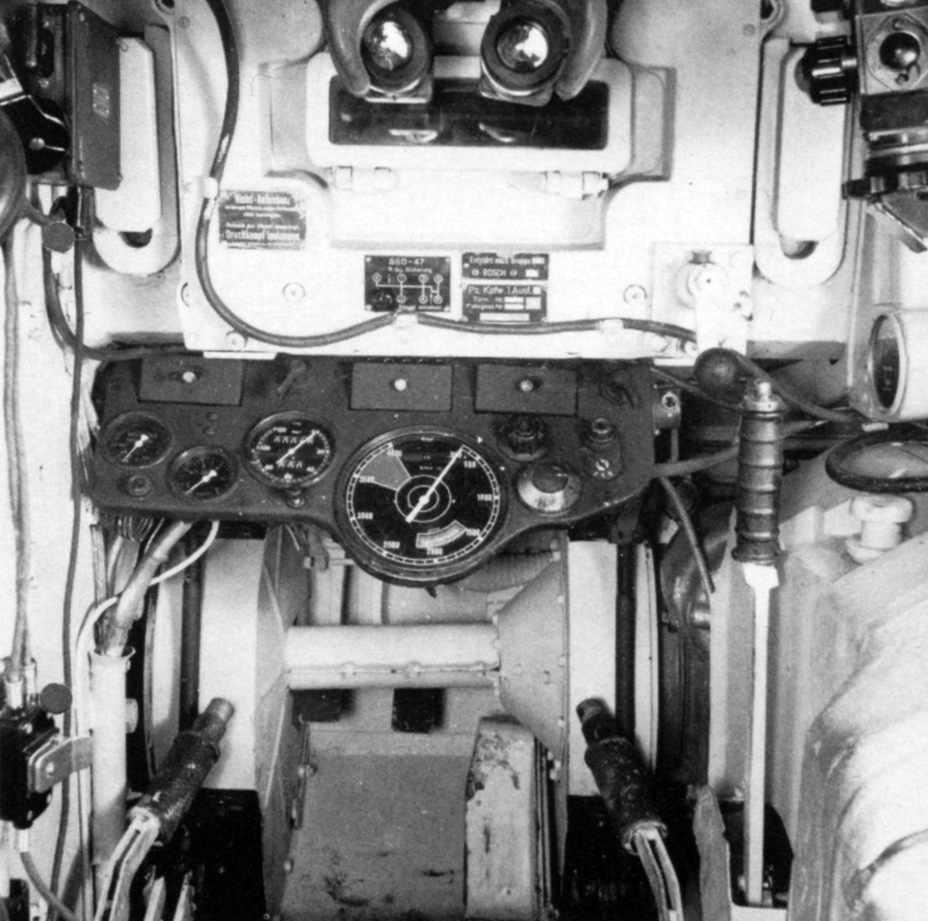
The mechanic-driver’s workstation also turned out to be better designed
On December 29, 1939, In 6 gave the go-ahead for the production of the VK 18.01 pilot series. Krauss-Maffei manufactured 30 chassis, and Daimler-Benz manufactured 30 turrets. The turret bases were not included in the contract, since the tank hull was a single piece on this occasion.
The new Daimler-Benz tower differed significantly in design from previous models. It had right angles at the sides and stern, yet for some reason it was fitted with a complex-shaped fairing whose walls were sloped. It is not entirely clear what prompted the addition of this decorative element.
All observation devices were mounted in the turret roof to avoid weakening its sides. The wall thickness of the turret and the gun mantlet was 80 mm. The hull’s armor thickness was 80 mm at the front and on the sides, and 60 mm at the rear. This armor provided reliable protection against fire from the 50-mm Pak 38 antitank gun. Although the Krupp concern did not even participate in the competition, it was not left out. The armor plates for both the hull and the tank’s turret were manufactured in Essen. A contract with Krupp for 30 sets of armor was signed on February 3, 1940. As for the VK 18.01 prototype, it was decided to build it from non-armor-grade steel.
It’s worth mentioning the VK 18.01 variant, which was never actually built as a physical prototype but was “put into production” through the efforts of some historians. This refers to the VK 18.02 design, dated July 9, 1940. It was essentially the same as the VK 18.01, but with a different transmission. Instead of the SSG 47, it proposed using an 8-speed semi-automatic Maybach SRG 15319 transmission with an LG 45 R turret rotation mechanism. The work did not progress beyond the design phase; production tanks were equipped with SSG 47 transmissions.
In the absence of goals
According to plans approved in April 1940, the first tank of the zero series was scheduled to be assembled in December 1940, and the last one in March 1941. Krupp was supposed to deliver the first sets of armor in November 1940. In reality, Krupp produced only one set of hull armor and two sets of turret armor plates in 1940. Moreover, all these parts were made of non-armor-grade steel and were intended for a prototype. The prototype vehicle was assembled at Krauss-Maffei by June 17, 1940.
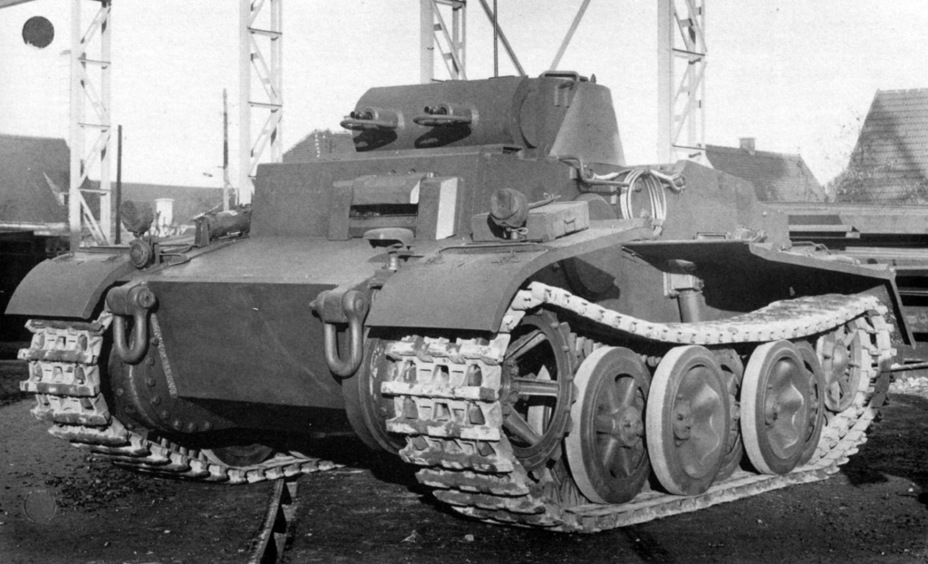
Pz.Kpfw.I Ausf.F, serial number 15329, the second-to-last vehicle in the zero series
The irony of the situation unfolding around the German heavily armored light tank was that by the time it was ready for testing, there were no targets left for it. The Germans captured the Maginot Line and other echeloned defensive sectors of their enemies without any tanks equipped with anti-shell armor. By this point, it had also become clear that a tank must possess not only armor but also high mobility. After all, for the French, the decision to prioritize armor led to defeat in the war. The Char B1, Renault D2, Renault R 35, and other tanks with good protection but mediocre mobility were unable to defend France against the blitzkrieg.
Furthermore, the experience of the French campaign showed that it was highly undesirable for tanks to exceed a combat weight of 30 metric tons. The 65-metric-ton VK 65.01 project fell victim to the combat weight restriction; its development was canceled in October 1940. Everything pointed to the VK 18.01 also being canceled, but no one thought to do so, since its combat weight did not exceed 30 metric tons. Thus, the bureaucratic machinery of the Third Reich simply “overlooked” a tank that Germany no longer needed at all.
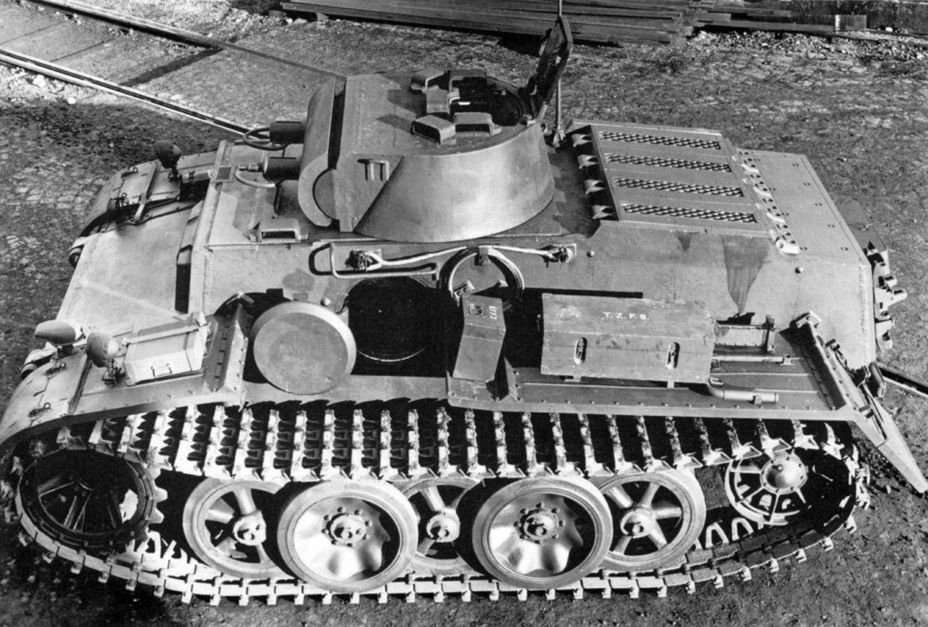
Here is the same tank with its hatches open. They look small, but they actually provide quite convenient access to the vehicle.
The Krupp Group was significantly behind schedule with its deliveries of armor kits. Nevertheless, by September 30, 1941, the shipment of armor plates for the prototype series had been completed. As for Krauss-Maffei, the situation there turned out to be even more dire. The company continued to tinker with another light tank, the VK 6.01. Meanwhile, a contract for the first series of the VK 18.01 was already on the horizon. The In 6 planned to order 100 tanks at once, with production set to begin in late 1941.
The course of events showed that the Motorized Troops Inspectorate was staffed by unabashed optimists: the first VK 18.01s of the zero series did not leave Munich until March 1942. Externally, these vehicles differed somewhat from the prototype. For starters, a Fu 2 radio was installed on the tank. Based on the test results of the prototype, the track pitch was reduced from 160 to 130 mm. The hull underwent minor modifications at the front, and the side hatches were made smaller in diameter. Guard rails were added to the gun mantlet to protect the machine guns, and spare tracks and a smoke-launching device were mounted on the rear hull plate.
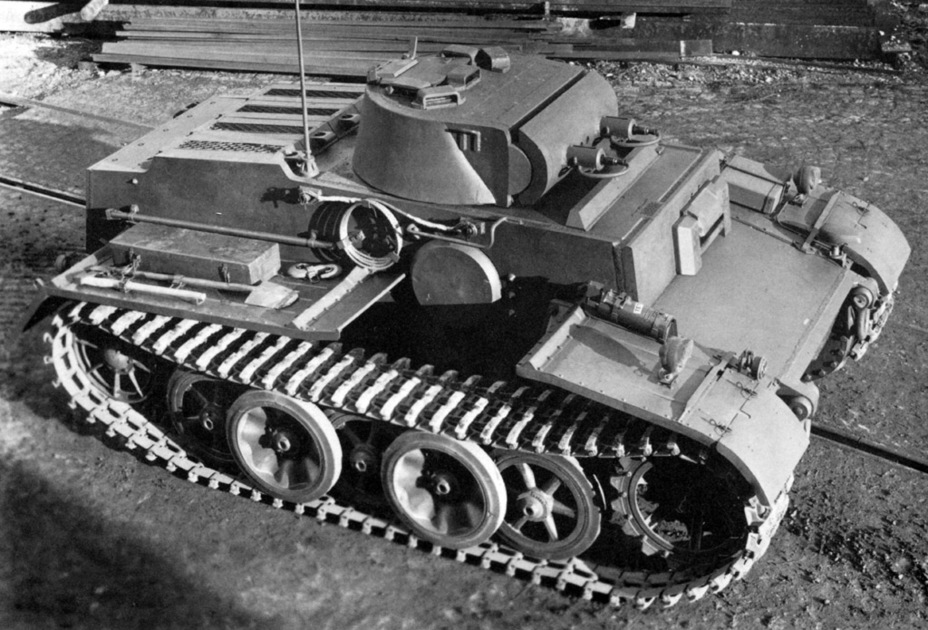
Unlike the prototype, the production tanks were equipped with radios
Serial production of the tank continued at a leisurely pace. The tanks were assigned serial numbers 15301–15330. In May, 12 units were produced at once; this was followed by a two-month hiatus, after which the tanks were produced in small batches until December 1942.
During this time, two events related to the VK 18.01 took place. First, the tank was designated Pz.Kpfw.I Ausf.F. Second, in late June 1942, officials at In 6 began to suspect something was amiss. On July 1, the order for the first series of tanks was canceled. Nevertheless, 30 tanks with highly questionable combat capabilities were shipped to the German army.
Into battle, anywhere at all
Initially, the Pz.Kpfw.I Ausf.F was assigned to a unit with a very specific mission—one that was, at least to some extent, suited to its original tasks. On May 30, 1942, the 66th Special-Purpose Tank Battalion was formed. This unit was intended for a very specific mission—the assault on Malta, which was planned under the name “Operation Hercules.” Five Pz.Kpfw.I Ausf.F were assigned to the 1st Tank Company, which also included five Pz.Kpfw.II Ausf.J and twelve Pz.Kpfw.IV in tropical configuration. The company was commanded by Oberleutnant Betke. The 66th Battalion’s 2nd Company turned out to be even more unusual: it included captured KV-1, KV-2, and T-34 tanks.
The battalion, however, never actually had to storm Malta—Operation Hercules was canceled in June. That was only the beginning of the battalion’s misfortunes.
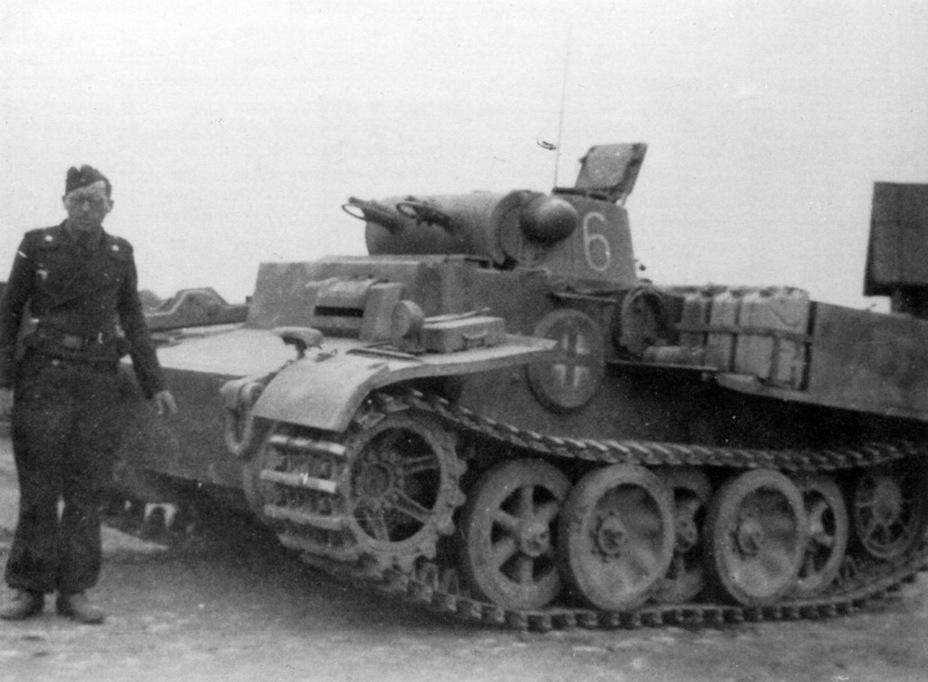
One of the tanks of the 66th Special-Purpose Tank Battalion
On July 27, a decision was made to split the 66th Tank Battalion in half. Its 1st Company was sent near Leningrad—not just anywhere, but to the Mga area, a marshy region that was, to put it mildly, not particularly suitable for these tanks. The company was placed under the command of the 12th Tank Division, and the number of Pz.Kpfw.I Ausf.F tanks in its ranks increased to seven. Once there, the vehicles were given two-tone camouflage. The battalion did not have to sit idle for long—the Sinyavino Offensive began in late August 1942.
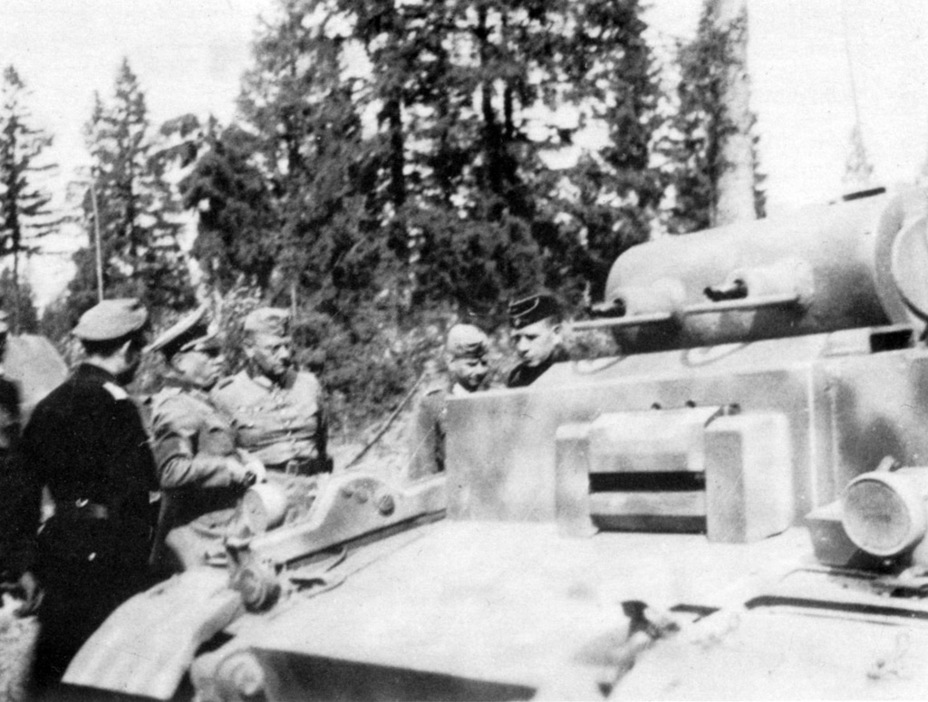
Inspection of military equipment that arrived in the Mgi area. Standing with his back to the photographer, wearing a black uniform and cap, is First Lieutenant Betke, commander of the 1st Company of the 66th Special-Purpose Tank Battalion
By September 10, when the Pz.Kpfw.I Ausf.F made its combat debut, six of the seven tanks were in working order. On that day, the tanks launched an attack on Tortolovo, and the outcome of the battle turned out to be quite different from what the German command had anticipated. Betke was mortally wounded and died on the 12th. Of the Pz.Kpfw.I Ausf.F tanks that took part in the battle, two were destroyed and two became stuck in a swamp. By September 24, one tank had been evacuated. Two days later, the Germans lost another vehicle while on the move. Later, one tank had to be sent for repairs.
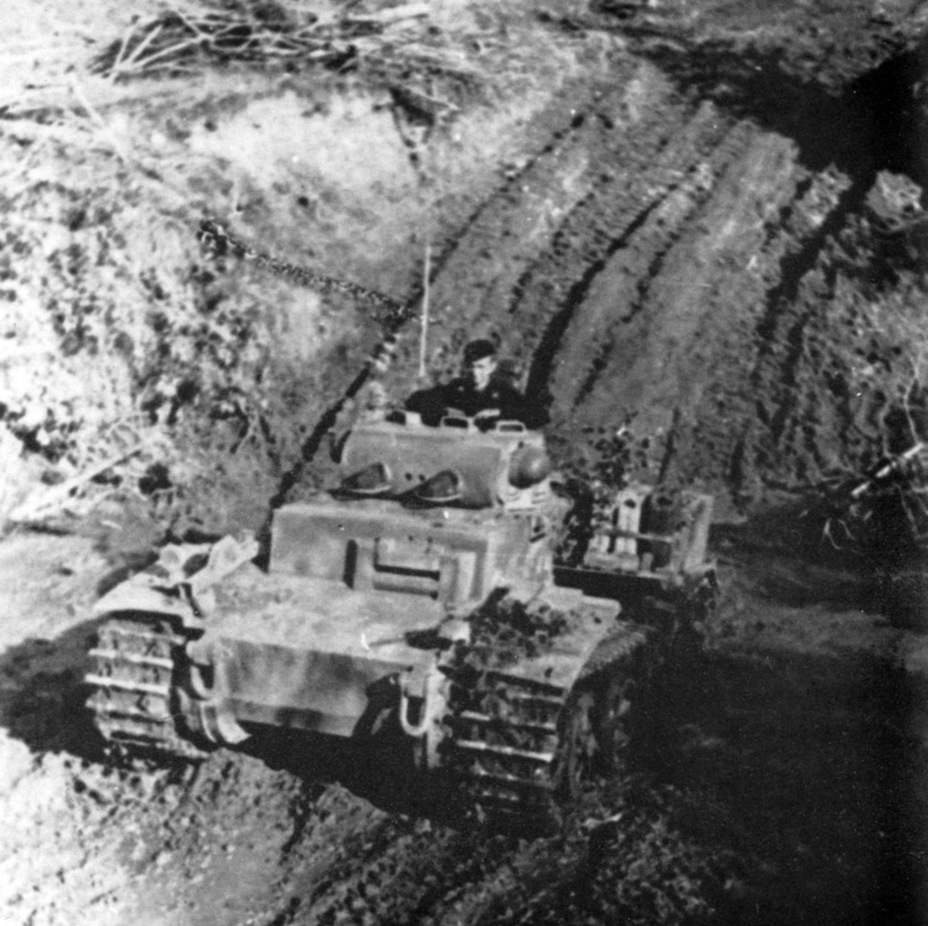
A Pz.Kpfw.I Ausf.F plows through the mud on the Volkhov Front. Its wide tracks provided quite decent cross-country mobility.
It cannot be said that the Pz.Kpfw.I Ausf.F was entirely useless: thanks to its wide, sturdy tracks and thick hull, this tank sometimes served as a mine sweeper. On October 2, 1942, the company was definitively incorporated into the 12th Panzer Division, where it became the 8th Company of the 29th Panzer Regiment. As of December 1942, five Pz.Kpfw.I Ausf.F from this unit were still operational. On January 23, five more of these tanks arrived at the regiment. In February, three tanks were lost in action; two more were decommissioned in April 1943. As of May, four tanks were assigned to the headquarters of the 2nd Battalion, while one remained with the 8th Company. The last mention of these vehicles dates to July 10.
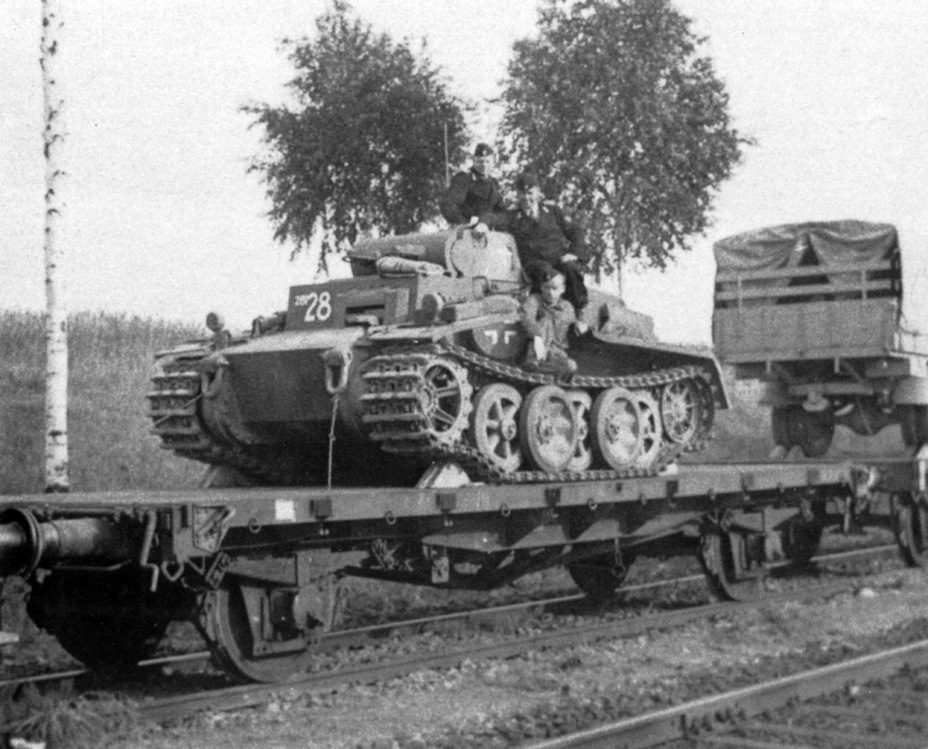
Arrival of the 2nd Police Tank Company in the combat zone. Toward the end of their service, the Pz.Kpfw.I Ausf.F were used primarily by punitive units.
The next unit to receive the Pz.Kpfw.I Ausf.F was the 2nd Battalion of the 1st Tank Regiment, 1st Tank Division. It received eight tanks of this type, as well as two Pz.Kpfw.I Ausf.C—a rather questionable combination. However, at that time, the 1st Tank Division was stationed in occupied Greece, so no combat operations involving it were planned. By November, the division had reached the outskirts of Kyiv, where it came into contact with units of the Soviet 3rd Guards Tank Army. Here, the armor of the Pz.Kpfw.I Ausf. F did not help much: by November 20, only one tank remained operational. Later, one tank was restored to working order, while another was destroyed by fire. The vehicles were withdrawn from the front between December 10 and 21; by the end of the year, only one Pz.Kpfw.I Ausf. F remained in the 1st Tank Regiment.
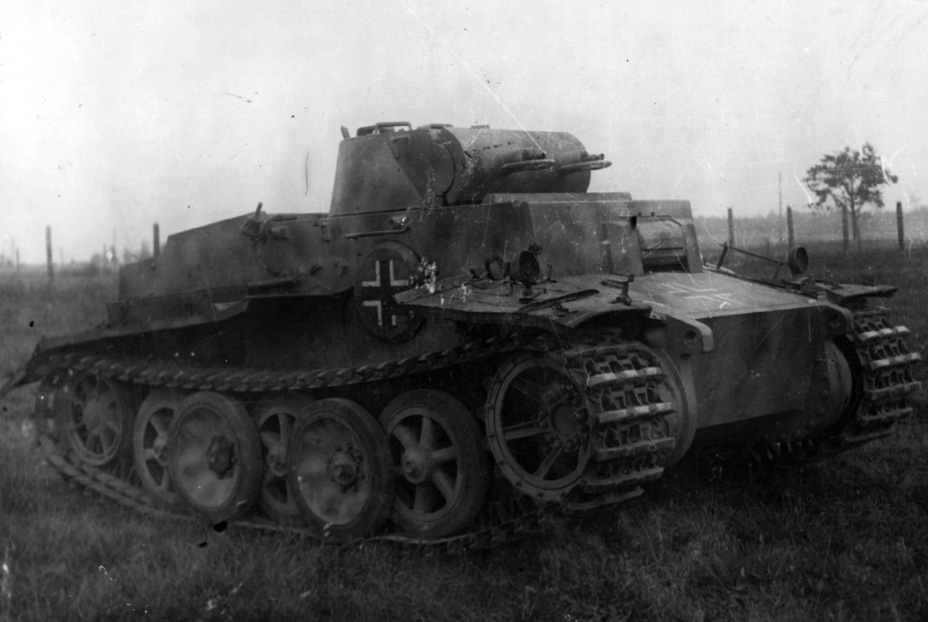
Pz.Kpfw.I Ausf.F, serial number 150329, from the 2nd Police Tank Company, captured in Belarus. NIP GBTU KA, fall 1944
Six more tanks of this type were assigned to the 221st Tank Company, which, like the 66th Tank Battalion, had a very diverse composition. In the summer of 1943, these tanks were used in counter-guerrilla operations in Belarus. As of March 11, 1944, the company still had five Pz.Kpfw.I Ausf.F tanks in its ranks, four of which were operational. Most likely, one of these tanks is now on display at the museum near Kalemegdan Fortress in Belgrade.
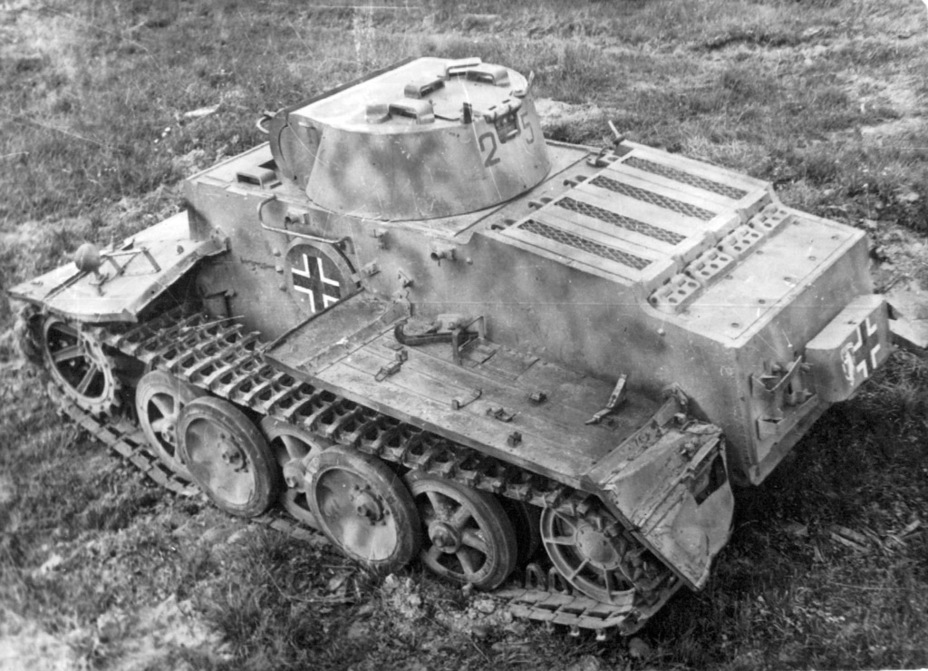
Because of the regiment’s distinctive emblem, the vehicle was nicknamed the “Bear Tank” in the USSR
The remaining Pz.Kpfw.I Ausf.F tanks also fell into the hands of the punitive forces. On May 17, 1943, five of these tanks (some of which had been repaired and came from other units) ended up in the 2nd Police Tank Company. There, they replaced the captured Panzerkampfwagen 35R (f) tanks. The company was attached to the 4th SS Police Regiment, which had been operating in Belarus since August 1943. As of June 1944, the regiment and the tank company were in the 4th Army’s area of operations. There, the punitive forces shared the fate of the rest of the group, coming under attack by units of the 1st Baltic Front. The remnants of the 2nd Tank Company arrived in Vienna in August 1944.
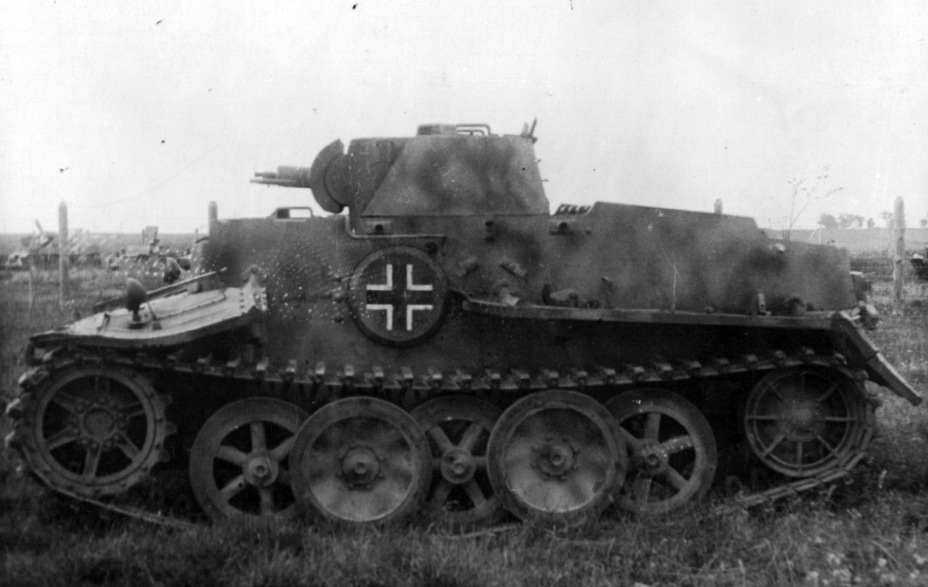
The car was in pretty good mechanical condition
Among the equipment left behind by the 2nd Police Tank Company was a Pz.Kpfw.I Ausf.F with serial number 150 329, manufactured in November 1942. According to documents, it arrived at the GBTU KA Research Institute in late summer 1944. Interestingly, the documents refer to it as the “Bear Tank.” It earned this name because the regimental emblem—a bear—was prominently displayed on the front and rear of the hull. No tests were conducted on the tank; the process was limited to a technical description of the vehicle.
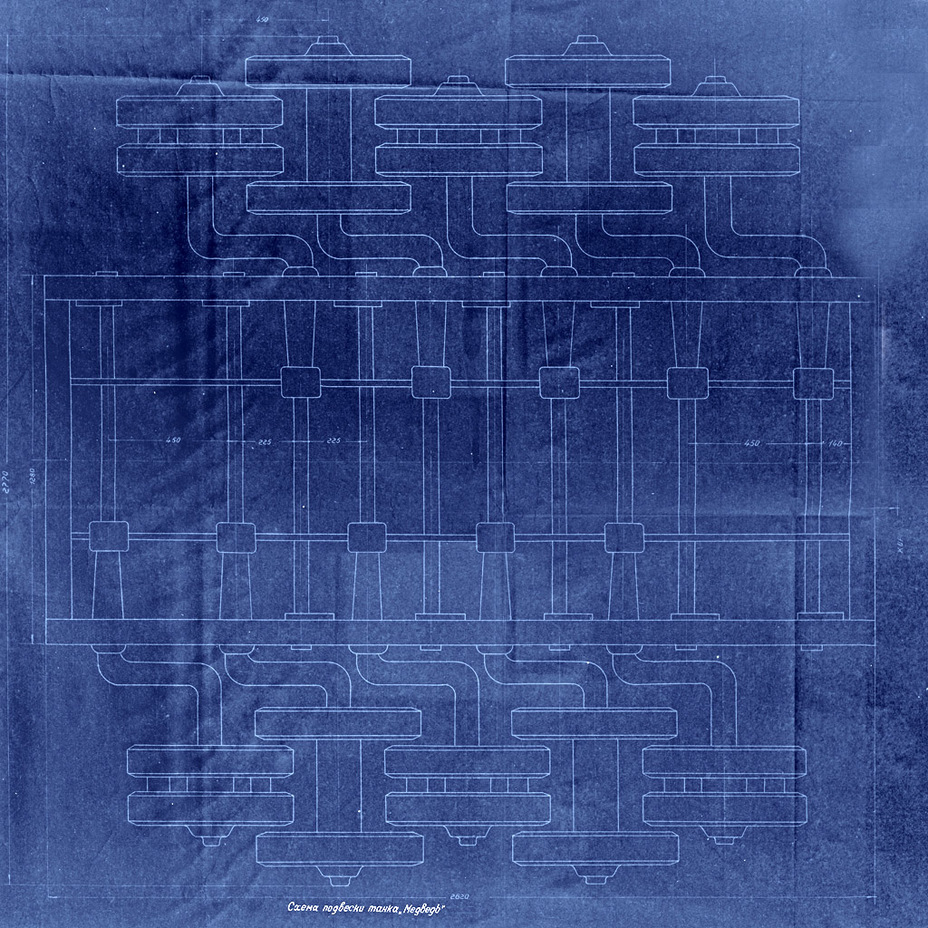
Suspension diagram for the Pz.Kpfw.I Ausf.F, prepared by specialists at the Research Institute of the State Technical University of Aerospace Engineering
Later, in the fall of 1945, the tank did attract the attention of the test range specialists. The fact is that its running gear was quite unique, and work was underway at the test range to study the torsion bar suspension of various types of tanks. Thus, this tank’s suspension became part of a research paper on torsion bar suspensions, to which an album of drawings was attached.
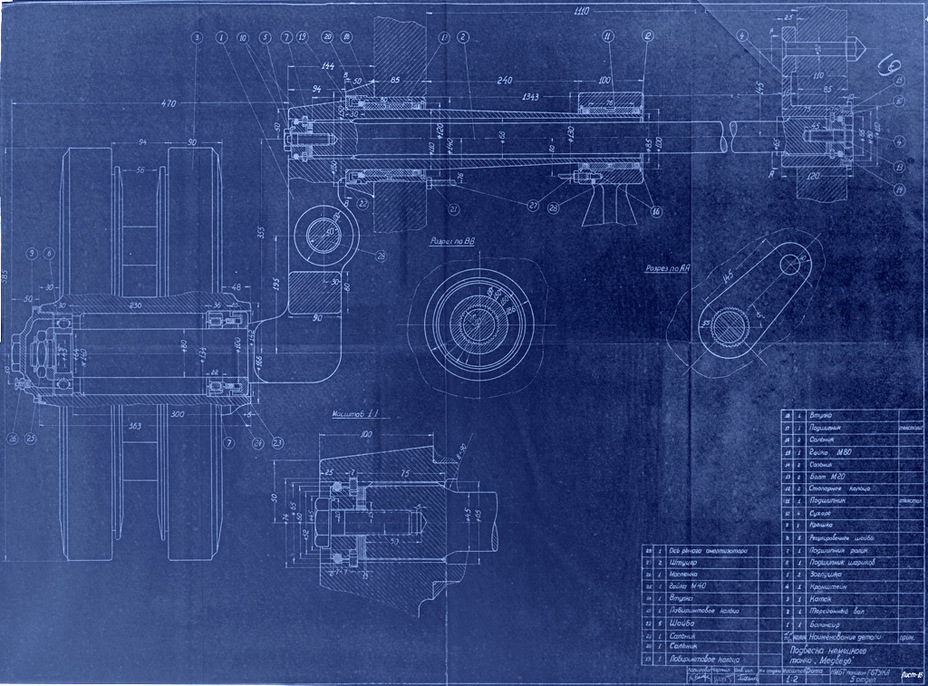
Tank suspension; illustration from an album of torsion bar suspensions prepared by the NIABT Test Range in 1945
As can be seen, the only task the Pz.Kpfw.I Ausf.F could more or less handle was participating in counter-guerrilla operations. This was made possible by its heavy armor and sturdy suspension, which withstood landmines well. But the Pz.Kpfw.I Ausf.F was designed for entirely different purposes. By the time this tank reached the front lines, its effectiveness on a conventional battlefield was virtually zero.
Of course, one might mention the similar British Infantry Tank Mk. I here, but that concept was conceived in the mid-1930s. The German “light tank with heavy armor,” on the other hand, was designed at a time when it was already clear that tanks armed solely with machine guns were unnecessary. Furthermore, it is completely unclear what these vehicles would have done against the fortifications they were supposed to storm. Thus, the Pz.Kpfw.I Ausf.F can be described as a tank with a fairly good design, developed according to a lackluster technical specification.
Sources
-
-
- NARA Materials
- Panzer Tracts No. 1–2: Panzerkampfwagen 1 (Kl.Pz.Bef.Wg. to VK 18.01), Thomas L. Jentz, Hilary Louis Doyle, Darlington Publication, 2002, ISBN 0–9708407–8–0
- Materials from the Central Archives of the Ministry of Defense of the Russian Federation
- Materials from the author’s photo archive
-