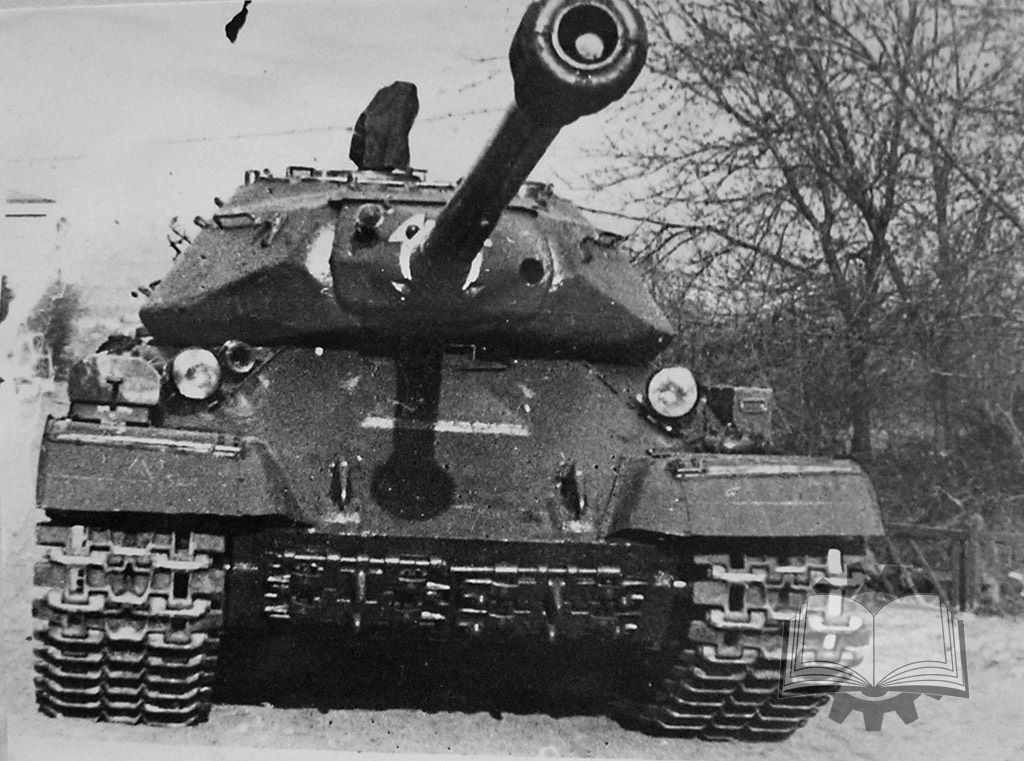
Marking the 80th anniversary of the IS-4—the heaviest of the Soviet mass-produced tanks—entering service
There is a well-known saying that generals prepare for the last war. In reality, that’s not quite true. They begin preparing for the last war immediately after that very war ends. A number of ideas continue to develop by inertia, and some of them become obsolete very quickly. This also applies to tank design. A similar phenomenon could be observed both after the end of World War I and after the end of World War II. Much of what they hadn’t managed to implement during the war, they tried to bring to fruition after it ended. But this was far from always successful.
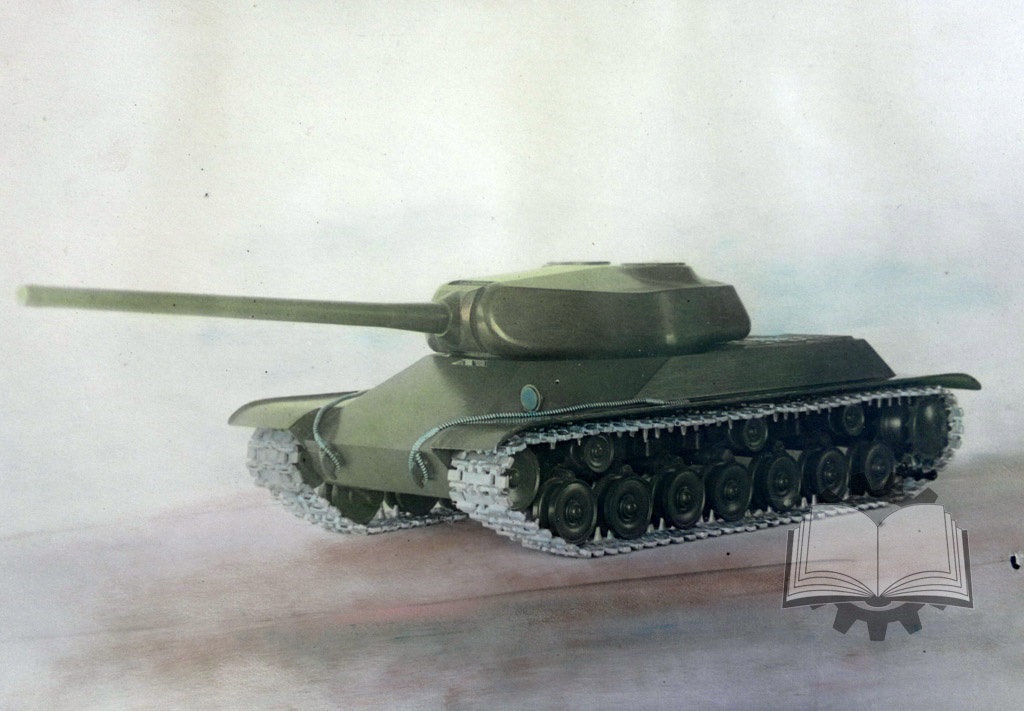
Tank “K,” November 1943
April 29 marked the 80th anniversary of the IS-4 heavy tank’s entry into service with the Soviet Army. This coincided with the entry into service of another tank, the T-54, which had also been developed during the Great Patriotic War. For Soviet tank manufacturing, the IS-4 became an iconic vehicle. It was the heaviest Soviet tank ever put into mass production. Furthermore, it turned out to be the only heavy tank of the second half of the 1940s that managed to enter more or less decent mass production, and it remained in service for a long time. However, this tank proved to be highly controversial; moreover, by the time it entered mass production, it was already obsolete.
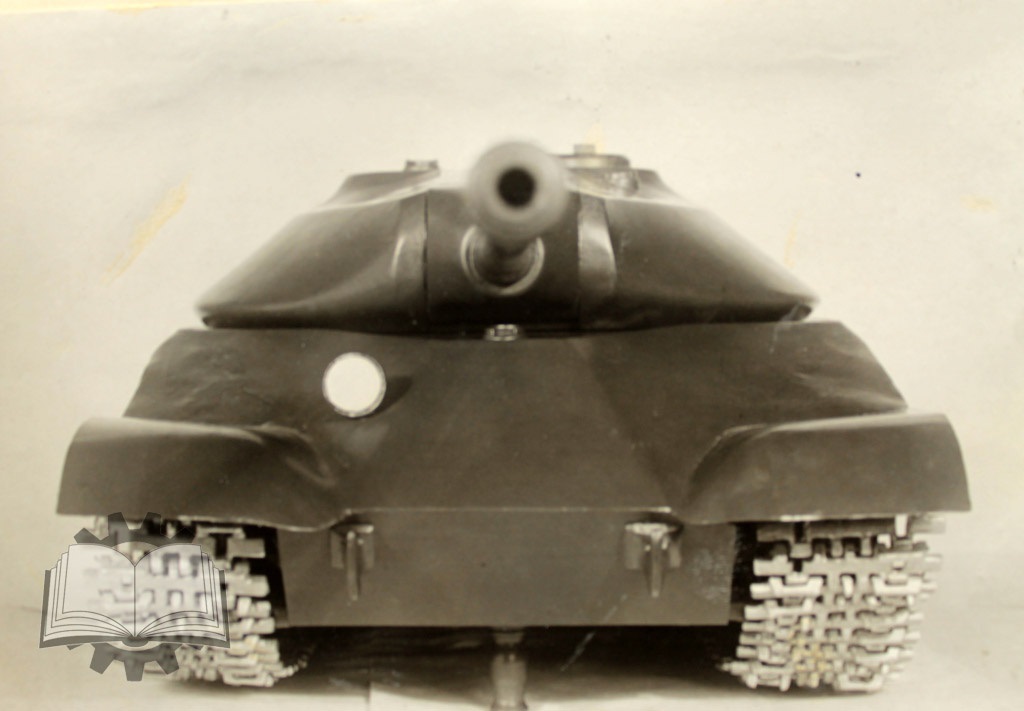
But in this early 1944 design, the future Object 703 can be recognized
During World War II, the development of certain combat vehicles was often a response to the enemy’s introduction of new models. This was the case with the German “menagerie” (primarily the “Panther”), which was developed in response to the introduction of the T-34 and KV-1. In the spring of 1943, the Soviet Union began developing new IS heavy tanks (Object 237) and the SU-85 self-propelled artillery piece, which were designed to counter the “Tiger.” As for the subject of this article, it was the result of an analysis of enemy military equipment used on the Kursk Salient. This primarily concerned the “Ferdinand” heavy tank destroyer.
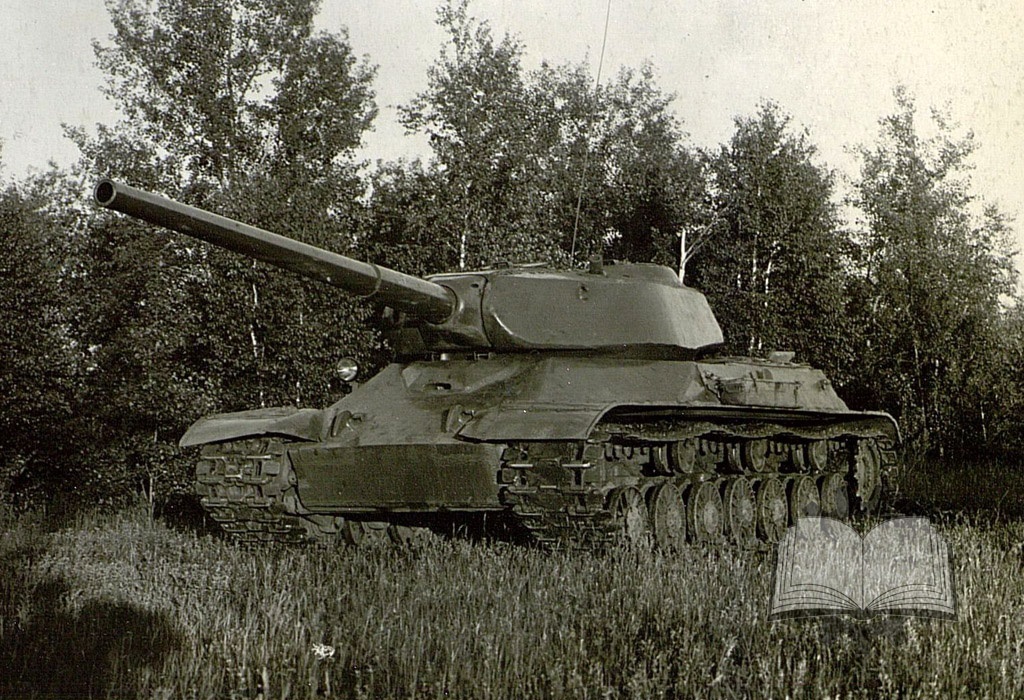
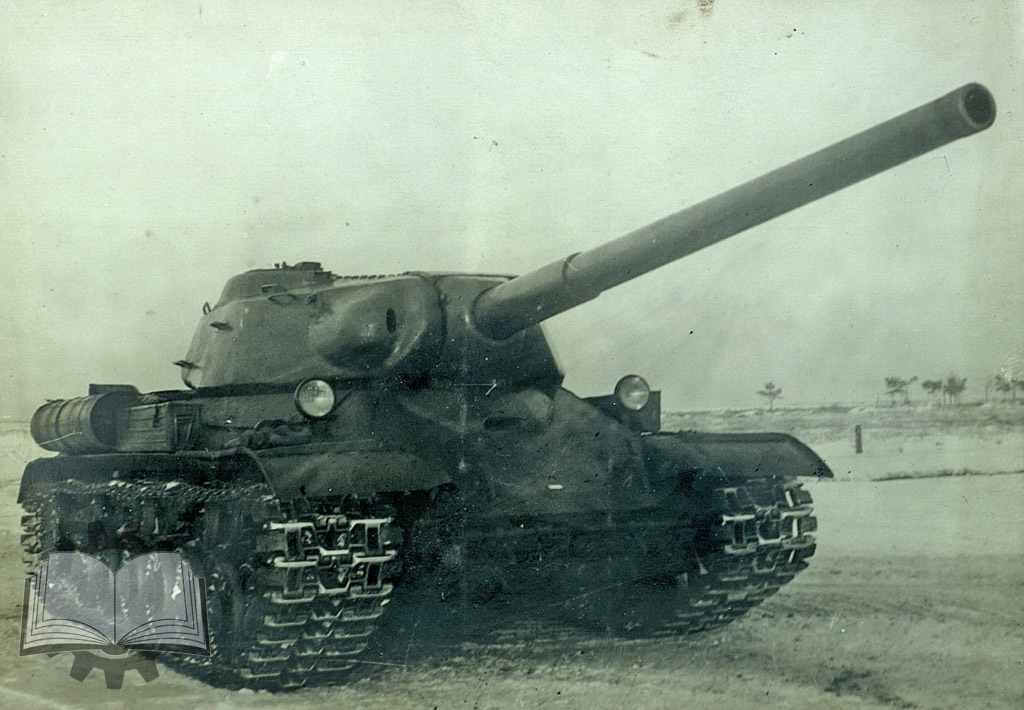
Object 701, Model No. 1, equipped with a 122-mm S-34 gun
On September 5, 1943, Colonel General A.N. Fedorenko of the Armored Forces presented his proposal to I.V. Stalin regarding ways to improve the performance of the IS-2 heavy tank (Object 240). However, increasing the armor thickness would have pushed the weight to 55–60 metric tons, so the idea was rejected. Nevertheless, on November 27, 1943, technical specifications for the new tank were released. The tank’s combat weight was 55 metric tons, and the crew consisted of five men. The thickness of the frontal armor could reach 200 mm, and the armament consisted of either a 122-mm gun or a 152-mm howitzer-gun. The plan was to install an 800–1,000-horsepower engine, a planetary gearbox, and planetary turret mechanisms. This tank was never built, but its design served as the basis for the “K” tank, which was subsequently developed by Design Bureau No. 2 of the Kirov Plant (ChKZ).
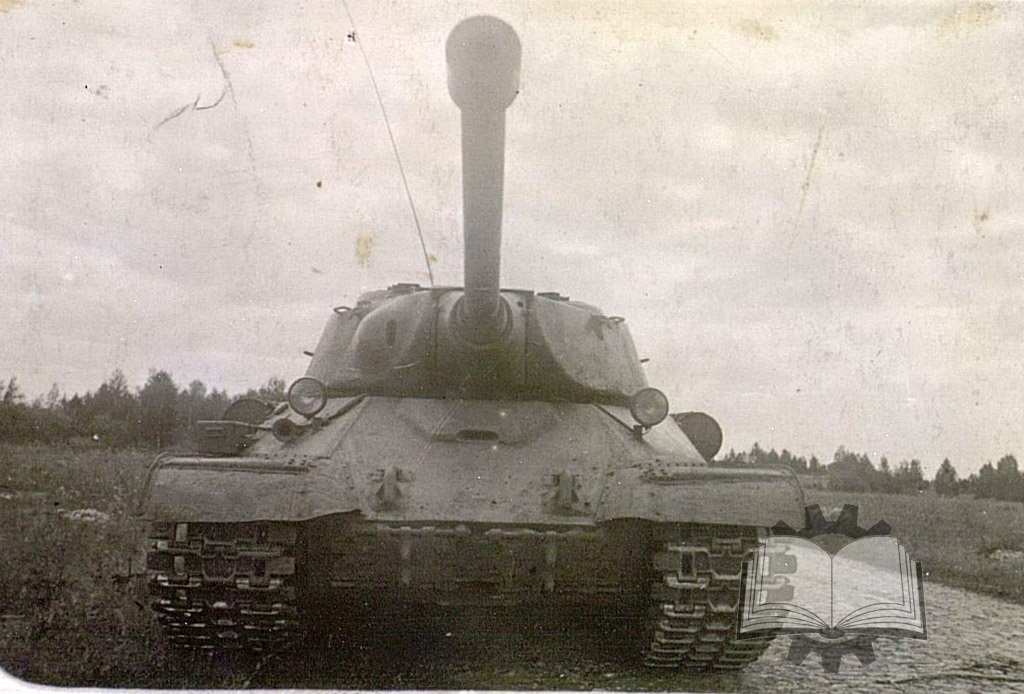
This prototype was equipped with the 100-mm version of the S-34 gun
At that time, serious tensions had arisen between the Chelyabinsk Machine-Building Plant and Experimental Plant No. 100. Prior to that, they had been working together, with Plant No. 100 taking the lead. But not this time. L.S. Troyanov headed the work on the new tank, and M.F. Balzhi also participated in the development of the “K” tank. Research Institute No. 48 was brought in to assist with the tank’s development, which had a very positive impact on the design of the hull and turret. Even at the preliminary design stage, the tank clearly had advantages over Object 240. There was a shift away from “cardboard boxes” toward a more rational use of armor, particularly on the hull sides. At the same time, instead of cast parts, the ChKZ Design Bureau opted for rolled steel plates. The step at the front of the hull was eliminated (as N.F. Shashmurin wrote in his memoirs, Zh.Ya. Kotin was very fond of it). The turret design proved to be more successful.
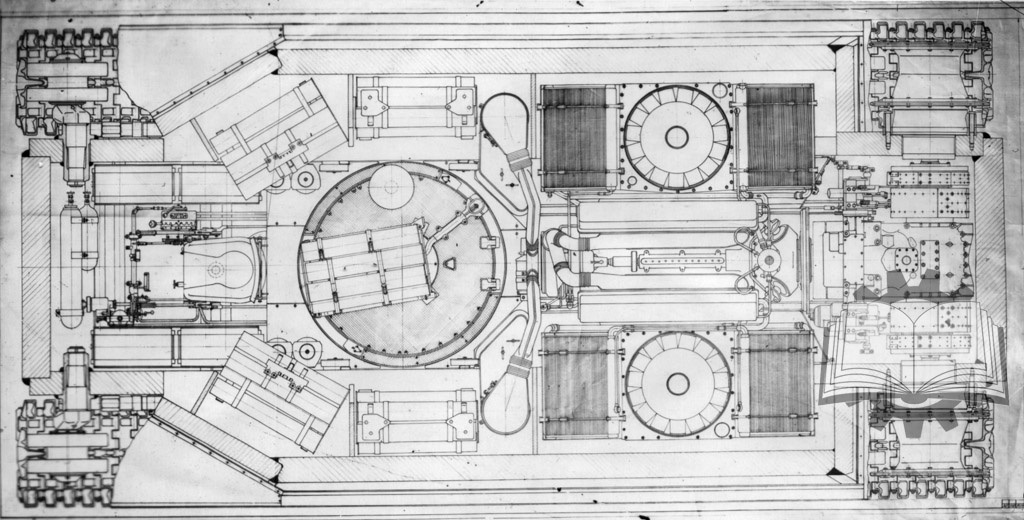
Layout of Object 701
In December 1943, the “K” tank was assigned the design designation 701. It soon came to be known as Object 701. Even before the first prototype was built, changes began to take place. The turret was equipped with guns developed by the Central Armament Design Bureau (TsAKB)—the S-34, with calibers of 122 and 100 mm. Both guns had a very interesting feature: V.G. Grabyn had proposed—in general—the sensible idea of moving the loader’s position to the left and the commander’s and gunner’s positions to the right. So, on Object 701, this idea was implemented, and a handrail was added beneath the telescopic sight. However, the S-34 lost the competition to both the 122-mm D-25T gun and the 100-mm D-10T gun. The extension was abandoned because it proved vulnerable to frontal fire. And the gun mount had to be redesigned for the D-25T, as did the entire turret.
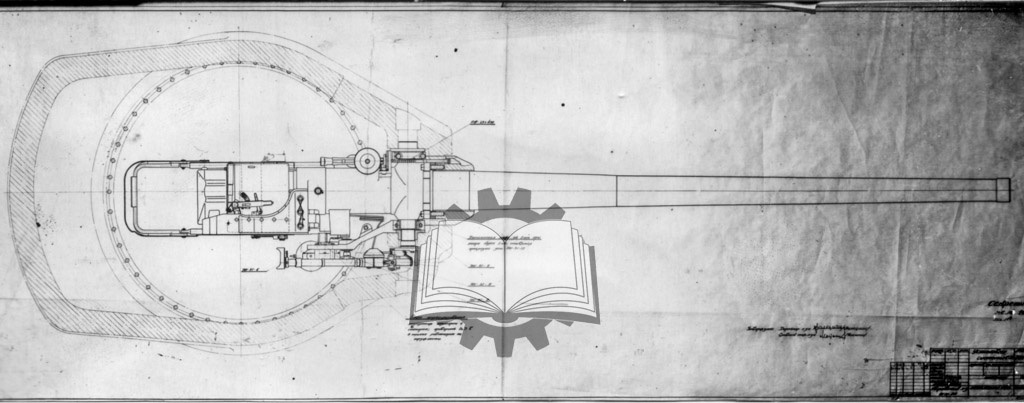
The gunner was seated on the right, as was the commander, while the loader was on the left
Problems also arose with the hull. Instead of the observation hatch that Kotin favored, Object 701’s upper frontal hull plate featured a cast protrusion with an observation slit and MK-IV periscopes. This design choice also turned out not to be the best idea. The tank was quite vulnerable to attacks on its “birdhouse,” yet even in 1945, it remained unchanged. Only after it was adopted for service was it redesigned, with the observation slit removed and a hatch for the driver-mechanic added. Incidentally, this design was first implemented on the prototype of Object 703 (better known as the “Kirovets-1”).
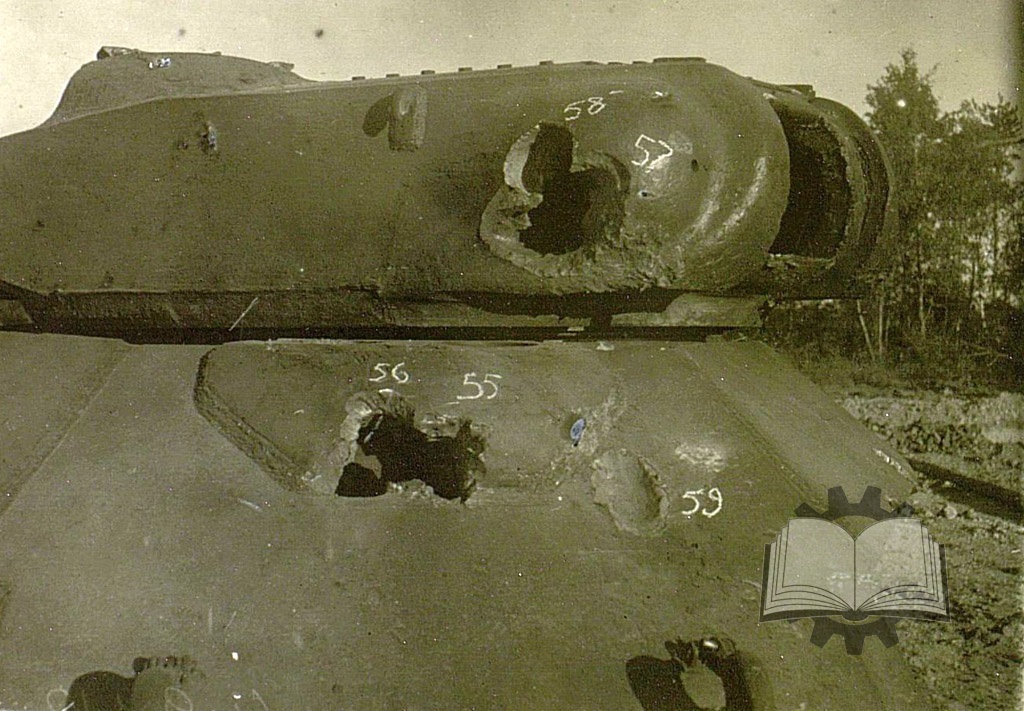
The mechanic-driver’s “birdhouse,” like the protrusion to the right of the sight on the turret, turned out to be a bad idea
Incidentally, the “Kirovets-1,” which appeared in late 1944, became Project 701’s most formidable competitor. Suffice it to say that this tank, after being modified based on the results of the initial tests, proved to be nearly equal in terms of armor protection, even though the difference in combat weight exceeded 10 metric tons. This should come as no surprise: NII-48 and the Design Bureau of Plant No. 100, as well as SKB-2 of the Chelyabinsk Tractor Plant, were not sitting idly by. Plant No. 100 devised a double-sloped frontal hull section (also known as a “pike nose”); SKB-2 of the Chelyabinsk Tractor Plant (more precisely, Balzhi) designed a turret with a distinctive shape; and NII-48 also contributed its share. The result was a tank that had a better chance of entering mass production. It was no coincidence that V.A. Malyshev, People’s Commissar of the Tank Industry, insisted on putting Project 703 into mass production. That is how the Red Army came to have the IS-3.
Nevertheless, they just couldn’t get rid of them
The military, it must be said, insisted on putting Object 701 into mass production. And they had their reasons. From a technical standpoint, it was a more advanced tank, featuring a planetary transmission, a more powerful V-12 engine, a lower commander’s turret, and a number of interesting innovations. However, the combat weight of Object 701 kept increasing, and there were issues with its armor protection. Things didn’t go entirely smoothly from a technical standpoint either. It couldn’t have been any other way—the tank was completely new. To be fair, their competitors at Design Bureau of Plant No. 100 fared even worse. Their IS-6 turned out to be a frankly “unpolished” tank, which was inferior in every respect—not just to Object 701, but even to the IS-3. Nevertheless, the GBTU KA’s persistent desire to put Object 701 into mass production had a negative impact.
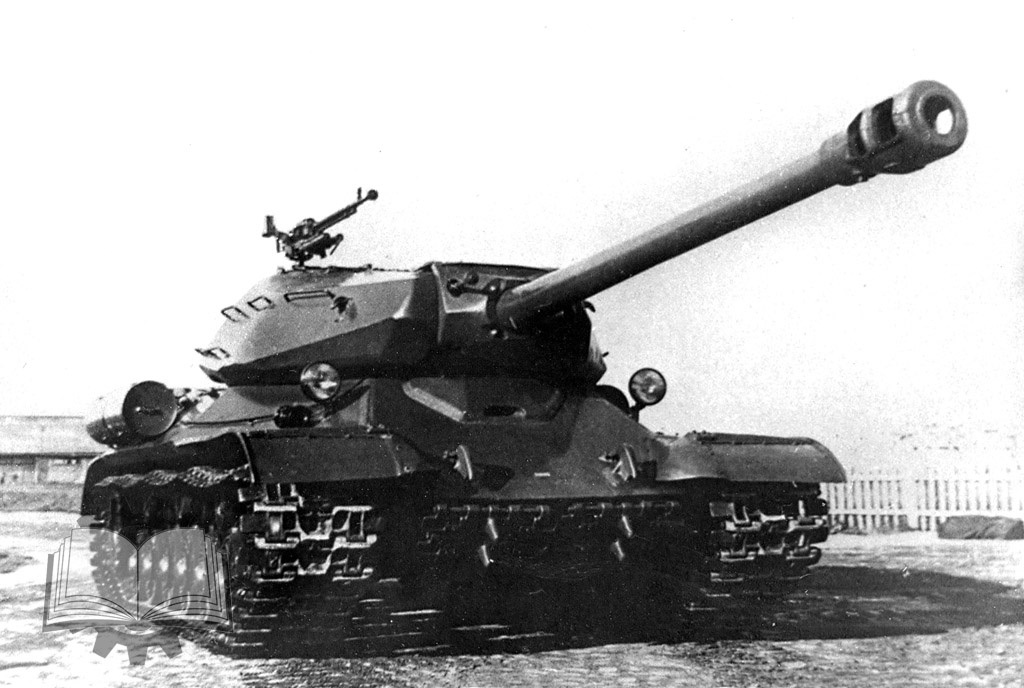
An intermediate version of Object 701, equipped with a 122-mm D-25T gun and a new turret, featuring extensive armor plating on the gun mantlet
Sometimes you hear that the IS-3 was taken out of production because there were too many complaints about it. In reality, that’s not the case. It was simply that the military “pushed hard” and managed to get Object 701 adopted into service. Ironically, it ended up with some distinctive features that were characteristic of the IS-3. For example, the production IS-4 abandoned the separate commander’s and loader’s turrets, opting instead for hatches similar to those on the IS-3. And this idea turned out to be less than ideal. But the “funniest” part wasn’t that. The fact is that the industry simply wasn’t ready to launch the tank into mass production. For example, Plant No. 200 was initially unable to supply 160-mm-thick rolled steel, so it proposed making the frontal armor from two 80-mm-thick plates.
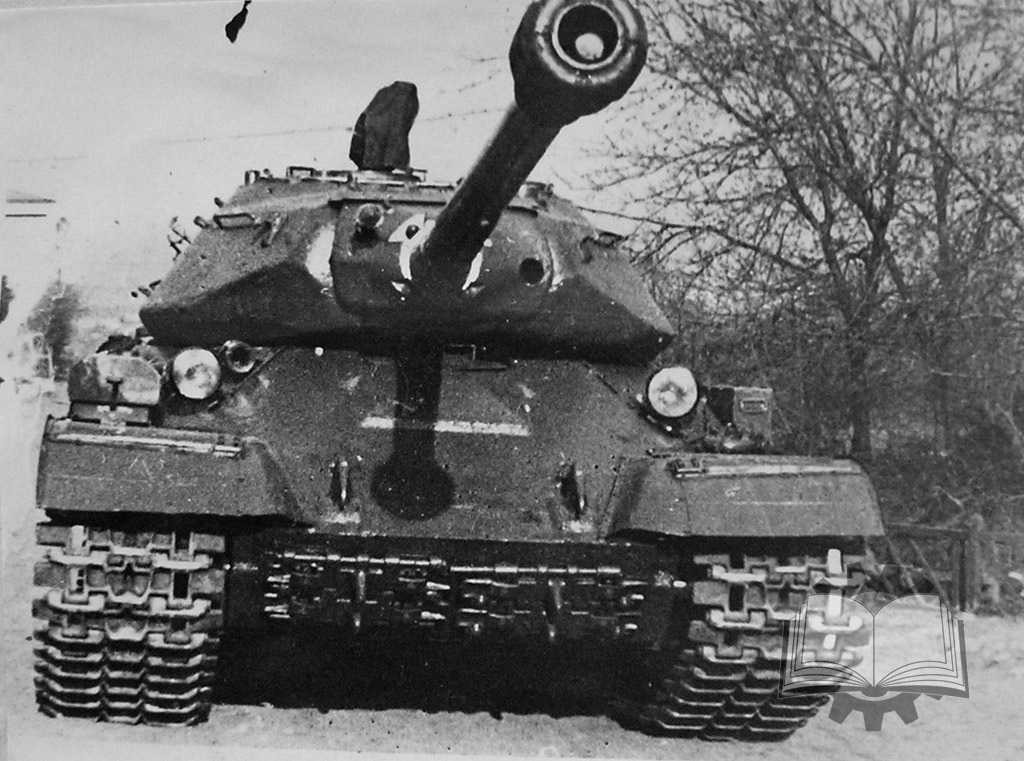
One of the first IS-4s
ChKZ was supposed to deliver the first 10 IS-4s in September 1946, but it wasn’t until October that it began assembling seven tanks. It is worth noting that, at that time, the production of S-80 tractors had become a higher priority. This directly affected the development of the IS-4. In 1946, not a single tank of this type was delivered. At the same time, the IS-4 was undergoing refinement, which gradually led to the tank’s combat weight reaching 60 metric tons. In 1947, production targets were consistently missed. They managed, with great difficulty, to produce 52 tanks, although the original plans had been quite different. Another 155 were delivered in 1948. However, in 1948, an extremely alarming warning was issued. The Ministry of Transport Engineering (the successor to the NKTP) acknowledged that further development of the tank was impossible. Its weight had reached its limit.
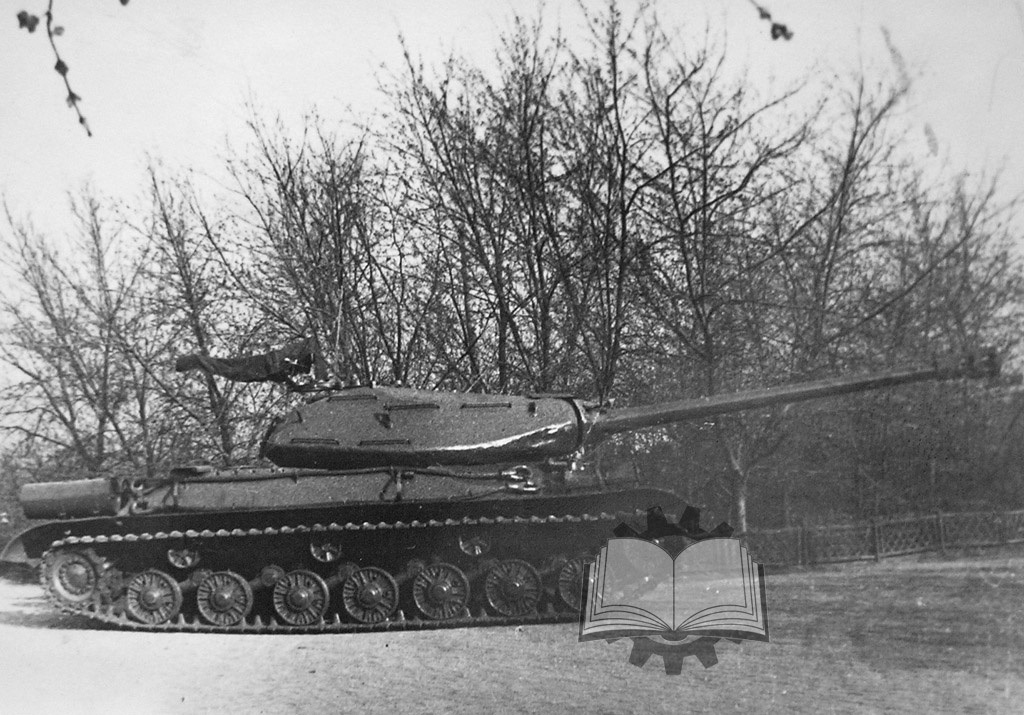
He had a very hard time getting into the series
The most interesting thing is that by the time the IS-4 was adopted into service, it was already considered a stopgap measure. The fact is that the tank’s armament was clearly outdated, but there was nothing else available at the time besides the D-25T. As subsequent events showed, its armor protection was also outdated. The turret was vulnerable to “bump shots,” and the wide armor plating around the gun mount wasn’t the best idea either—if it wasn’t penetrated, it could jam. Incidentally, the T-54 also inherited this turret problem, since the final configuration of the T-54 turret produced in 1947–49 was based on that of the IS-4. Another matter is that the IS-7 (Object 260), which was developed to replace the IS-4, turned out to be even more problematic. And its price tag, even compared to the IS-4 (which cost more than 700,000 rubles), seemed exorbitant.
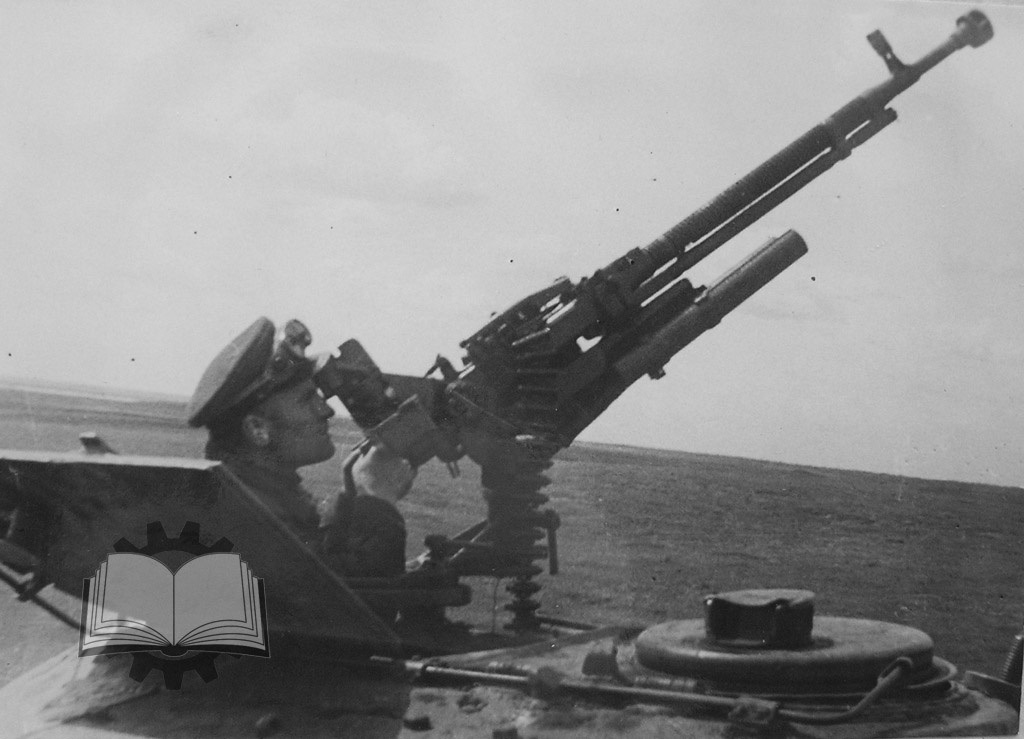
Firing an anti-aircraft machine gun
As a result, in February 1949, a decision was made to discontinue production of the IS-4. The Chelyabinsk Tank Plant was able to deliver 12 more tanks, although the IS-4s that had already been produced required modifications. In 1951, 217 tanks underwent a program to correct design flaws, and an additional 25 modernized IS-4 tanks were produced. They differed somewhat from their predecessors. The IS-4’s history proved beneficial to the military: from then on, the combat weight limit for new heavy tanks did not exceed 50 metric tons. As early as 1949, the first prototype of the IS-5 heavy tank (Object 730) appeared, marking the first step toward the T-10, the most widely produced and successful heavy tank of the postwar period.
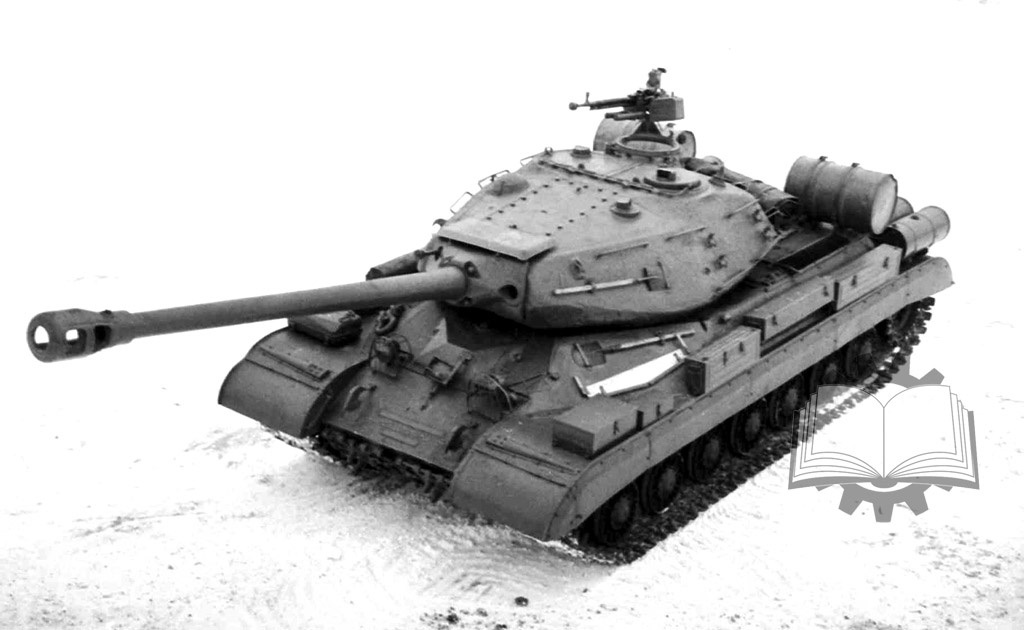
This is what the tanks looked like that were produced after the IS-4 was taken out of production
It might seem like the IS-4 has a sad history, but that’s not the case. You only need to look at what was happening in other countries to understand certain things. The IS-4 turned out to be the only heavy tank that was developed toward the end of World War II, adopted into service after the war, put into mass production, and remained in service for several decades. What was going on with the Americans is a whole other story— the ARL-44 was adopted as a tank destroyer (!), even though it was officially classified as a medium tank. All in all, the main mistake in the history of the IS-4 was the very persistence with which the tank was pushed into mass production. But hindsight comes into play here. Our command acted out of inertia; roughly the same thing could be seen in other countries. That said—and I’ll repeat this—the tank still proved to be combat-effective and saw several decades of service. And its components served as the basis for the design of the future T-10. So it’s more of a controversial tank than a failed one. Others in the second half of the 1940s didn’t even have that much.
The author would like to thank Igor Zheltov (Moscow) and Kirill Koksarov (Chelyabinsk) for their assistance and for providing the materials.
List of Sources:
-
-
- Central Archives of the Russian Federation
- Russian State Archive of Economic History
- Russian State Archive of Economic History
- ChTZ Archive
- Kirill Koksharov Archive
-