Lessons from the Ukrainian Conflict: Russia Offers to Modernize India's T-72 and T-90 Tanks

For decades, the T-72 and T-90 tanks have remained the backbone of India’s armored forces. Today, the Indian Army has more than 2,000 T-72 Ajeya tanks and over 1,000 T-90 tanks of various modifications in service, making India one of the world’s largest operators of Russian tanks. However, the nature of modern warfare is changing rapidly, and events in recent years have shown that even the most widely deployed main battle tanks require significant adaptation to new threats.
That is precisely why Uralvagonzavod Corporation has proposed a large-scale modernization of India’s T-72 and T-90 tanks, drawing on the experience gained during combat operations in recent years. Essentially, this is an attempt to apply to export models the solutions that Russian engineers began implementing on their own armored vehicles after encountering new threats on the battlefield.
Why Was Modernization Necessary Right Now?
Just ten years ago, most tank modernization programs focused on increasing firepower, improving fire control systems, and strengthening frontal armor. However, the development of unmanned aerial vehicles has changed the situation.
Today, the threat comes not only from anti-tank missile systems and artillery. Increasingly, tanks are facing FPV drones, loitering munitions, and other weapons that attack the vehicle from above—where the armor is traditionally most vulnerable.
That is precisely why Uralvagonzavod’s new proposals focus not so much on traditional modernization as on improving the vehicle’s survivability on a battlefield saturated with drones.
What Russian Engineers Have to Offer
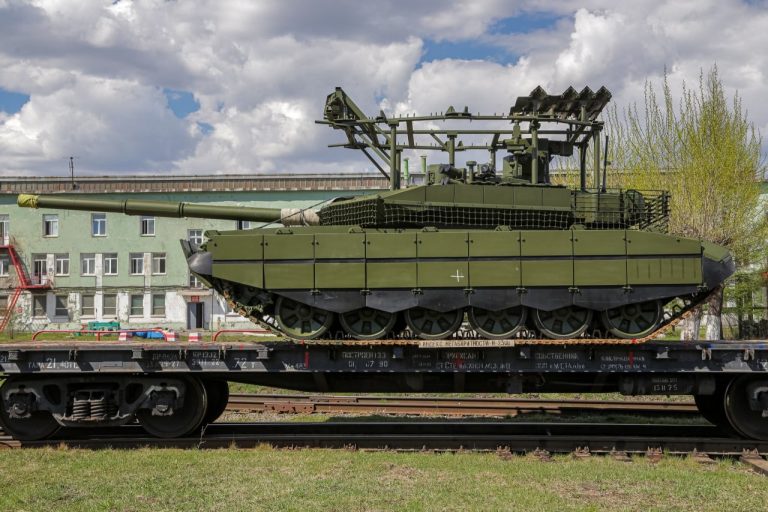
Judging by the published images, the upgraded vehicles are receiving additional protection for the turret and hull.
The most noticeable feature is the special protective structures above the turret, designed to counter attacks from above. Such solutions have been seen for several years on tanks participating in modern conflicts, but now they are beginning to be offered as complete factory-produced modernization kits.
In addition, plans call for the installation of additional hull protection elements and improvements to the overall armor configuration.
Although the detailed technical specifications of the upgrade have not yet been disclosed, the very fact that such a proposal has emerged shows just how significantly the requirements for armored vehicles have changed in recent years.
Until recently, another tank was considered a tank’s main adversary. Today, however, one of the most dangerous threats could be a drone costing just a few hundred dollars.
India is already charting its own course
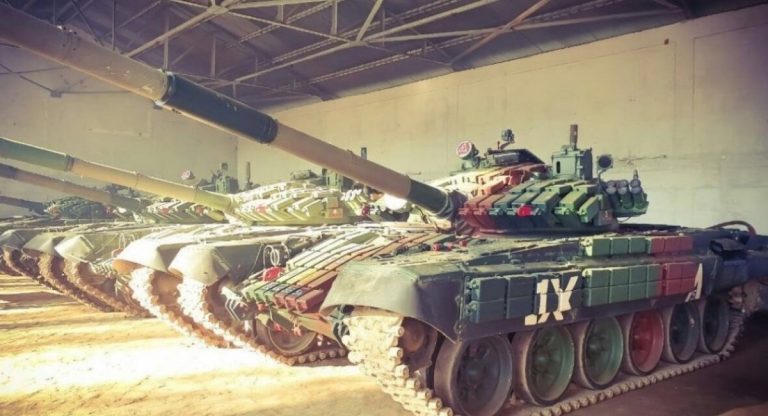
It is interesting to note that, at the same time, India is actively developing its own modernization programs.
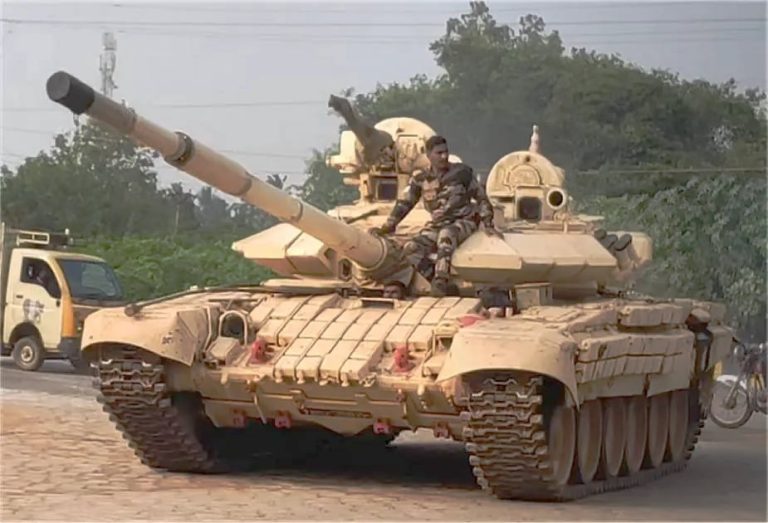
In recent years, Indian manufacturers have begun producing upgraded versions of the T-90 Bhishma Mk III, equipped with new thermal imaging sights, digital ballistic computers, and automatic target tracking systems. The introduction of active protection systems and specialized anti-drone systems is also being considered.
Similar work is also underway on the T-72 Ajeya tanks. The Indian Army is already modernizing part of its fleet by installing new fire control systems, thermal imagers, and upgraded engines.
Therefore, the question is not whether tanks need new capabilities, but rather which specific solutions will prove to be the most effective and will be selected by the Indian side.
More Than Just an Export Contract
For Uralvagonzavod, the Indian market is of particular importance. It was orders from India in the early 2000s that helped maintain T-90 production during a period when domestic procurement was at a minimum. Later, a significant portion of the tanks began to be manufactured directly in India under license as part of production localization programs.
Today, this cooperation is entering a new phase. Whereas Russia previously supplied finished tanks or tank kits, its main export is now technology for modernizing and adapting armored vehicles to the new conditions of war.
That is precisely why Uralvagonzavod’s proposal is intriguing not only as a commercial project but also as an indication of how rapidly perceptions of the future of tanks are changing.
The Tank of the 21st Century
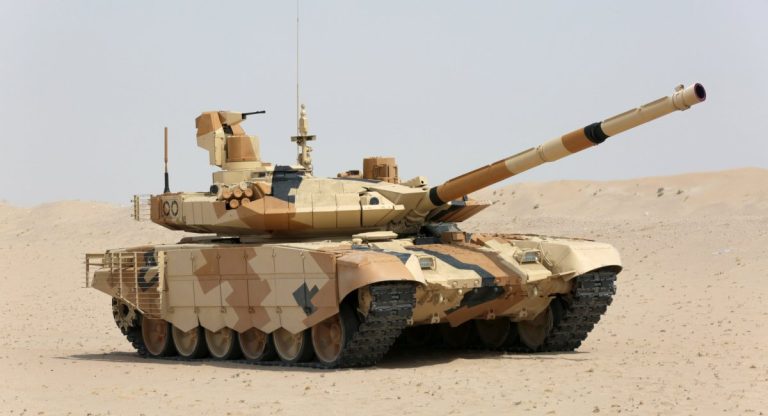
Just a few years ago, many analysts predicted the imminent decline of the main battle tank era. However, reality has proven them wrong. Tanks remain a crucial element of ground forces, but they now have to operate in a new environment where dozens of reconnaissance and strike drones are constantly present over the battlefield.
In such conditions, it is not the tank with the thickest armor that survives, but the one that is better equipped to counter modern threats.
This is precisely what makes the story of the modernization of India’s T-72s and T-90s so interesting. It shows that today, the main task for designers is no longer to increase the gun’s caliber or the engine’s power, but to find ways to protect the vehicle from threats that simply did not exist on such a scale just ten years ago.