A new machine gun can meet its range and lethality requirements yet remain awkward when boarding a vehicle, carrying it, or changing positions. Everyday use exposes details that are difficult to assess through firing trials on a prepared range.
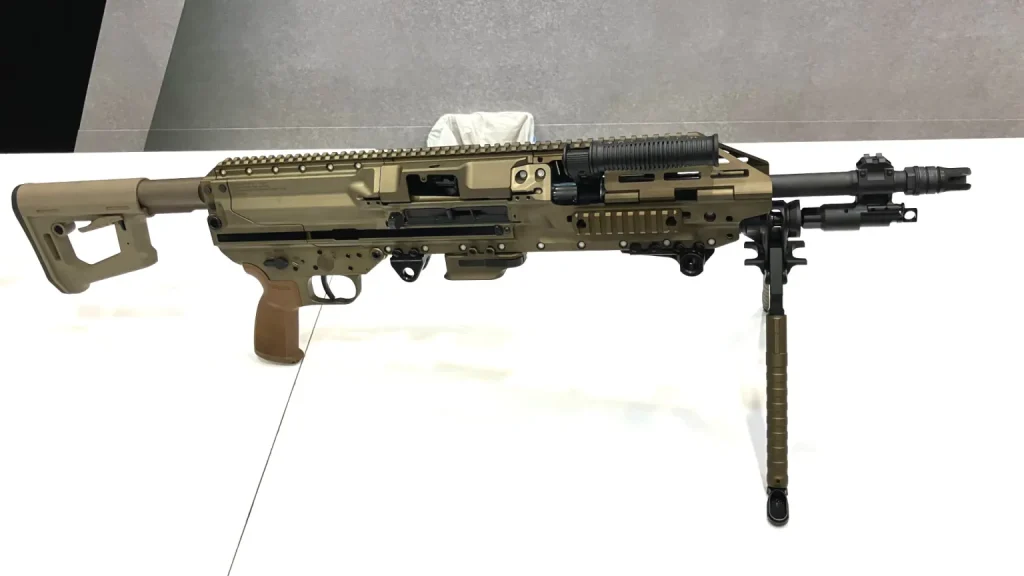
At AUSA 2026, SIG Sauer displayed the M250A1, an improved version of its 6.8 mm machine gun. It features a shorter, lighter barrel, changes to the barrel-change system, and several reliability and handling improvements. Feedback from American soldiers informed the redesign.
The Original Challenge: Greater Capability in a Portable Weapon
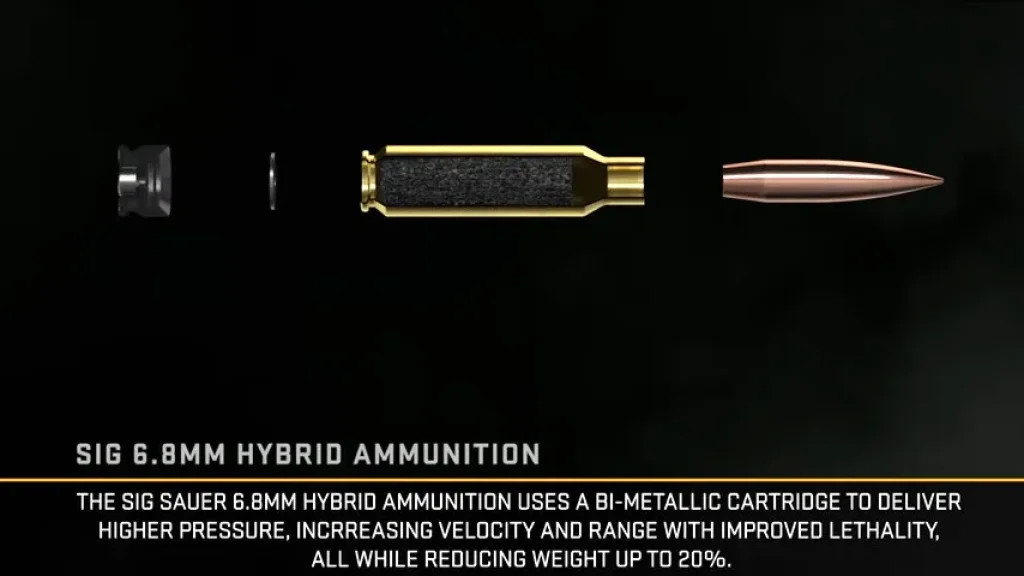
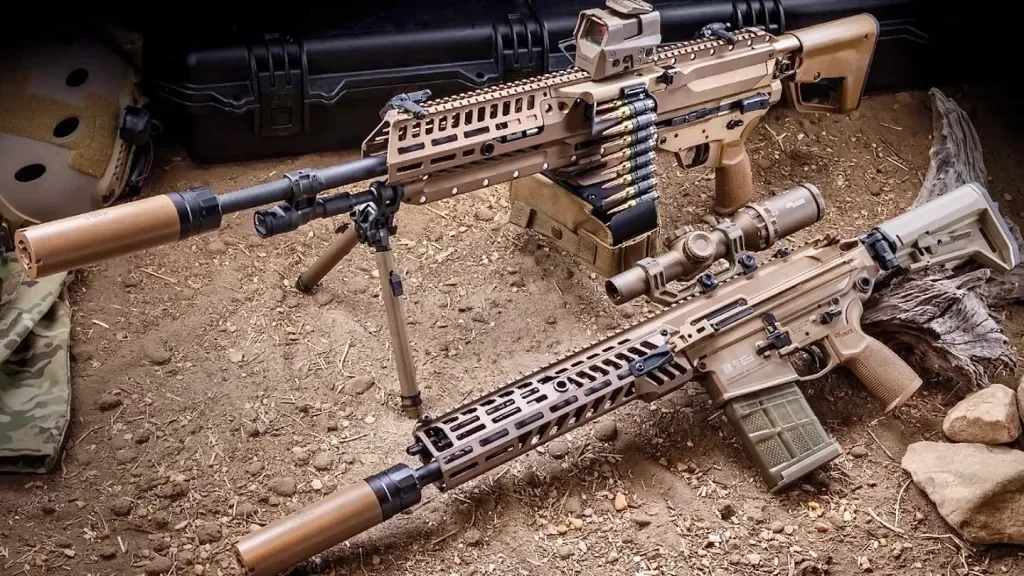
The M250 was developed under the Next Generation Squad Weapons programme to replace the M249 within the Close Combat Force. It uses 6.8×51 mm ammunition, belt feeding, and a recoil-mitigation system. The design was intended from the outset to operate with a quick-detach suppressor.
A suppressor reduces sound and muzzle flash, but adds length and weight at the front of the weapon. Optics and ammunition add to the load as well. Handling therefore depends on the complete configuration carried by the gunner, rather than the weight of the basic weapon without accessories.
The Army’s reference page lists the M250 at approximately 5.9 kg without a suppressor and 6.6 kg with one. Those figures apply to the original model: final specifications for the M250A1 have not yet been published.
A Shorter Barrel: Smaller Dimensions at the Cost of Velocity
The most visible change is a 13-inch barrel, approximately 330 mm long, replacing the roughly 16-inch barrel fitted to M250s entering service. That is a reduction of about 76 mm. The longer option will remain available.
Shortening the front end makes the weapon easier to handle in confined spaces. Reducing its weight also makes the machine gun easier to support and move when changing direction.
But there is a ballistic trade-off: with the same ammunition, a shorter barrel generally produces a lower muzzle velocity. SIG Sauer’s representative acknowledged the reduction while stating that the new configuration still meets Army requirements. The ammunition was not changed to compensate.
Key specifications:
| Calibre | 6.8×51 mm |
| Feed system | Belt-fed |
| M250A1 short barrel | 13 inches, approximately 330 mm |
| Retained longer option | 16 inches, approximately 406 mm |
| Original M250 weight | Approximately 5.9 kg without suppressor |
| Exact M250A1 weight | Not disclosed |
| A1 status at the time of publication | Final Army acceptance of the configuration was still pending |
A Lighter Barrel Raises Questions About Heat
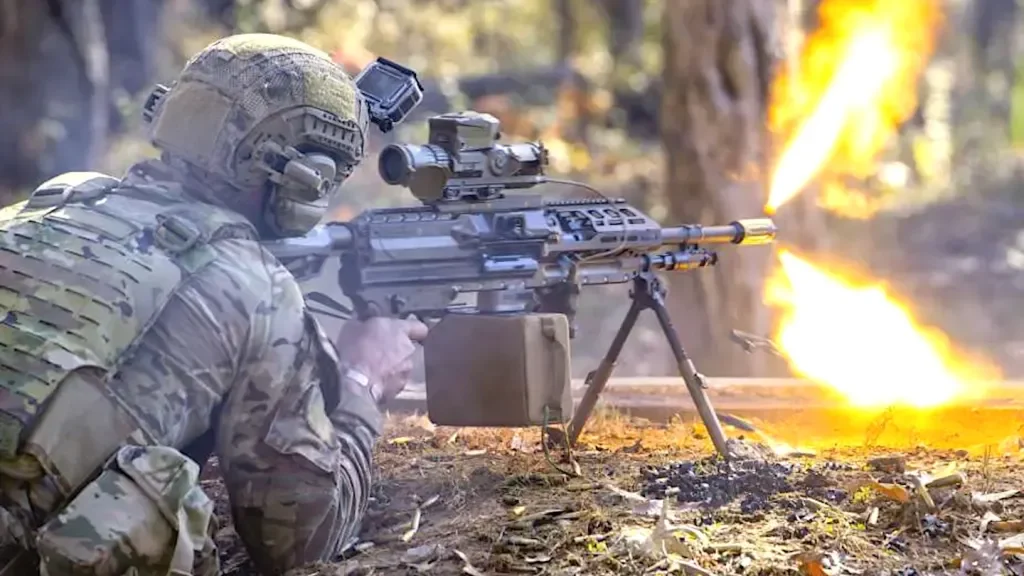
Reducing barrel length and changing its external profile removes weight. Less metal, however, also means lower heat capacity: all else being equal, a lighter barrel heats up faster during firing.
That does not establish that the M250A1 performs worse. The actual outcome depends on the design and prescribed firing schedule. But evaluating a lighter machine gun requires looking beyond kilograms to its ability to sustain the required workload.
That makes convenient replacement of a hot barrel particularly important.
Maintenance and Mounting Improvements
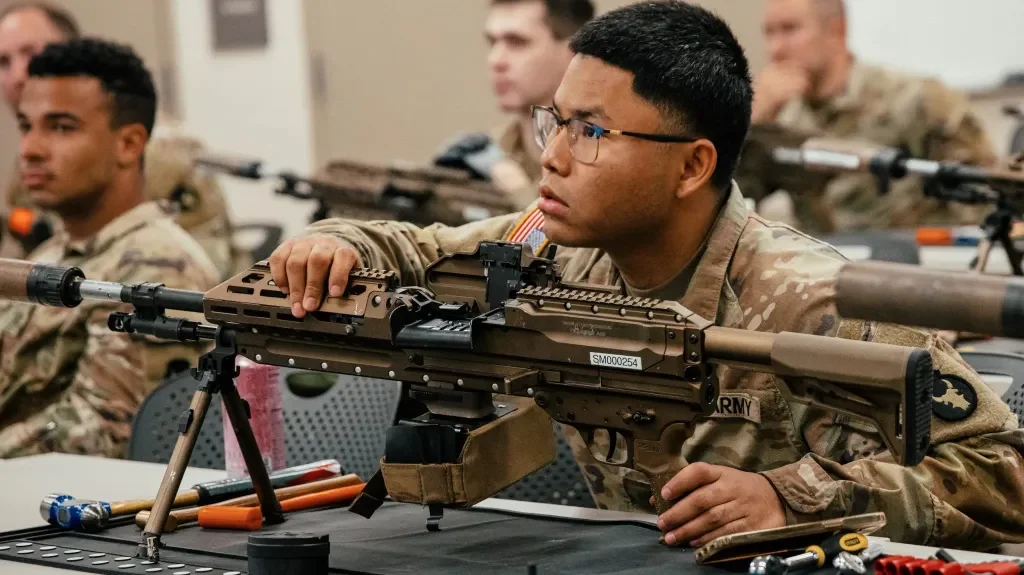
The M250A1’s barrel-change arrangement has been revised, with a handle added for handling a hot barrel. The upper handguard cover is now captive during the process. A guide has also been modified to make installation easier.
These changes aim to reduce awkward actions and loose components that soldiers must manage while wearing gloves, working in poor visibility, or fatigued.
Other revisions affect the gas system, trigger guard, buttstock, and attachment points for tripod or vehicle mounts. The developer links them to improved durability and issues identified during use.
The redesign must now be assessed as a whole: how much easier the machine gun is to handle, what ballistic performance the short barrel retains, and how the weapon withstands sustained use. Precise weight savings and test results will be more informative than the A1 designation itself.
based on https://www.twz.com/land/sig-sauers-m250-machine-gun-gets-shorter-and-lighter-after-army-feedback