Minimal Bloodshed: A Preemptive Strike—An Alternative Scenario for World War II

I find it somewhat strange that *Alternative History of World War II* effectively ignores the possibility of a preemptive strike by the USSR against the Third Reich. In fact, the only work on this topic is the book *By Overwhelming Force*, written 20 years ago. I read it a long time ago, but I clearly remember that, to put it mildly, it isn’t particularly realistic.
First, let’s examine the goal of the WWII alternatives (or, more precisely, the main characters in them): it’s clearly to improve the postwar outcome for the USSR and reduce wartime losses. How does this usually play out in similar AI games? The USSR is prepared for a German attack: its equipment is superior, its troops are better trained, a covert mobilization has been carried out, and so on. As a result, the USSR doesn’t lose millions of soldiers in border skirmishes while gradually wearing down the Wehrmacht, and by around 1944, it wins the war—more or less following a scenario shifted by a year. So what’s the problem here? At the very least, a long, drawn-out war could have been avoided by launching a preemptive strike, which would have allowed the USSR to defeat Germany much more quickly (how and why will be explained below).
So, in order to draft the “Preemptive Strike” scenario, we need to decide on the date of the strike.
First, let me explain why it was already too late to launch a preemptive strike in 1941. For one thing, the Germans had replenished their troop losses, had analyzed their combat experience, had already integrated captured equipment, and were in the midst of a full-scale technical rearmament. Yes, it’s possible that if we launched an attack in early May 1941, we might achieve some success, but the problem is that, unlike the Wehrmacht, the Red Army had not been fully mobilized—meaning we would have no numerical advantage in troop strength. Perhaps the only significant advantage of this scenario is that Britain would no longer be able to switch sides to join the “Anti-Comintern Pact.”
So, we’ve determined that 1941 is out of the question; that leaves only 1940.
At first glance, it would have made sense to enter the war on May 11, after the start of the “French Campaign,” but this option had one critical flaw. Britain had a radically anti-communist government, and anti-war sentiment was very strong in France. This would make an immediate peace between the “Allies” and Germany virtually 100% certain, and might even lead to their joining the anti-Soviet coalition (directly or indirectly). This would allow Germany to redeploy its forces to the east more quickly, and from a political standpoint, the results wouldn’t be very favorable—Western propaganda could quite successfully stoke anti-communist sentiment against the “Red threat.” Or, alternatively, we could orchestrate a pro-Western coup in Germany—after all, we’re no longer technically at war with the OOPP, and Germany is already pro-Western.
I believe there were two optimal dates for launching the attack: June 9, 1940, and June 22.
Overall, the difference between them is small, but the June 9 scenario has some advantages—namely, that Italy has not yet entered the war (and most likely will not) and that German troops are still fighting in France. But this option is extremely risky; the likelihood that the “Allies” will somehow mess things up for us is very high (there are many possibilities, but I won’t go into detail about them).
That leaves only June 22, 1940—exactly one year before that fateful June of 1941.
So why this particular date? First, France had capitulated; second, anti-German sentiment was already running high in Britain, Churchill was determined to fight the war to the end, and British public opinion supported him in this. The chances of Britain somehow undermining the USSR are minimal, and the possibility of peace with Germany is already quite low, even against the backdrop of the “Red Threat” (I’d put those odds at 60/40%).
Contents:
Preparing for War
So, let’s say we have someone who’s been transported back to 1930; by 1940, he has prepared the USSR, the Red Army, and the Air Force for war. On average, the equipment is better than Germany’s; the troops are highly radio-equipped; there’s good coordination among the units; and both enlisted personnel and officers are well-trained. In short, the Red Army is at least on par with the Wehrmacht in terms of quality.
Domestic political preparations: First, the gradual introduction of genuine instruments of people’s democracy: competitive elections within a one-party system (a multi-party system is impossible in principle in a planned economy), expanding the powers of the councils, introducing instruments of popular oversight over the implementation of plans and the actions of officials, etc. All of this will significantly increase support both within the USSR and abroad (reducing the potential for “anti-communism”). The process of indigenization can be significantly slowed down but should not be abandoned. This will make it possible to painlessly incorporate new republics into the USSR.
External political preparations: A more decisive and successful repulsion of Japanese aggression; an earlier conclusion of a non-aggression pact with Japan (tentatively June 1940). Otherwise, follow the ReI strategy: occupy the Baltic states, western Belarus, Ukraine, and Bessarabia. However, with the exception of the “Winter War,” preparations for it can be used as a pretext for mobilization and for disinformation. There is neither the time nor the resources to conduct a full-scale Finnish campaign in AI.
Covert Mobilization and Reconnaissance (May–June 1940)
Our task is to determine the optimal targets for air and ground forces, while simultaneously carrying out a covert mobilization of the army under the pretext of the “Finnish Campaign” and exercises similar to “West 40.” Wehrmacht forces in the east are few in number and are incapable of actually stopping or even slowing down the Red Army’s advance.
The Outbreak of the War
The likelihood that Britain will make peace with Germany after the USSR enters the war is still quite high, so in the AI I will focus specifically on that scenario (as the most unfavorable one).
The covert mobilization and preparations for war carried out in May and June of 1940, against the backdrop of a press campaign advocating “Cooperation with Germany” and disinformation spread by German intelligence, were not uncovered.
At 4 a.m. on June 22, 1940, the USSR attacked the borders of Germany and Romania; the Soviet Air Force carried out strikes against warehouses, airfields, troop concentrations, and Romanian oil fields.
During the first 10 days, taking advantage of the fact that nearly all of the Wehrmacht’s forces were concentrated in France, the Red Army captured Warsaw, cut off Königsberg, and crossed the Vistula River along its entire length. A total of three army groups were involved in the offensive: the Northern Army Group, with its main thrust toward Danzig; the Western Army Group, with attacks toward Warsaw and Krakow; and the Southern Army Group, with its main thrust toward Ploiești. Against a backdrop of limited resistance, the pace of the offensive reached up to 30 km per day, and encirclements were also created (although they were small due to the limited number of troops).
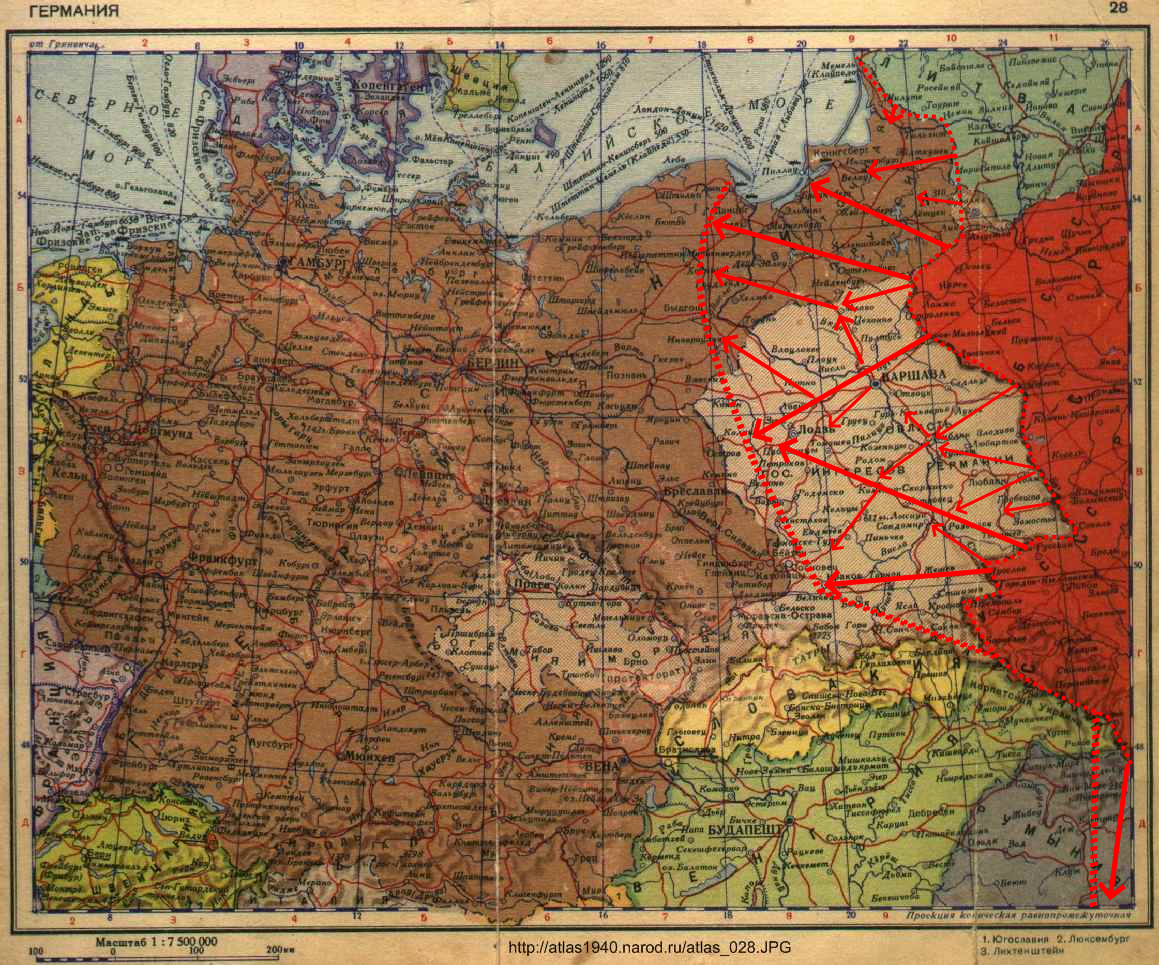
Battle Map: June 22–July 2
Ten days later, the first Wehrmacht units began arriving from the Western Front, while the USSR began regrouping its troops and replenishing its supplies. The assault on the besieged city of Königsberg began.
Throughout July, despite German attempts to launch counterattacks and stabilize the front line, Army Groups North and West advanced to and secured positions along the Oder River near Berlin, while Army Group South advanced to Budapest along the Danube River.
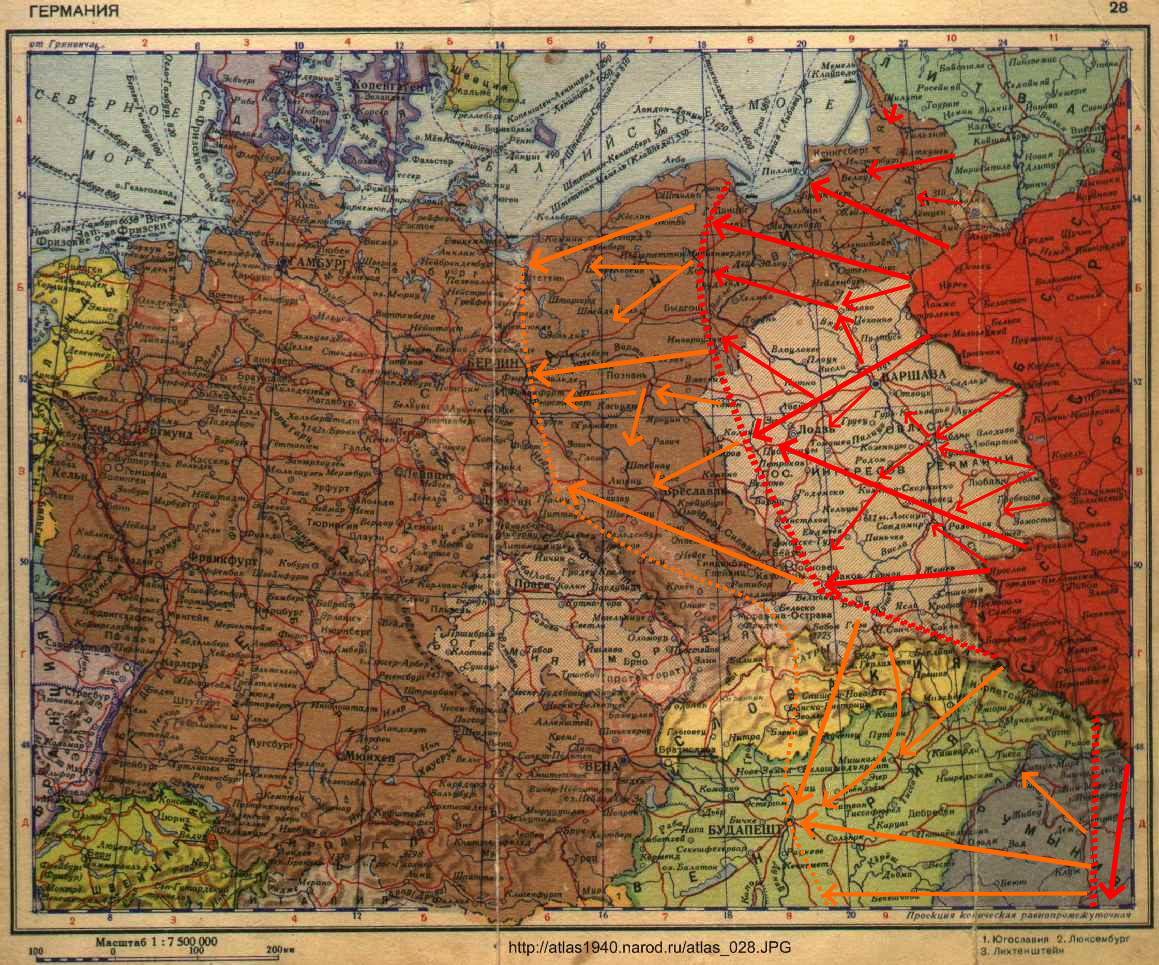
Battle Map: July 2–July 31
In August, Germany launched a large-scale counteroffensive in the Silesia region, making extensive use of its best mechanized units and air force. While maintaining air parity, the Red Army held its ground on the ground thanks to deployed reserves and the use of mechanized units; in September, it launched counterattacks, advancing as far as Prague. In October 1940, the Red Army recovered and launched a large-scale offensive; Army Groups North and West encircled Berlin with converging strikes, while Army Group South advanced and began fighting for Vienna.
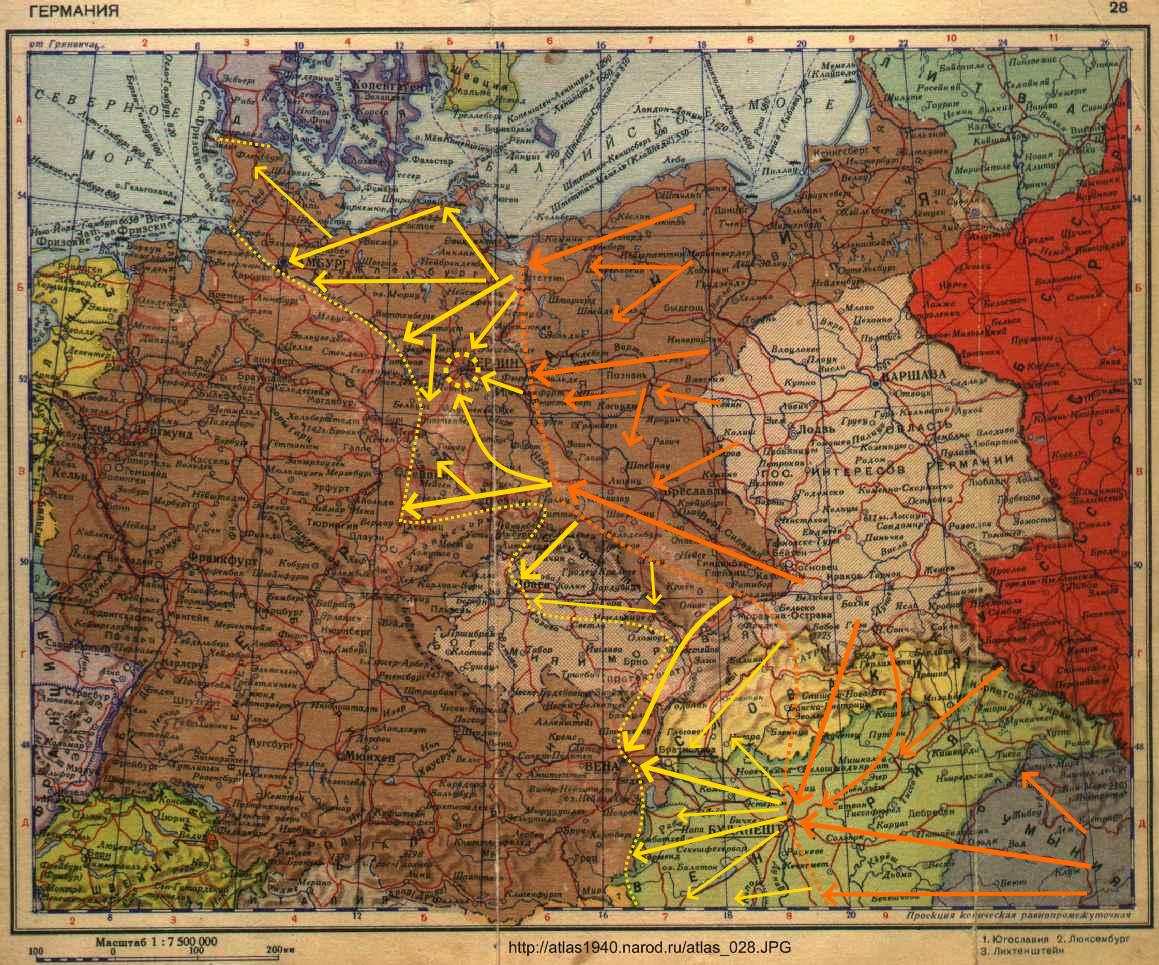
Battle Map: July 1–October 31
In November–December 1940, the final offensive operations were carried out; during fierce urban battles, Vienna and Berlin were taken by storm, and the Red Army advanced through western Germany with virtually no resistance. On December 31, Germany’s surrender was signed, and a peace treaty was also signed with Italy (where a pro-British military coup similar to the one in the Republic of Ireland had taken place, only on a larger scale). In France, Vichy France regained control of the north of the country with minimal German resistance; in the Benelux countries, Denmark, and Norway, governments-in-exile were restored with active British support (with virtually no German resistance).
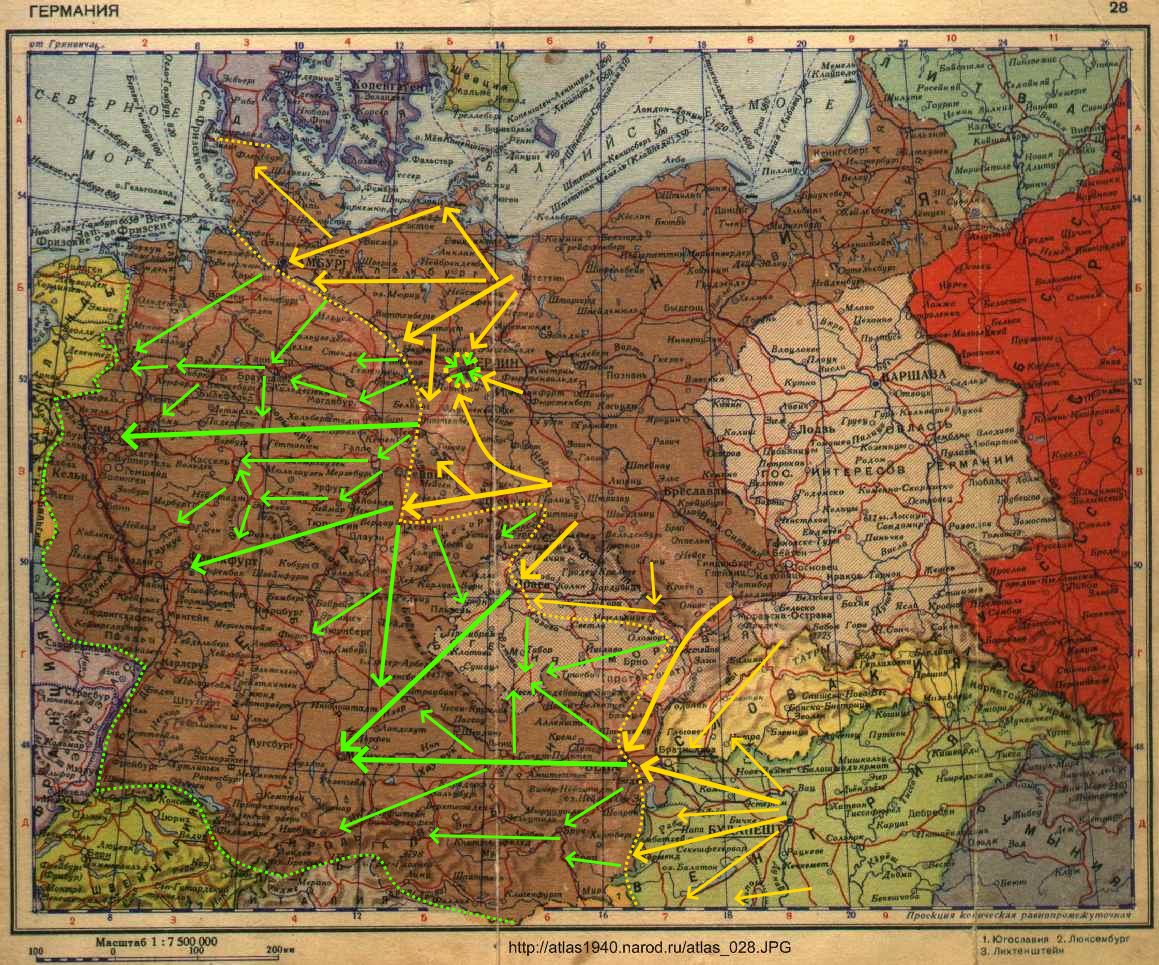
Battle Map: October 31–December 31
***
Postwar Results
In 1942, following completely fair referendums, nine new republics joined the USSR. The population of the USSR grew from 198 million to 310 million people, and its industrial capacity increased significantly, propelling the USSR to first place in the world in terms of industrial output. (The total size of the economy in purchasing power parity should be roughly comparable to that of the United States.) Thanks to a more “democratic” system and the preservation of cultural autonomy, the new union republics were successfully integrated.
I think it’s extremely difficult to estimate the casualties on both sides of the conflict; I believe the total is around 3 million people on both sides.
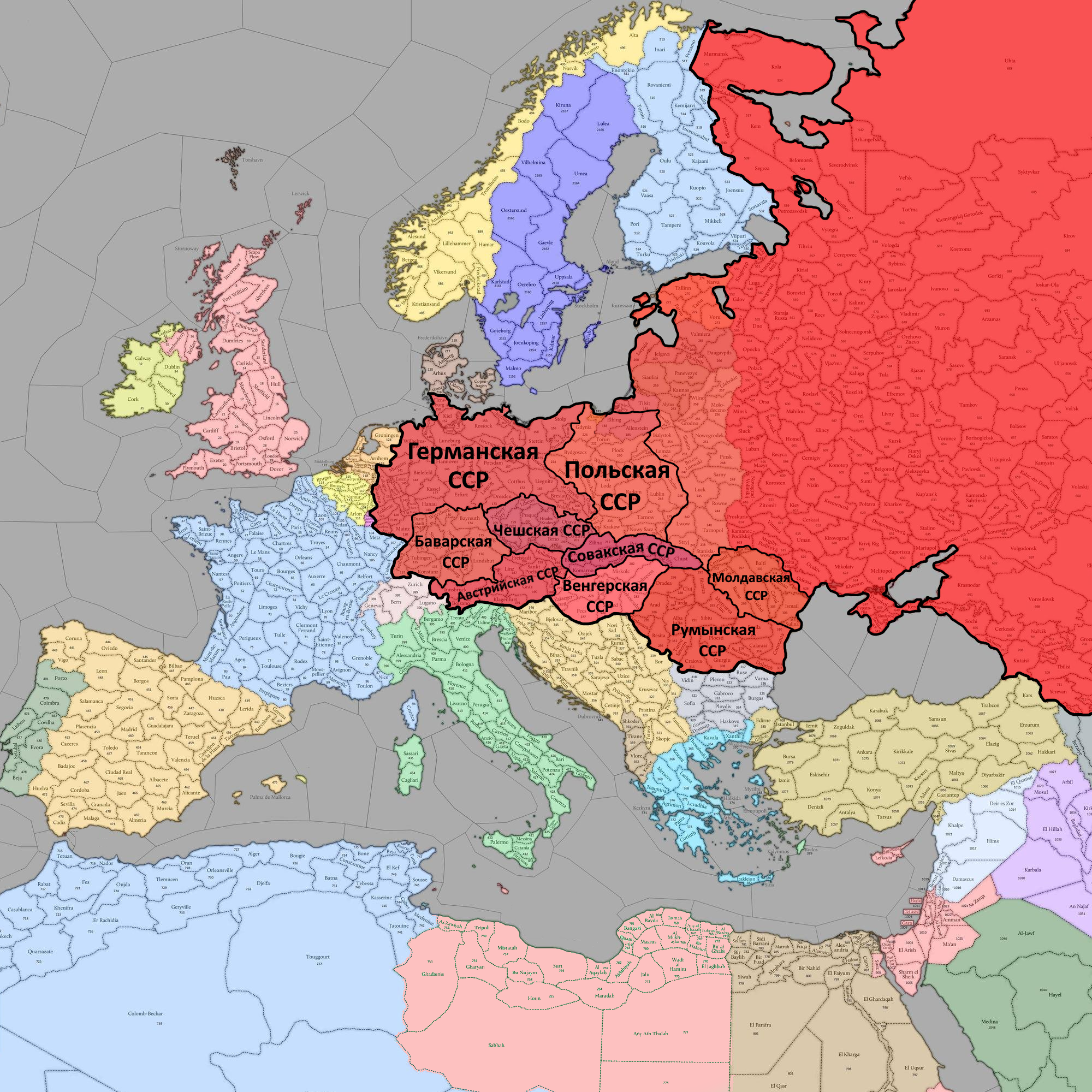
Recognizing the danger posed by the spread of the “Red Threat,” an alliance of Western European countries and the United States—later to become NATO—was formed. On the Pacific front, with the support of the British, Italian, and French navies, the United States quickly defeated Japan, while the Soviet Union launched an offensive in Manchuria and helped the Chinese Communists win the civil war.
In 1943, Manchuria, Tuva, Mongolia (+ internal monopoly), Xinjiang, and Korea became part of the USSR. As a result, the population of the USSR in 1943 was approximately 380 million people.
In 1944, the Soviet Union tested its first nuclear bomb, and the Cold War began