What If Patek Philippe Made Cars? The Patek Monarque — $40 Million of Absolute Perfection

A forty-million-dollar car no longer seems entirely impossible today. Exclusive Bugattis, Rolls-Royces, Paganis, and one-off coachbuilt projects can cost many millions, especially when we are talking about a car built as a single example. Yet practically all of them remain, first and foremost, automobiles — incredibly expensive, fast, and luxurious, but still created according to familiar automotive principles.
But what would happen if a car were created by a company that had never built automobiles at all, and which was accustomed to measuring the lifespan of its products not in years or even decades?
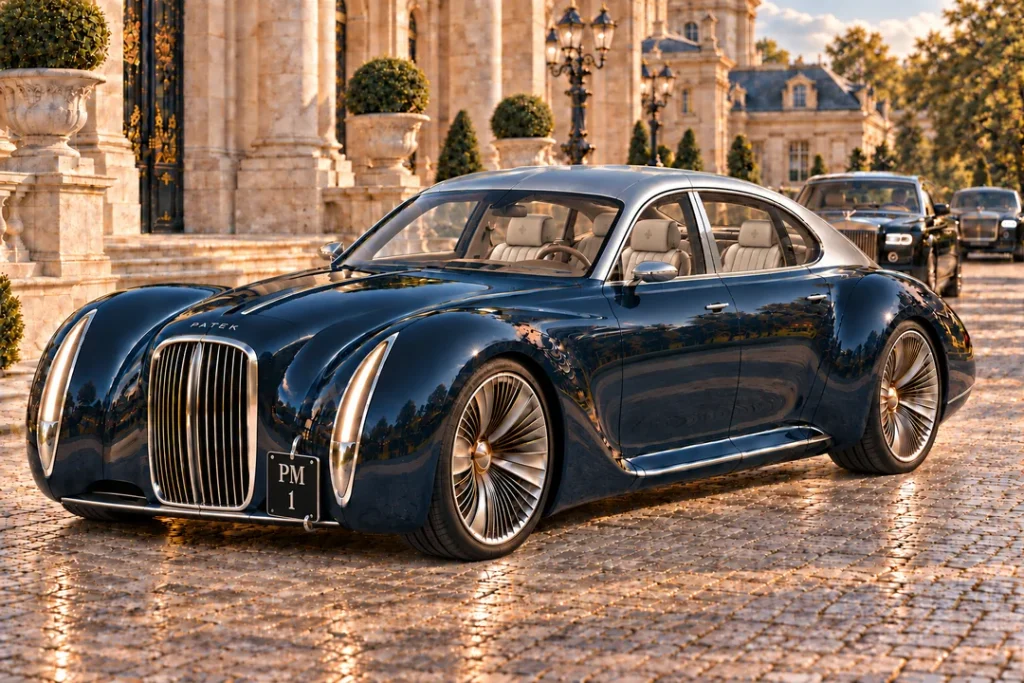
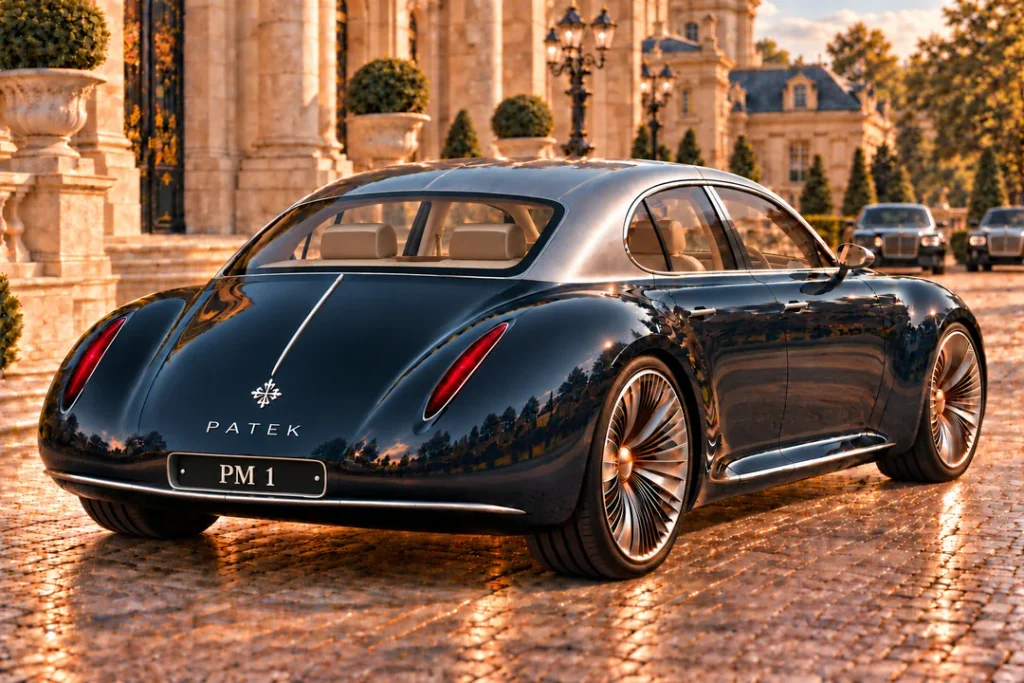
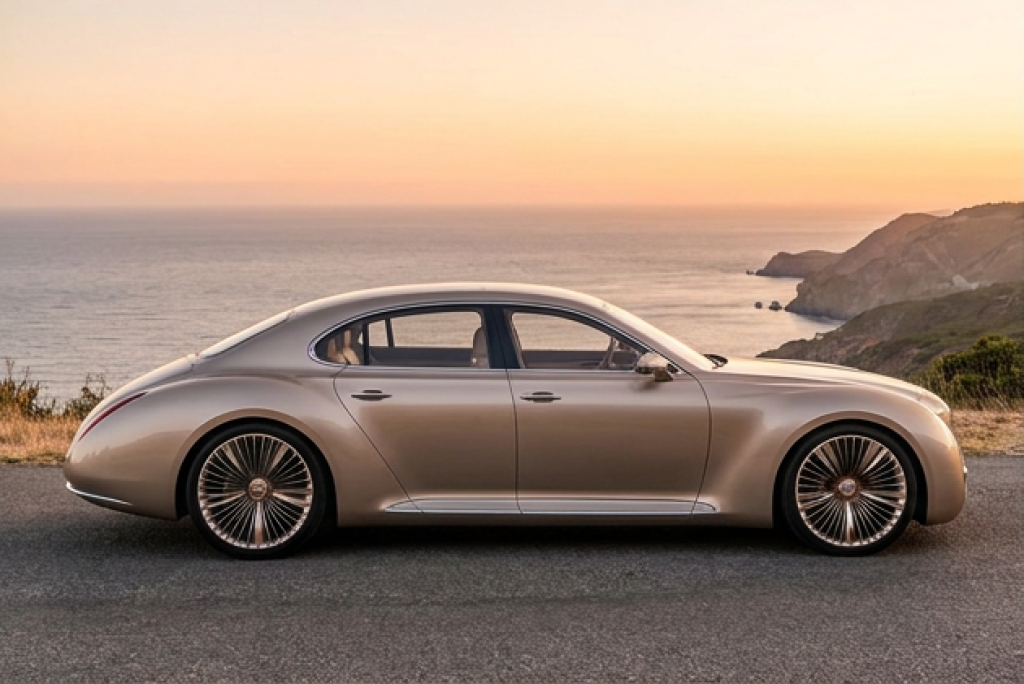
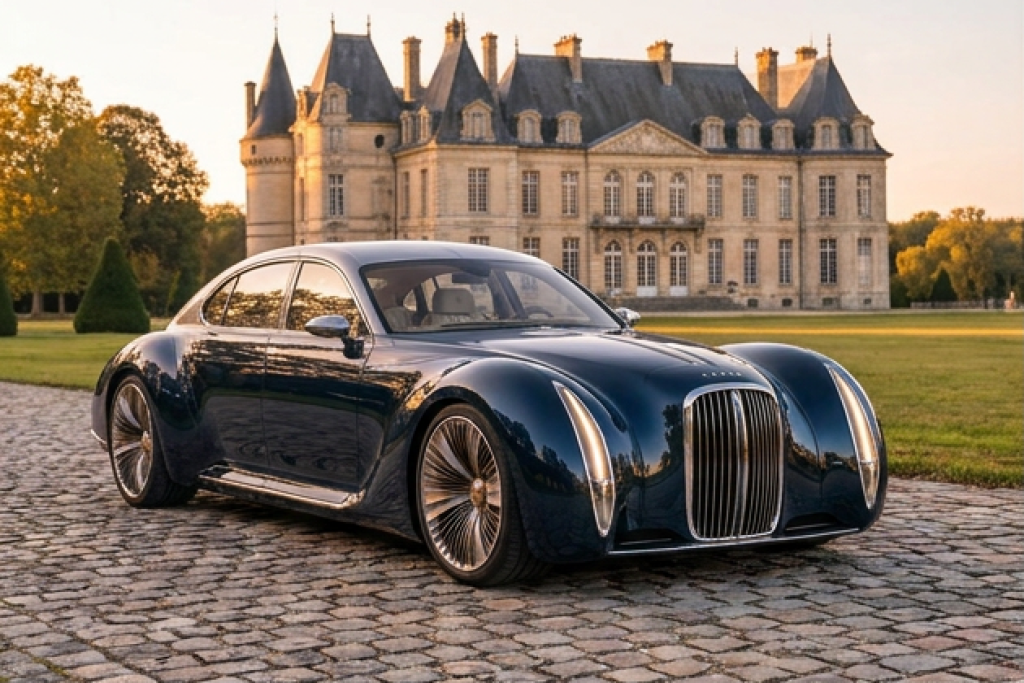
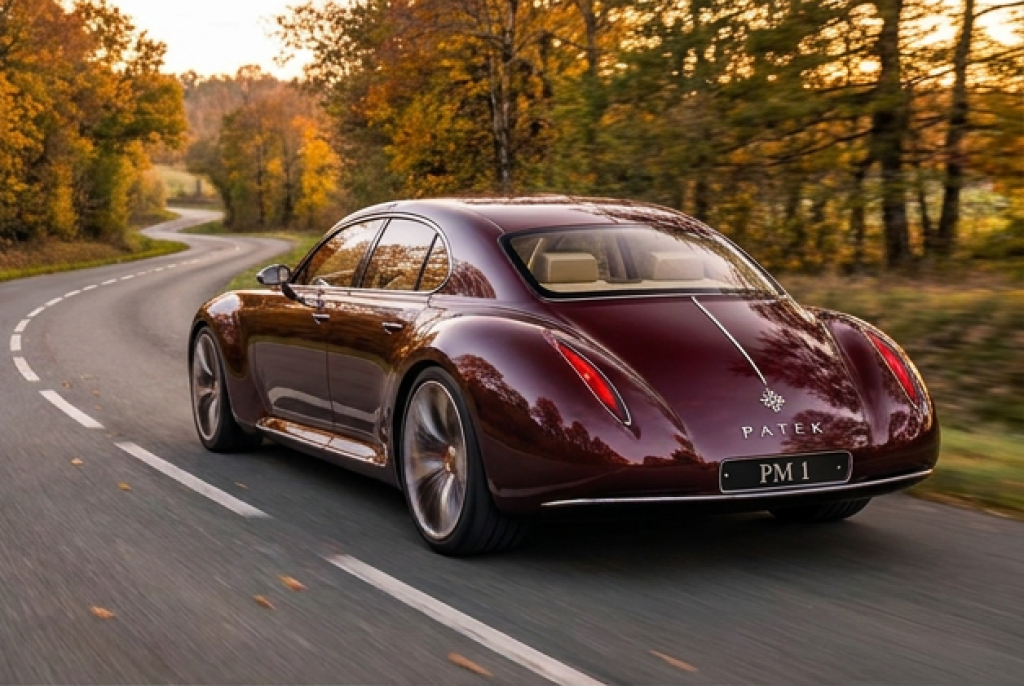
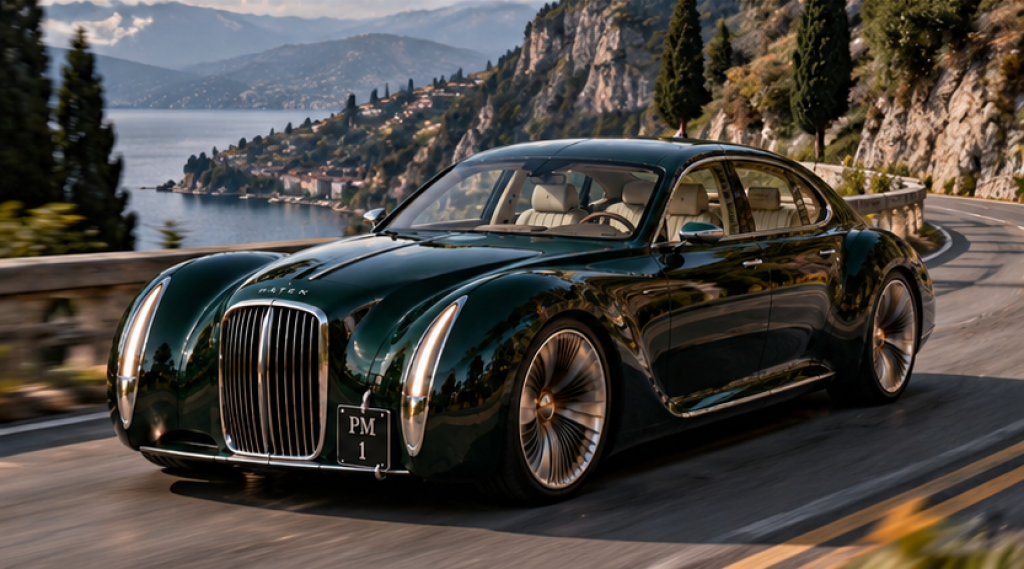
Our Western colleague BatteriesAndBoxers tried to imagine just such a car — the Patek Monarque, a huge luxury sedan that looks as though it had driven straight out of a Patek Philippe catalogue. The creator of the original concept describes it as an “analog Patek in a digital world”: with Art Deco styling, a dark-blue body, a brushed-metal roof, analog instruments, parchment-colored leather, and dark wood.
Let us develop this idea further and imagine what the Monarque might have become in an alternate reality where one of the world’s most famous watch manufactures actually decided to build an automobile.
Foreword: Patek Philippe — When a Watch Becomes More Than Just a Watch
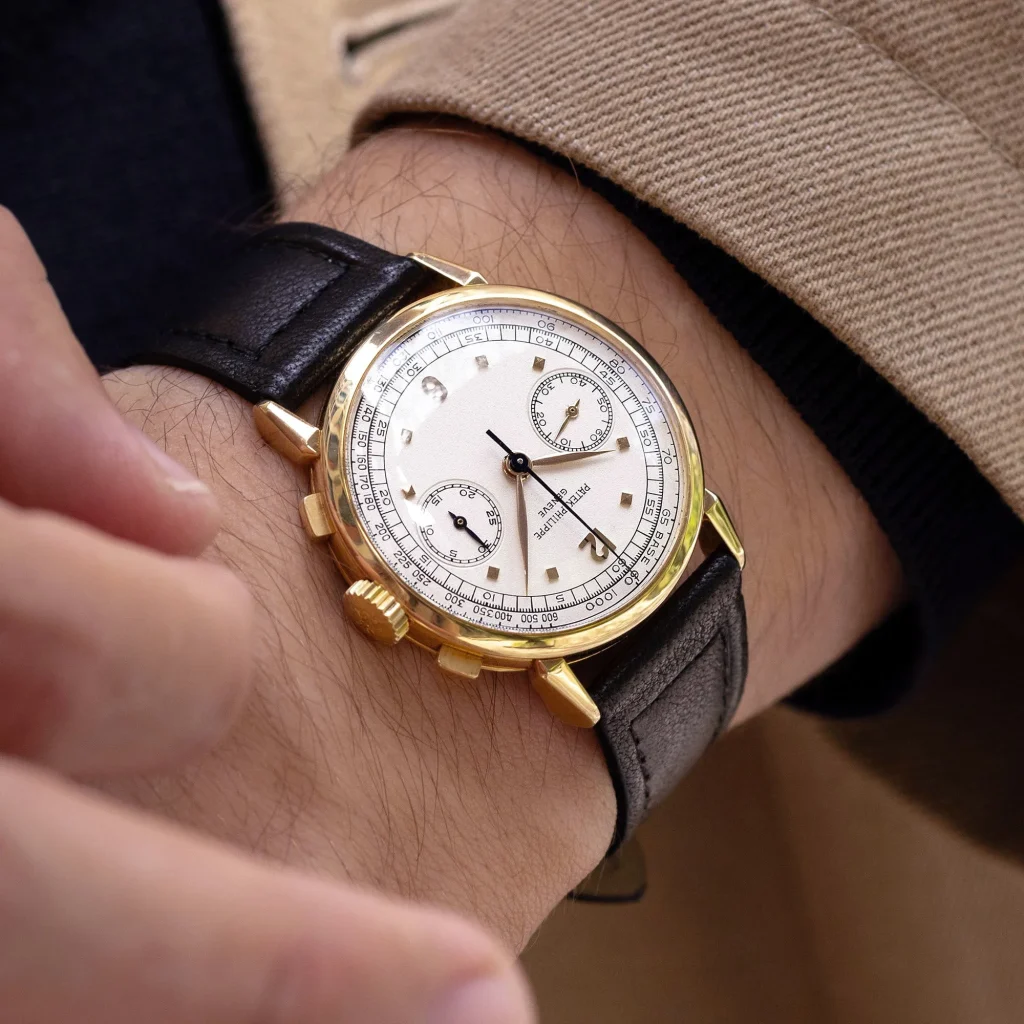
Patek Philippe is one of the world’s most famous Swiss watch manufactures and one of the companies that helped shape the modern understanding of Haute Horlogerie. The firm’s history dates back to 1839, and the company itself emphasizes the combination of traditional Genevan watchmaking craftsmanship with modern production technologies. At the same time, the components of its movements undergo meticulous hand-finishing.
A special place in the company’s range is occupied by its Grand Complications — watches featuring the most sophisticated mechanical functions. Patek Philippe creates perpetual calendars, chronographs, minute repeaters, world-time mechanisms, and astronomical complications. The legendary Calibre 89, for example, featured 33 complications and consisted of 1,728 components, while the Grandmaster Chime combines 20 complications. The company’s perpetual calendars can automatically account for months of different lengths and leap years and require no calendar correction until the year 2100.
The decorative side is no less important. Patek Philippe preserves the so-called Rare Handcrafts — traditional artistic crafts that include engraving, guilloché, Grand Feu enameling, gem-setting, and miniature marquetry. For wood marquetry, the craftsmen have a palette of approximately 130 species of wood at their disposal, using differences in natural color and grain to create miniature images.
And this is where the central principle behind our alternate Monarque comes from.
Patek Philippe would not build the fastest car in the world. It would not try to set a Nürburgring lap record. And it certainly would not turn the interior into a collection of enormous touchscreens.
Instead, it would attempt to create a car that could be handed down to your grandson fifty years from now — and that he, in turn, could hand down to his own grandson another fifty years later.
The Birth of the Monarque
In our alternate history, the decision to create an automobile is made in Geneva in the late 2020s. Moreover, the project is initially not even considered an attempt to enter the automotive market.
The Monarque is intended to become a kind of Grand Complication on four wheels.
For this reason, the company categorically rejects the idea of mass production. Only a few cars are to be built each year, with every example assembled for a specific owner. The production cycle takes approximately three years, while a significant proportion of the interior components, instruments, and decorative elements are created using the same artisanal methods employed in the manufacture of unique watches.
The base price of the car is set at a level that seems almost absurd by automotive standards — $40 million.
But the customer is not so much buying an automobile as an enormous mechanical work of art.
Exterior: A Car from Another Time
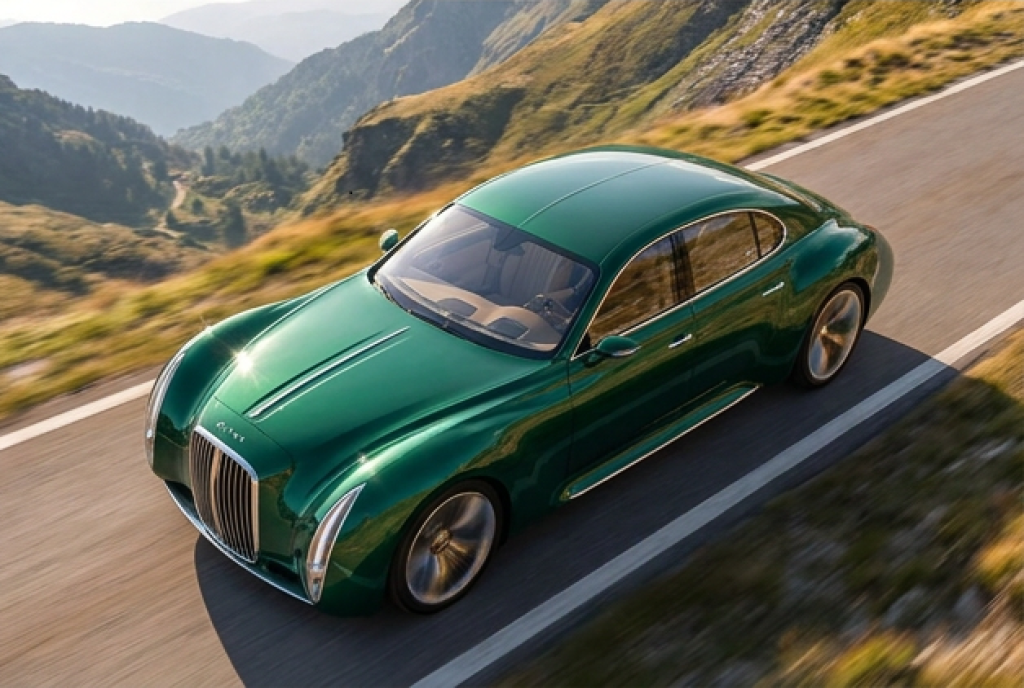
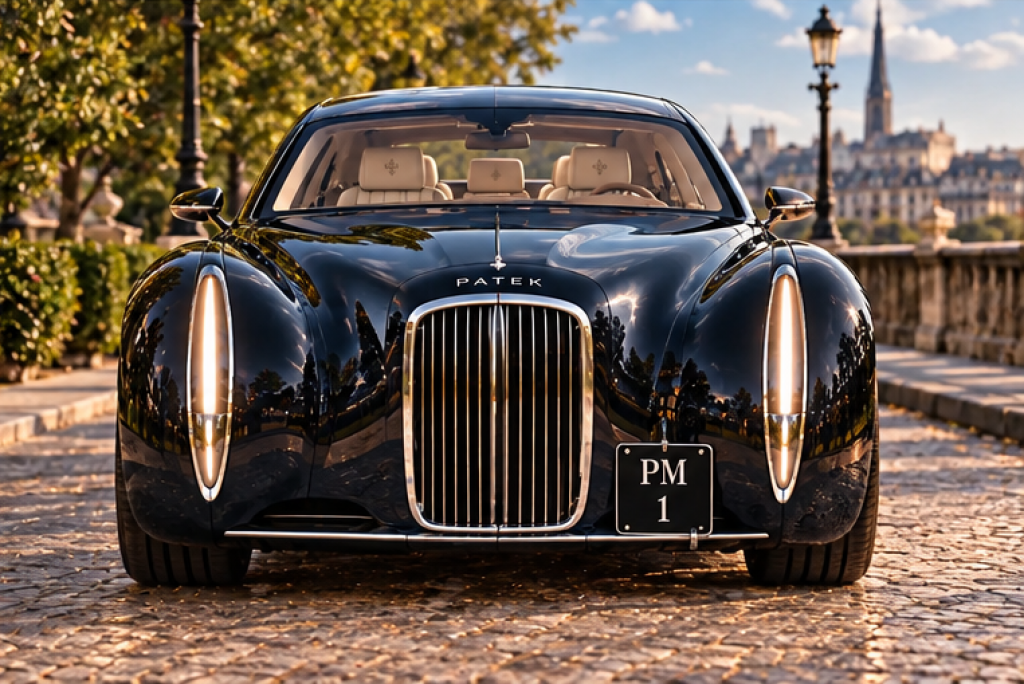
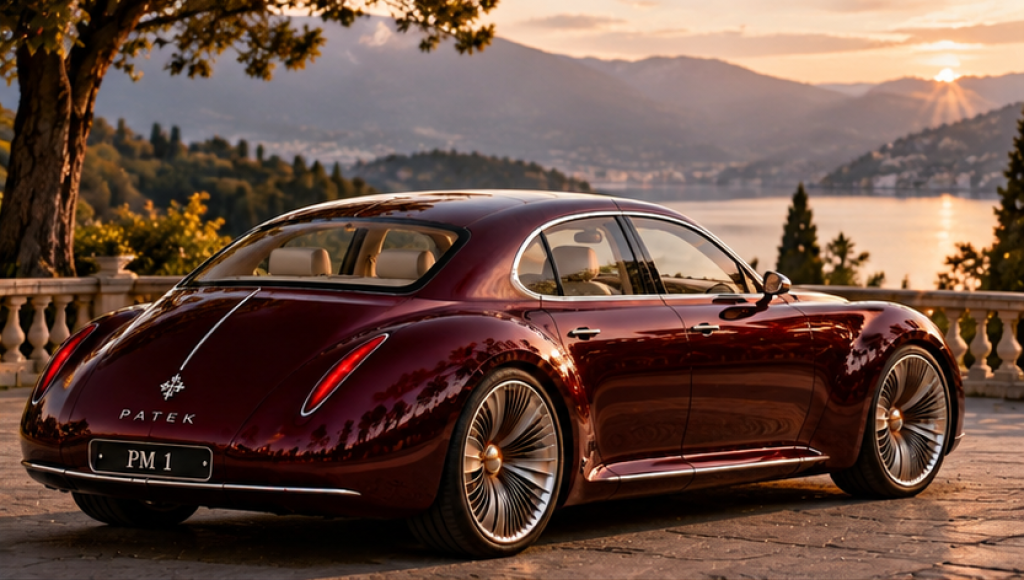
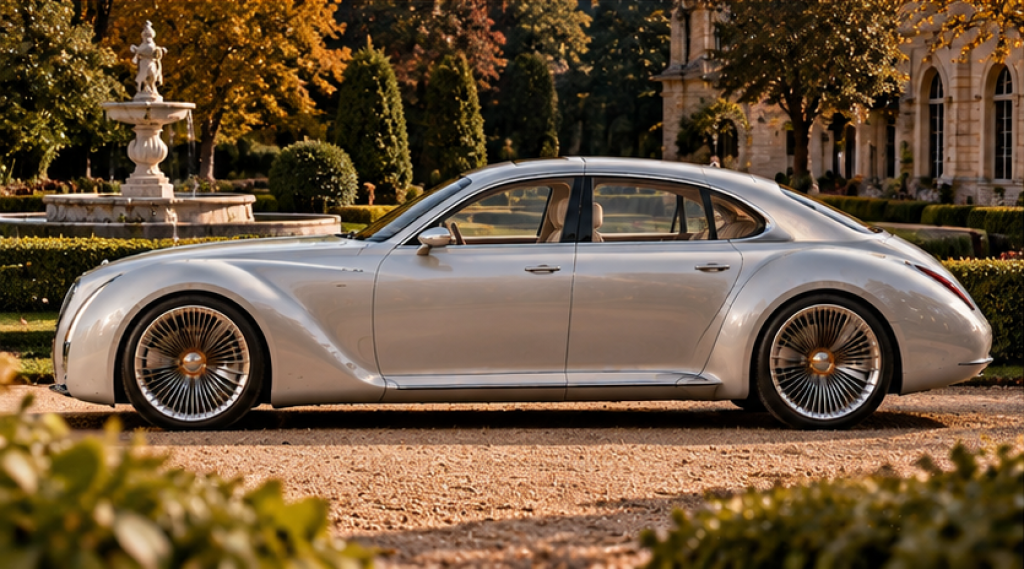
The exterior design is based on the original idea created by BatteriesAndBoxers. The Monarque is a large luxury automobile with a long hood, substantial fenders, and flowing body lines influenced by the automobiles of the 1930s and the aesthetics of Art Deco. The concept’s creator chose a deep midnight-blue finish combined with a brushed-metal-effect roof.
Yet this is not a retro car.
The proportions are classical, but the surfaces are exceptionally clean. There are no enormous air intakes, pseudo-sporting diffusers, or excessively complicated LED lighting signatures. Even the badges are kept to an absolute minimum.
The logic is the same as with an expensive Patek Philippe watch: the owner has no need to shout to everyone around them about the value of the object they possess.
The Monarque is meant to make an impression only on someone who understands exactly what they are looking at.
The Grand Complication Engine — The Heart of a Mechanical Masterpiece
The Monarque’s defining feature is its engine.
In an era when the automotive industry is rapidly moving toward electric propulsion, Patek Philippe’s engineers take an almost defiantly old-fashioned approach. An electric vehicle depends too heavily on battery technology, power electronics, and software — technologies that inevitably become obsolete.
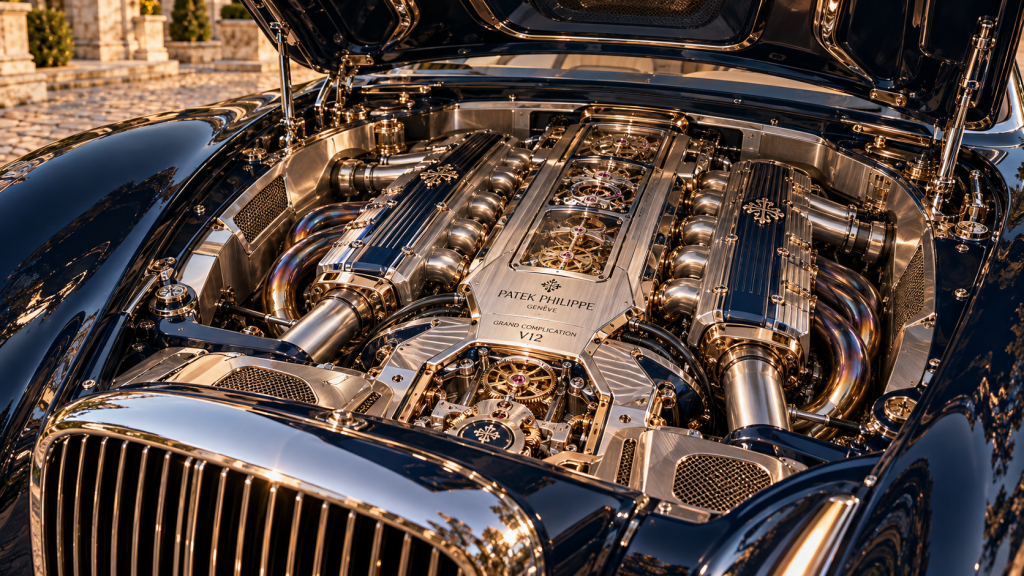
The Monarque therefore receives a specially developed naturally aspirated twelve-cylinder Grand Complication engine.
The most logical configuration would be a V12 displacing approximately 7 liters. Maximum output would be around 700–750 hp — an enormous figure, but nowhere near record-breaking. Nobody is attempting to extract 1,500 or 2,000 horsepower.
The point is something else entirely.
The block and the engine’s most important components are manufactured from special aluminum and titanium alloys, while practically every visible metal surface is finished as though it were part of a watch movement.
The edges are polished by hand. Decorative bridges feature Côtes de Genève — Geneva stripes. The cylinder-head covers receive hand engraving. Certain components are made from gold, titanium, and nickel alloys.
The hood is therefore opened not so much for servicing the car as for displaying its engine.
The Monarque’s engine is meant to look like a watch caliber enlarged to the dimensions of an automobile engine.
A Gearbox That Must Not Be Hidden
The transmission is equally unusual.
There are no plastic joysticks or touch-sensitive selectors. The most expensive version of the Monarque uses an automated transmission with part of its mechanism deliberately left exposed.
Beneath a large sapphire window in the center console, the driver can see the rods, joints, and components of the gear-selection mechanism.
While driving, the owner can literally watch the machine at work.
The gear lever itself resembles the crown of an expensive watch more than a conventional automotive selector. The mechanism is carefully tuned so that every gear change is accompanied by a short metallic “click.”
This is not accidental noise.
The acoustics of the mechanism are deliberately engineered — much in the same way that Patek Philippe works with the sound of its minute repeaters. The company’s real watches do indeed use repeater mechanisms, while the Ref. 5374G is equipped with two so-called “cathedral” gongs.
Suspension Designed to Survive Decades
The chassis becomes even more unusual.
The creators of the Monarque begin with a simple idea: a car costing $40 million should remain fully operational half a century later.
Therefore, instead of a conventional modern adaptive suspension critically dependent on dozens of sensors and electronic control units, an extremely sophisticated mechanical-hydraulic kinetic system is developed.
Its design is inspired by the balance mechanism of a mechanical watch.
A system of interconnected counterweights, hydraulic circuits, and mechanical compensators redistributes loads between the wheels. Individual components are made from thermally stable alloys. Electronics are used only where required by safety regulations and legislation, while the suspension itself operates almost entirely independently of software.
Of course, it would be impossible to literally transfer a watch balance into an automobile. This is therefore an engineering analogy: the principles of compensation and mechanical interaction form the philosophical foundation of the design.
The result is not sporting stiffness but almost absolute smoothness.
The Monarque is meant to glide over the road.
An Interior Without a Single Screen
But the true Patek Philippe experience begins only after the door is opened.
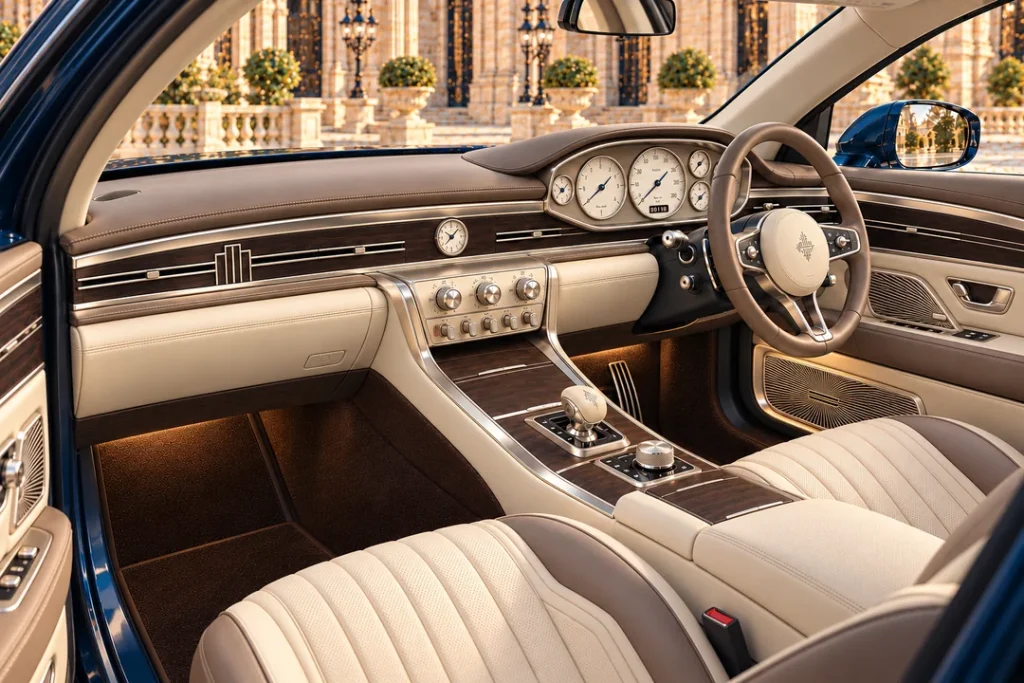
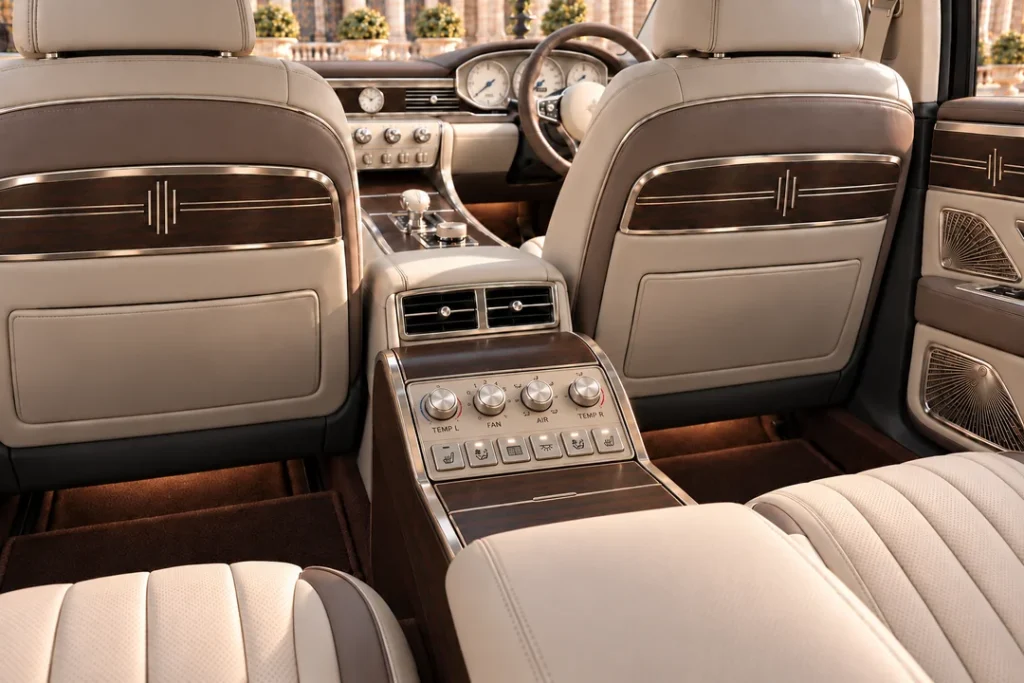
The creator of the original concept already established the right foundation: parchment-colored leather, restrained beige shades, rich dark wood, and a limited amount of polished metal.
We will take the idea much further.
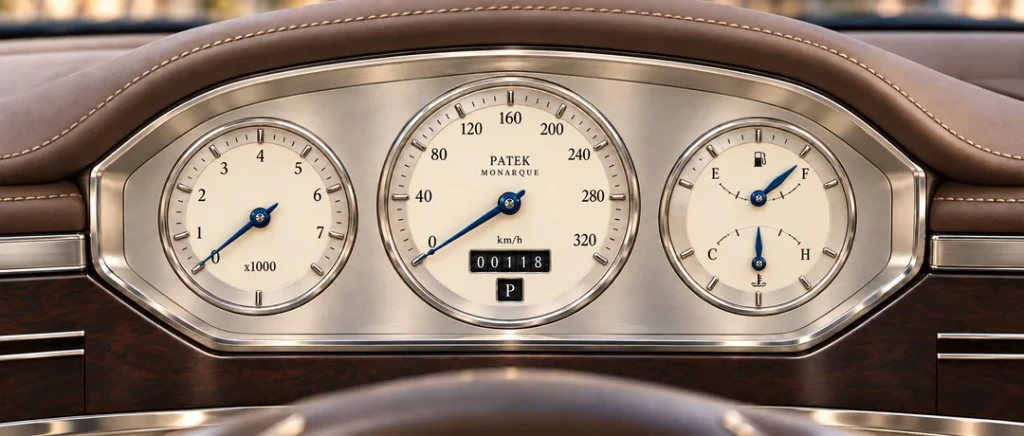
There is not a single digital display anywhere inside the Monarque.
In front of the driver are three enormous mechanical dials. The speedometer, tachometer, fuel level, oil temperature, and other parameters are indicated by physical hands.
But it does not end there.
The instrument panel itself becomes an automotive version of the Grandes Complications.
A Perpetual Calendar on the Dashboard
At the center of the dashboard is a genuine mechanical perpetual calendar.
It displays the date, day of the week, month, and leap-year cycle. A separate small aperture contains a moon-phase indicator made from gold and blue enamel.
This is almost a literal automotive interpretation of Patek Philippe mechanisms. In the company’s real watches, a perpetual calendar automatically accounts for months of different lengths and leap years, with the next calendar correction required only in 2100.
Now imagine the same principle in an automobile.
The owner leaves the Monarque in a collection for several weeks, returns, starts the engine — and dozens of miniature gears begin bringing the calendar back to the correct position.
The automobile literally comes to life like an enormous mechanical watch.
A Mechanical Navigator
The most extraordinary element of the interior, however, is the navigation system.
Of course, a modern automobile cannot completely dispense with satellite navigation. But its digital components are hidden from the owner’s view and used only as a source of coordinates.
There is no Google Maps display on the dashboard.
Instead, there is a mechanical sphere depicting the night sky. Beside it sits a World Time mechanism showing the time in the world’s principal time zones.
This concept has a very real basis in Patek Philippe watchmaking: the company produces World Time watches capable of displaying the time across 24 time zones. There are also models combining World Time, a minute repeater, and artistic Grand Feu enamel.
In the Monarque, a satellite module invisibly corrects the mechanical position indicator, while the driver sees the result exclusively in analog form.
The result is a kind of 21st-century astronomical navigator.
A Minute Repeater Instead of Parking Sensors
Modern cars are constantly beeping.
Open door — beep. Seat belt not fastened — beep. Reverse selected — another beep.
The creators of the Monarque consider this unacceptable.
Therefore, audible warnings become yet another complication.
Specially tuned metal gongs are installed within the body. Different combinations of tones indicate different events. Engaging reverse produces one melody, an improperly closed door another, while exceeding a preset speed produces a third.
In essence, the automobile receives its own Minute Repeater.
Once again, there is a direct parallel with real Patek Philippe products: minute repeaters are among the manufacture’s most sophisticated specialties, while some real models use long “cathedral” gongs to produce an especially rich sound.
The Monarque therefore does not beep.
It chimes.
Grand Feu — An Automobile Decorated with Enamel
Even the car’s finish is unusual.
The main body surfaces are still coated with a specially developed multilayer automotive lacquer — covering enormous body panels with genuine watchmaking enamel would be technologically extremely difficult.
Decorative inserts, badges, and selected metal components, however, receive genuine Grand Feu enamel.
The enamel is applied in layers and fired at high temperature. This gives the color a distinctive depth that conventional automotive paint cannot reproduce.
This technique has a real-world counterpart at Patek Philippe: the company uses Grand Feu enamel for dials and artistic compositions in its Rare Handcrafts pieces.
On the Monarque, watchmaking craftsmanship is transferred for the first time to an object almost six meters long.
Marquetry — Paintings Instead of Wooden Trim
The door panels are even more impressive.
An ordinary luxury automobile would use solid sheets of expensive wood veneer.
The Monarque receives genuine wooden mosaics.
Hundreds of tiny fragments of amboyna, rosewood, and other exotic woods are assembled by hand to create images. The customer can choose a map of Lake Geneva, a constellation, a family coat of arms, a country estate, or practically any other subject.
And once again, the fantasy is based on a genuine Patek Philippe craft. The company really does use miniature marquetry, with its craftsmen working with dozens of species of wood and hundreds of individual pieces. In one work described by the manufacture itself, the image consists of 315 pieces of veneer and another 75 minute inlays.
In an automobile, the available surface area is vastly greater.
As a result, each Monarque door becomes a work of art in its own right.
Gold, Platinum, and Clous de Paris
There is practically no visible plastic anywhere in the interior.
Climate-control switches, air-vent controls, buttons, and selected steering-wheel components are made from 18-karat gold, white gold, or platinum.
Some surfaces receive the traditional Clous de Paris pattern, resembling a field of miniature pyramids.
Yet the precious metals are used with considerable restraint.
The Monarque must not become the kind of automobile-show extravagance of the 2000s in which gold exists primarily as a display of wealth.
Here, gold is a functional material within the mechanism.
For this reason, most gold components are matte-finished, guilloché-decorated, or concealed within the construction.
A Car with Its Own Watch Caliber
Another unusual feature occupies the center console.
The Monarque has its own mechanical clock, but calling it merely an automotive clock would be completely inadequate.
A special Patek Philippe Monarque Grand Complication caliber is developed specifically for the automobile and is mechanically linked to some of the car’s systems.
It displays the time, date, phases of the Moon, the car’s remaining driving range, and the duration of the current journey. A separate automotive chronograph allows the owner to measure travel time.
The operation of the movement can be observed through a sapphire window.
When the engine is started, a special mechanism automatically winds the clock.
Thus an almost literal connection is created between two machines — the automobile and the watch.
A Car They Must Be Able to Repair a Century Later
The Monarque’s most unusual feature, however, is not the gold or even the engine.
Every automobile receives its own chassis number and individual archive.
Patek Philippe really does preserve information about watches it has produced in its archives dating back to the company’s foundation; based on archival records, an Extract from the Archives can be issued containing information about a particular timepiece.
In our alternate reality, the same principle is extended to automobiles.
The drawings for every Monarque component are preserved in Geneva, along with the chemical composition of the alloys used, gear dimensions, wiring diagrams, marquetry templates, and even enamel formulas.
The company commits itself to maintaining the ability to restore the car regardless of its age.
Damaged a fender in 2087?
They will manufacture another one.
A transmission gear wears out in 2114?
The workshop will retrieve the original drawing and machine a replacement.
And this is precisely where the logic behind a $40 million automobile becomes clear.
Why Exactly $40 Million?
From the perspective of an ordinary automobile, the Monarque is not worth that much money.
It is not faster than a hypercar. It is not roomier than a Rolls-Royce. It cannot go where a Range Rover can.
But evaluating it according to conventional automotive criteria is meaningless.
The customer is paying for thousands of hours of hand labor, a unique body, an individually designed interior, handmade mechanisms, enamel, marquetry, precious metals, and effectively lifelong archival support for the automobile.
Moreover, every example is intended to be slightly different.
One customer might request platinum trim.
Another might want an image of their estate rendered in wooden marquetry.
A third could commission a unique minute-repeater composition.
A fourth might ask for their family coat of arms to be engraved on the engine.
There should therefore never be two completely identical Monarques.
Patek Monarque Specifications
- Type: Hand-built ultra-luxury executive sedan
- Engine: Naturally aspirated Grand Complication V12
- Displacement: Approximately 7.0 liters
- Power: Approximately 700–750 hp
- Drivetrain: Rear-wheel drive or all-wheel drive, depending on specification
- Transmission: Automated transmission with exposed selector mechanism
- Length: Approximately 5.8 m
- Seating: 4
- Suspension: Mechanical-hydraulic kinetic system
- Instrumentation: Fully analog
- Interior materials: Leather, platinum, 18-karat gold, enamel, sapphire crystal, rare woods
- Production: Bespoke, individual manufacture
- Production time: Approximately 3 years
- Estimated price: From $40 million
Instead of a Conclusion
Of course, the Patek Monarque does not exist.
The original BatteriesAndBoxers project is an independent concept inspired by Patek Philippe, as its creator explicitly states. Everything involving the Grand Complication engine, the $40 million price, the mechanical suspension, the automotive perpetual calendar, and the other features of our car is a further development of the original idea in the genre of alternate history.
But that is precisely what makes the concept so fascinating.
Today’s automotive industry is rapidly moving toward electric motors, enormous displays, software-defined features, and cars that begin to feel like outdated gadgets after only a few years.
The Monarque proposes exactly the opposite philosophy.
No race for computing power. No new screen every three years. No attempt to turn the automobile into a smartphone on wheels.
Only metal, wood, leather, glass, enamel, gears, and human hands.
Perhaps this is exactly what a Patek Philippe automobile should be — not the fastest, and not even the most technologically advanced car of its era, but a machine that refuses to belong to any particular era at all.
After all, a genuine Patek is not purchased only for oneself.
And a $40 million Monarque would have to be purchased for those who will one day inherit its keys as well.