A new war rarely begins with the first bomb exploding. Long before that happens, aerial tankers take to the sky, fighters fly a familiar route a little farther than usual, ships change course, and politicians suddenly begin ending their sentences with the words “once and for all.” All those signs have now appeared in the Middle East at the same time. Israeli aircraft are rehearsing long-range flights near Iran, American warships are moving toward the region, Tehran is threatening a wider retaliation, and Donald Trump has begun talking about another, albeit “little,” Operation Epic Fury.
No date has been announced for the next attack. The White House has even said that the United States will not strike before the November 3 midterm elections. Yet military preparations have reached a point at which they can no longer be explained by diplomatic theater alone. And the most alarming warning has not come from the generals. Physical Dated Brent crude is hovering around $120 per barrel, while Brent futures ended the week at $116.72 and are climbing again. The market is behaving as though the second round has already begun.
A Rehearsal Near the Iranian Border
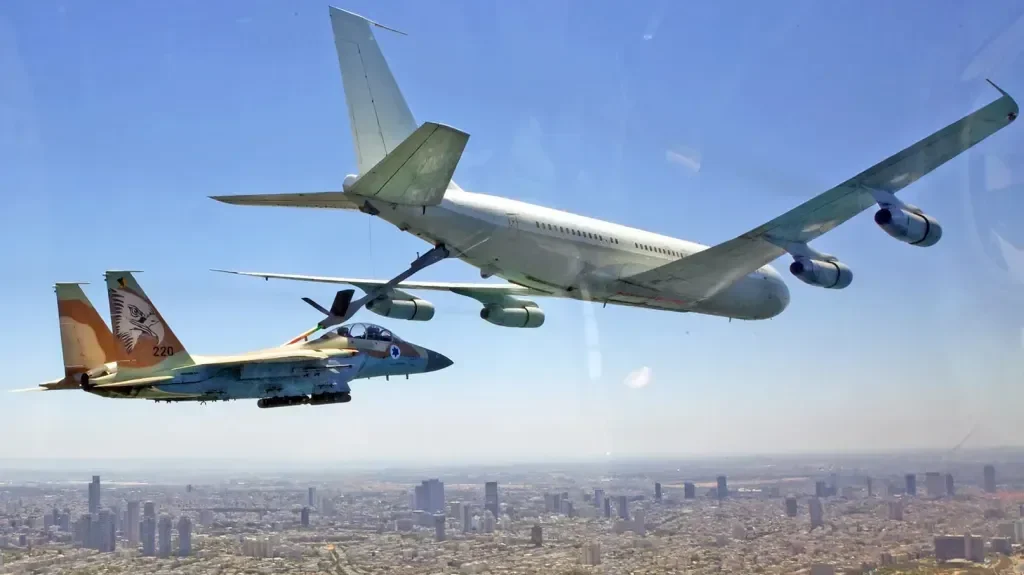
In mid-October, dozens of Israeli combat aircraft and tankers flew through Syrian and Iraqi airspace toward Iran. Officially, it was an exercise and a show of force. But the roughly 800-mile route looked too much like a future strike corridor to be dismissed as routine training.
Such a mission serves several purposes at once. Aircrews practice coordination and refueling, headquarters test their ability to control a large formation, and intelligence officers watch how Iran reacts. A radar switched on during an alert reveals its location and operating frequencies. A mobile air-defense system leaves a trail that can be detected by satellites or electronic-intelligence aircraft. Even if no attack order has been issued, preparing for one can produce very real intelligence gains.
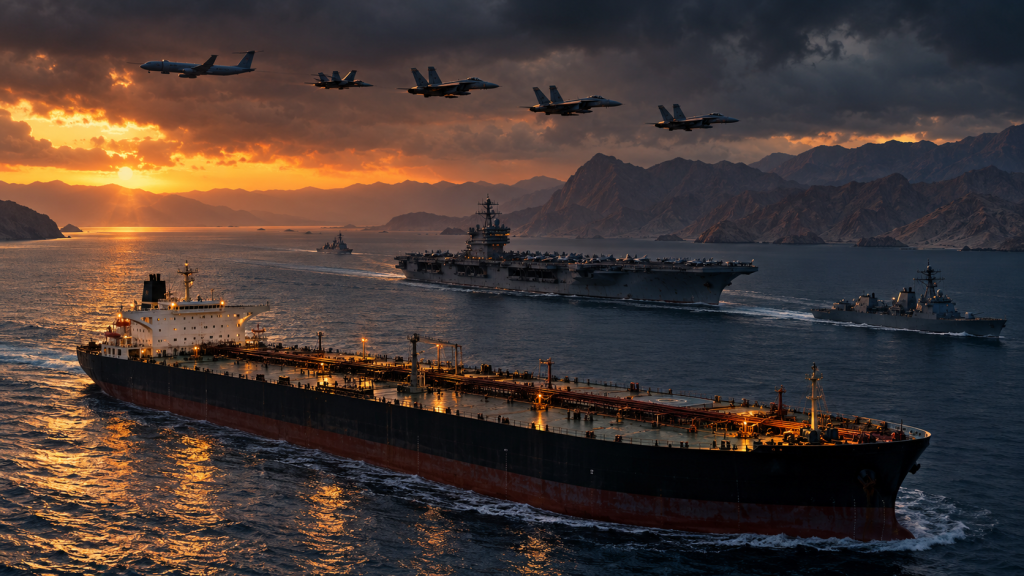
The exercise came soon after an unexpected visit to Israel by U.S. Defense Secretary Pete Hegseth and his meeting with Benjamin Netanyahu. At almost the same time, reports emerged that the USS Theodore Roosevelt carrier strike group and the USS Makin Island amphibious ready group, carrying U.S. Marines, were moving toward the Middle East. According to American media reports, their arrival could allow Washington to concentrate as many as three aircraft carriers, around 150 carrier-based combat aircraft, and a substantial force of cruise-missile-armed and missile-defense ships in the region.
Aircraft carriers move slowly, but they are impossible to hide. That makes them both weapons and messages. Washington is assembling enough force to conduct another air campaign, help shield Israel from retaliation, and protect shipping. The president would only have to make the political decision.
Why Is a Second “Decisive” Operation Necessary?
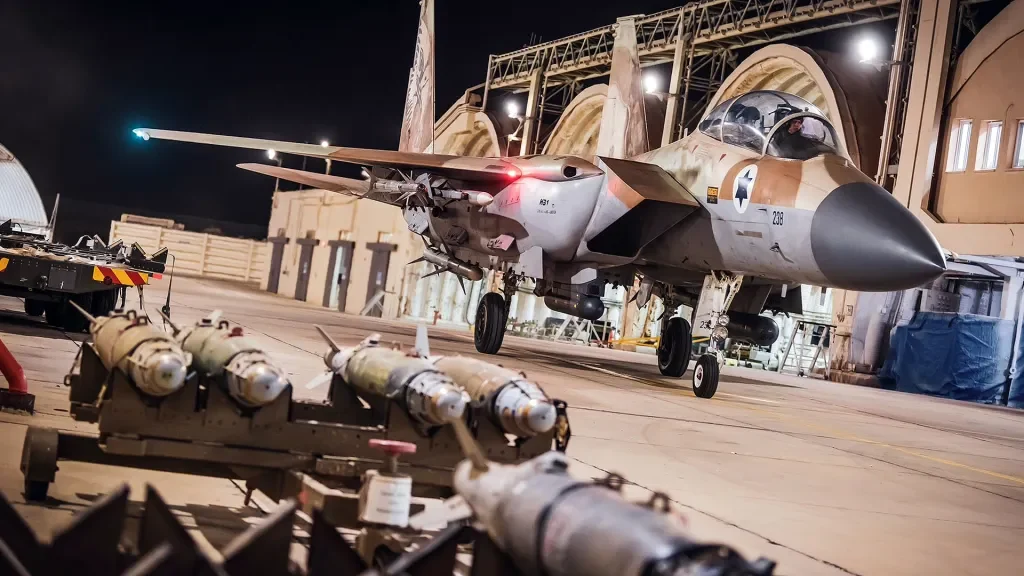
The first Operation Epic Fury began on February 28, 2026. The goals assigned to American forces were extraordinarily broad: destroy Iran’s offensive missiles, its missile-production capacity, its navy, and elements of its nuclear program. The United States and Israel carried out thousands of strikes, destroyed numerous facilities, and killed part of the country’s senior leadership. The most intense phase of the campaign ended in the spring, but the war itself did not. Peace was replaced by an unstable limbo of blockade, retaliatory strikes, and anticipation of the next major air assault.
Supporters of another offensive now say that Iran is rebuilding its missile capabilities and continuing work at protected nuclear sites. Netanyahu has gone further, naming the overthrow of the Iranian government as the objective. Trump promises to “finish” the job and bring oil prices down.
That leaves an uncomfortable question: if the first campaign was a complete victory, why is another one needed eight months later?
Airstrikes can destroy a factory, a warehouse, or a missile launcher. They can delay a program and impose an enormous cost on an adversary. They are less effective against a state’s intentions. Production can be dispersed, machinery can be replaced, and knowledge cannot be bombed out of existence. Even killing senior commanders does not guarantee that others will not take their place. The first Epic Fury inflicted tremendous damage on Iran but failed to produce a lasting political outcome. A second campaign risks repeating the same pattern on a larger scale.
The Mountain Left for Later
The clearest symbol of the unfinished war is a site known as Pickaxe Mountain. The suspected nuclear complex lies deep beneath a mountain and is considered one of the most difficult targets in Iran. It survived the previous strikes.
Reports in the American press have suggested that the United States could use the massive GBU-43/B MOAB against it. The weapon is commonly called the “Mother of All Bombs,” but that intimidating nickname conceals an awkward technical detail: the MOAB was designed to produce a devastating surface blast and immense overpressure, not to punch through rock and reinforced concrete. It could destroy support facilities outside the mountain, collapse entrances, and kill exposed personnel inside open tunnel sections. It offers no guarantee of destroying deeply buried chambers.
Public discussion of the weapon may be part of a pressure campaign. The Trump administration has repeatedly allowed military options to surface in the media in the hope of pushing an adversary toward a deal. The tactic carries a danger of its own: if a threat is repeated too often, eventually it has to be carried out or it stops being credible.
Iran Is Preparing an Expensive Response
Tehran is operating on the assumption that another attack is inevitable. The Islamic Revolutionary Guard Corps has threatened to widen its retaliation against American and allied targets across the Middle East. Yet the system supporting the global oil trade has proved even more vulnerable than the region’s military bases.
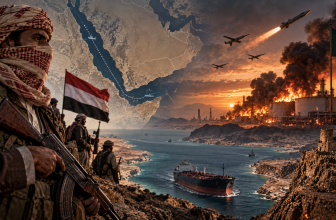
The number of vessels damaged around the Strait of Hormuz rose sharply during the first two weeks of October. Incidents were no longer confined to the strait itself, but occurred off Qatar, the United Arab Emirates, Saudi Arabia, and Oman. At the same time, Yemen’s Houthis increased pressure on the region’s other maritime chokepoint, the Bab el-Mandeb Strait, through which ships enter and leave the Red Sea. Saudi facilities and the East–West oil pipeline — built specifically to bypass Hormuz — have also come under attack.
The map still shows routes capable of carrying oil out of the Persian Gulf. In practice, every one of them now requires escorts, transfers, detours, more expensive insurance, and acceptance of the risk that a ship may be lost. Even a tanker that completes its voyage successfully delivers more expensive oil.
Why Oil Is Near $120 and Refuses to Come Down
At first glance, the market should have calmed. Combined Middle Eastern oil exports through Hormuz and alternative routes have once again surpassed their prewar level, reaching roughly 24 million barrels per day. About 14 million barrels per day were moving through Hormuz and nearby offshore transfer points — around 82 percent of the former volume. The shortage eased, but the price remained high.
The market is no longer pricing only the number of barrels delivered today. It is also charging for the risk of what may happen next week. Dated Brent, the physical benchmark reflecting crude available for prompt delivery, is holding at around $120. Brent futures closed at $116.72 on October 23, six percent higher than a week earlier. Before the war, Brent traded at roughly $72.
Oil has not followed recovering export volumes downward because the supply system itself has become fragile. Tanker insurance is more expensive, available ships are scarce, inventories are depleted, and the region’s two main maritime chokepoints are threatened at the same time. Iran’s own exports have effectively been halted by the blockade. A successful attack on a major terminal, pipeline, or group of tankers could once again remove millions of barrels from the market.
Expectations of another American operation after the elections are adding to the pressure. Earlier in the conflict, physical crude rose far faster than futures because traders believed the disruption would be brief and the war would soon end. That gap is now narrowing. Future deliveries are becoming more expensive, which means the market is losing faith in a quick return to normal.
American oil production cannot solve the problem overnight. Crude is traded on a global market, new wells take time, and no presidential order can instantly produce more tankers, safer shipping lanes, or additional refining capacity. The U.S. Strategic Petroleum Reserve is already at its lowest level since 1982, even as Washington has had to authorize another emergency crude exchange. The room for a quick and inexpensive reduction in prices is shrinking.
A Strike or the Final Round of Bargaining?
None of these preparations proves that an attack order has been issued. The aircraft may be demonstrating readiness, the carriers may be strengthening Washington’s negotiating position, and threatening statements always become louder before an election. Israelis vote on October 27, while the U.S. midterms will be held on November 3. In both countries, the war has become part of domestic politics.
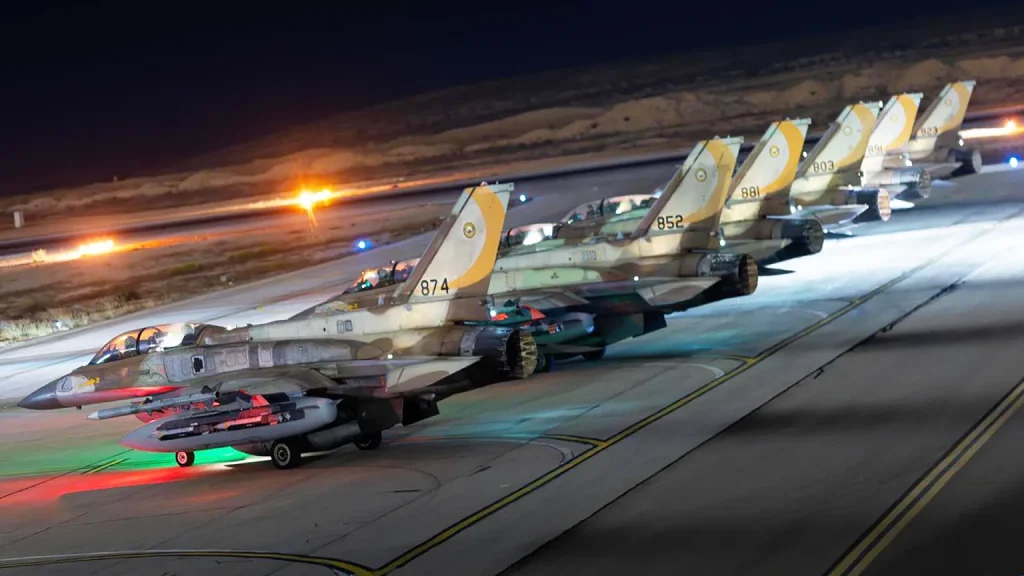
But a bluff works only if the other side believes a strike is possible. That forces the militaries involved to prepare in earnest. Israeli aircraft rehearse their routes, the U.S. Navy assembles an offensive and defensive force, and Iran disperses its assets while selecting targets for retaliation. Each side may believe that its own preparations are deterring the other. Such a structure remains stable only until the first mistake.
A second Epic Fury, if it begins, will not be a repeat of the first. The element of surprise is gone. Iran is expecting an air campaign, its surviving forces have had time to prepare, and its response will probably extend far beyond military installations. Tankers, ports, pipelines, airfields, and digital infrastructure across the Persian Gulf could all be at risk.
The first campaign was supposed to deprive Iran of the ability to continue the war. The second may reveal that the strikes merely pushed it into another form — more prolonged, less controllable, and far more expensive for everyone. Not one bomb from the new campaign has yet fallen on Iran, but the world is already paying almost $120 for a barrel of oil. The price keeps rising because no one knows what victory is supposed to look like anymore.