In the early 1990s, the word “Houthis” meant almost nothing to most people, even in the Middle East. In the mountains of northern Yemen, there was a Zaydi religious and political movement concerned with the erosion of its traditions, corruption within the central government, and growing foreign influence. It had no state, modern army, air force, or vast oil revenues. Three decades later, the heirs of that movement control Sanaa and much of Yemen’s most densely populated territory, possess ballistic and cruise missiles, strike drones, and anti-ship weapons, threaten shipping in the Red Sea, and can strike targets inside Saudi Arabia. On September 8, 2026, this transformation reached a particularly revealing point: Houthi missiles and drones struck Saudi targets in Abha, Najran, and Jizan, as well as the air base at Khamis Mushait. Fires broke out at oil infrastructure, 73 people were injured, and some energy facilities temporarily halted operations. All of this happened at a moment when traffic through another critical oil artery—the Strait of Hormuz—had already fallen sharply. A local movement from one of the poorest countries in the world had unexpectedly acquired the ability to affect one of the nerve centers of the global economy.
The simplest explanation is tempting: the Houthis are just another Iran-created armed group that Tehran transformed into an instrument for pressuring Saudi Arabia and the West. The problem is that historically, this is inaccurate. Iran has indeed played an enormous role in turning Ansar Allah into a modern missile force, but the movement itself emerged inside Yemen, has its own religious and social base, and existed long before Tehran began providing it with large-scale military assistance. To understand where the missiles over Jizan and the anti-ship drones in the Red Sea came from, we need to go back not to Tehran, or even to the civil war of 2015, but to the mountains of northern Yemen, where the Houthi story began with an entirely different problem.
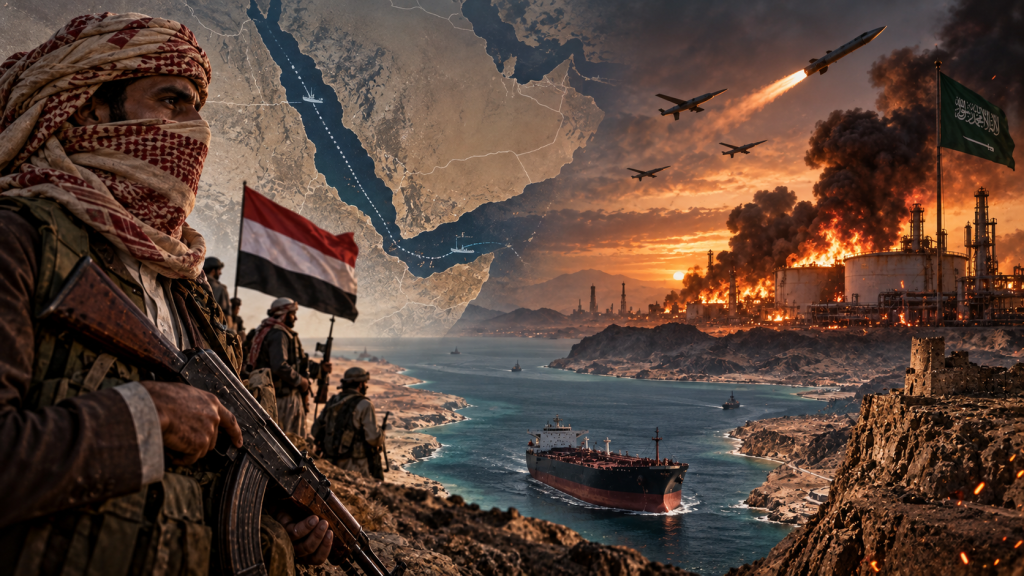
To Understand the Houthis, You First Need to Understand the Zaydis
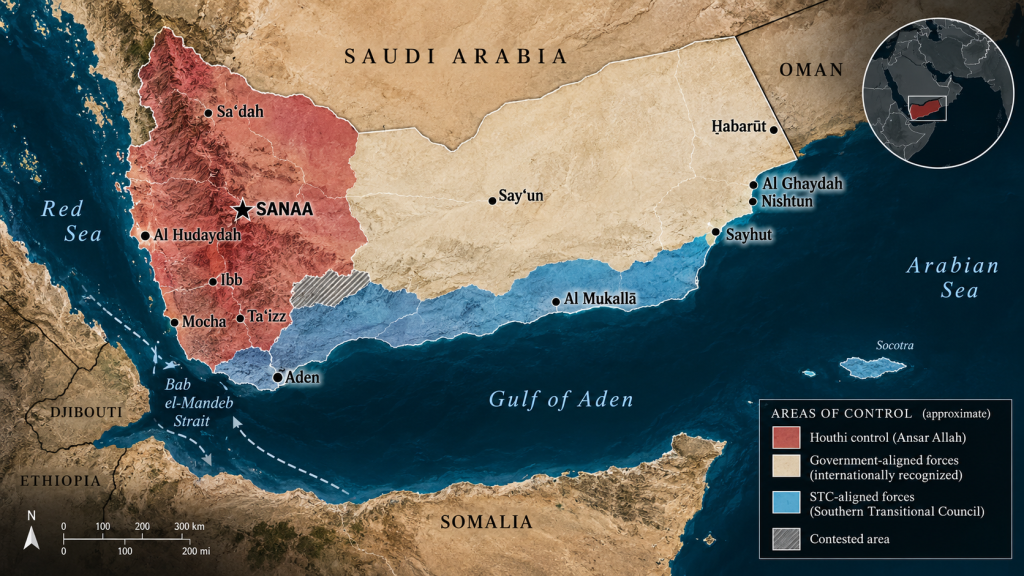
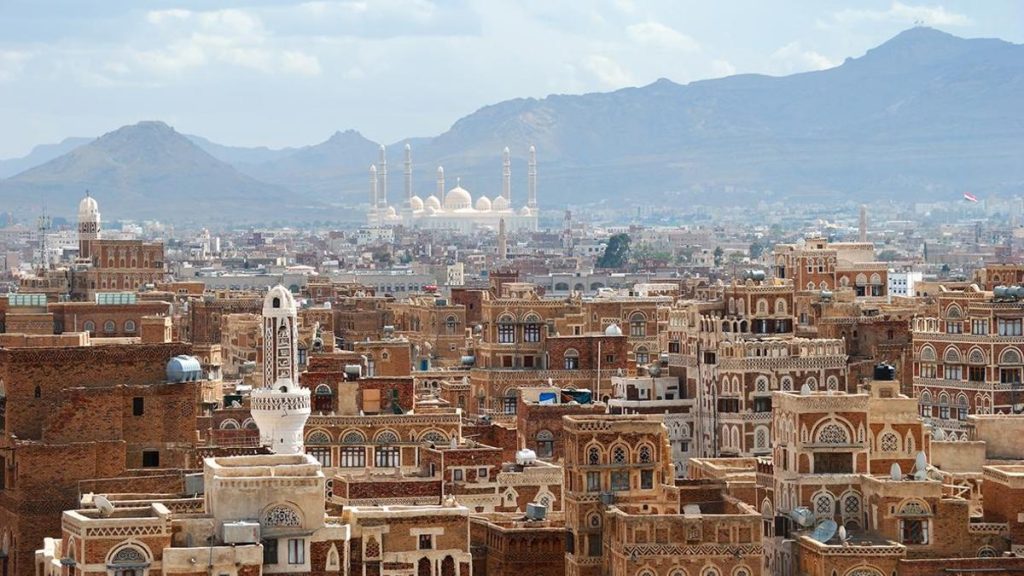
Yemen has never been a religiously or politically homogeneous country. For centuries, the north was home to a distinctive Zaydi tradition of Islam. Zaydism belongs to the Shia branch of Islam but differs significantly from the Twelver Shiism dominant in modern Iran. Describing the Houthis simply as “Yemeni Shiites” is therefore technically correct but explains very little. Zaydi religious and political traditions developed within Yemen over many centuries, and Zaydi imams ruled substantial parts of northern Yemen in various forms for roughly a thousand years. The last Mutawakkilite Kingdom of Yemen was overthrown by the republican revolution of 1962, which was followed by a prolonged civil war. The old imamate disappeared, but the Zaydi population did not.
Over the following decades, the country’s political and religious balance gradually changed. North Yemen united with the formerly socialist South Yemen in 1990 to create the modern Republic of Yemen, but unification did not eliminate longstanding regional, tribal, and religious divisions. In the northwest, particularly in Saada Governorate near the Saudi border, parts of the Zaydi community increasingly felt that they were losing their former political and cultural position. During the 1980s and 1990s, a religious revival movement developed there, eventually giving rise to the organization now known as Ansar Allah—“Supporters of God.” The more familiar name “Houthis” comes from the al-Houthi family, whose members emerged as leaders of the movement.
The pivotal figure was Hussein Badreddin al-Houthi, a religious and political activist around whom the movement became increasingly radicalized in the late 1990s and early 2000s. His supporters adopted a progressively more confrontational stance toward President Ali Abdullah Saleh’s government, American influence, and Saudi policy. It was within this environment that the movement’s notorious radical slogan—with anti-American, anti-Israeli, and antisemitic language—became established. Yet the conflict soon became much more than an ideological dispute. The central government regarded al-Houthi’s growing organization as a threat to its control over the north, while the movement increasingly viewed the state itself as an enemy. In 2004, the government attempted to crush it by force. Hussein al-Houthi was killed. The story might have ended there.
Instead, the opposite happened.
Six Wars That Were Supposed to Destroy the Houthis Taught Them How to Fight
Between 2004 and 2010, Saleh’s government fought a series of conflicts against the Houthis collectively known as the Saada Wars. They are generally divided into six rounds of fighting, interrupted by ceasefires and renewed outbreaks of violence. The state had an army, air power, and heavy weapons, while its opponent initially remained a regional movement based largely in the mountainous districts of Saada. Yet these wars gradually transformed the organization itself. People who had begun with religious and political mobilization acquired commanders, combat experience, supply networks, armed formations, and their own military tradition. Instead of destroying the movement, the government effectively put it through a prolonged school of war.
Geography worked in the Houthis’ favor. Northwestern Yemen is rugged mountain country, where the technological superiority of a regular army does not automatically translate into control of the terrain. The Houthis learned to use small mobile units, local networks, concealment, and their knowledge of the landscape. The conflict gradually spilled beyond Yemen itself. In 2009, fighting crossed the border and Saudi Arabia became directly involved in clashes with Houthi forces. The present-day confrontation between Riyadh and the movement is therefore not a new front created by recent attacks on shipping. Their direct military rivalry dates back well over fifteen years.
It would still be a mistake, however, to portray the Houthis of this period as simply an Iranian army operating in Yemen. Contacts with Iran existed, individual members of the Zaydi milieu had visited the country as early as the 1990s, and Iranian ideological influence gradually increased. But evidence that Tehran played a decisive role in the 2004–2010 wars remains limited. Much closer cooperation developed later, when it became clear that what had once been a relatively small northern Yemeni movement was turning into a major political and military force. And the next crisis gave the Houthis the opportunity to leap from regional insurgency to effective control over a large part of the country.
The Houthis’ Most Important Ally Was the President Who Had Spent Years Fighting Them
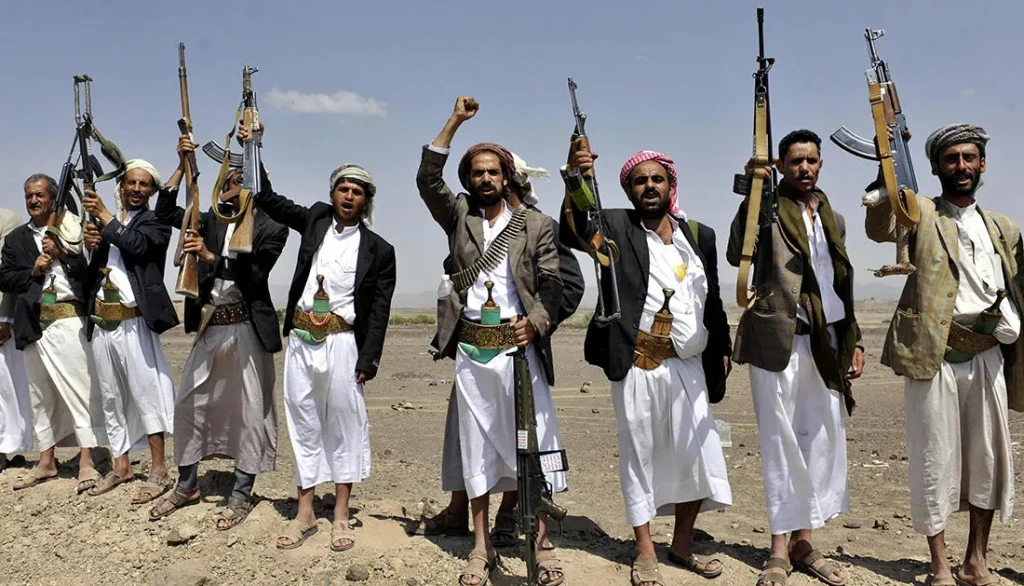
In 2011, the Arab Spring reached Yemen. Mass protests, violence, and splits within the political elite forced Ali Abdullah Saleh from the presidency. Power passed to his deputy, Abdrabbuh Mansur Hadi, but the political transition failed to resolve the country’s underlying problems. State institutions weakened, the armed forces fractured between competing factions, southern separatists grew stronger, Al-Qaeda in the Arabian Peninsula retained influence, and the economy remained in severe distress. The Houthis gained something they had never possessed before: room to expand far beyond Saada.
Then came one of the strangest turns of the entire Yemeni conflict. Former president Saleh—the man whose army had fought six wars against the Houthis—effectively allied himself with them against his former political opponents. This was enormously important. The Houthis were now backed not only by mountain fighters and tribal allies but also by elements of Yemen’s old military establishment, including trained personnel, weapons stockpiles, heavy equipment, and intimate knowledge of the state apparatus. This is why the offensive that followed cannot be understood as a story of a few thousand guerrillas suddenly defeating an entire country.
In September 2014, the Houthis entered Sanaa. In January of the following year, they seized the presidential palace, while Hadi eventually fled the capital for the south and then left the country. A movement that the central government had tried to eliminate in a single northern province only a decade earlier had become the master of the capital. In March 2015, Saudi Arabia assembled a coalition and launched a military intervention intended to restore the internationally recognized government and halt further Houthi expansion.
Saudi Arabia Expected to Solve the Problem Quickly. The War Lasted for Years
On paper, the imbalance in capabilities looked enormous. Saudi Arabia and its partners possessed modern combat aircraft, precision-guided weapons, sophisticated intelligence systems, and immense financial resources. The Houthis controlled part of a country devastated by civil war and had virtually no conventional air force. Yet the coalition failed to destroy the movement. The Houthis retained Sanaa and much of northwestern Yemen and gradually adapted to the new war. Saudi air superiority allowed the coalition to inflict heavy damage, but it did not automatically produce control over mountainous terrain and densely populated areas.
At the same time, the war itself radically transformed the Houthis. If in 2004 they had primarily been a regional armed movement, a decade later they controlled elements of the former state apparatus, military stockpiles, parts of the army, and substantial territory. Gradually another component became increasingly important: ever-closer military and technological ties with Iran. As early as 2013, the Jihan I was intercepted carrying a large shipment of Iranian weapons linked to the Houthis, and after the seizure of Sanaa, Tehran’s support became much more visible. Iran and Iran-linked organizations provided technology, weapons components, training, and advice.
This is where an important distinction emerges. Iran did not create the Houthis, but it helped transform a regional force into an actor capable of operating hundreds or even thousands of kilometers from its own territory. This is why many researchers prefer not to describe Ansar Allah as a conventional Iranian “proxy,” but rather as an autonomous informal partner of Tehran. The movement has its own leadership, interests, and political base. Yet Iranian assistance gave it access to missile, drone, and anti-ship capabilities that would have been extraordinarily difficult for an ordinary insurgent organization to develop independently.
How Fighters from the Mountains Acquired Ballistic Missiles
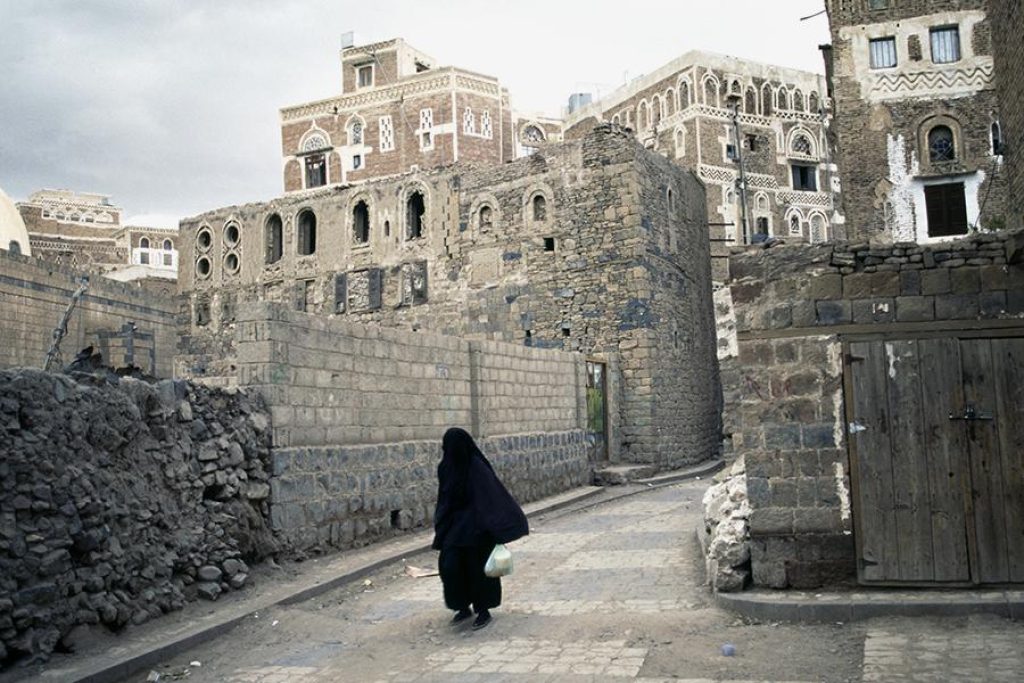
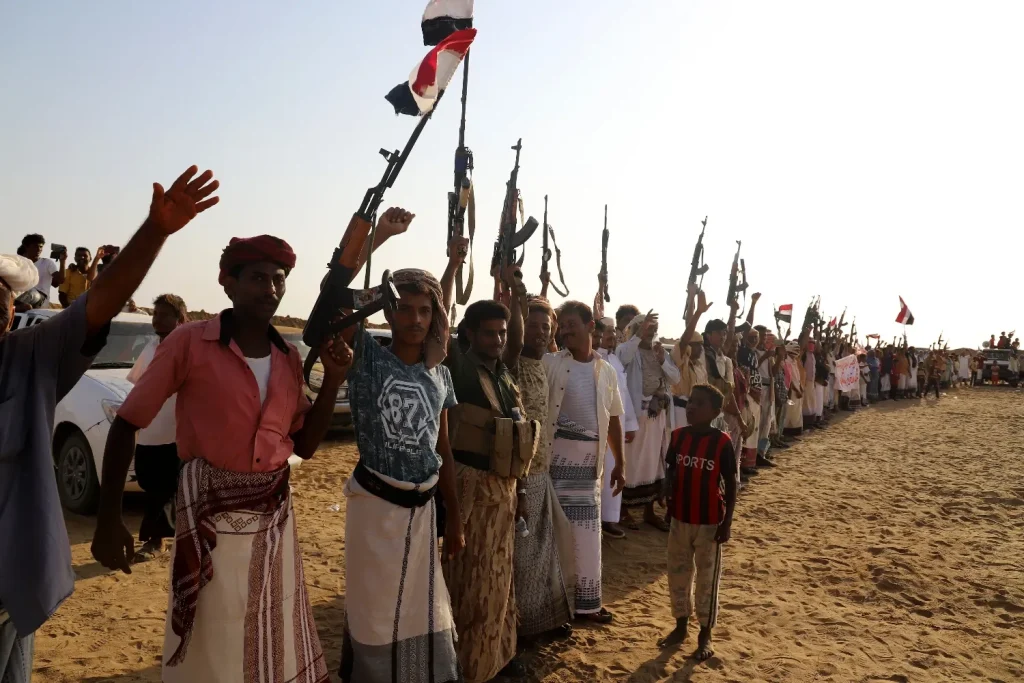
The Houthis’ public image can still be misleading. Photographs show armed men in traditional clothing and sandals carrying assault rifles; a few frames later, the same organization is displaying enormous ballistic missiles in a military parade. There is no contradiction. Ansar Allah has become an unusual hybrid of insurgent movement, former state institutions, territorial government, and military organization supported by foreign technology.
When Yemen’s armed forces fragmented, the Houthis gained access to part of the country’s military arsenal, including missile systems. New weapons and technologies later appeared whose origins have been linked to Iran. Over time, the arsenal expanded to include ballistic missiles of varying ranges, cruise missiles, strike drones, and anti-ship systems. This does not necessarily mean simply transporting a complete missile from Iran to Yemen. The reality is more complicated: smuggled components, technological assistance, local assembly, modifications to existing weapons, and domestic manufacture of some parts can all be involved. The seemingly simple question “Is this an Iranian missile or a Yemeni one?” can therefore have a much less straightforward answer than expected.
For the Houthis, these weapons solved a fundamental problem of asymmetric warfare. They could not build an air force comparable to Saudi Arabia’s. But they did not need to win an air war in order to hit an oil facility. They merely needed a relatively small number of missiles or drones to penetrate the defenses. The cost of such an attack could be radically lower than the value of the infrastructure being protected—and lower still than the cost of the defensive systems needed to protect it.
The movement had found a way to strike its enemy not where the Houthis themselves were strongest, but where the enemy was most vulnerable.
That logic eventually carried the Houthis far beyond Yemen’s civil war.
The Houthis’ Most Powerful Weapon Turned Out Not to Be Missiles, but Geography
A glance at the map explains why Yemen can have far greater strategic importance than the size of its economy would suggest. Its western coast faces the Red Sea, and at the sea’s southern entrance lies the Bab el-Mandeb Strait. Yemen stands on one side, Djibouti and Eritrea on the other. Beyond the strait lies the Red Sea, and farther north the Suez Canal—one of the most important maritime routes connecting Asia and Europe.
A ship that cannot or will not pass through Bab el-Mandeb and the Suez Canal must instead sail around Africa via the Cape of Good Hope. That means thousands of additional kilometers, more fuel, extra days at sea, higher insurance costs, slower ship turnover, and more expensive transportation. A relatively small armed movement capable of systematically threatening vessels at precisely the right point on the map can therefore acquire influence wildly disproportionate to the size of its economy or army.
This is exactly what the Houthis demonstrated in the Red Sea. Beginning in late 2023, they launched a campaign of missile and drone attacks on shipping, initially claiming that their actions were connected to the war in Gaza. Commercial vessels came under attack, followed by military warships. International forces launched retaliatory strikes, but they were unable to eliminate Houthi operations completely.
This fundamentally changes the scale of the story. To influence global commerce, the Houthis do not need to seize the Suez Canal or physically blockade Bab el-Mandeb. They only need to create enough risk that shipping companies decide for themselves that the route is too dangerous.
In a modern global economy, sometimes you do not need to close a road. You only need to make it too expensive to use.
Now the Same Geography Is Beginning to Work Against the Global Oil System
The events of September 2026 made this mechanism particularly dangerous. Amid a sharp escalation of the wider Middle Eastern conflict, tanker traffic through the Strait of Hormuz—the principal oil gateway of the Persian Gulf—fell dramatically. According to Reuters on September 9, oil flows through the strait dropped to around 2 million barrels per day, compared with more than 8 million shortly beforehand. Brent crude rose above $100 per barrel. Under normal circumstances, alternative routes should reduce the vulnerability of the system, and Saudi Arabia possesses one of the most important such alternatives: oil can be moved through pipelines across the kingdom to the Red Sea, bypassing Hormuz.
But this creates an almost perfect geographical trap. To the east lies an unstable Strait of Hormuz. To the west, Saudi oil reaches the Red Sea. And the southern gateway to the Red Sea lies beside territory controlled by the Houthis. This is why the latest attacks matter far beyond the immediate scale of the physical damage they caused. TWZ has highlighted the threat to Saudi Arabia’s remaining alternative energy corridor: if pressure develops simultaneously around the Persian Gulf, Saudi energy infrastructure, and the Red Sea, the system loses much of the redundancy that normally protects it from disruption.
On September 8, the Houthis said they had used ballistic missiles and drones against Saudi Aramco facilities in Abha, Najran, and Jizan, as well as Khamis Mushait Air Base. Saudi authorities confirmed fires and temporary shutdowns at some energy facilities, while NASA satellite observations detected smoke over the area of the Jizan refinery and an oil distribution facility in Abha. Seventy-three people were injured. The following day, the alert in Khamis Mushait was lifted, but the renewed escalation represented a serious threat to the relative calm that had persisted since the 2022 truce.
This is why the importance of such an attack cannot be measured simply by counting destroyed storage tanks or calculating how many hours a particular facility remained offline. Saudi Arabia remains one of the world’s most important oil exporters. If an adversary demonstrates the ability to threaten its infrastructure precisely when another major export route is already under severe pressure, markets begin pricing not only the losses suffered today but also the possibility of much larger disruptions tomorrow.
The Houthis Did Not Become a Superpower—They Found a Way to Make Their Weakness Matter Less
This is the central paradox of the Ansar Allah story. The Houthis have not built an economy comparable to Saudi Arabia’s. They have no modern blue-water navy. They possess neither a powerful air force, a global network of overseas bases, nor the resources of a great power. They do not even control all of Yemen: the country remains divided, while forces opposed to them hold substantial territories in the south and east. Yet the territory under Houthi control contains a large share of Yemen’s population.
Modern warfare, however, does not always demand symmetry. If one side buys an aircraft costing tens of millions of dollars, the other side does not necessarily need to build an equivalent aircraft. It can try to destroy the airfield, fuel depot, or radar with a far cheaper drone. If an opponent possesses an enormous merchant fleet, there is no need to build a fleet of equal size—sometimes it is enough to force those ships to change route. If a wealthy oil monarchy depends on a limited number of export corridors, an adversary does not need to capture the oil fields themselves. It may be enough to increase the risk of using those corridors.
This is the model the Houthis have spent more than two decades learning to exploit. The Saada Wars taught them how to survive against a regular army. The collapse of the Yemeni state gave them access to government resources and military infrastructure. Their alliance with former Saleh loyalists helped them seize Sanaa. The war with Saudi Arabia pushed them toward long-range strike capabilities. Iran provided technologies, weapons, and expertise that dramatically expanded those capabilities. And Yemen’s geography supplied the one asset that cannot be smuggled, manufactured, or imported: a position beside one of the most important maritime crossroads on Earth.
That is why the question “Who are the Houthis?” can no longer be answered adequately with the phrase “Yemeni rebels.” That description may once have been reasonably accurate, but today it conceals more than it explains. What exists now is a movement that has evolved from Zaydi religious and political activism, through regional insurgency and civil war, into a de facto governing authority over a substantial part of Yemen—with the ability to conduct a limited regional missile and maritime campaign.
Thirty years ago, the future Houthis were trying to preserve Zaydi identity in the mountains of Saada. Twenty-two years ago, Yemen’s government decided to destroy them by force. Twelve years ago, they captured the capital. Then a coalition led by one of the wealthiest countries in the Middle East went to war against them. They survived that too. Today, a fire at an oil facility in Jizan can become one of the factors traders consider when determining the price of a barrel of oil on the other side of the world.
And perhaps that is the best way to understand the Houthi phenomenon. Their story is not simply about how a small insurgent movement became a large army. It is the story of how a local force learned to turn Yemen’s political collapse, foreign technology, and its own geographical position into influence on a global scale.