The news itself sounds strange.
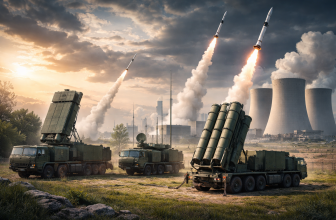
The U.S. Navy plans to equip its destroyers with Patriot missiles—specifically the PAC-3, which for decades was considered a purely land-based air defense system. And this is not just a theoretical plan: a contract for integration has already been awarded, and the budget includes provisions for the purchase of hundreds of these missiles.
At first glance, the question arises: Why does the navy need a system that already exists on land when it has its own line of missiles—the SM-2, SM-3, and SM-6?
The answer doesn’t lie in a “new rocket.”
And in a change in the very logic of air defense.
Not a replacement, but another layer
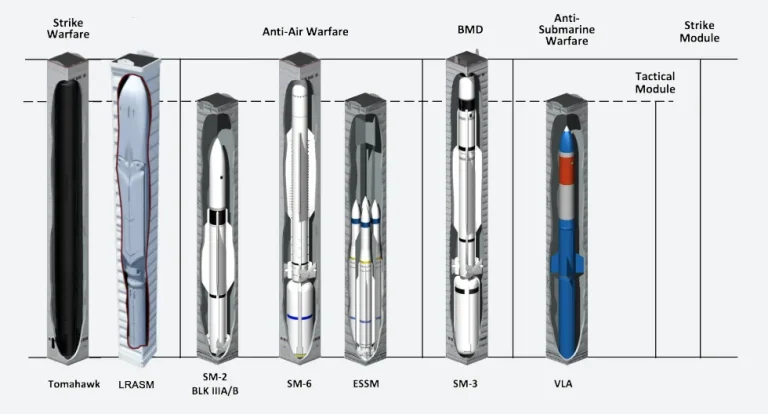
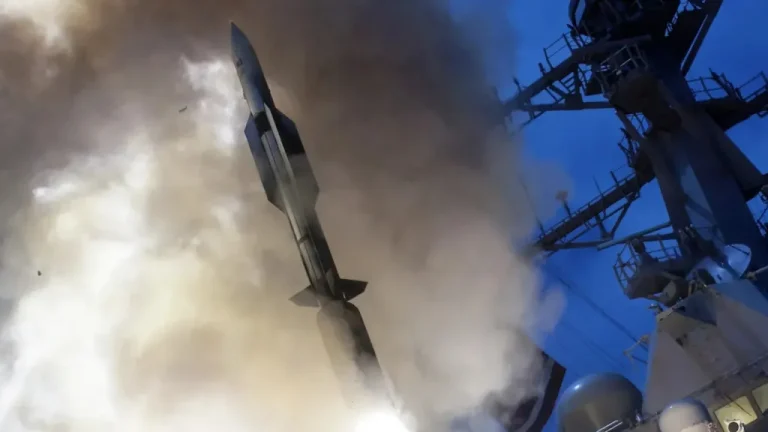
The Aegis system remains the backbone of the air defense capabilities of U.S. ships.
She already knows how to operate a whole range of missiles:
- SM-2 — “intermediate level”
- SM-6 — a versatile interceptor
- SM-3 — Exoatmospheric Missile Defense
- ESSM — Near-field layer
Now the PAC-3 MSE is being added to this lineup.
And that’s important.
This is not about replacing existing missiles, but about adding another tier—one with a different specialization.
What is the PAC-3 MSE in this diagram?
🔧 Technical Unit: PAC-3 MSE
| Type | anti-aircraft/anti-missile |
| Principle | hit-to-kill (kinetic interception) |
| Main objective | ballistic and maneuvering targets |
| Feature | high maneuverability |
| Range | front/middle echelon |
The main difference between the PAC-3 and conventional naval missiles is their mode of operation.
It doesn’t “explode nearby.”
It hits the target directly.
This is especially important when dealing with:
- ballistic missiles
- maneuvering warheads
- hypersonic targets
Why the Navy Lacked This
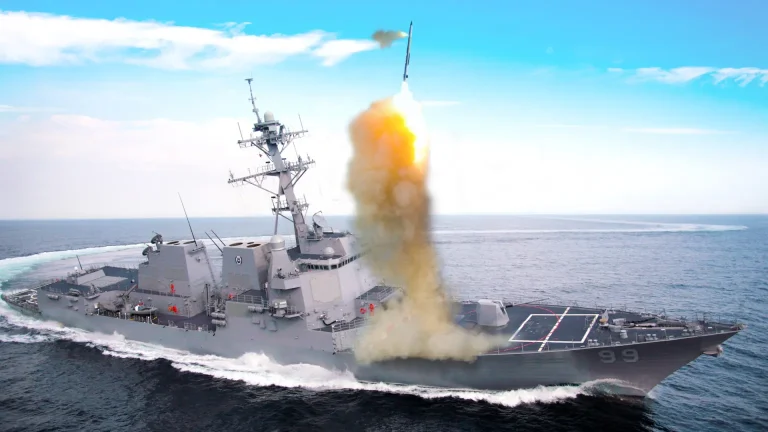
Modern missile defense is divided into the following stages:
- Long-range interception (SM-3)
- in-atmosphere interception (SM-6)
- last-second steal (final seconds)
And that’s exactly where the gap formed.
The PAC-3 is precisely what covers this stage—the final phase, where maximum precision and maneuverability are required.
In fact, this is a “last chance.”
How it is installed on a ship
The most interesting part is the technical side of things.
The PAC-3 was not designed for naval use.
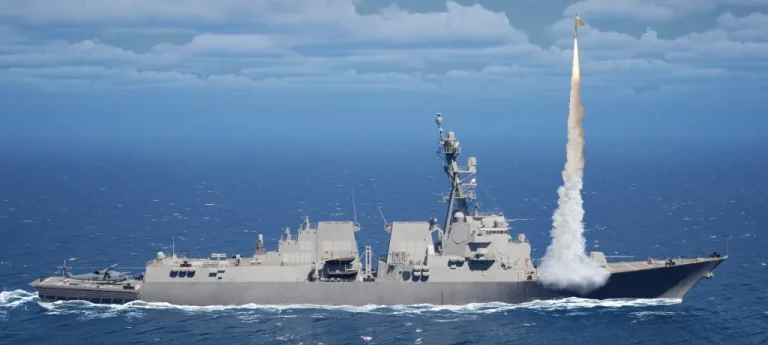
But they managed to adapt it for use with the standard Mk 41 ship-based launcher—the very same one already installed on Arleigh Burke-class destroyers (oh, how Americans love flashy names).
And all this without having to make any major modifications to the system itself.
The missile is placed in a separate container and becomes yet another “type of ammunition.”
This is the key to modern architecture:
👉 Not a new system, but a new missile within the existing system
Economics and Logistics
🔧 Technical Section: Numbers
| Procurement Plan | 405 missiles |
| Budget | ~$1.7 billion |
| Price per | ~$4–5 million |
| Manufacturing | up to 2,000 per year (target) |
The fleet gains yet another advantage.
The PAC-3 is already being produced in large quantities for the Army and its allies. This means:
- more reliable supplies
- lower cost due to economies of scale
- general standardization
And this is critical given that modern conflicts are “using up” missiles faster than they can be produced.
Why is this happening right now, anyway?
The reason is that the threats have changed.
Whereas the main objective used to be to shoot down aircraft and cruise missiles, now:
- ballistics
- hypersonic systems
- mass attacks
And here, one type of missile is no longer enough.
We need a system where each level completes its own task.
Conclusion
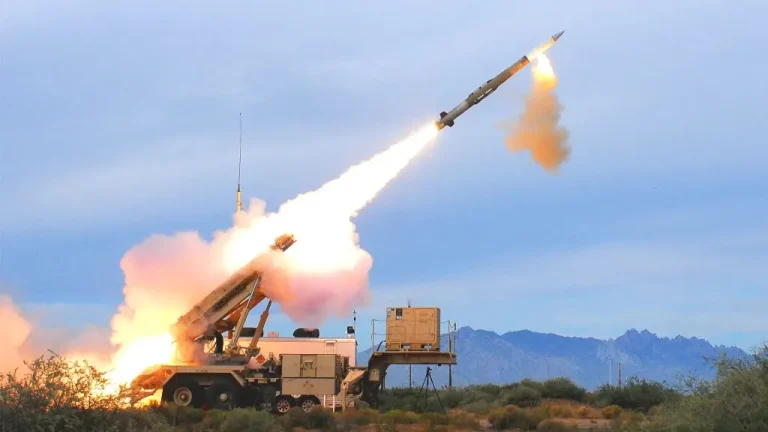
The story about the PAC-3 on destroyers isn’t about a “new weapon.”
This is about changes to the air defense structure.
The Navy is not giving up its missiles.
It adds another tool—one that is more precise, more agile, and effective in the final phase.
And that’s exactly what shows where things are headed:
not a universal missile,
but a layered system in which each component fulfills its own specific role.
And in such a system, it makes perfect sense for even a “land-based” Patriot to be deployed on a ship.
источник https://www.twz.com/land/patriot-pac-3-missiles-to-arm-navy-arleigh-burke-class-destroyers