Pneumatics vs. Drones: The “Kupol-25” System Automatically Destroys FPV Drones as They Approach

The development of unmanned technologies on the battlefield has compelled engineers to seek fundamentally new and cost-effective methods for protecting armored vehicles and fixed installations. Traditional electronic warfare systems are not always effective against the latest drones, which feature secure communication channels or autonomous guidance capabilities. In light of this, Russian developers have unveiled a robotic close-range interception system that uses compressed air and a cloud of projectiles to destroy high-speed aerial targets.
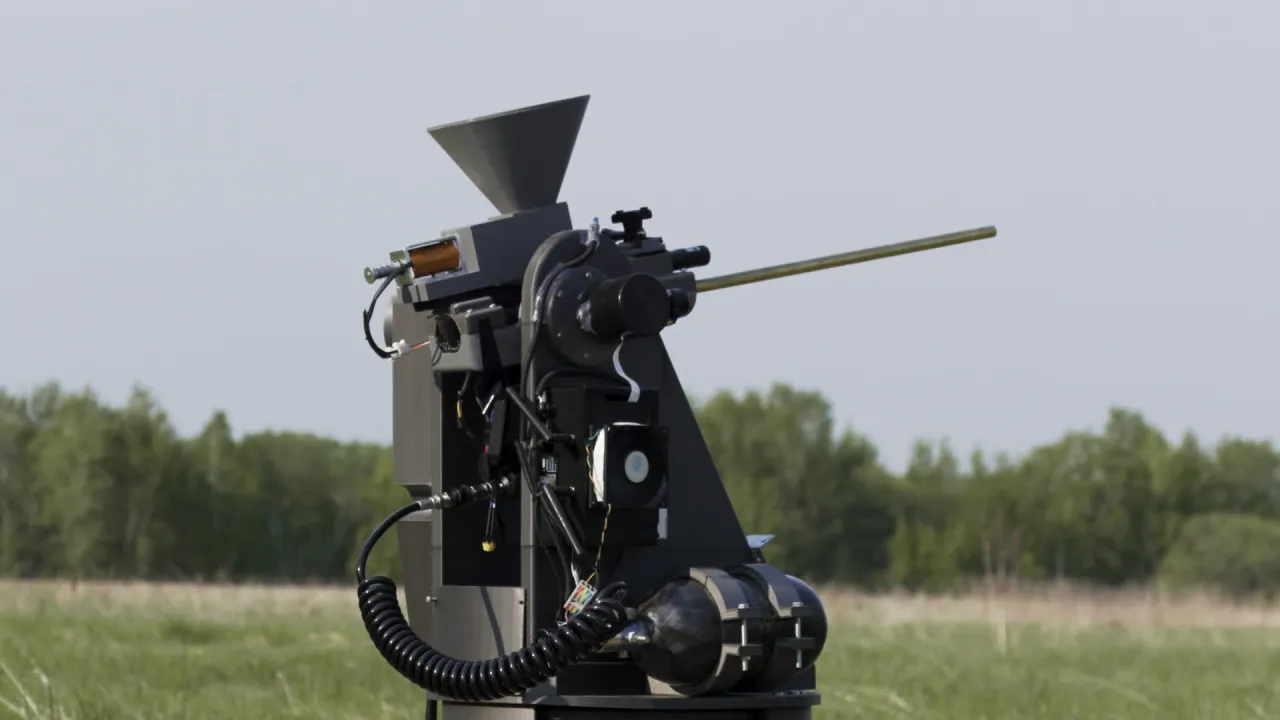
A New Philosophy of Close-Range Air Defense
The main concept behind the system is to create an insurmountable kinetic barrier directly in the flight path of an attacking drone. Electronic detection systems track the approach of a small object at ranges where standard anti-aircraft machine guns are ineffective due to the target’s high angular velocity. The system’s automation calculates the lead in a fraction of a second and fires a high-speed burst.
Unlike traditional close-quarters combat firearms, the pneumatic operating principle of the launcher prevents ammunition from detonating if the system itself is damaged by shrapnel. High-pressure compressed gas enables an extremely high rate of fire and allows the projectiles to reach their initial velocity instantly. This technical solution makes the system safe for the armored vehicles and infantry it is designed to support, even when they are in the immediate vicinity of the firing zone.
System Architecture and the Principle of Automatic Interception
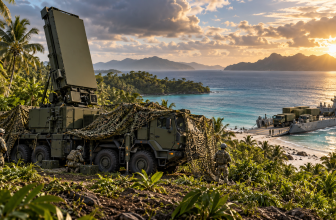
Structurally, the system consists of a rotating launch tube assembly, high-speed pneumatic valves, and an integrated sensor module. Target detection is handled by a compact omnidirectional radar station operating in conjunction with a high-definition thermal imaging camera. The control unit’s neural network algorithm instantly recognizes the characteristic silhouette and acoustic profile of an FPV drone, filtering out false targets such as birds or falling debris.
The moment the drone crosses a critical threshold, a cascade of solenoid valves is triggered, releasing compressed nitrogen from high-pressure composite cylinders. A dense cloud of special tungsten shot or heavy steel entangling netting is fired from a multi-barrel launcher. The projectiles create a three-dimensional curtain in the air that physically destroys the propeller blades, disrupts communication antennas, or causes the drone’s shaped-charge warhead to detonate prematurely even before it reaches the armor.
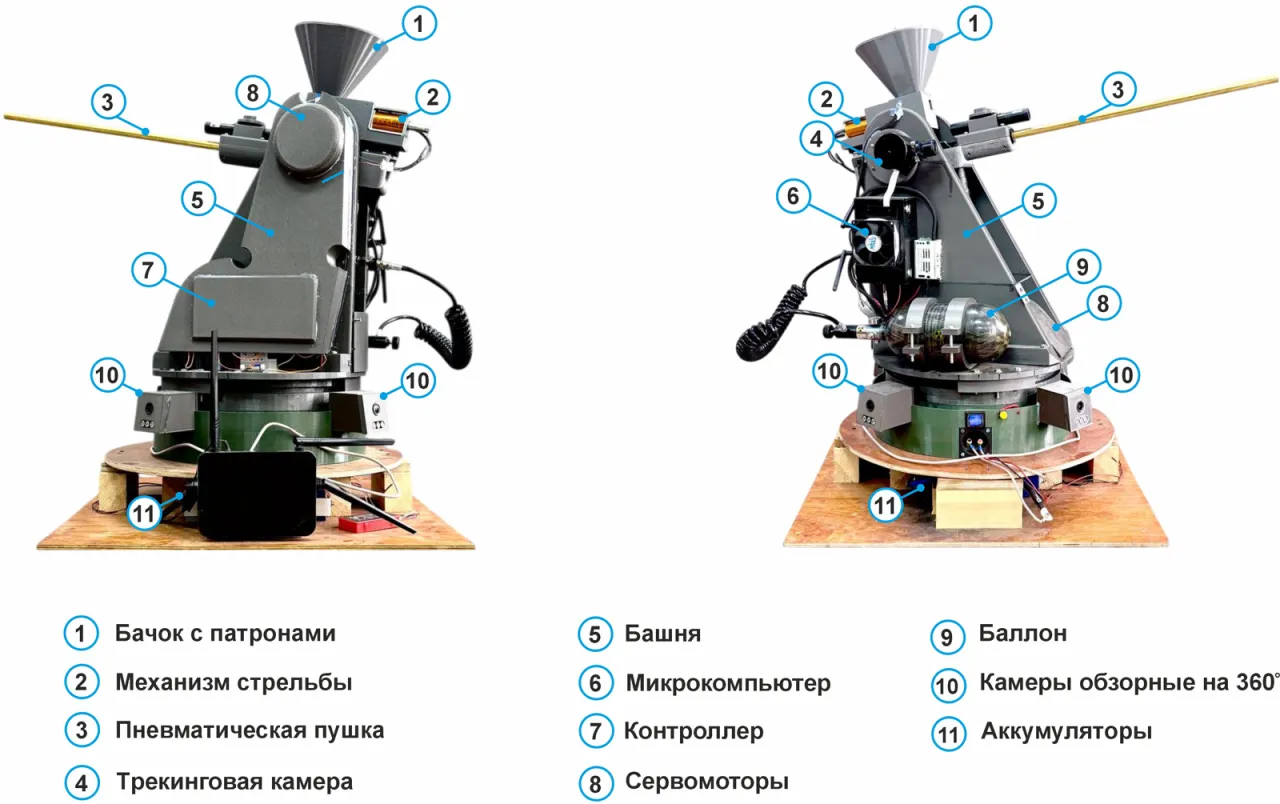
The Advantages and Cost-Effectiveness of Air Guns
The main advantage of this new development over missile or laser interceptor systems is its unprecedentedly low cost per shot. Loading the launch modules with conventional metal shot and refilling the gas cylinders costs hundreds of times less than manufacturing modern anti-aircraft guided missiles. This makes it possible to effectively address the problem of ammunition depletion during massive attacks by swarms of drones.
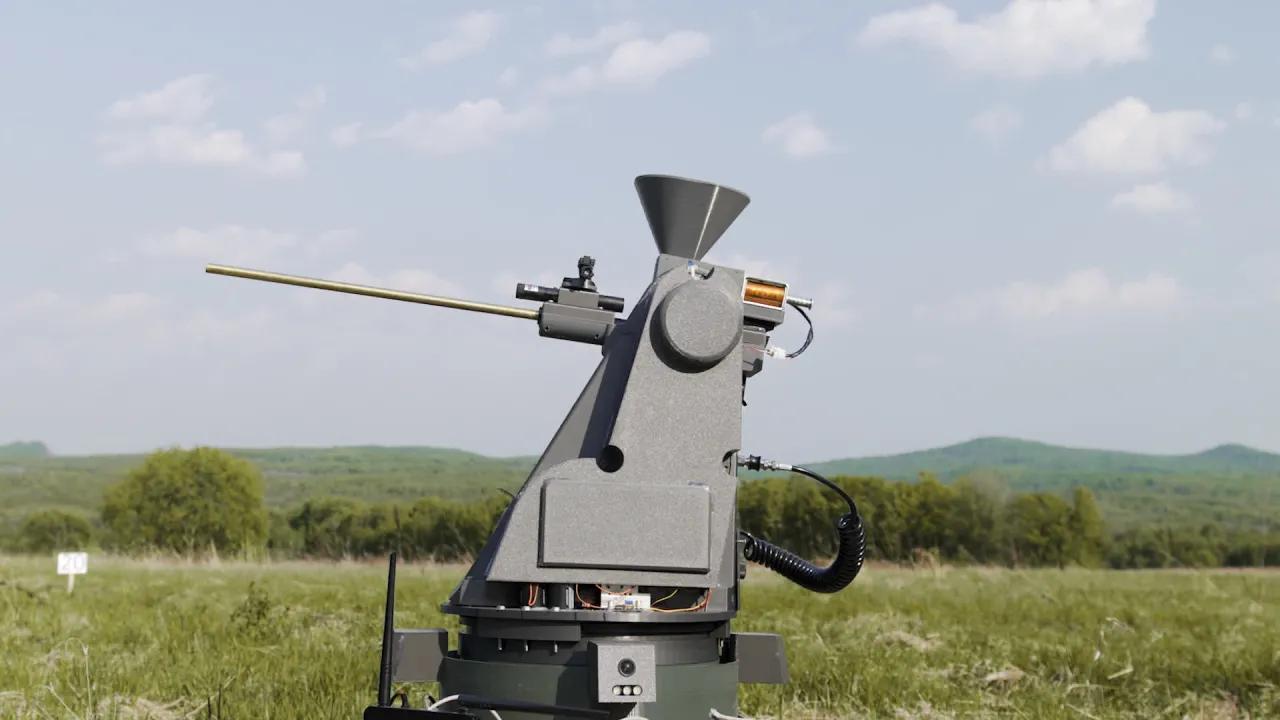
Their compact size and moderate weight allow the launch modules to be mounted on the roofs of tank turrets, infantry fighting vehicles, or defensive bunkers. The system is fully autonomous and requires no operator intervention, which reduces the burden on the combat vehicle’s crew at critical moments during battle. The pneumatic reloading system allows the system to return to combat readiness in just a few seconds after repelling a previous attack.
Tactical and Technical Specifications of the “Kupol-25” Interception System
- The guaranteed detection range for small drones is 150 meters.
- The effective engagement range for high-speed aerial targets is 25 meters.
- The total response time of the automatic system, from detection to firing, is 0.12 seconds.
- The working pressure in composite gas cylinders is 350 atmospheres.
- The rate of fire of the multi-barrel launch module reaches 4,000 rounds per minute.
- The initial velocity of the projectiles is 280 meters per second.
- The total weight of the launcher, excluding ammunition, is 45 kilograms.
- The magazine capacity of a single launch module is 12 rounds.
- The automatic reload time between bursts is 0.8 seconds.
- The horizontal swivel angle of the rotating platform is 360 degrees.
- The vertical elevation angle range is from minus 10 to plus 85 degrees.
- The electrical power consumption of the onboard electrical system is 120 watts.
- The type of projectiles used consists of tungsten pellets with a diameter of 4 millimeters.
- One warhead weighs 350 grams.
Sources:
https://topwar.ru/283513-kupol-25-pnevmatika-nejroset-i-fanernyj-poddon-protiv-fpv-dronov.html