Polikarpov’s Last Fighter. What If the USSR Had Purchased the American Allison Engine and Developed the High-Altitude I-165?

The history of Soviet aviation is full of promising aircraft that never had the opportunity to realize their full potential. One of the most famous examples was the I-200 high-altitude fighter, developed by Nikolai Polikarpov’s design bureau but subsequently transferred to the team led by Mikoyan and Gurevich. This aircraft became the basis for the famous MiG-1 and MiG-3 fighters. But what if events had taken a different turn in the autumn of 1939? What if Polikarpov had retained his project, while the Soviet Union had purchased a license from the United States to manufacture the promising Allison V-1710 engine?
At first glance, these two points of divergence seem completely unrelated. Yet their combination could have led to the emergence of an entirely new Soviet fighter, designated the I-165. Moreover, unlike many fantastic alternative-history projects, creating such an aircraft would not have required inventing any unknown technologies. It would have been enough to make somewhat different use of existing designs and industrial capabilities.
The 1939 Point of Divergence: Polikarpov Keeps His Fighter
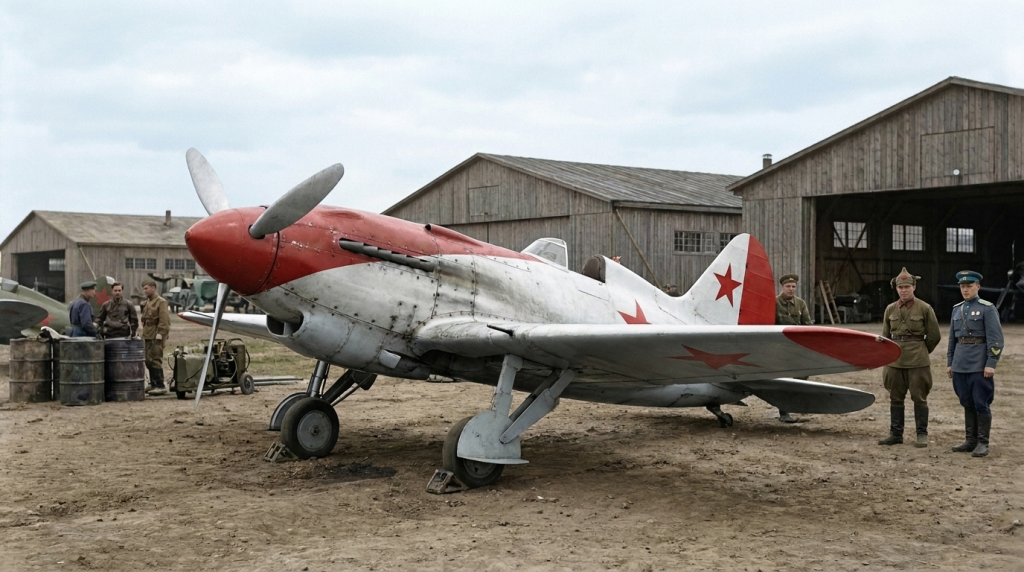
In actual history, work on the I-200 began at Polikarpov’s design bureau in 1939. The aircraft was conceived as a high-speed, high-altitude fighter powered by the AM-37 engine. However, in the autumn of that year, while Nikolai Polikarpov was on a business trip to Germany, part of his design team, together with the project, was transferred to the newly established design bureau headed by Artyom Mikoyan. As a result, the I-200 became the MiG-1 and subsequently the MiG-3, while Polikarpov himself lost one of the most promising areas of his work.
In our alternative history, the Soviet leadership makes a different decision. The I-200 remains with Polikarpov’s design bureau, which receives its own production facilities and the opportunity to systematically improve the design. The establishment of Mikoyan’s new design bureau is not canceled, but it is assigned independent development projects. Thus, the famous “King of Fighters” retains his team and continues working on his promising aircraft.
An American Engine for a Soviet Fighter
The second point of divergence occurs at approximately the same time. In the summer of 1939, a Soviet purchasing commission concludes an agreement with the American company General Motors to acquire a license for manufacturing the Allison V-1710 engine. Along with the technical documentation, the USSR receives several dozen complete engines, components, and production equipment. American specialists help establish manufacturing operations, while Soviet engineers begin adapting the engine to domestic conditions.
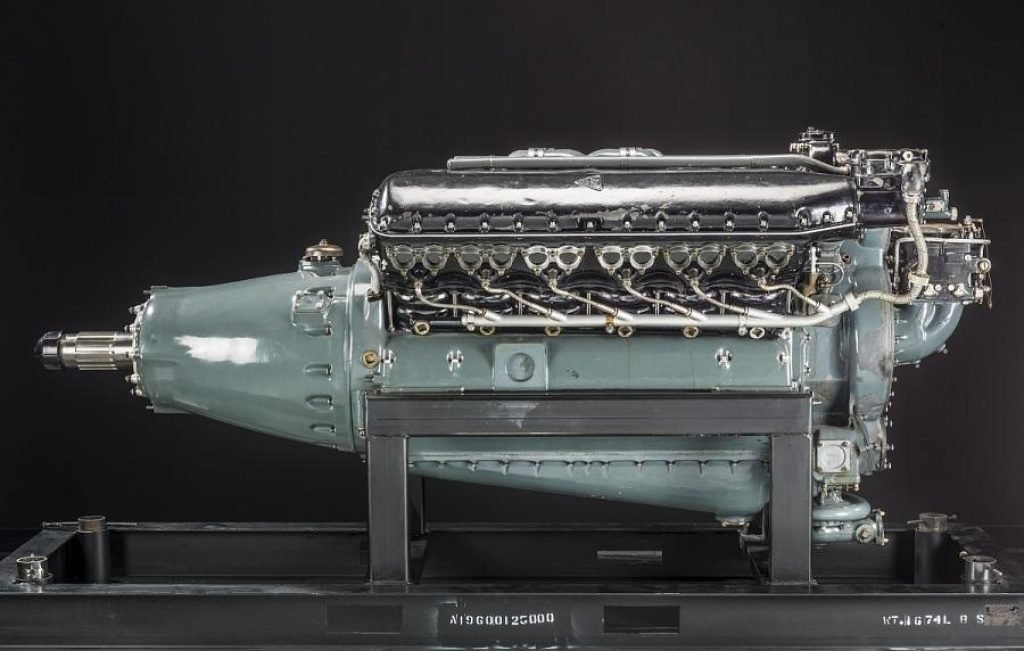
American twelve-cylinder Allison V-1710 engine.
This engine was a twelve-cylinder, liquid-cooled V-type powerplant, initially developing approximately 1,000–1,150 hp. Engines of the Allison family were subsequently installed in American P-38 Lightning, P-39 Airacobra, and P-40 fighters. More importantly, the design had considerable modernization potential: in actual history, later versions reached 1,500–1,600 hp, while experimental variants demonstrated even higher performance.
In our alternative timeline, the Soviet version receives the designation M-171. Assembly using American components begins in 1940, while domestic production is established the following year. A separate production line is created, without interfering with the manufacture of Klimov and Mikulin engines. This is a crucial condition for the entire alternative scenario, since otherwise the new engine would inevitably compete for manufacturing capacity with existing Soviet powerplants.
From the I-200 to the New I-165
Initially, Polikarpov continues working on the I-200 with the AM-35A engine, but in early 1940 he receives an assignment to develop a modification powered by the Allison. The new engine requires changes to the forward fuselage, engine mounting structure, radiator arrangement, and aircraft balance. By the end of the year, the experimental I-200M appears, gradually becoming the main direction of the project’s development.
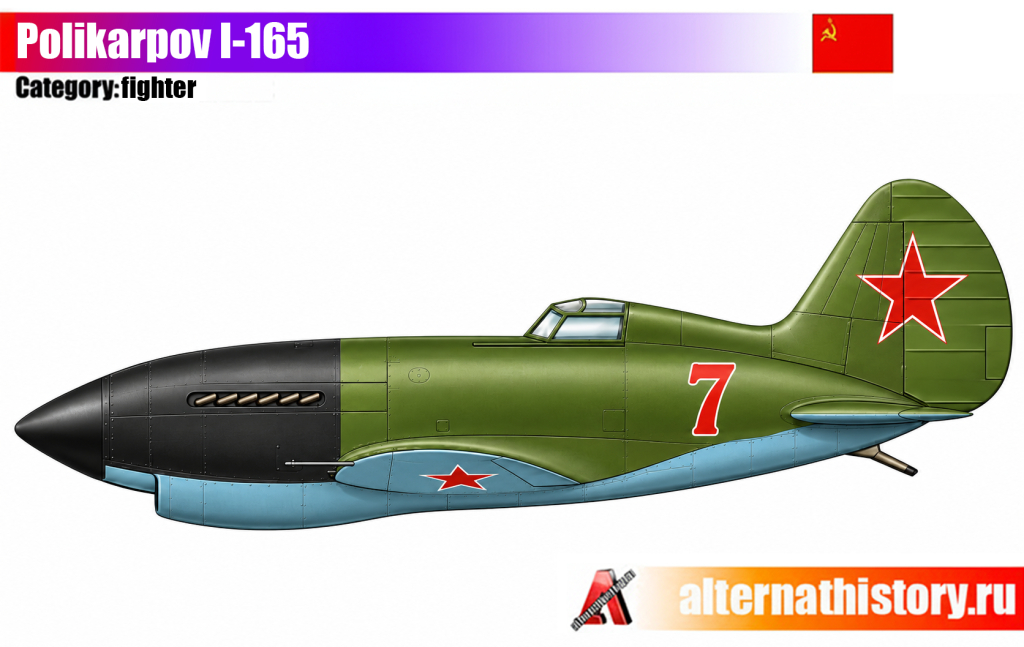
Limited serial production of the new aircraft begins in 1941. However, Polikarpov realizes that the potential of the original I-200 has been almost exhausted. Therefore, a new fighter, the I-165, is developed in parallel, incorporating the most successful design solutions from the I-200 and the promising I-185. The aircraft receives a redesigned fuselage, an improved wing, more powerful armament, and a more comfortable cockpit offering better visibility.
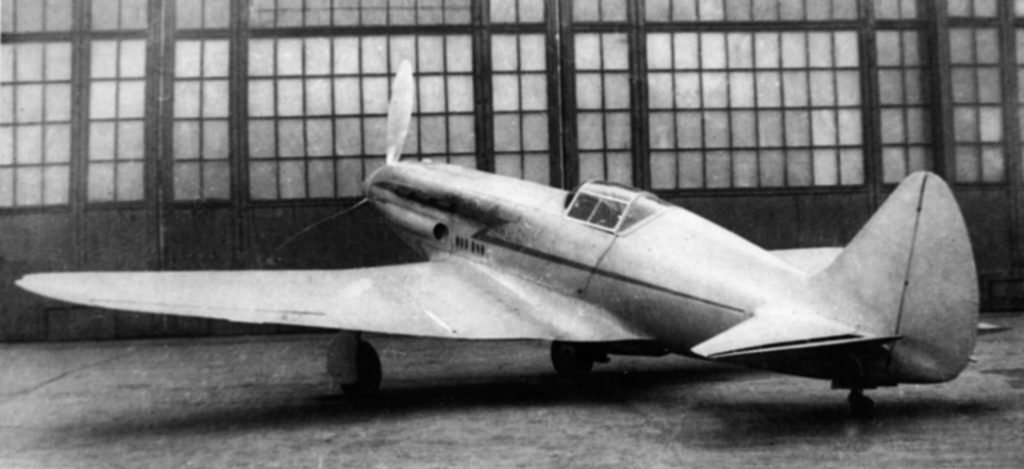
The real I-200, the future MiG-1.
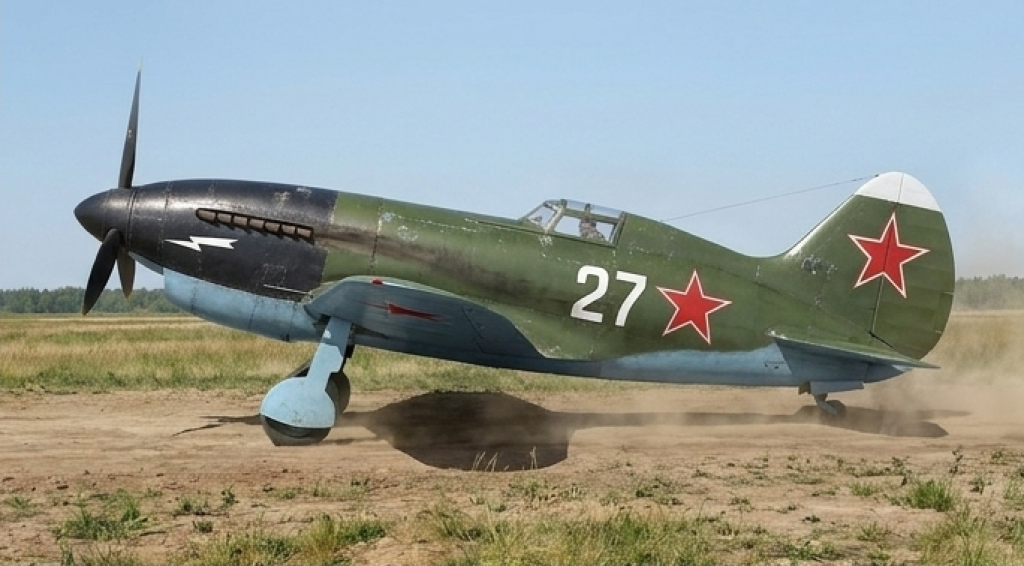
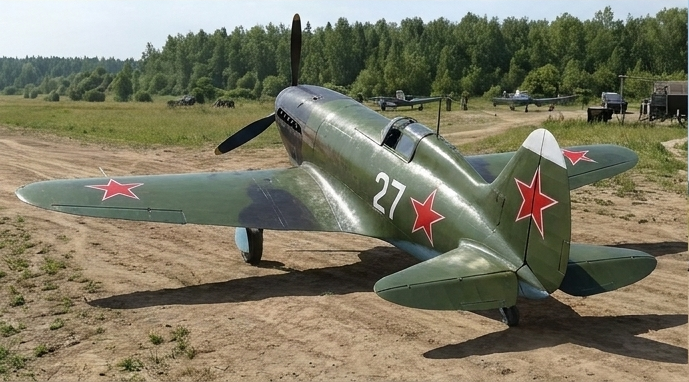
Externally, the I-165 would resemble the real MiG-3, but would feature a shorter, more streamlined nose, a modified radiator arrangement, and a new wing design. Thanks to the more compact engine, the designers would be able to improve cockpit visibility and redistribute the aircraft’s internal space. The primary objective would remain the development of a high-speed fighter capable of operating effectively at both high and medium altitudes.
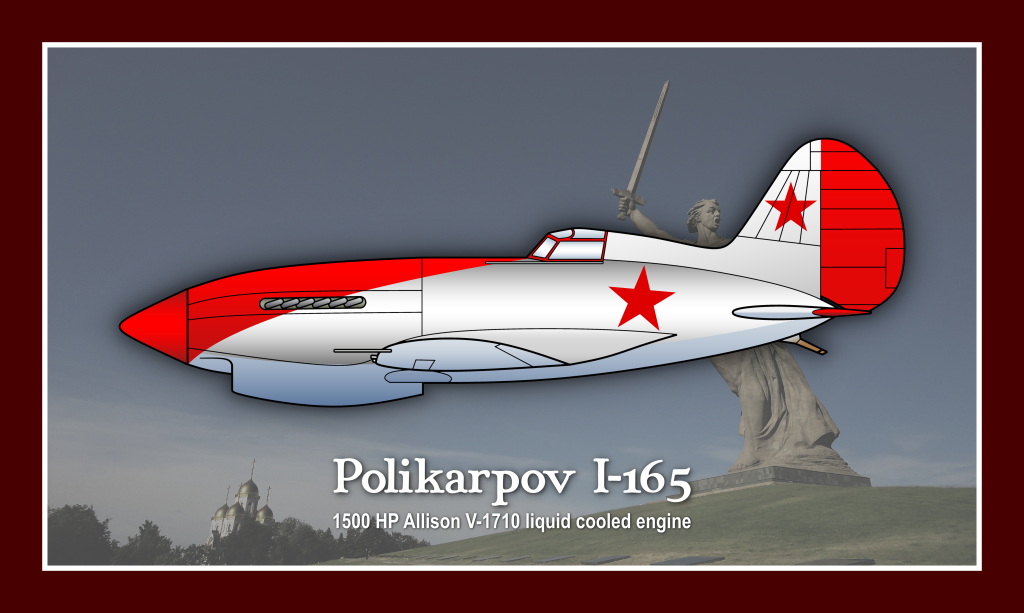
A 1,700-Horsepower Soviet Allison
The most interesting direction in the project’s development would be the improvement of the engine. Soviet engineers gradually increase the M-171’s power output, refine its cooling system, and develop a more efficient supercharger. In 1942, the M-171F modification appears, producing approximately 1,500 hp, followed the next year by the M-171FN, capable of developing up to 1,700 hp in short-duration combat power mode. To maintain power at high altitudes, the engine is equipped with a two-stage mechanically driven supercharger and an intercooler.
Naturally, such modernization would require considerable effort. The USSR would have to master the production of more advanced superchargers, use high-octane aviation fuel, and develop high-quality heat-resistant materials. However, in principle, this level of engine tuning would not exceed the Allison’s inherent capabilities. Moreover, American technical assistance under Lend-Lease could significantly simplify the solution of these problems.
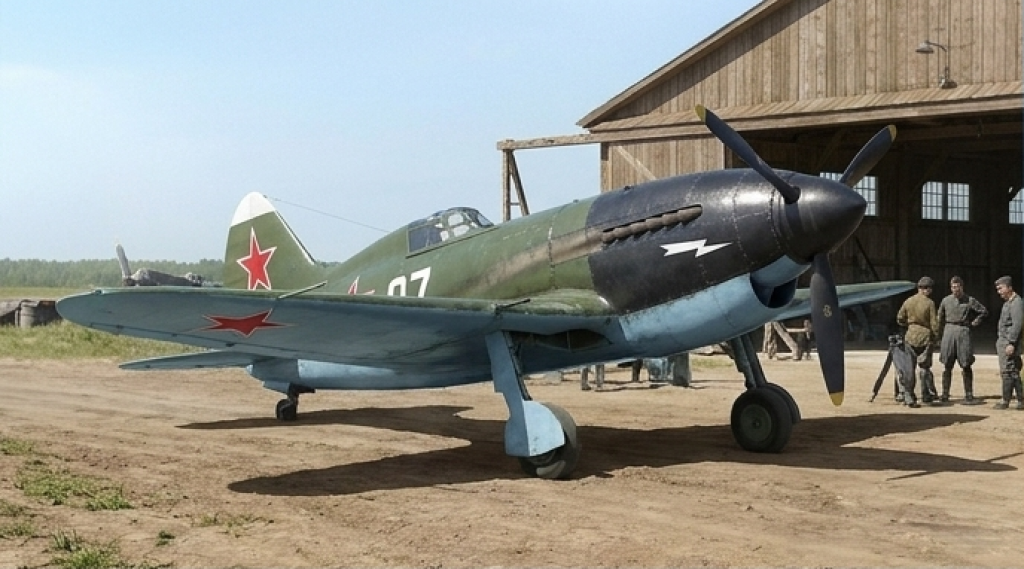
What Would the I-165FN Have Been Like?
By 1943, the most advanced modification of the new aircraft, the I-165FN, enters service. It is a single-engine fighter of conventional configuration, featuring a low-mounted wing, retractable landing gear, and powerful cannon-and-machine-gun armament. Despite its relatively low weight, the aircraft demonstrates excellent speed characteristics and a fairly high rate of climb.
Estimated technical specifications of the I-165FN Model 1943:
-
Crew: 1 pilot.
-
Engine: M-171FN, twelve-cylinder, liquid-cooled.
-
Maximum power: 1,700 hp in short-duration combat mode.
-
Takeoff weight: 3,200–3,500 kg.
-
Maximum speed: approximately 640–670 km/h.
-
Service ceiling: 11,000–12,000 m.
-
Flight range: 800–1,000 km.
-
Armament: two 20 mm ShVAK cannons and two 12.7 mm UBS machine guns.
Naturally, these figures are hypothetical estimates for an alternative-history scenario. Actual performance would depend on aerodynamics, aircraft weight, and the engine’s ability to maintain power at altitude. Nevertheless, such a fighter could have been competitive with the best combat aircraft of 1943.
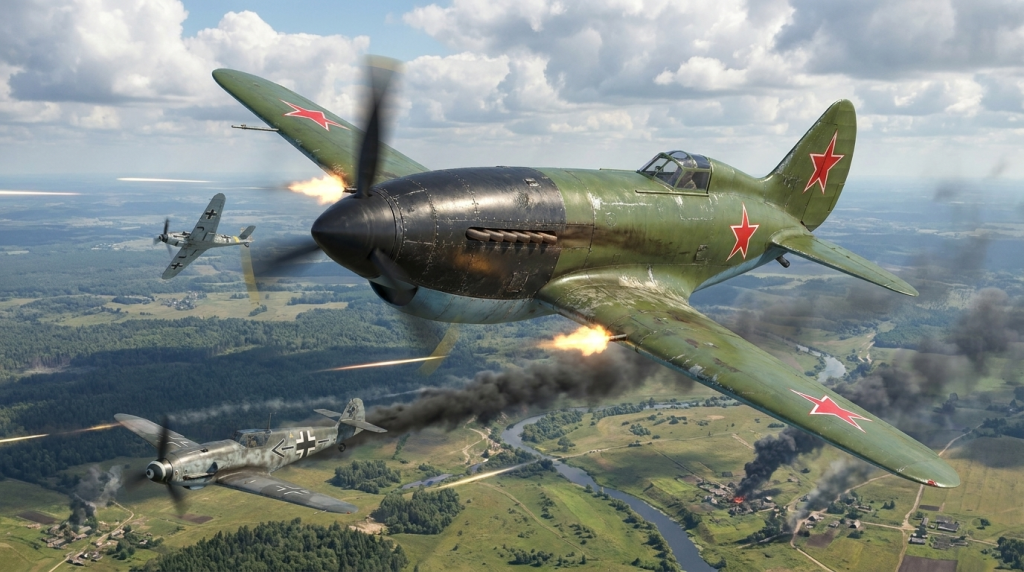
I-165FN in flight.
Could the I-165 Have Changed the Course of the Air War?
The new fighter’s main advantage would lie in preserving an independent line of liquid-cooled engine development. In actual history, MiG-3 production ended in late 1941, partly because it became necessary to concentrate production on AM-38 engines for the Il-2 ground-attack aircraft. In our alternative timeline, the I-165 would not depend on that decision, since it would be powered by an engine from an entirely different family.
However, the new aircraft would hardly have been able to completely replace the Yak-9 or La-5. Soviet industry had already mastered their mass production, while switching to a fundamentally different engine would require additional resources. A more realistic possibility would be limited production of the I-165 for air-defense units and selected fighter regiments. By the end of the war, Soviet aviation could have received approximately 1,200–1,500 aircraft of various modifications, provided that engine production was successfully established and the manufacturing base was preserved.
Conclusion
Thus, two relatively minor points of divergence in 1939 could have led to some very interesting consequences. Nikolai Polikarpov would have retained the I-200 project, Soviet industry would have mastered the American Allison engine, and their subsequent development would have culminated in the creation of a new high-altitude fighter, the I-165.
Of course, such a scenario would require several favorable circumstances, above all the successful conclusion of a licensing agreement with the United States and the rapid establishment of production of a complex engine. Nevertheless, none of these conditions would require the emergence of any fantastic technologies.
As a result, the I-165 could well have become the last major achievement of Nikolai Polikarpov, who died in July 1944. Soviet fighter aviation, meanwhile, would have gained another promising family of combat aircraft, whose history began with an American engine and a project that its great designer had never lost.
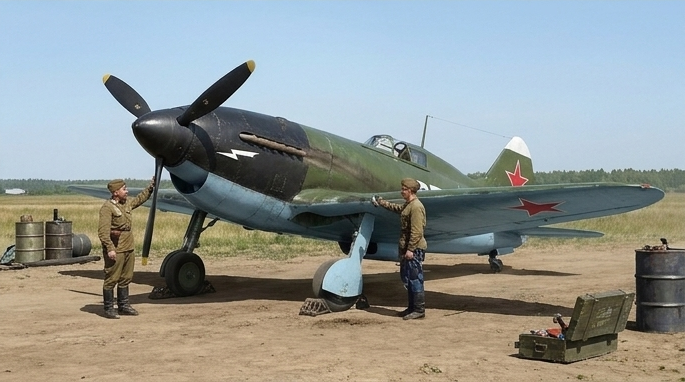
Source: Reddit — ImaginaryAviation: Let’s Put Some Surplus P-40 Engines to Use