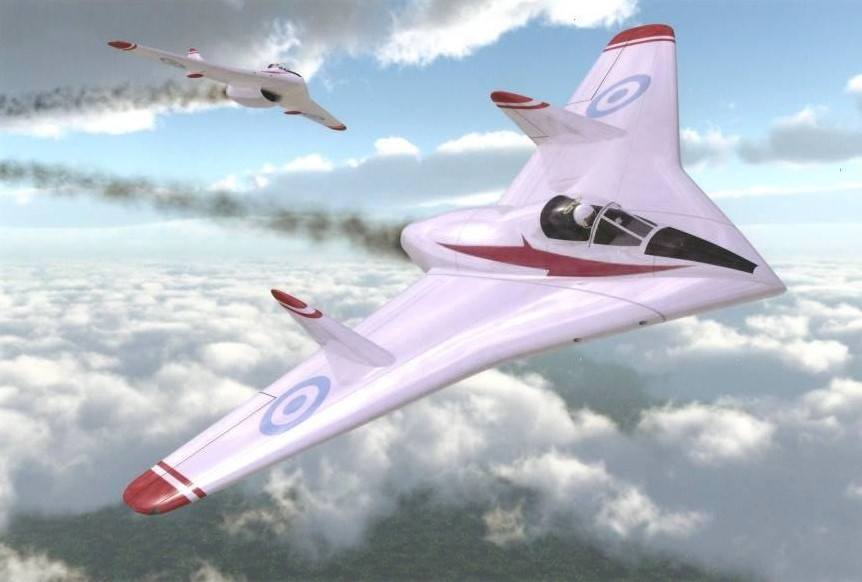
An article from the magazine *Flugzeug Classic* (July 2004 issue) that I think will be of interest to readers and colleagues.
Editor’s Foreword: The brothers Walter and Reimar Horten became widely known for their “flying wing” aircraft. However, their avant-garde fighter designs featuring triangular wings—originally developed in Germany and later primarily in Argentina—are virtually unknown. Helmut Walter discusses these little-known projects.
In addition to designing “flying wing” aircraft, Reimar Horten also devoted himself, starting in 1944, to the development of a jet fighter with a delta wing. This was likely prompted by the growing success of the earlier “flying wing” jet fighter, the Ho IX (Go 229), which was equipped with two Jumo 004 engines.
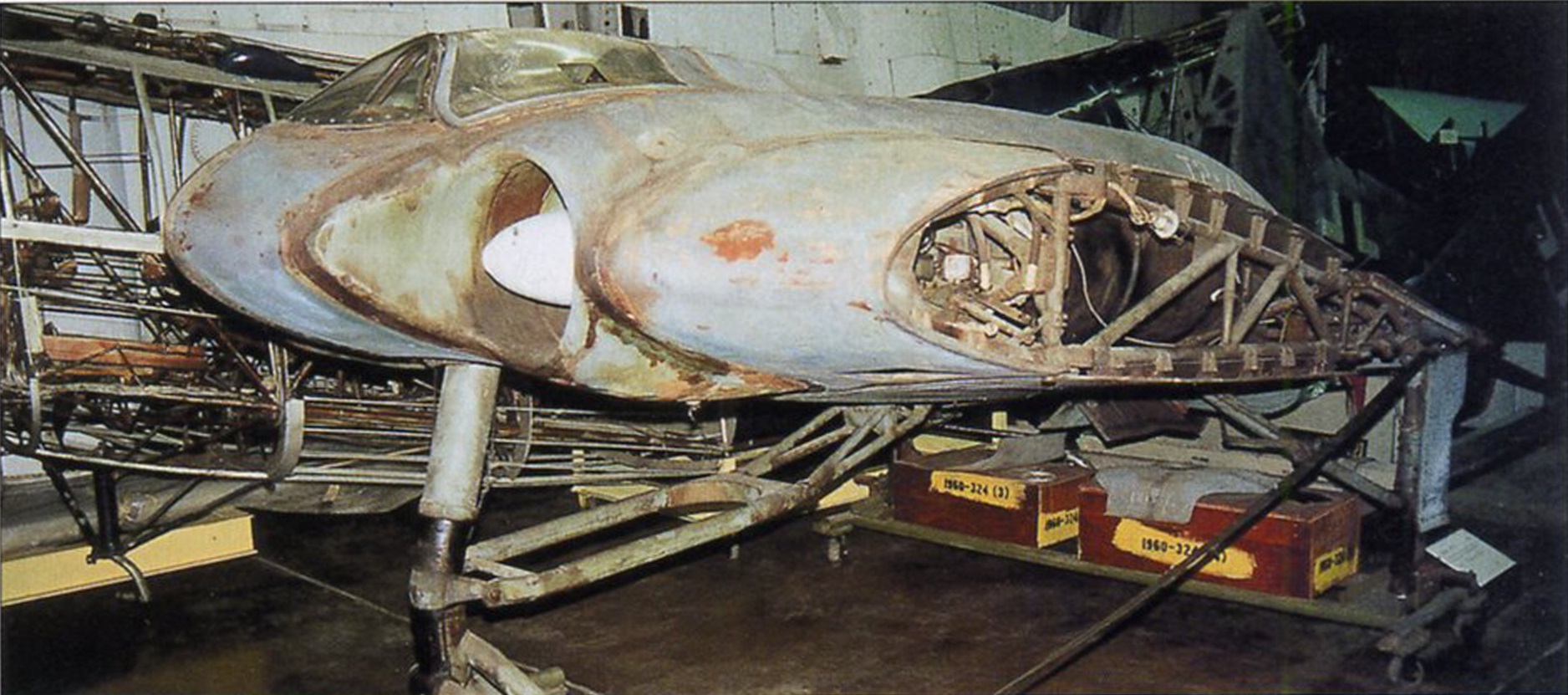
the revolutionary Ho IX V3 (Go 229) jet fighter, which is currently stored in disassembled form in Silver Hill, Washington, D.C.
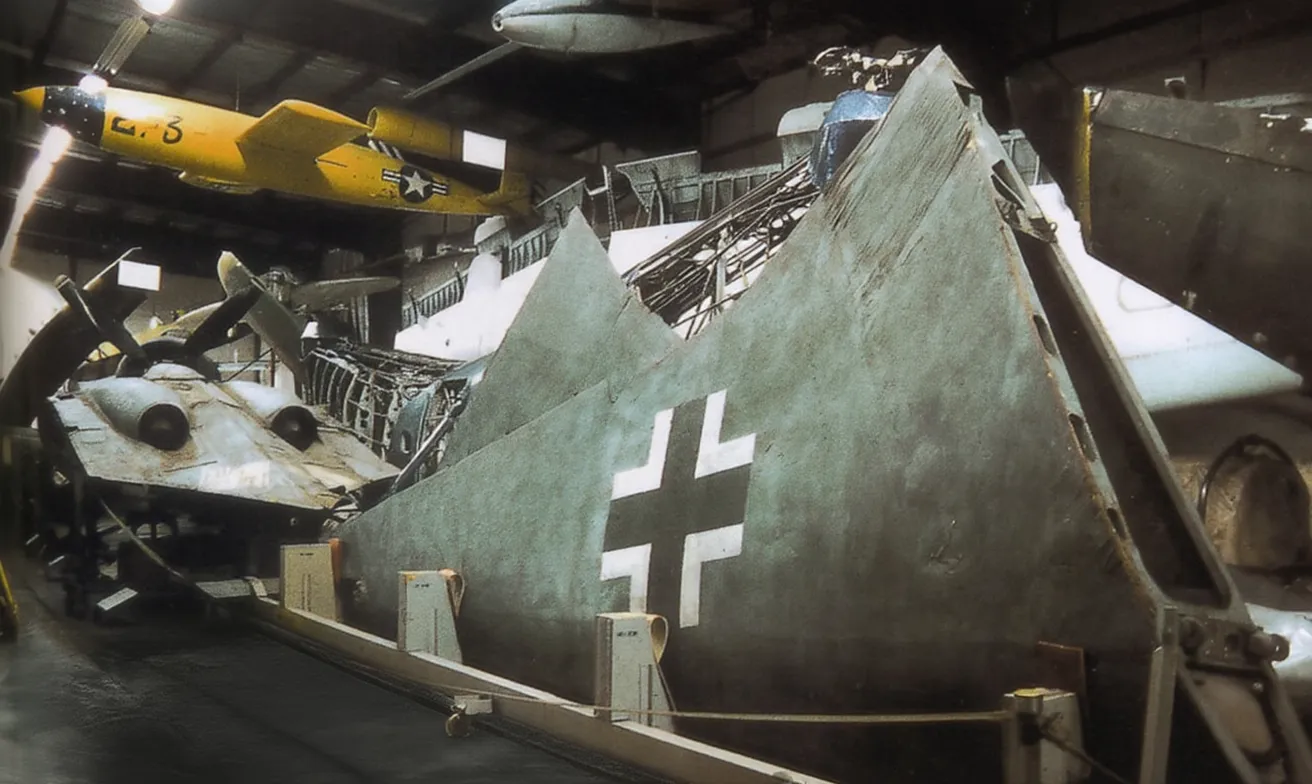
the revolutionary Ho IX V3 (Go 229) jet fighter, which is currently stored in disassembled form in Silver Hill, Washington, D.C.
A series of projects for jet fighter “flying wings” began in Germany and was not completed until the early 1960s in Argentina. Beginning with the very bold Horten Ho X (1) delta-wing fighter design and the subsequent “People’s Fighter” project Ho X (2)—which was submitted to the Reich Ministry of Aviation (Reichs-Luftfahrtministerium, RLM)—Reimar Horten continued his work on these designs in Argentina after World War II. In this South American country, Reimar Horten developed a jet fighter design as part of a competition in which Kurt Tank was his rival. The competition was won by the successor to the Focke-Wulf Ta 183 fighter project, designated the Pulqui II, while Horten devoted himself to a futuristic new design—the I.A.37.
Reimar Horten’s efforts led to the creation of the I.A.48 jet fighter prototype. However, following the coup d’état that ousted Juan Perón from the presidency of Argentina, funding for the country’s fledgling aviation industry became increasingly scarce, and work on the project ceased in the early 1960s. The designs for aircraft with delta wings developed by Reimar Horten are presented in chronological order.
Ho X Supersonic Fighter (1)
The first project with this designation was a “flying wing” aircraft with a sweep angle of 70°. By employing this extreme configuration, the Horten brothers sought to achieve supersonic speeds. A maximum speed of Mach 1.4 was to be achieved using a Heinkel He S 011 turbojet engine. To minimize the anticipated problems with vibration and flight stability when breaking the sound barrier, the plan was to achieve this in a vertical dive. For 1944, these were, of course, very bold ideas. Since supersonic flight was a completely new field of knowledge, the Horten brothers naturally wanted to first gain fundamental experience regarding the flight characteristics of a highly swept delta wing.
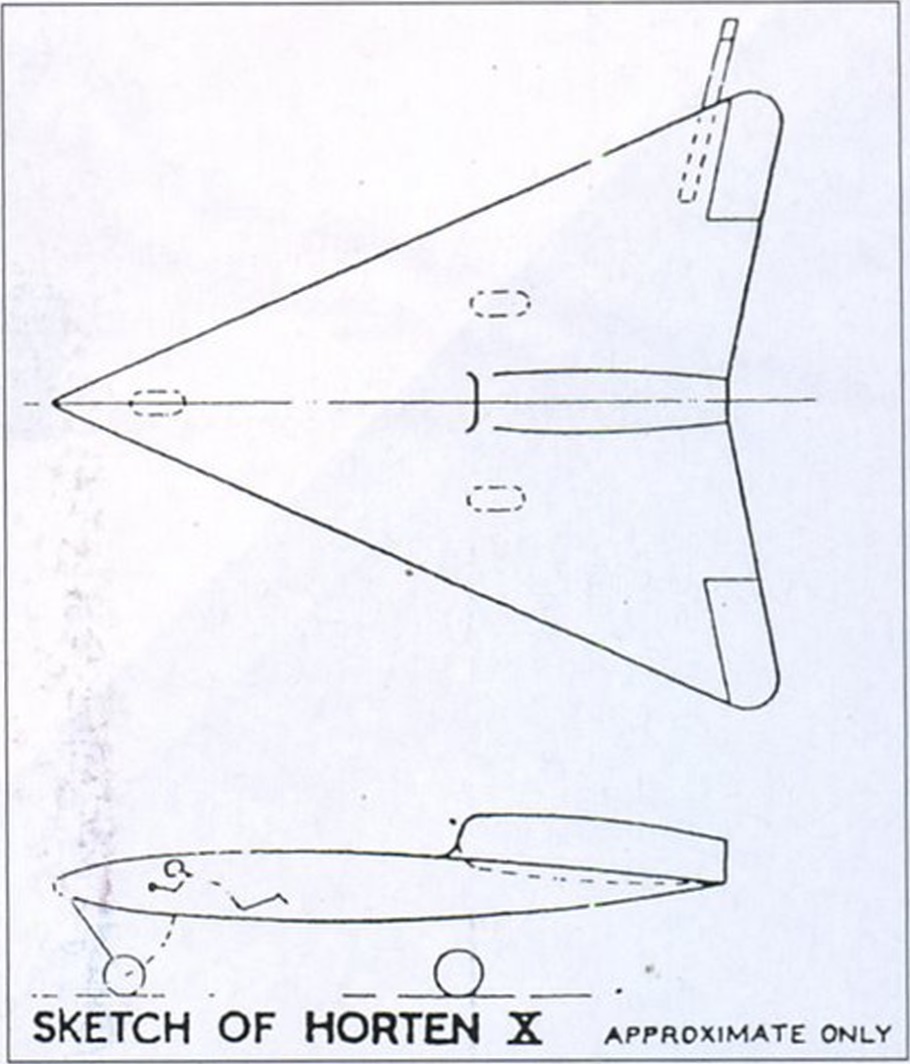
The Horten Ho X (1), with a wing sweep of 70°, was designed to reach a speed of 1.4 Mach
To this end, preliminary tests of various glider models were first conducted in Homberg, which—as was the case with the Ho XIII a—subsequently led to research on a piloted glider. The Ho XIII a was a flying-wing aircraft with highly swept wing spars and a pilot’s cockpit mounted beneath the wing, with the pilot seated. Ho X (1) was a flying-wing aircraft with a wingspan of 7.2 meters and a pilot seated in a reclining position. Unfortunately, no parts, components, documents, or photographs have survived from this glider, which was nearly completed in Bad Hersfeld in 1945.
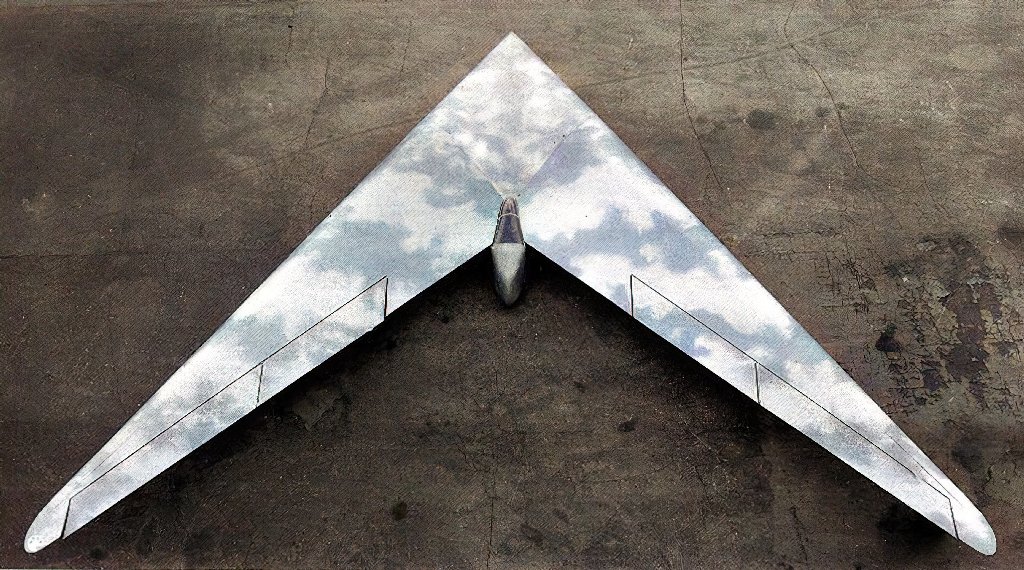
Ho XIII a, with wing cantilevers exhibiting very high sweep
Only a sketch, based on witness testimony from a British interrogation report from 1945–46, shows the approximate appearance of the Ho X (1). Distinctive features of the design included a tricycle landing gear, a jet engine mounted at the rear of the fuselage, and a reclining pilot’s position—a configuration already familiar from the high-performance Ho IV and Ho VI airframes. However, the course of hostilities prevented further development of this project.
“People’s Fighter” Ho X (2)
In parallel with the development of the Ho X (1) project, the Horten brothers submitted a design under the same name to the “People’s Fighter” (Volksjäger) competition. This design largely adopted the characteristics of a pure delta-wing configuration and adapted them into a hybrid of delta and swept wings. The Ho X (2) design was also planned to be equipped with a He S 011 jet engine; the engine was to be mounted at the rear of the fuselage on its upper surface, with the pilot in a reclining position. The futuristic appearance of this design is clearly visible in the isometric projection drawing created by design engineer Hartung. The Ho X (2) was intended to serve both as a fighter and as a light bomber with a bomb load of up to 1,000 kg. Its mixed construction—with a steel-tube frame for the fuselage and wooden wing spars—reflected the material constraints Germany faced in 1945. Each of the retractable main landing gear struts was equipped with two wheels arranged in tandem. The simplified nose landing gear consisted of a retractable skid. The Ho X (2)’s armament was to consist of either two MK108 cannons with 300 rounds per barrel or four such cannons with 120 rounds per barrel.
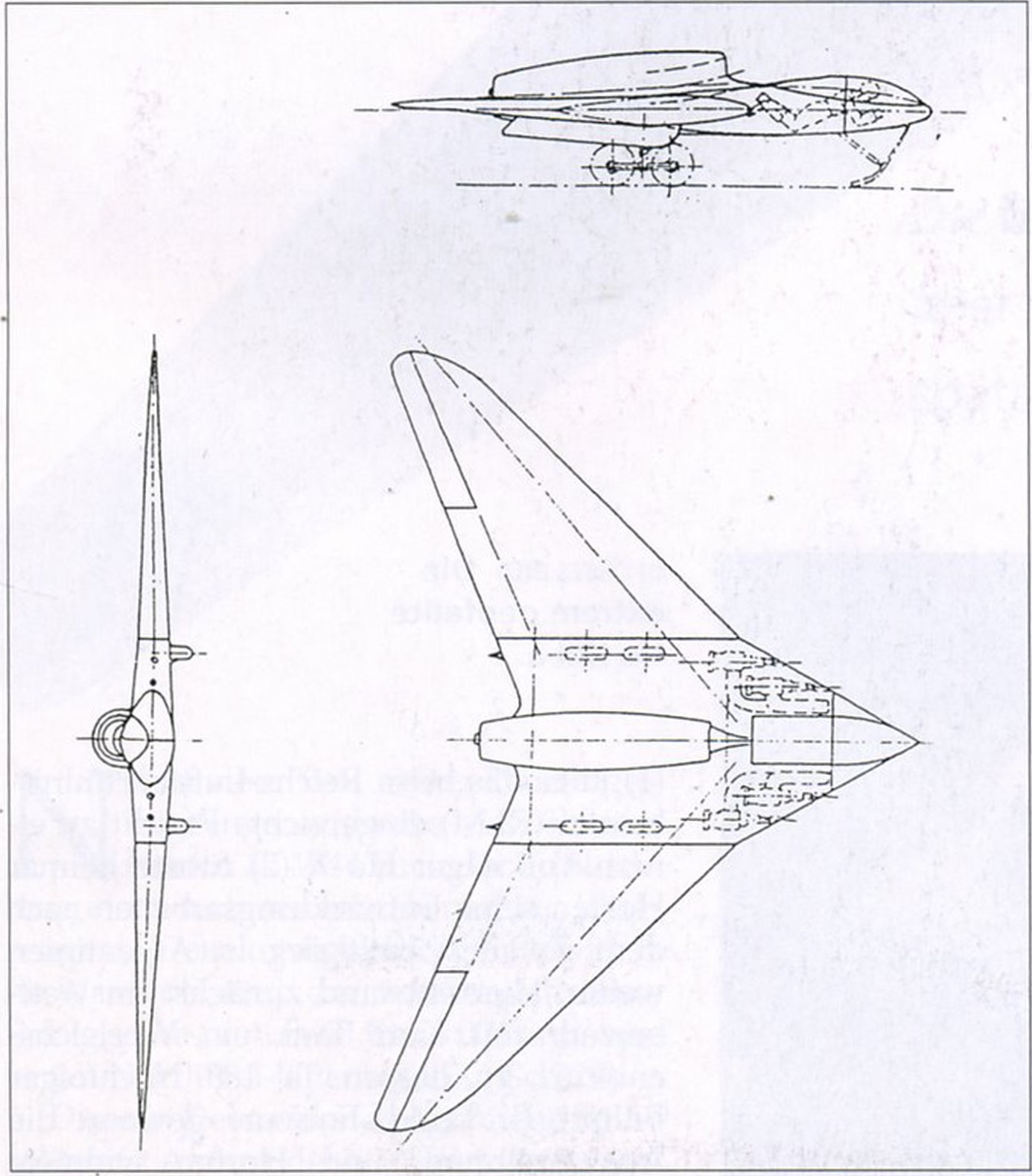
To participate in the competition to design the “People’s Fighter,” Horten developed the Horten die Ho X (2) project, in which the pilot was positioned in a lying-down position
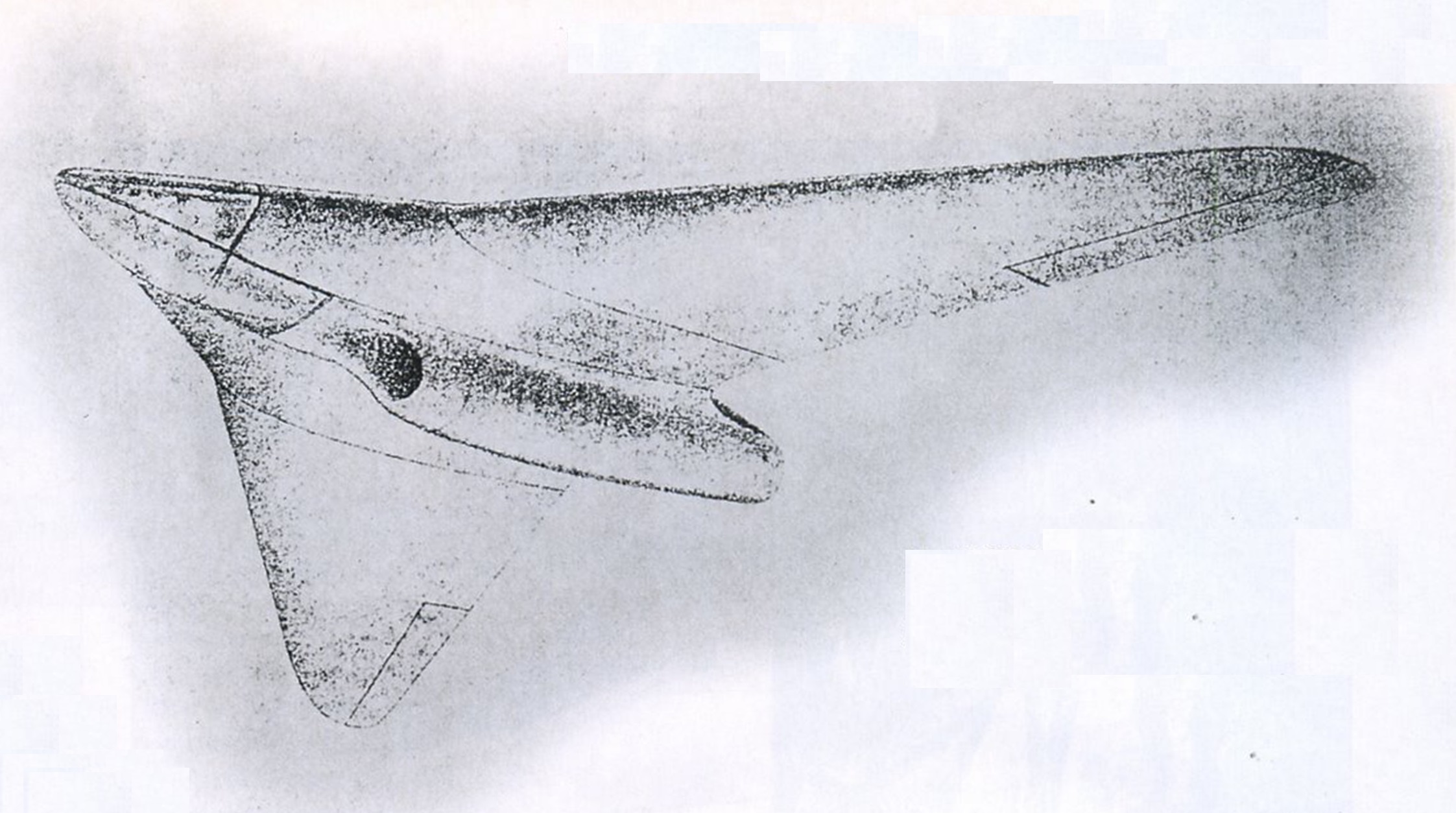
A design sketch of the “People’s Fighter” Ho X (2), drawn by design engineer Hartung
The Ho X (2) was the last project officially developed during World War II under the leadership of Reimar Horten.
Many other projects attributed to Horton—especially during the “turbulent 1950s,” when anyone could publish anything they wanted without encountering any objections—are likely more a product of the imagination.
“Caza sin Cola”: A Competitor to the Pulqui II Project
After the end of World War II, Reimar Horten continued to design aircraft in Argentina. In addition to his highly successful “flying wing” aircraft, Horten developed a design in 1949 that competed with Kurt Tank’s Pulqui II fighter project. Tank’s design won the competition, and five Pulqui IIs were built.
The project with the fanciful name “Caza sin Cola” (tail-less fighter) was based on the Horten Ho X (2). Unlike the Ho X (2), in this design the engine air intake was located under the wing, and the pilot sat in a seated position in the cockpit. Furthermore, the aircraft no longer had to be built from scarce materials, as had been the case in 1945, and featured a conventional all-metal construction.
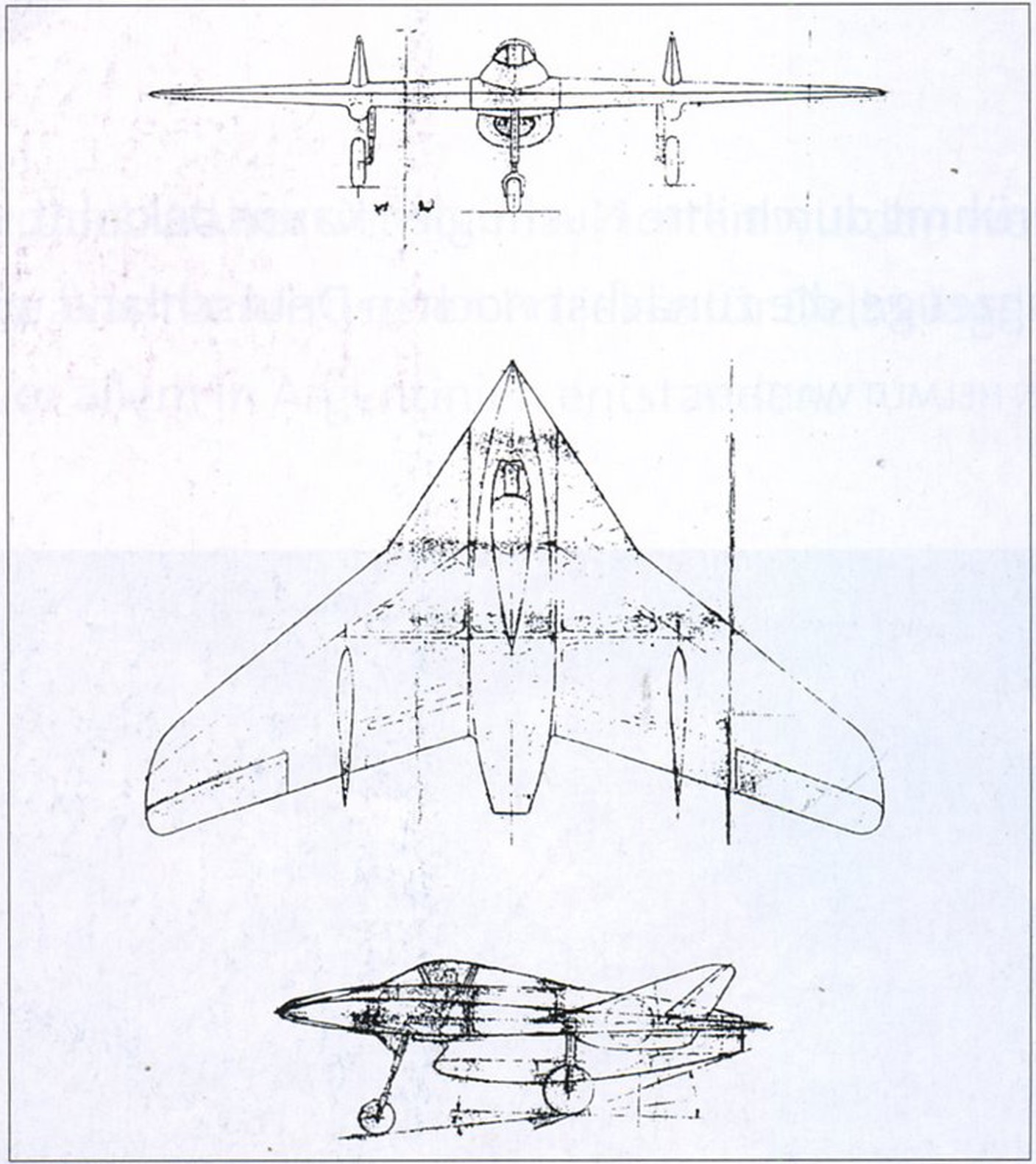
The “Caza sin Cola” project, developed in Argentina as a competitor to Professor Kurt Tank’s “Pulqui II,” was based on the Ho X (2) design
The fighter designed by Reimar Horten was to be powered by the same Rolls-Royce Derwent V engine as Kurt Tank’s Pulquí II, but it had better estimated performance characteristics. Compared to its competitor, Reimar Hortens’ design had a better rate of climb, a higher service ceiling, and was faster, exceeding the competitor’s top speed by 50 km/h. However, as is often the case in the recent history of aviation, Tank’s more traditional design was preferred over the technically innovative “flying wing” design with a triangular wing of variable sweep. As an innovation compared to wartime designs, Horten incorporated into the design of the the “Caza sin Cola” a twin-tail configuration, mounting it on wing struts at the trailing edge (similar to the American carrier-based fighter, the Vought F7U Cutlass)
IA 37 P Interceptor for Argentina
Guided by the concept of a clean triangular wing, Reimar Horten was able to convince the Argentine Air Force leadership to develop a “flying wing” interceptor with a triangular wing.
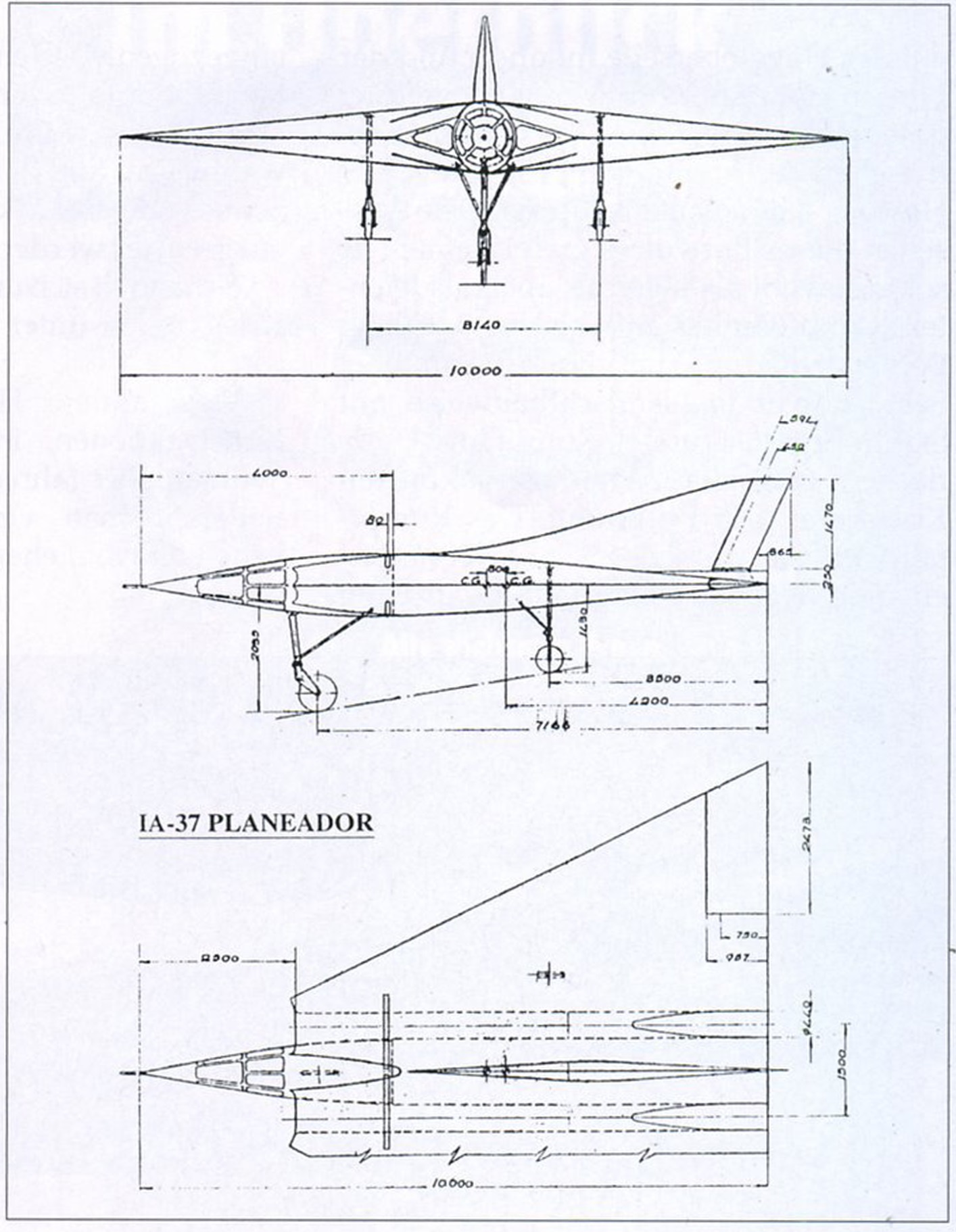
Three-view drawing of the IA 37P project, developed for Argentina for use as an interceptor
Due to the limited resources available, development—as had been the case in Germany—began with glider models. In the absence of a wind tunnel, these gliders were launched onto the lake using a catapult and retrieved from the water to evaluate their flight characteristics.
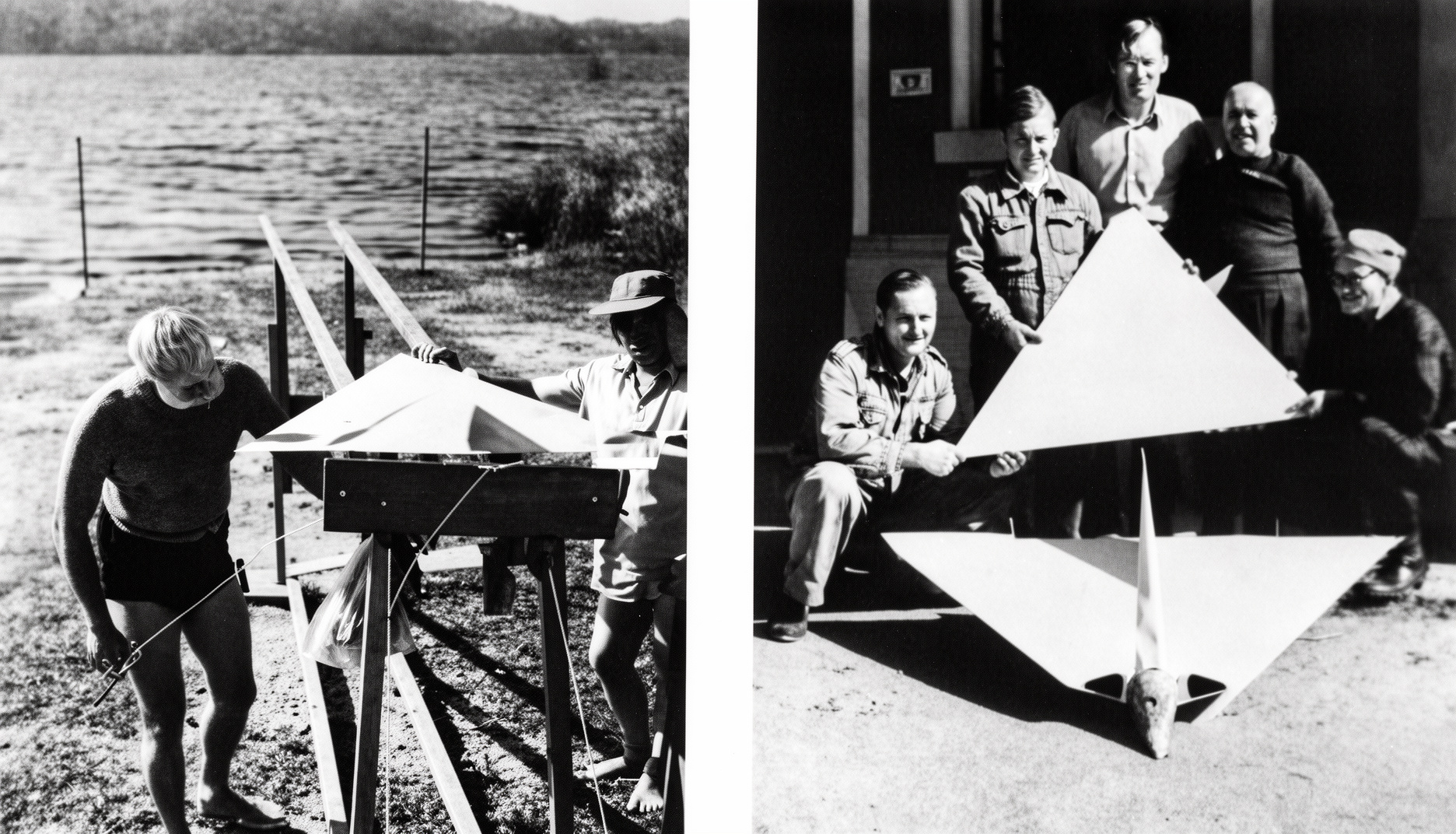
Since there is no wind tunnel in Argentina, simple catapults and scale models were used. Photo processed by lmarena.ai
This research led to the development of a manned glider. This glider, with a delta wing and conventional vertical tail, was exactly 10 meters long and had a wingspan of 10 meters. The pilot was again positioned in a reclining position to minimize the cross-sectional area as much as possible for a later high-speed version. The glider was equipped with a fixed tricycle landing gear with a nose wheel and was used, in particular, to test the flight characteristics and controllability of the triangular wing at low flight speeds. Testing of the glider, constructed entirely of wood, began in 1954. Initially, a Ju 52 was used as the tow plane, but later a more modern DC-3 took over this role. In the version with the pilot in a reclining position, the IA 37 P glider underwent 100 hours of testing. One of the findings from these tests was that, on later production models, the front landing gear leg would need to be lengthened. This meant that during a steep landing approach, the triangular-winged aircraft’s three landing gear legs would all quickly touch down on the runway. Afterward, the height of the front landing gear leg could be reduced to improve visibility during taxiing.
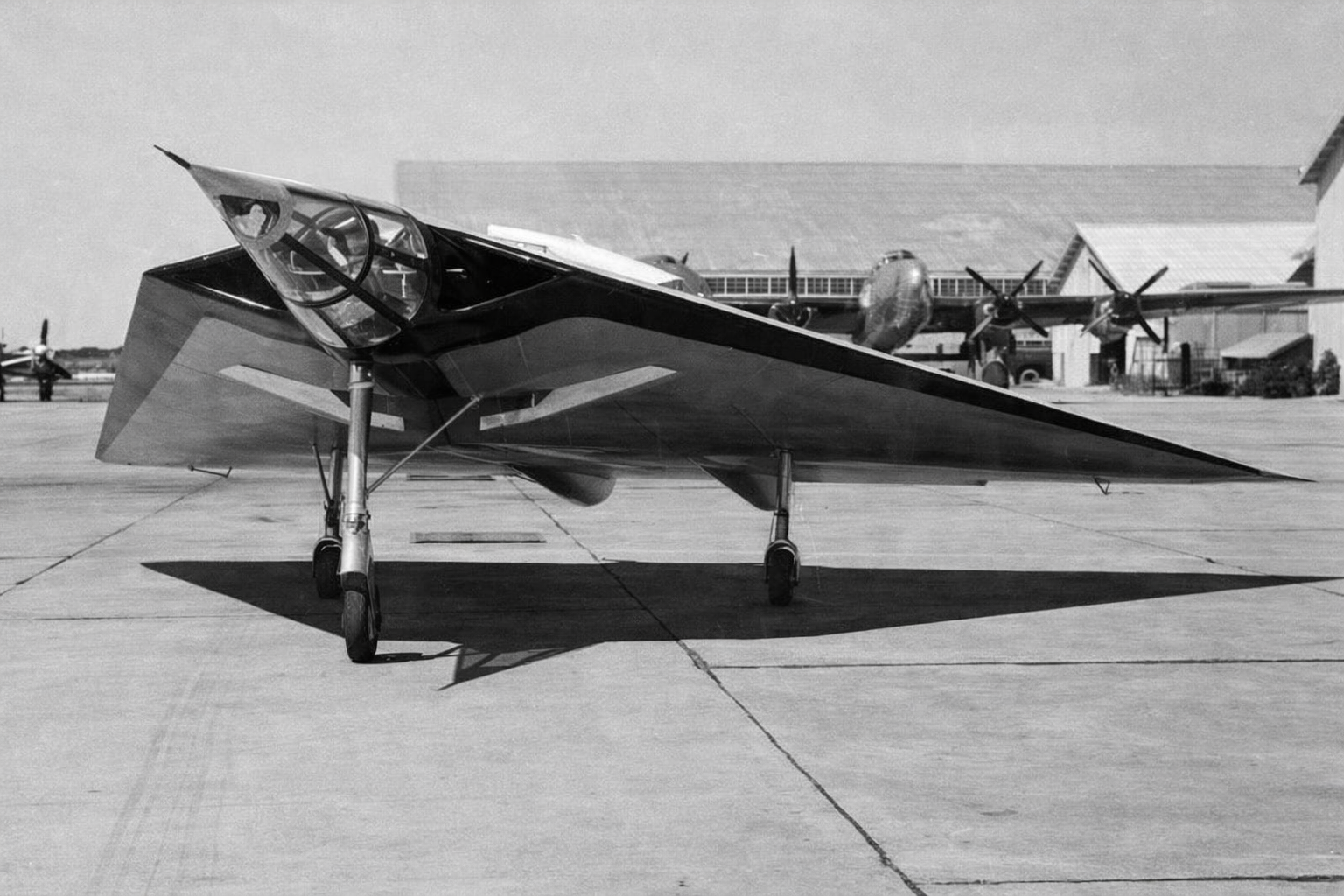
IA 37 P glider, front view. Image processed by lmarena.ai
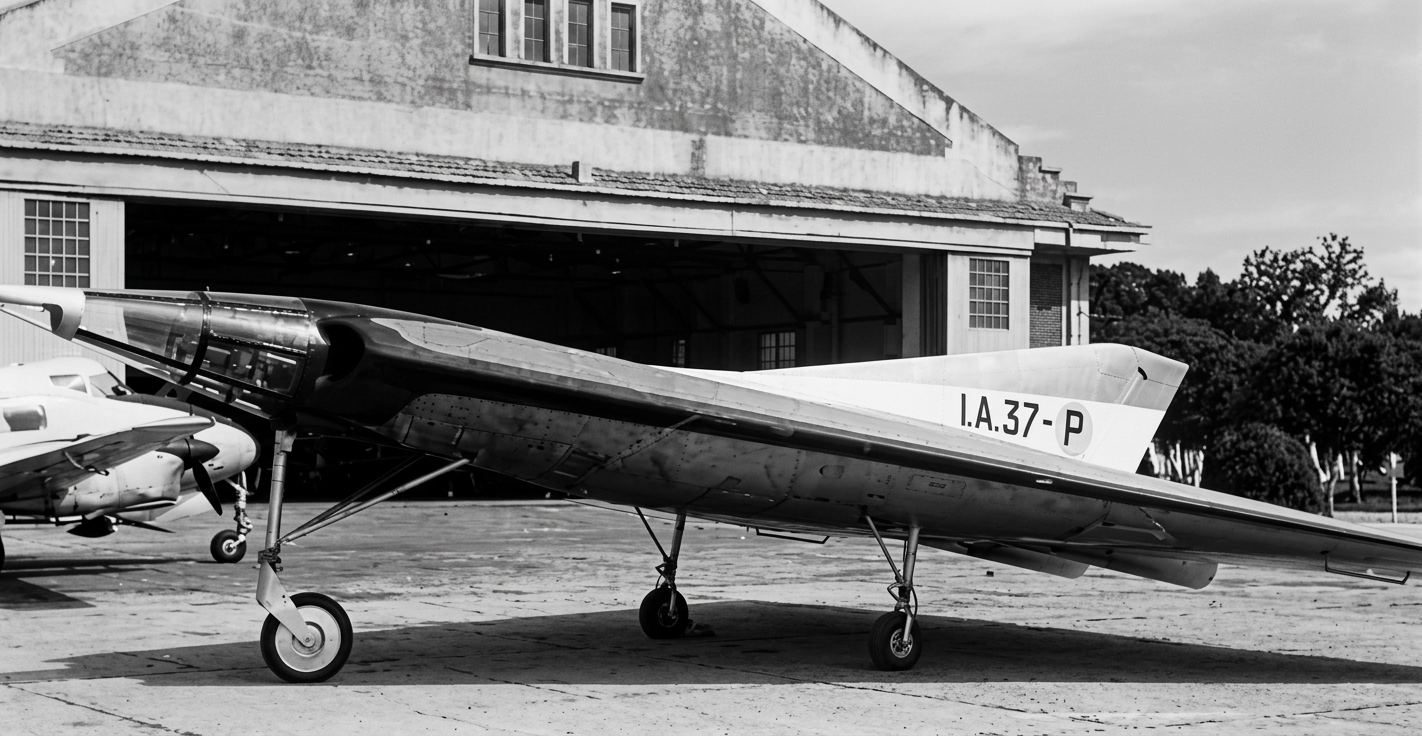
IA 37 P glider, ¾ front view. Image processed by lmarena.ai
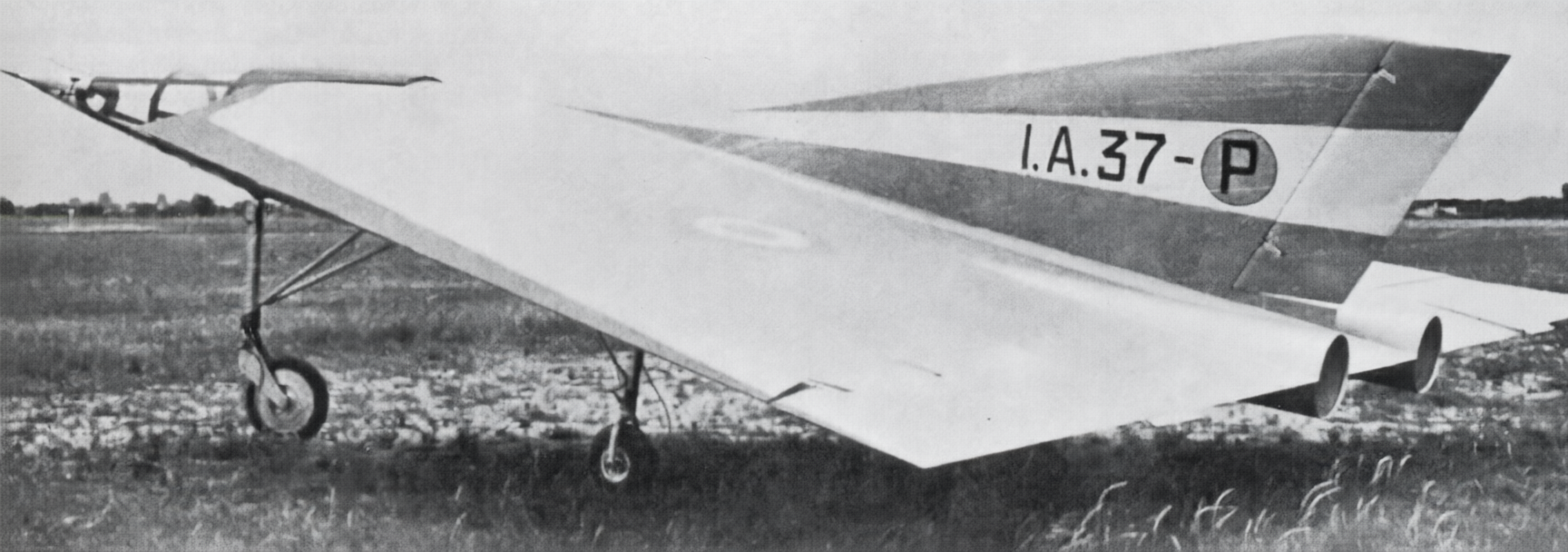
IA 37 P glider, ¾ rear view
Subsequently, the IA 37 P glider was modified so that the pilot could sit in the cockpit. After the modification, the glider underwent another 50 hours of testing.
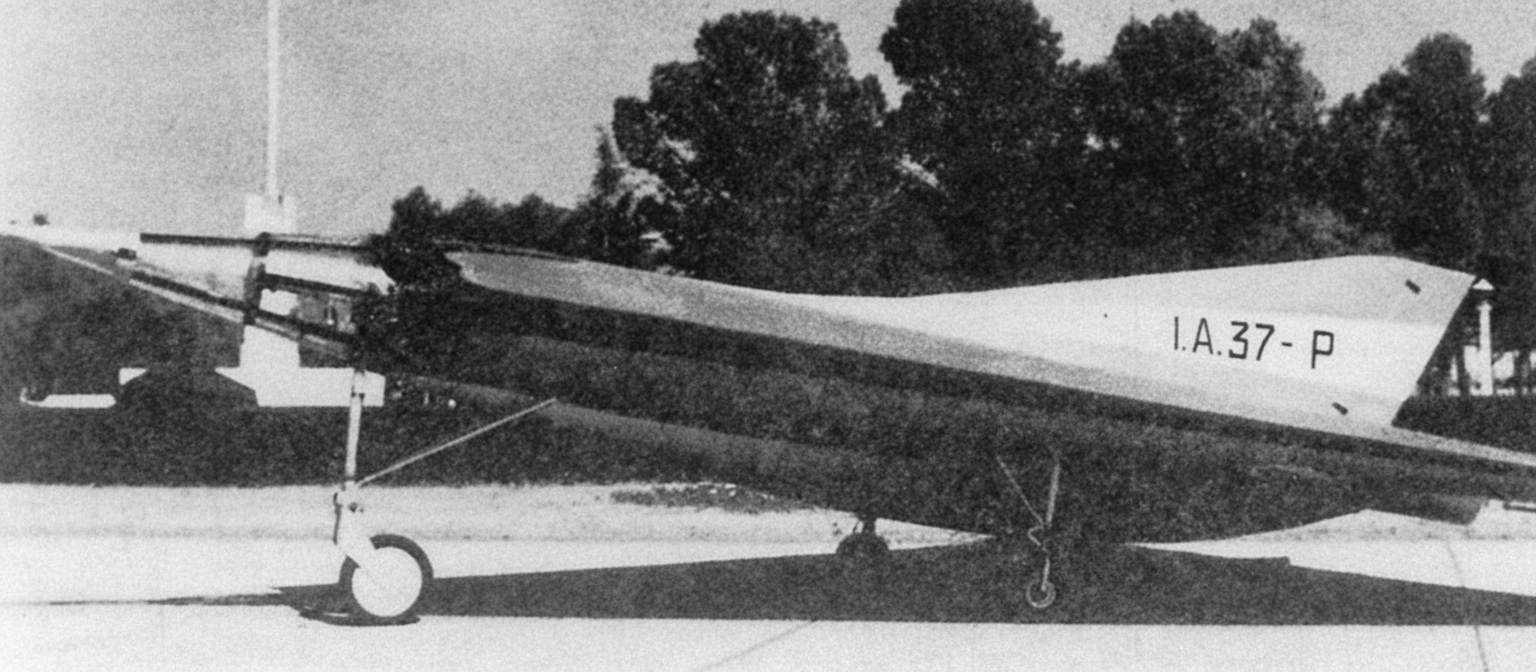
IA 37 P glider with a modified lower fuselage section (an intermediate step toward a fuselage with a conventional pilot seating position)
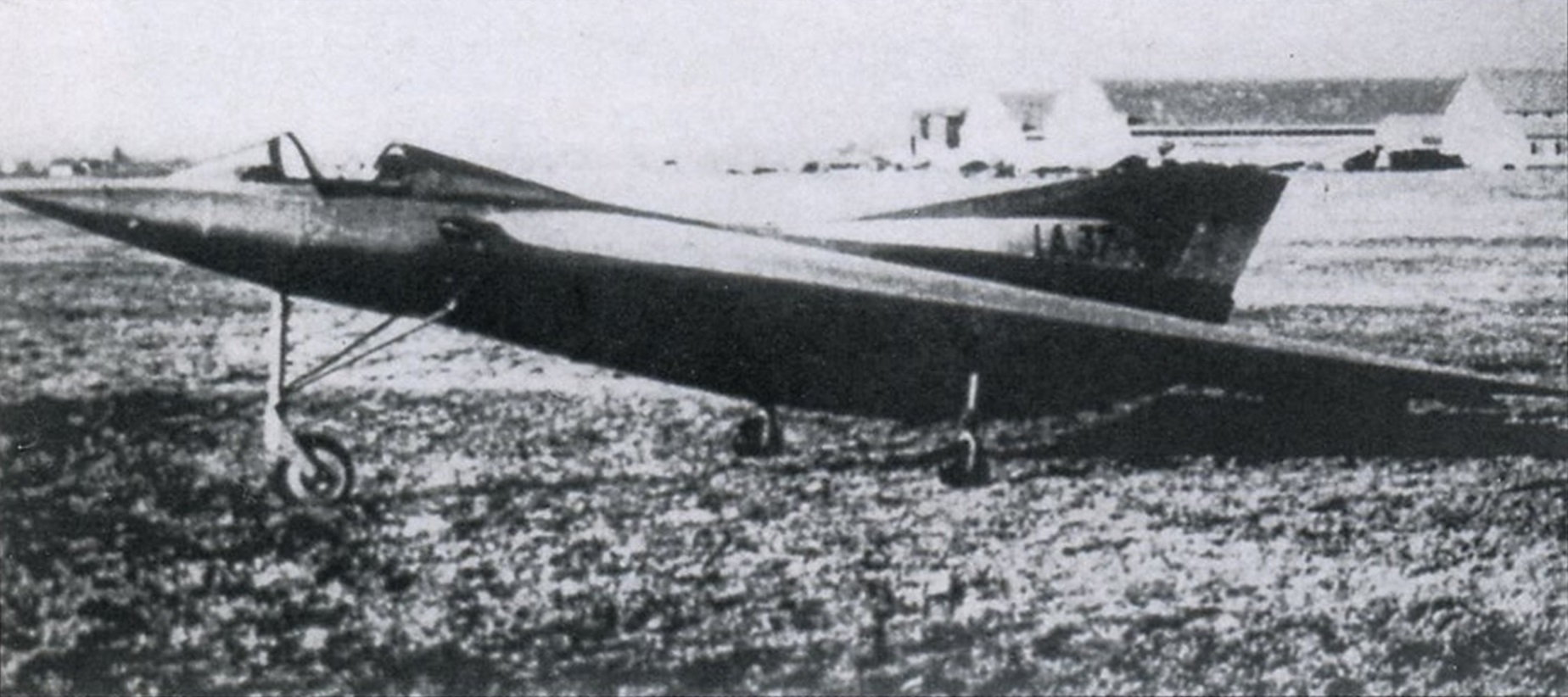
The IA 37 P glider after the cockpit was reconfigured to a standard seating arrangement
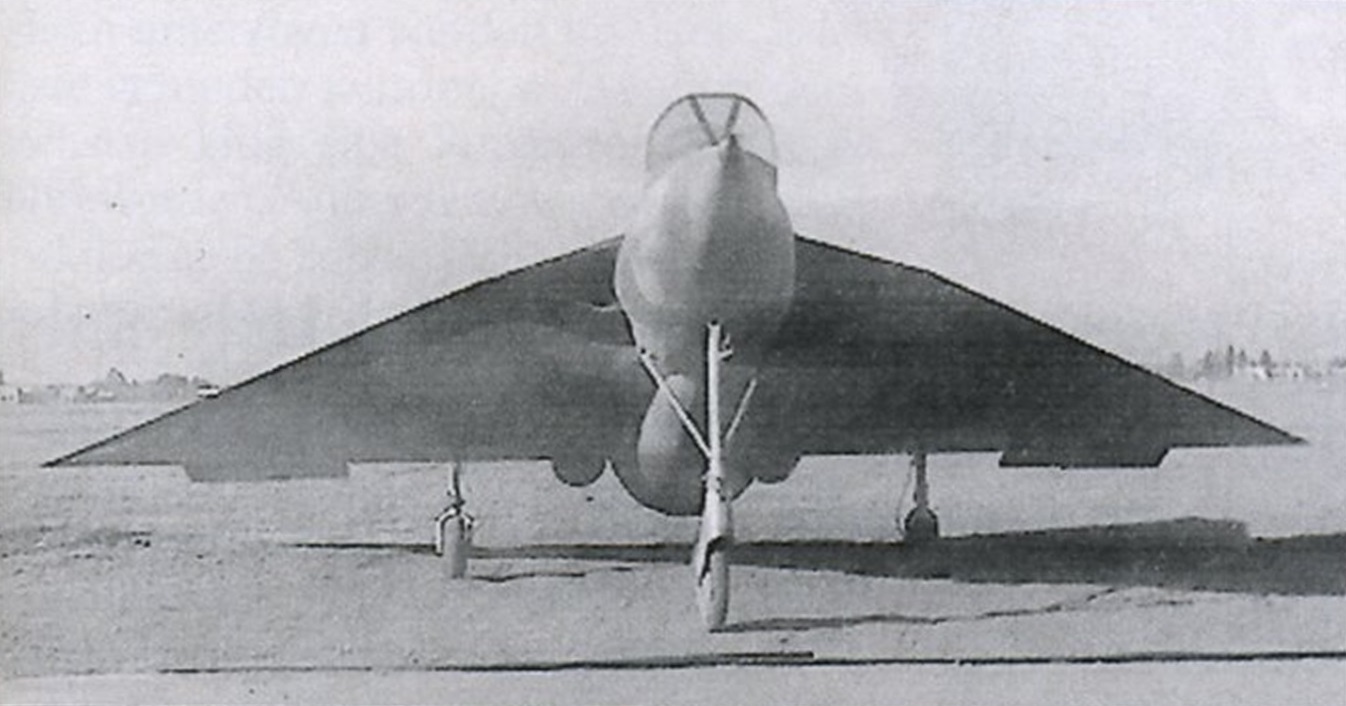
IA 37 P glider after the cockpit was reconfigured to a standard seating position, front view
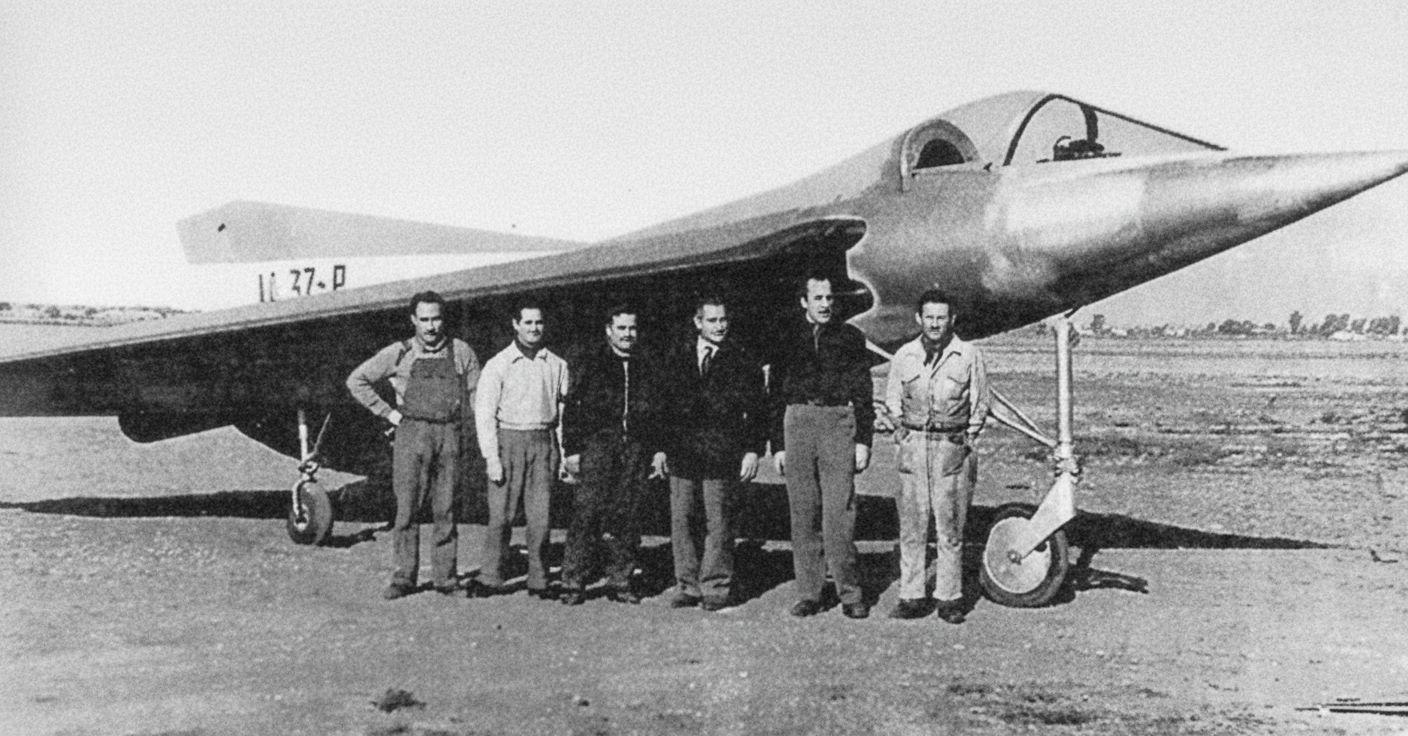
The IA 37 P glider after the cockpit was reconfigured to a standard seating arrangement, with a group of test pilots on board. Photo processed by lmarena.ai
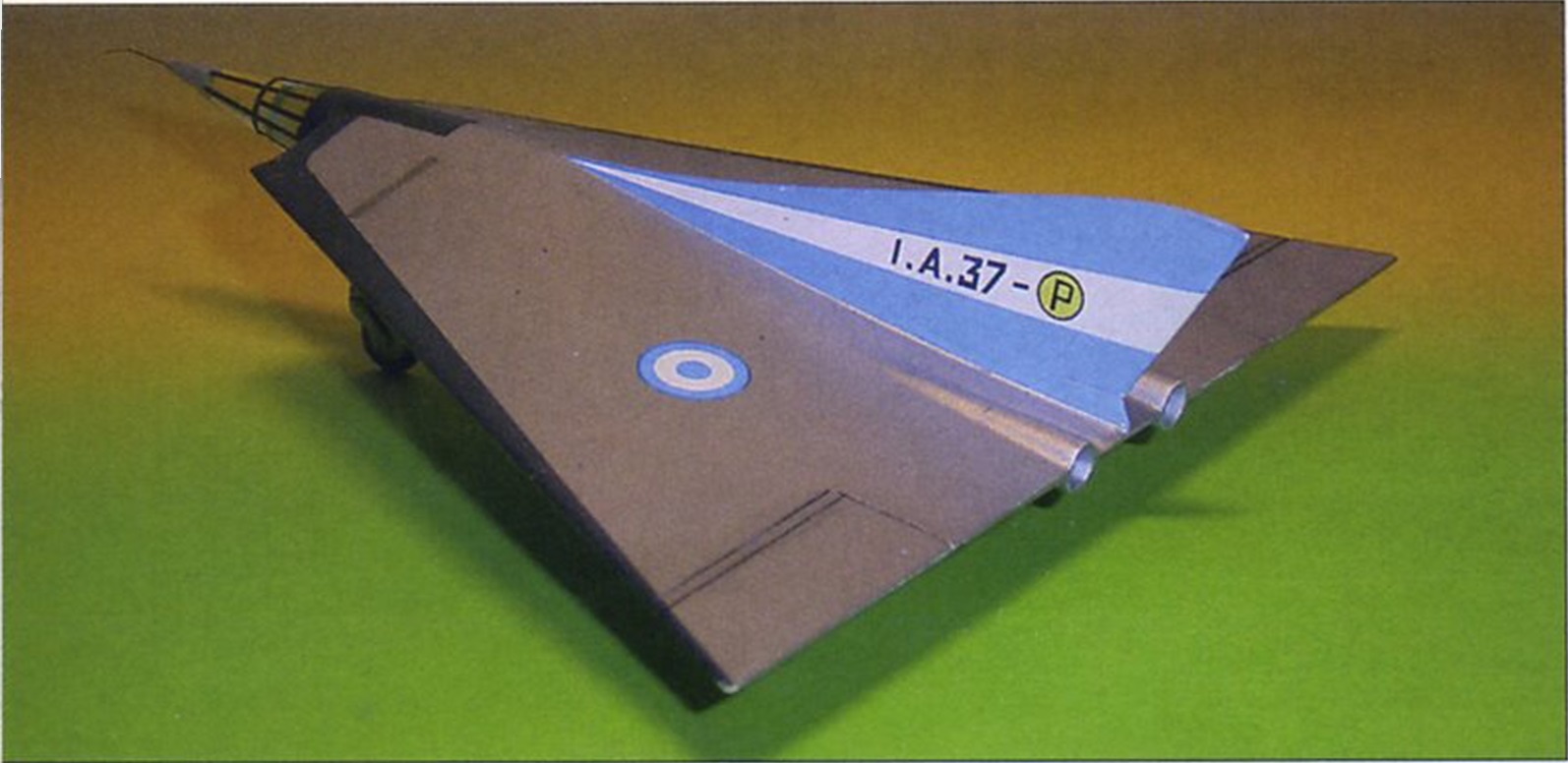
Model of the IA 48 tailless fighter with a delta wing, ¾ rear view
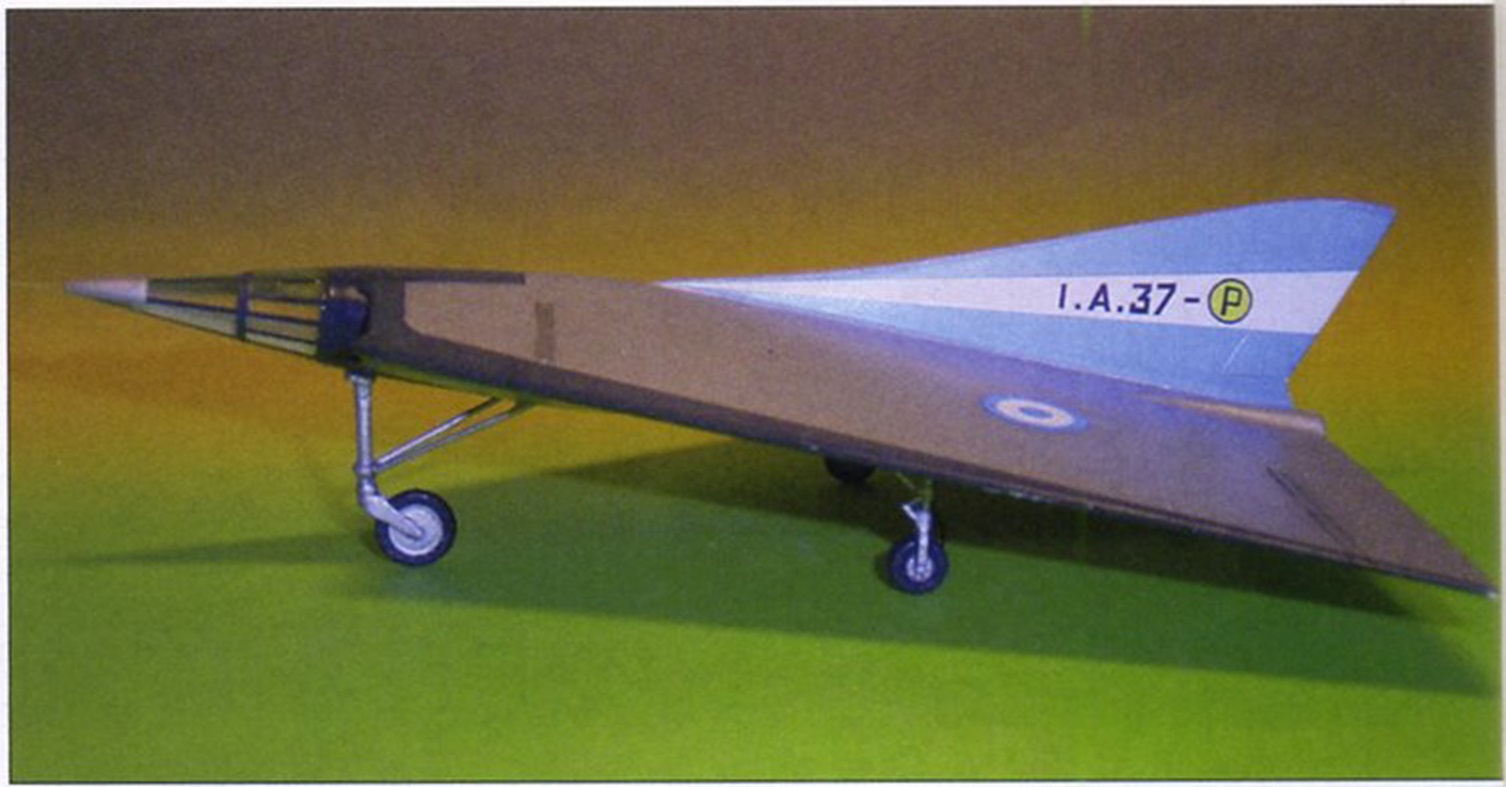
Side view of the IA 48 tailless fighter with a delta wing
Source: Helmuth Walther, “From Flying Wing to Delta Fighter: The Forgotten Horten Deltas,” *Flugzeug Classic*, July 2004, pp. 56–61
Translation first published at – https://vk.com/@710541705-die-vergessenen-horten-deltas-01