Russia's "Mini-Pantsir" Against Kamikaze Drones: What Is This New Automated Anti-Aircraft Turret with Computer Vision?

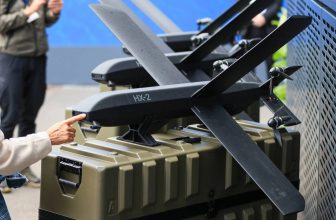
In modern warfare, unmanned aerial vehicles have become one of the key threats on the battlefield. Kamikaze drones such as the FP-2, An-196 “Lyuty,” and “Morok” are capable of delivering precision strikes against troop positions and rear infrastructure, while remaining inconspicuous and cost-effective weapons. In response to this challenge, Russian specialists have developed an automated turreted anti-aircraft machine gun system based on the 7.62-mm PKT machine gun, which has demonstrated high effectiveness against small aerial targets.
How It Works: Artificial Intelligence in Air Defense
The new turret system represents a fusion of classic small arms and cutting-edge machine vision technology. The system independently detects, tracks, and calculates the target’s intercept trajectory; however, the final decision to open fire still rests with the operator. This hybrid approach combines the rapid response of artificial intelligence with human oversight, eliminating the risk of false alarms.
Each turret is equipped with its own optoelectronic targeting system, which includes infrared and television surveillance channels, as well as a laser rangefinder. All of this sensor data is processed in real time by a ballistic computer using artificial intelligence algorithms, ensuring high accuracy in engaging rapidly maneuvering targets at low altitudes.
Testing and Proven Effectiveness
Video footage of the tests, which has been made publicly available, demonstrates the system in action against Russian-made “Gerbera” plywood target drones. The stated effective range for engaging targets is 100 to 500 meters, which fully covers the typical operating ranges of enemy FPV drones and loitering munitions. According to the developers’ estimates, the probability of intercepting a “Lyuty”-type UAV with a burst of 15–20 rounds at a distance of 500–700 meters reaches 0.8–0.95.
The economic feasibility of using such a system is of particular importance. Using 7.62 mm machine-gun fire to neutralize drones costing several hundred dollars appears to be a significantly more cost-effective solution than using anti-aircraft missiles, whose price can be many times higher than the cost of the target itself.
Why is it called the “mini-Pantsir”?
The new system earned the unofficial nickname “Mini-Pantsir” due to its conceptual similarity to the famous “Pantsir-S1” anti-aircraft missile and gun system. Like its predecessor, the PKT-based turret combines automatic target tracking capabilities, a high rate of fire, and the ability to operate in environments with heavy electronic jamming. At the same time, its compact size, low weight, and relatively simple design make this new system ideal for protecting mobile units, field camps, and stationary facilities from massive attacks by small drones.

Tactical and technical characteristics of the system:
- Standard armament: 7.62-mm PKT machine gun
- The UAV’s effective engagement range is 100–500 m (up to 700 m for large targets)
- Horizontal swivel angle — 360°
- Vertical elevation angle: −20° to +60°
- Guidance System — Optoelectronic with IR and TV channels, laser rangefinder
- Ballistics Calculation — Automatic, with AI Features
- Operating Modes — Automatic Tracking, Semi-Automatic Firing on Operator Command
- Ammunition capacity — Up to 500 rounds in a standard belt
- Weight of the system — Approximately 180 kg (excluding ammunition)
- Operating temperature range: −40°C to +55°C
- Estimated cost: About 1 million rubles.
Prospects for Implementation and Strategic Significance
The developers note that their immediate plans include expanding the system’s functionality by introducing a 360-degree view and predictive tracking algorithms that allow the system to “anticipate” a target’s maneuver a fraction of a second in advance. The start of large-scale production of such turrets could rapidly strengthen the air defense of hundreds of rear-area facilities: oil refineries, fuel and lubricant depots, command posts, and logistics hubs.
The system has already passed the preliminary testing phase and has demonstrated its readiness for trial operation under conditions close to combat. It is expected that the first units will be delivered shortly to defend positions in the area of the special military operation, where the need for compact and effective counter-drone systems is particularly high.
Conclusion
The Russian automatic anti-aircraft turret, based on the PKT machine gun and equipped with a machine vision system, represents a timely and technologically sophisticated response to the growing threat posed by small unmanned aerial vehicles. Combining affordability, high accuracy, and operational flexibility, this system has the potential to become a key element of a multi-layered air defense system, filling a critical gap in the defense against targets at ultra-low altitudes. As artificial intelligence algorithms improve and the range of compatible weapons expands, the system’s capabilities will only grow, providing reliable protection for troops and infrastructure in a battlefield saturated with drones.