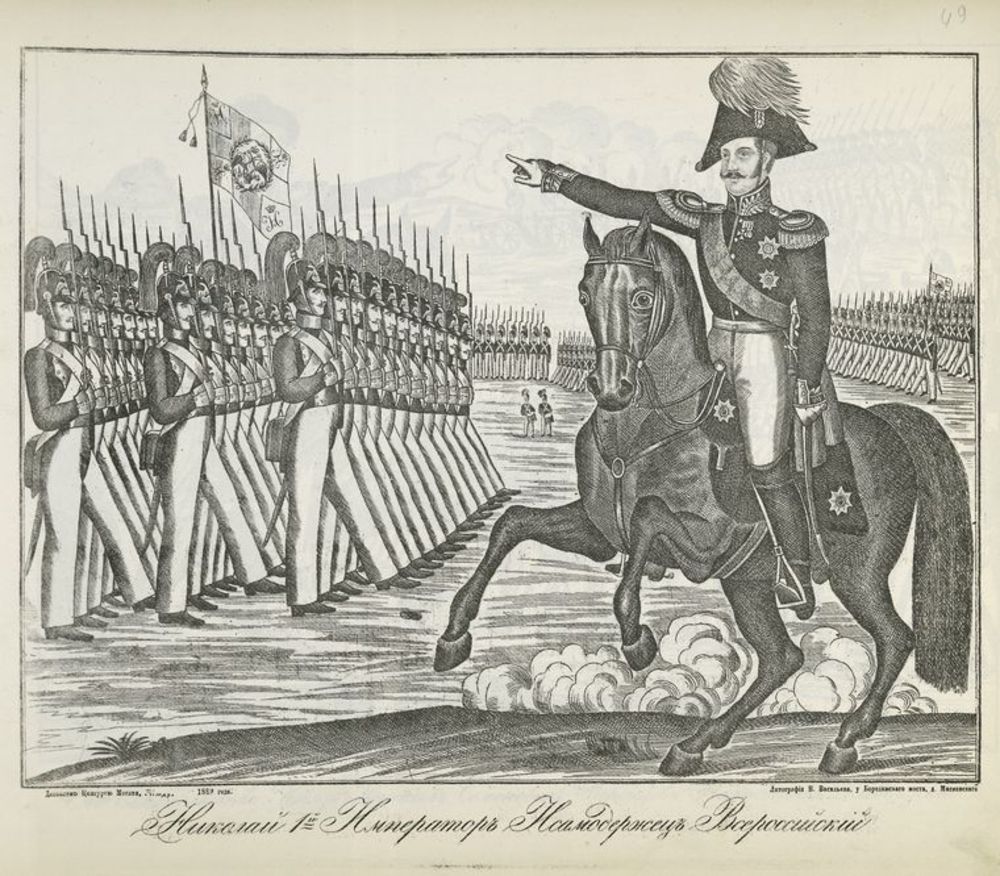
An article from Sergey Makhov’s Telegram channel, “George Rooke.”
We all remember that Peter I, that bastard, introduced lifelong service for soldiers, which was later reduced to 25 years, and what Nicholas I was known for (who, in reality, actually reduced the term of service to 15 years and kept soldiers in the reserve for another 5 years).
But let’s take a look at the main pillar of democracy in Europe: Britain.
During the Napoleonic era, this is how things stood. Soldiers were enlisted in the army… either for life or for 21 years (which was essentially a lifetime). In 1806, limited-term service (a 7-year enlistment) was introduced in some units. But it was abolished in 1829.
As a result, British soldiers served either for life or for 21 years until… 1847. Thereafter, under new regulations, soldiers were enlisted in the army for either 10 or 12 years. If they wished, soldiers could extend their enlistment upon its expiration, for which they received a bonus of 3 guineas from the king (or queen).
A soldier’s pay was one shilling a day. However, so-called “stoppages” came into play here. Medical care, food, uniforms, weapons, etc., and as a result, IN THE BEST-CASE SCENARIO, a soldier received half a shilling (6 pence), but in most units, where additional stoppages had been introduced, they received just 1 penny a day.
The soldier mortality rate in the 1810s was 23 per 1,000.
In the 1850s, it remained virtually unchanged—22 people per 1,000.
Only a small number of soldiers were allowed to marry. But… there was a catch. Sometimes wives were assigned to accompany “all-male” units (to do the laundry, ironing, cooking, etc.), and quite often the following would happen: the husband served in one regiment, while his wife was sent to another (one wife for every eight cavalrymen or twelve infantrymen), and no one’s consent was sought. As a result, a soldier might not see his wife at all during his entire tour of duty. Or he might see her with other men’s children—and in the plural, no less—because, as you can imagine, eight drunk cavalrymen or twelve drunk infantrymen aren’t going to ask a woman for permission to have sex.
So here I am, sitting and thinking—no, of course not… In an ideal vacuum, Nicholas I is a despot and the oppressor of soldiers, and Arakshcheev’s regime is pure evil. But then what are we supposed to say about the British Army???
Here we go again…
In a previous discussion, some comrades told us that, supposedly, it’s not right to compare ourselves to the British Army. It’s somehow dishonorable. We should compare ourselves to the best armies in the world—which, in their opinion, at that time were the French, Austrian, and Prussian armies.
As for the Austrians and the situation in the 1840s, I’m not an expert—German isn’t really my forte—but I know for certain that before 1806 (perhaps even later, but here I’d like to ask the audience for help—preferably from authentic sources, not from Svechin) the Austrian army was recruited… in exactly the same way as the Russian and British armies. In other words, one became a soldier for life. The advantage was that each regiment was supported by the specific region where it was stationed, and to which it returned after the war.
Now, about the Prussian army. Here, actually, necessity is being passed off as a virtue. Gerhard von Scharnhorst began the reform of the Prussian army, but the one who initiated it… was Napoleon. In fact, Napoleon allowed Prussia to have an army of 43,000 men. And that was it. But the Prussians wanted more, so they could eventually measure their strength against Napoleon’s after all.
But how can this be done if the size of the army is limited to 43,000 men? Scharnhorst proposed creating Landwehr and Landsturm units. These would serve as a military reserve, and if necessary, the Prussian army could easily reach 200,000 bayonets—all of them already trained. Napoleon banned the creation of the Landwehr, so Scharnhorst implemented a rotation system in his army: as soon as a soldier was sufficiently trained, he was discharged from the army, and a new recruit took his place. At the same time, discharged soldiers remained in the reserve and could be called up for military service at any time.
This practice continued afterward only because postwar Prussia was short on money—in other words, it wasn’t feasible to spend money on the army.
Things aren’t exactly that simple with the French army.
According to the republic’s regulations, the army became a conscripted force, and any man between the ages of 17 and 40 was drafted for service—initially for 7 years, then for 8, and then back to 7 years. The war ended, and there was no longer a need for such a large army. As a result, out of approximately 200,000 conscripts, 80,000 were drafted annually, while the rest were called up for three-month training sessions—simply to teach them which end of the rifle to hold and that it fires in that direction.
By the 1830s, the situation was as follows: France had the backbone of its army—that is, trained soldiers— numbering approximately 100,000–150,000–200,000 men, and 300,000 men who were merely cannon fodder, who would be conscripted only as a last resort and were not, in principle, regular soldiers.
Now let’s use our imagination. Here you are—you, personally—Nicholas I. You have an army organized according to a certain model. It numbers approximately 500,000–600,000 (it only reached one million in 1855, and even then only briefly) of TRAINED soldiers.
The French, whom you defeated in the last war, are building their army according to some different model. But, to put it bluntly, they haven’t had much success. They’ve been dragging their feet with Algeria for ten years now.
There are Prussians who are also building their army according to a different model. That said, they’d like to do it our way, but they don’t have the money. Frederick II could allocate 90 percent of the budget to the army, but in a nascent capitalist society, that just won’t fly. In fact, one of the slogans of the Berlin Revolution of 1848 was to reduce military spending, which was less than 50 percent. Moreover, let’s take a look at the successes of this so-called “new-type army.” What has it achieved? Its limited contingent in Schleswig clashed with Denmark for three years, and then collapsed on all fronts.
As for the Austrian army—and I’ll say this again—I don’t have any information on its organization, but I also don’t see any particular successes by the Austrian army during the period from 1826 to 1851. I know that the Hungarians would have been defeated in 1849 if it weren’t for the Russians.
What are the compelling reasons for restructuring the army’s composition and organization?
And yes, let me remind you: Those who speak of the strength of the French army are referring to it after the 1852 reform, which could not have been foreseen in the 1840s.
When people speak of the Prussian army, they are referring to its strength following the reforms of the 1860s—that is, after the Crimean War served as a catalyst.
Those who talk about the Austrian army also, for some reason, consider it as it was after the reforms of 1868—that is, after the Crimean War, after Solferino, and after Sadova.
Something like that.
If anyone is interested in my opinion, the French pulled ahead in the 1850s for two reasons.
- A large number of their troops passed through Algeria and gained real combat experience in “cat training.” In other words, it’s not about the equipment system, but about general combat experience.
- The reforms of 1846 and 1852 turned the army into a unified structure for a time (though they did not eliminate its flaws, which surfaced later).