Soon to take to the skies. The new Ka-65 “Minoga” maritime helicopter is on the verge of its historic maiden flight. What’s already ready?

We’ve previously written about the development of the new Ka-65 “Minoga” helicopter in Russia. However, information about it has been scarce lately, but that doesn’t mean work on the helicopter has been halted. So, what stage is the project at in 2026? Let’s take a closer look below.
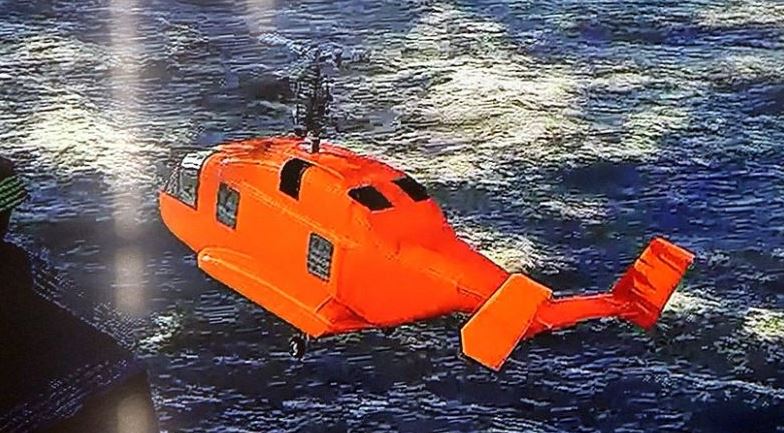
Project History and Power Plant
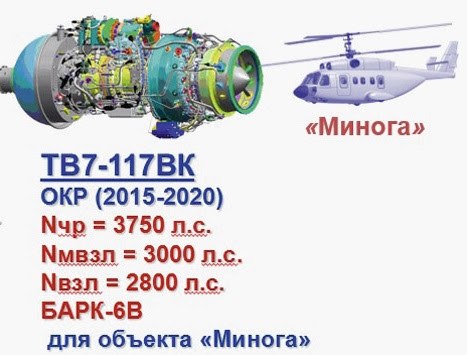
Rumors about this project had been circulating for about ten years. Initially, a special modification of the TV7-117VK engine was developed for it at the Klimov Design Bureau, which differed from other variants in that its output shaft was reversed. The layout of the prospective helicopter was planned to be classic—the power units were positioned in front of the main gearbox. This configuration was illustrated in promotional materials about the engine.
However, for reasons that remain unclear, the “rear-drive” engine design was abandoned, even though it had the potential to avoid the problems characteristic of other versions of the TV7-117. In those versions, the shaft extended forward, which required routing it inside the turbogenerator shaft, and the inter-shaft bearing frequently seized up. The designers were able to more or less overcome this difficulty only after the crash of the Il-112V military transport aircraft.
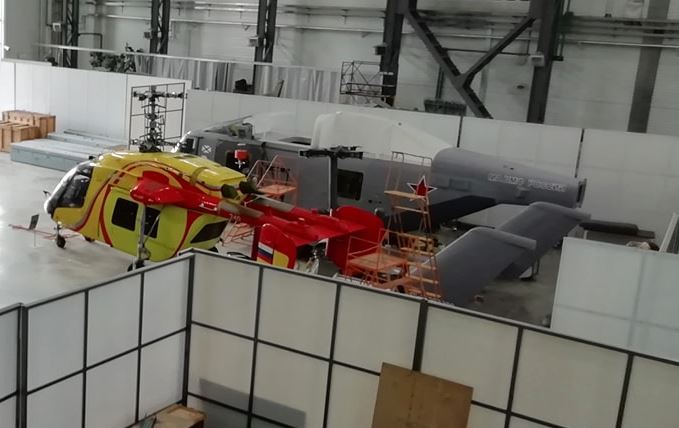
A Ka-65
prototype in the hangar, behind the yellow helicopter
New Layout Scheme
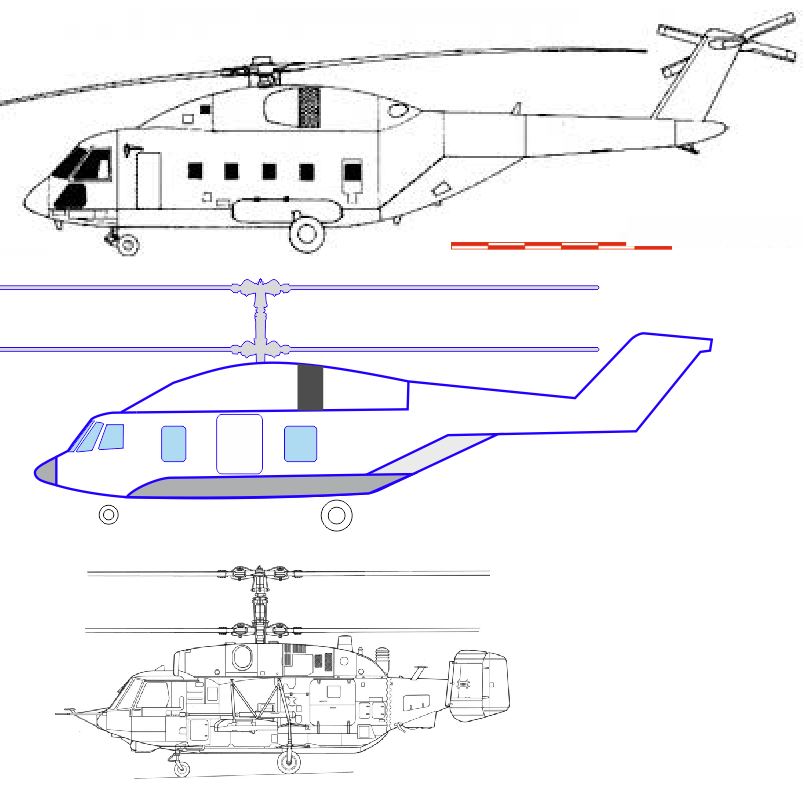
Kamov’s engineers had to radically rethink the layout, adopting a modern trend—placing the main gearbox in front of the engines. This layout is popular today, although its main advantage is merely that it simplifies the alignment of the aircraft. At the same time, it has drawbacks: increased losses at the engine inlet and difficulties in routing the free turbine shaft forward. But as we know, trends are also present in aircraft manufacturing.
Availability of Information and Funding
The “Minoga”’s new design first came to light in 2019, when an image of a mockup from the assembly shop at the National Helicopter Manufacturing Center in Panki was leaked online. A contract for research and development work was signed at the “Army-2020” forum.
Naturally, due to the classified nature of the project, no detailed information was made public. There were concerns that funding for the development might be cut due to the high costs of a special military operation. Nevertheless, the Russian Ministry of Defense secured the necessary funds, and work continued. According to unconfirmed reports, about one and a half to two years ago, the production order was transferred to one of the plants belonging to the “Russian Helicopters” holding company, since the National Center for Helicopter Development in Panki does not have its own production facilities. It is expected that the new helicopter will be unveiled in the coming months.
The Need to Replace the Fleet
This development has been long overdue. Russia’s only anti-submarine helicopter, the Ka-27, made its maiden flight in 1973—more than fifty years ago. Its modernized variant, the Ka-27M, introduced in 2015, is certainly more advanced, but even its capabilities are now insufficient. The Ka-27PS (search and rescue), Ka-29 (transport and combat), and Ka-31 (long-range radar detection) models also require upgrades.
Design Features of the Ka-65
The requirements for the intended equipment and its specifications led to an increase in the Ka-65’s overall dimensions compared to its predecessor. The helicopter has become significantly longer than the Ka-27, approaching the Mi-38 in this respect. Its takeoff weight will also increase—thanks to the use of a coaxial rotor system, it may even exceed that of the Mi-38. These dimensions and weight will open up opportunities for developing various modifications, including those for civilian use—for example, for ice reconnaissance from icebreakers.
If the “Minogi” test flight takes place this year, it will fulfill the prediction made back in 2016 by Sergey Mikheev, former chief designer of the Kamov Design Bureau, who estimated that the development of the new aircraft would take ten years. All that remains is to wait for the first flight.
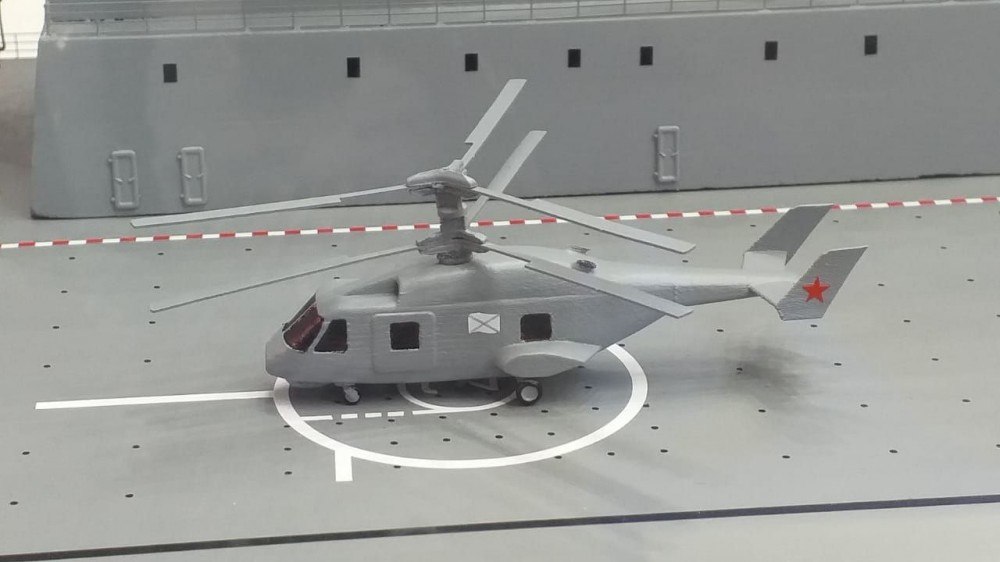
Ka-65
Model
What about the specs?
- Dimensions: The Ka-65 is significantly longer than the Ka-27 and is nearly as long as the Mi-38.
- Weight: An increase in mass is expected, which will make it possible to develop variants, including those for civilian use, such as ice reconnaissance vehicles for icebreakers.
- Engines: According to preliminary plans, the Ka-65 will be equipped with TV7-117VK engines with a maximum power output of 3,750 l. s. in emergency mode and 2,800 l. s. during takeoff.
- Configuration: The helicopter is designed according to the coaxial configuration traditionally used by the Kamov Design Bureau.
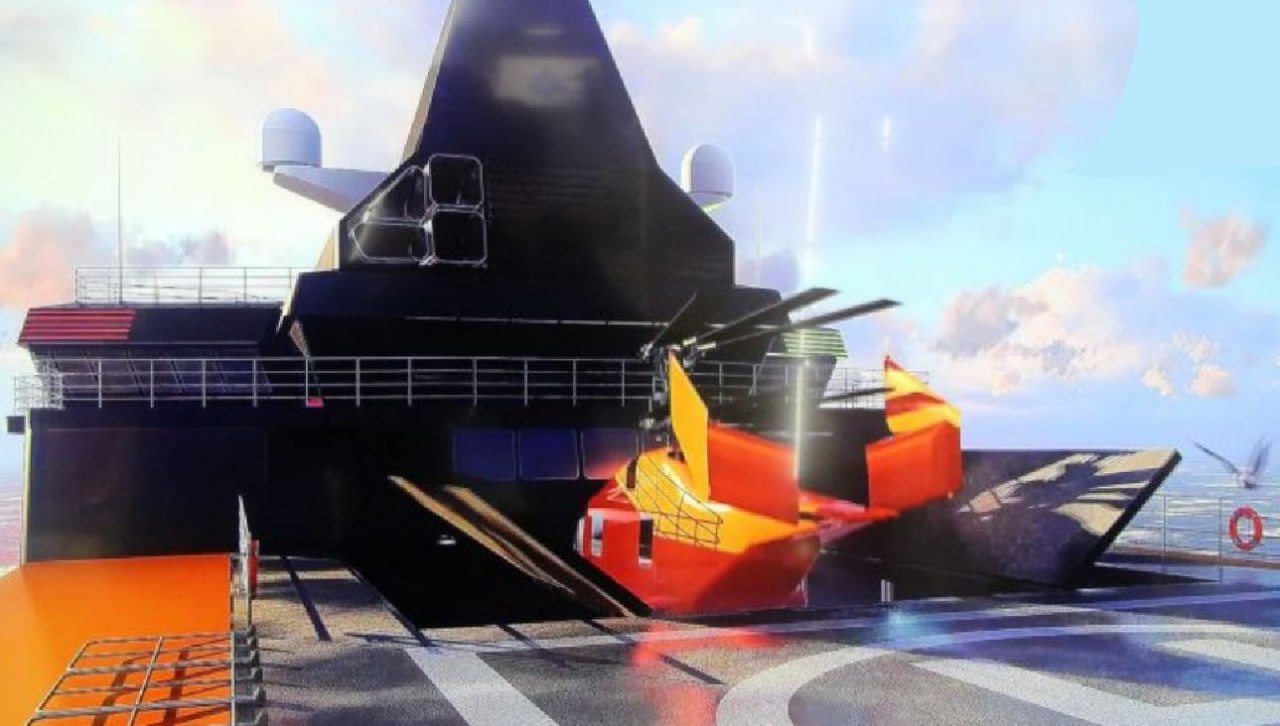
- Compatibility: The Ka-65 will be integrated into the air group of the first Project 23900 “Ivan Rogov” multipurpose amphibious assault ship, currently under construction.
Based on material from https://t.me/wingsofwar/20417