Soviet Russian TS and BT Series Tanks in a World Where the Kaiserreich Won World War I

This work was prepared by our Western colleague Javalr—the very same researcher who authored a comprehensive study on the tanks of the Kaiserreich during the interwar period and World War II. It is noteworthy that the author of the original research assigned completely different names to his vehicles. Since his material lacked a coherent alt-historical narrative, yours truly took the liberty of adapting the tank names and fitting them into the logic of the proposed world, while preserving all the technical specifications provided by the original source.
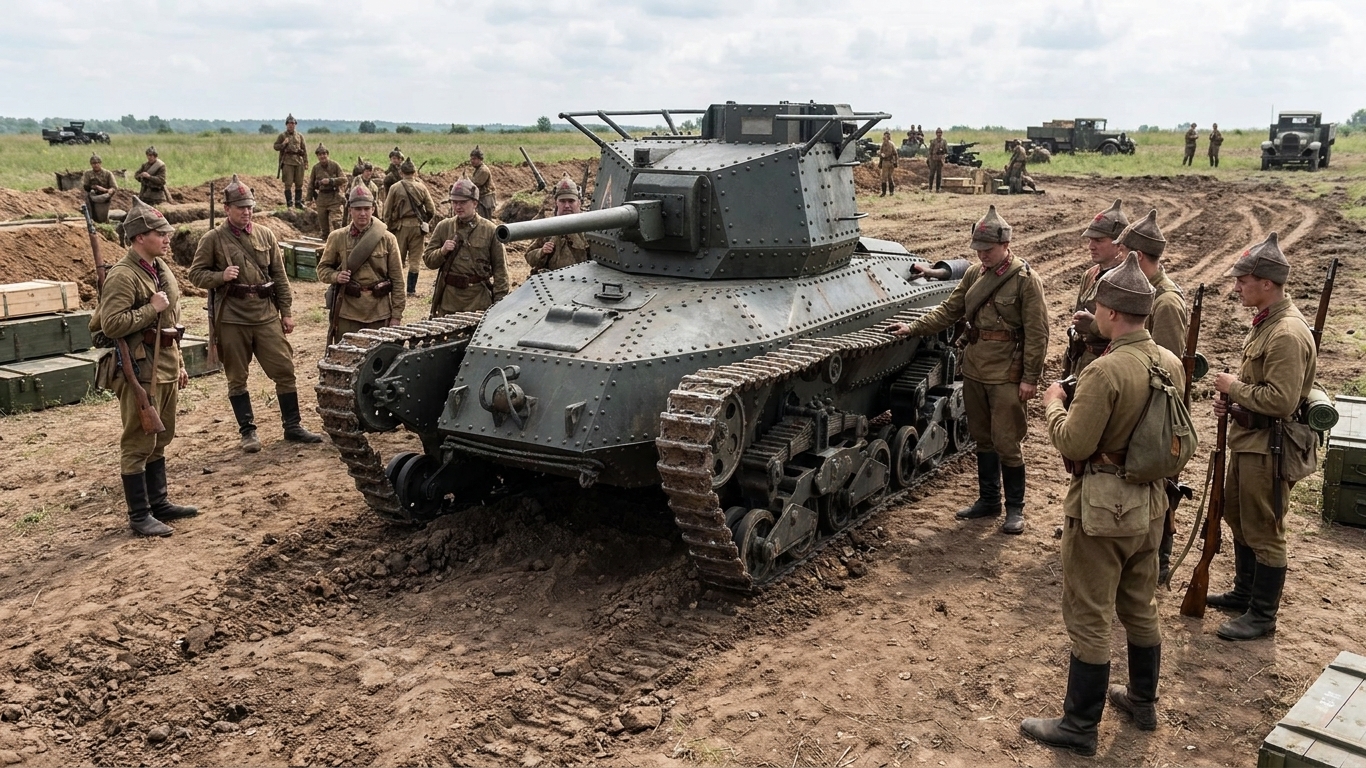
Description of the World
The circumstances surrounding the victory of the Second Reich—the Kaiserreich—in World War I are deliberately left outside the scope of this publication. This topic is left open to the reader’s discretion: our website features numerous versions of alternative history, and everyone can choose the one that resonates most with them. This article is devoted exclusively to “rivets”—that is, technology.
Based on available data, Germany—which had indirectly contributed to the Bolsheviks’ rise to power in Russia—generally maintained business-like, largely neutral relations with Soviet Russia (or the USSR—the question of its formal establishment remains a matter of debate). Berlin preferred to turn a blind eye to calls for a world revolution from certain fringe politicians, given that the Soviets, as a rule, did not go beyond rhetoric.
German industrial conglomerates played an active role in the industrialization of the Soviet Union, and—what is particularly important for this alternative history—provided substantial assistance in the development and design of armored vehicles, primarily in the areas of powerplants and transmissions. This collaboration laid the foundation for the emergence of unique examples of Soviet tank design in the 1930s.
General Principles for Classifying Soviet Tanks
As was customary in international military practice in the 1930s, Soviet armored doctrine initially divided tanks into two main classes: infantry tanks and cruiser tanks. In the USSR, infantry tanks were designated TS—“escort tanks”—while cruiser tanks retained the abbreviation BT—“battle tanks”—inherited from pre-revolutionary designs.
These tanks were designed to provide direct support to the infantry during an offensive, featuring heavy armor and relatively moderate speed. BT tanks, on the other hand, were designed for deep penetrations, raids behind enemy lines, and coordination with cavalry, which required high mobility at the expense of protection.
TS Series — Escort Tanks
TS-2 Tank
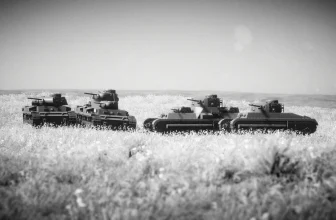
The author of this alternative history provides no details about the TS-1 tank; however, it is highly likely that it was an evolutionary development of the real-life MS-1 (T-18). Our focus is on the TS-2, a next-generation infantry tank that appeared at the turn of the 1920s and 1930s.
The project was led by engineer Arkady Ursov—a fictional character who had previously worked on the design of agricultural tractors. The TS-2’s chassis was based on Ursov’s proven tractor platform, which ensured the vehicle’s reliability and maintainability in field conditions. The tank’s crew consisted of three people.
TS-2 TTT:
- Combat weight: 12.1 metric tons
- Price: $1,374 (in late 1920s prices)
- Engine: 12.4-liter V8, 265 l.s.
- Transmission: clutch-braked, 5 forward gears, 3 reverse gears
- Main armament: 65-mm gun in a turret
- Gun armor penetration: 92 mm of homogeneous armor
- Crew: 3 people
Tank TS-2 bis
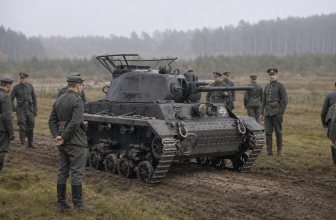
During the TS-2 competitive trials, two prototypes were presented. The second one featured an elongated hull and a more spacious fighting compartment. Although it was not selected for mass production due to its increased weight and cost, the potential it offered made it possible to return to this design later during modernization.
The TS-2 bis model, developed during the interwar period, featured larger road wheels and a redesigned engine compartment layout. It was equipped with a 15-liter, 10-cylinder engine producing 325 l.s. The enlarged rear turret compartment allowed for the installation of additional machine guns for all-around defense. After switching to armor plates made of rolled homogeneous steel and generally reinforcing the protection, the tank’s weight increased, but so did its survivability on the battlefield.
TTX TS-2 bis:
- Combat weight: 14.4 metric tons
- Price: $1,659
- Engine: 15-liter 10-cylinder, 325 l.s.
- Hardness: quenched and tempered homogeneous steel
- Additional armament: machine guns in the rear compartment of the turret
- Undercarriage: enlarged support rollers
TS-2M Tank
With the outbreak of large-scale conflict, the TS-2 Bis tanks underwent an emergency modernization program, resulting in the TS-2M variant. The vehicles were equipped with a modern whip-type radio antenna, their suspension was modified to improve cross-country capability, and new track belts with a longer service life were introduced. The rear machine gun in the turret was removed—combat experience had shown it to be of little practical value.
The powerplant underwent a radical overhaul: the new 19.2-liter V16 engine delivered a significant increase in power. The main gun’s caliber was kept at 65 mm, but the gun itself was almost completely redesigned: the increased barrel length allowed for a higher muzzle velocity and, consequently, greater armor penetration, while the ammunition load remained unchanged.
TS-2M TTD:
- Combat weight: 14.2 metric tons
- Price: $18,100
- Engine: 19.2-liter V16
- Main armament: 65-mm long-barreled gun
- Armor penetration: 118 mm of homogeneous armor
- Equipment: modern radio antenna, improved suspension, new tracks
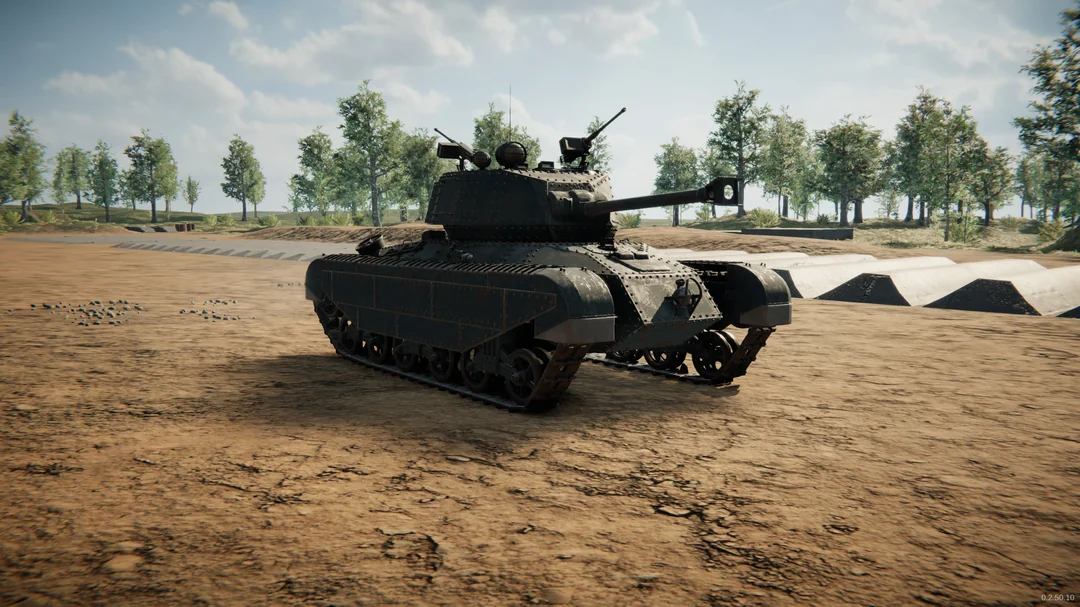
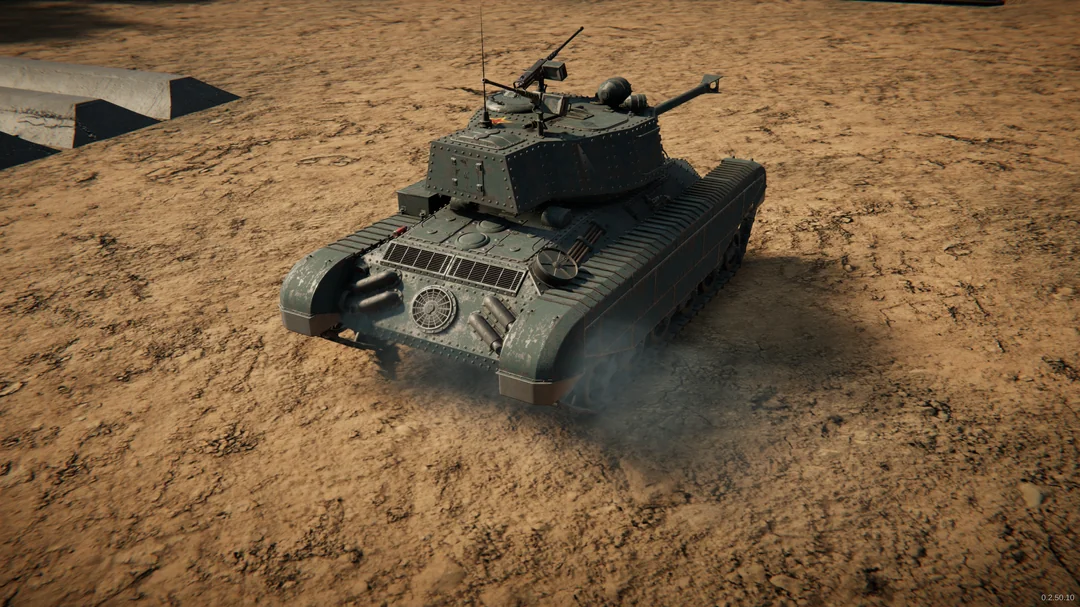
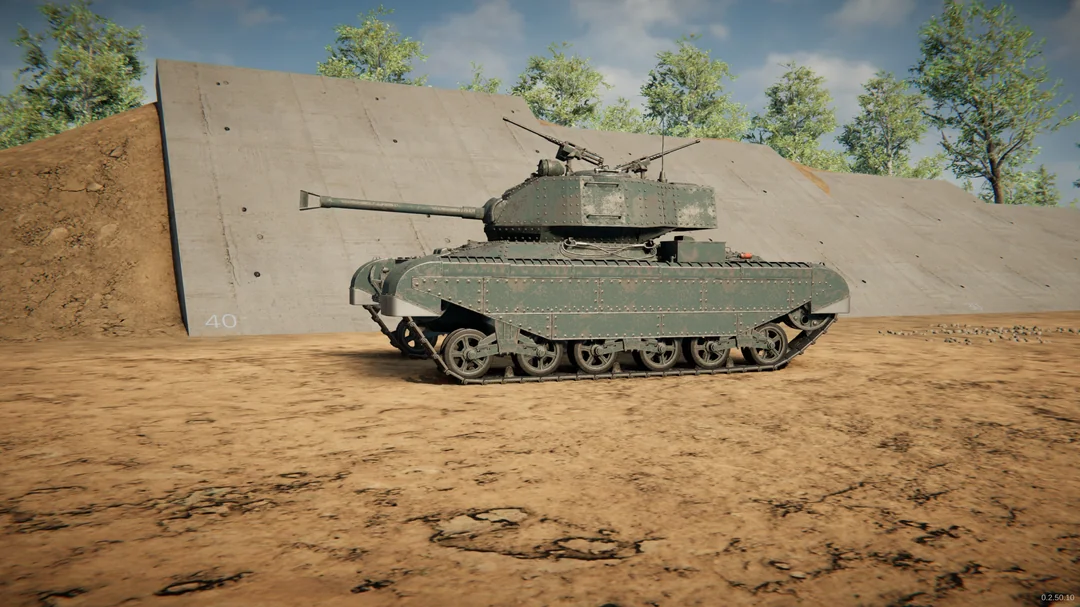
TS-3 Tank
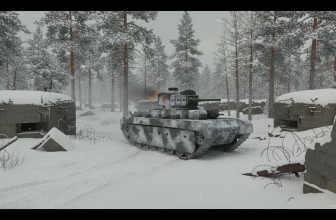
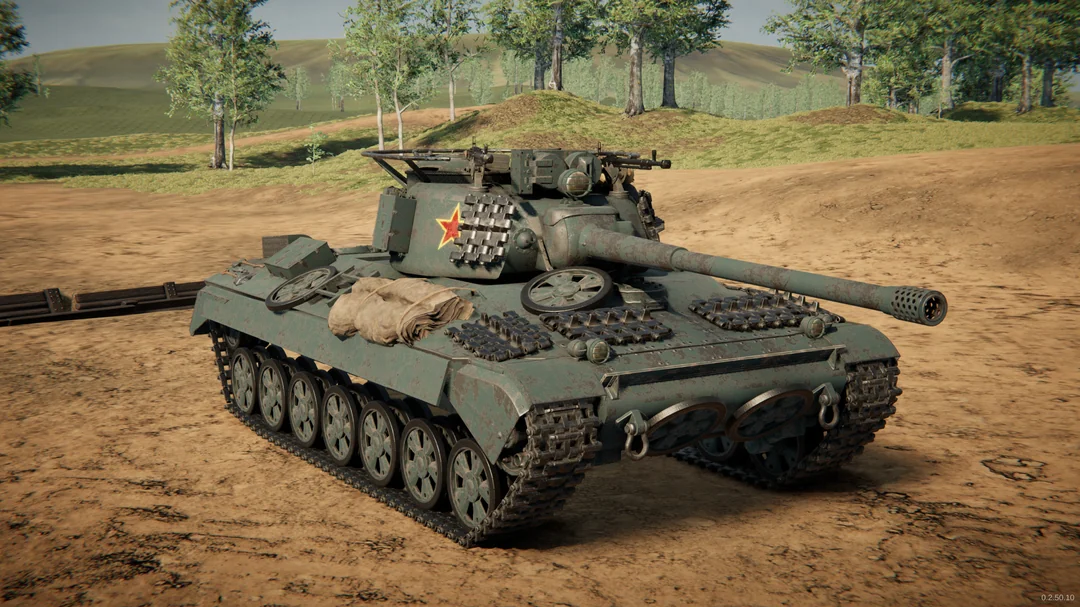
The TS-3 model became the final version of the infantry tank series. Retaining the proven tracks and suspension of its predecessors, the engineers added side skirts to protect the undercarriage and installed a new, larger cast turret with improved ballistic shape. The powerplant was radically upgraded—the new engine produced up to 728 l.s., which was an outstanding figure for an infantry tank of that period.
The hull’s frontal armor was increased to 65 mm, while the turret’s armor plates were mounted at an optimal angle of 27 degrees, which significantly increased the likelihood of ricochet. The main armament changed caliber: the new 60-mm gun, with a barrel length of 620 mm, possessed outstanding armor-penetration capabilities for its class, while maintaining a high rate of fire and ease of loading.
TS-3 TTT:
- Combat weight: 18.9 metric tons
- Price: $1,920
- Engine: supercharged, up to 728 l.s.
- Front hull armor: 65 mm
- Turret armor: at a 27-degree angle
- Main armament: 60-mm cannon, barrel length 620 mm
- Armor penetration: 132 mm of homogeneous armor
- Additional protection: side armor, cast turret
BT Series — Cruiser-Class Battle Tanks
The first models of the BT series, despite their tactical effectiveness in maneuver warfare, revealed a serious shortcoming—insufficient armor protection. In most cases, they proved vulnerable to new-generation anti-tank weapons. This led to a revision of the requirements: the new tank was to feature a greater vertical elevation angle for the gun, a larger-caliber gun, a more powerful electric turret rotation drive, increased ground clearance, and significantly reinforced armor.
At the same time, in terms of a number of key design features, the tanks in this series remained fairly conservative, which made them similar to other Soviet designs of that period: a transmission with a clutch-braking system, large-displacement engines, and archaic frame-mounted radio antennas. One of the series’ distinctive features was its cast hull design combined with large road wheels—this design allowed the tanks to reach high speeds on both hard ground and rough terrain.
The series features three main variants that reflect the evolution of views on the role of the cruiser tank in the context of a changing battlefield.
BT-2 Tank (Mid-War)
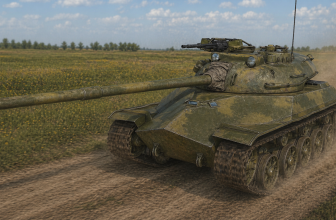
The original vehicle in the series, which laid the foundation for all subsequent developments. Most of the BT-2’s design features were carried over to later generations: an engine mounted at an angle to optimize the layout, large-capacity fuel tanks, a signal light on the turret for coordinating fire with allies, and a powerful searchlight on the front hull plate for night operations.
TTX BT-2:
- Length: 6 m
- Height: 2.2 m
- Combat weight: 29.7 metric tons
- Hull armor: 95 mm
- Turret armor: 100 mm
- Main armament: 82-mm gun, barrel length 840 mm
- Armor penetration: 158 mm of homogeneous armor
- Engine: 26.4-liter V12, 810 l.s.
- Equipment: signal light on the tower, floodlight on the front panel
BT-3 Tank (late model)
As the war progressed, demands for firepower and protection continued to grow. The BT-3 was given a slightly elongated hull with a sloped stern—this design allowed for the installation of a larger and more powerful engine without a radical redesign of the transmission. The turret was also lengthened to accommodate a larger-caliber gun and additional ammunition. A machine gun was added to the rear of the turret for defense against infantry, and the commander was equipped with panoramic sighting devices, which significantly improved situational awareness in close combat.
TTX BT-3:
- Length: 6.7 m
- Height: 2.3 m
- Combat weight: 38.6 metric tons
- Hull armor: 165 mm
- Tower armor: 130 mm
- Main armament: 100-mm gun, barrel length 700 mm
- Armor penetration: 216 mm of homogeneous armor
- Engine: 33-liter V12 (upgraded version of the BT-2), 1,032 l.s.
- Additional armament: stern machine gun in the turret
- Surveillance Equipment: Panoramic Viewing Devices
BT-5 Tank (late model)
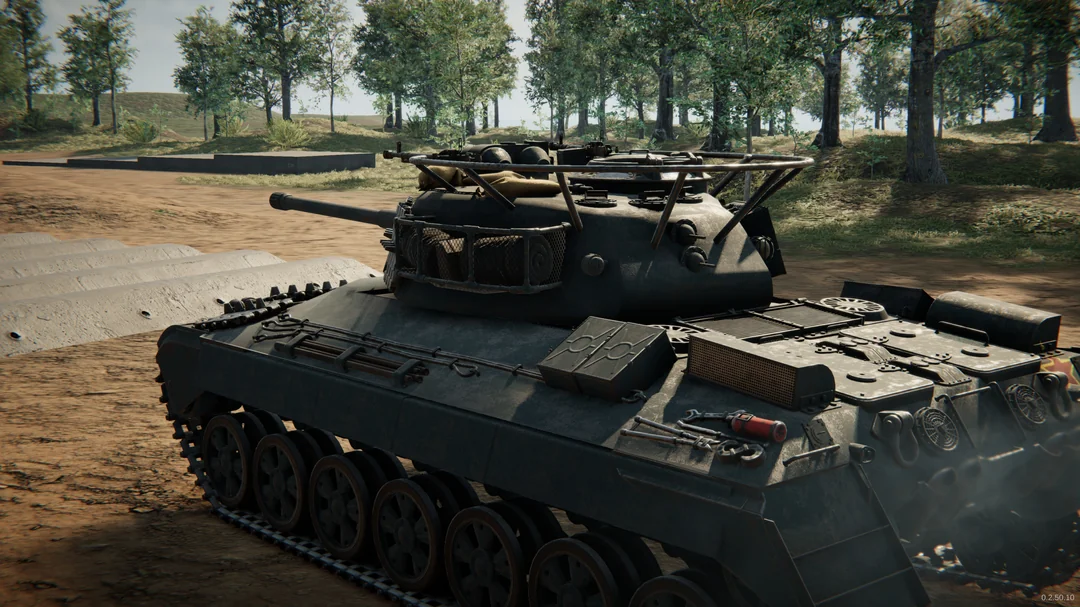
The final and most powerful model in the series, designed to counter increasingly heavy enemy tanks and new-generation anti-tank guns. The BT-5 was designed with most of the principles of its predecessors in mind, but featured significantly more sloped armor and a gun of unprecedented firepower. The guidance system, transmission architecture, and overall layout remained consistent with its predecessors—this simplified crew retraining and repairs in field workshops.
The enlarged turret made it possible to mount two machine guns at the rear for all-around defense, as well as a machine gun coaxial with the main gun for engaging lightly armored targets. Despite its increased weight, the tank retained acceptable mobility thanks to a tuned engine and an optimized suspension.
BT-5 TTT:
- Length: 7.1 m
- Height: 2.3 m
- Combat weight: 72 metric tons
- Hull and turret armor: 200 mm
- Main armament: 115-mm gun, barrel length 950 mm
- Armor penetration: 280 mm of homogeneous armor
- Engine: 14-cylinder, 37.1 L displacement, 1,168 l.s.
- Additional armament: two rear machine guns in the turret, a twin machine gun
Conclusion
The examples of armored vehicles presented in this work—the TS and BT series—demonstrate the unique path taken by Soviet tank design under an alternative geopolitical reality. Neutral, business-oriented cooperation with the Kaiserreich, access to advanced German technologies in engine and transmission design, and the preservation of its own design schools made it possible to create a line of vehicles that combined reliability, firepower, and tactical flexibility.
Although some design choices—such as a clutch-braking transmission or frame-mounted antennas—may seem archaic to later generations, it was precisely these tanks that laid the foundation for the further development of Soviet armored doctrine. Their combat experience, the evolution of their armament and armor, and their adaptation to changing conditions on the front lines remain valuable material for studying the history of military technology—both real and alternative.
This work was prepared with the assistance of researcher Javalr; the adaptation and historical context were provided by yours truly.