Strikes on Parchin: Did the U.S. Use GBU-57 "Bunker Busters" to Destroy an Iranian Nuclear Facility?

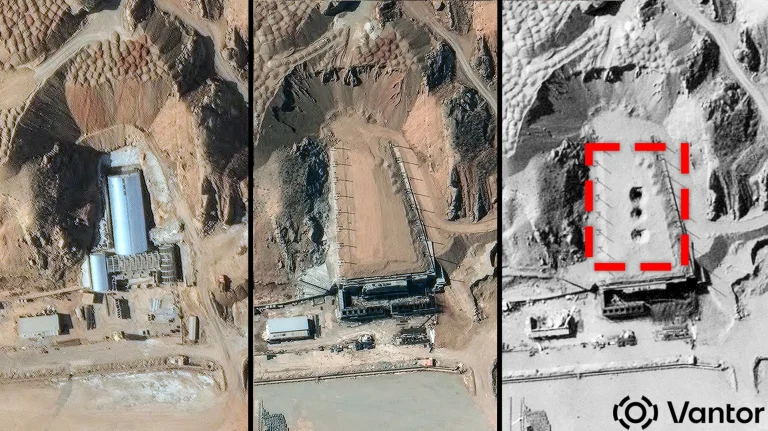
New satellite images of the Parchin military complex in Iran have sparked a wave of discussion among experts. The images show the Taleghan 2 facility, which has long been linked to Tehran’s nuclear program. The nature of the damage—three massive craters arranged in a straight line directly on the roof of the fortified building—suggests the possible use of the most powerful non-nuclear munitions in the U.S. arsenal: the GBU-57/B Massive Ordnance Penetrator (MOP).
What is the GBU-57 (MOP)?
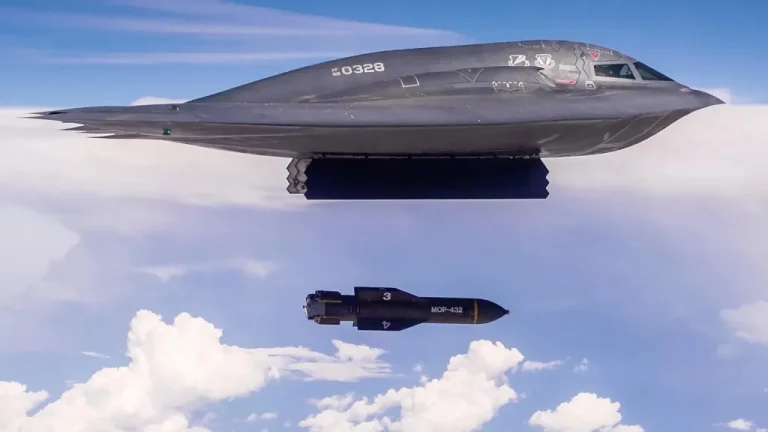
The GBU-57 is a 13-metric-ton (30,000-pound) guided bunker-busting air bomb. It was specifically designed to destroy targets located deep underground or protected by layers of reinforced concrete several meters thick. To date, the only aircraft certified to carry these giants is the B-2 Spirit stealth bomber, which is capable of carrying two such bombs in its internal bays.
Analysis of the Attack on Taleghan 2
The Taleghan 2 facility in Parchin had previously been identified by intelligence agencies as a site where tests were conducted on components necessary for the detonation of a nuclear charge. Although the facility was considered “mothballed,” recent data indicated that activity had resumed there.
Key details of the incident:
- Accuracy and Pattern: The three impact points are perfectly aligned. This is a common tactic for destroying deep-buried bunkers—several high-yield bombs are dropped at the same point (or very close to each other) to “cut through” a path through the concrete slabs and rock, reaching the lowest levels of the facility.
- Extent of the damage: Conventional 2,000-pound (900 kg) bombs would be unlikely to leave such distinctive marks on such a heavily fortified target. Experts note that the use of the GBU-57 guarantees the complete destruction of a high-priority target that cannot be hit with standard munitions.
- Context of the operation: This strike echoes Operation Midnight Hammer, during which B-2 bombers had already dropped GBU-57s on nuclear facilities in Fordo and Natanz. The similarity of the visual effects visible in satellite imagery provides strong grounds for believing that the same scenario was employed in Parchin.
Why is this important?
If the use of the GBU-57 is confirmed, it will be yet another sign that the United States has shifted to a strategy of physically destroying Iran’s most critical nuclear infrastructure sites, which were previously considered invulnerable to air strikes.
The Taleghan 2 complex has been further fortified by Iran in recent months, which likely explains the decision to use “bunker busters.” The use of the B-2 and MOP underscores that even Tehran’s deepest and most heavily defended laboratories remain within the range of U.S. strategic aviation.
Conclusion
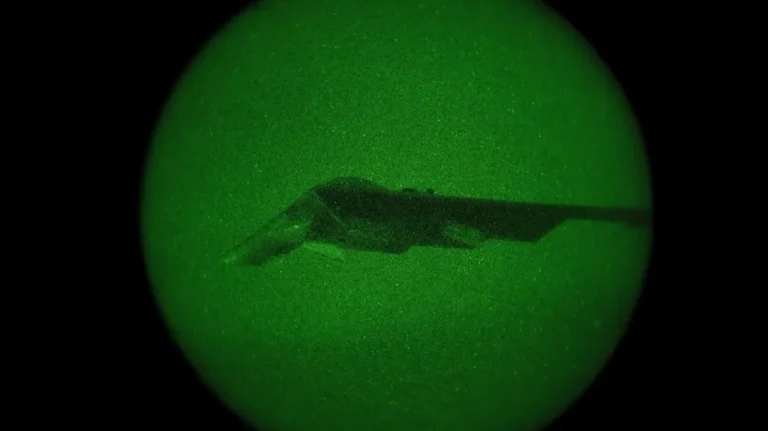
Although CENTCOM officials have confirmed the use of 2,000-pound bombs in the current conflict, the use of the GBU-57 is rarely officially acknowledged due to the secrecy surrounding the weapon’s specifications. However, the “signature” left on the roof of the facility in Parchin leaves virtually no doubt: the B-2 Spirit once again deployed its heaviest weapon.
по материалам https://www.twz.com/air/did-b-2s-just-drop-gbu-57-massive-ordnance-penetrators-on-another-iranian-nuclear-site