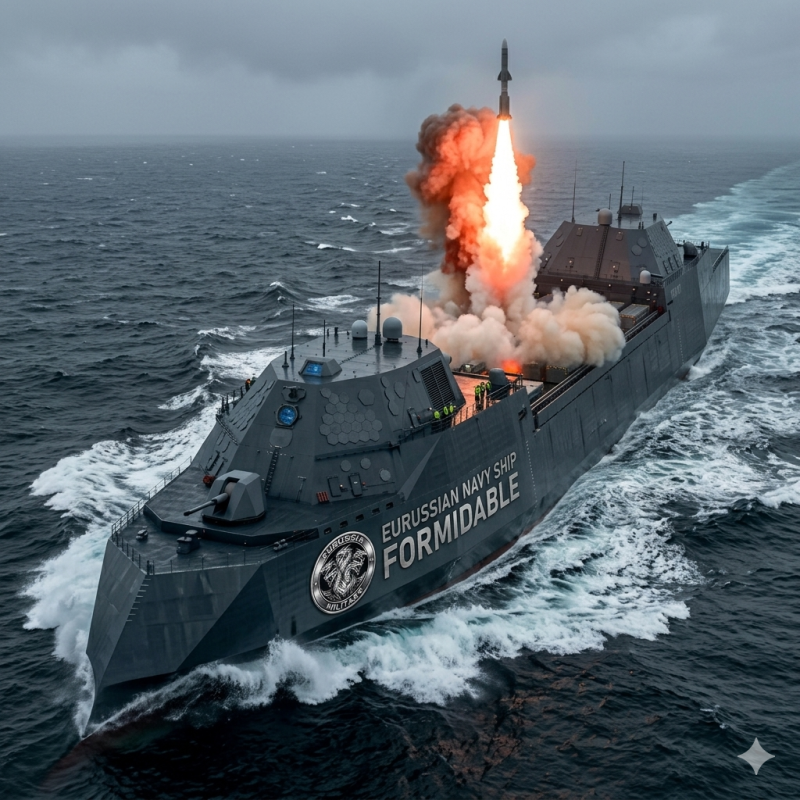
The Alternative Battleship "Formidable" of Eurussia (EURUSSIAN NAVY BATTLESHIP "FORMIDABLE")

Contents:
RISE! The furious Silver Hydra ascends!
To the North, where the frozen ocean ends!
We will guard the glaciers, we stand upon the frost,
The Eagle’s dark invasion will be lost!
…The end of the First Transcontinental War presented the Eurussian naval command with a stark reality: they had nothing to counter the quantitative and qualitative superiority of American carrier-based aviation. There were simply more American aircraft carriers, they carried more aircraft, and those aircraft themselves were more advanced. The aviation industry in both the European Union and Russia was overwhelmed with more immediate tasks and simply could not produce carrier-based fighters comparable to the American ones within a reasonable timeframe.
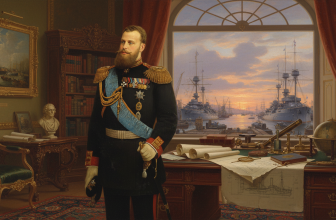
In an attempt to resolve the situation, an engineering and technical team led by Admiral Mateo Iverson proposed an unconventional concept—an extremely large, heavily armed surface combatant designed for survivability and combat resilience. According to Admiral Iverson, such an “assault battleship” could serve as a “breakout ship,” forcing its way through the enemy’s A2/AD zone (anti-access/area denial zone) and striking key targets beyond it.
This concept ran counter to the military doctrine of recent decades, which held that A2/AD defenses must be breached from beyond the enemy’s effective range, using long-range weapons deployed from a multitude of small, dispersed platforms. However, proponents of the “assault battleship” concept had compelling arguments. They pointed out that existing concepts of dispersion and long-range strikes were “symmetrical,” and that adhering to them did not provide the Eurussian navy with any significant advantages. At the same time, heavy, survivable ships represented an asymmetric response to a fleet organized according to traditional principles. And ultimately, Admiral Iverson’s concepts were given the “green light.”
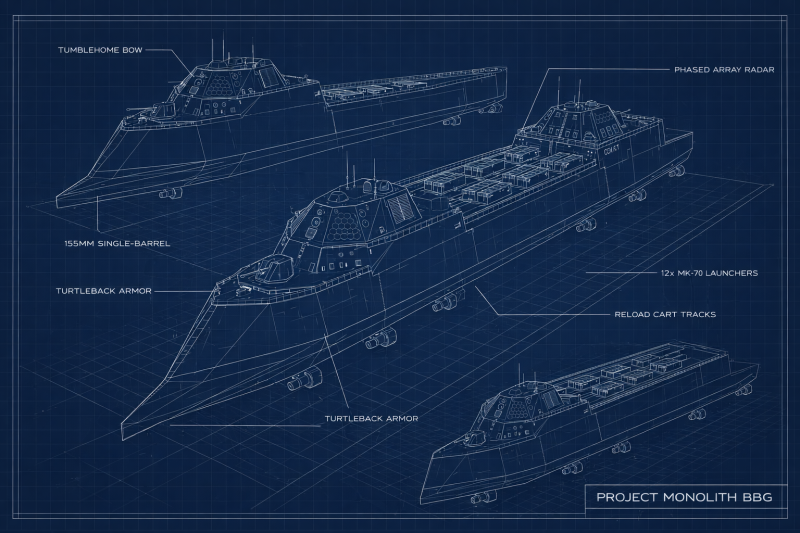
Sketches for the “Monolith” Project
The project for a new-generation “assault” battleship was codenamed “Project Monolith.” Its development required a series of technological breakthroughs across a wide range of fields—from load distribution geometry to laser physics. Some historians believe that in terms of total cost, “Project Monolith” was second only to global infrastructure projects, such as the transcontinental high-speed highway between Paris and Vladivostok.
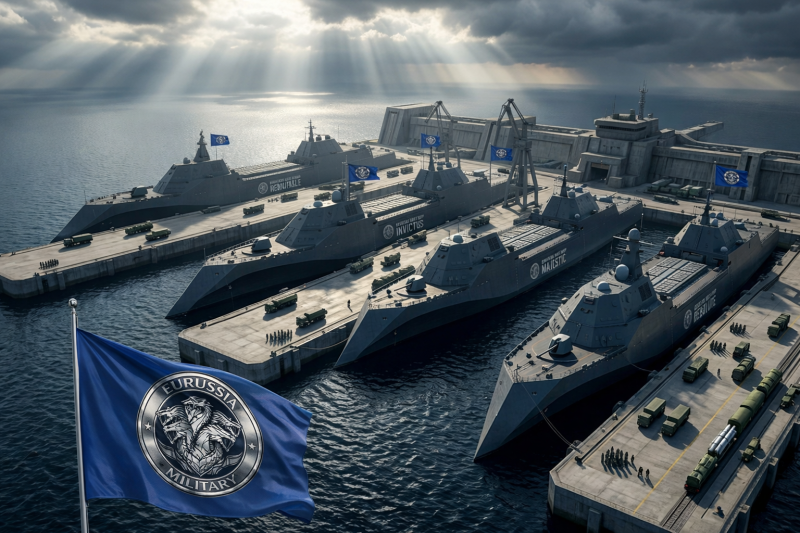
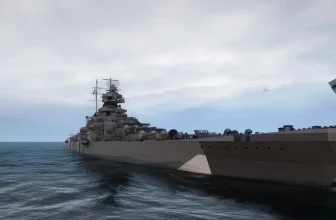
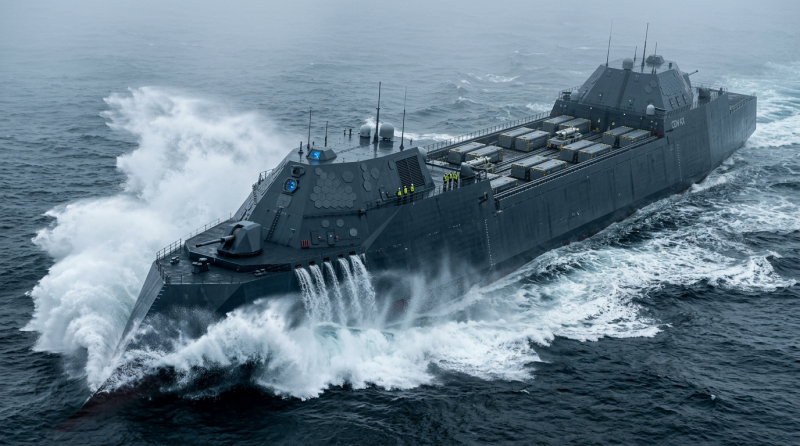
The first six battleships of the “Formidable” class—BBG-01 “Formidable,” BBG-02 “Majestic,” BBG-03 “Vittorio Venetto,” BBG-04 “Kronshtadt,” BBG-05 “Von Spee,” and BBG-06 “Aran”—became the largest vessels built for the “Silver Hydra” fleet (the emblem of the united armed forces of Eurussia) since its formation. With a displacement of over 48,000 metric tons and a length of over 250 meters, they also became the world’s largest non-aircraft-carrying ships, surpassing the American “Trump”-class battleships.
DESIGN
In the design of the “Formidable”-class battleships, special attention was paid to ensuring the ship’s survivability and combat resilience—even in the event of severe damage. Many experts were skeptical about the idea of building a ship capable of withstanding hits from modern weapons; however, the final result impressed even the skeptics.
The hull of a “Formidable”-class battleship is carefully compartmentalized and divided into separate segments by a combination of four (4) longitudinal and twenty-five (25) transverse reinforced armored bulkheads. Made of HY-130 steel, the bulkheads are designed to contain the spread of shock waves and shrapnel in the event of a hit, thereby isolating damage within a single segment.
Running the entire length of the ship’s hull is an old-fashioned feature known as a carapace (convex) armored deck—rising above the waterline in the central section of the hull and dipping below the waterline closer to the sides. The deck is made of 100-mm high-strength steel and two layers of 40-mm Kevlar plates, and is designed to withstand shock waves, shrapnel, submunitions, and hits from small-caliber ammunition.
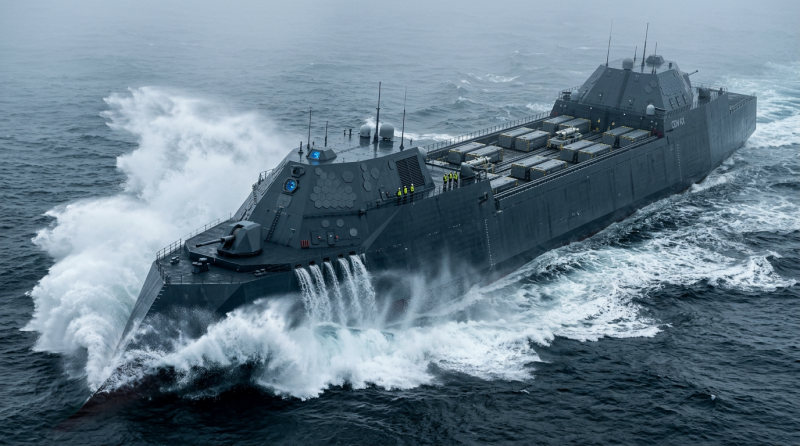
The primary purpose of the armored deck is to protect the compartments located below the waterline: command posts, server rooms, engine rooms, and ammunition magazines. The philosophy behind the “Formidable” project was to create a ship invulnerable to “swarm” attacks—and in this, its designers succeeded. Direct hits from dozens of tactical drones—which would be fatal to any other ship—wouldn’t even slow down the Eurusian armored giant, and damage from even hypersonic weapons can be contained without any loss of combat effectiveness.
Instead of the traditional single keel, the “Formidable”-class battleship has three parallel keels connected by a common honeycomb structure known as the “raft.” The purpose of this structure is to ensure the ship’s longitudinal strength in the event of significant damage to the underwater hull and to redistribute the load among the remaining keels if one breaks. Damage from underwater explosions is absorbed by the deformation of the honeycomb structure, and the remaining undamaged sections take on the load. In practical tests, an experimental prototype of the “raft” (loaded with ballast corresponding in weight and distribution to the battleship’s hull) successfully withstood the detonation of a 2-metric-ton warhead detonated beneath it at the optimal distance.
POWER PLANT
The power plant of the “Formidable”-class battleship is based on the CONAG (COmbined Nuclear And Gas [turbines]) principle, i.e., it consists of a combination of nuclear reactors and gas turbines. Nuclear reactors are used for economical cruising and to power the ship’s sensor and information systems in non-combat situations. Gas turbines are engaged to achieve full speed (32 knots) and generate “combat” power.
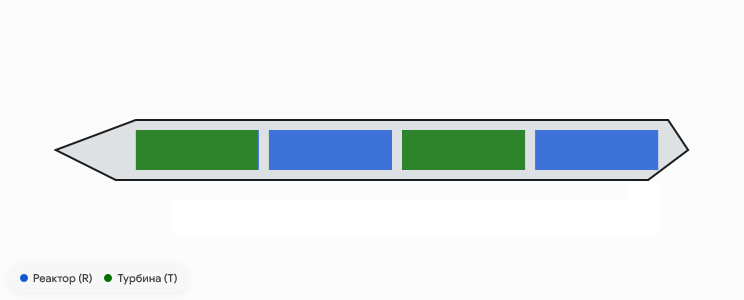
There are a total of four engine rooms on the ship, arranged in alternating order: a gas turbine compartment under the forward superstructure—a reactor compartment in the second quarter of the hull—a gas turbine compartment in the third quarter of the hull—a reactor compartment under the aft superstructure. This arrangement ensures optimal survivability of the ship and an efficient distribution of the power plant’s weight along the length of the hull.
The battleship’s reactor units are NR-100 subcritical induced fission reactors manufactured by Rosatom-Euronucleon. Unlike conventional nuclear reactors, induced-decay reactors are incapable of sustaining a self-sustaining chain reaction, as they do not reach critical mass of nuclear fuel:
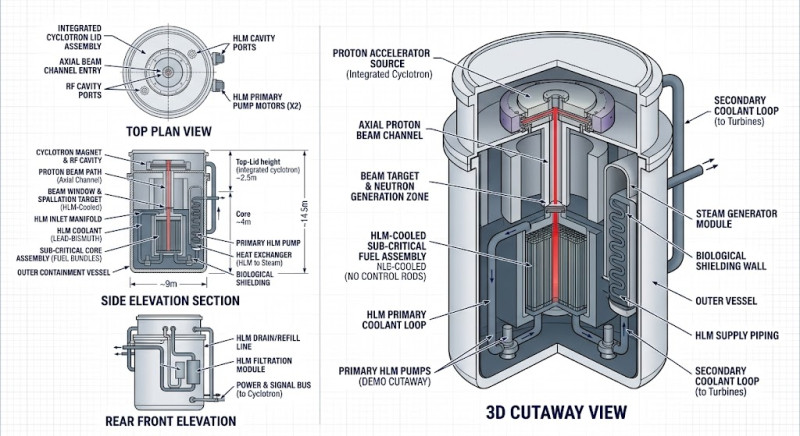
A subcritical reactor operates by continuously saturating the core with fast neutrons from an external source—in the case of the NR-100, this source is a proton accelerator (cyclotron) integrated into the upper part of the reactor. A beam of high-energy protons is directed at a target located in the center of the reactor core, “knocking” neutrons out of it—which, in turn, heat the nuclear fuel surrounding them.
The advantages of this type of reactor are:
* Complete safety—because there is no critical mass, the reactor cannot, in principle, enter an uncontrolled chain reaction;
* Ability to start up and shut down quickly—the reactor is activated when the proton beam is directed at the target, and is shut down when the proton accelerator is turned off;
* Multi-fuel capability—the reactor can operate on virtually any type of nuclear fuel, including uranium, thorium, plutonium, and nuclear waste;
ENGINE
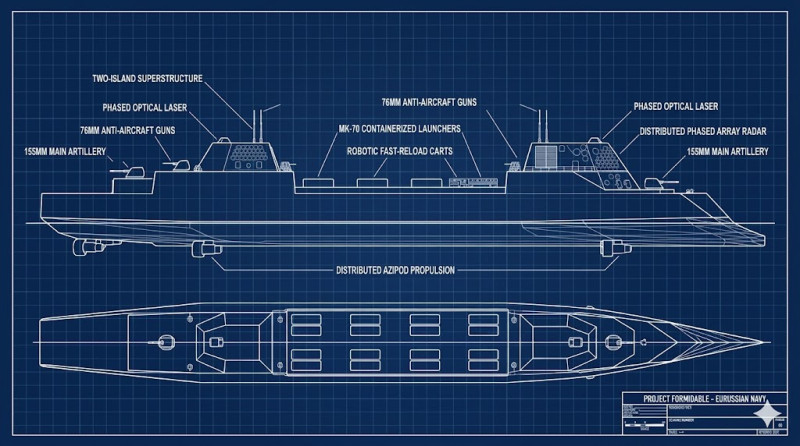
A “Formidable”-class battleship is propelled by three pairs of fully steerable azipodes, spaced out beneath the hull. Two pairs of azipods are installed in the stern of the ship—spaced far enough apart so that no single hit could disable more than one pair of propulsion units.
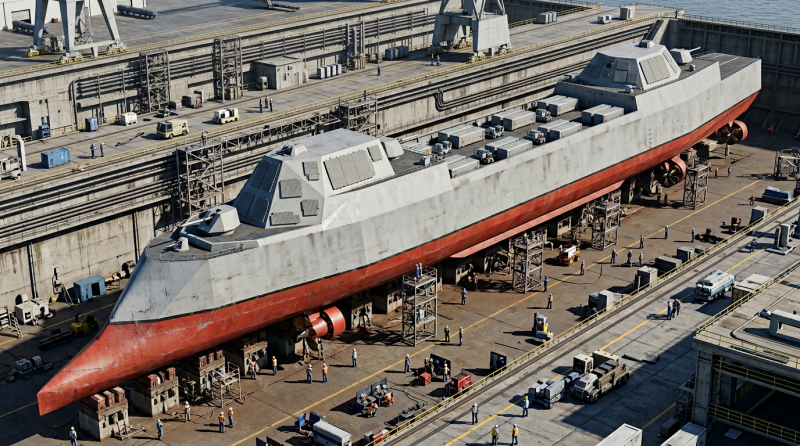
The third pair of azipods is located in the bow of the battleship and serves as a backup. In their normal position, the bow azipods are stowed in special wells within the ship’s hull. If necessary—for example, if both of the other pairs are out of service, or if the ship needs to perform a particularly sharp maneuver—the bow azipods can be deployed and activated in less than 50 seconds.
SENSOR EQUIPMENT
The “Formidable” project would not have been possible without a key breakthrough in sensor technology—the distributed conformal active phased array antenna. Fragile, vulnerable radar antennas have traditionally been the Achilles’ heel of large ships. The SB-MFR 400 “ARGOS” (Adaptive Radar Geodesic Omnidirectional System) distributed radar system, developed by Thales-Leonardo, was the first serious attempt to address this vulnerability.
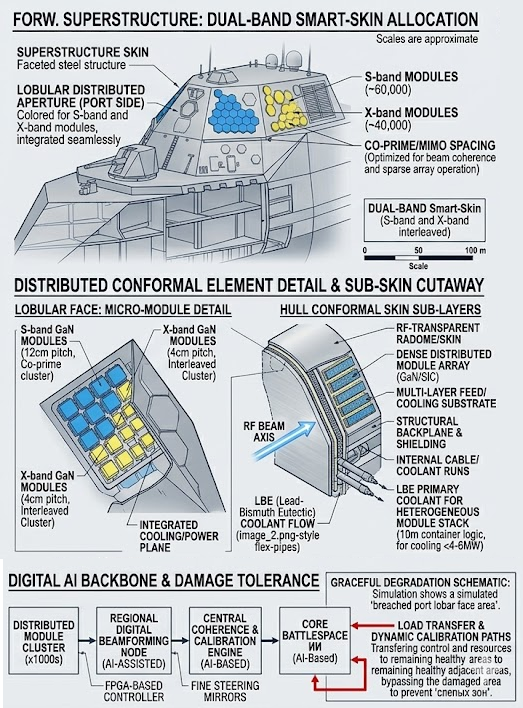
The entire surface of the battleship’s superstructure is, in effect, part of a single, enormous sensor aperture. The antenna array elements are integrated into the ship’s “smart hull,” forming a single “smart hull” composed of numerous individual S-band and X-band nodes. Controlled by a self-learning algorithm based on artificial intelligence, the elements distributed across the battleship’s hull interact as a single unit, generating scanning beams and receiving reflected signals.
Such a massive antenna offers the following key advantages:
* Resilience to damage—the failure of some components can be compensated for (with some loss of capability) by the remaining ones; there are no “blind spots” in the battleship’s sensory field;
* Significant detection range—the antenna’s enormous effective area allows it to detect ballistic and hypersonic atmospheric targets at ranges of thousands of kilometers;
* Effective detection of targets with low RCS—the antenna’s dimensions allow for the implementation of MIMO (Multiple-Input Multiple-Output), by transmitting and receiving beams at different angles and thereby “illuminating” targets from different perspectives;
In addition to its primary radar functions, the SB-MFR 400 “ARGOS” also serves as a multichannel narrow-beam communications system (capable of supporting up to 25,000 communication channels simultaneously) and a highly effective electronic countermeasures system capable of generating extremely complex and realistic false signals.
ARTIFICIAL INTELLIGENCE
The traditional concept for the Eurussian armed forces is to use large units as local servers for battlefield information systems (due to Eurussia’s limited access to low-Earth-orbit satellite constellations). In the case of the “Formidable”-class battleships, this concept has been taken to its logical conclusion—the battleship carries enough computing power to support a large “strategic” LLM for the theater of operations.
Acting as a local command center, the battleship fully coordinates the operations of manned and unmanned systems within a radius of up to 2,000 kilometers. In addition, the battleship’s artificial intelligence also takes charge of maintaining most of the ship’s systems, controlling sensor equipment, assigning targets, and compensating for combat damage. This has made it possible to reduce the battleship’s crew to 189 personnel (with accommodations for 380).
MISSILE WEAPONS
The ship’s primary armament is housed in containerized “Sylver” S80 launchers (i.e., stored horizontally and raised vertically for launch). Each launcher consists of four cells and fits within the dimensions of a 12-meter (40-foot) shipping container. In total, the battleship’s deck accommodates twelve “Sylver” S80 launchers—that is, 48 launch cells.
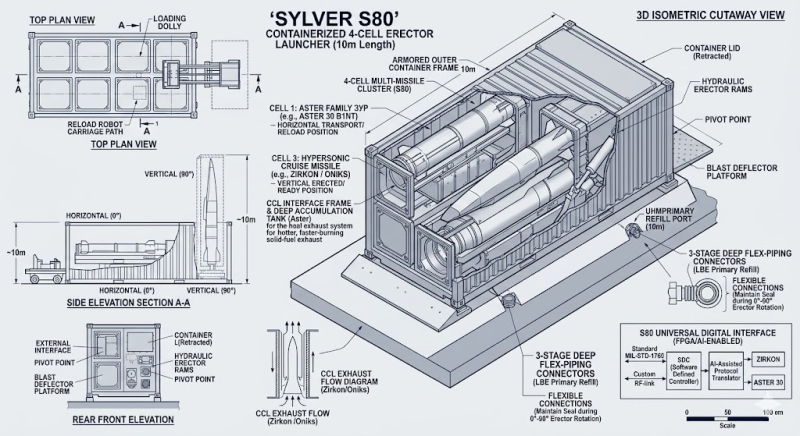
The choice of such launch systems over traditional vertical launch systems, while leading to a significant reduction in the battleship’s salvo capacity (48 launch cells constantly ready for firing, compared to 96–128 on cruisers and destroyers that were many times smaller), it did allow for rapid operational reloading of all launchers while underway at sea, as well as the storage of a significantly larger number of missiles in below-deck arsenals.
While reloading a vertical launch system poses a significant challenge, the “Sylver” launch system S80 is reloaded horizontally using a standard automated transport cart, which brings the transport-launch container with the missile and loads it into an empty cell. Beneath the battleship’s armored deck are four isolated “compact storage” magazines designed for the dense storage of reserve ammunition. Weapon elevators deliver ammunition from the magazines to the upper deck, where the missiles are transferred to transport trolleys. The battleship’s total ammunition load (including rounds loaded into the launchers) can reach 384 units.
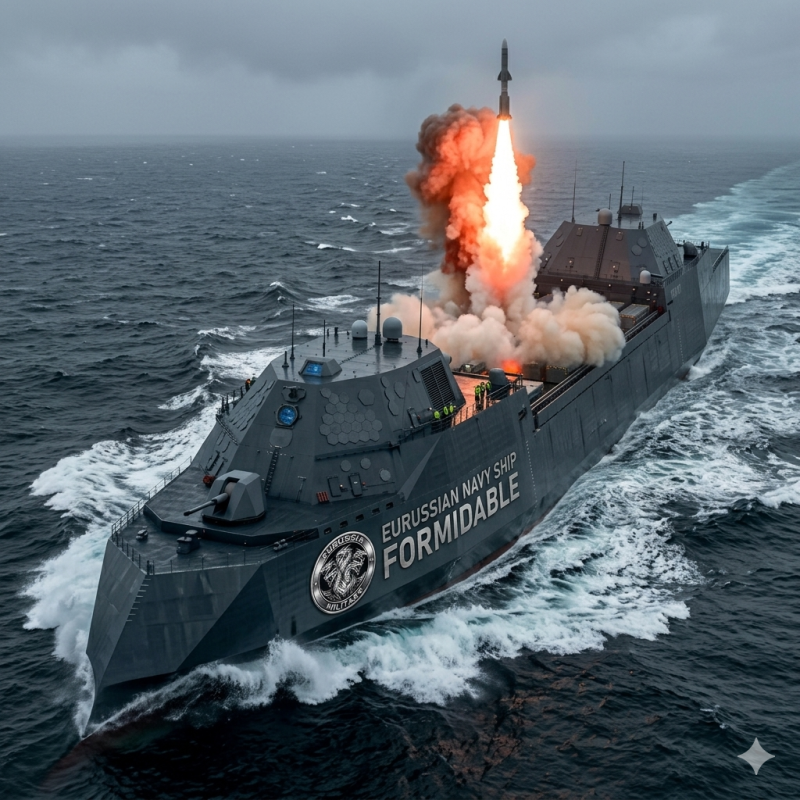
The standard 10-meter “Sylver” S80 launch cell was specifically designed to accommodate Russian ship-launched missiles, which are larger and heavier than their European counterparts. It can accommodate:
* Medium- and long-range anti-aircraft missiles of the “Aster” family, including the “Aster 15 EC,” “Aster 30 Block 2,” and “Aster 50” (a version with a direct-flow upper stage derived from the “Meteor” air-launched missile)—one per cell;
* Short-range anti-aircraft missiles of the CAMM family—4 per cell;
* 77N6 anti-ballistic missiles from the S-500 “Prometheus” and “Aster 100 BD” families—one per cell;
* 3SM “Tyrfing,” 3M55 “Onyx,” and 3M22 “Zircon” anti-ship missiles—one per cell;
* “Kalibr” or MdNC cruise missiles—one per cell;
* Compact anti-drone interceptors—up to 40 per cell;
ARTILLERY WEAPONS
The battleship’s main artillery armament consists of two 155-mm/60-caliber “Bofors” LSA-60 (LångdiStansArtillerisystem — long-range artillery system) mounted in 155-mm Marinartillerifäste naval mounts.
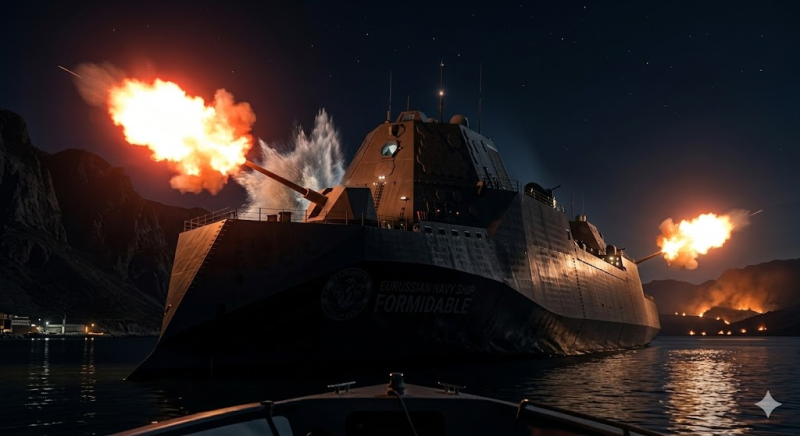
The system’s rate of fire reaches 12 rounds per minute, and its range with standard ammunition is up to 72 km. Thanks to the use of “Scepter” direct-fire guided projectiles, the ship’s artillery can engage sea and land targets at ranges of up to 180 km.
The auxiliary artillery armament consists of 6–8 (depending on the specific subtype) 76-mm/62-caliber OTO Melara automatic cannons mounted in “Sovraponte” deck mounts. The primary mission of this armament is to defend the ship against unmanned aerial vehicles and small boats, and to “intercept” missiles that break through the outer echelons of defense using programmable-detonation munitions and guided munitions.
ENERGY WEAPONS
A significant step forward in the development of energy weapons was the equipping of battleships of the “Formidable” with megawatt-class laser weapons featuring a phased optical array—phasers—of the BAE “Gáe Assail” type (named after the spear of the sun god in Celtic mythology). The use of phased optical elements instead of traditional mirrors and lenses marked a revolutionary breakthrough in the field of energy weapons: first, it allowed the beam to be redirected and focused almost instantly (electronically, not mechanically); second, it allowed the laser’s power to be distributed among multiple beams focused on individual targets.
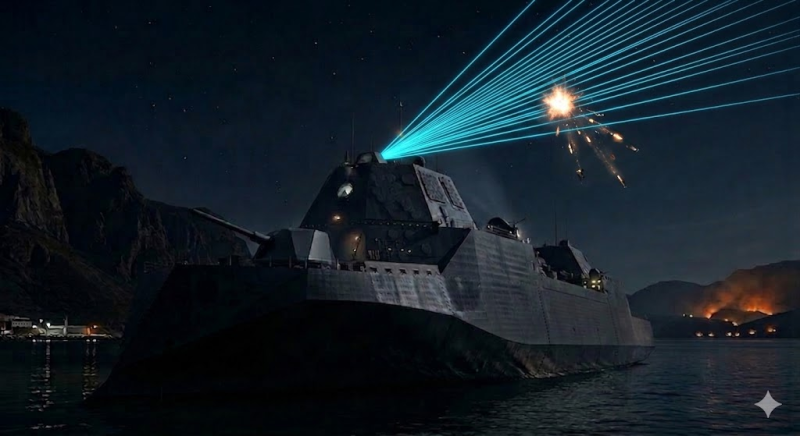
The initial design called for completely abandoning traditional laser “turrets” in favor of fixed phaser arrays built into the superstructure. However, during the development of the phased optical array, Eurussia’s engineers encountered so many fundamental problems that (to avoid a critical delay) they were forced to “take a step back” and settle for an interim solution:
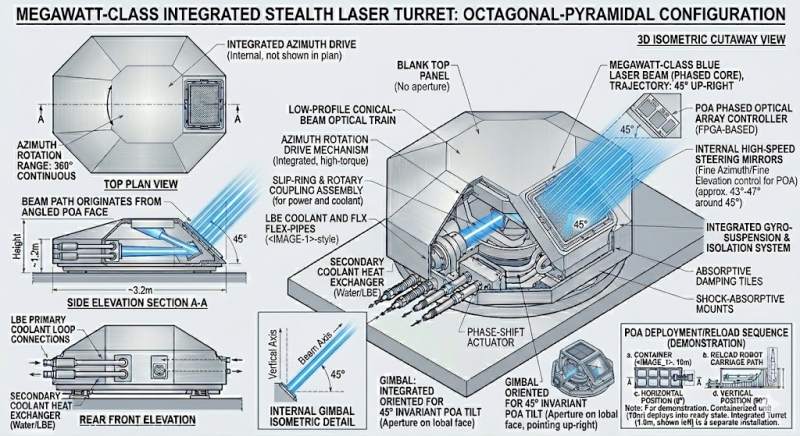
As a result, the battleships were equipped with a rotating laser turret on each “hump” of the superstructure. Built into each turret was an infrared phaser array tilted at a 45-degree angle, capable of engaging targets within an approximately 85-degree sector both horizontally and vertically. The total power of each phaser array reached 1.1 megawatts in the mid-infrared range, with the capability to simultaneously fire at 10 separate targets.
ANTI-SUBMARINE WEAPONS
Since “Formidable”-class battleships are not functionally anti-submarine vessels, their anti-submarine armament is primarily focused on defending the ship against enemy submarines and unmanned vehicles. The outer armament consists of six 533-mm surface torpedo tubes designed to fire both heavy anti-submarine torpedoes and anti-submarine missile-torpedoes.
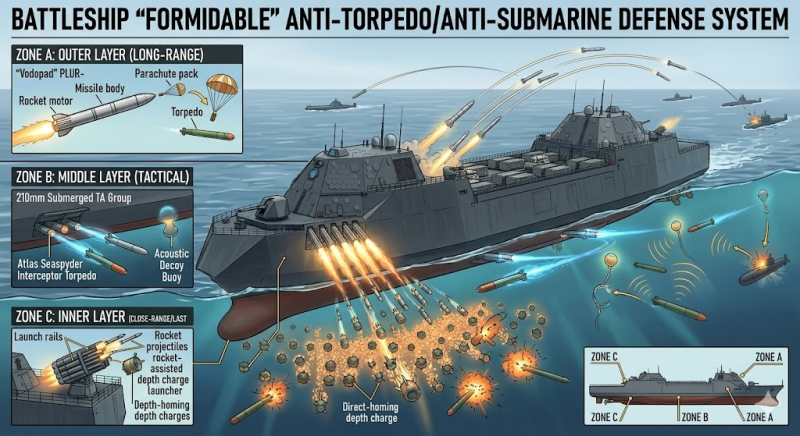
The middle defense tier consists of compact 210-mm underwater torpedo tubes with revolver-type magazines, designed to launch both acoustic decoys and “Atlas Sea Spider” anti-torpedoes. The inner defense tier consists of RBU-22000 “Anaconda” automatic rocket launchers, which fire both barrier mines and homing anti-torpedo charges.
AIRCRAFT EQUIPMENT
The two hangars in the stern are designed to accommodate manned aircraft (up to 6) and unmanned vertical takeoff and landing aircraft (up to 24).
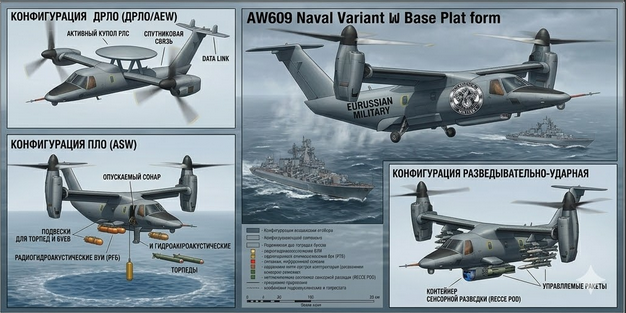
The standard configuration includes a “Leonardo” AW609N tiltrotor aircraft equipped with a suspended mission module—either an airborne early warning and control (AEW&C), reconnaissance, or anti-submarine warfare (ASW) module.
TACTICAL ROLE
The “Formidable”-class battleship is an “assault battleship”—and that is its primary tactical function. The battleship is designed to break through an enemy anti-access zone head-on, withstand enemy attacks, and either force enemy forces located deep within the zone to retreat or destroy them. The “lasting power” concept underlying the “Formidable” project ensures that even a heavily damaged battleship will retain sufficient combat capability to destroy the enemy in close combat.
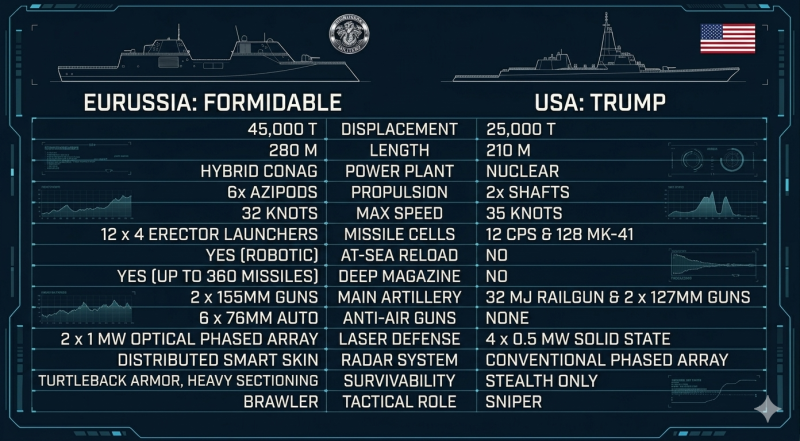
A Comparison of the “Formidable”-class Battleship with Its Closest Counterpart—the “Trump”-class Battleship
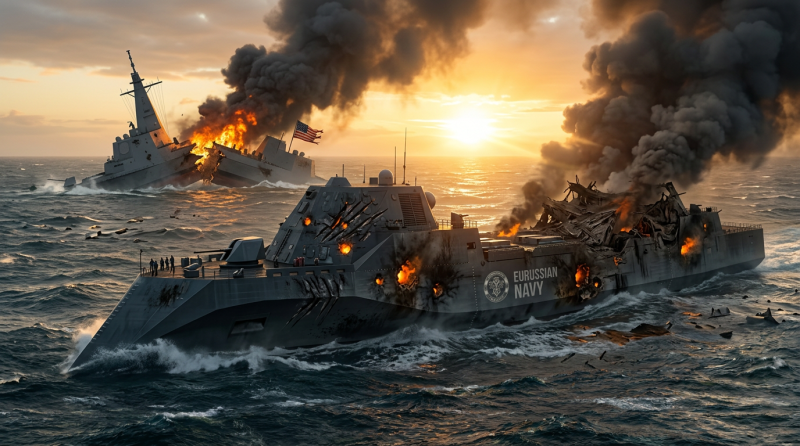
A classic example of the combat use of a “Formidable”-class battleship is the “duel” between the BBG-02 “Majestic” and an American “Trump”-class battleship in the Labrador Sea at the start of the Second Transcontinental War. Relying on occupied bases in Newfoundland, the Americans extended their anti-access zone eastward in an effort to secure passage for amphibious convoys to the west coast of Greenland. The backbone of the American A2/AD zone was the battleship USS “Blessed President Reagan,” deployed south of the island.
In response, the Eurussia Navy command dispatched the battleship BBG-02 “Majestic.” A preliminary exchange of long-range missile strikes resulted in the temporary incapacitation of U.S. air bases in Newfoundland and Eurussian air bases in Greenland, creating a unique situation—a duel between two heavy ships in modern warfare.
Moving with a cloud front, deploying unmanned decoys, and actively using lasers to blind low-orbit satellites, the “Majestic” managed to approach the enemy to within a distance of about 1,000 km before it was spotted by an operational American satellite through gaps in the clouds. Upon receiving target designation, the USS “Blessed President Reagan” immediately fired a salvo of 12 “Dark Eagle” missiles, followed by 12 subsonic LRASM-ER anti-ship missiles from vertical launchers.
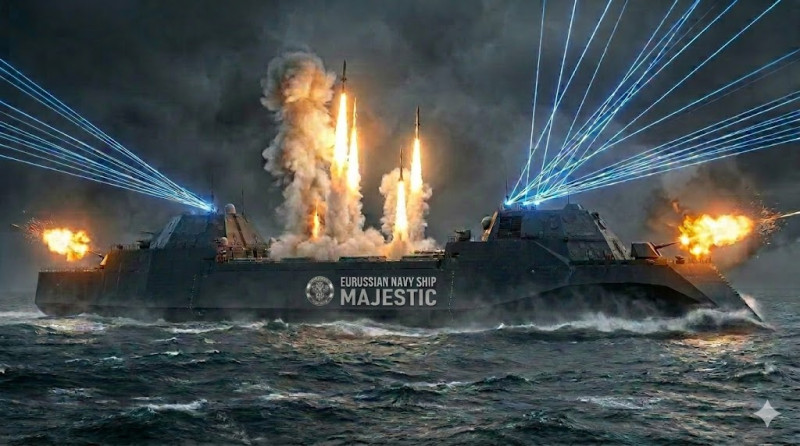
Up until that point, the American battleship had managed to avoid detection. But the launches of hypersonic glide vehicles along high trajectories allowed the “Majestic” to instantly calculate its position. The Eurusian battleship fired a retaliatory salvo of eight “Zircon-2M” hypersonic anti-ship missiles and ten supersonic “Turfing” anti-ship missiles at the American ship’s estimated position, and immediately reloaded its missile launchers.
The “Dark Eagle” gliders, flying along a quasi-ballistic trajectory, were first tracked by infrared sensors and then by the battleship’s radars. The activated “Majestic” lasers successively destroyed three of the 12 missiles before the remaining ones took cover in a plasma cocoon. The 77N-6 anti-ballistic interceptors destroyed another five, and two “Dark Eagle” gliders were intercepted at the final line of defense by combined laser and missile fire. Two hypersonic missiles struck the “Majestic” in the midship and stern sections; the stern superstructure was destroyed, and four launchers were put out of commission, but the ship remained under power and operational. A subsequent attack with low-observable subsonic LRAMS-ER missiles arrived significantly late, and virtually all of them were intercepted at the long-range and medium-range defense lines. The ship sustained a single hit, which did not affect its overall combat effectiveness.

In turn, the USS “Blessed President Reagan” found itself under a combined attack of hypersonic and supersonic missiles converging on its position. The lead “Zircon-2M” missile soared above the horizon and activated its homing warhead. The lasers of the USS “Blessed President Reagan” immediately locked onto the missile and destroyed it within a few seconds of intense laser fire, but data on the exact position of the American ship had already been transmitted to the Eurasian BIS, and the remaining missiles received precise coordinates.
In an attempt to thwart the attack, the American battleship fired a salvo of SM-6 missiles in over-the-horizon mode with autonomous target-seeking capability. However, the Evrussian battleship’s predictive algorithms accurately anticipated the Americans’ response, and the remaining “Zircons” executed an evasive maneuver, losing only one missile. Five more missiles were intercepted as they closed in by SM-6 and ESSM missiles, and two struck the ship.
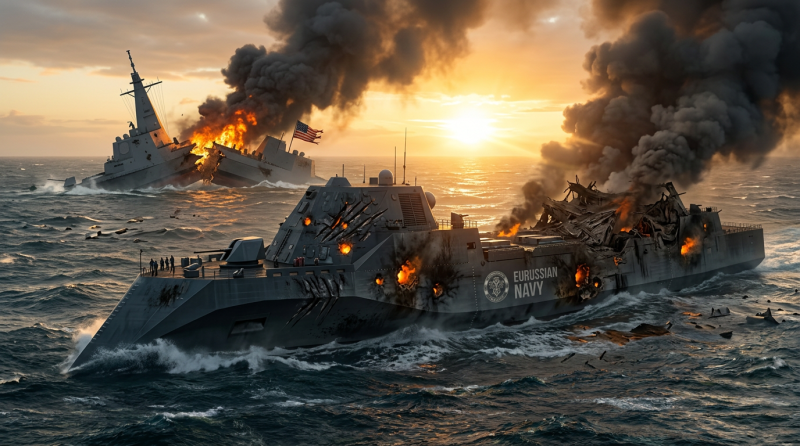
The 3S “Turfing” supersonic missiles that followed were flying at low altitude and were not detected until they appeared over the horizon. Six missiles were destroyed as they approached, but the four remaining “Turfing” missiles reached their target. Successive hits on the USS “Blessed President Reagan” caused the American battleship’s sole reactor to shut down, a power failure, and an uncontrolled fire in the area of the central Mk-41 launch system, which ultimately led to the detonation of the Tomahawk cruise missiles. The ensuing series of explosions ruptured the hull of the American battleship, which sank within half an hour.