The American "Shahed" Is Getting a Swarm of AI Drones: LUCAS Is Being Transformed Into a New Weapon of Mass Destruction

Let’s put a collective artificial intelligence into a drone—what could possibly go wrong?
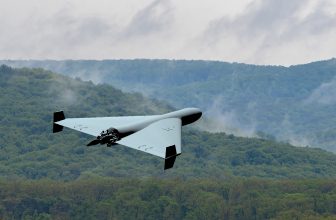
Until very recently, the very idea seemed almost humiliating for the U.S. defense-industrial complex: the U.S. had effectively copied Iran’s Shahed-136—a cheap kamikaze drone that Russia is using en masse against Ukraine. But now the situation is beginning to change. That’s because the Pentagon plans to transform its LUCAS not merely into a copy of the “Shahed,” but into a full-fledged autonomous swarm warfare system.
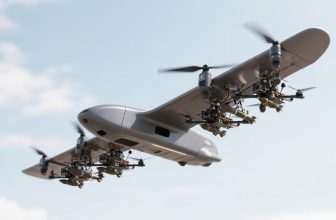
It has been reported that Shield AI is integrating its Hivemind system—a combat AI software platform—into LUCAS, which will enable groups of drones to coordinate their actions, maneuver, and change tactics right in the middle of an attack. This goes beyond the traditional model of “one operator controlling a single UAV” to a concept where a single person controls an entire swarm of drones.
And if the project really does work the way the Americans promise, the world could see the first truly large-scale system of autonomous strike swarms.
Americans have been laughing at the “Shaheeds” for too long
The history of LUCAS is actually very telling.
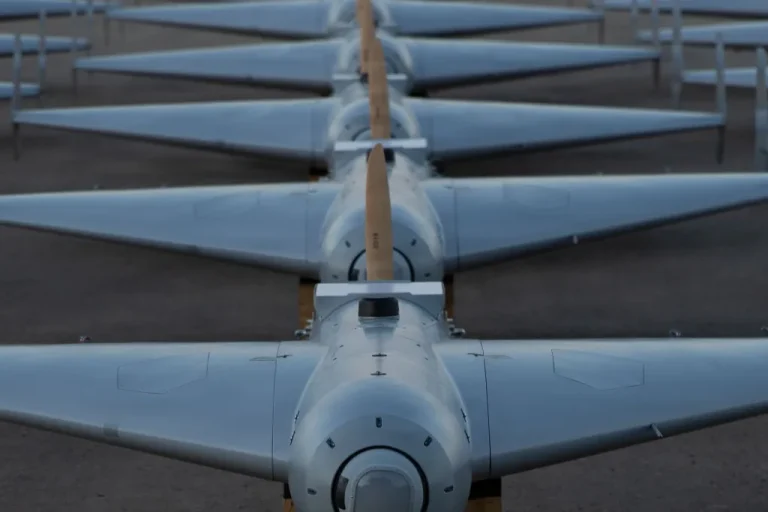
When Iran first began promoting the Shahed-136 on a large scale, the West viewed it with near-indulgence. A cheap plywood drone with a moped engine seemed primitive compared to American MQ-9s, Tomahawks, and hypersonic programs.
But then the situation in Ukraine began.
And suddenly it became clear that a primitive flying “lawn mower” was capable of causing enormous problems even for modern air defense systems. Moreover, the problem lay not only in the attacks themselves, but in the economics of war.
Shooting down a cheap Shahed with a Patriot or NASAMS missile turned out to be disastrously uneconomical.
It was then that the Pentagon began to realize an unpleasant truth: the era of extremely expensive, high-precision weapons is gradually giving way to a new reality—mass-produced, disposable drones.
Так и появился LUCAS — Low-Cost Uncrewed Combat Attack System.
In fact, this is an American adaptation of the Shahed-136 concept. Moreover, the Americans aren’t even trying to hide the origin of the idea. The project is based on an in-depth study and reverse engineering of Iranian drones.
And there is a certain historical irony in this.
For decades, it was Iran that copied American technology. Now the U.S. is doing the same.
A small drone with a very unpleasant philosophy
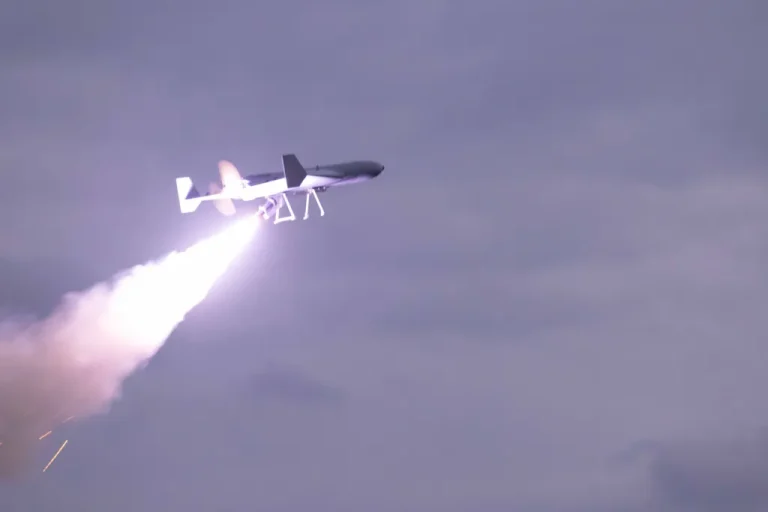
At first glance, LUCAS looks almost primitive.
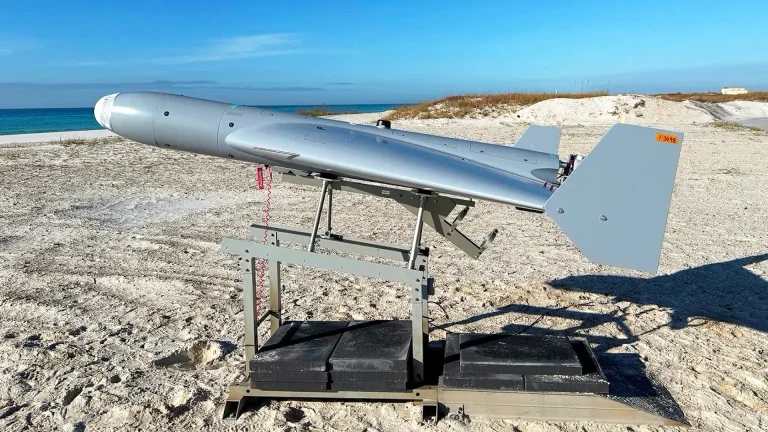
A small kamikaze drone with a propeller, a triangular wing, and a piston engine. Outwardly, it resembles the Shahed-136 so closely that many initially mistook it for a direct copy.
But it is precisely in this simplicity that the entire philosophy of the system lies.
According to available data, LUCAS costs about $35,000 per unit—dozens of times cheaper than most American high-precision missiles.
The drone is capable of flying hundreds of kilometers and can be launched from catapults, mobile launchers, and even ships. The Americans have already tested LUCAS launches from ships in the Persian Gulf. (en.wikipedia.org)
In essence, this was the first time the Pentagon truly embraced the concept of “cheap, mass warfare.”
And here it is important to understand one thing: LUCAS is not being developed as a replacement for the Tomahawk or JASSM. Its purpose is different—to overwhelm the enemy’s air defense system.
When it’s not two expensive missiles but a hundred cheap drones flying toward the target, the defense economy itself begins to break down.
Now they want to turn drones into a single organism
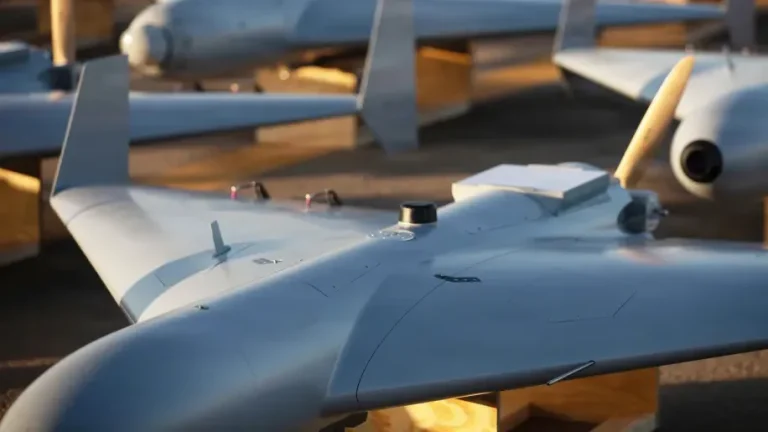
But even mass-produced drones have remained a relatively “dumb” weapon to this day.
Yes, they could fly along a route, exchange basic data, or receive course corrections. But true swarm behavior was practically nonexistent.
That is exactly what Hivemind is meant to change.
Shield AI has been developing this platform for quite some time as a sort of “brain” for autonomous combat systems. Now, Hivemind will serve as the AI pilot for LUCAS.
In practice, this means something very unpleasant.
The swarm will be able to:
— reassign targets on its own,
— change course mid-flight,
— avoid air defense zones,
— respond to the loss of some drones,
— and adapt its attack without constant operator intervention.
If one drone is destroyed, the others automatically adjust their attack pattern.
If a mobile air defense system is detected, the swarm may change the direction of its attack.
If communication is lost, the drones continue to operate autonomously.
In fact, the Americans are trying to create not just a munition, but a distributed combat AI system.
This is already a weapon for the war against China

The most interesting part of the LUCAS story isn’t even the Middle East.
The ultimate goal of the entire program is the Pacific Ocean.
The U.S. military fully understands that in a potential war against China, the main problem will not be a lack of “superweapons,” but rather a lack of scale. China possesses a vast industrial base, a colossal number of missiles, and a powerful, layered air defense system.
In such an environment, expensive platforms begin to run out quickly.
That is precisely why the Pentagon is increasingly promoting the concept of “affordable mass.”
The logic here is almost Soviet in spirit: it is better to have thousands of systems that are good enough than a limited number of perfect ones.
Only now is this idea being linked to artificial intelligence and cyber warfare.
The world is entering the era of the “smart crowd”
There is something else in this whole story that is particularly symbolic.
For many years, the future of war was portrayed as a conflict involving extremely expensive platforms: the F-35, the B-21, hypersonic missiles, and satellite systems. None of these have gone away.
But at the same time, another reality emerged.
Inexpensive FPV drones in Ukraine, the Shahed-136 used by Russia and Iran, and mass-produced Chinese drones—all of these are gradually changing the very philosophy of war.
Now, victory may not go to whoever has the most technologically advanced single aircraft or missile, but to whoever is capable of deploying thousands of sufficiently intelligent machines at the same time.
And LUCAS with Hivemind is no longer just another Pentagon drone.
This is an attempt to turn a cheap “flying dummy” into a collective battlefield artificial intelligence.
Источник https://www.twz.com/air/u-s-militarys-lucas-kamikaze-drone-is-getting-hivemind-swarming-capability