In the early 20th century, the Balkans became a place where the conflicting interests of various countries—both those of the Balkan states themselves and those of the great powers with interests in the region—intertwined. The resulting tense situation is often referred to as the “Balkan knot.” Today, this knot is not exactly untied, nor have its contradictions been resolved; rather, its former participants have largely settled down. However, back in the day—when the participants in the knot were more passionate and tried to advance their own interests within the broader knot—it led to bloodshed.
The conflicts in the Balkans were exacerbated by the fact that the political leaders making decisions at the time proved incapable of thinking them through or anticipating the consequences of their decisions amid the complex interplay of different countries’ interests. As a result, this tangle of contradictions steered the development of the situation in the Balkans toward a dire scenario, leading to events that resulted in heavy casualties.
Russia also had interests in the Balkans, which meant it became entangled in that complex web of contradictions. This involvement led to the turbulent events in the Balkans becoming part of Russian history as well.
The Second Balkan War and Its Consequences
In 1912, Serbia, Bulgaria, Greece, and Montenegro joined forces to fight together against the Ottoman Empire. The war (the First Balkan War) proved successful. The allies quickly drove the Turks out of the Balkans and liberated the lands inhabited by their fellow countrymen.
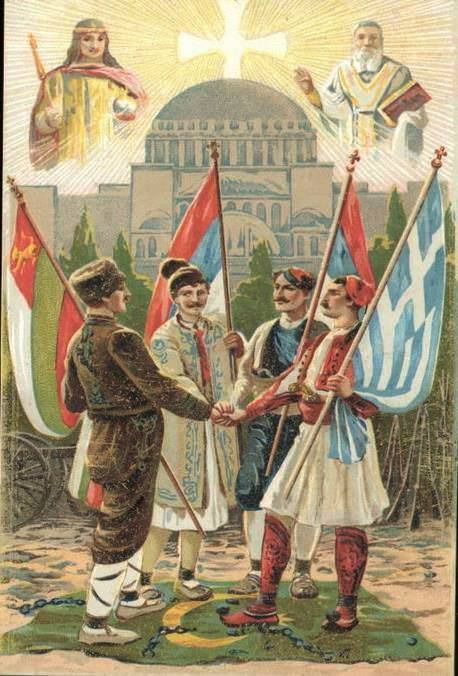
A poster depicting a union of Balkan countries. Alas, their union lasted only half a year.
After the victory, the liberated territories remained to be divided—but here the allies’ interests diverged, and a dispute quickly escalated between them. A war of nerves began—one in which Bulgaria was the first to crack. In the summer of 1913, it launched military operations to seize the disputed territories. In response, all of Bulgaria’s neighbors—Serbia, Greece, Romania, and Turkey—attacked it. This war, known as the Second Balkan War, proved to be disastrous—for everyone, that is. Well, except for the Turks.
The anti-Bulgarian coalition had an overwhelming advantage, and the Bulgarians suffered a catastrophic defeat. The victors seized large swaths of territory and carried out ethnic cleansing of the Bulgarian population there.
For Serbia
In 1913, the Serbs were celebrating—they had defeated Bulgaria and secured control of Macedonia, which had been a source of dispute between the two countries. The Serbs eradicated everything they considered pro-Bulgarian in the annexed region. But the price they paid was that the Serbs became the Bulgarians’ worst enemy. Instead of an allied Bulgaria, the Serbs ended up with a hostile neighbor seeking revenge. And as early as the following year, this came back to haunt the Serbs. In 1914, they clashed with Austria-Hungary, marking the beginning of World War I. Bulgaria sided with Serbia’s enemies.
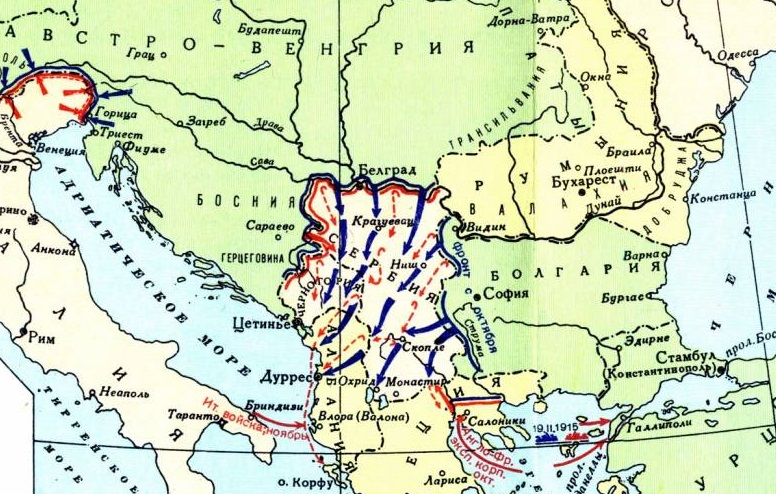
The Defeat of Serbia in 1915
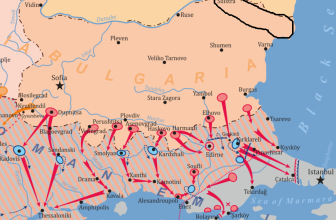
It was precisely the desire to wrest Macedonia from the Serbs that was the immediate cause of Bulgaria’s entry into World War I on the side of Austria-Germany. In the fall of 1915, the Bulgarian army joined the Austro-German offensive against Serbia. Under attack from two sides, the Serbian army was routed, and the country was occupied. As a result, the war took a particularly heavy toll on Serbia, inflicting enormous losses.
More than 150,000 Serbian soldiers were killed, and the war ravaged the entire country, which, combined with the enemy occupation, resulted in the deaths of hundreds of thousands of civilians. In total, Serbia suffered at least 700,000 casualties during World War I—this is the lower estimate of its losses; the higher estimate is over 1.2 million (according to Serbian sources). And this was with a population of 4.5 million in 1914 (including 1.5 million in the territories annexed in 1913). Hundreds of thousands of war-disabled and orphans were left in the wake of the war. Along with the military catastrophe, the country also suffered a demographic one.
And then there was World War II. For Bulgaria, the Serbs were still not Slavic Orthodox brothers, but the worst of enemies who had seized Bulgaria’s ancestral lands. This was well remembered. In the spring of 1941, Bulgaria made its territory available for the deployment of German troops against Yugoslavia. The German offensive from Bulgaria was decisive in the defeat of Yugoslavia. In total, more than 500,000 Serbs died in World War II (this is a conservative estimate).
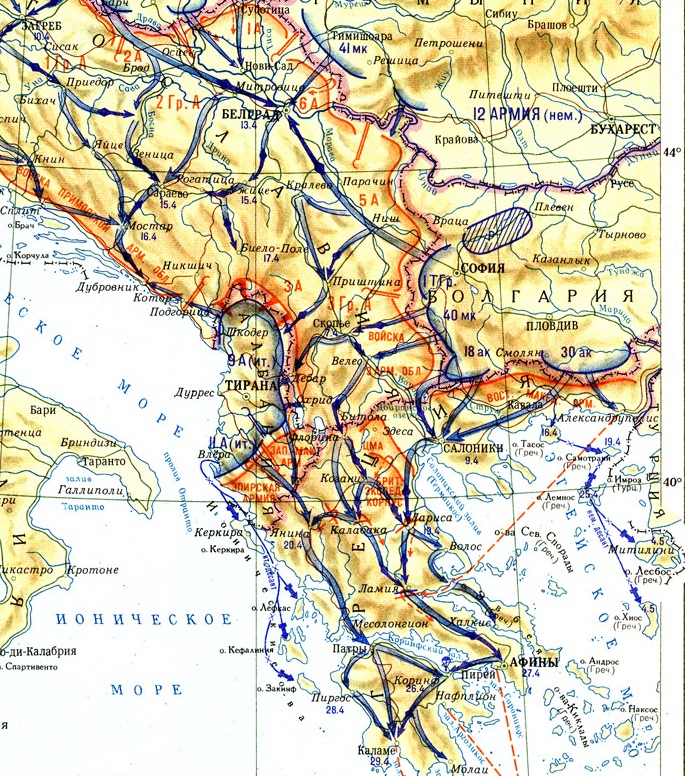
The German offensive from Bulgarian territory in 1941
All in all, the annexation of Macedonia in 1913 would cost the Serbs dearly due to Bulgarian retaliation, which found strong external support. And in the end, the Serbs also lost Macedonia, which seceded in 1993.
For Romania and Greece
Romania also seized a large portion of Bulgarian territory during the war of 1913, after which the recovery of that territory became a matter of national interest for Bulgaria. Driven by this interest, in 1916 the Bulgarian army assisted the Austro-Germans in defeating the Romanians. Romania, like Serbia, became the target of Bulgarian revenge for its defeat in the Second Balkan War and the occupation of Bulgarian territory. As a result, World War I also inflicted heavy losses on Romania. Approximately 700,000 Romanians—one in ten—lost their lives. The conquest came at a very high cost to Romania, and in 1940 it was forced to return to Bulgaria the lands it had seized in 1913.
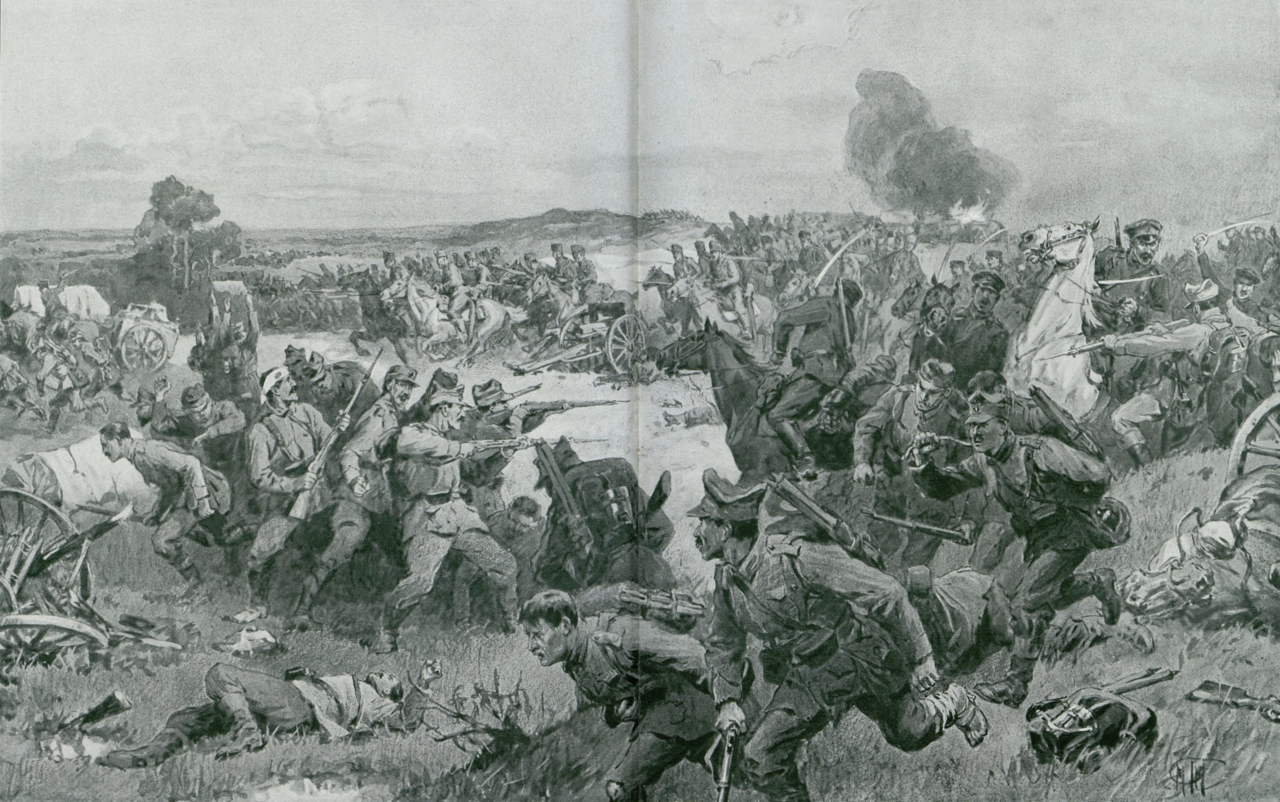
An episode from World War I—Bulgarian cavalry charged a Romanian position
Greece also seized large swaths of territory as a result of its victory over Bulgaria in the Second Balkan War. But then the Greeks found themselves alone, without Bulgarian support, facing the Turks, and the war against them turned into a disaster for the Greeks.
For Bulgaria
After the Second Balkan War, Bulgaria’s interest was in regaining the territories seized by its neighbors during that war and in taking revenge on those neighboring aggressors. And it chose which side to take in World War I based precisely on this interest. Both the Entente, along with Russia, and the Central Powers wanted to win Bulgaria over to their side. It was clearly more difficult for the Entente. Of Bulgaria’s neighbors, only Turkey was an enemy of the Entente—and it was only at Turkey’s expense that the Entente could make any promises to the Bulgarians.
But the Bulgarians were more interested in Macedonia—which had been taken from them in 1913 by the Serbs and Greeks—as well as Southern Dobruja, which had been taken by the Romanians. In other words, Bulgaria wanted territory at the expense of Serbia, Greece, and Romania. But Serbia was already an ally of the Entente, and the Entente also hoped to bring Romania and Greece into the alliance. The Entente could not risk complicating matters with these countries for Bulgaria’s sake. Its diplomats could only make vague promises to facilitate some revision of the results of the 1913 war. But the victors of that war—Serbia, Greece, and Romania—categorically refused to cede even a single piece of the territory they had captured in 1913.
It was easier for the Central Powers—their enemy was Serbia, so they immediately guaranteed the Bulgarians what was most valuable to them: Serbian Macedonia (or, more precisely, the territory that had become Serbian in 1913). The Austro-Germans also promised the return of territories seized by Romania and Greece in 1913—provided those countries opposed the Central Powers (and everything was heading in that direction). The Austro-Germans supported the Bulgarians’ territorial interests—and this swayed them to the side of the Central Powers—against the Entente and Russia within its ranks. Thus, the war with its neighbors in 1913 led Bulgaria into the German camp in 1915.
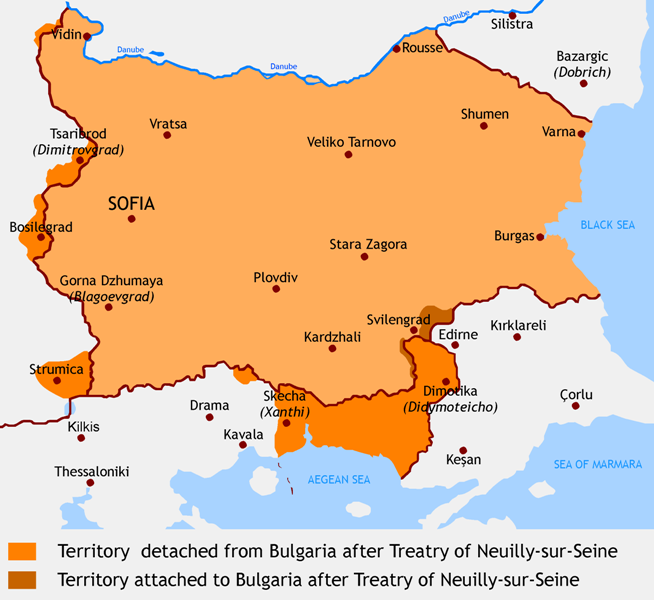
Bulgaria’s Territorial Losses Following World War I
But for Germany, World War I ended in defeat—and with it, the Bulgarians suffered yet another catastrophic defeat. More than 100,000 soldiers died in vain; more than 100,000 civilians perished from starvation and epidemics. The victors of World War I imposed heavy reparations on a country already ravaged by war. They also annexed large territories, completely expelling the Bulgarian population from those areas. Thus, for the Bulgarians themselves, fighting on the German side had dire consequences.
For Russia
For Russia, Bulgaria’s participation in World War I on the opposing side was also a major setback. The Black Sea straits were the most convenient route of communication between Russia and its Western allies during World War I. But when Turkey entered the war against Russia, the straits were blocked. Russia was thus effectively cut off from its allies. The route through the Baltic was blocked by the Germans. Only the North Sea and the Far East remained—but communication capabilities through those routes were extremely limited and could not meet Russia’s needs.
Our army was in dire need of ammunition and weapons. Supplies from the British and French could have remedied the situation—but those supplies were severely hampered by the blockade of the straits. Russia effectively found itself under blockade, which doomed it to a much harder struggle than it might otherwise have been.
Gaining control of the straits was vital for Russia. Had Bulgaria sided with us, this problem would have been solved. The Bulgarian army was close to the straits, and the Turks could not field large forces against it, since they were already tied down on other fronts. Bulgaria’s entry on our side would also have cut Turkey off from German aid. After that, the Turks would have been quickly forced out of the war. The Turkish front, which had been diverting Russian forces, would have been eliminated. Moreover, Romania would have followed Bulgaria’s lead and joined our side as well.
In short, if Bulgaria had sided with us in World War I, the entire course of the war would have taken a turn that was far more favorable to Russia. Perhaps there would not have been the strain on Russian forces that led to the devastating revolution of 1917.
But this opportunity, which had been so favorable for Russia, was destroyed by the ill-fated Second Balkan War in 1913. In 1914–15, Russia had to reap the consequences—it could no longer count on Bulgaria.
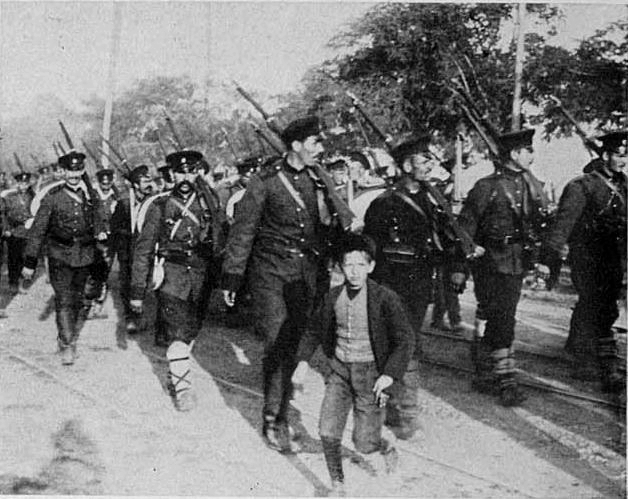
Bulgarian soldiers are heading to the front—but not the one we need
The Balkan crisis led to the Second Balkan War of 1913. The aftermath of that war further exacerbated the crisis, which in turn resulted in heavy losses for all the countries involved, including Russia. The final tally: everyone lost.
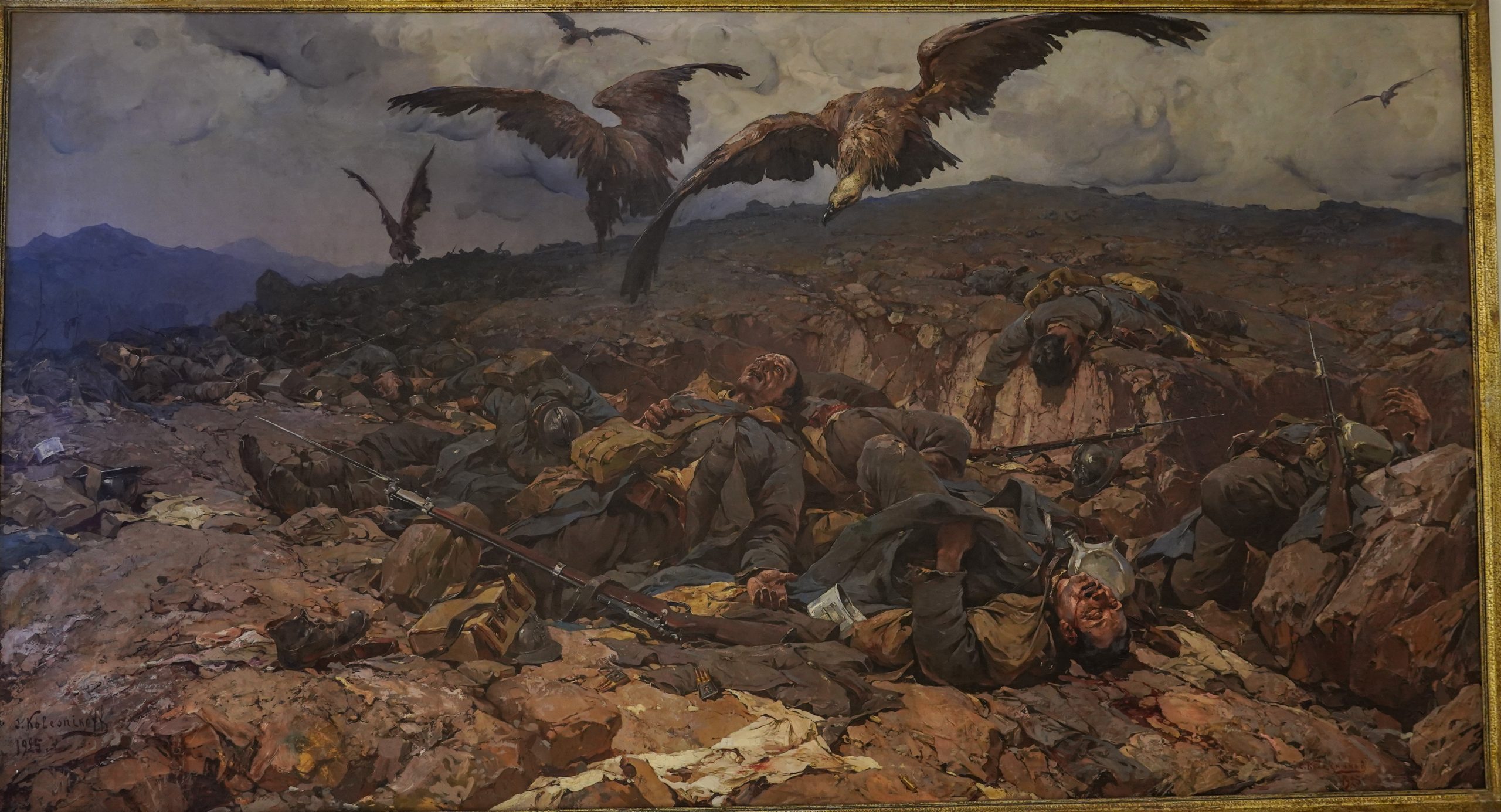
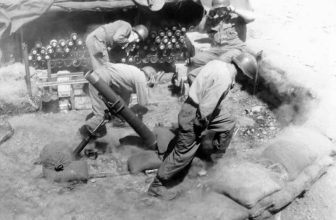
One of the battlefields of the Balkan Wars
To be continued