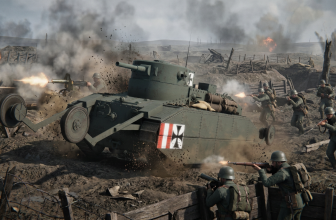
When American tank crews first encountered German Pz.Kpfw. VI “Tiger” tanks in Tunisia and Sicily, the effect was akin to a blow to the nervous system of the U.S. tank command structure. The vehicle, which had initially been deemed “excessively heavy and logistically unviable” at the Aberdeen Proving Ground, behaved differently on the battlefield: its frontal armor deflected 75-mm shells from the M4 Sherman at ranges of up to 800 meters, while the 88-mm KwK 36 penetrated any Allied medium tank with a single shot. This experience was later reflected in popular culture: even decades later, the film *Fury* (2014) visualized the collective trauma of tank crews by showing how a single “Tiger” methodically destroyed a group of “Shermans.”
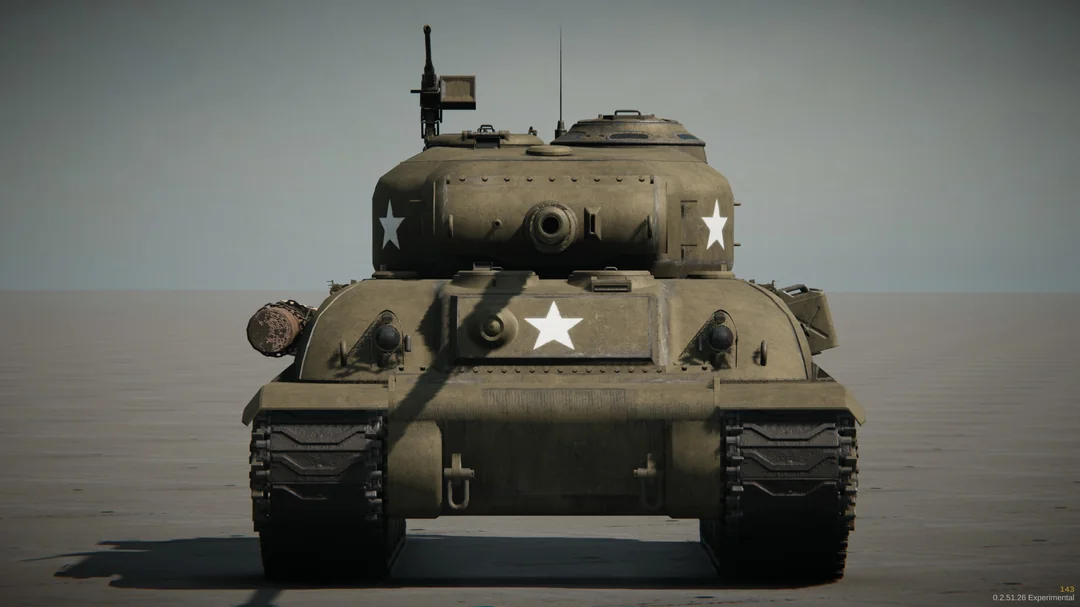
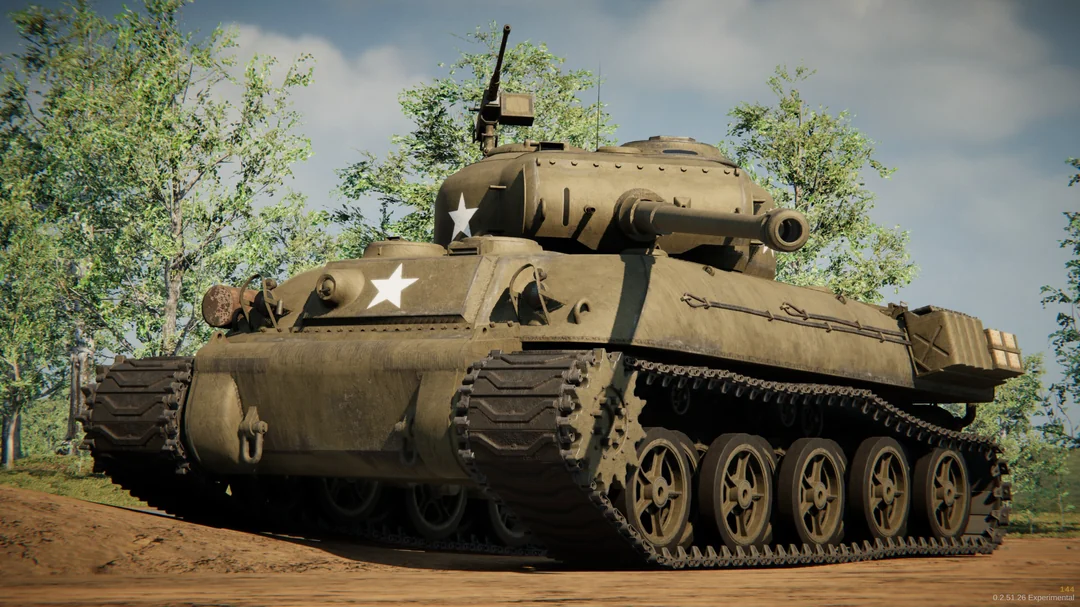
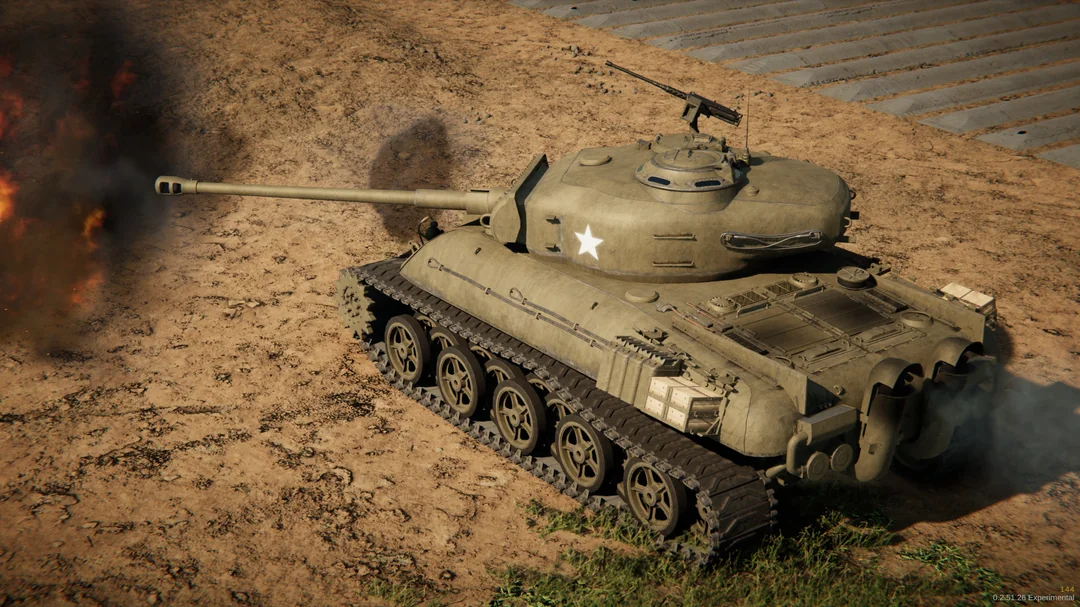
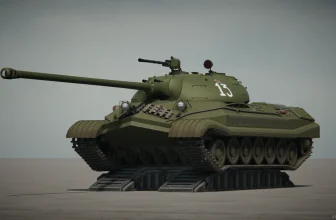
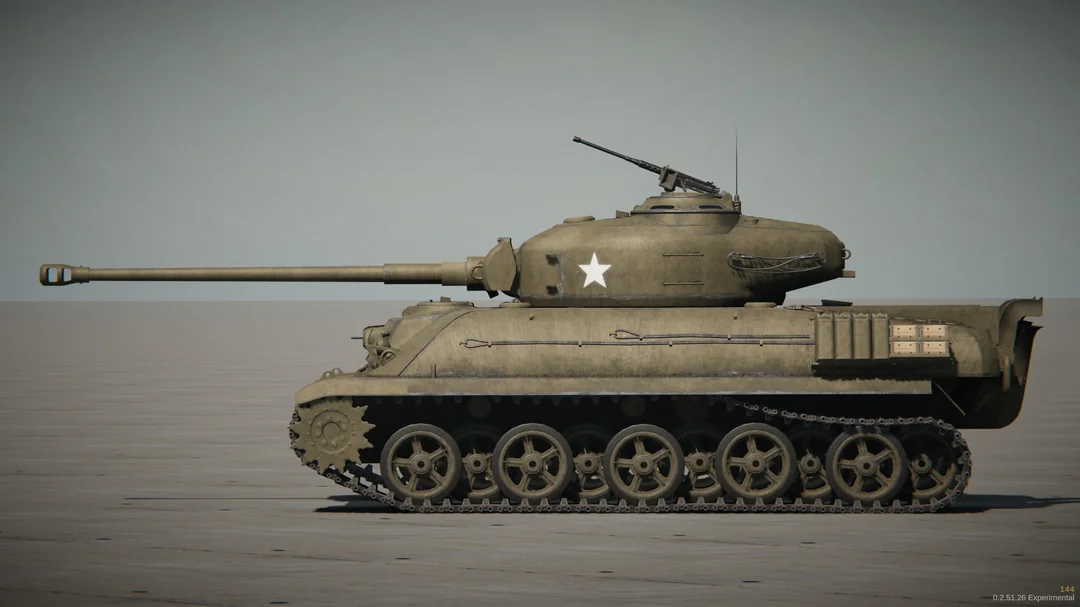
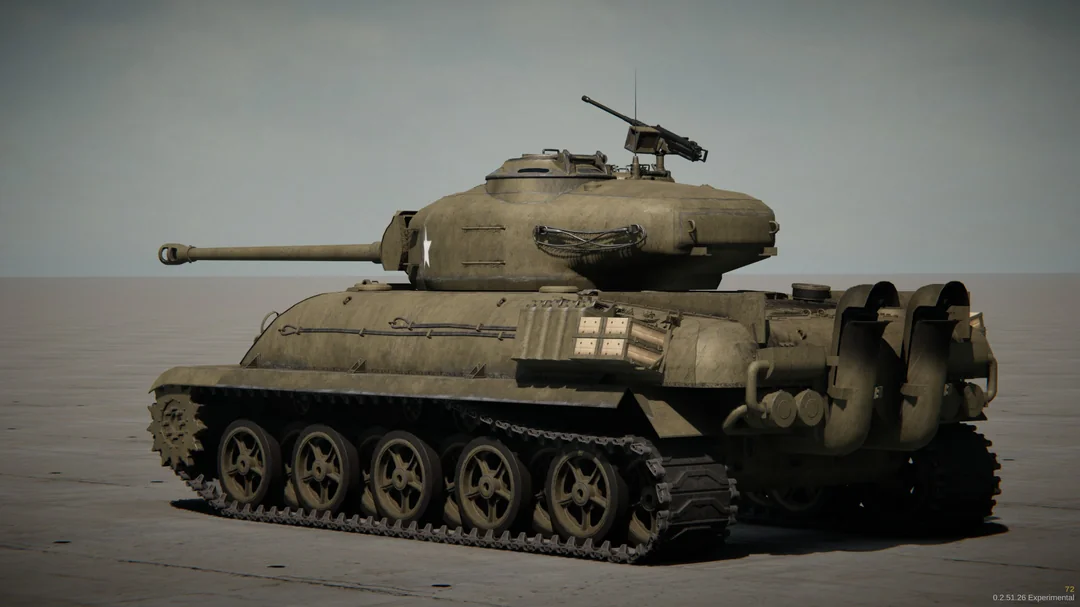
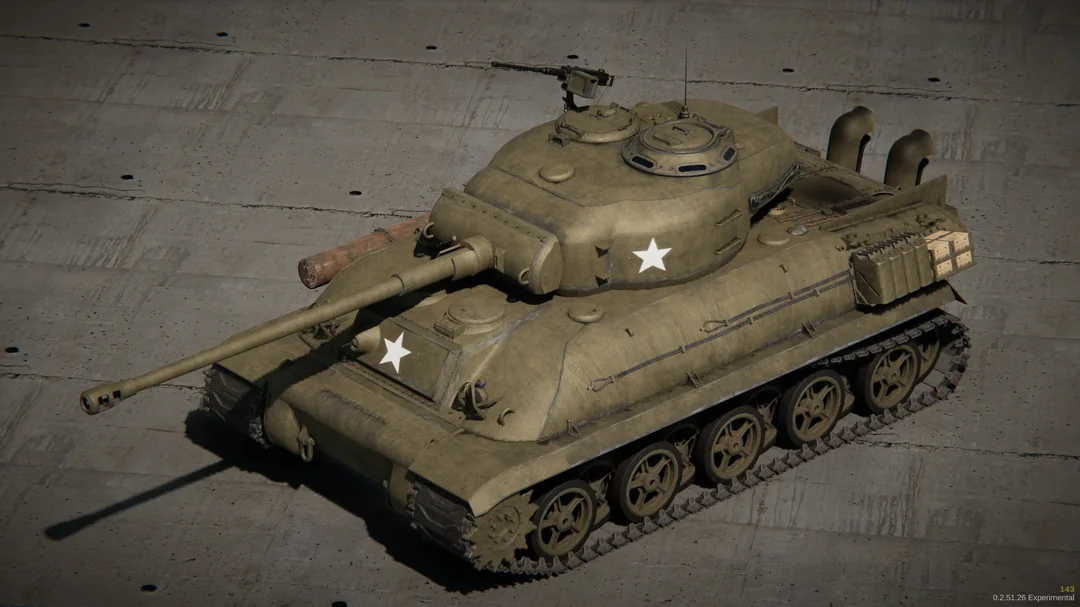
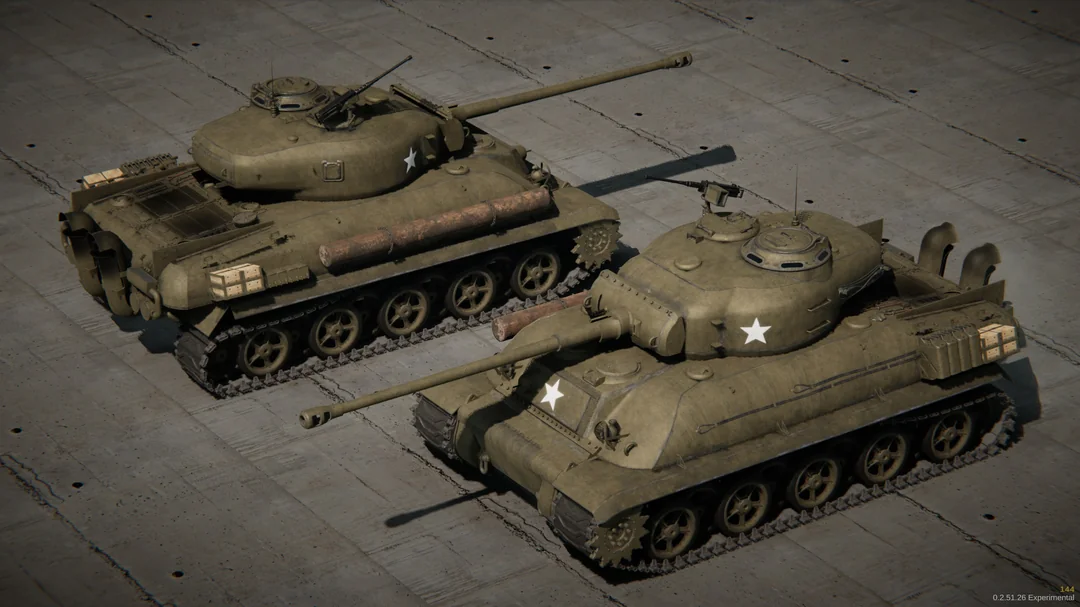
In our reality, the U.S. focused on mass production, reliability, and a gradual increase in firepower, choosing not to directly copy German heavy vehicles. But in an alternate branch of history that diverged in early 1943, the path turned out to be different. The American Locomotive Company (ALCO), which had vast experience in heavy machinery manufacturing and was already producing components for the M4, received a direct order from the U.S. Army Ordnance Department: to create a vehicle capable of matching the “Tiger” on equal terms, but adapted to the American industrial ecosystem. Thus was born the project that went down in history as the M45 “Grizzly-T” Heavy Tank (referred to in some documents as the M1 Shiger or Sherger)
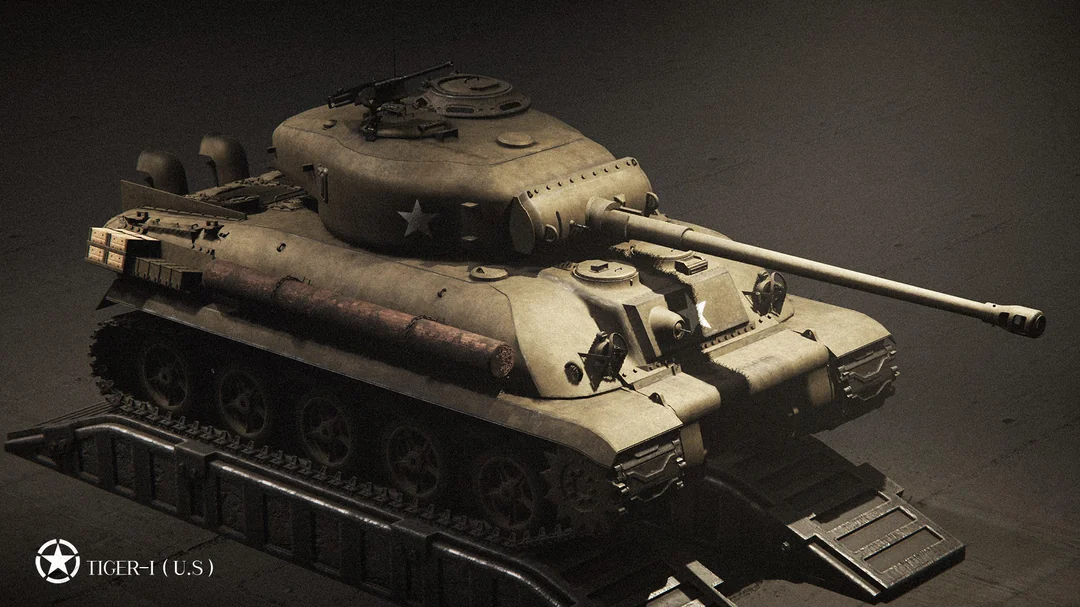
Adaptation for the American assembly line
- Cast, rounded hull: Instead of the complex “tongue-and-groove” assembly of flat German steel plates followed by manual welding, the Americans employed their signature technique—large-scale casting. The front and sides were given the characteristic smooth, streamlined shapes typical of the heavy “Sherman” variants, which not only sped up production but also increased the equivalent armor thickness. The frontal armor provided the equivalent of 170–240 mm of effective thickness.
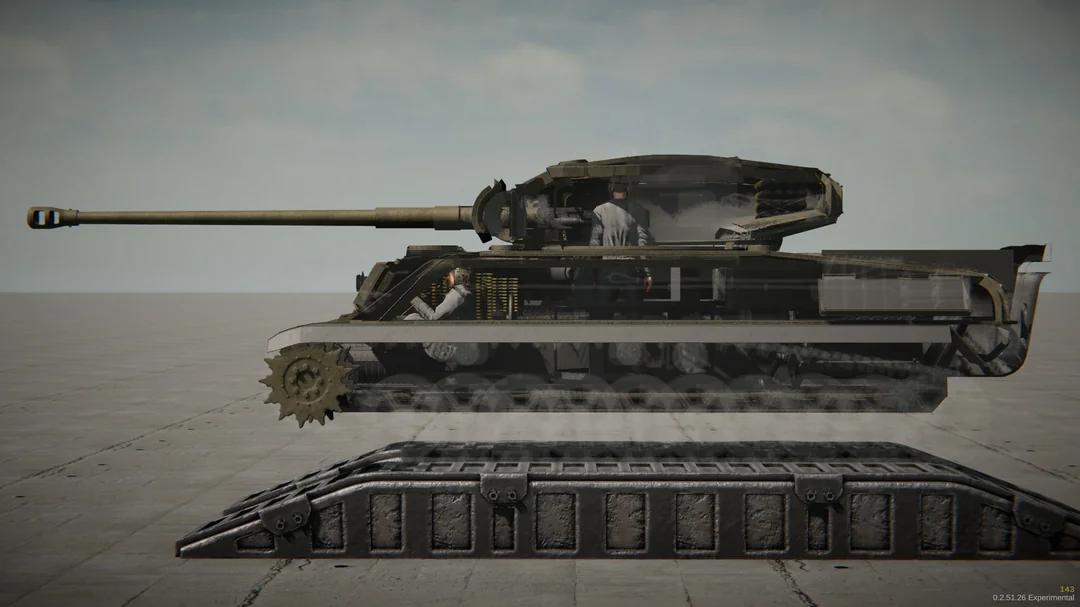
- Chassis and Suspension: Heinrich Knipkamp’s complex checkerboard suspension, which constantly became clogged with mud and froze up, was ruthlessly rejected. Instead, the “American Tiger” was fitted with a torsion bar suspension, supplemented by a massive steel armor plate on the sides to protect the undercarriage.
- Engine and Transmission: The temperamental Maybach gasoline engine was replaced with a pair of reliable General Motors diesel engines or a Continental R975 radial aircraft engine (depending on the variant). The transmission was moved rearward, which eliminated the need for a long driveshaft and reduced the tank’s overall profile height. [1]
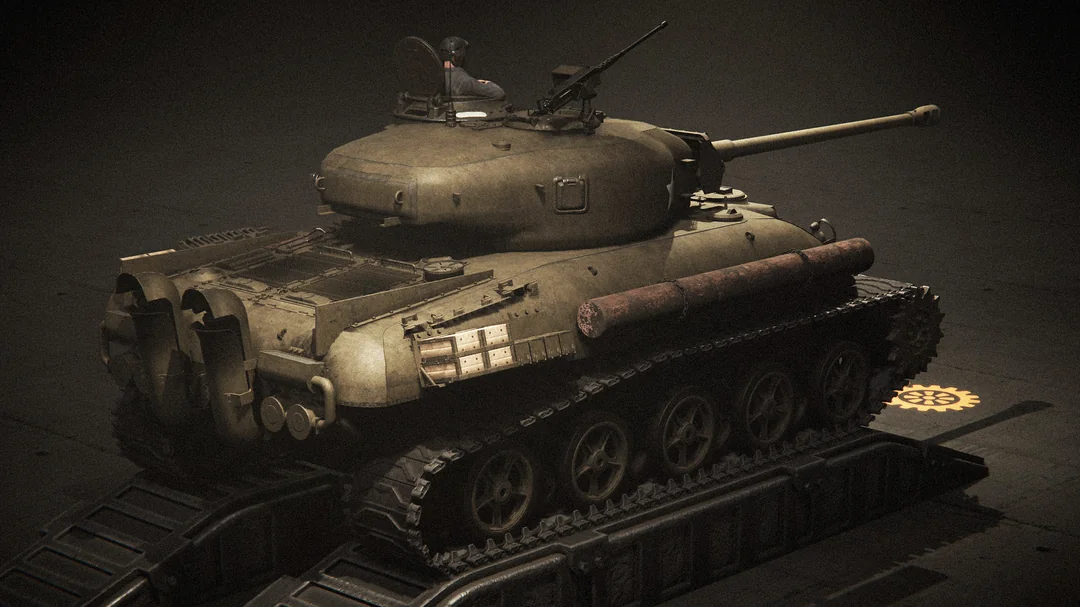
Weapons and Ergonomics
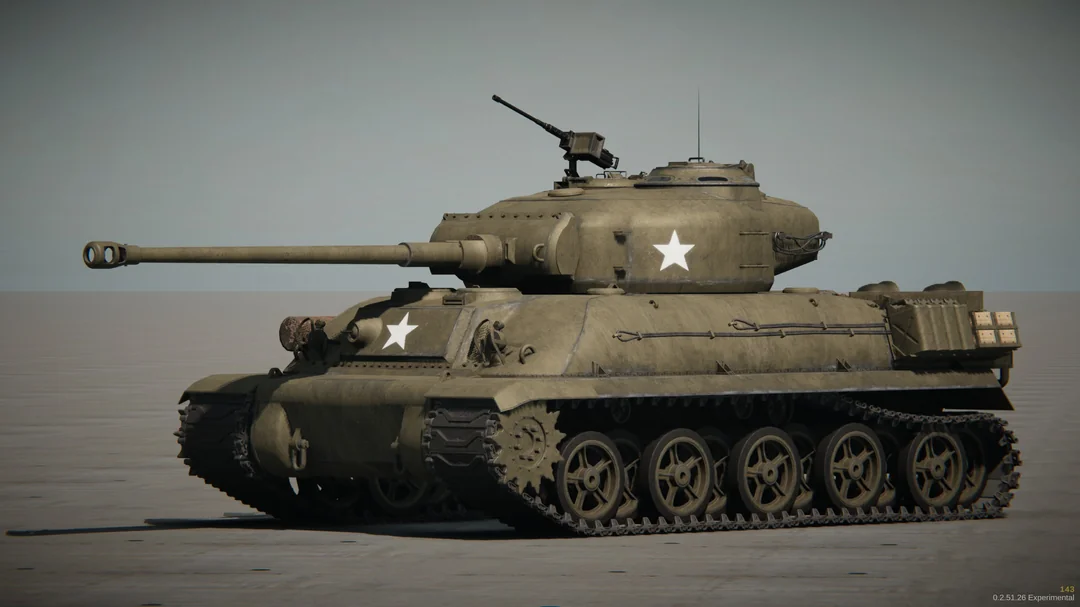
- Main Armament: A powerful 90-mm M3 gun (similar to the one mounted on M36 “Jackson” tank destroyers) was installed in the enlarged cast American turret in place of the German gun. It was on par with the “88” in terms of armor penetration, but used standard American shells and was equipped with an effective muzzle brake.
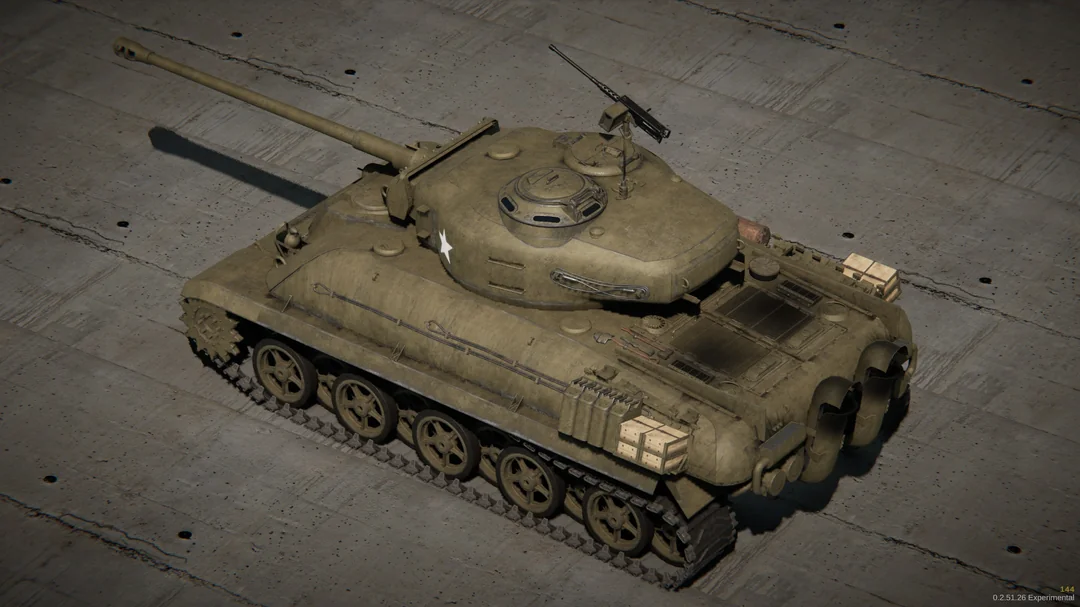
- Machine-gun armament: The radio operator’s coaxial machine gun and the gun mounted alongside the main gun were replaced with reliable .30-caliber Browning M1919A4 machine guns. In accordance with American tradition, a 12.7-mm Browning M2 anti-aircraft machine gun was mounted on the commander’s turret.
- Crew comfort: The interior has been completely redesigned in accordance with U.S. ergonomic standards. The tank was equipped with the latest radio sets, a hydraulic turret rotation drive (replacing the slow German mechanical one), and more spacious workstations. American tankers themselves joked that they had received “a cozy Sherman that someone finally forgot to unplug—and it grew.”
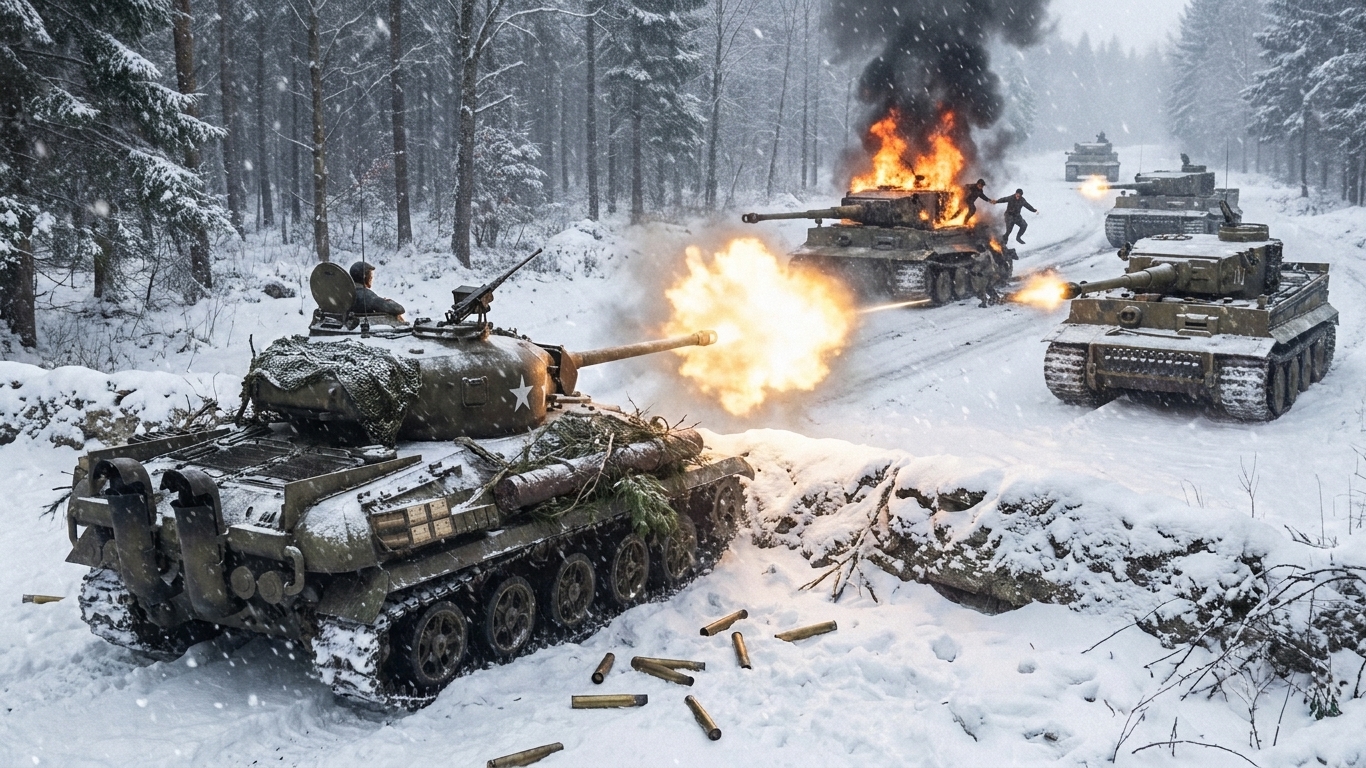
Baptism by Fire: “Fury” in Reverse
Tactical and Technical Specifications (TTS)
| Parameter | German Panzer VI “Tiger” (Ausf. E) | American M45 “Grizzly-T” |
|---|---|---|
| Combat weight | 57 metric tons | 49.5 metric tons (due to the use of cast components and the elimination of the checkerboard chassis) |
| Crew | 5 people | 5 people (commander, gunner, loader, driver, assistant/radio operator) |
| Reservations (LOB) | 100 mm (vertical sheet) | 110–135 mm (cast rounded armor, equivalent thickness up to 210 mm) |
| Reservation (flight) | 60–80 mm | 76 mm + 20 mm steel undercarriage skids |
| Main weapon | 8.8 cm KwK 36 L/56 | M3 L/53 90-mm gun with T14 muzzle brake |
| Machine Guns | 2 × 7.92-mm MG-34 | 2 × 7.62-mm Browning M1919A4 + 1 × 12.7-mm Browning M2HB |
| Engine | Maybach HL 230 P45 (gasoline, 700 hp) | General Motors 6046 diesel engines (650 l.s.) / option: Continental R975 |
| Power reserve | 100 km (over rough terrain) | 175 km (over rough terrain) |
| Max. speed | 38 km/h (on the highway) | 42 km/h (on the highway) |
The Reaction of German Engineers and Commanders
- Ferdinand Porsche (at a meeting of the Tank Commission in November 1944):
“This is barbarism and the triumph of plebeian rationalism! The Americans took our pure engineering concept and cast it in cast iron on a tractor assembly line. They stripped the ‘Tiger’ of its nobility, but I admit that their cast hull rid the vehicle of our main problem—vulnerable welds in the frontal projection.”
- Alfred Speer (Reich Minister of Armaments):
“The reports from the Ardennes are horrifying. It took us 300,000 man-hours to produce a single battalion of ‘Tigers.’ The Americans, using stamping and casting, are capable of producing up to a hundred ‘Grizzlies’ a month at the ALCO plants. Their industrial capacity has nullified our technological superiority.”
- Heinz Guderian (Inspector General of Armored Forces):
Issued an urgent directive to Panzerwaffe crews: “Attention! American heavy tanks mimicking the German silhouette have appeared on the front. It is forbidden to open fire ‘at the silhouette’ without visual confirmation of crosses or stars. Beware of flanking maneuvers—American vehicles are more maneuverable than the original ‘Tiger.’”
Battle Episode: The Duel Near the Village of Saint-Vit (December 21, 1944)
From Lieutenant Miller’s memoirs:
“We were waiting for them in the valley. When that steel mountain emerged from the fog, my gunner ‘Ace’ shouted, ‘Boss, that’s our twin—only with a swastika!’” The German tank advanced confidently, presenting its angular side to us. Our “Grizzly” lurched from a 90-millimeter shell. The shell pierced the German tank’s side just below the turret. A flash, the shells detonating—and the Nazi’s turret was simply blown off.”
Confusion on the Front and the Wehrmacht’s “Phantom Tigers”
-
- The entire front section of the tank was painted a bright white.
- Huge steel shields were welded onto the sides of the turret, completely distorting its silhouette.
- They mounted huge neon U.S. flags on the roof for identification from the air.
In February 1945, during a German counterattack near Alsace, two damaged M45 tanks—abandoned by their crews—fell into the hands of soldiers from the 10th SS Panzer Division. German repair crews quickly repaired the American GM diesel engine pairs. The vehicles were marked with swastikas (German crosses) and sent into battle against American infantry.
T92 “Thunderer” Heavy Assault Self-Propelled Gun
-
- Design: The rotating turret was completely removed from the tank. In its place, a massive, fixed cast conning tower was installed, set well back.
- Armament: A colossal 155-mm M1 howitzer was mounted in the turret. The high-explosive shell for this gun weighed over 43 kg and could reduce a three-story pillbox to a pile of rubble with a single hit.
- Combat Use: The self-propelled gun, designated T92 “Thunderer,” served as a battering ram. It crept up to German fortifications under the cover of its 130-mm frontal armor and fired point-blank at the embrasures. It was the ALCO “Thunderers” that breached the walls of German fortress cities such as Aachen and Cologne.
Postwar History: “Grizzlies” vs. Soviet “Thirty-Fours” in Korea (1950)
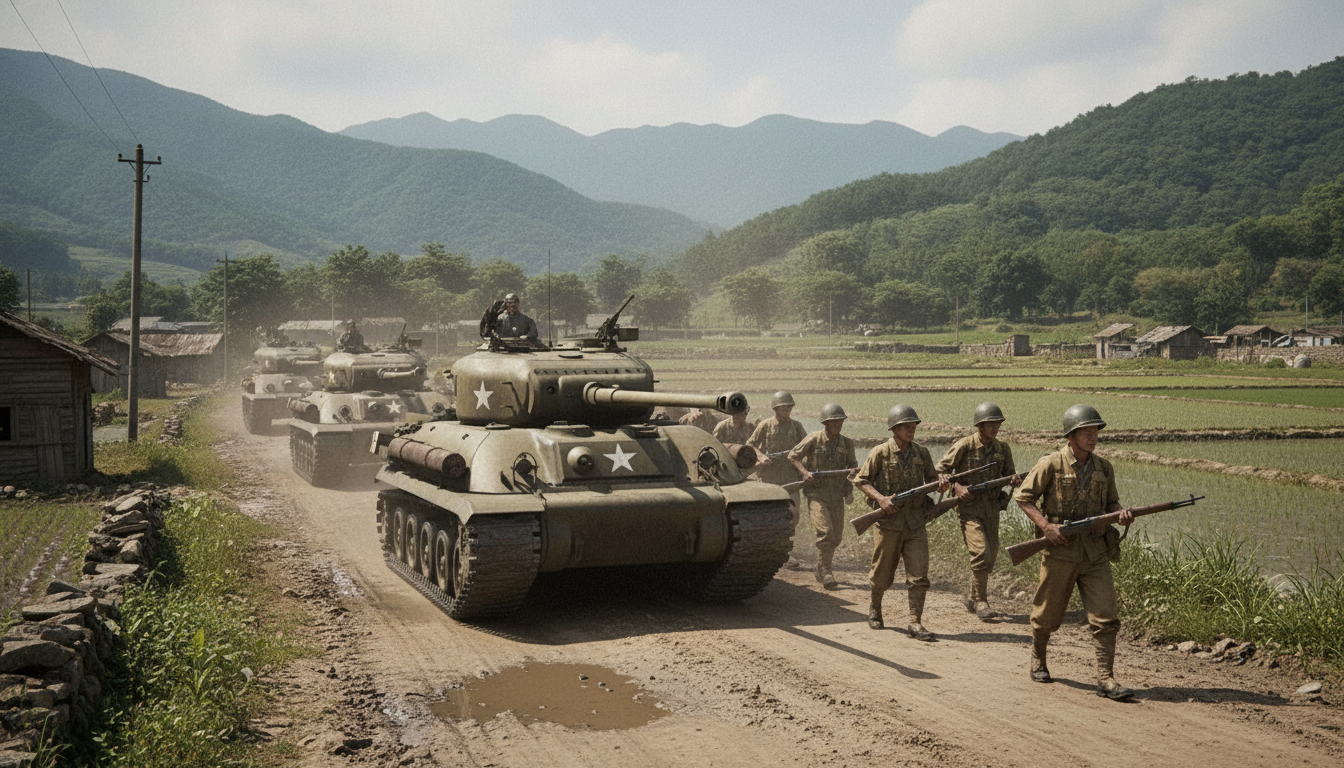
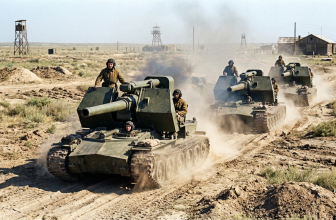
In August 1950, a legendary tank battle took place on the Busan Perimeter. The Soviet concept (the mass-produced, medium-weight, and maximally simplified T-34) clashed with the American vision of a heavy tank (the comfortable, heavily armored M45 with powerful optics).
From the report of Major John King (commander of the M45 battalion):
“The Soviet T-34s were advancing in tight formation. They were fast and maneuverable, but their 85-mm guns could not penetrate our cast armor from a distance of more than 600 yards. We, on the other hand, using excellent optical sights inherited from the German ‘Tiger’ concept, were firing accurately from 1,500 yards. Our M3 90-mm gun literally pierced right through the T-34s, often penetrating the frontal armor and exiting through the rear. It took us only 20 minutes to destroy the Korean battalion.”