The British Challenger 3 main battle tank fired its first round with a crew on board—a new phase in the modernization of armored vehicles

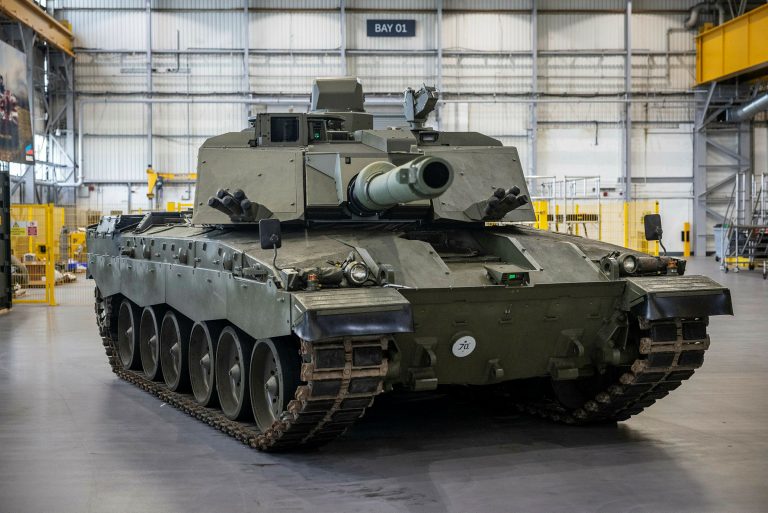
The British Challenger 3 main battle tank, designed to replace the aging Challenger 2 in the British Army, has passed a major testing milestone: it successfully conducted its first live-fire exercises with the crew on board. This step is a key element of the testing program before the vehicle enters service as part of the modernization of the British armored forces.
What exactly happened?
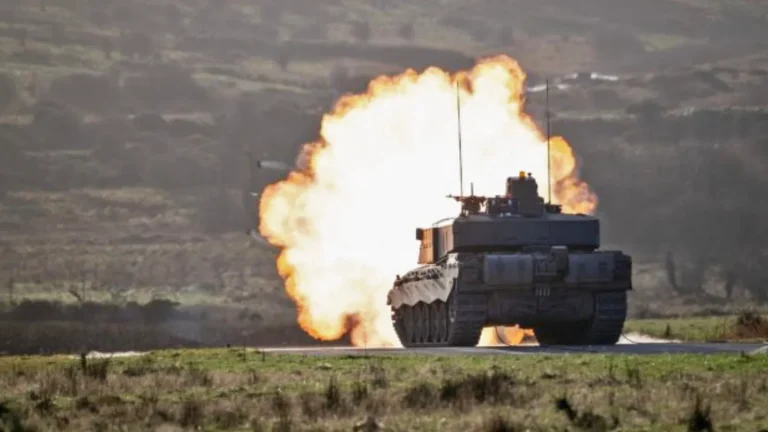
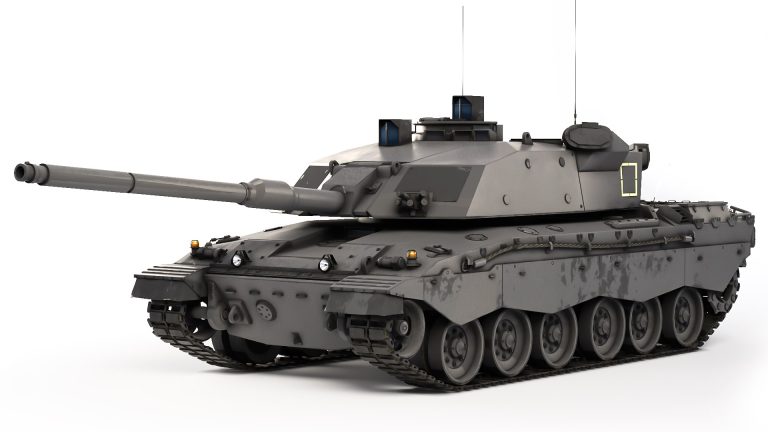
In January 2026, tests were conducted at a Ministry of Defense training range in the United Kingdom, during which the Challenger 3 tank fired its new 120-mm L55A1 smoothbore gun for the first time, with the crew already inside the turret. The firing system had previously been tested remotely—with no one in the turret—to ensure safety, after which the tests proceeded to crew-controlled firing.
This marked the first time in more than 30 years that the UK’s newest main battle tank had conducted live-fire exercises with a crew.
Who is the developer, and where are the tests being conducted?

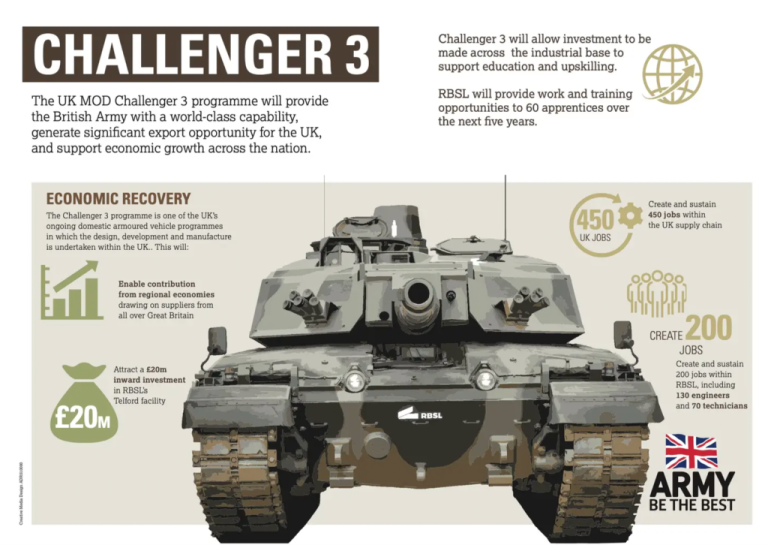
The Challenger 3 tank is being developed as part of a joint project by Rheinmetall BAE Systems Land (RBSL)—a joint venture between the German company Rheinmetall and the British company BAE Systems. Production and preparation of the prototypes are taking place at a plant in Telford, England.
The tests were conducted at a test range under the supervision of the British Ministry of Defense (MOD)—they included not only testing the weapon’s firepower but also evaluating the performance of the entire fire control system, safety, and the integration of the weapon into the platform.
Challenger 3 Armament: New Cannon and Ammunition
The main change compared to its predecessor is the switch from a rifled barrel to the Rheinmetall L55A1 smoothbore gun. This 120-mm gun is compatible with NATO-standard single-component ammunition, which expands the range of ammunition available for the tank and simplifies logistics.
Such munitions include:
- Armor-piercing sub-caliber projectiles (APFSDS), such as the DM63 and DM73;
- A multi-purpose, programmable warhead.
Their design ensures the effective destruction of modern fortifications and armored targets.
Switching to a smoothbore barrel increases the projectile’s muzzle velocity and penetration capability, and also allows for the use of advanced types of ammunition when necessary.
Security and Sensor Systems
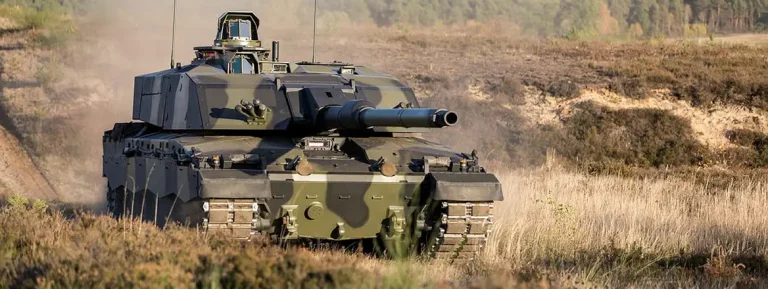
In addition to its new gun, the Challenger 3 has been equipped with a state-of-the-art optical sighting system from Thales, which includes a day/night gunner’s sight and a panoramic view—this is part of the turret’s digital architecture, designed with an open architecture for easy modernization.
The tank’s protection system includes:
- modular composite armor (nMA), which can be easily installed or replaced depending on the mission;
- if necessary, the Trophy Active Protection System (APS), which is capable of detecting and neutralizing incoming anti-tank projectiles and grenade launcher rounds before they strike the vehicle.
This set of measures makes the Challenger 3 a significant step forward in terms of the survivability of both the crew and the vehicle itself in modern combat conditions.
Engine and Chassis
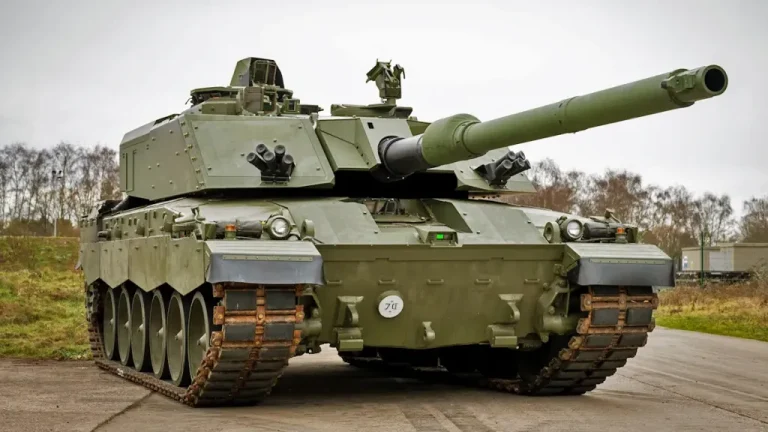
The Challenger 3 is also equipped with an upgraded powerplant and chassis as part of the Heavy Armor Automotive Improvement Project (HAAIP). This includes:
- improved suspension;
- a hydraulic track tensioning system;
- a cold-start system and an upgraded cooling system.
Although the engine’s power output remains the same, other changes improve the vehicle’s reliability, maneuverability, and overall operational stability.
The Role of the Challenger 3 in the Modernization of the British Army
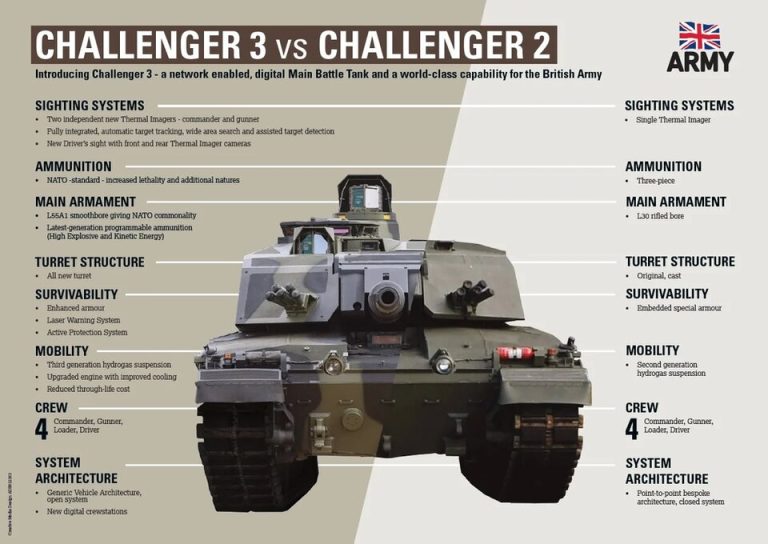
The Challenger 3 is the centerpiece of the UK’s armored forces modernization program. It is being developed as a replacement for the Challenger 2 and is scheduled to enter service by 2027. The planned production run is relatively small—approximately 148 modernized vehicles, including several prototypes.
The transition to the new platform provides:
- reaching a modern level of firepower;
- digital integration of sensors and fire control systems;
- enhanced protection for the crew and the platform.
What’s next?
Following the successful test firings, the Challenger 3, with its crew on board, will continue to undergo a series of test phases, including additional test firings, reliability testing, system interoperability testing, and validation of all technological solutions, prior to its entry into service.
Conclusion
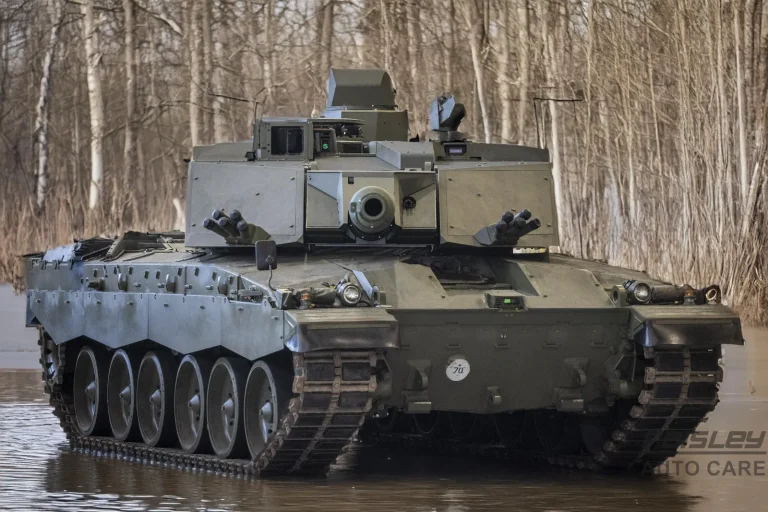
The first live-fire tests with a crew mark an important milestone in the Challenger 3 program, signifying the transition from preliminary testing to a real-world assessment of the combat vehicle’s capabilities. The new tank combines a modernized gun, enhanced armor, digital fire control systems, and state-of-the-art sensors, reflecting the United Kingdom’s commitment to maintaining the competitiveness of its armored forces in the 21st century.