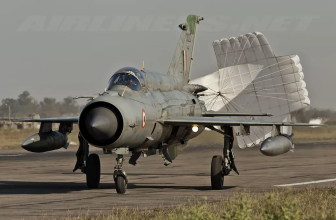
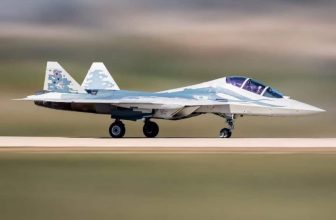
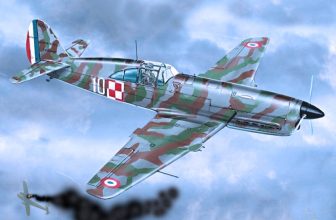
The conceptual precursors to our air bombs with UMPK. An “SDB”-class air bomb—the GBU-39. United States

An archived article from 2012 on the TopVar website.
In the 1990s, development began on small-diameter aerial bombs, with the aim of equipping supersonic aircraft with high-precision munitions capable of being dropped from an internal bomb bay. Research was conducted as part of a program called “MMTD,” focusing on the development of various technologies:
- smart target tracking;
- programmable electronic fuse;
- high-energy explosives;
- countering signal jamming;
- optimal management;
- smart autopilot;
- state-of-the-art GPS/INS;

As part of this program, the F-22’s armament was upgraded, enabling the aircraft to carry standard bombs, including up to eight SDB-class bombs. In 2005, these bombs were already part of the Air Force’s arsenal and were first used in combat in Iraq in 2006. According to the U.S. Air Force’s plans, it intends to procure 24,000 SDB-class bombs of various weights. These bombs will be used on supersonic aircraft, and more than half of them will serve as the primary weapon for engaging stationary ground targets, while new variants will also be capable of engaging moving targets.

In late 2007, Boeing, the American aircraft manufacturing giant, reported progress in the “HIFEX” program, which aims to implement active airflow control technologies. These technologies enable the safe release of bombs from internal weapon bays at high speeds (exceeding Mach 1). Tests confirmed that the release of an Mk-82 JDAM bomb from a B-1 aircraft at Mach 2 is safe.
In the summer of 2008, the first supersonic drop of a GBU-39 bomb from aircraft of the 411th Squadron of the U.S. Air Force took place at an air base in California. These tests were successful and confirmed that it is possible to safely drop bombs at high speeds from internal bomb bays. This achievement allowed the program to develop a new generation of weapons for supersonic aircraft to be deemed a success.

The GBU-39 bomb belongs to the “Small Diameter Bomb” category. The GBU-39 SDB weighs 113 kilograms. It is designed to precisely strike ground targets from a long distance to avoid attacks on the aircraft by enemy air defenses. Due to its compact size and small form factor, the GBU-39 SDB can be mounted on external hardpoints as well as in internal weapon bays. This reduces the aircraft’s visibility and improves its speed and maneuverability.

The program to integrate guided aerial munitions into the F-22A’s arsenal was quite extensive. As part of this program, ground tests were conducted to identify and reduce the vibration characteristics of the bombs, as well as drop tests at low speeds (M = 0.8–1). Eight test drops of the GBU-39 SDB were conducted at Mach 1 or less. The F-22A Raptor’s internal weapons bay can accommodate up to eight Small Diameter Bombs (SDBs). Following the successful integration of the GBU-39 SDB, combat testing of new variants of small-diameter bombs is continuing. The program for the operational use of supersonic bombs, called “Revolutionary Approach to Time-critical Long Range Strike,” includes ground tests on supersonic launchers at speeds of approximately 600 m/s at Holloman Air Force Base.

The GBU-39 SDB air-to-ground bomb is capable of striking targets behind cover and offers greater accuracy than JDAM-type air-to-ground bombs. The bomb’s components:
- A GPS receiver from “Rockwell Collins”;
- an inertial unit from Honeywell;
- an electronic programmable fuse capable of detonating the munition in flight, upon contact with a target, and with adjustable delay settings;
- Harris anti-jam module;
- “HR Textron” tailplane actuators;
- the “MBDA Diamondback” deployable wings;
- “TAM Garland” warhead;
- “Mil-Std-1760” interface;
- The “Sargent Fletcher” launch system—an ejector from Boeing.
Effective guidance is a specialized technology that ensures the guided bomb aligns with the direction of the velocity vector at the moment of impact, which significantly increases its penetration capability. All kinetic energy is directed toward adjusting the munition to successfully destroy the intended target.

The aerodynamic wings used give the air-to-ground bomb a range of more than 100 kilometers. The blast radius of the 285-pound GBU-39 SDB is 26 feet, compared to 82 feet for the 2,000-pound JDAM. Designers claim that these bombs are capable of penetrating 5 feet of reinforced concrete and that they will compete with the BLU-109/B bomb. Such munitions will be most effective when striking urban targets, providing air support to ground forces against airfields, fortifications, armored vehicles, firing positions, multiple-launch rocket systems, and air defense systems. They will be less effective when used against deep bunkers, structures, large infrastructure and buildings, industrial facilities, bridges and trench systems, vehicle fleets, and enemy personnel.

Key Features:
- 7.5 inches in diameter;
- 1.8 meters long;
- 19 centimeters wide;
- weight 285 pounds;
- a range of more than 100 kilometers;
- penetration—5–6 feet of reinforced concrete floor slab;
- Weight of the BB — 17 kilograms;
Carrier aircraft:
- F-15E;
- F-16;
- F-35 II
- A-10 II
- F-117;
- B-1;
- B-2;
- B-52.
Source — https://topwar.ru/14809-aviabomba-klassa-sdb-gbu-39.html