The dreadnought that turned the tide of the war: how the battleship “Ao Guang” brought China victory over Japan!

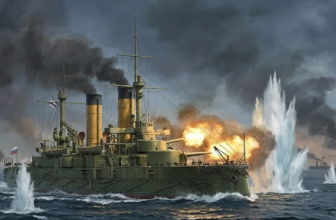
Yalu, September 17, 1894. By midday, the Yellow Sea had all but vanished behind a veil of smoke. Ships were burning, a heavy pall of gunpowder fog hung low over the water, and colossal geysers erupted between the two squadrons as shells plunged into the sea. The battle had been raging for hours, yet it was unfolding nothing like the Japanese command had anticipated.
The Japanese fleet possessed virtually every advantage that typically decided the outcome of a naval engagement. Their ships were, on average, faster; their gunners were better trained; their numerous quick-firing guns allowed them to literally smother the enemy in shells; and their command exercised superior control over the squadron. The Chinese Beiyang Fleet looked formidable on paper, but it suffered from the same afflictions as the Qing Empire as a whole: poor organization, inadequate training for some of the crews, corruption, supply disruptions, and wildly uneven quality of ammunition.
In the history we know, all of this ended in defeat for China.
But in this world, Admiral Ding Ruchang had an argument that did not exist in our reality.
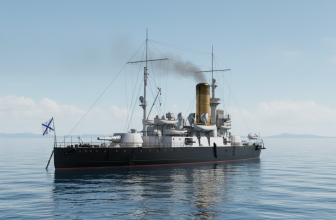
At the center of the Chinese formation, alongside the ironclads *Dingyuan* and *Zhenyuan*, steamed a massive vessel that stood out distinctly from the rest of the squadron’s pennants. Its silhouette seemed overloaded even by the standards of the late 19th century: four heavy turrets, numerous secondary guns, massive superstructures, and funnels. The ship carried no fewer than eight 305-mm guns—an utterly incredible concentration of firepower for 1894.
The ship was named “Ao Guang”, in honor of the Dragon King of the East Sea.
The Japanese were well aware of the existence of this Chinese battleship. Its agonizing construction had been discussed for years by foreign naval attachés and the European press. People had even managed to mock it: absurdly expensive, taking nearly six years to build, partially fitted with imported equipment, and remaining the sole representative of what was originally a planned class.
But it is one thing to read specifications in a reference book, and quite another to see the muzzle flashes of multiple twelve-inch guns bearing directly on your ship.
The first Chinese salvos were inaccurate. The Japanese quickly found the range and began to exploit their primary advantage. Their quick-firing guns unleashed a veritable hail of shells upon the *Ao Guang*. Its superstructures were riddled with holes, the ship’s boats were smashed to splinters, ventilation trunks were damaged, and fires broke out on the upper deck. Several crews of the light guns were virtually wiped out. Shrapnel mowed down men at the exposed battle stations.
Yet the battleship steamed on and, most unexpectedly, answered with a no less furious barrage from its own quick-firers. It could bring eight of these per side to bear—more than any Japanese battleship.
The Japanese hit their targets significantly more often than the Chinese, but the majority of their shells could not quickly incapacitate the vital areas of the heavily armored ship. The engines kept running, the armor belt remained intact, and, crucially, the massive turrets housing the 305-mm guns continued to rotate.
And when the Chinese gunners finally found their range, the character of the battle began to change.
A heavy Chinese shell did not require a dozen hits to do its work.
Sometimes, one was enough.
One 305-mm shell struck a Japanese ship near the waterline. A few minutes later, another detonated in the engine room area of the next cruiser. It abruptly lost speed and began to drop out of the line. Another Chinese salvo straddled yet another Japanese pennant, raising a massive cloud of black smoke over its stern.
Now, the Japanese command had to think not only about how to destroy the Beiyang Fleet, but also about how many ships they were willing to pay for such a victory.
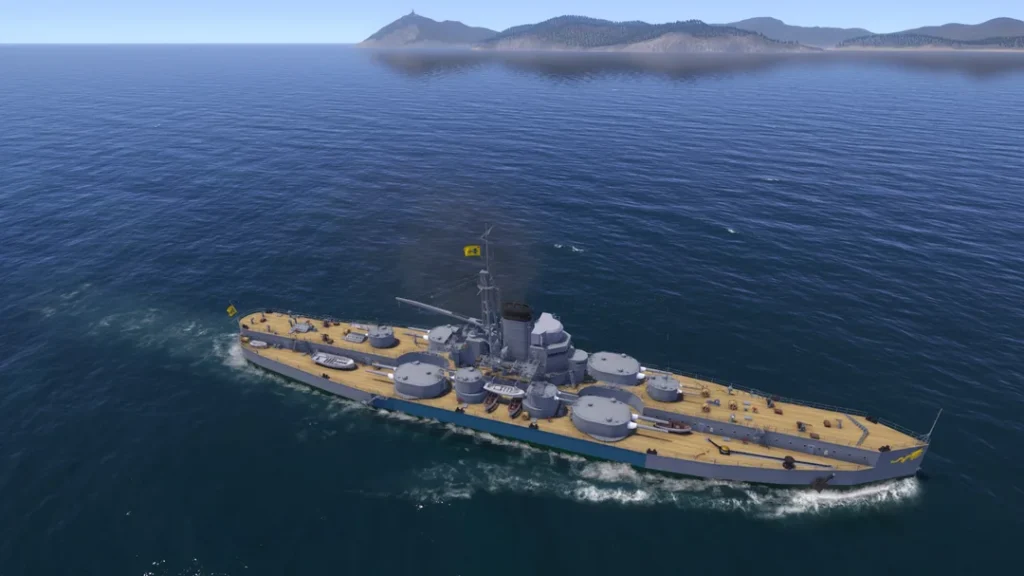
Three Chinese Ironclads
It was here that the true significance of the «Ao Guang» revealed itself. It was not a magic weapon and could not single-handedly shoot up the Japanese squadron. Moreover, in terms of service organization and crew training, it still lagged behind the enemy’s best ships.
But alongside it were the *Dingyuan* and the *Zhenyuan*.
In our reality, these two German-built ironclads formed an exceptionally tough core of the Chinese squadron. Now, the Japanese were facing three heavy ironclads, with the third significantly outgunning the first two in both heavy and secondary artillery.
Every Japanese maneuver had to be calculated with the «Ao Guang» in mind. An attempt to close the distance meant coming under fire from its 305-mm and numerous 152-mm guns. An attempt to concentrate all fire on it simultaneously gave relative freedom of action to the *Dingyuan* and *Zhenyuan*.
An astonishing paradox emerged. The Chinese ship, burdened with a mass of technical flaws, forced the entire Beiyang Fleet system to operate more efficiently simply by its presence.
The final hours of the battle were especially grueling for the Japanese. The «Ao Guang» itself looked terrifying: its superstructures were smashed, dozens of holes gaped in its hull, some of the secondary guns had been silenced, and several fires had been extinguished only at the cost of tremendous effort by the crew. But the main battery kept firing, and the heavy twelve-inch shells kept finding their marks.
Soon, another 305-mm shell found its target.
That target was the Japanese armored corvette *Hiei*, which had already sustained several damages and was trying to withdraw from under the fire of the heavy core of the Chinese squadron. The «Ao Guang’s” massive shell pierced the hull near the waterline and detonated inside. Almost simultaneously, several more shells from the Chinese secondary battery struck the ship. Fires broke out in the engine and living quarters, water began rushing in rapidly through the breach, and the corvette’s speed dropped sharply.
The *Hiei* tried to turn away, but it was now little more than a stationary target. A few minutes later, another salvo followed. A second 305-mm shell struck the midsection of the ship, triggering a catastrophic internal explosion. A huge cloud of smoke and steam rose above the deck; the corvette developed a pronounced list to starboard and began to sink rapidly.
Japanese ships tried to cover their damaged comrade, but it was already impossible to save him. In less than a quarter of an hour, the *Hiei* capsized and sank, becoming the first major Japanese vessel destroyed by the heavy artillery of the «Ao Guang».
The loss of the *Hiei* produced an effect far exceeding its actual combat value. For the first time, the Japanese command saw that the Chinese 305-mm guns were not merely capable of damaging their ships—they could destroy them with just a few lucky hits.
To continue the battle meant risking not just individual cruisers, but the combat effectiveness of the entire Combined Fleet. The Japanese squadron began to withdraw.
The Chinese remained on the field.
A Victory No One Expected
And so, the Battle of the Yalu ended quite differently than in the history we know. The Beiyang Fleet suffered heavy losses but retained its heavy core. The Japanese also lost several ships and, far more importantly, failed to achieve command of the Yellow Sea.
The strategic consequences proved far more significant than the tactical ones. Japan could no longer freely transport troops along the Korean coast without fearing the appearance of the Chinese squadron. Sea lanes turned from a virtually safe highway into a potential battlefield. Port Arthur could no longer be considered doomed. The Chinese army gained time, and Beijing gained the opportunity to bring up additional forces and turn Japan’s short, victorious campaign into a protracted war.
The most astonishing thing was that just a few months before the war, the «Ao Guang» had been considered little short of a symbol of yet another Chinese failure.
The ship had been built agonizingly slowly. It cost the treasury far more than initial estimates. A class of two ironclads had been planned, but the second never materialized. Foreign experts doubted the very concept of the ship, officials accused each other of embezzlement, and opponents of naval modernization pointed to the «Ao Guang» as proof that China was still incapable of building modern ironclads on its own.
Yet it was this very “failure” that was now smoking amidst the victorious Chinese squadron at the Yalu.
The victory of September 17, 1894, was made possible by a single event that contemporaries had, until very recently, considered just another costly Chinese failure—the attempt by the Celestial Empire to build its first domestically constructed ocean-going battleship.
To understand how a ship with eight 305-mm guns could even appear at a Chinese shipyard, one must go back nearly ten years.
After the “Dingyuan” and the “Zhenyuan”
It all began with two ships that China could not yet build on its own. In the early 1880s, the Qing Empire ordered two powerful ironclads from Germany—the *Dingyuan* and the *Zhenyuan*. For their time, these were very formidable combat units, becoming the core of the nascent Beiyang Fleet. Their appearance demonstrated both the success and the weakness of Chinese self-strengthening policy: the Celestial Empire already understood what kind of fleet it needed and had the funds to create it, but it was still forced to buy the most complex technology from Europeans.
It is precisely here that the history of our world and the history in which the «Ao Guang» appeared begin to diverge.
In this reality, the Self-Strengthening Movement proved somewhat more successful. China did not suddenly transform into an industrial superpower, nor did it eradicate corruption, political contradictions, or the archaic nature of its state apparatus. The change was far more modest, and therefore more plausible: the authorities invested more consistently in the military industry and the training of domestic technical specialists.
Arsenals and shipyards expanded, European machine tools were purchased, the production of higher-quality shipbuilding steel was mastered, and Chinese engineers were sent to study in Germany, Britain, and France. The main difference, however, lay in the very approach to foreign orders. Buying ships in Europe was now viewed not as a permanent way to equip the fleet, but as a school after which China was supposed to learn to build them independently.
The *Dingyuan* and the *Zhenyuan* were to be the last major ironclads built entirely for China abroad.
By the mid-1880s, an influential group of officials and military men had formed at court, arguing that the next pair of heavy ships must be built at home. The argument was not merely a matter of national prestige. In the event of a major war, China could lose the ability to order ships in Europe or safely escort them across half the globe. Moreover, building ironclads was expected to force the development of dozens of industries at once—metallurgy, mechanical engineering, boiler production, optics, marine equipment, and artillery.
Thus was born the idea of a ship that did not initially seem like madness at all.
Two New Ironclads for the Beiyang Fleet
In 1886, the naval ministry formulated preliminary requirements for the next generation of Chinese ironclads. The plan was to build two ships that would develop the ideas of the *Dingyuan* and *Zhenyuan* while eliminating the shortcomings discovered during their operation.
The new ironclad was to be larger, faster, and significantly more heavily armed. Chinese admirals were particularly wary of the numerous fast cruisers being built by Japan. Therefore, the future ship had to not only withstand their fire but also possess a sufficiently high speed so that the enemy could not choose the engagement distance with complete impunity.
The initial requirements called for a speed of about 18 knots and relatively traditional heavy artillery for the time. However, as work on the project progressed, the fleet’s demands began to grow.
It was then that the decision was made, which would subsequently make the «Ao Guang» unique.
The Chinese officers reasoned quite straightforwardly: if the main advantage of a battleship is its heavy guns, why limit it to four?
The answer from foreign consultants was obvious—weight.
A massive turret, its training mechanisms, armor protection, magazines, ammunition hoists, and the 305-mm guns themselves weighed hundreds of tons. Each additional turret meant reinforcing the hull, increasing displacement, and installing a more powerful powerplant.
But the Chinese side insisted.
In the final design, the ship was to receive eight 305-mm guns in four twin turrets.
By the standards of the late 1880s, this looked almost like madness.
A Semi-Dreadnought Twenty Years Before the “Dreadnought”
Calling the «Ao Guang» a true dreadnought, of course, would be incorrect. Its designers were not developing the all-big-gun battleship concept in the sense it would emerge much later. The ship retained a powerful battery of twelve 152-mm guns, and the placement of the heavy turrets was more a result of the desire to mount maximum firepower on a relatively small hull.
Why was this necessary? The Chinese understood they could not compete with the Japanese in speed, and that Japanese ships would always be able to attack from the most favorable sectors. So the Chinese decided that no such safe sectors should exist. No matter from which direction one approached the Chinese monster, at least four main battery guns would be looking right back at you.
Nevertheless, the very concentration of eight 305-mm guns on a ship displacing just over 13,000 tons was incredible.
Later, after the appearance of the British HMS *Dreadnought*, historians would call the «Ao Guang» a semi-dreadnought that had appeared before the era of the pre-dreadnoughts.
The hull turned out to be extremely densely packed. The four heavy turrets occupied a vast amount of space, and nearby it was necessary to accommodate twelve 152-mm guns, magazines, boiler rooms, and engine rooms. The significant mass of armament and armor created stability issues.
But on paper, the drawings still balanced.
In 1887, the project was approved.
The lead ship was named «Ao Guang», in honor of the Dragon King of the East Sea. The second was to be named *Ao Qin*, in honor of the Dragon King of the South Sea.
China was set to receive its own pair of ocean-going battleships.
On paper.
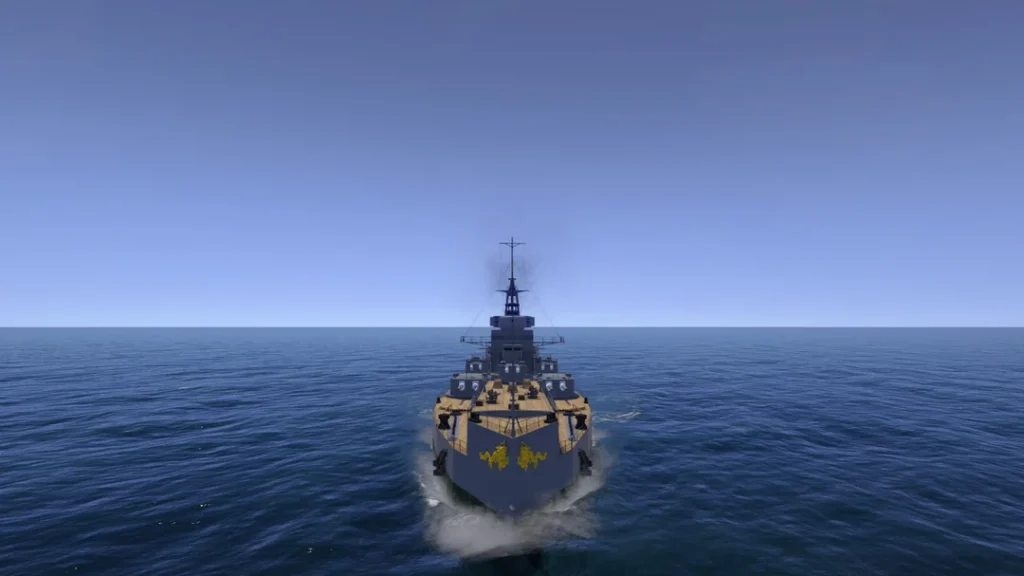
The First Chinese Ironclad Laid Down at a Domestic Shipyard
The ceremonial keel-laying of the «Ao Guang» took place in October 1887 at the expanded Jiangnan Arsenal near Shanghai. Enormous political significance was attached to the event. Officials, naval representatives, and foreign experts were in attendance. In government circles, the construction was presented as proof that China was finally beginning to transition from merely acquiring Western technology to mastering it.
But the phrase “Chinese-built ironclad” required a substantial caveat.
China was building the hull, carrying out the assembly, and producing some of the equipment, but domestic industry was not yet capable of creating a fully indigenous ship of this class. Design was carried out with the participation of foreign specialists. Some of the special steel and armor plates had to be ordered in Europe. The most complex machinery, optics, and artillery mounting equipment also came from there. The 305-mm guns were also manufactured abroad to Chinese order.
This did not in any way diminish the significance of what was happening. For the first time, China was not buying a finished ironclad. It was attempting to independently organize the entire process of its construction, assembly, and outfitting.
And it was precisely here that the real problems began.
It quickly became apparent that building an ironclad was significantly harder than building a shipyard theoretically capable of building ironclads.
One Crisis Followed Another
As early as 1888, construction began to fall seriously behind schedule. Some hull elements had to be reworked after defects were discovered. Problems arose with the precision machining of large parts. Deliveries of European components were delayed by months, and sometimes, upon their arrival, it turned out that the equipment could not be installed without altering already built structures.
The main battery turrets became a particular headache.
The four twin mounts turned out to be heavier than anticipated during the early design stages. The hull structures had to be reinforced and internal spaces redistributed. Then it was found that the initial ammunition supply system was too complex and potentially dangerous. Another redesign followed.
Simultaneously, the ship’s mass grew. To compensate, designers began economizing down to the very ton. Protection for secondary areas was revised, superstructures were lightened, and the stowage of coal was rearranged. Some compartments originally provided for in the project disappeared entirely.
The powerplant caused no less trouble. The fleet wanted 20 knots—a very serious speed for a heavy battleship of that era. This required about 15,500 indicated horsepower. Even using imported components, achieving the necessary figures and acceptable reliability proved extremely difficult.
By 1889, the original construction schedule bore almost no resemblance to reality.
And simultaneously, the most banal problem of all emerged.
The money was running out.
China Could No Longer Afford the Second “Dragon”
Initially, it was assumed that construction of the second ship would begin with a slight lag behind the lead vessel. Moreover, this approach seemed economically sound: having mastered the production of parts on the first ironclad, Chinese industry was supposed to build the second much faster and cheaper.
It turned out the other way around.
The cost of the «Ao Guang» was rising so rapidly that allocating funds for the full-scale construction of a second ship was constantly postponed. Some materials for it had been ordered, preparatory work had begun, but beyond that, progress was practically nil.
In 1890, the naval ministry had to admit the obvious: China was incapable of simultaneously completing the «Ao Guang» and beginning full-scale construction of its sister ship.
The second ship was first postponed indefinitely.
Then the project was quietly closed.
All available resources were directed to the lead battleship.
For opponents of the program, this was a godsend. Instead of the promised class of two ironclads, the fleet was getting one, and it still wasn’t finished. Its cost had already far exceeded the original estimate, deadlines were constantly being pushed back, and the large number of foreign components allowed critics to ask an uncomfortable question: to what extent could this ship even be considered Chinese?
Increasingly, the opinion was voiced that it would have been much cheaper to simply order two more ironclads in Germany.
The «Ao Guang» was gradually transforming from a symbol of the future Chinese fleet into a symbol of excessive ambition.
1891. It Finally Reached the Water
Despite all the problems, work continued. Moreover, something was happening that could not be seen in financial reports. Chinese engineers were acquiring practical experience.
Mistakes were corrected, production processes were refined, workers mastered new technologies, and operations that had taken months at the beginning of construction gradually became almost routine.
In August 1891, the «Ao Guang» was finally launched.
The celebration was somewhat strange. Formally, China had achieved a huge success: the largest and most heavily armed ship ever built at a Chinese shipyard had been launched. At the same time, everyone perfectly understood that the ironclad was still far from entering service.
Fitting out took another nearly two years.
It was now that the ship received its massive turrets, secondary artillery, conning towers, masts, and superstructures. Engines, boilers, armor plates, and auxiliary equipment were installed. Some mechanisms had to be reworked even after installation.
The sea trials proved particularly grueling.
The ironclad initially failed to make its designed 20 knots. Bearings overheated, boiler problems arose, and severe vibration was felt. After several months of modifications and the replacement of some equipment, the ship finally approached its calculated characteristics.
In October 1893, nearly six years after the keel was laid, the «Ao Guang» was officially commissioned into the Beiyang Fleet.
China had acquired its first domestically built ironclad.
And almost no one wanted to build a second one anymore.
The Most Expensive “Failure” of the Chinese Fleet
In peacetime, the “Ao Guang’s” flaws were far more conspicuous than its virtues. The ship was expensive to operate, required a large crew, and consumed enormous amounts of coal. Maintaining the four main battery turrets proved complex, and the layout of the artillery did not allow its full power to be brought to bear simultaneously.
The main complaint was even simpler: why on earth were eight 305-mm guns needed in the first place?
In naval combat of that era, the bulk of hits were scored by the faster-firing, smaller-caliber artillery. Heavy guns fired slowly, and accuracy at long ranges remained low. Many experts quite rightly believed that instead of additional heavy turrets, it would have been more sensible to reinforce the quick-firing secondary battery, increase armor protection, or simply reduce the ship’s cost.
The very history of the ship’s construction seemed to confirm their correctness.
China had wanted to build two ironclads—and got one. It had wanted to prove independence from foreign suppliers—and still had to buy vital components abroad. It had wanted to quickly master modern shipbuilding—and spent six years building the lead ship.
The «Ao Guang» became the favorite example for all opponents of overly expensive naval modernization.
And then 1894 arrived.
And it turned out that the ship possessed one virtue that could be seen neither in an accounting ledger nor during peacetime maneuvers.
When a 305-mm shell struck an enemy ship, it was completely indifferent to how much the battleship’s construction had cost.
Specifications of the Ironclad «Ao Guang»:
- Class: Fleet ironclad; in later historiography—an early semi-dreadnought
- Laid down: October 1887
- Launched: August 1891
- Commissioned: October 1893
- Displacement: 13,309 tons
- Length: 133 m
- Beam: 25 m
- Height: 40 m from keel to the top of the masts
- Draft: approx. 8.1 m
- Propulsion: two vertical triple-expansion steam engines, steam boilers
- Power: 15,502 ihp
- Number of shafts: 2
- Maximum speed: 20 knots
- Range: approx. 4,500 nautical miles at economic speed
- Complement: approx. 730 men
- Main battery: 8 × 305-mm guns in four twin turrets
- Secondary battery: 12 × 152-mm guns in six twin mounts
- Anti-torpedo boat artillery: 6 × 75-mm guns
- Light artillery: 4 × 40-mm guns
- Machine gun armament: 3 × 7.7-mm machine guns
- Torpedo armament: 2 × 360-mm torpedo tubes
- Main armor belt: up to 250 mm
- Main battery turrets: up to 250 mm
- Barbettes: up to 230 mm
- Conning tower: up to 250 mm
- Armored deck: 40–65 mm
Displacement, principal dimensions, power, speed, and armament correspond to the original author’s project “Ao Guang Semi-Dreadnought Class.” Draft, range, complement, propulsion type, and armor protection are not provided in the published description, so they have been reconstructed here taking into account the ship’s size, purpose, and presumed era of construction.
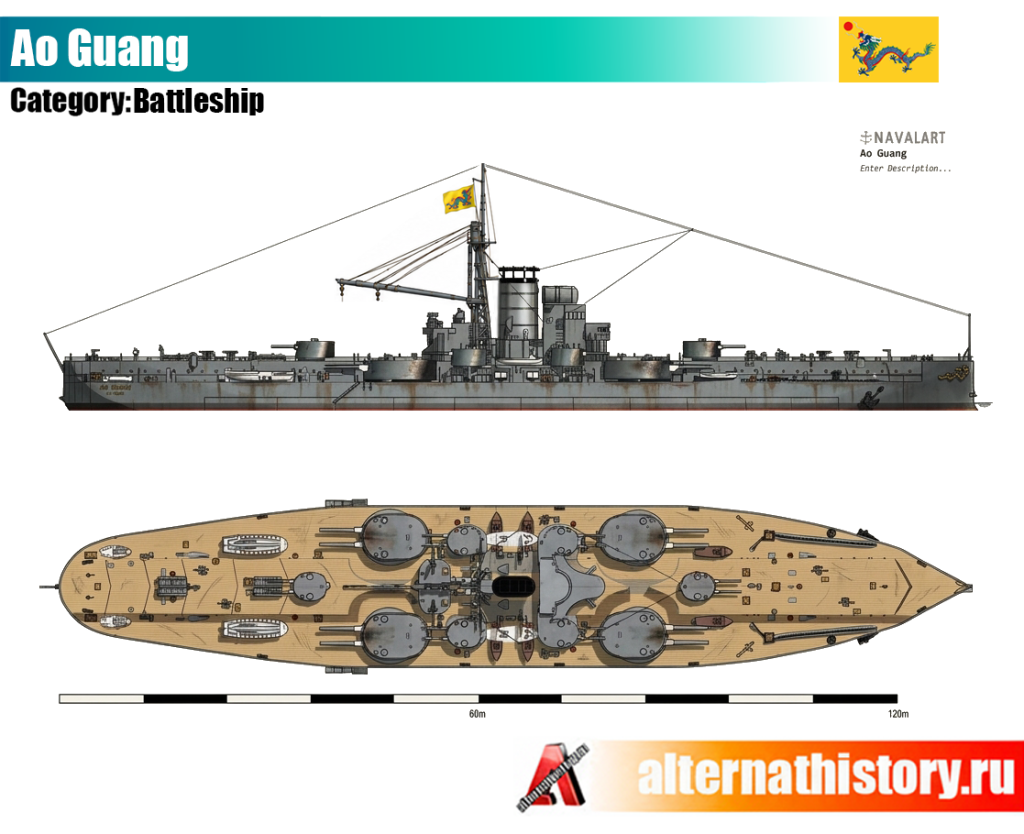
Why the “Ao Guang’s” Design Was Far from Ideal
Eight 305-mm guns look so impressive that it is easy to mistake the «Ao Guang» for a ship that was decades ahead of its time. In reality, everything is much more complex.
Mounting a large number of heavy guns did not in itself turn a ship into a dreadnought. The placement of the turrets, the fire control system, the rate of fire, the quality of the rangefinders, and the ability to concentrate the majority of the guns on a single target were of immense importance. It was precisely here that the Chinese battleship remained a ship of its era.
The four main battery turrets were placed as a compromise. Due to the superstructures and the mutual interference of the turrets, firing arcs were restricted. It was impossible to use all eight barrels with equal effectiveness on every heading. The enormous mass of the artillery ate into the displacement that could have been directed toward additional armor or a more rational secondary battery.
Even in the discussion of the original artistic project, attention is drawn to this problem: the unusual armament scheme looks excessive and does not confer all the advantages of a true dreadnought. That is why the «Ao Guang» is more correctly considered not an early dreadnought, but an extravagant semi-dreadnought born significantly ahead of its historical time.
But war sometimes creates a situation in which even a controversial engineering solution suddenly turns out to be exactly what is needed.
That is what happened at the Yalu.
Why the Japanese Underestimated the «Ao Guang»
The Japanese command evaluated the new Chinese ironclad much like its numerous critics. The eight 305-mm guns were impressive, but the extremely low rate of fire of the heavy artillery was supposed to noticeably diminish their real significance. The Japanese fleet, conversely, was banking on speed, maneuver, gunnery training, and the intensive fire of quick-firing guns.
For most potential engagements, this assessment was perfectly reasonable.
But the Battle of the Yalu turned out to be precisely the kind of fight for which the «Ao Guang» had been created.
The Chinese did not need to chase Japanese cruisers in the open ocean. They needed to withstand an attack and hold their line. The «Ao Guang», “Dingyuan”, and “Zhenyuan” formed a heavy core of the squadron that the Japanese were literally forced to blast apart.
And here, extremely unpleasant arithmetic revealed itself.
A Japanese 120- or 152-mm shell could smash a boat, destroy an open gun crew, wreck a superstructure, or start a fire. To incapacitate a heavy ironclad, a multitude of such hits was required.
A Chinese 305-mm shell sometimes needed only one lucky hit.
That is why the ship, which peacetime had turned into an expensive technical curiosity, during the general engagement unexpectedly turned out to be almost perfectly suited to its one true task.
It was supposed to absorb blows.
And strike back much harder.
One Ship Could Not Win a War. But It Could Prevent Losing It
It is important here not to turn alternate history into a fairy tale. Even the victory at the Yalu did not eliminate the numerous weaknesses of the Qing Empire. The Chinese land army did not suddenly become modern, corruption did not vanish anywhere, the command remained uneven in quality, and Japan retained its excellently trained armed forces and immense political will to continue the war.
The «Ao Guang» could not solve all these problems.
It did something else.
It deprived Japan of the ability to exploit Chinese weaknesses under the most favorable conditions.
After the Yalu, the Beiyang Fleet retained a combat-capable core. The Japanese command was forced to constantly factor in the possibility of its sortie. Any major troop transport now required serious escort. Sea lanes became vulnerable, and operations against Port Arthur and Weihaiwei became far riskier.
The «Ao Guang» itself required extensive repairs after the Yalu. Its appearance was depressing: the superstructures were riddled with holes, some of the light and secondary artillery was destroyed, the funnels were damaged, and the hull was scarred by numerous hits.
But the engines and most of the heavy artillery survived.
A few months later, the battleship was ready to put to sea again.
That alone was enough to prevent the Japanese from considering the Yellow Sea their own.
The war was gradually turning into exactly what Japan wanted least—a protracted confrontation with a state possessing far greater human and material resources.
By the spring of 1895, both sides were ready to discuss peace.
But now the terms were no longer dictated by Japan alone.
A Different 1895
In real history, the war ended in a crushing defeat for China and the Treaty of Shimonoseki. The Qing Empire recognized the independence of Korea, ceded territories to Japan, and was obliged to pay a massive indemnity. The defeat became one of the most painful testimonies to the crisis of the Chinese state.
In our alternate reality, the result was completely different.
China did not defeat Japan.
But neither did Japan defeat China.
Beijing was still forced to recognize the final exit of Korea from the traditional Chinese sphere of dependence. In itself, this was a serious geopolitical defeat. However, territorial concessions were avoided, and, crucially, Japan did not receive the enormous indemnity that in real history became one of the sources of funding for its further military modernization.
For China, the result was perceived almost as a victory.
For the first time, the Empire received proof that the expensive policy of self-strengthening could indeed yield concrete results. European technology could not only be bought—it could be mastered. Chinese shipyards were capable of building large warships. Domestic engineers were capable of solving tasks that had seemed impossible just a decade prior.
And the main symbol of all this became the ship that until recently had been cited as proof of the opposite.
The Victory of the «Ao Guang» Burying the «Ao Guang» Itself
After the war, the idea of building a second ship unexpectedly returned.
It would seem, what could be more logical? If the sole ironclad had played such a crucial role at the Yalu, several more of the same should be built immediately.
But unexpectedly, the Chinese shipbuilders themselves spoke out against this.
Six years of grueling work had given the engineers enough experience to clearly see the flaws of their own creation. The four heavy turrets were placed irrationally. Too large a share of the displacement was taken up by artillery. The secondary battery competed with the main caliber for internal volume. The engines took up a lot of space, and there was virtually no reserve for future modernizations.
To repeat the «Ao Guang» meant consciously repeating the mistakes of the 1886 project.
Therefore, the second ship was never built.
The next generation of Chinese battleships was designed differently. The «Ao Guang» remained one of a kind—a giant experimental ship that appeared at the right moment in history and was never repeated.
And then an event occurred that forced a completely different look at the old Chinese “dragon.”
Nineteen Years Before HMS “Dreadnought”
In 1906, Great Britain commissioned HMS *Dreadnought*. The new battleship caused a genuine revolution. A homogeneous battery of heavy guns, high speed, and a fundamentally different approach to artillery combat almost instantly turned the old fleet ironclads into second-class ships.
And then naval historians dug out the old blueprints of the Chinese battleship once more.
Eight 305-mm guns.
Four heavy twin turrets.
A speed of 20 knots.
And a keel-laying date of 1887.
Of course, the «Ao Guang» was not a dreadnought. Its creators had proceeded from a completely different tactic. They retained powerful secondary artillery, did not solve the problem of the rational placement of heavy turrets, and did not possess the fire control systems that would allow future battleships to fire effectively at enormous distances.
But denying the obvious was becoming difficult.
Nineteen years before HMS *Dreadnought*, Chinese engineers had built a strange ship that had accidentally taken a few steps in the direction of the future battle fleet.
Therefore, the «Ao Guang» gradually acquired an unofficial designation:
the world’s first semi-dreadnought.
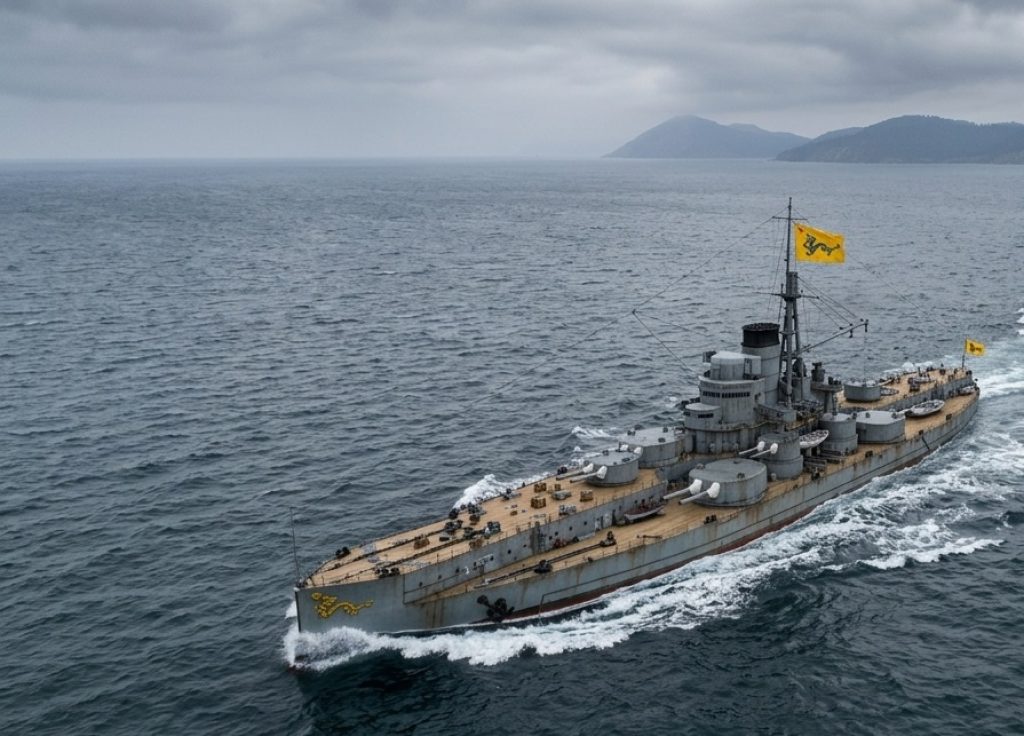
A Failure That Proved Sufficient for Victory
The history of the «Ao Guang» perfectly illustrates how deceptive the word “failure” can be.
China indeed did not fulfill the original program. Instead of two ships, one was built. Deadlines were missed. The budget was exceeded. Complete independence from foreign technology was not achieved. The battleship itself turned out to be overcomplicated, expensive, and possessed a mass of design flaws.
If one were to evaluate the program against the original technical specification, it could indeed be called a failure.
But on September 17, 1894, accounting arguments ceased to matter.
The Chinese fleet did not need ten such ships.
It did not even need two.
On that specific day, one was enough.
The «Ao Guang» did not win the First Sino-Japanese War single-handedly. It did something far more plausible and therefore more important: it shifted the balance of power just enough so that China could avoid losing it.
The victory at the Yalu saved the Beiyang Fleet. The surviving fleet did not allow Japan to reign unchallenged at sea. The absence of such command ruined the Japanese plan for a quick war. And the protracted war ended in a compromise that in Beijing was perceived as the first great victory of the self-strengthening policy.
The ship that for years had been considered a monument to China’s inability to catch up with the West became proof of the exact opposite.
Sometimes, to change history, one really does not need to build a huge fleet.
Sometimes, one very expensive failure is enough.