The Eye of the Aircraft Carrier: How the AW101 Was Transformed into the Navy's Flying Radar

Sometimes a system’s fate is determined not by its purpose, but by the foundation on which it is built.
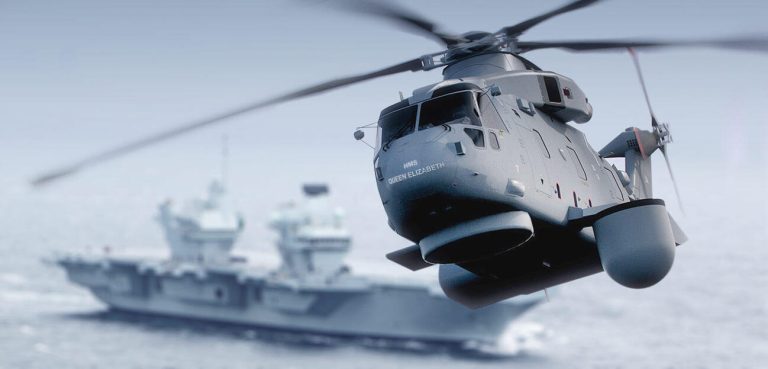
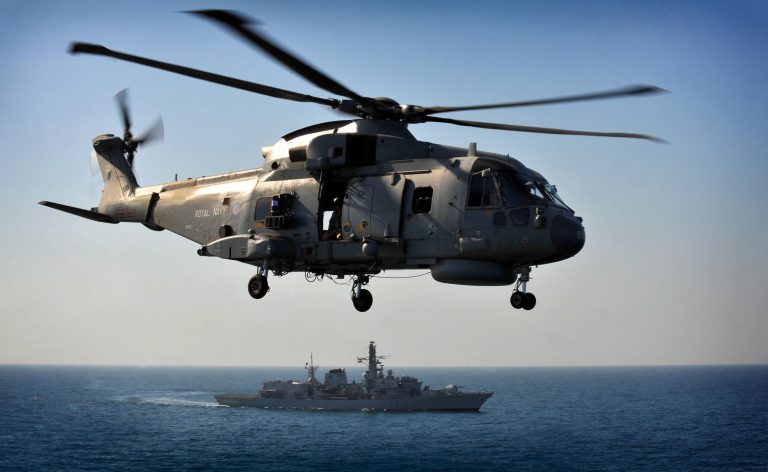
The story of the Merlin Crowsnest is exactly about that. Because behind that complicated name lies not so much a new helicopter as a redesigned, long-proven, and perfected version of the AgustaWestland AW101 — a heavy naval helicopter that the British have been operating for decades.
And it was this very system that served as the platform for what is now known as the “eyes of the fleet.”
When a Tried-and-True Car Is Better Than a New One
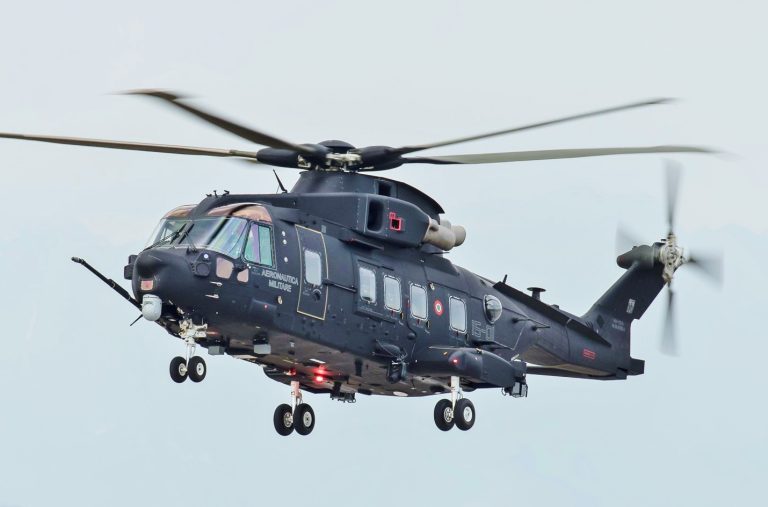
The reason is simple: they’ve already been “broken in.”
The AW101 has everything needed for demanding maritime operations:
- three engines, providing a margin of safety
- high load capacity
- spacious fuselage
- Stability when operating at sea
And most importantly—the ability to carry additional equipment without sacrificing functionality.
That is precisely what made it possible to turn the anti-submarine helicopter into a flying radar station.
Crowsnest: Not a New Helicopter, but a New Role
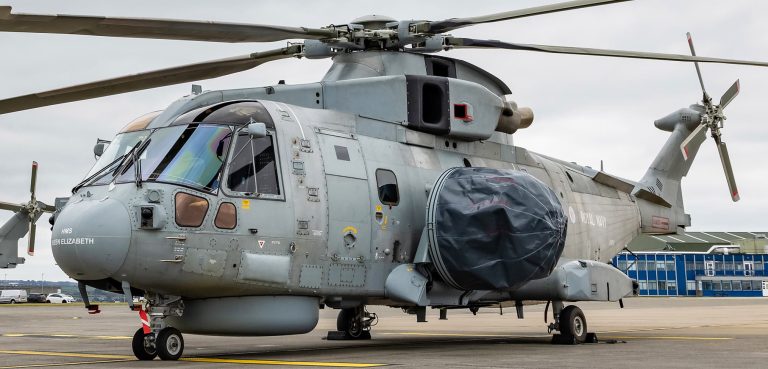
The Merlin Crowsnest is not a separate vehicle, but a variant of the Merlin HM2.
The basic helicopter remains the same. What changes is its mission.
At first glance, the solution seems crude, but it is technically sound.
There’s no need to redesign the entire helicopter.
There’s no need to change the fuselage’s aerodynamics.
All you need to do is add a system that “hangs” and activates when needed.
This is a typical British approach: not to overhaul the platform, but to adapt it.
Why was the AW101 the right choice?
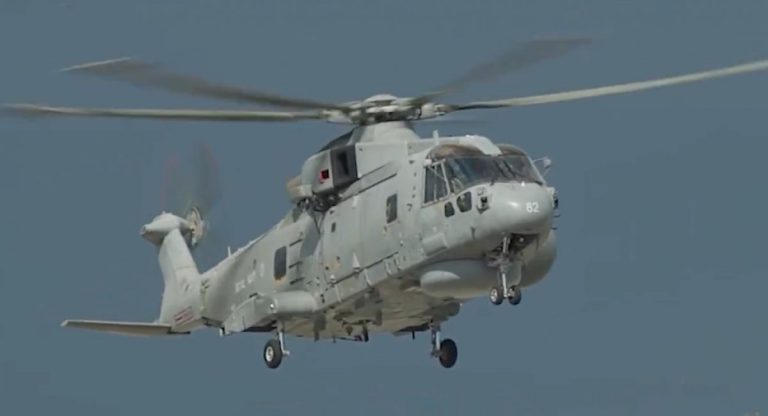
Not every helicopter is capable of carrying such a system.
The AW101 was a near-perfect fit.
The large fuselage provides space for operators and equipment.
Powerful engines compensate for the additional weight.
And the marine design is built from the ground up to withstand harsh conditions.
But there is also a less obvious factor.
The AW101 is a machine designed for long-term operation.
And that’s critical.
Crowsnest isn’t just a matter of “taking off, looking around, and landing.” It involves hours of hovering in the air, continuous monitoring, and data transmission.
A light helicopter simply wouldn’t be able to withstand such conditions.
A radar that works where others can’t see
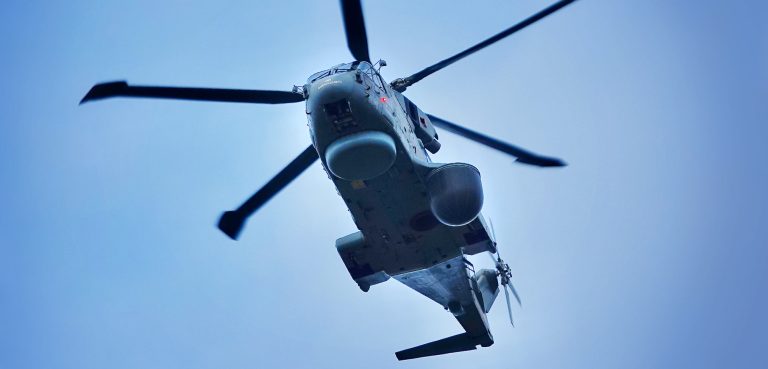
Crowsnest’s primary mission is to detect low-flying targets.
And this is where a problem arises that all maritime systems face: the radio horizon.
Ship-based radar is “limited” by the curvature of the Earth.
Airplanes are expensive and require infrastructure.
A helicopter turns out to be a compromise.
By rising to a high altitude, it “expands” the fleet’s field of view.
And he begins to see:
- drones over the water
- cruise missiles
- low-flying targets
It is precisely these threats that are considered the most significant today.
Cyprus: Practical Application
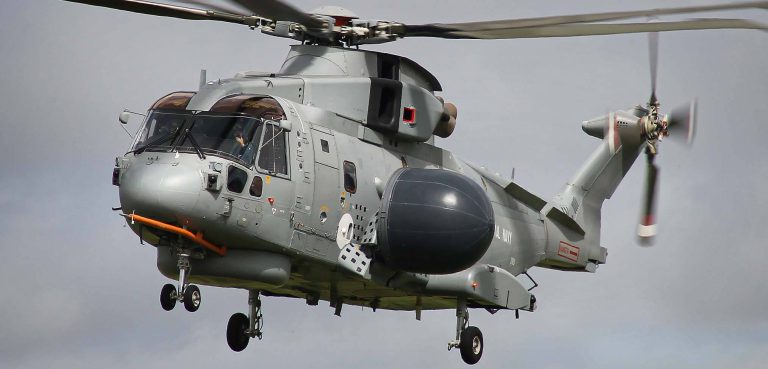
The deployment of Merlin Crowsnest in Cyprus is not a show of force.
This is a practical solution.
In a region where the following are reported:
- drone attacks
- escalating tensions surrounding Iran
- Heavy traffic in the Strait of Hormuz
We need a monitoring system, not a percussion instrument.
And the AW101 with the Crowsnest system does exactly that:
continuous monitoring,
early warning,
and real-time data transmission.
Restrictions That No One Talks About
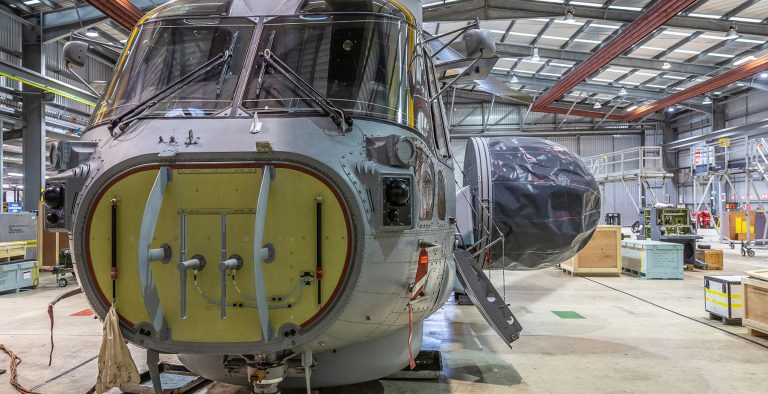
As effective as it is, Crowsnest is a compromise.
It is inferior to full-fledged AEW&C aircraft:
by operating altitude,
detection range,
and flight duration.
But its purpose is not to replace an airplane.
And to give the fleet the ability to see farther than deck-mounted radar allows.
And in this regard, it fulfills its role.
Merlin Crowsnest Technical Specifications
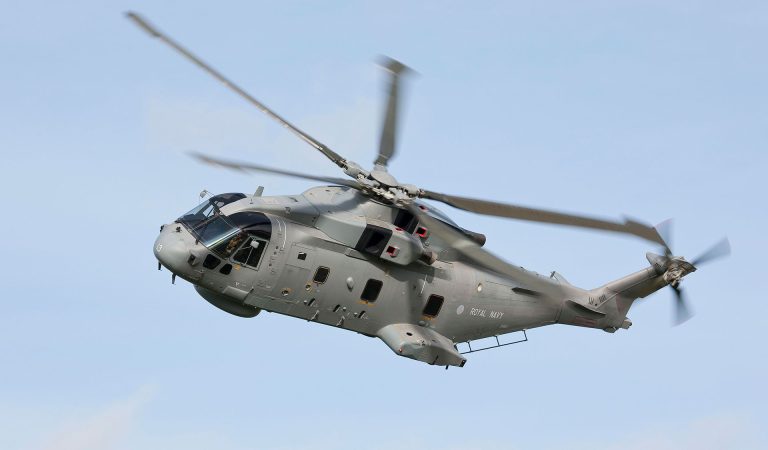
| Base Platform | AgustaWestland AW101 |
| Modification | Merlin HM2 Crowsnest |
| Type | Long-Range Radar Detection Helicopter |
| Engines | 3 turbine shafts |
| Crew | Pilots + Cameramen |
| Feature | Remote Radar Module |
| Role | Detection, Monitoring, Coordination |
| Stationing | Ships and Land Bases |
Conclusion
Merlin Crowsnest is not a revolution.
That’s evolution.
They take an old, reliable platform—the AgustaWestland AW101—and adapt it for a new role.
No radical changes.
No building a machine from scratch.
But with the understanding that in modern warfare, the most important thing is to see.
And if the platform allows for this, it remains relevant even decades after its first flight.