The F-117, German-Style: How Germany Nearly Built the World's First Stealth Fighter in the 1980s

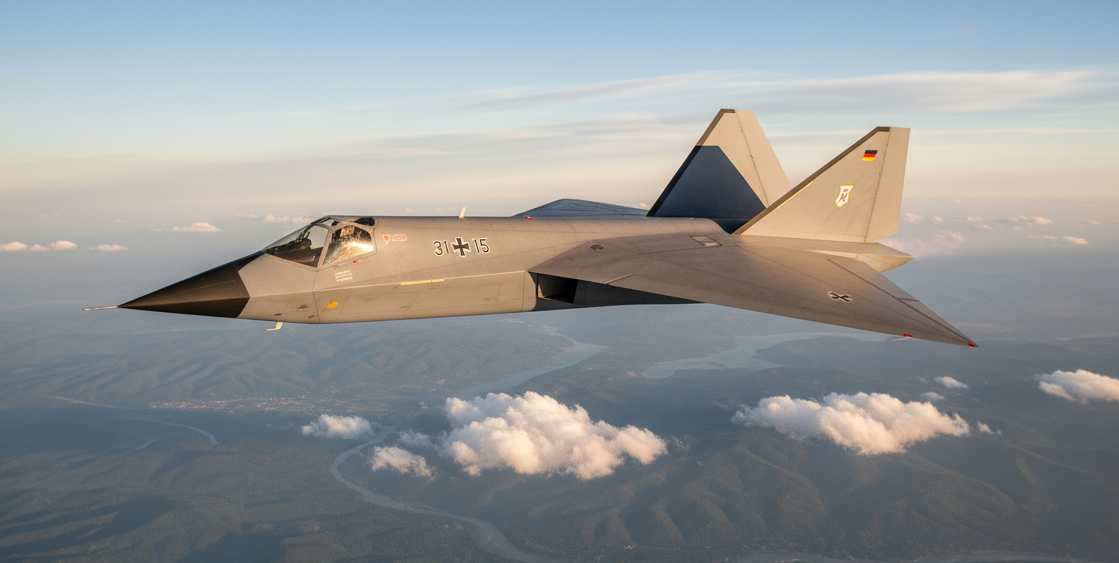
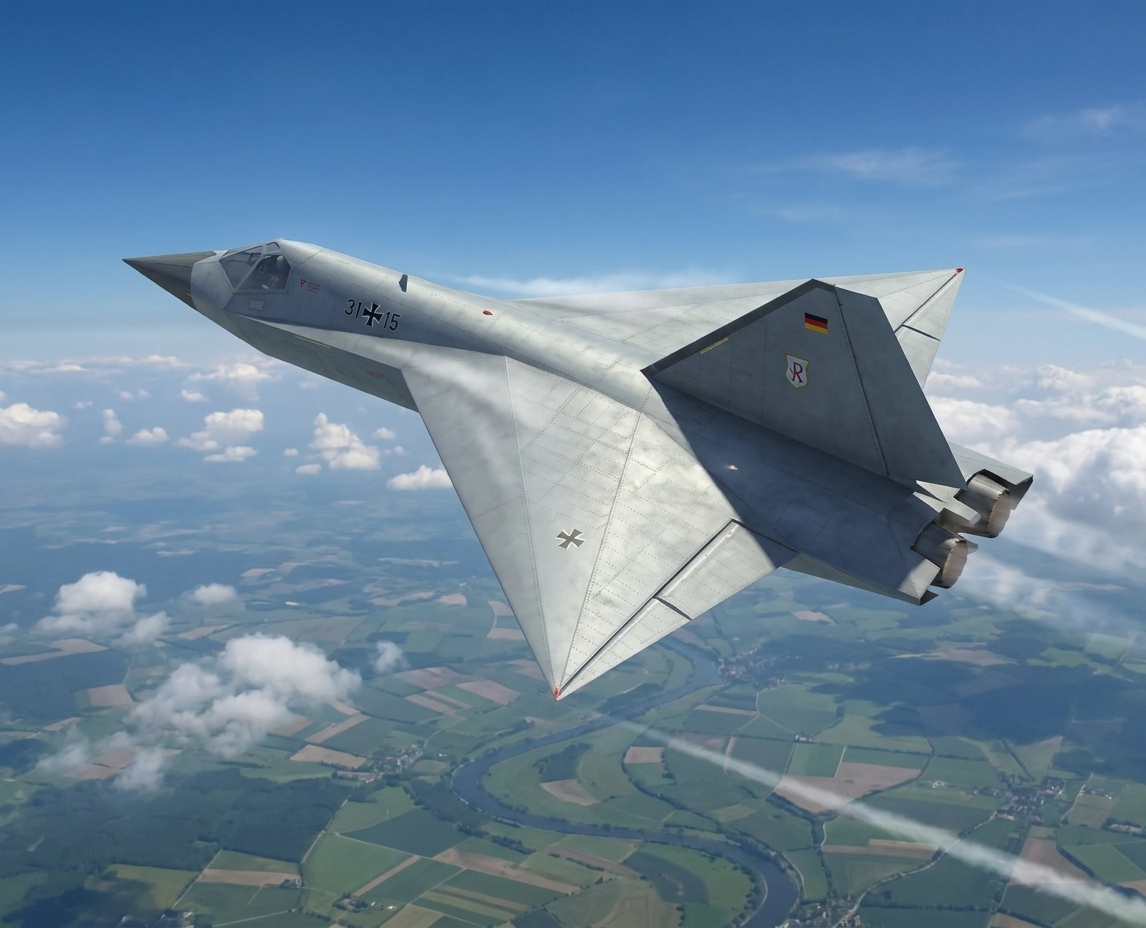
While the U.S. was feverishly working on its “stealth” program in the 1970s and 1980s, creating the legendary F-117 Nighthawk, few suspected that similar research was being conducted in West Germany at the same time. German engineers didn’t simply copy American developments—they forged their own path, and the result might have been even more impressive. One of the most ambitious projects of that time was the DASA TDEFS—Germany’s answer to the American “stealth” aircraft.
From Lampyridae to TDEFS: The Evolution of an Idea
The history of German stealth technology began back in the 1970s with the MBB Lampyridae project—an experimental aircraft developed by the Messerschmitt-Bölkow-Blohm consortium. It was the first postwar German aircraft to systematically employ technologies designed to reduce radar visibility. According to some sources, the project was scrapped not for technical reasons, but for political ones: allegedly under pressure from the United States, which did not want to see a competitor to its F-117 on the market. Be that as it may, the work done on the Lampyridae was not in vain.
DASA (Deutsche Aerospace AG) took up the baton and, building on previous research, developed its own concept for a stealth fighter. Unlike the highly specialized Lampyridae, the new project was conceived from the outset as a more versatile design, tailored to European theaters of operations.
Technical Specifications: What the Germans Had Planned
The project underwent extensive aerodynamic testing: models of the future aircraft were tested in high-speed wind tunnels and showed promising results. An intermediate step was the development of the FTTU (Fliegender Technologie-Träger Unbemannt) unmanned technology demonstrator, which was intended to validate key solutions before the manned version was built.
Among the innovations planned for TDEFS, the following stood out:
- Variable thrust vectoring is a technology that has already been tested on the Rockwell-MBB X-31, a joint U.S.-German experimental aircraft;
- A new-generation radar-absorbing coating is a special paint that scatters radar signals;
- The airframe’s faceted geometry—similar to that of the F-117—is designed to minimize the radar cross-section;
- Integrated avionics with artificial intelligence capabilities for flight control and electronic warfare systems.
In fact, the DASA TDEFS was considered a fifth-generation fighter long before the term came into common use.
Why the project never really took off
Despite the technical planning, the prototype was never built. The reasons are systemic in nature:
- Financial barrier. DASA realized that it could not handle such a capital-intensive project on its own. Attempts to attract European partners ran up against the realities of the time: Europe’s major aerospace companies were focused on finalizing their own programs—the Eurofighter Typhoon, the Dassault Rafale, and the Saab Gripen. There were simply no spare resources left for yet another flagship project.
- Technological “lag.” By the time the active phase of TDEFS began, the basic solutions inherited from Lampyridae had come to be seen as outdated—primarily because the computing power available at the time did not allow the concept’s full potential to be realized.
- Geopolitical Context. Following German reunification, defense budget priorities shifted, and interest in costly “breakthrough” projects waned.
The Legacy of What Might Have Been
The story of the DASA TDEFS is not just a tale of an aircraft that never came to fruition. It is an example of how even cutting-edge engineering ideas can run up against economic and political realities. German experts laid the groundwork for future research in the field of stealth technology, and many of their developments were later applied in European defense programs.
Today, when stealth technology has become the standard for fifth-generation fighter jets, the TDEFS project seems less like a curiosity and more like a missed opportunity. Perhaps, had circumstances been different, it would be a German “stealth” fighter—not an American one—patrolling the skies over Europe.
An alternative option
A neural network happened to generate an alternative design for me. As you can see, it’s practically the same aircraft that was being developed, but with a twin keel: