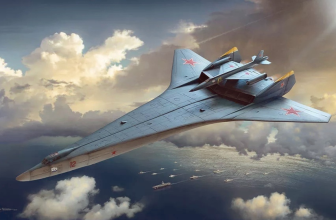
The First Soviet Aircraft Designed to Carry an Atomic Bomb: The “64” Strategic Bomber (Tu-64). Why Did It Never Take Off?

Even in the midst of the Great Patriotic War, the Soviet leadership recognized the strategic importance of developing its own nuclear weapons. In 1943, the First Main Directorate was established under the Council of Ministers of the USSR to coordinate all work on the atomic program. At the same time, there arose an urgent need to develop a specialized aircraft capable of delivering the future atomic bomb to enemy targets.
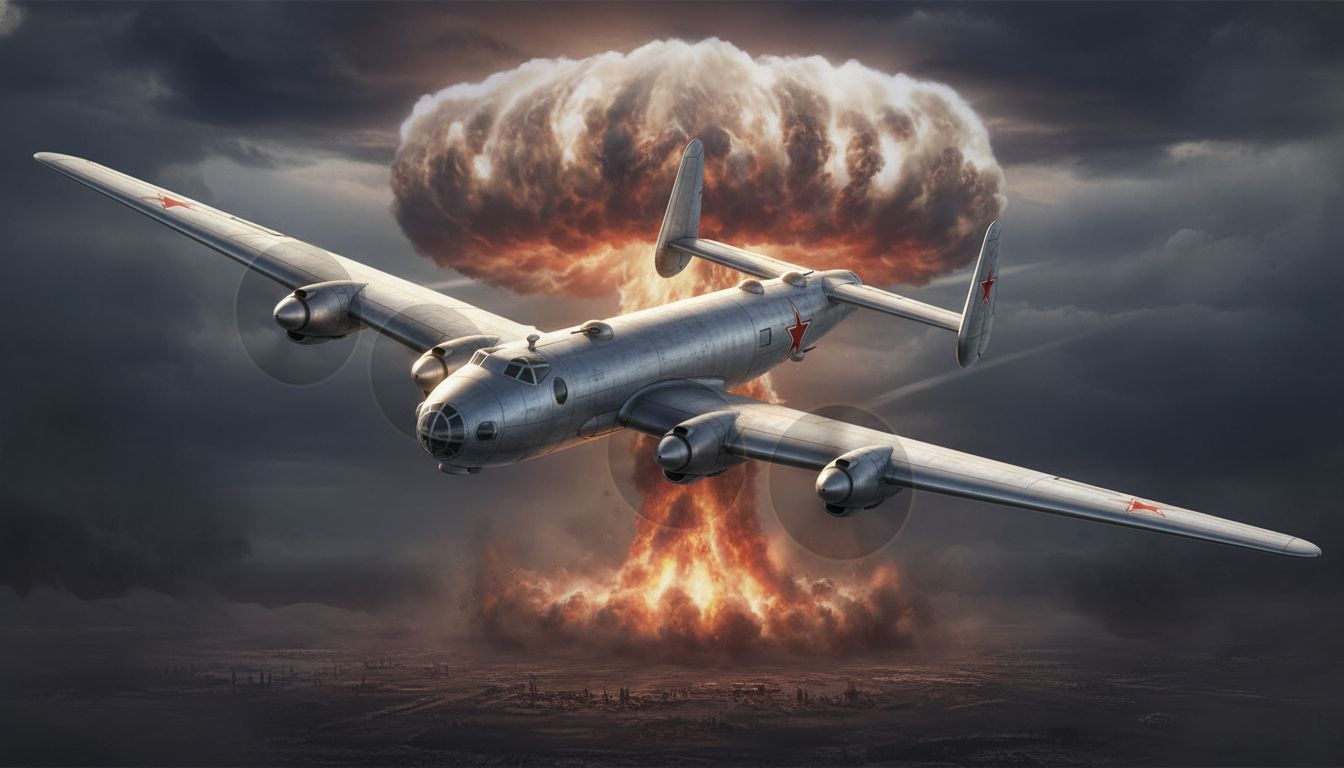
It was in this context that, on September 7, 1943, A. S. Yakovlev, Deputy People’s Commissar for the Aviation Industry, issued an official directive to Andrei Nikolaevich Tupolev. The document called for the development of a preliminary design and the construction of a scale model of a heavy high-altitude four-engine bomber powered by M-71 engines, equipped with turbochargers, pressurized cockpits, and defensive cannon armament. Key requirements included a maximum speed of 500 km/h at an altitude of 10,000 meters, a range of up to 6,000 km with a bomb load of 7–8 metric tons, and the ability to carry two bombs weighing 5,000 kg each in the fuselage. This date is considered the official start of work on the aircraft, which was given the internal designation “Aircraft 64.”
Start of Work and Preliminary Design
The A. N. Tupolev Design Bureau faced an extremely difficult task: to develop a bomber based on domestic technology that would be comparable in performance to the American B-29. Design work began in May 1944 and proceeded simultaneously on two variants—a bomber and a transport/passenger aircraft.
An analysis of preliminary calculations showed that, with dimensions similar to those of the previously developed ANT-42 (Pe-8), the new aircraft was expected to have twice the takeoff weight. This posed serious engineering challenges, especially for airframe designers and structural engineers: the loads on the structural components of “Aircraft 64” exceeded those of the Pe-8 by more than a factor of two.
During the preliminary design phase, led by B. M. Kondorsky’s team, several dozen layout schemes were developed. The range of solutions considered was extremely broad—from classic four-engine configurations resembling the B-17, B-24, or Me-264 to non-standard twin-boom variants. Ultimately, the team settled on a traditional mid-wing configuration with pressurized compartments, a spaced vertical tail, and a tricycle landing gear with a nose wheel.
During the design phase, the experience gained from the development of the B-29 was carefully studied. All of the cutting-edge solutions in global aircraft manufacturing that were feasible given the technological capabilities of Soviet industry were incorporated into the design. As a result, “Aircraft 64” occupied an intermediate position between the bombers of the late 1930s and the new generation of B-29-class aircraft.
Design Features of the “64” Aircraft
By August 1944, the preliminary design had been completed. According to the design, “Aircraft 64” was a heavy four-engine bomber intended for daytime operations deep behind enemy lines. Its high speed and altitude capabilities, combined with powerful defensive armament, were intended to ensure its survivability in areas with a sophisticated air defense system.
Structurally, the aircraft was designed as an all-metal monoplane with a mid-mounted wing. The spindle-shaped fuselage featured a monocoque structure with an active skin of increased thickness. The twin-spar wing was equipped with Fowler-type landing flaps. The tail unit consisted of a twin-fin configuration, with the fins spaced apart at the ends of the stabilizer. The landing gear was a tricycle configuration, with a nose wheel measuring 1000×350 mm and main landing gear with wheels measuring 1600×450 mm.
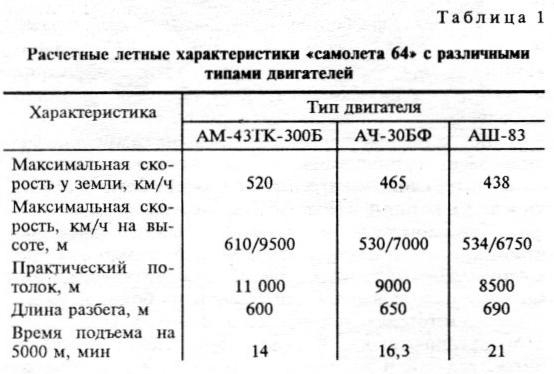
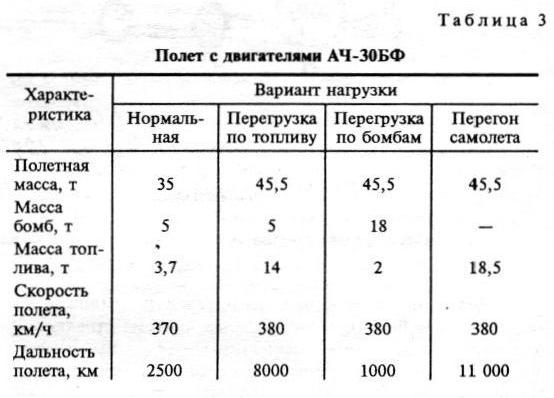
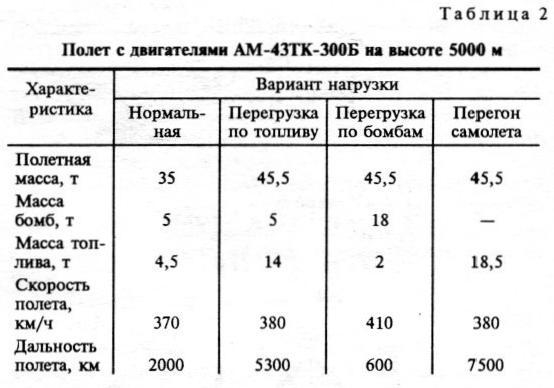
A wide range of engines was considered for the power plant: the AM-42TK, AM-43TK-300B, and the diesel engines ACh-30BF, ASh-83FN, or M-250. Detailed design studies and flight performance calculations were carried out for each of these options.
Armament and Bomb Load
The bombing armament of “Aircraft 64” was designed with operational flexibility in mind. The standard combat load was 5 metric tons; however, when engaging targets near the front lines, it could be increased to 18 metric tons. The bombs were housed in two compartments—one forward and one aft of the center wing. The forward compartment was divided into two sections, each capable of holding up to three 2-metric-ton bombs. The rear compartment allowed for the carriage of two super-heavy bombs weighing 5,000 kg each.
To provide protection against enemy fighters, a powerful system of machine guns and cannons was developed, providing full all-around fire coverage. Any point in the space around the aircraft could be engaged by at least four barrels simultaneously. The NS-23 and B-20 cannons were mounted in four turrets—two each on the top and bottom of the fuselage, as well as in one or two aft mounts. The turrets rotated 360° and had elevation angles ranging from +80° to –10° for the upper turrets and from +10° to –80° for the lower ones. The ammunition load consisted of 200 shells per barrel in the turrets and 300 in the stern mount.
Fire control was carried out via an electric remote control system. The senior gunner coordinated the upper turrets, while the flank gunners coordinated the lower ones; each gunner could fire from either one or both turrets. If necessary, control of the forward turrets could be transferred to the forward cockpit. The aft turret was used as an additional firing position at low altitudes; at high altitudes, the gunner would move to the central pressurized cockpit.
Requirements Development and Prototyping
Based on preliminary studies, in August 1944 the Air Force prepared a draft of the tactical and technical requirements for a new high-altitude, long-range bomber powered by AM-42TK engines. The document stipulated that the aircraft should be capable of performing not only strike missions but also reconnaissance and troop-transport missions.
By September 1944, a full-scale mock-up of “Aircraft 64” had been built and had passed an initial inspection by the customer. A number of comments were raised, including a requirement to install an onboard radar station. After modifications were made, a second inspection took place only in February 1945, and further comments were made regarding the layout, equipment, and armament.
As they became more familiar with examples of Western aircraft technology, the Air Force’s design requirements steadily increased. At some point, they exceeded the actual capabilities of the Soviet aircraft industry in the mid-1940s, particularly in the areas of radio-electronic equipment and fire-control systems.
On April 7, 1945, the Air Force finally approved the tactical and technical requirements. According to these requirements, the power plant was to use either AM-43TK-300B or AM-46TK-300 engines. The crew was increased to 10 members with the addition of a radar operator. The number of gun mounts was reduced to five, and the total number of barrels to ten. Particular attention was paid to the avionics: a radar station, radio altimeters, instrument landing system equipment, a long-range navigation system similar to the “LORAN-C,” as well as radio identification and radiation warning systems were required.
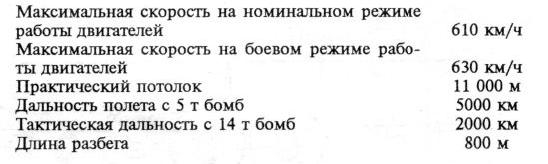
On April 27, 1945, the design review board approved the design of “Aircraft 64” with four AM-43TK-300B engines. Work continued, and with the end of the war and the onset of the “Cold War,” the project took on paramount strategic importance.
Technical Challenges and a Political Decision
Despite the approval of the design, the practical implementation of the project encountered serious obstacles. The design bureau began producing working drawings and preparing assembly jigs for the first prototype. Issues related to the airframe and powerplant generally did not pose any difficulties.
The key challenge was to equip the aircraft with modern equipment within a tight timeframe. Suppliers were unable to provide “Aircraft 64” with either the ordered navigation and radar system or the automated remote-control system for its machine-gun and cannon armament. The latter was based on the principles of cybernetics, which at that time was subject to ideological criticism in the USSR, further complicating the work.
Given the project’s national importance, all details were reported to L. P. Beria, who oversaw the atomic program, and personally to I. V. Stalin. Realizing the reasons for the delays, the country’s leadership made a radical decision: instead of continuing to develop the original design, they would copy the American B-29, four of which had been interned in the Far East after making forced landings on Soviet territory.
On June 6, 1945, the State Defense Committee issued a decree instructing the Tupolev Design Bureau to organize production of the B-4 (Tu-4) aircraft—a Soviet copy of the B-29. From that point on, active design work on “Aircraft 64” was scaled back.
The third version of the project: the final evolution of “Aircraft 64”
Although the design bureau’s main efforts were redirected toward replicating the B-29, work on the original “64” project did not cease entirely. For nearly two years after the mockup was approved in April 1945, Tupolev’s engineers continued to refine the design, incorporating engineering solutions discovered during their study of the American bomber.
By the end of 1946, the third and final version of “Aircraft 64” had been developed, which differed significantly from previous versions. The key change was the transition from a mid-wing to a low-wing configuration—this decision made it possible to standardize the airframe design for both the bomber and passenger variants, simplifying production and maintenance.
Another notable improvement was the stepped glazing of the forward cockpit, which significantly improved forward and downward visibility—a critically important feature for bombing and navigation. A domestically produced “Cobalt” radar station, modeled after the American AN/APQ-13, was installed in the forward cockpit. The onboard avionics, particularly the navigation system, were expanded and brought into line with the customer’s requirements and the configuration of the systems on the B-29.
The power plant for the third variant called for the use of AM-46TK-ZPB engines, each with a power output of 2,300 l. s.—the most promising Soviet turbocharged engines available at the time. This was intended to give the aircraft a calculated maximum speed of approximately 600 km/h at high altitude and significantly improve its high-altitude performance.
Work on the third version of “Aircraft 64” was carried out as a strategic fallback in case the B-29 reverse-engineering program failed. The Ministry of Aviation Industry took a similar stance, issuing Order No. 159 on March 27, 1946, regarding the design and preparation for production of a four-engine bomber powered by AM-46TK engines. Thus, the projects “smoldering” in the design bureau received official state support.
The project was not finally completed until the first production Tu-4 was ready at the Kazan plant and the success of the B-29 copy program had become indisputable. On April 16, 1947, the Ministry of Aviation Industry issued Order No. 223, pursuant to which all work on “Aircraft 64” was discontinued. Thus ended the more than three-year history of this ambitious Tupolev project.
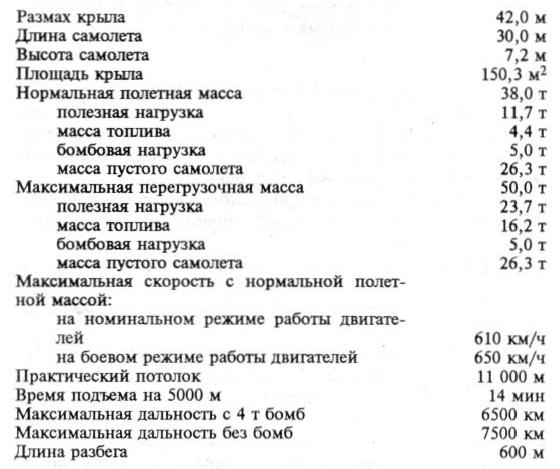
The third version of the “Aircraft 64” had the following design specifications:
Completion of the Project and Its Historical Significance
Work on “Aircraft 64” was officially halted by Order No. 223 of the Ministry of the Aviation Industry, dated April 16, 1947, by which time the first production Tu-4 had already been completed at the Kazan plant, and the success of the B-29 reverse-engineering program had become evident.
Thus came to an end the more than three-year history of Tupolev’s ambitious project. Although “Aircraft 64” was never built, it played an important role in the development of Soviet aircraft manufacturing. The experience gained during its design was subsequently applied to the creation of a new generation of strategic bombers. The project became a symbol of the transition from pre-war concepts to the era of jet and nuclear aviation, laying the foundation for future achievements by A. N. Tupolev’s Design Bureau.
Tactical and Technical Specifications of the “Aircraft 64” Project
- Type: Heavy four-engine high-altitude bomber
- Crew: up to 10 people
- Power plant (options): AM-42TK, AM-43TK-300B, ACh-30BF (diesel), ASh-83FN, M-250
- Maximum speed at an altitude of 10,000 m: 500 km/h
- Cruising speed: 400 km/h
- Range with a full bomb load: 5,000 km
- Range with a payload of 7,000–8,000 kg: 6,000 km
- Standard bomb load: 5,000 kg
- Maximum bomb load: 18,000 kg
- Bomb load: up to two 5,000-kg bombs in the rear compartment, up to six 2,000-kg bombs in the forward compartment
- Defensive armament: 10 NS-23/B-20 guns in five remotely controlled turrets
- Ammunition supply: 200 rounds per barrel in the turrets, 300 rounds in the stern mount
- Design: all-metal mid-wing monoplane with a monocoque fuselage and a twin-spar wing
- Landing gear: tricycle, with a nose wheel
- Features: pressurized crew cabins, staggered vertical tail surfaces
Sources:
https://alternathistory.ru/proekt-tyazhelogo-bombardirovshhika-64-sssr/