The History of External Tail Structures: From World War II Research to SpaceShip III. Part 4

Zoom Out
A separate line of innovation began in 1998 when Patrick Peebles adopted a cross-flow fan as part of the wing structure. Peebles named the resulting design the FanWing, and interest in it only grew in the years that followed. BAe engineer George Seyfang, who presented a study on the topic of an external horizontal stabilizer at a Royal Aeronautical Society conference in 2008, joined the project team in 2010, quickly recognizing the relevance of an external tailplane for the FanWing. This was the same situation that Vought engineers faced while working on the ADAM project: a dramatic change in the direction of the downward flow behind the innovative SCVWP wing, which led to the tail being moved beyond the wingtips. In 2011, after a year of work on interim configurations, the FanWing demonstration model was equipped with a purely external tail. Design studies in this area appear to be ongoing.
By 1990, John Kentfield, a Canadian scientist from the University of Calgary (John Kentfield) began researching external tail surfaces after learning about certain glider models that had been flown in the 1980s by the American C.W. McCutchen in the 1980s. Following the publication of a preliminary report in 1990, John Kentfield built large flying models and published his findings in 1995. Kentfield’s research confirmed much of what was already known, namely that the design resulted in more efficient aerodynamics, good flight characteristics, and a simpler, lighter glider with minor structural shortcomings regarding the wing. In the years that followed, John Kentfield and his colleagues conducted further extensive research, carrying out numerous thorough studies to analyze its characteristics. In 2012, Kentfield continued to publish his findings.
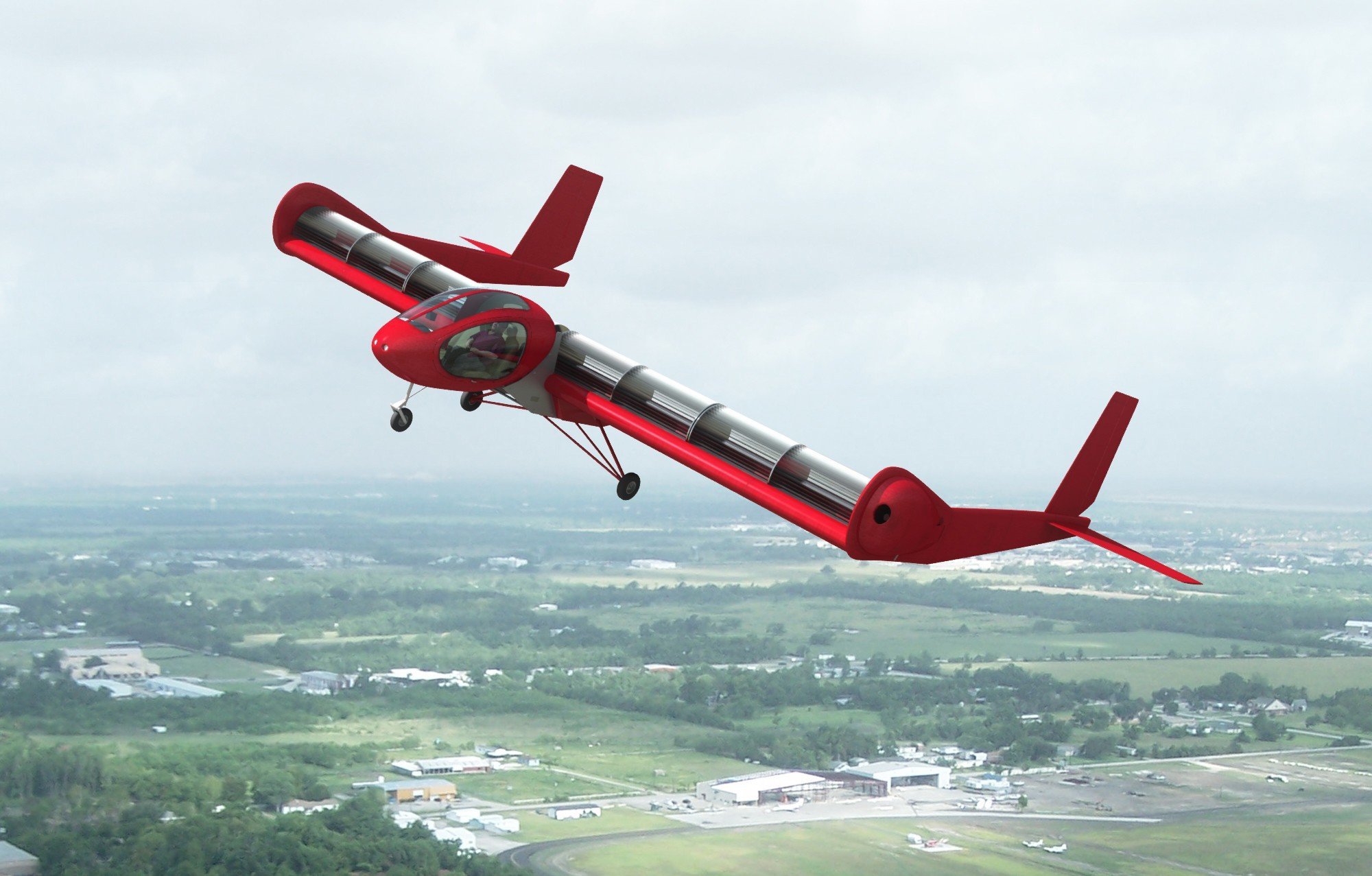
The FanWing concept—a cross-flow fan integrated into the wing structure—includes blades radiating from a central axis and forming a fan that, when rotating, induces a directed airflow that provides lift for the wing in which the fan is mounted. The incorporation of external horizontal stabilizers into the aircraft’s design, as shown in this figure, recovers energy from the vortices at the wing tips, increasing overall efficiency. Figure from FANWING.COM, hdpic.club
It should be noted that, in addition to taking the depth of analysis to an entirely new level, John Kentfield’s research was groundbreaking in its examination of keels. Kentfield was interested in how keels—which traditionally provide only directional stability and controllability—could, when positioned outside the wingspan, also improve airflow, similar to wingtips, and contribute to overall efficiency. At the turn of the millennium, a comprehensive database of scientific information was created in Calgary, sufficient for an analytical evaluation of the external tailplane design with reasonably realistic predictions of its performance, which enabled Müller to complete his analysis of the Blohm und Voss P 208 fighter design in 2002.
In 2004, Frenchman Benjamin Darrenougue (Benjamin Darrenougue), during a student exchange program in Ireland, used Kentfield’s research for his theoretical work and for wind tunnel tests, continuing the earlier research of Matthias Randolph. Meanwhile, other developers were pursuing their own independent lines of research into the use of wingtips to control a “flying wing” aircraft by changing the angle of attack. The system worked, but as with any “flying wing” aircraft, pitch and yaw control was poor. Kevin Hagen recalled Richard Vogt, who, in an effort to improve efficiency, had moved such surfaces backward and used them as an external tail unit. Without realizing it, Hagen rediscovered a design featuring variable-geometry external tail surfaces, developed by Roger Robert in 1948. However, Kevin Hagen had doubts about whether this technical solution would be feasible in the design of a full-scale aircraft, so he focused his attention on smaller unmanned aerial vehicles (UAVs). By 2017, Hagen had developed and flight-tested a prototype. Tests of the prototype showed that the external tail with a variable angle of incidence is a viable system for pitch control, but it will likely it would need to be supplemented with a conventional tailplane and rudder to ensure stability and yaw control.
Into space
Scaled Composites (often referred to simply as “Scaled”) is a company that designs and manufactures aerospace prototypes. The company was founded by American aviation pioneer Burt Rutan. When NASA launched its ERAST program (Environmental Research Aircraft & Sensor Technology—a program to develop an aircraft and onboard equipment for environmental research) with the goal of creating a high-altitude UAV with a long flight endurance, Scaled was among the companies invited to submit a proposal for further evaluation. Design work began in 1997, and, drawing on research conducted in Calgary, Scaled equipped its Model 287 Alliance I with a non-swept wing featuring a high aspect ratio and an external tail unit. Although the Model 287 was powered by a pusher propeller, in concept this design would have been closer to the Škoda-Kauba SL6 than any other aircraft that has ever flown, and even a scale model of the 287 rivaled the SL6 in wingspan. However, a full-scale UAV was never built.
Around 1994, Scaled, in collaboration with Microsoft co-founder Paul Allen, began work on a suborbital spaceplane, entering the competition for the Ansari X-Prize—a $10 million prize for the first, privately sponsored spaceflight on a reusable spacecraft. Even today, reaching space remains an extremely complex operation. The concept developed by Scaled was based on a two-stage or composite aircraft. The carrier aircraft, named White Knight, was designed to lift the detachable spacecraft to altitude. This is a proven and reliable technology that was used to launch the North American X-15 from a converted bomber back in the 1960s. Re-entry into the atmosphere was expected to be a major challenge, as the spacecraft would have to descend at supersonic speeds through an increasingly dense atmosphere. Here, the designers took a leap into the unknown, choosing untested technology and pushing it one step further.
When the engineers began looking for a way to stabilize and slow down the spacecraft at this stage of the flight, they realized that a conventional tail assembly would not be sufficient. A shuttlecock-like ring of air brakes and stabilizers would have jeopardized the spacecraft’s ability to make a safe landing. Their solution combined two ideas from earlier projects: Alliance I and the SKVVP project with a wing utilizing the “Freewing” principle (the ability to maintain a constant angle of attack throughout the flight) combined with a variable fuselage pitch angle and a self-adjusting tail unit—similar to a wing and hinged to two spars—that remained in a horizontal position at all times. The latter design also flew as a scale-down model.
For the descent module, Scaled engineers used a tail joint and made it operate differently: the angle of the tail section changed, while the fuselage remained horizontal. During reentry from space, the tail unit was designed to rotate vertically to stabilize the descent vehicle, while the rest of the vehicle remained horizontal, and the descent proceeded vertically downward. When the air density increased and began to generate lift, the tail section was returned to a horizontal position, and the craft could fly and land like a conventional airplane. It was here that the external tail unit reappeared, as earlier studies had shown that it would reduce the main wing’s area by approximately 15 percent. The two booms were to be located at the tips of short, non-swept wing cantilevers.
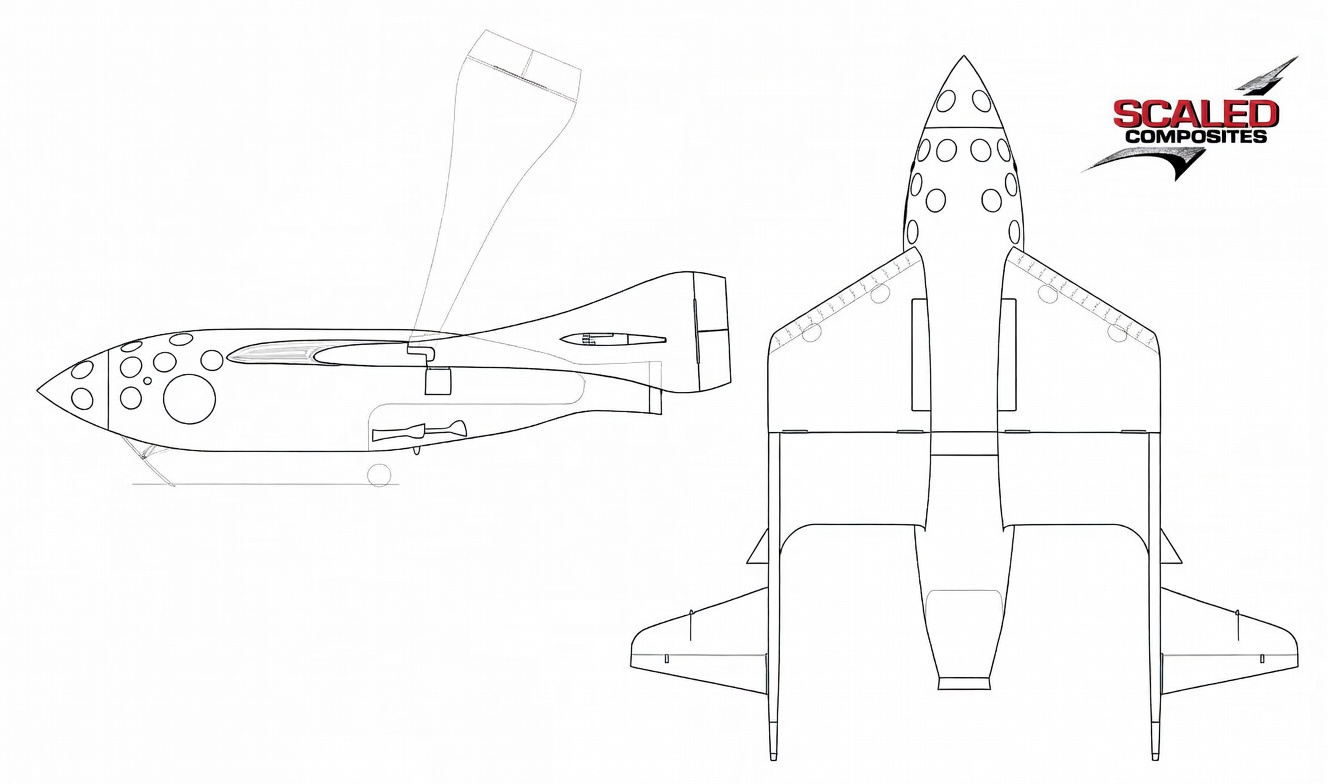
Diagram of the Scaled Composites SpaceShipOne reusable spacecraft. Wingspan: 16 feet 5 inches (5.0 m), length 16 feet 5 inches (5.0 m), diameter 5 feet 0 inches (1.52 m), wing area 160 square feet (15 m²). Developed by Scaled Composites and built by Mojave Aerospace Ventures, a joint venture founded by Scaled and Microsoft co-founder Paul Allen, SpaceShipOne was built in 2003 and featured swing-out booms with external tail surfaces mounted on them. Illustration by Kaboldy © 2022. Image processed by lmarena.ai
On May 20, 2003, Scaled’s SpaceShipOne separated from its carrier aircraft in flight for the first time, marking the first flight of a manned vehicle with an external tail assembly since NASA’s M2-F1 flights that had taken place approximately forty years earlier. In June 2004, SpaceShipOne demonstrated the effectiveness of its variable-geometry reentry system, and subsequent flights enabled it to win the coveted Ansari X-Prize. It is currently on display at the National Air and Space Museum in Washington, D.C.
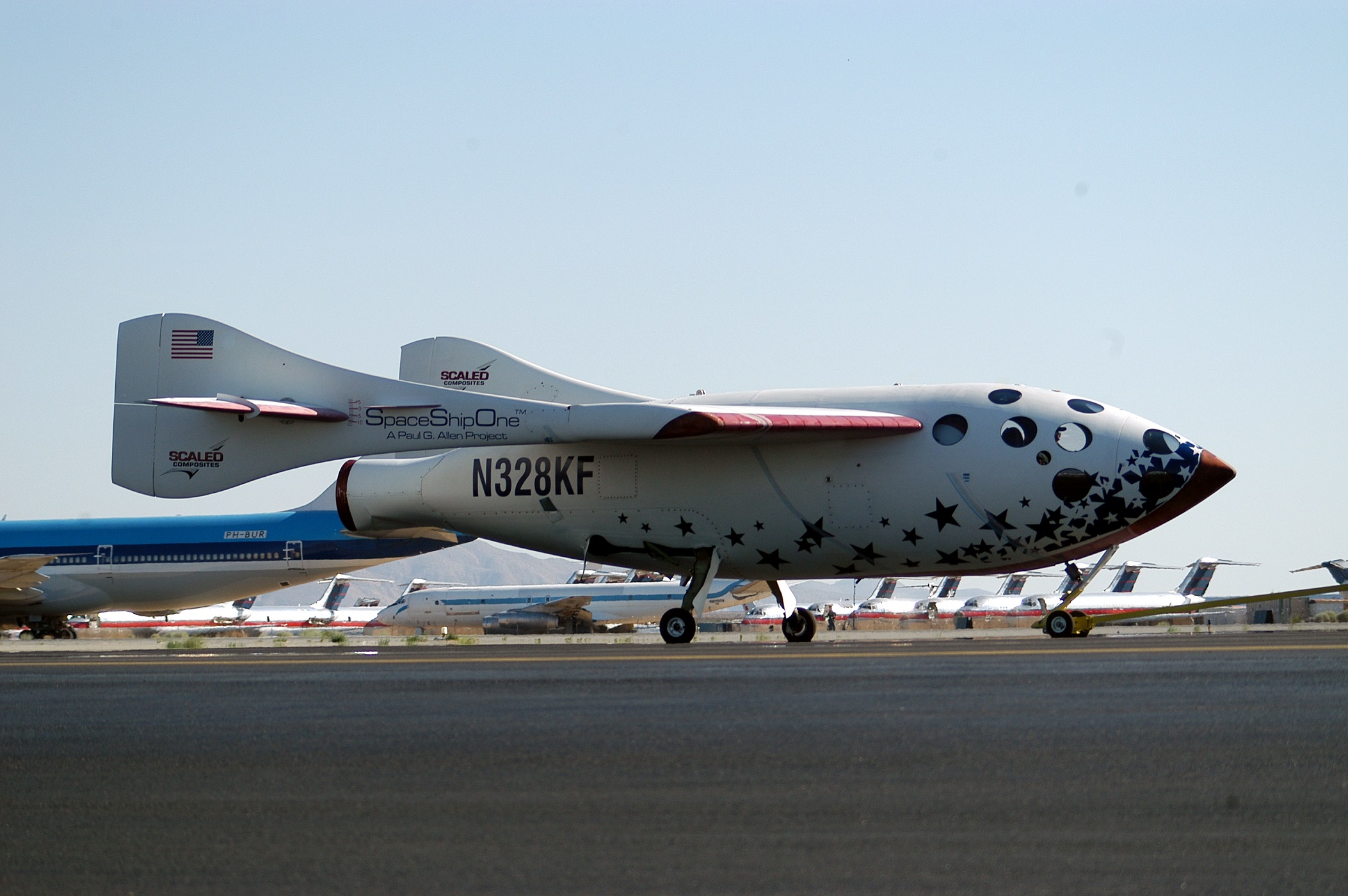
The reusable SpaceShipOne reentry vehicle at the Mojave Spaceport after Flight 15P, which took place on June 21, 2004 — the first spaceflight in which a privately funded spaceplane reached an altitude of 100.124 km (328,412 feet). The registration number N328KF was deliberately chosen to represent 328 kilofoot—that is, 328,000 feet—the Kármán line, or the officially designated boundary of space. Photo by Don Ramey Logan, weebau.com
In Scaled’s subsequent project, another figure takes center stage. Richard Branson is the driving force behind the Virgin Group—a diverse and innovative multinational corporation with a wide range of business interests. When Branson decided it was time to expand his ventures into space travel, he founded Virgin Galactic and partnered with Scaled to create The Spaceship Company, which was to manufacture spacecraft. Virgin’s first offering will be suborbital space flights lasting no more than a few hours aboard an upgraded version of SpaceShipOne, to be called SpaceShipTwo.
The future?
SpaceShipTwo, which is twice the size of its predecessor, was designed to carry a two-person crew and several passengers into space. VSS Enterprise made its first free-flight on October 10, 2010, and performed its first launch on April 29, 2013. Following the tragic, fatal loss of the Enterprise, when the tail fins were deployed at the wrong time, the second aircraft, VSS Unity, reached the edge of space on December 13, 2018, reaching an altitude of 50 miles (80 km). This altitude, recognized in the United States as the boundary of space, falls significantly short of the internationally established Kármán line at 100 kilometers (62 miles).
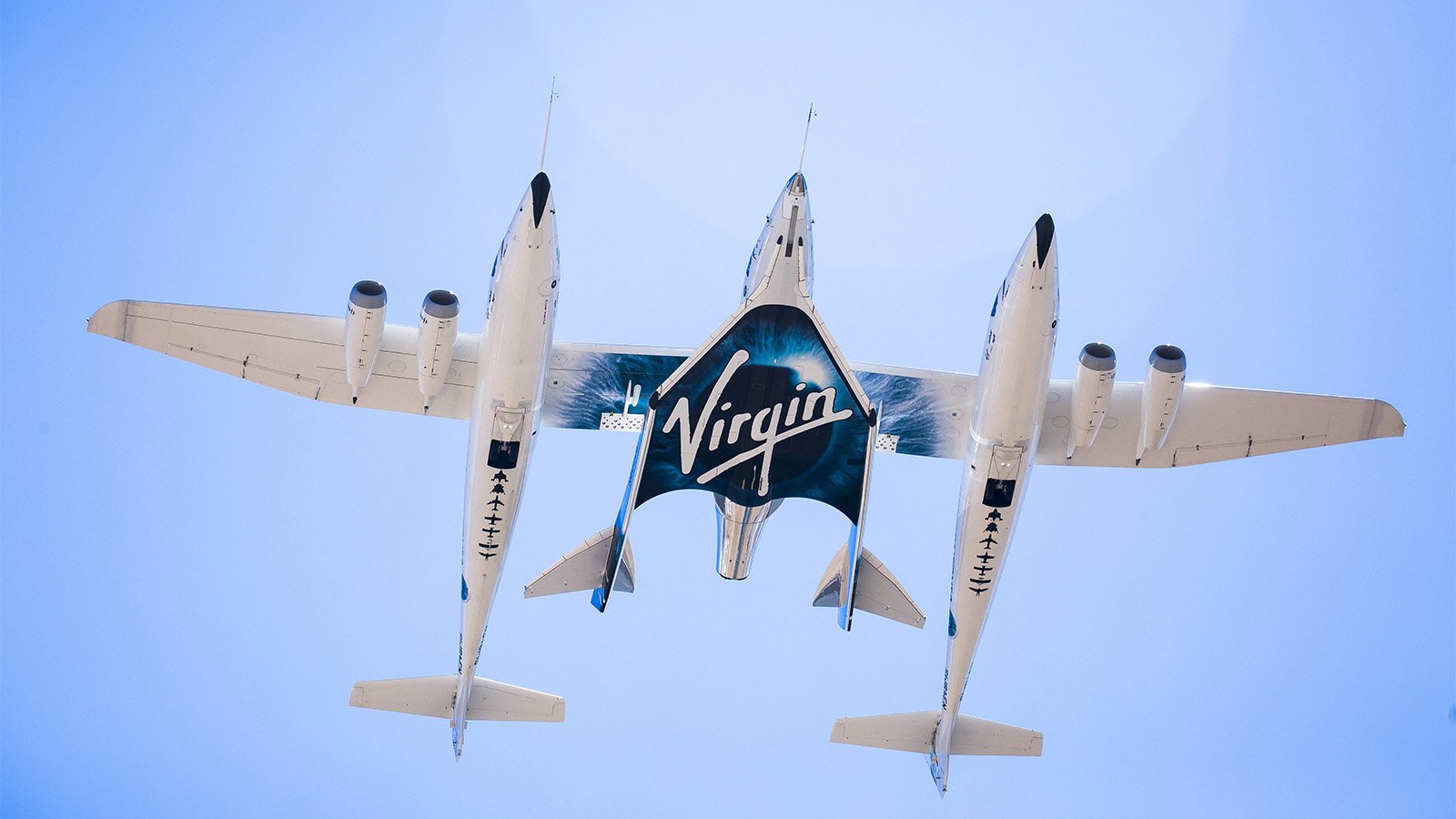
An unusual pair—the second reusable descent vehicle and SpaceShipTwo, VSS Unity, along with the White Knight Two VMS Eve carrier aircraft—take to the skies during their first joint test flight; September 8, 2016. SpaceShipTwo not only retained the external tail structure of its predecessor, but rudimentary control surfaces were also installed inside the spars. Photo courtesy of Virgin Galactic, cdn.forbes.ru
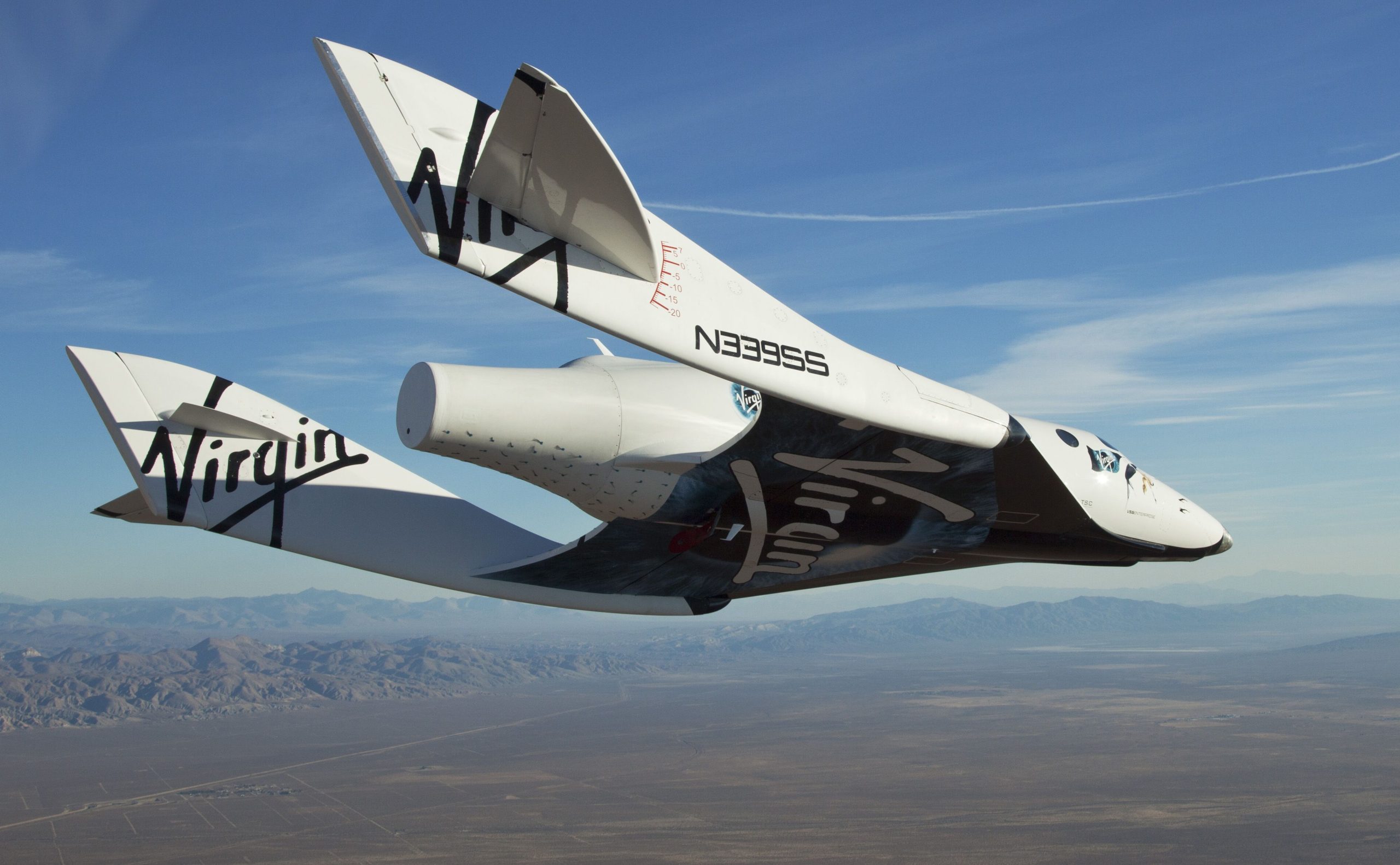
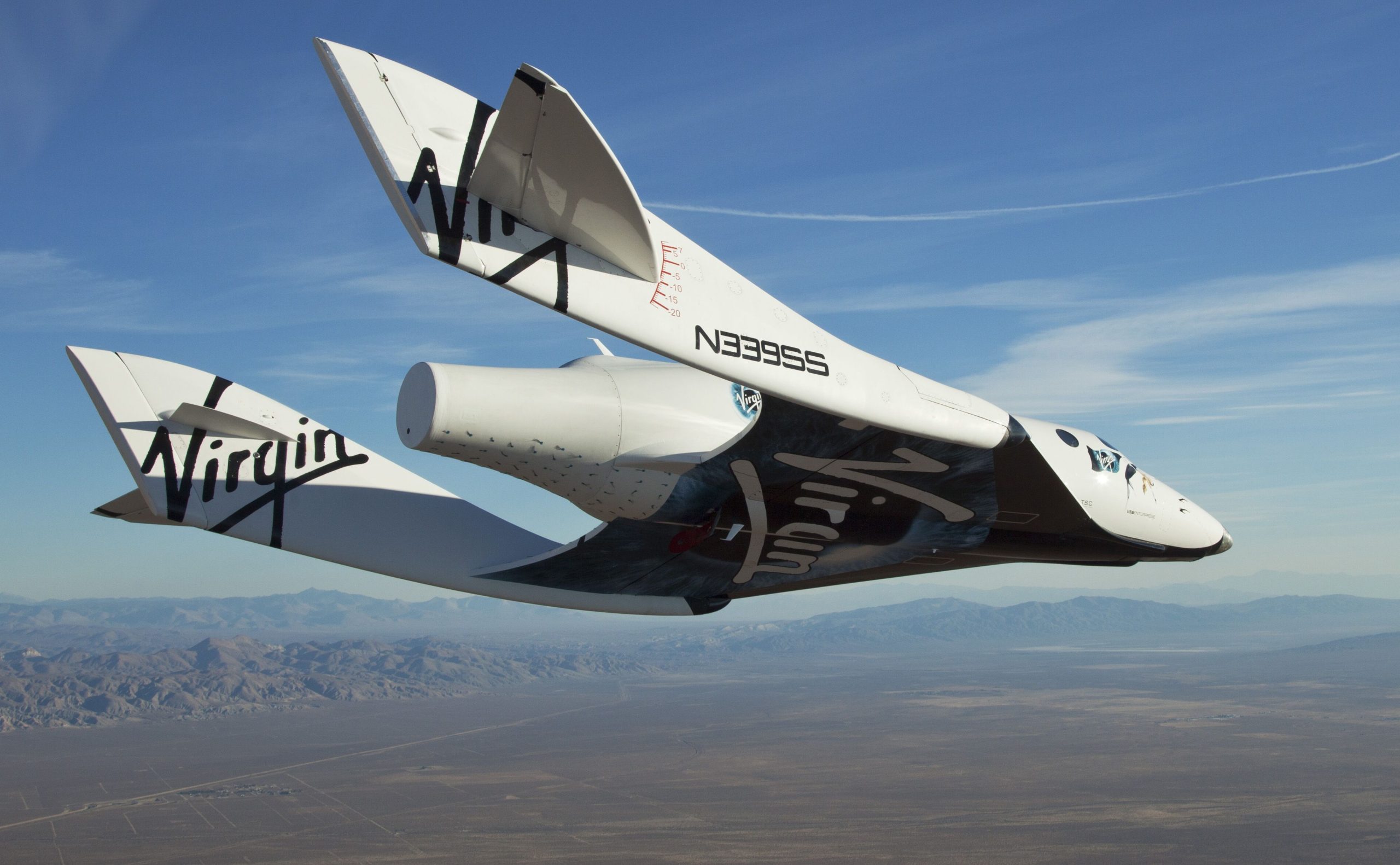
The reusable spacecraft SpaceShipTwo VSS Enterprise, with its tail section clearly visible, is heading toward the Earth’s surface during its first test flight in 2010. Photo courtesy of Virgin Galactic, popsci.com
On July 11, 2021, VSS Unity completed its highest flight to date, carrying two crew members and four research astronauts, including Branson. Test flights are ongoing, and the first commercial launch is scheduled for 2022. Branson expects there will be enough business to support a fleet of suborbital spacecraft, and the first of two SpaceShip III-class spacecraft—the VSS Imagine—was launched in March 2021.
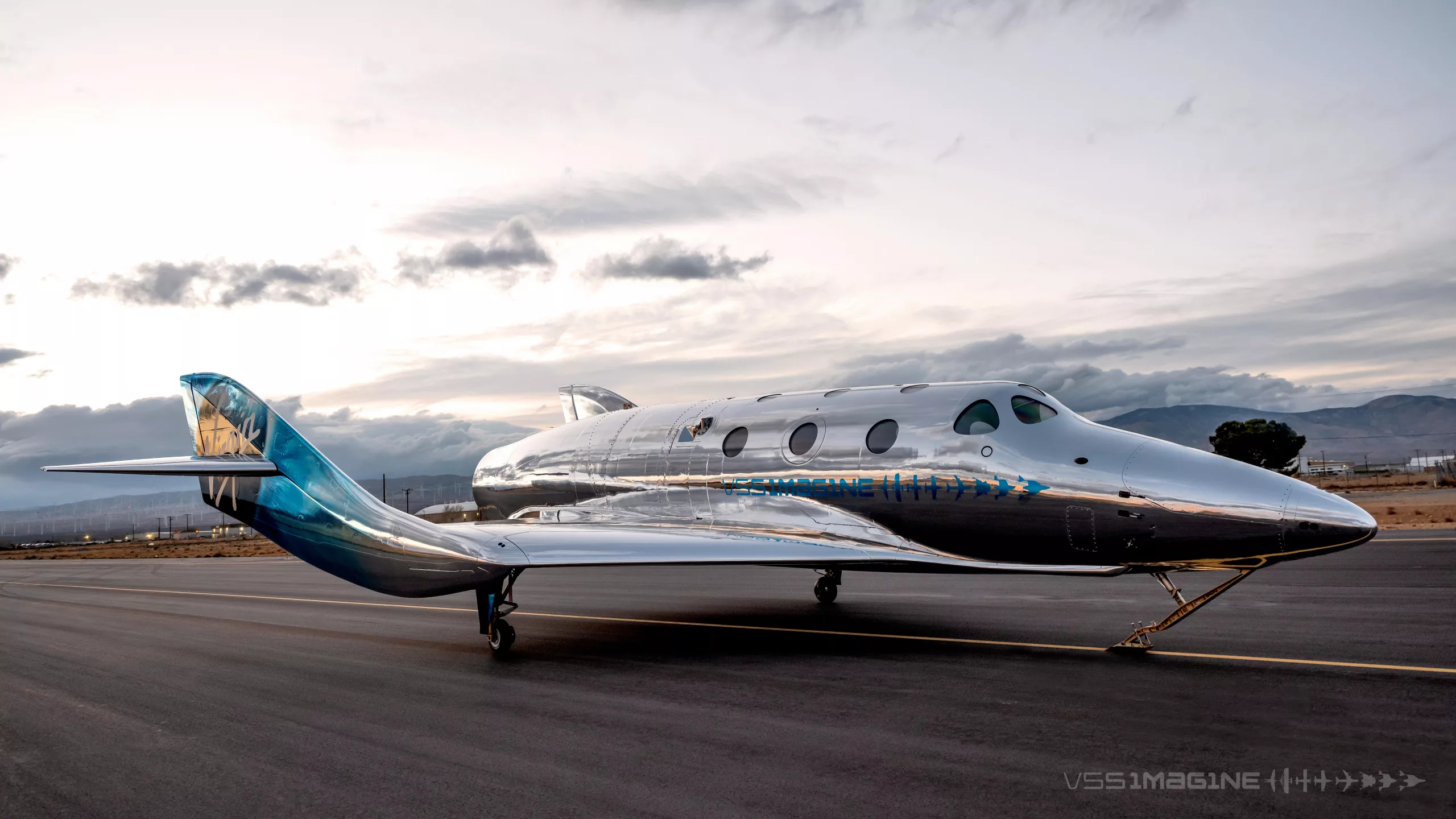
The future is here: the reusable SpaceShip III VSS Imagine descent vehicle was rolled out of the assembly hall in March 2021 and is, in essence, a production version of its experimental predecessor, SpaceShipTwo. SpaceShip III was originally intended for flights along predetermined routes beyond the atmosphere, but it appears that, for now, it will be used only for space tourism. Photo courtesy of Virgin Galactic
The external tail section has finally shown its potential.
источник: Guy Inchbald «Outside edge» «The Aviation Historian» №38, pages 106-118
Translation first published at — https://vk.com/@710541705-outside-edge-04