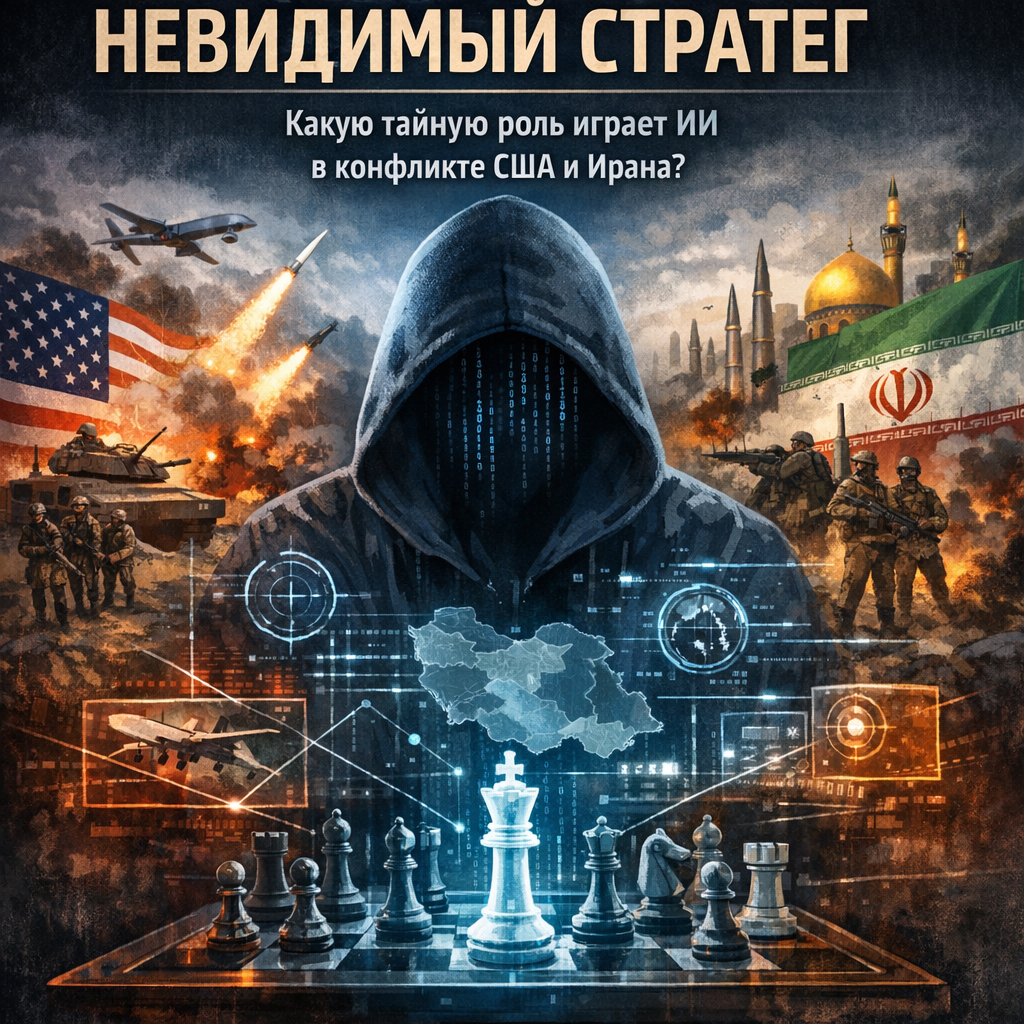
The conflict between the United States and Iran in February–March 2026 marked the first instance in history of the large-scale use of artificial intelligence (AI) in military operations. Algorithms determined the pace and precision of operations, shortening decision-making times and transforming the very paradigm of warfare.
Contents:
Using Anthropic Models
The U.S. military deployed Anthropic’s AI model, Claude, to analyze intelligence, identify targets, and simulate combat scenarios during Operation Epic Fury. This occurred despite the fact that, just a few hours before the strikes began, U.S. President Donald Trump had officially banned federal agencies from using Anthropic’s technology, calling the company “radical left” and “a threat to national security.”
The Claude model was integrated into a system developed by Palantir in collaboration with the Pentagon. It helped process large amounts of data (satellite imagery, signal intercepts, social media information), identify priority targets (such as IRGC commanders and nuclear facilities), and simulate the progression of combat scenarios.
Anthropic has previously participated in military operations—for example, in a raid on the residence of Venezuelan President Nicolás Maduro. The conflict between the company and the Trump administration arose over ethical restrictions: Anthropic prohibited the use of its technology in mass surveillance systems and fully autonomous weapons, which contradicted the Pentagon’s requirements.

“Containment of the Chain of Damage”
AI has made it possible to reduce the time from target detection to strike from several days or hours to minutes and seconds. This phenomenon is referred to as “compression of the kill chain” or “decision compression.”
Algorithms analyzed vast amounts of information in real time, which accelerated the planning of complex strikes. For example, the Palantir system used machine learning not only to identify targets but also to assess the legal grounds for a strike.
Experts note that this pace could lead to a situation where military officials and lawyers merely rubber-stamp automated plans, thereby losing control over the process.

Participation by Tech Giants
The operation involved not only Anthropic’s technologies, but also those of other companies:
- OpenAI provided GPT models for simulating combat scenarios. Shortly after its dispute with Anthropic, the company entered into an agreement with the Pentagon to deploy its tools, including ChatGPT, within a restricted military infrastructure.
- Microsoft and Google provided cloud infrastructure for data processing.
There have also been reports of plans to use the Grok model from Elon Musk’s xAI for military purposes.
Standalone Systems
The U.S. deployed swarms of low-cost, AI-controlled LUCAS kamikaze drones in combat for the first time. These drones, based on captured Iranian Shahed-136s, were used to neutralize Iranian air defenses. They cost about $35,000, which changed the “economics of war” by making strikes against fortified targets more affordable.
In this regard, it’s interesting to ask: who were these very drones targeting? There isn’t a single video showing our Geranium clones hitting any targets in Iran. But the “Shaheeds” flew frequently toward the Arab monarchies and Israel, and hit many targets there as well. But were all these Shaheds actually Iranian? Who knows what the Iranian military might have come up with?
Cyberwar
AI was actively used to carry out large-scale cyberattacks against Iran’s military infrastructure, government networks, and nuclear facilities. The algorithms helped identify vulnerabilities and automate the attacks, thereby increasing their scale and effectiveness.
Consequences and Risks
Experts refer to this conflict as “the first full-scale AI war.” Among the consequences and risks, they highlight:
- Operations Planning.
- “Algorithmic loops”: the risk that AI could create uncontrollable escalation scenarios without taking diplomatic considerations into account.
- Cognitive offloading: Decision-makers may feel detached from the consequences, since the machine does most of the work.
- Ethical dilemmas: The use of AI for military purposes raises questions about responsibility and control over technology.
The conflict demonstrated that AI is no longer merely a supporting tool but has become a key element of modern military operations, shifting the balance of power on the battlefield. However, this also creates new challenges related to managing the technology and preventing unintended escalation.
Afterword: Who Is to Blame?
No one can tell you for sure today whether AI is waging war against Iran or not. Personally, I think AI is only being used to write press releases.
However, if something goes wrong—and a lot is already going wrong, as evidenced by the loss of three F-15s in the skies over Kuwait alone (this incident still needs to be investigated separately), then the blame will not lie with Donald Trump or anyone in his administration, but with the flawed AI—or those who created and control it.