The Largest Tank Battle of the 20th Century: 200 T-72s Against 435 Abrams Tanks

When the Americans advanced into the rear of the Iraqi army across the desert, they expected a swift victory. But soon, hundreds of Republican Guard tanks appeared before them. A battle was about to begin that would later be called one of the most famous tank battles in modern history.
Many believe that the Gulf War definitively proved the complete superiority of the American “Abrams” tanks over the Soviet T-72s. People usually recall images of burning Iraqi tanks and the massive losses suffered by Saddam Hussein’s army. But if you take a closer look at the events of February 1991, the picture turns out to be much more complex. The last major tank battle of the 20th century did not begin with the rout of Iraqi forces at all, but rather with a serious problem for the Americans. Their plan was based on a rapid flanking maneuver through the desert, but the enemy turned out to be far from as helpless as is often portrayed in popular movies and documentaries.
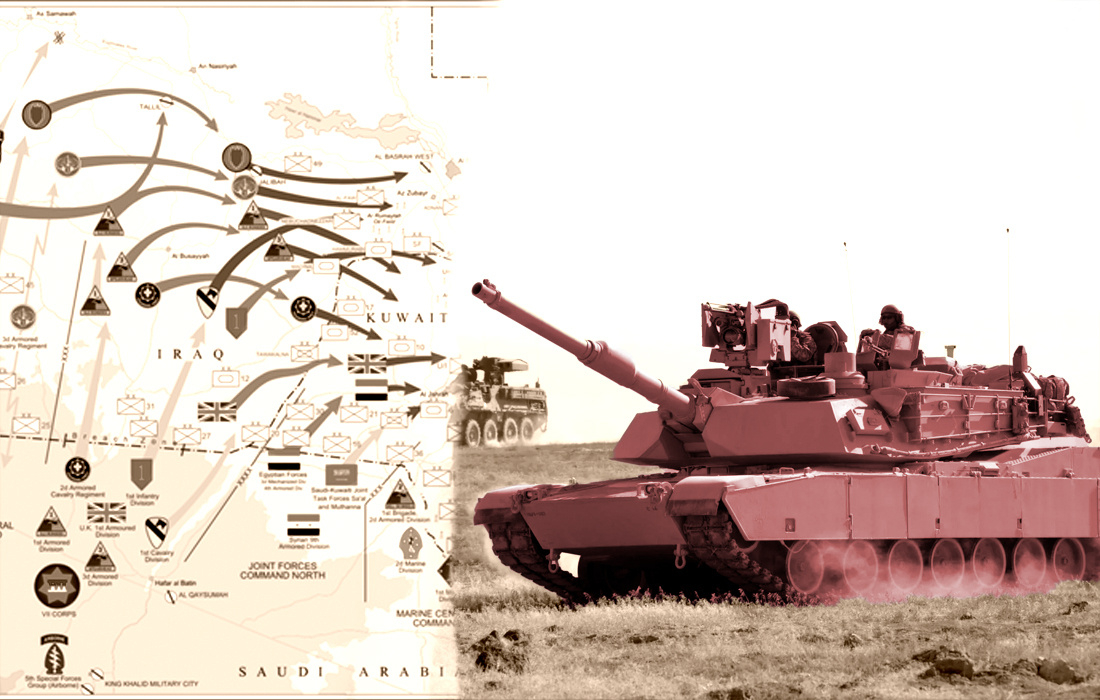
By the time the ground operation began, the coalition air force had already done most of the work. For weeks, American planes and helicopters had been striking targets in Iraq, taking advantage of their virtually complete air superiority. However, the results were not entirely clear-cut. Despite the constant bombing, many Iraqi units remained combat-ready.
For example, the 1st Mechanized Division’s losses did not exceed 10 percent, and the 50th Tank Brigade lost only eight tanks and a limited number of other vehicles. Even the elite units of the Republican Guard—the “Hammurabi,” “Medina,” and “Tawakkalna” divisions—retained between 57 and 72 percent of their original strength and still posed a serious threat.
The Iraqi command expected the coalition’s main strike to come across the border with Saudi Arabia or from the Kuwaiti coast. That is where they had concentrated their main defensive forces. However, the Americans decided to take a different approach. The main strike was launched across the desert far to the west of the expected direction. There were virtually no roads or landmarks in this area, so coalition troops made extensive use of GPS navigation, which was still considered a relatively new technology at the time. As a result, the Iraqis were caught off guard when they discovered that the enemy was flanking them and even moving into their rear.
On February 26, 1991, the U.S. Army’s 7th Corps launched an offensive. It consisted of the 1st and 3rd Armored Divisions, the 1st Cavalry Division, the 2nd Cavalry Regiment, and the British 1st Armored Division. The American armored divisions alone each had six tank battalions armed with Abrams tanks. On paper, the advantage looked impressive. But in reality, the offensive encountered unexpected difficulties. Historical note: Operation Desert Storm was one of the first wars in which GPS navigation systems were used on such a large scale directly on the battlefield.
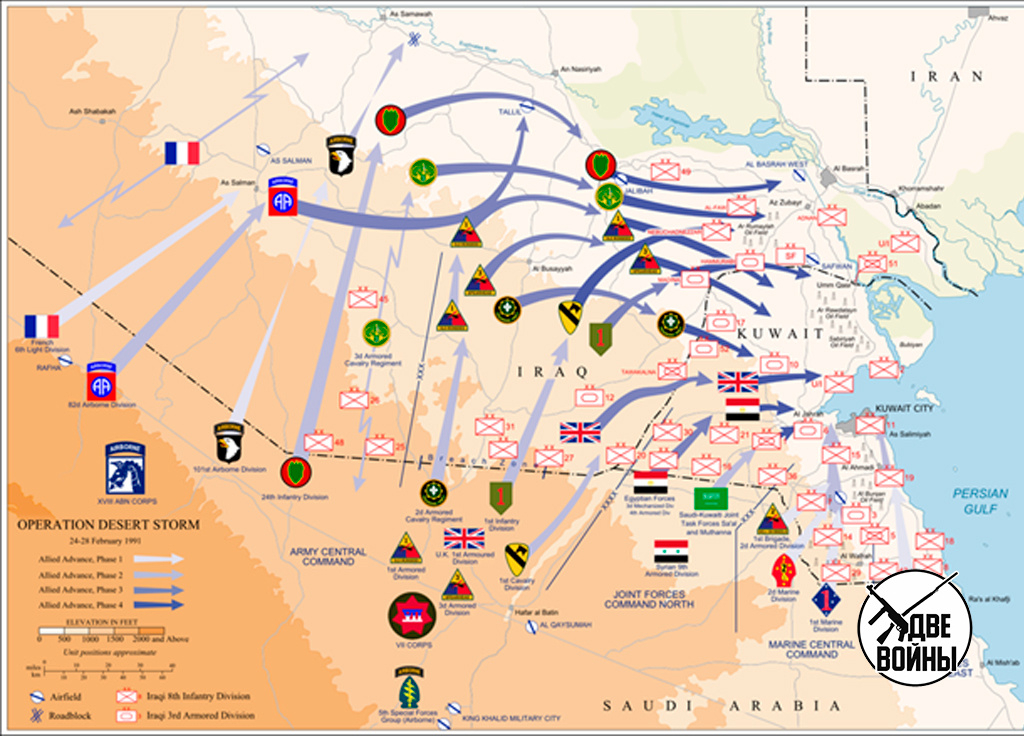
The weather took a sharp turn for the worse. It began to rain, and in some places the desert soil turned into sticky mud. Some American vehicles got stuck, slowing our advance. At the same time, the Iraqis began redeploying their tank divisions to the threatened sector, attempting to close the gap that had opened up and buy time for their main forces to withdraw from Kuwait.
The situation was further complicated by a sandstorm, which temporarily prevented the coalition air force from operating as effectively as before. It was at this very moment that the Americans faced organized resistance from large Iraqi armored units for the first time.
By noon, U.S. advance units had spotted well-camouflaged Iraqi vehicles dug into the ground. Artillery soon opened fire. Facing the Americans was the “Tawakalna” Republican Guard Division—one of the Iraqi Army’s finest units. It consisted of about 220 T-72 tanks, 284 infantry fighting vehicles, 126 artillery systems of various calibers, and 18 “Grad” multiple rocket launchers. Twelve American battalions were deployed against it. Thus began a battle that would later go down in history as the “Battle at Marker 73 Easting” and become the largest tank battle of the late 20th century.
Iraqi tank crews encountered the Americans in unprepared positions. This was one of the main problems facing the defenders. Most units were hastily redeployed once the direction of the coalition’s main assault became clear. Instead of a pre-established deep defensive line, many units took up positions literally on the fly.
Nevertheless, the “Tawakkalna” Division was considered the elite of the Republican Guard and was capable of causing the enemy serious trouble. Its core consisted of T-72M and T-72M1 tanks—export versions of the Soviet T-72A. To enhance protection, the Iraqis additionally mounted 30-mm armor screens on the front of the hulls and turrets. However, even these measures could no longer fully compensate for the gap in technology compared to equipment from the early 1990s.
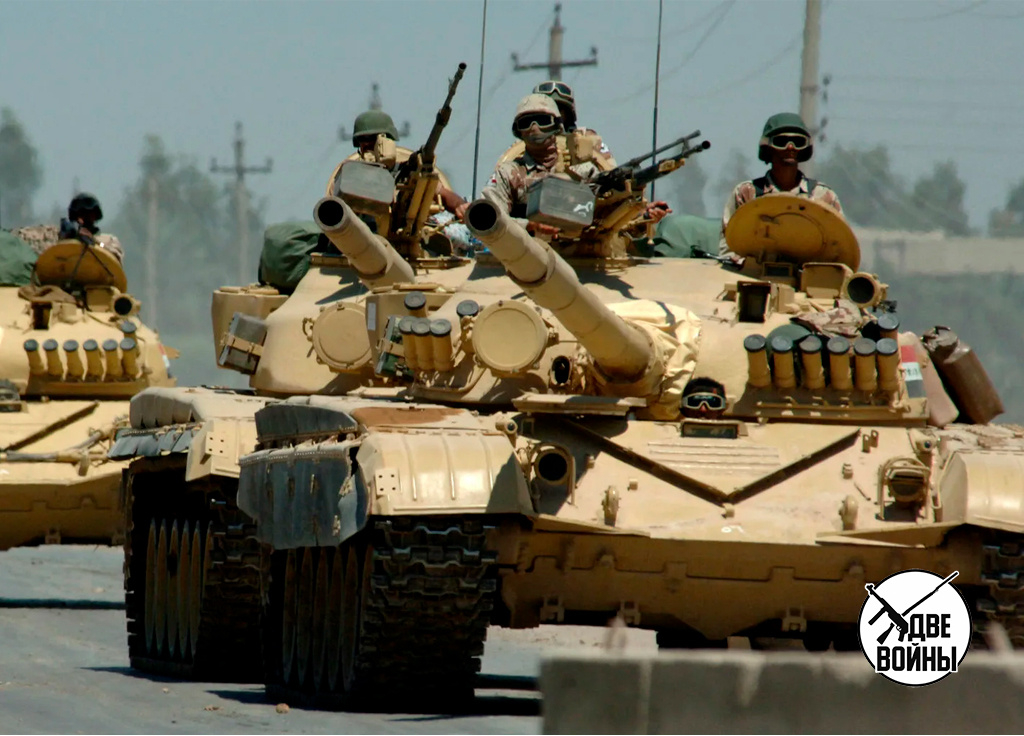
The battle that ensued lasted from the evening of February 26 through the day of February 27. The Americans proceeded cautiously. Reconnaissance was conducted by forward platoons of tanks and infantry fighting vehicles. One platoon would advance about a kilometer, after which it would be relieved by the next. This tactic helped reduce the risk of falling into an ambush.
But the Iraqis weren’t sitting idly by either. Their artillery opened fire on the advancing forces, and tanks buried in the sand were used as stationary firing positions. Amid a sandstorm and poor visibility, the battle often devolved into a series of brief skirmishes at relatively close range.
The Americans had a significant technological advantage. Visibility dropped to as low as a few hundred meters in some areas. Under such conditions, an ordinary observer could see practically nothing beyond the nearest dunes. However, the Abrams crews were equipped with modern thermal imaging devices, which allowed them to detect targets well before the enemy could. Historical note: The Gulf War was one of the first major conflicts in which thermal imaging sights demonstrated their superiority on a large scale in actual combat.
Iraqi crews often opened fire from a distance of about two and a half kilometers. But in conditions of poor visibility, they were unable to achieve significant results. American tank crews, on the other hand, were able to confidently detect targets and engage them sooner. The training of the personnel also played a major role. Many Republican Guard crews were experienced by Middle Eastern standards, but the level of training among American tank crews was still noticeably higher.
The lack of air superiority posed an additional problem for Iraq. Even when sandstorms limited air operations, they could not be completely halted. Ground-attack aircraft, attack helicopters, and reconnaissance planes were constantly searching for targets for artillery and missile systems. In effect, Iraqi units were forced to simultaneously repel attacks by ground forces while constantly fearing strikes from above. It was precisely this circumstance that many military experts would later cite as one of the main reasons for the defeat of Saddam Hussein’s army.
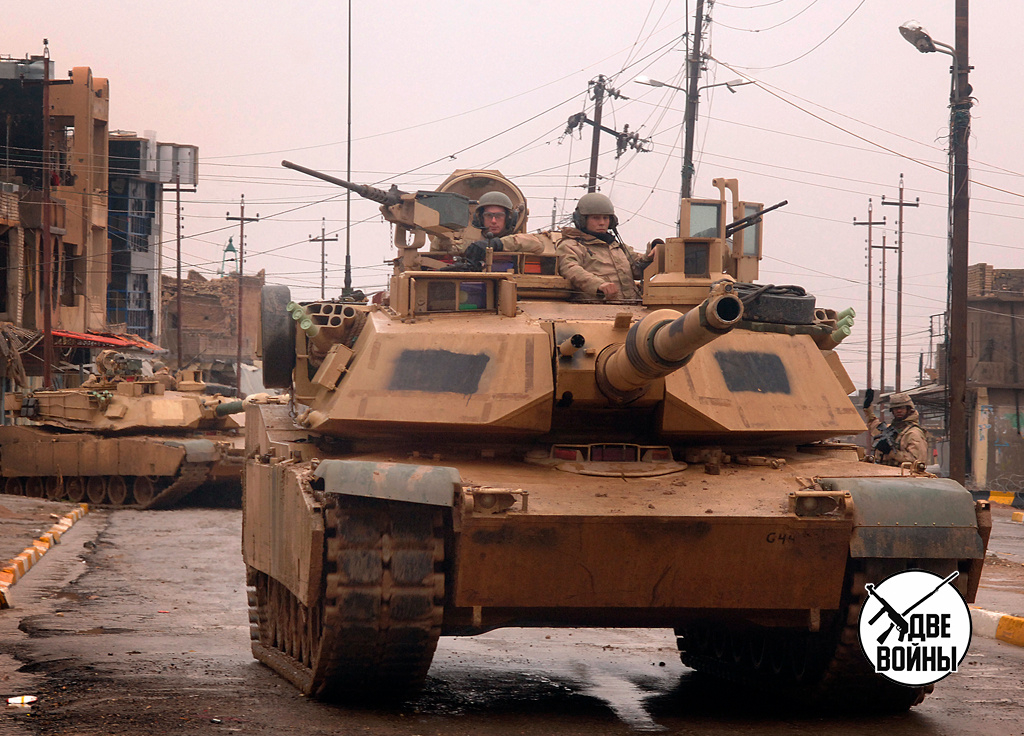
As a result, the “Tawakkalna” Division suffered heavy losses. The Americans claimed to have routed its main forces. The “Medina” units and other Republican Guard units were also hit. However, it is important to understand that this was not simply a duel between T-72s and Abrams tanks, as it is often portrayed. Artillery, aircraft, helicopters, reconnaissance assets, and modern command-and-control systems were all in action on the battlefield. Historical background: Many experts consider the 1991 war to be the first example of the large-scale application of the concept of network-centric warfare, in which success is achieved through the coordination of all branches of the military, rather than solely through the quality of a single tank.
After the operation concluded, the Americans stated that the Iraqi army had lost 2,633 tanks of various types—T-72s, T-62s, T-55s, and Chinese Type 59s. Of these, according to American data, about 1,700 vehicles were destroyed by air strikes. It later became clear that a significant portion of the equipment had not been damaged at all, but had simply been abandoned by the crews during their retreat. During the fighting, U.S. tanks fired more than 20,000 armor-piercing shells with depleted uranium cores, while Bradley IFVs fired thousands of TOW anti-tank missiles.
The official estimate of American tanks lost was approximately 50, not including those damaged and subsequently repaired. The actual figures are still a matter of debate among researchers. But one thing is certain: the battle in the Iraqi desert was the last major tank battle of the 20th century and clearly demonstrated the new reality of modern warfare. Victory was no longer secured solely by a tank’s armor and gun, but by superiority in intelligence, communications, aviation, and troop command. That is precisely why the story of the clash between the T-72 and the Abrams turned out to be much more complex than a simple tale of one tank’s victory over another.
Source — https://dzen.ru/a/ahYQO6_qjS0GZo1U