The Latest Cruise Missile/UAV for NATO Countries from Lockheed Martin and BAE Systems

Today, the line between cruise missiles and UAVs is rapidly blurring. Companies are increasingly developing drones based on missile platforms—and vice versa—UAVs with the functions and characteristics of cruise missiles. The most recent example is our “Geran” with a jet engine—also known as the “Banderole”—which is essentially a cruise missile. While we are already actively deploying such technology, the West is only just beginning to consider how to develop a “low-cost” cruise missile—a type of weapon that, in a high-tech war, is needed not just in large numbers, but in very large numbers.
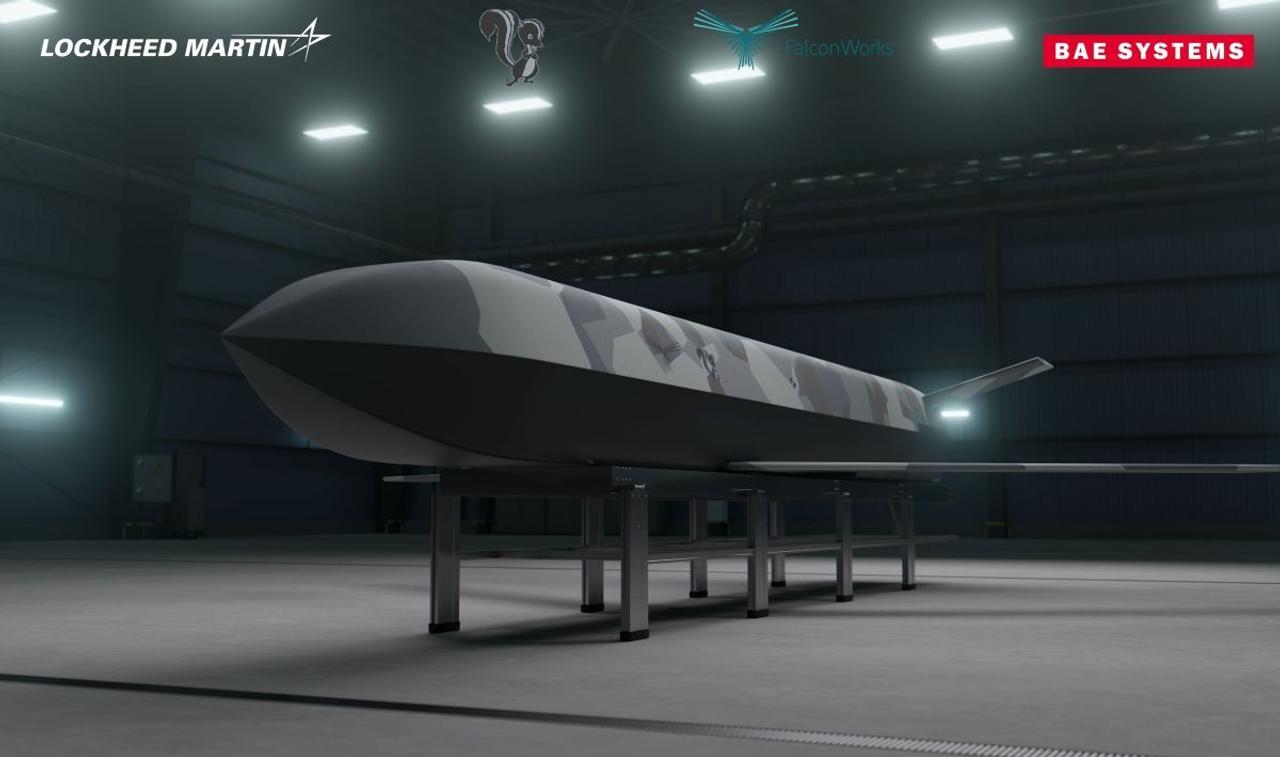
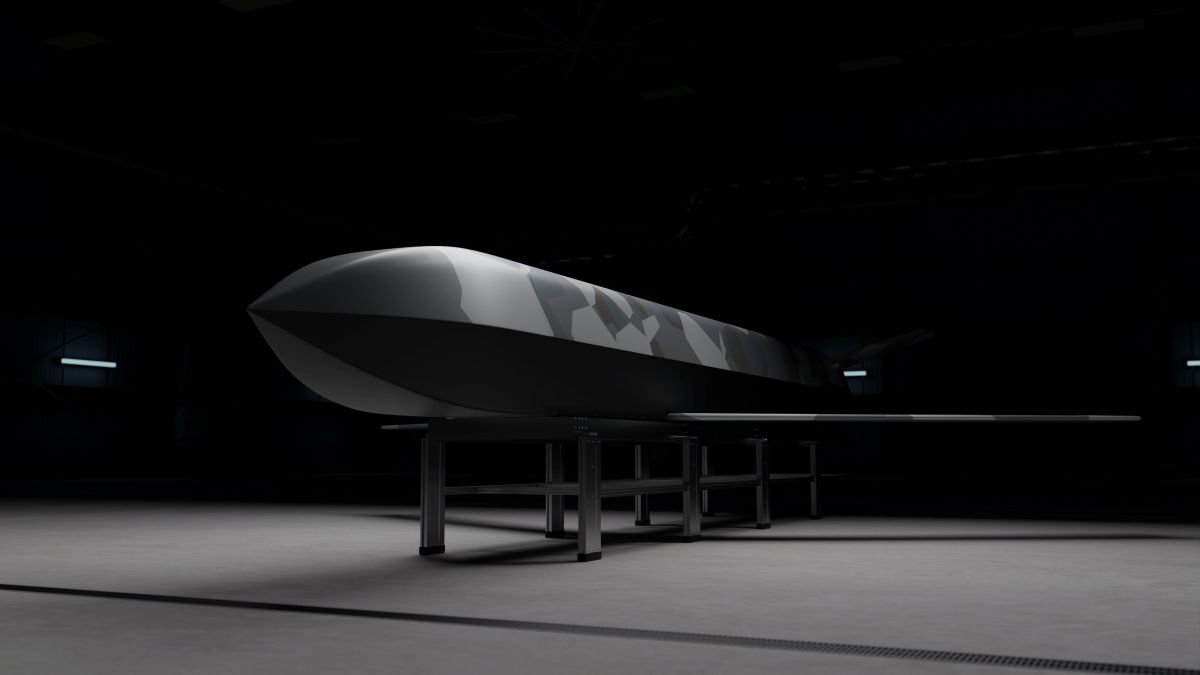
Lockheed Martin and BAE Systems have jointly unveiled a concept model of a new autonomous drone. Designed to protect fighter aircraft, this drone is capable of operating in a formation and effectively neutralizing modern enemy air defense systems.
The global military technology market is undergoing a period of transformation. Unmanned aerial vehicles are coming to the forefront, becoming a key component of modern armies’ arsenals. Whereas priority was previously given to expensive and complex pieces of equipment, leading defense companies are now striving to develop solutions that enable the creation of large-scale, relatively inexpensive, and multifunctional systems. It is in this context that Lockheed Martin and BAE Systems have announced a joint project to develop a new autonomous UAV, which is expected to serve as the basis for an entire series of unmanned aerial vehicles.
Contents:
Concept and Design Features
The illustrations show a drone shaped like a rocket, with contours optimized for low observability. The aircraft has elongated, narrow wings with moderate sweep, a V-shaped tail, and additional elements under the fuselage that improve maneuverability and flight stability. This design is intended to minimize the radar signature and improve aerodynamic performance.
Experts note the drone’s external resemblance to stealth cruise missile concepts, but they also emphasize its reusability and the ability to equip it with various modular systems.
Autonomy and the Role of Artificial Intelligence
The developers are positioning the project as a fully autonomous UAV, although optional remote control is also provided for. The main focus is on developing artificial intelligence technologies and machine learning algorithms that will enable the drone to operate under electronic warfare conditions and carry out its assigned tasks without constant operator intervention.
Particular attention is being paid to swarm technology. The new drone will be able to coordinate its actions with other drones, exchange information in real time, and carry out complex missions as part of a distributed network.
Primary Purpose: Electronic Warfare
The key mission of the new aircraft is to conduct electronic warfare and enhance the survivability of manned aircraft. Lockheed Martin and BAE Systems report that the drone will be equipped with modules designed to jam signals, suppress enemy guidance systems, and disable enemy radar stations.
In the future, the drone will also be capable of performing strike missions by carrying small-caliber munitions on board. However, the top priority remains the creation of a “protective shield” for fifth- and sixth-generation fighter jets, allowing them to safely carry out missions within the range of modern air defense systems.
This joint project between two major Western defense contractors reflects a trend away from unique, high-cost platforms toward mass-produced and relatively affordable solutions. The new unmanned aerial vehicle being developed by Lockheed Martin and BAE Systems could become a key component of future air operations, where the determining factor will not be the number of manned fighter jets, but rather the effectiveness of coordination among autonomous systems.
Moreover, the emphasis on electronic warfare indicates that future military operations are increasingly shifting into the realm of invisible technologies. Creating interference, suppressing, and disorienting the enemy are becoming just as important as the physical destruction of targets.
The combination of low observability, modularity, and the ability to operate in swarms makes this project particularly promising. In the face of the growing threat posed by modern air defense systems, such unmanned aerial vehicles will be a decisive factor in ensuring air superiority.
По материалам — https://building-tech.org/%D0%92%D0%BE%D0%BE%D1%80%D1%83%D0%B6%D0%B5%D0%BD%D0%B8%D0%B5/lockheed-martin-y-bae-systems-sozdayut-noviy-bespylotnyk-dlya-radyoelektronnoy-borbi-y-zashchyti-boevoy-avyatsyy